Start with the carrying job, not the catalog photo
Canvas zipper portfolios for tech startups are usually bought for one of four jobs: new-hire onboarding kits, conference speaker packs, investor meeting folders, or branded retail merchandise. These jobs look similar in photos, but the material selection should not be the same. A portfolio holding a thin notebook and stickers can be soft and light. A portfolio carrying a tablet, charger, notebook, badge, and pitch documents needs structure, zipper strength, and better lining control.
Before requesting quotes, define what the portfolio must hold on day one. The most common sourcing mistake is giving the supplier only an outside size and logo. That leaves the factory to choose canvas weight, lining, board, zipper grade, and pocket construction based on cost. The first quote may look attractive, but the sample can feel floppy, the zipper may wave around the corners, and the internal pockets may not fit the actual device with a case.
- For A4 documents, allow internal space beyond the paper size so corners do not bend near the zipper.
- For 11-13 inch tablets or laptops, confirm actual device dimensions with protective case thickness.
- For event gifting, reduce unnecessary pockets and focus on flat packing, clean logo placement, and fast lead time.
- For retail resale, specify hangtag, barcode, carton labeling, and more consistent fabric shade control.
Outer canvas: choose weight by structure and sewing risk
For zipper portfolios, canvas between 12 oz and 18 oz is commonly discussed, but the safer commercial range for most tech startup programs is 14-16 oz, roughly 475-540 GSM depending on yarn and weave. This weight gives enough body for a professional hand feel while still allowing clean zipper sewing at the corners. If the design includes foam, lining, and several internal pockets, 14 oz can already feel substantial after assembly.
Heavy canvas is not automatically better. At 18 oz or above, the corners become thick after folding, the zipper tunnel is harder to keep smooth, and needle holes become more visible if the operator unpicks a seam. The product also ships heavier, which matters for air freight and distributor programs. Lighter 10-12 oz canvas can work for low-cost document pouches, but it often needs additional backing or foam if the buyer expects a portfolio, not just a zippered sleeve.
- Budget document pouch: 10-12 oz canvas with minimal lining and no rigid board.
- Standard startup onboarding portfolio: 14-16 oz canvas with 210D or 300D lining and light foam.
- Premium structured portfolio: 16 oz canvas with reinforced panels, stronger zipper, and controlled corner thickness.
- Avoid comparing quotes unless every supplier lists both oz and GSM, because canvas descriptions vary by market.
Washed, unwashed, recycled, or organic canvas: what changes in production
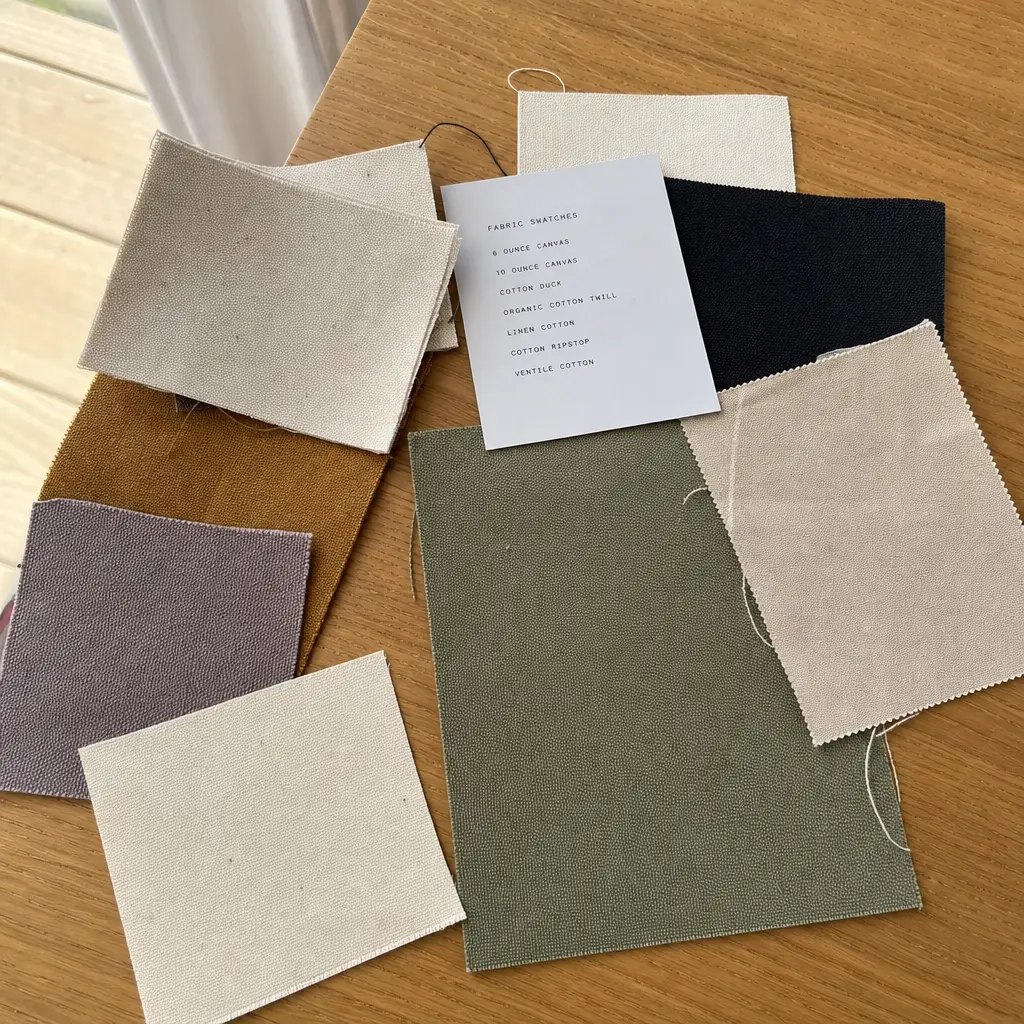
Washed canvas gives a softer, more relaxed finish that many startup brands like. It reduces the stiff factory-new feel and can make natural cotton colors look more premium. The tradeoff is shade variation and dimensional change. If the fabric is washed after weaving but before cutting, the shrinkage risk is easier to control. If garment washing or panel washing is proposed after sewing, the zipper, lining, print, and internal board must all be compatible.
Organic or recycled cotton canvas may support a sustainability positioning, but procurement should treat those options as material changes, not just marketing terms. Availability, dye behavior, yarn consistency, and minimum order quantity can change. If certification claims are required for retail labeling, the buyer should state the documentation requirement in the RFQ. If the program only needs a natural material story without certification on the product, stock natural cotton canvas may be more practical and faster.
- Washed canvas: better hand feel, more casual appearance, possible shade tolerance needed.
- Unwashed canvas: sharper shape and cleaner print edges, but shrinkage control must be verified.
- Recycled cotton blend: useful for sustainability messaging, but check tensile strength and pilling.
- Organic cotton canvas: may require higher MOQ and document control if the claim appears on labels or packaging.
Lining and reinforcement decide the real perceived value
A buyer can choose good outer canvas and still receive a weak product if the inside is under-specified. The lining, foam, board, and pocket materials control how the portfolio opens, how the zipper sits, and whether the front panel wrinkles after packing. For most canvas zipper portfolios, a 210D or 300D polyester lining is a practical baseline. If the portfolio is positioned as premium or will carry electronics, thicker lining or a smooth twill lining can improve feel, but it also raises sewing and material cost.
Reinforcement should be matched to use. A thin foam layer gives cushioning and removes the hollow feel. EVA or PE board adds shape, but too much rigidity makes the portfolio hard to close when loaded. Paper board should be avoided if the product may face humid storage, long sea freight, or repeated bending. Internal tablet sleeves need soft lining at the contact surface and enough seam allowance so the sleeve does not tear at the top corners.
- Light foam around 1.5-2.0 mm is usually enough for meeting portfolios.
- Tablet sleeve openings should have bartacks or reinforced stitching at stress points.
- Elastic cable loops need recovery testing; weak elastic looks loose after a few uses.
- Dark lining hides pen dust and cable marks better than cream or white lining.
Zipper selection: where low-cost quotes often fail
The zipper is the main functional part of a canvas portfolio, so it should be specified with more detail than 'zipper closure'. A No.5 nylon zipper is enough for many A4 or letter-size portfolios. If the design has a thick gusset, heavy contents, or a large tablet compartment, a No.8 nylon or resin zipper may be safer. Metal zippers can look premium, but they add weight, may scratch devices if poorly placed, and can be less smooth around curved corners.
Slider quality matters as much as zipper tape. A weak slider can feel acceptable on a sample and still fail after repeated use. The zipper should run around the corners without catching the lining. For a portfolio that opens flat, the zipper ends and binding tension must be controlled so the panels do not twist. If a custom puller is used, allow tooling time and test whether the puller hits the fabric or logo when the portfolio is stacked.
- No.5 nylon zipper: cost-efficient, lighter, good for standard document portfolios.
- No.8 nylon zipper: stronger feel, better for thicker builds and heavier contents.
- Resin zipper: bold appearance, useful for casual tech merchandise, but bulkier at corners.
- Custom puller: good branding detail, but adds mold cost, sample time, and potential color matching work.
Printing and logo placement on canvas portfolios
Canvas texture affects print edges. Screen printing is usually the most practical method for simple startup logos, especially one to three solid colors. It is durable, economical at bulk quantity, and works well on flat front panels. Heat transfer can reproduce finer detail, but it may not match the natural hand feel of canvas and should be tested for adhesion on textured fabric. Embroidery can look premium but may pucker the panel if the canvas and reinforcement are not stabilized.
Logo placement should be decided with the zipper and pocket layout already fixed. Printing too close to the zipper seam can cause distortion. Printing over reinforced areas may create uneven ink coverage. Large solid ink blocks can make canvas feel stiff and may crack if the portfolio bends often. For understated branding, a woven side label or small front print often works better than a large full-panel logo, especially for employees who will use the item in public meetings.
- Screen print: best for solid logos, Pantone matching, and repeat bulk orders.
- Woven label: durable, premium, and less sensitive to fabric shade variation.
- Embroidery: good for small marks, but test pucker and backing visibility.
- Debossed patch: premium look, but confirm patch material, colorfastness, and compliance expectations.
MOQ logic and cost drivers buyers should separate
MOQ for canvas zipper portfolios is driven less by sewing and more by material and trim preparation. If the buyer accepts stock canvas color, stock zipper tape, standard lining, and screen print, a factory may support a few hundred pieces depending on workload and setup. If the project needs custom-dyed canvas, custom lining color, custom zipper tape, molded puller, or certified material, the real MOQ can move to 800-1,000 pieces or higher.
When comparing quotes, separate the base product from customization. One supplier may include a basic No.5 zipper, 210D lining, simple print, and polybag. Another may quote 16 oz canvas, 300D lining, foam, custom puller, belly band, and barcode labels. The unit prices are not comparable unless the quote data is normalized. Procurement teams should request a costed option list instead of forcing every feature into one unclear price.
- Main cost drivers: canvas weight, lining grade, reinforcement, zipper size, pocket count, print area, packing, and inspection level.
- MOQ drivers: custom fabric color, custom zipper tape, custom hardware, certification documents, and split shipment requirements.
- Setup cost drivers: screen setup, embroidery digitizing, puller mold, label weaving, and sample courier fees.
- Freight drivers: carton size, flat versus folded packing, gross weight, and whether individual boxes are required.
Sample approval: do not approve the wrong sample
A development sample is useful for checking size, layout, and general construction, but it is not enough for final approval if substitute materials were used. Many early samples are made with available canvas, available zipper, and similar lining to save time. That is acceptable only if the sample is clearly marked as non-production material. The pre-production sample should use the real canvas weight, lining, zipper, reinforcement, print method, and packing method.
Approval comments should be measurable. Instead of saying the portfolio feels too soft, state whether the front and back panels need thicker foam, stiffer board, or heavier canvas. Instead of saying the zipper is poor, state whether the slider catches at corners, the zipper tape waves, or the puller feels weak. Good sample feedback shortens production discussion and prevents the factory from guessing which part to change.
- Measure outside size, inside usable size, spine thickness, and device pocket size.
- Load the sample with the intended kit contents for at least one day before approval.
- Open and close the zipper repeatedly around corners and note exact catching points.
- Review logo alignment with a ruler from seam or edge, not by eye only.
- Keep one signed approval sample with the buyer and one with the factory for bulk comparison.
Packing decisions affect shape, freight, and retail handling
Canvas portfolios are usually packed flat, but flat packing still needs structure control. If too many pieces are compressed in one carton, zipper corners can dent the canvas and front panels may arrive with permanent creases. If the canvas is natural or washed, surface dirt from the carton is also more visible. Individual recycled polybags are practical for export protection, while paper belly bands or tissue wrapping can improve presentation for event kits and retail programs.
For importers and distributors, carton data should be part of the quote, not an afterthought. Carton length, width, height, gross weight, net weight, and estimated CBM affect landed cost and warehouse handling. If the goods will be kitted with notebooks, bottles, or electronics after arrival, tell the factory whether barcode labels, SKU labels, or carton marks are needed. Repacking at the destination can erase the savings from a slightly cheaper factory quote.
- Use desiccants or moisture-control packing for natural canvas shipped by sea.
- Limit carton compression so the zipper and reinforced corners are not crushed.
- Define whether each piece needs a barcode, hangtag, care label, or polybag warning text.
- Confirm carton drop and stacking expectations if the product will move through retail distribution.
Lead time risks and what to lock before production
A realistic schedule includes artwork confirmation, material sourcing, sample making, sample revision if needed, bulk material preparation, cutting, printing, sewing, finishing, inspection, packing, and export handover. The sample stage can be quick if stock materials are used, but custom-dyed canvas, woven labels, custom pullers, or special packaging add time. Printing cannot be finalized until artwork size, Pantone color, and placement are approved.
Production risk increases when the buyer changes the internal layout after materials are cut. Adding a tablet sleeve, moving the zipper line, or changing pocket depth can affect cutting patterns, lining consumption, and sewing sequence. For seasonal launches or hiring events, freeze the material specification before confirming the delivery date. A supplier can often manage tight timing better when the buyer separates must-have features from optional upgrades.
- Freeze final artwork before screen setup or embroidery digitizing begins.
- Approve production fabric shade before cutting, especially for washed or dyed canvas.
- Do not change device pocket size after pre-production sample approval unless the timeline is reset.
- Reserve inspection time before shipment; skipping final inspection often costs more than it saves.
Specification comparison for buyers
| Spec decision | Recommended option | When it fits | Buyer risk to check |
|---|---|---|---|
| Outer canvas weight | 14-16 oz cotton canvas, about 475-540 GSM, with pre-shrink control | Best balance for tech onboarding kits, conference gifts, and daily meeting use where the portfolio must feel structured without becoming too heavy | Below 12 oz can look soft after packing; above 18 oz may raise sewing cost, carton weight, and zipper corner stress |
| Canvas finish | Washed or enzyme-washed canvas for softer hand feel; unwashed canvas for sharper structure | Washed canvas suits casual startup branding; unwashed canvas suits cleaner corporate retail presentation | Washed fabric may show shade variation between lots; unwashed fabric may shrink more if not tested before cutting |
| Internal structure | 1.5-2.0 mm foam or EVA board plus 210D-300D lining | Needed when the portfolio carries a tablet, notebook, charging cable, badge, and documents | Too much board makes corners bulky; no reinforcement causes wrinkled panels and weak perceived value |
| Zipper specification | No.5 nylon zipper for standard portfolios; No.8 nylon or resin zipper for large tablet sleeves | No.5 is cost-efficient for A4 or letter-size folios; No.8 fits heavier builds or thicker gussets | Cheap sliders create early failure; zipper tape shrinkage can distort the portfolio after pressing or washing |
| Branding method | Screen print for flat logos; woven label for premium understated branding; debossed leather patch only if leather trim is acceptable | Screen print is good for startup logos and event colors; labels work better across multiple fabric shades | Large ink coverage can stiffen canvas; patch material may trigger compliance or vegan-material concerns |
| Lining color | Dark grey, black, or brand-matched polyester lining with colorfastness control | Dark lining hides cable marks and pen dust; brand colors support retail and welcome-kit presentation | Light lining stains easily; low-grade dyed lining may transfer color onto documents or device cases |
| MOQ logic | 300-500 pieces for existing fabric and standard zipper color; 800-1,000 pieces for custom-dyed canvas or custom zipper tape | Lower MOQ works for pilot hiring kits and founder events; higher MOQ makes sense for annual distributor programs | Supplier may quote low MOQ but substitute stock materials unless custom material is clearly locked in the quote |
| Packing format | Individual recycled polybag or paper belly band, then export carton with flat stacking and moisture control | Polybag protects during ocean freight; belly band improves retail or event handout presentation | Over-tight cartons crease the front panel; poor moisture control can cause mildew smell on natural canvas |
Buyer checklist before sampling
- Define the exact device size to fit, including case thickness, not only screen size.
- Choose outer canvas weight in oz and GSM, and state whether washed or unwashed hand feel is required.
- Specify whether the portfolio must stand semi-rigid when held, or can be soft and foldable.
- Fix zipper size, zipper type, slider finish, puller shape, and zipper tape color before price comparison.
- List internal features separately: tablet sleeve, document pocket, card slots, pen loop, mesh pocket, elastic cable band, or notebook holder.
- Confirm logo size, print position, Pantone color, and whether the logo crosses seams or textured canvas areas.
- Require a pre-production sample using production fabric, production zipper, and final lining, not only a prototype with substitute trims.
- Set acceptance criteria for panel squareness, zipper smoothness, stitch density, logo alignment, and carton compression.
- State individual packing method and carton size limits if the goods will ship by air or be handled by a 3PL.
- Request the quote in a comparable format showing material, printing, packing, sample fee, tooling, MOQ, lead time, and Incoterm.
Factory quote questions to send
- What is the exact outer canvas weight in oz and GSM, and is the fabric stock, made-to-order, washed, or pre-shrunk?
- What lining material and GSM are included in the quoted price, and can it pass colorfastness testing against white paper or light device cases?
- Which zipper brand or grade is used, what zipper size is quoted, and how many open-close cycles are used for internal testing?
- Is the internal board foam, PE board, EVA, or paper board, and what thickness is quoted for the front, back, and spine areas?
- Does the quoted MOQ apply to one fabric color and one logo design, or can colors and logos be split within the order?
- Which print method is included, how many colors are included, and what is the maximum print area before price changes?
- Will the approval sample use production materials, or will any fabric, lining, zipper, puller, or print process be substituted?
- What packing is included: individual polybag, tissue, paper band, barcode label, master carton, desiccant, or carton marks?
- What is the lead time for sample, material procurement, bulk sewing, inspection, and shipment handover after deposit and artwork approval?
- Which quote validity period, payment terms, Incoterm, carton dimensions, gross weight, and estimated CBM are included?
Quality-control points to confirm
- Outer dimensions should stay within agreed tolerance, commonly plus or minus 5 mm for length and width on soft canvas goods.
- Main panels should remain square, with visible skew controlled before packing; severe twisting usually comes from uneven cutting or binding tension.
- Zipper must run smoothly around corners without catching lining fabric, with no missing teeth, cracked slider paint, or loose puller attachment.
- Stitch density should be consistent, commonly 7-9 stitches per inch for canvas portfolios unless a different decorative stitch is approved.
- Seam allowance should be secure at zipper ends, corners, handle points if included, and internal pocket stress areas.
- Logo print should match approved artwork position and color within agreed tolerance, with no obvious pinholes, ghosting, cracking, or ink bleeding.
- Lining should be clean, correctly attached, and free from loose thread that can catch cables, pens, or zipper sliders.
- Internal pocket dimensions should fit the approved device dummy or buyer-supplied template.
- Finished goods should pass a basic loading check using the intended contents: tablet, notebook, pen, cable, and documents.
- Cartons should protect flat shape without over-compression, moisture odor, crushed zipper corners, or dirty canvas surfaces.