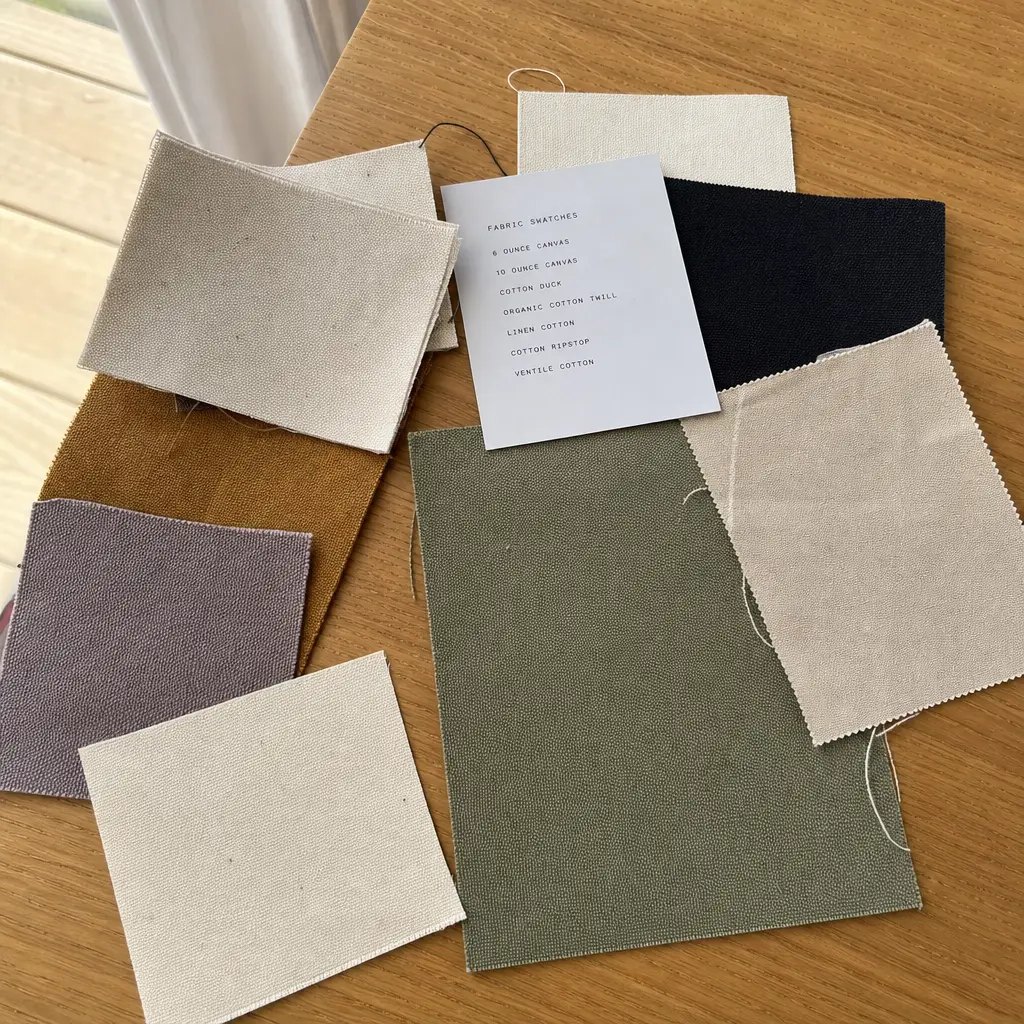
Define the Buying Problem Before Comparing Quotes
A canvas zipper portfolio for a university bookstore is not just a flat pouch with a logo. It may be sold as a retail accessory, bundled with orientation materials, used as a graduation gift, or positioned as a premium campus merchandise item. Each use changes the required fabric weight, internal layout, print method, packing standard, and acceptable defect level. If the RFQ only says “canvas zipper portfolio with school logo,” suppliers will quote different products while appearing competitive on price.
The main buying problem is controlling comparability. One quote may include 10 oz canvas, one-side screen print, no lining, and bulk packing. Another may include 16 oz canvas, branded zipper puller, inside sleeve, woven label, and individual barcode packing. Both may be called wholesale canvas zipper portfolios, but they are not the same production job. Procurement teams should lock the product’s job-to-be-done first, then request supplier evidence and pricing against the same specification.
- Retail shelf item: prioritize fabric hand feel, logo finish, hangtag or barcode packing, and low visible defect rate.
- Event giveaway: prioritize lead time, stable print quality, lower MOQ, and efficient carton packing.
- Licensed campus merchandise: prioritize logo approval, color control, documentation, and retained sample discipline.
- Distributor program: prioritize repeatability, carton labeling, reorder records, and landed-cost transparency.
Choose Canvas Weight by Use, Not Habit
Canvas weight is one of the first cost drivers, but buyers often specify it loosely. For zipper portfolios, common exterior fabric choices range from about 10 oz to 16 oz cotton canvas, roughly 320 to 540 GSM depending on yarn, weave, and finishing. A 10 oz fabric can work for a promotional document pouch, but it may feel thin on a bookstore shelf. A 16 oz fabric feels more substantial, but it increases sewing resistance, zipper corner bulk, freight weight, and sometimes unit cost.
A practical middle range for bookstore retail portfolios is often 12 oz to 14 oz canvas, approximately 380 to 450 GSM. This gives enough structure for a document or tablet sleeve without making the zipper edge bulky. If the product needs padding or a lining, the exterior canvas can sometimes be reduced slightly because the whole construction gains body. For natural canvas, buyers should also decide whether visible cotton seed flecks are acceptable. For dyed canvas, shade variation and crocking risk need earlier control.
- 10 oz canvas: useful for event folders or lighter promotional budgets, but can look less premium.
- 12 oz canvas: balanced for bookstore resale when paired with clean sewing and a good zipper.
- 14 oz canvas: stronger retail feel, suitable for premium campus merchandise or laptop-adjacent use.
- 16 oz canvas: durable but bulkier; check zipper corners, seam turning, and carton weight before approval.
- Dyed canvas: request color tolerance and rub test expectations before bulk cutting.
Specify the Zipper and Portfolio Construction
The zipper is the functional part customers touch first, so it should not be treated as a minor accessory. Nylon zippers are common for cotton canvas portfolios because they are flexible, light, and cost-efficient. Resin zippers create a chunkier look but can feel too casual or heavy depending on the design. Metal zippers look premium, but they add weight and may scratch documents or tablets if the interior is not properly designed.
Construction details decide both usability and labor cost. A simple flat portfolio with a top zipper is cheaper and faster than a two-side opening style. A portfolio with lining, divider pocket, pen loop, elastic strap, and card slot requires more cutting, more sewing operations, and more QC checks. Buyers should describe whether the product is meant to hold loose paper, a notebook, a tablet, or a bookstore gift pack. If it needs to fit a device, finished internal dimensions matter more than exterior dimensions.
- Zipper size: choose a smooth medium zipper instead of the cheapest small zipper for retail goods.
- Opening style: top opening is simpler; L-shaped opening improves access but adds corner sewing risk.
- Puller: standard metal puller is efficient; custom puller raises MOQ and tooling or mold cost.
- Interior: unlined construction reduces cost; lining improves presentation and protects contents.
- Corners: rounded corners can look refined but require better pattern control and sewing skill.
Match Logo Method to Campus Brand Requirements
University bookstore orders often involve licensed marks, department logos, alumni graphics, or campaign artwork. The decoration method must match both the artwork and the expected retail price. Screen printing is the most common choice for solid-color campus marks on canvas. It is durable when properly cured and economical at wholesale quantities. For full-color artwork, heat transfer can reproduce detail, but buyers should review hand feel, edge finish, wash or rub resistance, and whether the transfer film looks too promotional.
Woven labels, sewn patches, and debossed leather or PU patches can raise perceived value, especially when the main canvas is natural or dark dyed. These options add MOQ logic because labels or patches are produced separately before sewing. A small woven CTM or brand label at the side seam is not the same cost as a large front patch. For licensed products, the approval path should include artwork proof, print strike-off, and a physical sample photographed under normal light, not only a digital mockup.
- Screen print: best for one to three solid colors and clear campus marks.
- Heat transfer: useful for gradients or full-color artwork, but confirm film hand feel on canvas.
- Woven label: good for repeat retail SKUs and subtle branding near the seam.
- Embroidered patch: premium appearance but can pucker lighter canvas if backing is not controlled.
- Debossed patch: approve patch material, color, stitching, and edge finishing before bulk.
Understand MOQ Logic Before Negotiation
MOQ is not only a supplier policy. It comes from fabric purchasing, dyeing, accessory minimums, printing setup, cutting efficiency, sewing line changeover, and packing materials. A factory may accept a lower MOQ for natural canvas with standard black zipper and one-color print because materials are available and setup is simple. The same factory may require a higher MOQ for custom dyed canvas, branded zipper pullers, special lining, or multiple SKU colors.
Buyers can negotiate more effectively by separating MOQ drivers. Instead of asking for the lowest MOQ on a fully customized portfolio, split the RFQ into base construction and optional upgrades. A bookstore buyer may find that 500 pieces is possible for natural canvas with standard zipper and screen print, while 1,000 to 2,000 pieces are more realistic for custom labels, dyed fabric, or special packaging. These are examples, not fixed promises; the actual threshold depends on factory capacity and material availability.
- Lowest MOQ route: natural canvas, standard zipper, one-color print, no lining, simple polybag.
- Medium MOQ route: custom print colors, woven side label, interior pocket, barcode sticker packing.
- Higher MOQ route: dyed canvas, custom zipper puller, multiple pockets, custom carton or retail sleeve.
- SKU split risk: dividing one order across many colors can push each color below efficient cutting quantity.
- Reorder strategy: approve a core spec that can be repeated without re-sampling every component.
Compare Supplier Compliance Evidence, Not Claims
For university bookstore channels, supplier compliance is more than a checkbox. Procurement teams may need evidence for material composition, restricted substance controls, logo handling, ethical sourcing policies, packaging material, and production traceability. A supplier saying “we can pass compliance” is less useful than a clear file set tied to the actual canvas, ink, zipper, and packing used for the order.
The strongest supplier route is usually the one that can connect documents to production reality. A factory profile shows who is making the product. A material declaration states fiber content. Ink or print material statements reduce risk when logos are printed on large panels. Sample reports and inspection photos show whether the factory understands acceptance criteria. If working through a trading company, the buyer should still know where the portfolios are cut and sewn and who controls final inspection.
- Request a factory profile with product scope, export experience, and contactable quality process owner.
- Require material composition for canvas, lining, zipper tape, puller, patch, and packaging when applicable.
- Use restricted substance statements tied to the order materials, not generic certificates from unrelated items.
- Keep an approved physical sample at both buyer and factory side for dispute control.
- Require final inspection photos showing logo placement, zipper function, packing, and carton marks.
Build a Quote Sheet That Exposes Cost Drivers
A useful quote for wholesale canvas zipper portfolios should show more than a unit price. Buyers need enough data to compare total cost, production risk, and landed cost. Ask suppliers to separate fabric, accessories, decoration, packing, sample charges, tooling or screen charges, inland freight, and export terms where possible. Even if the factory does not disclose every internal cost, the quotation should clearly state what is included and what is excluded.
Quote data should also include carton information because portfolios can be deceptively expensive to ship if packed loosely. A flat canvas portfolio may appear light, but retail packing, inner cartons, and protective inserts can increase CBM. Buyers comparing FOB and delivered options should calculate volume weight, duty category, destination handling, and warehouse receiving needs. The cheapest unit price can become poor value if cartons arrive crushed, mixed by SKU, or missing barcode labels.
- Unit specification: finished size, canvas GSM, zipper type, lining, pocket layout, and logo method.
- Setup charges: screen, plate, mold, label weaving, patch tooling, and sample revision cost.
- Packing data: pieces per polybag, pieces per carton, carton size, gross weight, net weight, and CBM.
- Trade terms: EXW, FOB, CIF, DDP, or buyer-nominated forwarder requirements.
- Validity: price validity period, exchange-rate sensitivity, and material price change conditions.
Approve Samples With Measurable Acceptance Criteria
Sample approval should not rely on whether the product “looks good.” The buyer should record measurable points: finished size, logo position, fabric weight, zipper opening, stitch density, pocket placement, and packing format. For first production, a sales sample may prove concept, but a pre-production sample should confirm the exact bulk materials and workmanship before fabric is cut. If the supplier changes fabric lot, zipper source, or print ink after approval, the sample value is weakened.
A practical sample review includes both desk checks and use checks. Insert the intended documents, notebook, or tablet. Run the zipper several times around corners. Flex the printed area. Place the portfolio in the intended polybag and carton to see whether the corners bend. Photograph the sample next to a ruler and color reference. For campus logos, the approval file should also include the licensed artwork version so the factory does not copy from a low-resolution image.
- Measurement: record width, height, opening size, pocket size, and logo distance from edges.
- Function: zipper should open and close smoothly ten repeated cycles without catching.
- Print: approve color, opacity, edge sharpness, curing, and placement tolerance.
- Workmanship: review stitch line straightness, seam allowance, thread trimming, and zipper end security.
- Packing: approve folding method, polybag size, barcode label, carton count, and corner protection.
Set QC Thresholds Before Bulk Production Starts
Quality control works best when the supplier knows which defects are critical, major, and minor before production. For zipper portfolios, critical issues can include wrong logo, unsafe sharp components, severe odor, mold, or material that does not match compliance requirements. Major issues include broken zippers, crooked logo placement, wrong size, stains on the front panel, loose seam at the zipper, and missing retail barcode. Minor issues may include small loose threads or slight natural slub variation within the approved range.
Buyers should define inspection timing as well as criteria. Inline inspection can catch sewing and print placement issues before the full order is finished. Final inspection confirms carton count, SKU separation, packaging, measurements, appearance, and function. If the order is important for a campus launch, do not wait until goods are at port to discover that zipper pulls are wrong or cartons are mixed. The cost of delay is usually higher than the cost of a proper pre-shipment check.
- Critical defects: wrong logo, unsafe component, mildew, severe odor, non-approved material, or unusable zipper.
- Major defects: broken zipper, obvious stain, crooked print, wrong size, loose seam, missing barcode, or mixed SKU.
- Minor defects: trimable thread ends, small approved natural canvas slubs, or slight packing wrinkles.
- Inspection sample size: define AQL or agreed sampling method before production is complete.
- Rework rule: require repair, replacement, or sorting before shipment release, not after arrival.
Control Packing, Lead Time, and Receiving Risk
Packing is part of the product for university bookstore orders. Retail teams need clean, scannable, countable goods. A portfolio packed too tightly can arrive with permanent corner bends or print transfer marks. A portfolio packed too loosely can slide inside the carton and scuff the front panel. If the item will be sold online, the individual polybag and barcode sticker position should support warehouse picking without covering the logo or damaging the presentation.
Lead time should be planned by process, not by one optimistic number. Artwork proof, sample making, sample shipping, buyer approval, material booking, cutting, printing, sewing, trimming, QC, packing, inspection, and export handover all consume days. Peak season, school licensing approval, fabric dyeing, and shipping congestion can add risk. Procurement teams should build the purchase schedule backward from the bookstore delivery date, leaving time for sample correction and final inspection.
- Packing method: flat pack when possible; avoid sharp folds across printed artwork.
- Protection: use suitable polybag size, paper insert, or carton divider only when needed for presentation.
- Carton marking: include PO number, SKU, color, quantity, carton number, gross weight, and destination.
- Schedule buffer: add approval time for university licensing, artwork revisions, and sample courier delays.
- Shipment release: tie final payment or release approval to inspection results and complete packing photos.
Specification comparison for buyers
| Supplier option | What to verify | Commercial advantage | Buyer risk to control |
|---|---|---|---|
| Direct sewing factory | zipper source record, production-line zipper test photos, approved trim card, cutting marker photos, and final open-carton count | Better sample-to-bulk control and faster production feedback | May be weaker on export paperwork or branded packing unless checked early |
| Trading company | Factory name, production photos, trim-source proof, and who owns QC decisions | Can coordinate small mixed orders and extra services | Markup can hide real factory capability and slow defect decisions |
| Specialized bag workshop | zipper gauge, zipper tape width, puller finish, binding tape, corner reinforcement, seam allowance, and document-size tolerance | More practical for detailed construction, trims, and repeat programs | Capacity may be limited during peak seasons |
| Low-price general supplier | 300D-600D polyester, 10-12 oz canvas, or recycled PET with backing stiffness matched to document weight | Useful for simple promotional runs with loose specs | Material downgrades, weak packing, and vague inspection scope can erase savings |
| Retail-ready supplier | flat packing, insert board if needed, SKU bundles, carton weight limit, moisture protection, and barcode visibility | Can handle labels, SKU separation, carton marks, and receiving rules | Higher unit cost must be compared against reduced warehouse work |
| Compliance-focused supplier | Fabric records, labeling review, test plan, and production traceability | Safer for retail programs and repeat brand orders | Documentation claims need evidence, not only sales language |
| Local sample room plus bulk factory | Signed sample, bulk factory handoff, first-piece photos, and deviation owner | Good for complex branding before large production | Sample room quality may not match bulk line unless handoff is controlled |
Buyer checklist before sampling
- Define finished size with tolerance, not only paper size; include whether the portfolio must hold A4, letter-size paper, tablet, notebook, or bookstore gift set contents.
- Specify canvas weight by oz and approximate GSM, plus color standard such as natural, dyed black, dyed navy, or custom Pantone-matched fabric if required.
- State zipper type, zipper tape color, puller style, zipper end finishing, and whether the zipper must open on two sides or only along the top edge.
- Confirm whether the inside needs lining, pen loop, card pocket, mesh pocket, document sleeve, elastic strap, or only a simple unlined canvas interior.
- Provide logo artwork with placement dimensions, color references, print method preference, and licensing rules for university marks.
- Set sample approval criteria for size, fabric hand feel, zipper smoothness, print registration, seam strength, odor, and packaging presentation.
- Request MOQ by construction type, not one generic MOQ; blank, one-color print, custom dyed fabric, lining, and woven labels can have different minimums.
- Define retail packing, barcode sticker position, carton markings, carton drop expectations, and whether cartons must be warehouse-friendly for bookstore receiving.
- Require a pre-production sample or sealed reference sample before cutting bulk fabric, especially for first orders or licensed bookstore products.
- Ask for quote data separated by unit price, sampling charge, mold or screen charge, packing cost, inland freight, export terms, and estimated carton CBM.
Factory quote questions to send
- What canvas weight and GSM are included in the quoted price, and is the fabric greige, dyed, washed, or finished after dyeing?
- Is the quoted zipper nylon, resin, or metal, and what zipper size, tape color, slider color, and puller shape are included?
- What finished size tolerance do you apply to zipper portfolios after sewing, and how do you measure width, height, and gusset if any?
- Which logo method is included in the quote, how many colors are included, and what is the maximum printable area without affecting seam allowance?
- What MOQ applies to this exact construction, and what changes if we add lining, an inside pocket, custom zipper puller, or woven side label?
- How many days are needed for digital proof, physical sample, pre-production sample, bulk production, final inspection, and export packing?
- Can you provide photos or records from similar zipper portfolio production showing stitching, zipper finishing, packing, and carton labels without disclosing another buyer's brand?
- What compliance documents can you provide for fabric composition, ink safety, packaging material, factory profile, and restricted substance controls?
- How many pieces per carton, what carton size and gross weight, and what total CBM should we use for freight comparison?
- What defects are considered major for your internal QC, and will you replace or repair units with crooked logos, broken zippers, loose threads, or stains before shipment?
Quality-control points to confirm
- Finished size should stay within the agreed tolerance, commonly plus or minus 5 mm for simple flat portfolios and wider only if the design has padding or gusset.
- Canvas panels should match the approved sample in color, weave appearance, hand feel, and visible slub level; mixed dye lots should not be packed in the same retail carton.
- Zipper should run smoothly through the full opening without catching at binding, fabric folds, zipper stops, or corner stitching.
- Logo placement should be measured from fixed edges, not judged by eye; common tolerance is plus or minus 3 mm to 5 mm depending on print size.
- Screen print should pass reasonable rub and tape checks after curing, with no pinholes, ghosting, blurred edges, or ink bleeding into the canvas weave.
- Seams, binding, zipper ends, and pocket corners should have secure backstitching with no skipped stitches, broken thread, or loose bartacks.
- Interior should be clean, with trimmed threads, no trapped fabric dust, no strong chemical odor, and no sharp zipper puller edges.
- Retail packaging should protect the printed face and corners without forcing creases into the portfolio body.
- Carton labels should match purchase order, SKU, color, quantity, gross weight, net weight, carton number, and destination requirements.
- Final inspection should include appearance, function, measurement, packing, carton count, and a retained sample comparison before shipment release.