Buying Problem
A canvas zipper portfolio for a skincare brand is not just a document pouch. It may carry training sheets, ingredient cards, serum samples, sachets, applicators, retailer price lists, and sometimes a small gift set. The material choice affects how the item looks in a buyer meeting, how clean it stays in a retail back room, how smoothly the zipper works after packing, and how much freight cost is added to a bulk order.
The common sourcing mistake is to request a generic canvas zipper bag with logo and let each factory quote a different construction. One supplier may price 8 oz canvas without lining, another may include 12 oz canvas with cotton lining and reinforced zipper ends, and a third may use cheaper zipper tape. The quotes look close on the unit price, but they are not quoting the same product.
- Use this guide when the portfolio must look suitable for skincare, cosmetics, spa, clinic, or retail training programs.
- Treat the material selection as a technical RFQ item, not a design afterthought.
- Compare quotes only after fabric weight, lining, zipper, pocket layout, branding method, packing, and inspection standard are aligned.
Canvas Weight
For most skincare zipper portfolios, 12 oz cotton canvas, roughly 380-410 GSM depending on weave and finishing, is a practical starting point. It has enough body to hold a flat shape, takes screen print well, and does not feel as heavy as 16 oz canvas when packed in hundreds or thousands of units. If the portfolio is used as a premium sales representative kit, 14 oz canvas can work, but the buyer should review carton cube and zipper corner bulk before approving it.
Lighter 8 oz or 10 oz canvas can reduce cost, but it changes the product character. It may wrinkle after folding, show pocket outlines from the inside, and feel closer to a flat pouch than a structured portfolio. That may be acceptable for one-time PR mailers, but it is usually weak for distributor tools or retail staff kits expected to be reused.
- 8 oz canvas: lower cost, softer, suitable for light documents and short campaigns, but less structure.
- 10 oz canvas: acceptable middle option for flat inserts and moderate budget projects.
- 12 oz canvas: recommended default for reusable skincare portfolios.
- 14-16 oz canvas: premium handfeel but higher sewing difficulty, thicker zipper corners, and heavier cartons.
- State both oz and GSM in the RFQ because suppliers in different markets may interpret fabric weight differently.
Fabric Finish
Natural canvas is popular for clean beauty and wellness brands because it gives a simple, non-plastic impression. But natural cotton is not a perfectly uniform white board. Small cotton seed flecks, shade variation, and slub texture are normal unless the buyer specifies bleached, dyed, or tightly controlled fabric. For skincare brands with a minimalist logo and pale packaging, this matters because a beige or greyish fabric lot can change the perceived brand color.
A washed or enzyme-washed finish gives a softer handfeel, but it can slightly relax the fabric and alter finished dimensions. A firmer greige or dyed canvas keeps a cleaner structure, but it may feel less soft. If the portfolio needs a crisp retail presentation, request a fabric swatch and a finished sample from the same finishing route that will be used in bulk production.
- Natural canvas: good brand fit, but approve shade range and cotton fleck tolerance.
- Bleached canvas: cleaner background for light skincare branding, but more sensitive to stains in sewing and packing.
- Black canvas: practical for field sales teams, but lint and dust control must be reviewed.
- Custom dyed canvas: useful for brand color matching, but usually increases MOQ, lead time, and color approval work.
- Pre-shrunk or washed fabric should be tested before final size grading and pattern approval.
Lining Choice
A zipper portfolio used for skincare should normally have lining. Without lining, the inside shows seam allowance, back side of print or embroidery reinforcement, and raw construction details. More importantly, unlined cotton can release lint onto sachets, white cartons, or glossy product cards. For a low-cost promotional pouch this may be acceptable, but for retail buyer meetings it is usually not the right place to save money.
Cotton lining keeps the product story natural and is easy to explain to a brand team. Polyester lining is smoother, more color-consistent, and easier to wipe, which can be useful when the portfolio carries testers or tools. The best choice depends on the use case. A spa brand may prefer cotton lining for consistency, while a distributor sales kit may prefer polyester because the portfolio will travel and be handled often.
- Specify lining GSM, color, and whether it must be colorfast against light skincare packaging.
- Require pocket seams to be reinforced where documents or sample bottles create stress.
- Avoid very loose cotton lining if the portfolio has elastic loops, because pulling samples in and out can distort the panel.
- For pale outer canvas, confirm that dark lining will not show through or shadow at folded edges.
Zipper Hardware
The zipper is the part buyers touch first and the part most likely to create a complaint. For a standard canvas zipper portfolio, a No.5 nylon zipper is usually the safest choice. It is smooth, lighter than metal, easier to sew around corners, and available in many tape colors. Metal zippers can look premium, but they add weight and can scratch cosmetic packaging if the inside layout is tight.
Zipper corners need special attention. A portfolio is often rectangular with a long zipper path, and the zipper must run smoothly around the corner radius. If the corner is too sharp or the canvas is too thick, the slider catches. The sample may work when empty but fail after documents and samples are inserted. Ask the factory to test the zipper with a loaded sample, not only on a flat empty piece.
- Use No.5 nylon zipper for most bulk orders and No.5 metal zipper for premium limited programs.
- Define zipper tape color, teeth color, slider finish, puller shape, and whether a logo puller is required.
- Reinforce zipper ends with bartack or secure backstitching to prevent separation.
- Test each sample with repeated opening and closing around the corners after the portfolio is loaded.
- Avoid oversized decorative pullers if the product will be flat packed tightly, because they can mark adjacent units.
Interior Layout
Skincare portfolios often fail because the internal layout is copied from an office document folder instead of designed around actual contents. A skincare kit may include A4 training sheets, small product cards, sachets, dropper bottles, sample tubes, spatulas, cotton pads, QR cards, or retail price sheets. Each item has a different thickness and movement risk. If the buyer only says multiple pockets, the factory may create a layout that looks good empty but does not hold the real contents securely.
The RFQ should include the largest item dimensions and the weight of anything held by elastic. Elastic loops for sample bottles need width, stretch range, and stitch reinforcement. Mesh zipper pockets are useful for small pieces, but cheap mesh can snag on caps or metal tools. A document sleeve should be slightly larger than the paper size after seam allowance, otherwise documents curl at the corners.
- Provide item dimensions in millimeters for documents, sample bottles, sachet bundles, cards, and tools.
- Use elastic loops only where the bottle diameter range is known.
- Add a zipped mesh pocket for loose sachets, applicators, and small inserts.
- Keep heavy products near the spine or lower panel so the portfolio does not twist when carried.
- Avoid too many pocket types unless the order value supports higher sewing labor and inspection time.
Branding Method
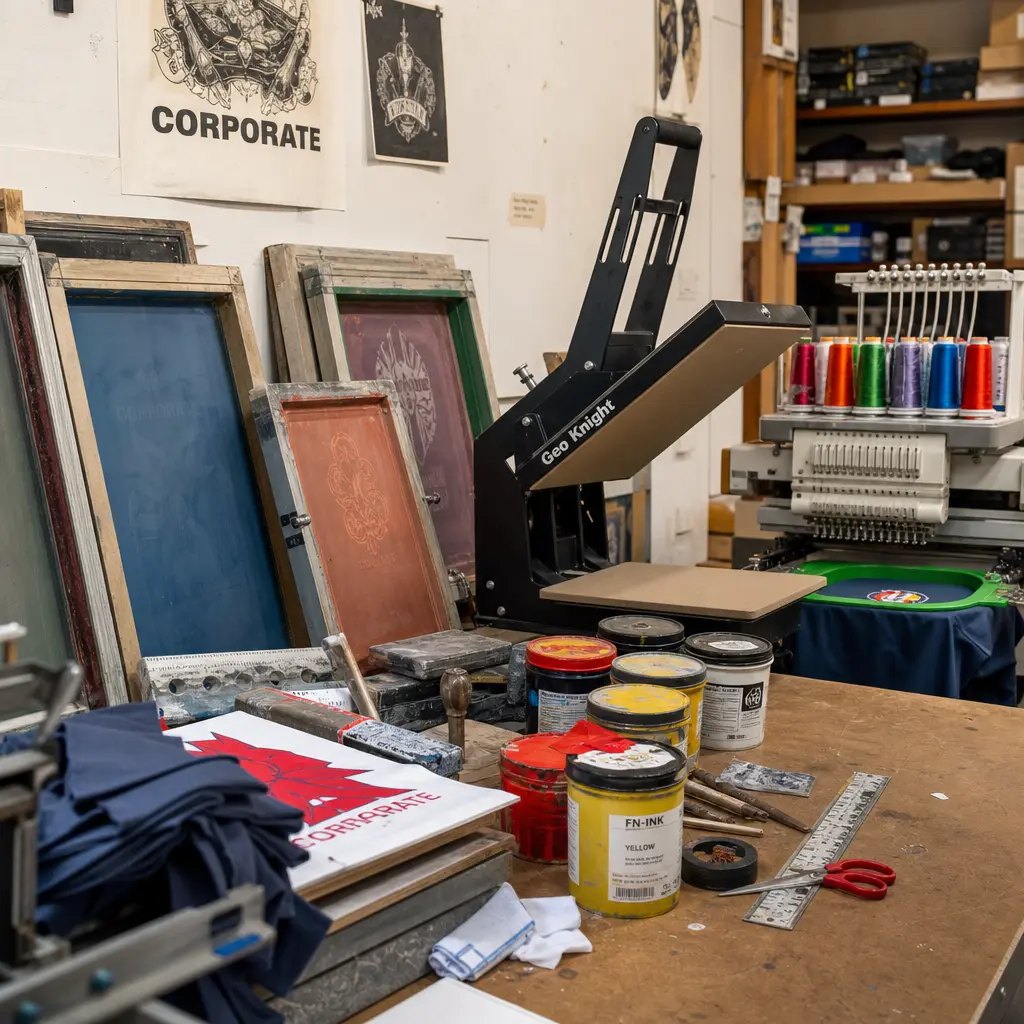
Screen printing is usually the most efficient branding method for canvas zipper portfolios when the logo is solid color or uses simple spot colors. It works well on natural, bleached, or dyed canvas, but the artwork should avoid zipper seams, thick folded edges, and high-friction corners. For skincare brands with very fine lines, small serif text, or gradient artwork, heat transfer may give a cleaner result, although buyers should test handfeel and wash or rub resistance.
Embroidery can look premium, but it adds thread texture and may pucker lighter canvas unless backing and stitch density are controlled. Woven labels are often a better choice when the portfolio needs quiet branding and long-term reuse. For distributor programs where the portfolio may serve several product launches, a small woven side label can be more flexible than a large seasonal printed campaign graphic.
- Screen print: best for simple logos, clear cost control, and bulk orders.
- Heat transfer: useful for gradients, small text, or color-rich skincare branding.
- Embroidery: premium but needs stitch testing to avoid puckering.
- Woven label: clean, durable, and suitable when the same portfolio may be reused.
- Debossed patch: possible on PU or leather patch, but it changes the material story and should be quoted separately.
MOQ And Cost
MOQ is not only one number. A supplier may accept 500 pieces for sewing, but the fabric mill may require a higher quantity for custom dyeing, the zipper supplier may have a minimum for special tape color, and the woven label factory may charge setup for small batches. When comparing canvas zipper portfolio quotes, separate the MOQ by material component so the buyer can see what is driving the minimum order.
The strongest cost drivers are canvas weight, lining complexity, zipper grade, pocket labor, print method, packing style, and inspection requirement. A heavier canvas may add material cost and freight cost. A more complex interior may add sewing minutes and raise defect risk. A premium zipper may cost more per unit but reduce after-delivery complaints. A serious landed-cost comparison should include carton cube and gross weight, not only unit FOB price.
- Ask suppliers to separate base bag cost, print cost, label cost, special packing cost, and sample charge.
- Compare MOQ for natural canvas versus custom dyed canvas before committing to brand-specific colors.
- Request CBM per 1,000 pieces to understand ocean freight impact.
- For small launch quantities, use stock fabric colors and standard zipper tape where possible.
- For annual programs, negotiate material reservation and repeat-order pricing after the first approved production.
Sampling Workflow
A useful sample process has at least two stages: a construction sample and a pre-production sample. The construction sample proves size, pocket layout, zipper movement, and material feel. It may use available fabric and approximate logo placement. The pre-production sample should use confirmed canvas, lining, zipper, print method, labels, and packing. Bulk production should not start from a rough prototype if the final materials have changed.
Sample approval should be written with measurable comments. Instead of saying make the canvas better or zipper smoother, note the exact change: upgrade from 10 oz to 12 oz canvas, increase zipper corner radius by 8 mm, move logo 15 mm lower, widen elastic loops to fit 22 mm diameter sample tubes, or change lining from black polyester to natural cotton. This reduces interpretation problems between sales, sampling room, purchasing, and sewing line.
- Test the sample with real or dummy skincare items at actual size and weight.
- Photograph the approved sample from front, back, inside panels, zipper ends, logo position, and packing.
- Keep one sealed approval sample at the factory and one with the buyer or inspection team.
- Record tolerances for body size, pocket size, print position, and zipper smoothness.
- Do not approve bulk production until the supplier confirms that sample materials match bulk sourcing.
Packing And Shipping
Canvas zipper portfolios should usually be packed flat. Folding or rolling can create creases across the logo, distort the zipper tape, or leave pressure marks from pullers. For light-colored skincare branding, individual packing helps prevent dirt transfer during inland handling and export loading. Recycled polybags, paper sleeves, or tissue wrap can be used depending on the brand policy, but the packing method must still protect the product from moisture and abrasion.
Carton planning matters because portfolios have a large flat footprint. A small change in finished size, padding, or puller thickness can change pieces per carton and total CBM. Importers should request packing photos and carton dimensions before shipment, especially when the portfolio is part of a wider launch kit with bottles, cartons, display cards, or retail packaging arriving from other vendors.
- Request flat packing direction and number of pieces per inner bundle.
- Use corner or edge protection when the portfolio has firm board, foam, or rigid inserts.
- Confirm export carton strength and maximum gross weight for warehouse handling.
- Require carton marks that match the purchase order, SKU, color, quantity, and destination.
- Ask for pre-shipment packing photos before final balance payment or cargo release.
Specification comparison for buyers
| Spec decision | Recommended option | When it fits | Buyer risk to check |
|---|---|---|---|
| Outer canvas weight | 12 oz cotton canvas, about 380-410 GSM, enzyme washed or pre-shrunk if a soft handfeel is required | Best balance for skincare PR kits, sales meeting folders, and retail training portfolios that need structure without becoming heavy | Light canvas below 10 oz can crease around zipper corners; heavy 16 oz canvas may increase freight and make the portfolio feel too rugged for premium skincare |
| Inner lining | 6-8 oz cotton sheeting or recycled polyester lining with reinforced document pocket seams | Use cotton lining for a natural brand story; use polyester lining when easy cleaning and color consistency matter more | Unlined portfolios show seam allowance and may shed cotton lint onto sample sachets, printed booklets, or white cosmetic cartons |
| Zipper type | No.5 nylon zipper for standard A4 portfolio, No.5 metal zipper only for premium styling with tested smoothness | Nylon is safer for bulk promotional orders; metal works for smaller premium runs where weight and scratching are controlled | Low-grade metal zippers can mark light canvas, scratch cosmetic compacts, and fail pull testing at the curved corners |
| Branding method | Screen print for solid logos, heat transfer for fine gradients, woven label for quiet retail-safe branding | Screen print is cost-effective for 1-3 spot colors; woven labels suit distributors who reuse the portfolio across seasons | Large ink coverage on natural canvas may crack on folded edges unless artwork avoids stress points and correct curing is verified |
| Structure and padding | Single layer canvas with reinforced edges, or light foam interlining for premium kits | Choose single layer for sales folders; add foam when the portfolio carries glass samples, testers, or metal tools | Too much padding can make cartons bulky and can hide uneven sewing unless thickness tolerance is set before sampling |
| Internal organization | Document sleeve, business card pocket, two elastic sample loops, and one zipped mesh pocket | Useful for skincare reps carrying catalogs, serum samples, spatulas, sachets, or small retail training items | Over-specified interiors raise labor cost and failure points; every pocket needs a clear size, stitch type, and load expectation |
| Color and finishing | Natural, off-white, black, or custom dyed canvas with colorfastness test requirement | Natural canvas fits clean beauty positioning; black hides handling marks for field sales and distributor use | Natural cotton has shade variation by lot; custom dye needs higher MOQ and may affect print color, shrinkage, and lead time |
| Packing method | Individual recycled polybag or glassine-style paper sleeve, then flat pack in export carton with edge protection | Flat packing protects shape and keeps carton cube predictable for importer landed-cost planning | Rolling or over-compressing can distort zipper tape, crease printed logos, and create customer complaints at retail handover |
Buyer checklist before sampling
- Define the actual use: PR mailer insert, retail staff kit, distributor meeting folder, sales representative organizer, or premium gift-with-purchase.
- Specify finished size using the largest document, carton, or sample bottle that must fit, not only A4 or letter size wording.
- Choose outer canvas weight in oz or GSM and state whether natural cotton slub, washed softness, or firm structure is preferred.
- State lining material, pocket layout, elastic loop size, and whether sample bottles must stand, lie flat, or be protected from scratching.
- Provide logo artwork with Pantone colors, print size, placement distance from edges, and acceptable print tolerance.
- Set zipper requirements: nylon or metal, zipper size, puller style, color, corner smoothness, and minimum pull test expectation.
- Request pre-production sample approval after final artwork and fabric are confirmed, not only a quick salesman sample.
- Ask for carton dimensions, pieces per carton, gross weight, net weight, and packing photos before shipment.
- Clarify whether the supplier quote includes inner packing, labels, barcode stickers, document inserts, and export carton marks.
- Build buffer time for fabric dyeing, logo proofing, zipper sourcing, sample revision, inspection, and vessel or air booking.
Factory quote questions to send
- What exact canvas weight will you quote in oz and GSM, and is it greige, bleached, dyed, washed, or pre-shrunk?
- What is the finished size tolerance for the portfolio, zipper opening, internal pockets, and elastic sample loops?
- Which zipper brand or grade is included, and can you provide zipper smoothness, slider locking, and pull strength expectations?
- What print method is included in the price, how many colors, what maximum print area, and what curing or colorfastness test is used?
- Does the unit price include lining, interlining, edge binding, woven labels, hangtags, inserts, barcodes, and individual packing?
- What MOQ applies to the fabric, zipper color, lining color, custom dyeing, woven labels, and printed packaging separately?
- How many days are needed for proto sample, artwork proof, pre-production sample, bulk production, inspection, and packing?
- Can you quote carton quantity, carton size, gross weight, and estimated CBM per 1,000 pieces for landed-cost comparison?
- What defects are counted as major for zipper portfolios, including skipped stitches, wavy zipper tape, print smearing, stains, and wrong pocket size?
- Can production be photographed at fabric cutting, printing, sewing, inline QC, and final packing stages for remote approval?
Quality-control points to confirm
- Finished size tolerance should normally be controlled within plus or minus 5 mm for body dimensions and plus or minus 3 mm for pocket openings unless a tighter spec is agreed.
- Zipper must open and close smoothly around corners for at least 10 full cycles during inspection, with no catching, slider separation, or tape distortion.
- Print position should be measured from fixed edges, not judged by eye; common tolerance is plus or minus 3 mm for small logos and plus or minus 5 mm for larger artwork.
- Fabric stains, oil marks, needle rust, loose threads longer than 5 mm, and visible dirt on light canvas should be treated as major defects for skincare presentation use.
- Seam strength should be tested on handles, zipper ends, elastic loops, document pockets, and any points that carry sample bottles or retail tools.
- Carton drop or compression risk should be reviewed when portfolios include rigid inserts, foam padding, or glass skincare samples packed separately by the buyer.