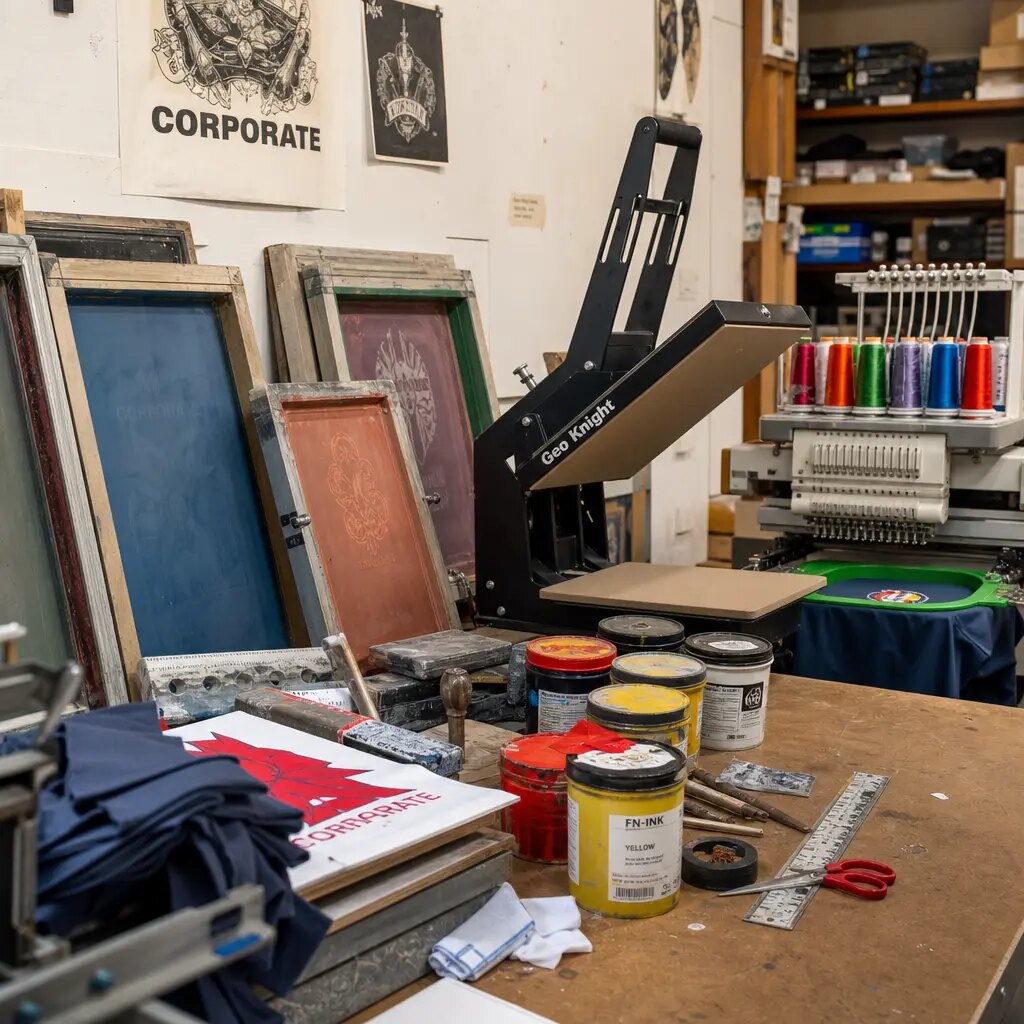
Why canvas zipper portfolio RFQs go wrong so easily
Canvas zipper portfolios look straightforward from a product photo. In procurement, they are not. A buyer may send a reference image, a logo, and one outside size, then receive quotes for items that share the same name but not the same construction. One factory may price 10 oz single-layer canvas, a basic #5 zipper, no lining, and bulk carton packing. Another may include 14 oz canvas, cotton lining, light interlining, bound edges, an inside zipper pocket, print strike-off, and individual barcoded packing. Both suppliers can honestly call the item a canvas zipper portfolio. The unit prices, however, are not comparable.
For eco apparel brands, the portfolio often carries more than paper. It may hold seasonal line sheets, fabric swatches, wholesale documents, sales meeting notes, staff onboarding materials, showroom kits, or retailer training packs. It is a brand-facing tool. It sits on meeting tables, travels with sales teams, and may be handed to distributors or retail buyers. If the canvas feels limp, the logo sits off center, the shade varies from front panel to back panel, or the zipper catches during a presentation, the portfolio weakens the impression it was meant to create.
A good RFQ does not need to control every sewing movement. It does need to lock the commercial variables that change price and quality: finished size, usable capacity, fabric weight, fiber claim, zipper grade, edge construction, interior organization, branding method, packaging, sample approvals, and final inspection criteria. Once those points are clear, suppliers can quote the same product instead of filling in blanks with their own assumptions.
- Most pricing gaps come from unspecified fabric GSM, lining structure, interlining, zipper gauge, edge finish, and pocket count.
- Most approval delays come from missing artwork dimensions, unclear insert size, undefined color reference, and no agreed tolerance for A4, tablet, or swatch fit.
- Most bulk defects show up as zipper corner distortion, print curing problems, shade mismatch, wrong pocket size, loose stitching, and over-compressed packing.
- The RFQ should explain what the portfolio must carry, how it should present the brand, which sustainability claims must be supported, how it will be packed, and how quality will be judged.
Start with the use case, not the material list
The fastest way to improve a canvas zipper portfolios RFQ template guide for eco apparel brands is to begin with the job the item must do. A slim A4 document holder is different from a swatch organizer, a distributor sample kit, a market appointment folder, or a staff onboarding portfolio. Presentation use calls for a flat front panel, clean rectangular shape, smooth zipper action, and quiet branding. Field use may need stronger corners, a gusset, reinforcement at stress points, and a zipper that still closes when the portfolio is loaded.
Procurement teams should list the actual insert set before asking for pricing. Give dimensions and approximate loaded thickness for A4 line sheets, folded catalogs, fabric cards, a 13 inch tablet, pens, notebooks, order forms, or small apparel accessories. If the portfolio needs to fit A4 documents, do not write only A4 fit. State the minimum usable internal clearance after seams and zipper tape. A practical A4 document portfolio may need at least about 225 x 315 mm usable space for loose papers, with more allowance if it must hold folders, catalogs, or thick swatch cards.
The opening format matters too. A full-zip envelope format is compact and efficient, but it may not display contents well. A book-style portfolio feels more like a presentation case, yet it needs tighter control of spine width, lining tension, pocket placement, and edge finish. A gusseted organizer adds capacity but puts extra strain on zipper corners and may require a #8 coil zipper rather than #5. Name the format in the RFQ so one supplier does not quote a flat sleeve while another quotes a structured organizer.
- Define the primary insert set: A4 papers, swatch cards, tablet, notebook, catalog, onboarding pack, distributor documents, or sales tools.
- List finished outer size and minimum usable internal width, height, and depth after sewing, not only the desired closed size.
- State whether the portfolio is for daily field use, occasional event use, wholesale market appointments, retail gift-with-purchase, or internal staff kits.
- Tell the supplier whether the portfolio must open flat, stand semi-structured on a table, or simply protect documents during transit.
- If the portfolio will be shipped loaded, provide loaded thickness and approximate weight, then request a closure test with equivalent contents.
Specify canvas weight, fiber claim, and structure in measurable terms
For many canvas zipper portfolios, 12 oz to 16 oz canvas, roughly 340 to 450 GSM finished weight, is a sensible starting range. Lighter fabric can work for a simple flat sleeve, especially if the price target is tight. But it may collapse at corners, wrinkle near the zipper, or feel too soft for a professional presentation item. Heavier canvas gives body and perceived durability, though it also adds sewing bulk. Above 16 oz, factories may need heavier needles, slower sewing speed, larger seam allowances, stronger binding, or pattern changes around zipper corners.
Avoid vague fabric language such as heavy canvas, natural canvas, recycled canvas, or eco canvas. Ask for GSM or oz, fiber composition, weave, color standard, and whether the weight is measured before or after finishing. Washed canvas, coated canvas, dyed canvas, laminated canvas, and printed canvas can behave differently from greige fabric. A 14 oz dyed canvas and a 14 oz washed canvas may not have the same hand feel, shrinkage, or panel stability. If the finished portfolio must feel structured, state whether the body comes from shell weight, lining, interlining, foam, board, or binding.
Sustainability claims need boundaries. If the brand requests organic cotton, recycled cotton, recycled polyester lining, undyed canvas, low-impact dye preference, or plastic-reduced packing, the RFQ should say which documents are required and which components are covered. A supplier may have documentation for the shell canvas only, while the lining, zipper tape, thread, labels, and packaging remain conventional. That may be acceptable for some programs. It should not be discovered after marketing copy, retailer submissions, or internal ESG language has already been written.
- Slim document portfolio: 12 oz canvas, clean seam finish or simple lining, #5 coil zipper, minimal internal pockets, and low-bulk corners.
- Structured presentation portfolio: 14-16 oz canvas, lining plus light interlining, stable edge finish, stronger zipper tape, and measured pocket layout.
- Swatch or kit portfolio: confirm gusset depth, reinforced pockets, #8 zipper, bartacks at stress points, and packing that prevents compression.
- For black or dark-dyed canvas, specify crocking expectations and ask how the supplier controls dye transfer onto light documents, garments, or lining.
- For recycled-content canvas, require a material declaration or transaction document and state whether percentage is by fiber weight, shell fabric only, or finished product.
Control zipper, edge finish, and stress points before sampling
The zipper is the first functional test most users perform. It is also one of the most common failure points. Nylon coil zippers are usually suitable for canvas portfolios because they move around corners more easily than metal zippers and are more forgiving during sewing. For a slim document holder, #5 coil is often enough. For a gusseted portfolio, heavy swatch folder, or loaded sales kit, #8 coil can offer better stability and a more substantial hand feel.
Do not let the zipper default to whatever is available on the sewing floor. The RFQ should identify zipper tape color, teeth color, slider type, puller shape, puller finish, opening direction, and end treatment. If the design uses a branded puller, clarify whether the supplier is quoting engraving on an existing puller, a custom molded puller, a rubber pull tab, or a detachable decorative pull. Each option affects tooling, MOQ, sample timing, and repeat-order management. If hardware finish matters, name it: matte black, nickel, antique brass, gunmetal, or another approved finish standard.
Edge construction changes the product more than many buyers expect. Bound edges can handle thicker canvas and create a rugged, durable look, but binding width and corner neatness must be controlled. Turned-and-topstitched edges can look cleaner on slim portfolios, yet they may be difficult with heavy canvas and interlining. Piping gives shape and definition, but it adds labor and makes size tolerance more sensitive. Ask which method is included in the price, then require bulk production to match the sealed sample.
- State zipper size, type, tape color, teeth color, slider finish, puller shape, opening direction, and whether the zipper is one-way or two-way.
- Require the zipper to close smoothly when loaded with the stated insert set, not only when the sample is empty.
- Define zipper corner expectations: no catching, no tape twist, no tooth spread, no loose zipper end, and no waviness beyond the approved sample.
- Identify edge finish: bound edge, turned edge, piping, overlock plus lining, or another factory-proposed method.
- If using custom pullers, request tooling cost, sample lead time, mold ownership terms, MOQ, finish tolerance, and whether tooling is charged again on repeats.
Make branding ready for production, not just presentation
Eco apparel brands often prefer subtle branding. That does not make the branding simple for production. A one-color water-based screen print can work well for bold logos on flat canvas panels and may align with a lower-plastic or lower-solvent brand direction. It still needs proper curing, color control, and rub resistance. A woven label gives a consistent small mark and lowers the risk of print cracking. Heat transfers can reproduce fine detail or multi-color artwork, but textured canvas may reduce adhesion unless the transfer is tested on the actual material.
Artwork should not wait until the sample stage. Print size, color count, logo placement, and distance from seams all influence price and production risk. A centered logo needs a placement tolerance. A large print on dark canvas may need an underbase, a different ink system, or additional drying control. Artwork that crosses a pocket, seam, fold line, or zipper area may distort after sewing. If portfolios are packed face to face, large prints also need blocking and transfer checks under pressure.
Include production-ready vector artwork and a simple placement diagram with the RFQ. If final art is not ready, mark the branding cost as provisional. This prevents a familiar procurement problem: one supplier quotes a basic screen print, while another includes screen cost, Pantone matching, a print strike-off, woven label setup, and rub checks. The lower number may not be a better quote. It may only be missing the work.
- Water-based screen print: good for simple logos and medium runs; request print strike-off, curing confirmation, and dry rub criteria.
- Woven label: useful for subtle branding, multi-color small marks, and programs with multiple shell colors.
- Heat transfer: suitable for fine detail, but test edge lifting, adhesion, gloss level, and appearance on textured canvas.
- Patch branding: premium appearance, but adds component sourcing, attachment labor, and material-claim questions if leather or synthetic trim is used.
- Custom zipper puller: strong brand detail, but ask for tooling, MOQ, finish standard, sample lead time, and repeat-order cost before approving.
Build MOQ and assortment around real setup costs
MOQ for canvas zipper portfolios is rarely one neat number. It depends on shell fabric source, color route, zipper and trim availability, branding method, lining color, packing format, and the number of SKU variations. A buyer may see 900 pieces split across three shell colors, three prints, and two label versions as one order. A factory sees fabric lots, zipper allocations, print screens, label setups, packing versions, and extra chances for mixed-SKU mistakes.
For smaller B2B programs, stock canvas colors are usually the cleanest route. Depending on the factory and construction complexity, stock colors may support quantities such as 300 to 500 pieces per color when trims are standard. Custom dyed canvas is useful when a brand must match a seasonal palette, but it adds lab dip approval, dye-lot minimums, shade control risk, and longer material booking. The same logic applies to custom zipper tape, custom lining colors, and custom hardware finishes.
Before requesting ten versions, decide which variation truly matters. In many programs, the most efficient structure is to standardize the shell color, zipper, lining, and construction, then vary a woven label, paper sleeve, insert card, or carton label by region. Marketing still gets controlled variation. Production avoids resetting the entire material package for small quantities.
- Ask for price breaks at realistic order bands such as 300, 500, 1,000, and 3,000 pieces, or the nearest efficient factory quantities.
- Separate MOQ by shell color, lining color, artwork version, label version, zipper tape color, hardware finish, and packing version.
- Use stock zipper tape and standard puller finish unless branded hardware has clear presentation value.
- Keep body construction common across the program when regional branding differs only slightly.
- If custom dye is required, ask for lab dip lead time, bulk shade tolerance, dye-lot MOQ, and how leftover fabric is handled.
Compare supplier quotes without comparing different products
Quote comparison becomes unreliable when suppliers make silent assumptions. One quote may include lining and interlining while another excludes both. One supplier may price a #8 zipper and bound edge; another may price a #5 zipper and turned edge. One may include individual polybags, barcodes, and carton labels; another may assume bulk packing. If the buyer compares only unit price, the lowest offer may simply be the least complete product.
A stronger RFQ requires suppliers to quote against the same specification and list exceptions. Buyers do not need a fully open-costed bill of materials, but they do need enough detail to understand why prices differ. The quote should identify shell fabric, lining, interlining, zipper, hardware, branding method, pocket count, edge finish, packing, sample charge, setup charges, documentation, inspection support, and trade term basis. If a supplier proposes a cost-saving alternative, it should appear as an alternate option, not as a quiet substitution.
Lead time also needs a clear starting point. A quote that says 30 days may mean 30 days after deposit, after artwork approval, after material approval, or after pre-production sample approval. Those are very different schedules. For procurement, the useful date is when the goods can realistically be inspected, packed, booked, and handed to the forwarder under the agreed trade term.
- Request a quote sheet with included items, excluded items, one-time charges, repeat-order charges, and optional upgrades.
- Separate unit price from sample charge, screen cost, label setup, custom puller tooling, document cost, packing cost, and inspection support.
- Compare trade terms consistently; do not compare EXW with FOB or FCA without adjusting local handling and export charges.
- Record whether lead time starts from deposit, artwork approval, material approval, or sealed pre-production sample approval.
- If one quote is much lower, ask what changed: fabric weight, lining, zipper grade, pocket count, branding method, packing, trade term, or QC standard.
Use samples to prove fit, function, and repeatability
Treat a canvas zipper portfolio sample like a functional fit sample, not a desk mockup. Load it with the real documents, swatch cards, tablet, notebook, or kit contents. The zipper should close without force. Corners should not bulge beyond the approved look. Internal pockets should hold the intended inserts securely without tearing, gaping, or making the product hard to close. A sample that looks good empty but fails when loaded is not ready for bulk production.
A practical sample route starts with digital artwork placement and material swatches. Then comes a development sample. After the buyer’s comments are resolved, request a pre-production sample in actual bulk materials: correct canvas, lining, zipper, puller, branding method, label, interlining, and packing. The approved pre-production sample should be sealed and retained by both buyer and factory. It becomes the physical standard for sewing, finishing, packing, and final inspection.
Sample comments should be measurable. Avoid vague feedback such as make it nicer or improve the shape. Instead, state that the logo must move 10 mm upward, the card slot must increase to 95 mm opening width, the zipper puller must change to matte black, or the front panel needs a specified interlining. If a comment adds materials or labor, revise the quote before bulk production starts. Many disputes begin when a buyer approves a higher-spec sample while the factory still works from the original lower-spec quotation.
- Test the sample with the real insert set and photograph loaded, unloaded, open, closed, and side-profile conditions.
- Open and close the zipper through both corners at least 10 times and note catching, waviness, slider resistance, or lining interference.
- Measure finished outer size, usable internal size, pocket depth, card slot width, pen loop opening, zipper pocket opening, and gusset depth.
- Photograph logo placement with a ruler or measured template and approve the placement tolerance.
- Record shell GSM, lining spec, interlining, zipper size, puller finish, label details, thread color, edge finish, and packing method on the approval form.
- Keep one sealed sample at buyer side and one sealed sample at factory side for final inspection reference.
Set QC thresholds that match the portfolio’s business role
Canvas zipper portfolios carry both visual and mechanical defect risks. A zipper that catches at the corner makes the whole item feel cheap. A front panel that is slightly twisted becomes obvious because the product is rectangular and often has a centered logo. Internal pocket defects may hide during a quick surface check, then show up when a user tries to insert line sheets, business cards, pens, or a tablet.
Write QC instructions before production, not after goods are finished. Define finished size tolerance, print position tolerance, shade standard, zipper operation, stitch quality, pocket dimensions, hardware finish, and packing appearance. For many structured portfolios, plus or minus 5 mm for finished width and height is a practical starting point. Small logo placement may need plus or minus 3 mm. If the style uses thick padding, piping, or heavy binding, agree on wider tolerances before sealing the sample.
Inspection should include packed and unpacked checks. Goods may leave the sewing line correctly but become creased, crushed, or distorted when cartons are overfilled. Open random cartons from different layers and check zipper impressions, print transfer, fold marks, crushed corners, and moisture odor. This is especially important when the portfolio includes foam, board, heavy zipper tape, dark canvas, or a large front print.
- Measure finished dimensions on a flat table after the product relaxes from packing.
- Check zipper top stop, bottom stop, slider action, puller finish, corner sewing, and loaded closure.
- Verify internal pocket openings using the intended inserts, not only visual inspection.
- Reject visible oil marks, severe loose threads, skipped stitches, needle cuts, logo skew beyond tolerance, and mixed hardware finishes.
- Check fabric shade under a consistent light source across front panel, back panel, gusset, binding, and pocket parts.
- Open random cartons from top, middle, and bottom layers to detect pressure marks, zipper waves, print blocking, fold marks, or crushed corners.
Treat packing as a product decision, not an afterthought
A canvas zipper portfolio is flat, but it can still be damaged in packing. Tight cartons can press zipper tracks into panels, distort corners, transfer print onto light fabric, or create fold marks that do not relax. If the portfolio includes foam, board, or thick internal pockets, the packing plan must protect the shape rather than simply minimize carton count.
Eco apparel brands often want less plastic. Many B2B programs can avoid individual polybags if the distribution channel allows it. Alternatives include paper bands, kraft sleeves, tissue separation, or bulk packing in master cartons. Some retailer programs still require polybags, suffocation warnings, barcodes, dust protection, or individual sellable packaging. The RFQ should say whether individual polybagging is required, optional, channel-specific, or prohibited.
Carton planning should include quantity per carton, orientation, maximum carton weight, maximum carton size, SKU separation, and carton marks. Mixed-color cartons can reduce warehouse handling in some cases, but they increase pick-error risk when colors are similar. For dark canvas with light prints, or light canvas with dark prints, use separators or approved facing direction to reduce transfer risk during transit.
- State whether individual polybag is required, prohibited, or allowed only for specific retailer channels.
- If polybags are used, define adhesive flap, suffocation warning if required by market, barcode placement, and recycling mark expectations.
- If plastic-reduced packing is preferred, specify paper band, tissue wrap, kraft sleeve, or bulk carton method.
- Set maximum carton weight and dimensions suitable for warehouse handling and retailer requirements.
- Require a no-over-compression packing rule when the portfolio includes foam, board, large print areas, or thick zipper construction.
- Confirm carton marks, SKU labels, quantity per carton, color separation, and whether mixed cartons are allowed.
Specification comparison for buyers
| Spec decision | Recommended option | When it fits | Buyer risk to check |
|---|---|---|---|
| Finished size and capacity | State closed size, open size, gusset depth if any, and minimum usable internal size; common A4 document fit needs at least 225 x 315 mm usable internal clearance before extra contents | Sales kits, wholesale line-sheet folders, onboarding packs, swatch document folders, light tablet sleeves, or retailer training packs | Outer dimensions alone are not enough; seam allowance, zipper tape, binding, padding, and pocket placement can reduce usable space by 10-20 mm |
| Fabric weight | 12 oz to 16 oz canvas, approximately 340-450 GSM finished weight; confirm whether weight is finished, dyed, washed, coated, laminated, or printed fabric | Structured portfolios carrying A4 documents, swatches, notebooks, catalogs, or light tablets | Below 10 oz can collapse at corners and show zipper waviness; above 16 oz can increase needle breakage, corner bulk, seam allowance issues, and sewing minutes |
| Fiber and eco claim | Conventional cotton canvas, organic cotton canvas, recycled-content canvas, or blended canvas with declared composition and documentation scope | Eco apparel brands balancing sustainability messaging, price, documentation, and repeat-order consistency | Do not accept broad claims such as eco canvas without documents; state whether claim covers shell only or also lining, zipper tape, thread, labels, and packing |
| Color route | Stock canvas colors for lower MOQ; custom dye only with lab dip approval, bulk shade standard, and dye-lot minimum confirmed | Stock colors support faster sampling and smaller runs; custom dye suits brand color standards or seasonal palettes | Mixed stock lots can create panel shade variation; custom dye can add 10-20 days for lab dip and approval plus fabric MOQ |
| Closure construction | Nylon coil zipper, #5 for slim flat portfolios and #8 for gusseted or heavily loaded versions; specify one-way or two-way opening | Most stable for repeated opening and easier to sew around corners than metal zipper on canvas | Low-grade zipper fails at corner turns; require zipper type, gauge, tape color, teeth color, slider finish, puller design, end treatment, and cycle test expectation |
| Interior structure | Document sleeve, zipper pocket, pen loop, card slot, tablet sleeve, or divider listed separately with dimensions and material | Distributor kits, sales presentation folders, staff onboarding packs, wholesale line-sheet organizers, and sample meeting tools | Unmeasured pockets often fail to fit inserts; every added pocket increases sewing operations, tolerance risk, and inspection points |
| Branding method | Water-based screen print for bold one-color art; woven label for subtle branding; heat transfer only after adhesion testing on textured canvas | Matches eco apparel positioning while keeping cost controlled on medium runs | Large dark-panel prints may crock or block if curing is weak; require artwork size, placement tolerance, color standard, strike-off, and rub test criteria |
| Edge and body finish | Bound edge, turned-and-topstitched edge, or piping; define lining, interlining, foam, or board support where needed | Bound edges suit thicker canvas; turned edges look cleaner on slim styles; interlining improves shape | Unspecified edge finish changes cost and appearance significantly; corner bulk can distort zipper sewing and finished size |
| MOQ route | Stock fabric programs may be practical from 300-500 pcs per color if trims are standard; custom dyed canvas or custom hardware often pushes MOQ toward 1,000 pcs or more | Lets smaller B2B programs launch without inefficient dye lots or trim development | Splitting quantity by color, print, label, zipper tape, and packing version creates hidden setup charges and mixed-carton risk |
Buyer checklist before sampling
- State finished size closed and open, gusset depth if any, and tolerance in mm. Include minimum usable internal size after sewing if the portfolio must fit A4 folders, 13 inch tablets, notebooks, swatch cards, catalogs, or printed line sheets.
- Specify shell fabric by GSM or oz, fiber composition, weave, hand feel if relevant, color reference, and whether the weight is greige, finished, dyed, washed, coated, laminated, or printed fabric weight.
- Define sustainability requirements precisely: organic cotton, recycled cotton, recycled polyester lining, undyed canvas, low-impact dye preference, reduced-plastic packing, or documentation requirements. State whether claims apply to shell fabric only or to all textile and packaging components.
- Define zipper type, gauge, tape color, teeth color, slider direction, puller shape, puller finish, zipper end treatment, and whether logo engraving, custom puller tooling, or standard puller selection is required.
- List every internal feature with dimensions: document sleeve depth, card slot width, pen loop material and opening, tablet pocket padding, zipper pocket opening, elastic retainers, divider height, lining material, and reinforcement patches.
- Attach production-ready logo files with print size, method preference, Pantone, TCX, LAB, or other color reference, artwork placement measured from seams or panel edges, and acceptable placement and color tolerances.
- Indicate construction details such as edge binding width, piping, foam thickness, lining material, seam allowance expectation, bartack or reinforcement at zipper ends, corner stress points, and handle or strap reinforcement if included.
- Clarify MOQ by shell color, artwork version, lining color, label version, zipper tape color, hardware finish, and packing SKU so factories quote setup costs accurately instead of hiding assumptions in one blended price.
- Include packaging format: individual polybag or no polybag, paper band option, tissue separator, silica gel requirement, barcode label position, master carton quantity, carton size limit, carton weight limit, carton marking, and mixed-carton rules.
- Request sample sequence and approval gates: digital layout, material swatch, print or label strike-off, development sample, revised sample if required, pre-production sample in actual materials, and sealed sample retained by both buyer and factory.
Factory quote questions to send
- What shell canvas GSM or oz are you quoting, and is this the finished fabric weight after dyeing, washing, coating, lamination, printing, or other finishing?
- What is the fiber composition of the shell, lining, binding, zipper tape, and thread? If any recycled or organic content is quoted, what percentage and documentation can you provide?
- Is the quoted canvas a stock color or custom dyed? If stock, how do you control shade variation across panels and lots? If custom dyed, what are the lab dip lead time, approval steps, dye-lot MOQ, and bulk shade tolerance?
- What zipper specification is included: nylon coil or metal, gauge number, tape color, teeth color, slider type, puller finish, zipper source, one-way or two-way opening, and end treatment?
- Does the portfolio close smoothly when loaded with the buyer’s stated insert set and thickness? If not, what gusset, zipper gauge, or pattern change do you recommend?
- How many sewing operations are assumed in your price, including lining, internal pockets, binding, reinforcement patches, label attachment, zipper pocket, bartacks, edge finishing, and final trimming?
- Does your quote include lining, foam, interlining, board support, backing fabric, or only single-layer canvas construction? Please identify material, thickness, and placement for each structural layer.
- What branding method is priced, and does it include Pantone matching, screen or plate cost, print strike-off, curing control, heat-transfer adhesion test, label setup, and rub or crocking verification on the selected canvas color?
- What is the MOQ per shell color, artwork version, lining color, label version, zipper tape color, hardware finish, and packaging version? What changes if we standardize shell color but vary labels or paper sleeves?
- What are the price breaks at 300, 500, 1,000, and 3,000 pieces, or the nearest production-efficient quantities for your factory?
Quality-control points to confirm
- Finished size tolerance should be defined before production. For structured portfolios, a common starting point is plus or minus 5 mm for width and height, and plus or minus 3 mm for pocket openings, unless heavy padding, piping, or thick binding requires a wider approved tolerance.
- Usable internal dimensions must be checked with the intended inserts named in the RFQ, not only measured as an empty product. A4 folders, tablets, catalogs, and swatch cards should slide in without stressing the zipper or deforming corners.
- Zipper must run smoothly through straight sections and both corner turns without catching lining, twisting tape, tooth spread, slider resistance, or seam interference. At inspection, open and close selected units at least 10 cycles each, and include loaded closure checks where the use case requires it.
- Zipper end points, top stops, bottom stops, and corner stitching should be clean and reinforced enough to prevent early failure during loaded use. Require no loose zipper tape ends, open seams, skipped stitches at corners, or sharp puller edges.
- Front panel print position should meet a stated tolerance, often plus or minus 3 mm for centered small logos and plus or minus 5 mm for larger artwork, unless a different tolerance is approved on the sealed sample.
- Print surface should be checked for curing, dry rub resistance, wet rub risk where relevant, cracking on folded or flexed areas, color consistency, pinholes, ink buildup, and blocking when packed face to face.
- Fabric shade must be consistent within the same PO color group. Compare front panel, back panel, gusset, binding, handle, trim, and pocket pieces under the same light source, and do not mix obvious shade lots within one visible panel set.
- Stitch density and seam appearance should be even. Define expected stitches per inch if needed, for example 7-9 SPI for heavier canvas seams, and reject loose threads, needle cuts, skipped stitches, oil stains, thread nests, and open seams.
- Internal pocket dimensions should match the specification sheet, including pocket depth, opening width, card slot width, pen loop size, tablet sleeve fit, zipper pocket opening, elastic tension, and divider height.
- Metal pullers, rivets, snaps, zipper sliders, or logo plates should be free of sharp edges, oxidation, plating scratches, burrs, and finish mismatch within the same carton.