The print proofing problem bookstores cannot fix after delivery
Canvas zipper portfolios look simple in a quote sheet, but the problems that create chargebacks or unsellable stock usually begin at proofing. University bookstores often work with licensed marks, department names, alumni logos, and event artwork that must look correct on shelf. Once 1,000 portfolios arrive with the logo 12 mm too low, the navy ink too purple, or the zipper puller scratching the printed front panel, the product is difficult to repair. A reprint on finished canvas goods is usually not practical because the portfolio is already sewn, structured, and packed.
The safest buying approach is to treat the proof as a production control document, not a sales mockup. A screen image can show layout, but it cannot show canvas absorption, ink opacity, seam pull, zipper height, or how the portfolio sits after packing. For university bookstore orders, the approved proof should lock fabric, color, placement, print method, trim color, zipper function, and retail packing before bulk cutting starts.
- A digital mockup is useful for layout discussion but should not be the final color approval.
- A fabric proof should be printed on the same canvas weight and color planned for production.
- A finished pre-production sample is preferred when the logo sits near a zipper, edge seam, or pocket.
- One retained approved sample gives both buyer and factory a common reference during inspection.
Start with the finished portfolio structure before discussing artwork
The print result depends heavily on the structure under the canvas. A soft single-layer canvas portfolio may be cheaper, but it can wrinkle and distort a large university logo. A portfolio with light foam or board reinforcement gives a flatter print face and better shelf presentation, but it increases sewing difficulty, carton volume, and sometimes the risk of corner bulk. Buyers should decide whether the item is a low-cost orientation giveaway, a retail bookstore product, or a premium alumni gift before selecting the construction.
For typical document portfolios, finished sizes are often built around A4, letter-size paper, tablet sleeves, or certificate folders. Do not quote only as 'fits A4' or 'fits documents.' Provide the finished outside size, inside usable pocket size, zipper opening width, and whether the product must hold a notebook, pens, cards, receipts, or a tablet. A portfolio that technically fits paper but has a narrow zipper opening may frustrate students and create returns.
- Soft canvas body: lower cost, lower weight, easier folding, but less premium and more print waviness.
- Canvas with foam: better hand feel and flatter logo surface, with moderate increase in cost and CBM.
- Canvas with board reinforcement: strong shelf shape, but heavier, stiffer, and more sensitive to bent cartons.
- Lined interior: cleaner retail finish, but adds material cost and another QC area for stains and loose threads.
Canvas weight, GSM, and color influence print more than many RFQs admit
For canvas zipper portfolios, common cotton canvas weights may range from 10 oz to 18 oz, roughly from 340 GSM to above 600 GSM depending on weave and finishing. Many bookstore programs settle around 12 oz to 16 oz because the material is strong enough for daily handling but not so heavy that seams become bulky. If the quote only says 'canvas,' suppliers may compare different fabrics and the cheapest offer may be based on a lighter cloth that cannot hold the intended structure.
Natural cotton canvas is popular because it matches campus sustainability messaging and has a warm retail look. However, it contains slubs, seed flecks, and shade variation that can affect logo visibility. White ink on natural canvas can look soft unless printed with sufficient opacity. Dark university colors can shift because the base fabric is not pure white. If the school brand guideline is strict, printed approval on real canvas is more important than a Pantone number alone.
- Specify fabric as 12 oz, 14 oz, or 16 oz cotton canvas and include approximate GSM where possible.
- State whether natural cotton flecks are acceptable outside and inside the logo area.
- For dyed canvas, request lab dip approval and note that custom dyeing may raise MOQ and lead time.
- For very light logos on natural canvas, require an opacity proof before confirming bulk production.
- For dark canvas, discuss underbase printing, transfer options, or a woven label if screen print cannot achieve clean contrast.
Choose the print method based on the logo, not supplier habit
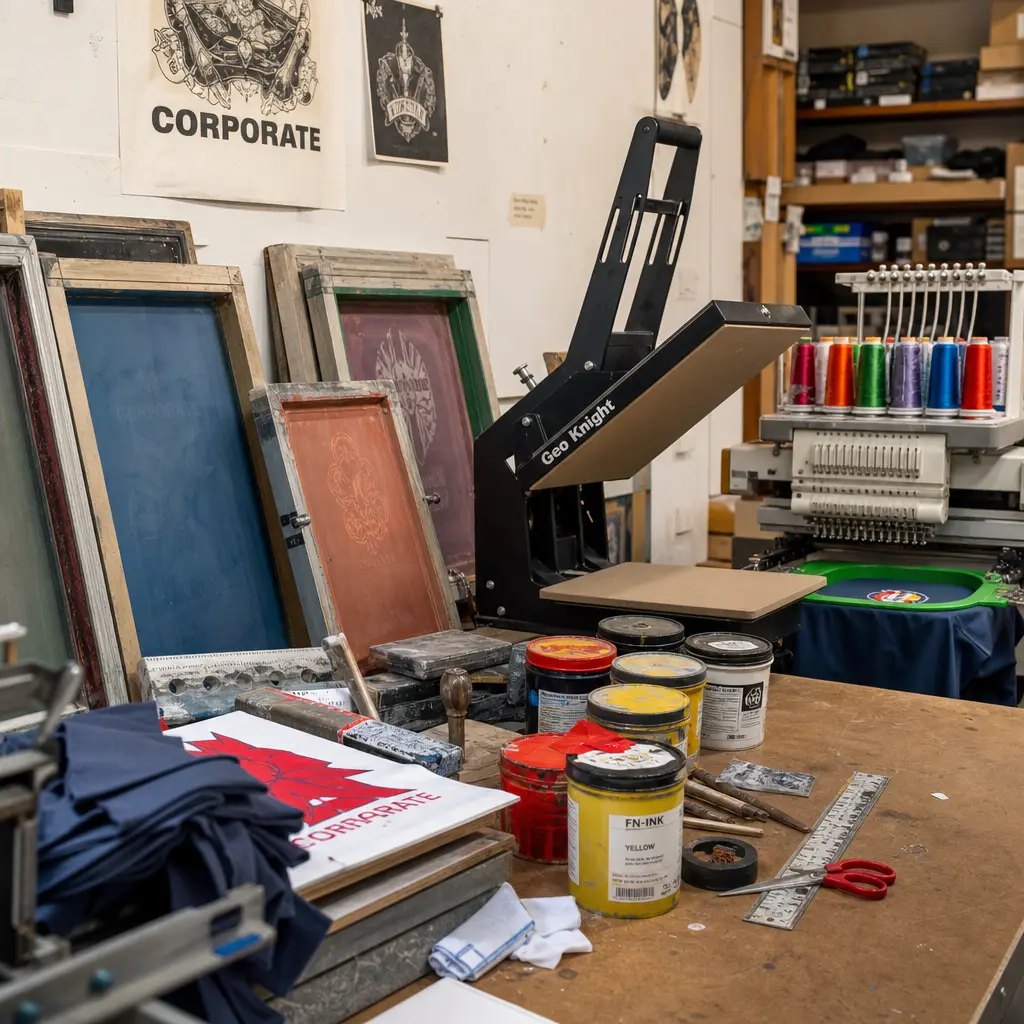
Screen printing is usually the most practical method for canvas zipper portfolios when the design uses one to three solid university colors. It gives good cost control, strong coverage, and predictable repeatability. It also allows clear placement control if the print is applied before sewing or on a flat panel. The limitation is that fine gradients, photographic mascot artwork, tiny license text, and multiple color layers can create registration or detail problems on textured canvas.
Heat transfer can reproduce more detail, but the surface feel may be less natural and the edge of the transfer film can be visible. Embroidery gives a premium result for small marks, but a large embroidered crest can pucker canvas and add cost. Woven labels or sewn patches are useful when artwork is detailed or when Pantone accuracy is difficult on a natural fabric base. The proofing checklist should force a method decision before the final price is accepted, because changing from screen print to transfer or embroidery can change MOQ, sampling time, and unit cost.
- Use screen print for bold bookstore logos, simple mascots, department names, and orientation year marks.
- Use heat transfer for gradients, complex illustrations, or small multi-color detail that screen print cannot hold.
- Use embroidery for small premium logos where texture is desired and placement is away from heavy fold lines.
- Use woven label or patch when the logo requires fine detail, repeat reorder consistency, or a controlled brand badge.
- Avoid placing thick ink directly over fold zones, seam bulk, or areas that will rub against zipper pullers in packing.
Placement proofing must include seams, zipper path, and usable print area
A common portfolio proofing mistake is approving a centered logo on a flat rectangle without showing the zipper tape, seam allowance, rounded corners, gusset, or fold line. On the finished product, the visual center may not match the mathematical center of the cut panel. Zipper portfolios also have a front face that may be interrupted by edge stitching, inner layers, and padding. If the logo is too close to the zipper, ink can crack at sewing pressure points or appear tilted after assembly.
Use millimeter-based placement dimensions rather than phrases like 'lower right' or 'center front.' A good proof marks distance from the left seam, bottom seam, zipper edge, and nearest stitch line. For licensed university marks, the bookstore may also need approval from the campus licensing office or brand department. Build this approval step into the sample timeline instead of treating it as an afterthought.
- Define print width and height in millimeters, plus acceptable tolerance.
- Show the logo on a finished product drawing with zipper, seam, pocket, and stitch positions.
- Keep important artwork away from edge seams by a practical safety margin, often 20-30 mm depending on construction.
- For two-sided printing, identify front and back clearly to avoid reversed artwork or wrong panel orientation.
- If printing before sewing, confirm that cutting and stitching will not shift the visible logo beyond tolerance.
Build a useful pre-production sample approval standard
A pre-production sample is not just a beauty sample for the merchandising team. It should represent the bulk materials and production process closely enough that it can be used as the reference for inspection. For a canvas zipper portfolio, the sample should show the actual canvas weight, zipper type, lining or reinforcement, print method, logo size, thread color, puller style, and packing method if retail presentation matters. If a substitute material is used at sample stage, mark it clearly and require a corrected sample or swatch before bulk production.
Sampling should be evaluated with a checklist and photos, not only with verbal approval. Measure the product, operate the zipper repeatedly, place documents inside, test whether the portfolio lies flat enough for shelf display, and compare the printed color under consistent lighting. If the sample is for a licensed university brand, keep a signed proof record or approval email that names the artwork version. This avoids arguments later when a campus department sends a different logo file after bulk production has already started.
- Measure finished outside size, inner pocket size, zipper opening, and print placement.
- Operate the zipper at least 10-20 times on the sample to feel catching, tight turns, or weak stops.
- Rub the print lightly after full curing; look for ink dusting, tackiness, or color transfer.
- Place sample under normal retail lighting and daylight-equivalent light to judge color shift.
- Compare fabric shade and texture against approved swatch, especially for natural or dyed canvas.
- Keep the approved sample in a protective sleeve and use it as the gold sample during production inspection.
Understand MOQ and cost drivers before comparing supplier quotes
Canvas zipper portfolios combine fabric, sewing, zipper hardware, reinforcement, and print setup. MOQ is not only a factory preference; it is connected to fabric availability, cutting efficiency, trim sourcing, print screens, and production line setup. A simple stock natural canvas portfolio with one-color screen print may be feasible at 300-500 pieces. A custom dyed body, special zipper tape color, branded puller, full lining, and multi-color print may push the practical MOQ closer to 800-1,000 pieces or more.
When comparing quotes, do not look only at the unit price. A lower price may exclude sample charges, retail labels, inner packing, carton reinforcement, inspection support, or more expensive print curing. It may also use a lighter canvas, shorter zipper, or no reinforcement board. Ask the factory to separate major cost drivers where possible. Even if the supplier will not disclose every internal cost, the quote should still identify the exact specification behind the price.
- Fabric cost changes with canvas weight, dyeing, washing, and whether the material is stock.
- Print cost changes with number of colors, print size, screens, curing time, and reject allowance.
- Zipper cost changes with size, tape color, puller material, slider quality, and branded hardware.
- Structure cost changes with foam, board, lining, pockets, pen loops, and binding details.
- Packing cost changes with individual bags, barcode labels, hangtags, paper inserts, carton strength, and pallet rules.
- Landed cost changes with carton volume; a reinforced portfolio may look inexpensive per piece but ship inefficiently.
Set QC thresholds for print, sewing, zipper, and stains before bulk shipment
Quality control needs written acceptance criteria. If the purchase order only says 'good quality,' the factory inspector and buyer may judge defects differently. For university bookstore retail, the front logo area is the most sensitive zone. Small natural flecks in cotton may be acceptable outside the print, but a dark oil mark through a school crest should not pass. A tiny thread end inside the pocket may be trimmed, but skipped stitches on a corner or broken zipper stop are functional defects.
Use defect classification that matches how the product will be sold. Critical defects include wrong logo, wrong school color, unsafe sharp metal parts, mold, or zipper failure that prevents use. Major defects include visible print smears, severe placement shift, open seams, broken stitching, heavy stains, incorrect size, or wrong packing label. Minor defects may include slight thread ends, small hidden fabric slubs, or tiny shade variation within agreed limits. The final inspection should review print, measurements, zipper function, stitching, cleanliness, packing, and carton marks.
- Print placement tolerance: define before production, commonly +/-3 mm to +/-5 mm for many flat panels.
- Dimension tolerance: use a realistic finished-goods tolerance, often around +/-5 mm unless structure requires more.
- Zipper test: every inspected unit should open and close fully without catching, splitting, or losing the puller.
- Stitching: no skipped stitches on stress points, no open seam, no exposed reinforcement, and no needle damage near the logo.
- Cleanliness: no oil stains, mildew smell, dirt marks, heavy creases, or adhesive residue on sellable faces.
- Packing accuracy: correct SKU, artwork version, barcode, carton quantity, and mixed-color assortment if applicable.
Packing and carton design can protect or damage the printed portfolio
Many print defects discovered at destination are actually packing defects. A metal puller can press into the printed panel during transit and leave a shiny mark. Wet cartons can stain natural canvas. Over-compressed cartons can bend board-reinforced portfolios and create permanent waves. If the product will be sold in a campus bookstore, the packing should preserve flatness and cleanliness, not only minimize freight cost.
Flat packing with a light paper insert or board support can improve shelf appearance. Individual polybags keep canvas clean, but buyers should consider local packaging rules and bookstore preferences. If the order is for event distribution, simple bulk packing may be enough. If it is for retail sale, barcode labels, hangtags, size labels, and carton SKU markings need to be included in the RFQ. Carton quantity should balance freight efficiency with safe compression.
- Place zipper pullers so they do not press directly into the printed logo.
- Use tissue, paper insert, or protective layer when print faces contact hardware or rough seams.
- Avoid forcing too many reinforced portfolios into one carton; compression can warp panels.
- Include silica gel only when appropriate and compliant with the buyer's market requirements.
- Mark cartons with SKU, artwork version, quantity, gross weight, net weight, and carton dimensions.
- Request packing photos before shipment for retail orders with strict presentation needs.
Lead time risk usually comes from approvals, not only sewing capacity
A realistic schedule for custom canvas zipper portfolios should include artwork cleanup, fabric sourcing, print proofing, sample approval, material purchasing, cutting, printing, sewing, inline checking, final inspection, packing, and export handling. Buyers often focus on the bulk production time but forget that university logo approvals can take several days or weeks. If the bookstore must launch before orientation or graduation, the artwork approval date is just as important as the ship date.
For many programs, a practical timeline is 7-14 days for a proof sample after final artwork and available materials, then 25-45 days for bulk production after written approval. Larger quantities, custom dyed fabric, multi-color print, special pullers, or complex interiors can extend this. Sea freight, customs clearance, warehouse receiving, and bookstore allocation must be added separately. A schedule that looks safe on an FOB date may still miss retail launch if landed logistics are ignored.
- Freeze artwork version before sample production; late logo changes can invalidate the proof.
- Reserve time for licensed mark approval if the university or bookstore requires it.
- Confirm whether fabric is in stock before promising a campus event delivery date.
- Do not start bulk cutting until the print proof and construction sample are approved in writing.
- Book final inspection before the last packing day, not after cartons are already sealed and rushed to the forwarder.
- For seasonal bookstore launches, build a buffer for reproofing if Pantone or placement is rejected.
Specification comparison for buyers
| Spec decision | Recommended option | When it fits | Buyer risk to check |
|---|---|---|---|
| Canvas fabric weight | 12 oz to 16 oz cotton canvas, roughly 380-540 GSM depending on finishing | Most university bookstore portfolios needing a structured but still sewable body | Very light canvas may wrinkle around the print; very heavy canvas can raise sewing cost and make corners bulky |
| Print method for school logo | Screen print for 1-3 solid colors; heat transfer only for detailed gradients; embroidery only for small premium runs | Screen print works best for bookstore logos, mascot marks, department names, and orientation merchandise | Pantone mismatch on natural canvas, ink cracking at fold areas, and poor registration on zipper-side panels |
| Portfolio structure | Flat zipper portfolio with padded or reinforced front/back panels and internal document sleeve | Bookstore retail, alumni gifts, student organization merchandise, conference packs | Unreinforced panels can collapse on shelf display and make the printed logo look wavy |
| Zipper specification | No. 5 nylon coil zipper with smooth puller; metal puller acceptable if packed to prevent abrasion | Daily student use, bookstore retail handling, and bulk campus event distribution | Cheap zipper tape, rough slider movement, weak end stops, or puller scratching the printed face during shipping |
| MOQ logic | 300-500 pcs for simple canvas and one-color print; 800-1,000 pcs when custom dyed fabric, lining, or molded pullers are required | Bookstores testing one design can start lower if fabric and trims are stock | Low MOQ with too many custom details often hides higher unit cost, longer sampling, or trim substitutions |
| Artwork proofing | Vector artwork with Pantone references, print size in mm, placement from seams, and approval on real fabric | Any order using licensed university marks, bookstore branding, or department logos | Approving only a digital mockup misses fabric absorption, seam distortion, and logo placement tolerance |
| Packing format | Individual polybag with silica gel if required, flat packed with paper insert or light board support | Retail shelf, warehouse distribution, and campus event kitting | Over-tight cartons can bend portfolios; unprotected metal pullers can mark neighboring units |
| Inspection level | AQL inspection with critical checks on print, zipper function, dimensions, stains, and needle damage | Importers and distributors consolidating several campus SKUs | If print defects are not defined with acceptance limits, factory and buyer may disagree after mass production |
| Lead time planning | Sample proof 7-14 days after artwork; bulk production commonly 25-45 days after approval depending on quantity and print complexity | Seasonal bookstore deliveries before orientation, graduation, homecoming, or move-in week | Late artwork approval, lab dip delay, or reproofing after Pantone rejection can consume the whole schedule buffer |
Buyer checklist before sampling
- Define the portfolio size in finished dimensions, not only paper size; include tolerance such as +/-5 mm for length and width.
- Specify canvas weight by oz and approximate GSM, and state whether the fabric is natural, bleached, dyed, or washed.
- Mark the exact print area in millimeters from the zipper, side seam, bottom edge, and any fold line.
- Provide vector artwork and Pantone references; do not rely on JPEG artwork pulled from a website or campus store page.
- Decide whether the proof must be printed on actual production canvas instead of paper or a digital mockup.
- List required zipper type, color, puller style, and minimum smoothness expectation before quoting.
- State whether the portfolio needs reinforcement board, foam padding, lining, internal pocket, pen loop, card slot, or document sleeve.
- Set an approval rule for logo color, registration, ink coverage, and acceptable minor fabric slub visibility.
- Confirm whether licensed university marks require pre-production approval photos or physical samples before mass production.
- Define packing for retail sale versus event giveaway, including barcode label, hangtag, carton quantity, and carton drop concerns.
Factory quote questions to send
- What canvas weight and GSM will you quote, and is it stock fabric or woven/dyed to order?
- Can you print the approved logo on the actual production canvas before bulk production, and how many proof rounds are included?
- Which print method do you recommend for the artwork: screen print, heat transfer, digital print, embroidery, or woven label, and why?
- What is the maximum print size you can hold cleanly on the selected panel without distortion near the zipper or seam?
- What zipper size, tape material, puller material, and color options are included in the base quote?
- Will the portfolio include reinforcement board, foam, lining, or only canvas layers, and how does each option change cost and carton size?
- What is the MOQ for the exact specification, and which custom parts drive a higher MOQ?
- What are the sample lead time, bulk lead time, and latest artwork approval date needed to meet our delivery window?
- How will you pack the portfolios to avoid bending, zipper scratching, print offset, and moisture marks during transit?
- What inspection standard will be used for print defects, zipper failure, stains, loose threads, dimensions, and packing accuracy?
Quality-control points to confirm
- Logo placement should match approved proof within agreed tolerance, commonly +/-3 mm to +/-5 mm depending on panel structure.
- Pantone color should be judged on the same canvas base under consistent light, not against a paper printout.
- Screen print edges should be clean without pinholes, heavy ink ridges, smearing, or visible off-registration between colors.
- Ink should pass a reasonable dry rub check and should not transfer to packing paper or adjacent portfolios after normal curing.
- Zipper should open and close smoothly across the full track without catching at corners or end stops.
- Finished size should be measured flat after packing relaxation, not while compressed in the export carton.
- Corners should be even, with no skipped stitches, loose backstitching, needle holes outside the seam, or exposed reinforcement board.
- Canvas should be free from major stains, oil marks, dark specks in prominent logo areas, and heavy shade variation across the same order.
- Inner pockets, pen loops, and document sleeves should match approved sample dimensions and not block zipper movement.
- Carton packing should protect printed panels from zipper puller abrasion, moisture, and compression bending.