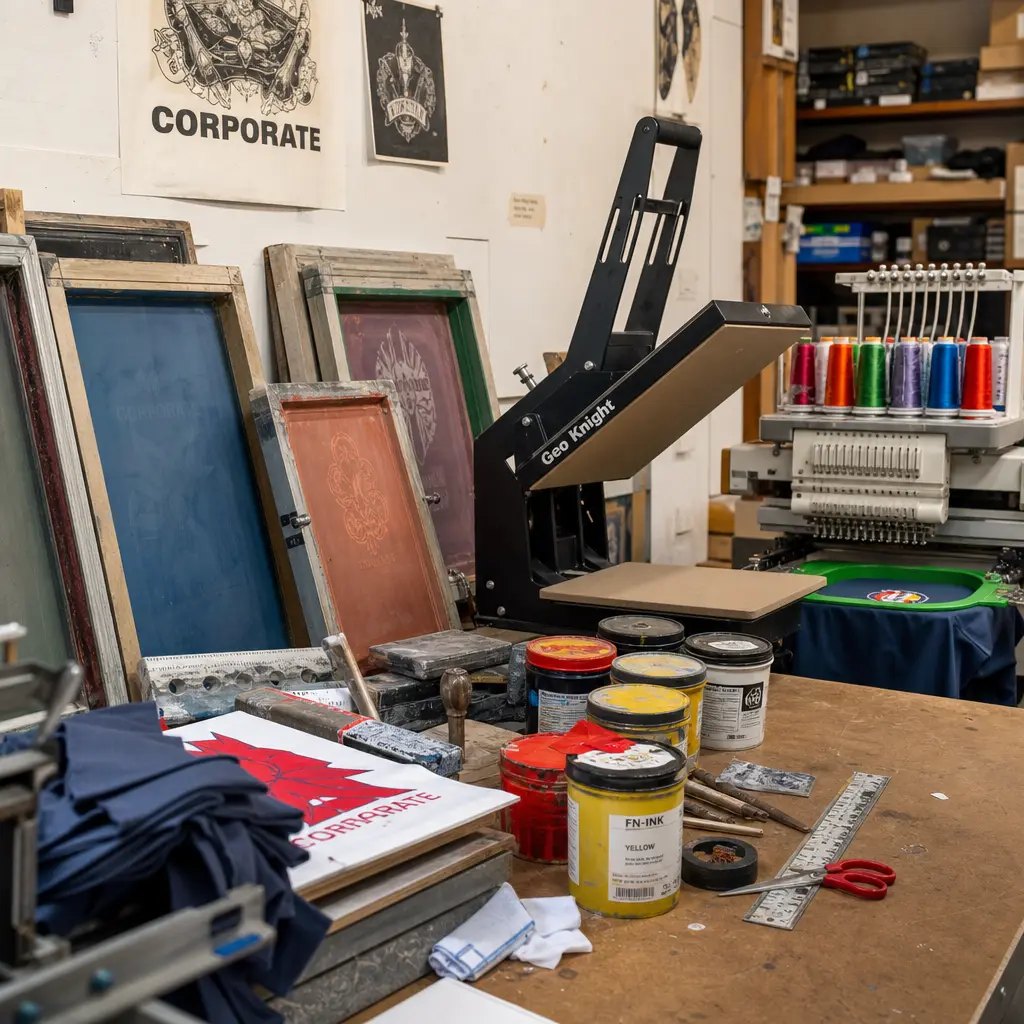
The real buying problem: print proofing fails before sewing fails
For wholesale canvas zipper portfolios, most costly disputes start with print proofing, not with the zipper. Natural grocer programs often use muted brand palettes, eco-looking base fabrics, and practical front graphics such as department labels, event kits, or store operations checklists. On canvas, those details can shift quickly: the fabric ground tone changes ink appearance, the weave swallows fine lines, and the sewing process can pull a printed panel slightly off square. If the portfolio is functional but the front branding looks weak or inconsistent across cartons, buyers still reject it.
That is why the RFQ should treat print proofing as part of engineering, not decoration. A buyer comparing quotes should look beyond unit price and identify whether the supplier is pricing actual control points: strike-off on the bulk-like fabric, artwork line-thickness review, registration tolerance, and bulk shade management. A cheap quote that skips these steps usually comes back as rework, delayed shipment, or accepted goods with uneven store presentation.
- Most common failure modes: logo shade shift, fuzzy small text, front-panel skew after sewing, ink rub on stacked goods, and mismatch between sample and bulk fabric tone
- Why natural grocer programs are sensitive: low-saturation earthy colors show variation more clearly on natural cotton than bold dark prints do
- Best buying approach: approve fabric, print, and sewing as linked stages rather than separately
Choose the base spec first: canvas weight, construction, and portfolio format
For this product, fabric weight drives both print behavior and product feel. A common working range is 12 oz to 14 oz canvas, roughly 340-400 GSM. In that range, the front panel stays flat enough for clean logo presentation, yet sewing remains efficient around zipper seams and inside pockets. Lighter fabric around 8 oz to 10 oz can reduce cost, but it often wrinkles after printing and may feel too soft when carrying forms or brochures. Heavier fabric above 15 oz can look premium, but corner turning becomes harder and carton volume increases.
Portfolio format matters just as much as GSM. Many importers over-specify the interior by adding foam, lining, gussets, and multiple organizers before confirming the use case. For natural grocers, the portfolio often stores paper inserts, promotional materials, field forms, or simple sales kits. A single-layer canvas outer with one interior sleeve, optional pen loop, and bound seams usually performs better commercially than a padded conference folder style. It keeps cost, weight, and defect risk under control.
- Practical spec range: 340-400 GSM cotton canvas for most wholesale zipper portfolios
- Typical sizes: A4-fit, US letter-fit, or custom retail operations size; list both closed and open dimensions in the RFQ
- Useful interior options: one document sleeve, pen loop, card slot; avoid adding features without a clear use case
- If sustainability claims matter, clarify whether recycled cotton blend is acceptable, because print surface and shade consistency may change
Print method selection: what works on canvas and what causes avoidable claims
Screen printing is usually the correct starting point for canvas zipper portfolios when the artwork is a logo, slogan, department mark, or checklist graphic in one or two colors. It is cost-efficient, durable enough for normal use, and easy to repeat across bulk production when the artwork is simple. But buyers should not assume screen print works for every file. Fine reversed text, soft gradients, and photographic artwork rarely perform well on midweight natural canvas without compromise.
Heat transfer or digital methods can reproduce more detail, but they may add hand-feel, edge film, or appearance differences that do not suit a natural grocer brand. Embroidery can look durable for a small logo, yet it can distort lighter front panels and is not suitable for detailed checklist graphics. The buyer's job is to match artwork complexity to the manufacturing route before requesting quotes; otherwise every supplier prices a different process and the comparison becomes meaningless.
- Best for 1-2 color logos: screen print with Pantone reference
- Not ideal on textured canvas: tiny text, large halftone fades, and very thin serif details
- Embroidery fits small marks but can pucker lighter fabric and adds needle-hole visibility on the inside
- If exact shade is critical, require strike-off approval under agreed light source, not only digital artwork sign-off
How to build a print proofing workflow that survives bulk production
A useful proofing workflow has three approvals, and each serves a different purpose. First is the fabric swatch approval: this locks the ground color and texture. Second is the print strike-off on the approved or bulk-like fabric: this shows opacity, line clarity, and color shift against the canvas base. Third is the sewn pre-production sample using the approved print method and near-bulk materials: this confirms that logo position, zipper operation, and seam construction still hold after assembly. Skipping any one of these invites surprises in bulk.
Many production mistakes happen because the digital mockup is treated like a print proof. It is not. Mockups do not show ink sink, weave interference, zipper pull direction, or the visual effect of logo centering against a stitched edge. For a portfolio, front-panel print position should be approved in relation to the zipper line and outer edges, not just by absolute measurement. A 5 mm drift can still look wrong if the panel itself sews slightly off grain.
- Approval gate 1: fabric swatch with shade note and GSM target
- Approval gate 2: print strike-off on actual canvas type with Pantone reference
- Approval gate 3: sewn pre-production sample with final print position and zipper construction
- Keep approval files linked: artwork revision, swatch code, strike-off date, and sample photo should all match the PO version
MOQ logic and quote comparison: why one order can price three different ways
MOQ on wholesale canvas zipper portfolios is rarely a single number. Factories may set separate minimums for fabric booking, color dyeing, print setup, and sewing efficiency. A buyer ordering 3,000 pieces with three artworks might assume the MOQ is met, but the supplier may still charge extra if each print version only runs 1,000 pieces with separate screen setups and split packing. To compare quotes fairly, ask suppliers to break down MOQ by body style, fabric color, and artwork count.
This is where importers often miss hidden cost drivers. A quotation based on stock natural canvas with one front print can look far lower than one based on dyed fabric, interior pocket variation, and destination assortments. Neither is wrong, but they are not comparable. A clean RFQ should state whether one body can be shared across multiple print versions, whether mixed carton packing is allowed, and whether the buyer can accept stock fabric shades instead of custom dyeing.
- Common MOQ split: one minimum for body style, one for fabric color, one for each print artwork
- Low-volume penalty items: custom zipper tape color, dyed fabric, extra inside features, many SKUs per carton
- Lowest quote may assume stock fabric and simplified packing; verify this before approval
- For regional natural grocer programs, one shared body spec with multiple logos often gives the best cost balance
Sample approval criteria: what to measure before you approve the pre-production sample
A pre-production sample should be judged against acceptance criteria, not general appearance. Start with dimensions: confirm the portfolio fits the intended paper size and closes without corner curl. Then evaluate print position relative to the zipper edge and front panel centerline. If the logo sits near a seam, decide the visible tolerance now. Without that written limit, factories may treat visually obvious drift as acceptable because the total measurement remains within a broad size tolerance.
Use the sample to validate real handling. Load it with the actual brochure set, insert card, or operations documents the end user will carry. Open and close the zipper repeatedly, especially across corners. Look at the inside after stress: seam binding should stay flat, and stitch density should remain even where the zipper ends are reinforced. If the print cracks, ghosts, or transfers after overnight stacking, the sample has already exposed a bulk risk.
- Dimension checks: closed size, open size, pocket depth, and paper fit without buckle
- Visual checks: print square to front panel, color opacity, no saw-tooth edges on letters
- Functional checks: zipper smoothness, pocket access, pen loop fit if specified
- Durability checks: stacked print transfer test, corner stress review, seam-end reinforcement
Quality control thresholds for natural canvas and zipper assembly
Natural canvas is not a perfectly uniform substrate, so quality control has to distinguish acceptable variation from rejectable defects. Minor slub and small weave variation may be normal, but broad panel shade differences within the same order should not be accepted when goods are packed for retail distribution. Buyers should define whether visual review occurs under daylight-equivalent lighting and whether mixed lots in one carton are allowed. This matters because natural and bleached cotton can show surprisingly different warmth between lots.
For zipper portfolios, assembly QC should focus on corner construction and seam cleanliness. Zippers often fail not because of the zipper itself, but because seam allowance bunches into the tape or the panel shape is inconsistent at turning points. Interior raw edges should be bound or turned to control fray. If the product includes a document sleeve, its opening should be smooth enough to insert paper without catching. These are low-cost features to control early and expensive issues to correct after bulk packing.
- Set visual QC under consistent lighting for shade review
- Reject print defects such as pinholes in solid fills, blurred text, obvious double hit, and weak opacity
- Reject sewing defects such as skipped stitches, uneven zipper topstitching, exposed raw edges, and misaligned corners
- For field use portfolios, include zipper open-close cycle testing on sample and during inline QC
Packing details that affect cost, cleanliness, and warehouse handling
Packing decisions on this product are usually treated as an afterthought, but they directly affect landed cost and defect rate. Individual polybags can protect natural canvas from dust and moisture during transit, yet they add plastic, labor, and disposal concerns that some natural grocer programs want to reduce. If the product is not retail shelf-ready, tissue separators or stacked bulk packing inside a clean master carton may be enough. What matters is preventing fresh print transfer, zipper scuffing, and moisture exposure.
Carton planning should also reflect the portfolio shape. Overpacked cartons can leave zipper impressions on front panels or create edge creasing. Underfilled cartons waste freight cube. A better RFQ specifies carton quantity range, target gross weight limit, and whether assortments by artwork or destination should be packed separately. Buyers often save more by reducing packing errors and re-labeling at destination than by forcing a few cents out of the unit price.
- State whether individual polybag is mandatory, optional, or not allowed unless needed for cleanliness
- Limit carton gross weight to a practical warehouse-handling threshold set by your team
- If multiple artwork versions ship together, require clear carton marks with PO, SKU, and destination
- For fresh prints, avoid tight face-to-face compression without separator material
Lead time planning: where schedule risk actually sits
Lead time on canvas zipper portfolios is not only sewing time. The schedule usually includes material booking, fabric finishing or dyeing if needed, print screen preparation, strike-off approval, sample sewing, bulk printing, sewing, packing, and export documentation. The risk point for many natural grocer programs is artwork delay. Factories can often reserve sewing capacity, but if print approval misses the planned slot, the whole order slips because printing feeds the cut panels into production.
A realistic schedule should separate approval gates from factory execution days. Buyers who send complete artwork, size spec, and packing plan early tend to receive tighter ex-factory control because the supplier can book screens, fabric, and line time with confidence. Buyers who keep revising print position after sample approval usually trigger hidden costs: re-cutting printed panels, changing carton counts, or re-running screens. The right response is not pressure on the supplier but better version control on the buyer side.
- Key gates: artwork lock, fabric approval, strike-off approval, pre-production sample sign-off, bulk start
- Biggest avoidable delay: late logo revision after print screens are prepared
- If shipping to a promotion date, build buffer for approval feedback loops, not just factory sewing days
- Request a stage-by-stage timeline in the quote instead of a single total lead-time number
Landed-cost thinking: unit price is only part of the buying decision
For importers and distributors, the cheapest ex-factory unit price is often not the cheapest landed option. Heavier canvas raises freight, but poor print control raises claims. Individual polybags add packaging cost, but bulk repacking at destination adds labor. Dyed fabric may increase the quote, but it can reduce visual inconsistency compared with variable natural lots when exact brand tone is important. The right decision comes from comparing total program cost against the end use, not squeezing one line item.
When reviewing supplier quotes, classify each cost as fixed, variable, or avoidable. Screen setup is usually fixed per artwork. Ink coverage and fabric choice are variable with design and spec. Rework from unclear print approval is avoidable and often the most expensive category because it steals time as well as money. If one supplier looks higher, study whether the quote includes stronger control points such as bulk-like strike-offs, carton marking, or stricter zipper-grade assumptions. Those items do not show well in a simple unit-price comparison but often save the order.
- Fixed-cost examples: screen setup, sample courier, some pattern fees for custom construction
- Variable-cost examples: GSM, dyed fabric, number of print colors, zipper grade, interior organizer count
- Avoidable-cost examples: repacking, re-labeling, print remake from unclear approval, split shipments caused by version changes
- Use landed-cost review when comparing stock-fabric offers versus custom-dyed or multi-artwork programs
Specification comparison for buyers
| Spec decision | Recommended option | When it fits | Buyer risk to check |
|---|---|---|---|
| Canvas weight | 12 oz to 14 oz canvas, about 340-400 GSM | Best for reusable portfolios carrying brochures, forms, coupons, and clip sheets in natural grocery distribution or store operations | Below about 300 GSM can feel soft and wrinkle-prone after printing; above 430 GSM adds cost and may distort around zipper corners if patterning is weak |
| Fabric color base | Pre-bleached natural or dyed khaki matched to approved swatch | Fits natural grocer branding where earthy shades matter and print contrast must stay readable | Natural cotton lots vary in base tone; logo color can shift visibly if the bulk fabric is warmer or greyer than the approved sample |
| Print method | Pantone-matched screen print for simple logos and checklist graphics | Most cost-efficient for 1-2 spot colors and medium to large bulk runs | Halftones, small nutrition-style text, and edge-to-seam artwork can break up or blur if the screen mesh and artwork line weight are not approved early |
| Closure type | Nylon coil zipper with metal puller | Reliable for repeated opening in retail back office, trade events, and field merchandising kits | Cheap zippers often fail at corner turning or snag on heavy seam allowance; require opening-closing cycle test on pre-production sample |
| Portfolio structure | Single-layer body with interior document sleeve and bound seams | Good balance of cost, weight, and function for paper-based proof packs or brand guides | Unbound raw seam interiors fray fast; multi-layer foam padding raises carton cube and often adds no value for grocery admin use |
| MOQ route | One body size shared across 2-3 colorways or print versions | Useful when natural grocer programs split by region, department, or house-brand artwork | Too many SKUs under the same order can push small print lots, extra setup charges, and packing errors unless carton marking is detailed |
| Sample approval method | Fabric swatch + print strike-off + sewn pre-production sample | Best route when logo registration and zipper sewing quality both matter | Approving only a digital mockup leaves fabric shade, ink opacity, and zipper corner shape untested until bulk production |
| Packing format | Individual polybag only if retail cleanliness requires it; otherwise stacked in master carton with tissue separators | Works for distributor shipments and lowers plastic use for natural grocer positioning | Tight compression can transfer fresh ink or crease front panels; polybag spec should include thickness and suffocation warning rules if needed |
| Lead time plan | Allow sample approval, bulk fabric booking, print strike-off, and sewing in separate gates | Helps importers align with promotion dates and avoid late artwork edits hitting the ship window | When artwork approval is delayed, factories may still reserve sewing lines but lose printing slot priority, extending ex-factory date |
Buyer checklist before sampling
- Define final portfolio size closed and open, plus whether it must fit A4, US letter, or both without paper corner curl.
- State canvas weight in GSM or oz, not just 'heavy canvas'; for most zipper portfolios, 340-400 GSM is the practical range.
- Specify base fabric color standard: natural unbleached, bleached natural, or dyed shade with swatch reference.
- List print method and artwork count: 1-color screen print, 2-color screen print, heat transfer, or embroidery for logo only.
- Set minimum readable text size and minimum line thickness for any checklist or proofing graphic printed on canvas.
- Include zipper type, tape color, puller finish, and whether the zipper must go around corners or only across one side.
- Request a print strike-off on actual production fabric before pre-production sewing starts.
- Require one sewn pre-production sample using bulk-like materials, not substitute stock canvas.
- Define seam tolerance, print position tolerance, and acceptable skew for front logo placement.
- State whether interior features are required: pen loop, card slot, document pocket, elastic holder, or none.
Factory quote questions to send
- What exact canvas construction are you quoting: cotton content, yarn count if available, weave, and finished GSM tolerance?
- Is the quoted fabric from ready greige stock, dyed-to-order, or custom woven, and how does that affect MOQ and lead time?
- Which print method are you pricing, and how many screens, setup charges, and color approvals are included?
- Can you provide a strike-off on the actual canvas lot before cutting bulk fabric?
- What zipper brand or quality grade are you using, and what in-house opening-closing test do you run on pre-production samples?
- How do you control print position on cut panels so logo drift does not increase after sewing?
- What is your normal tolerance for size, print placement, and color shade variation on natural canvas?
- If we split one order into multiple artworks or departments, how does the MOQ work per design and per color?
- What packing configuration is included in the quote: inner pack, polybag thickness, master carton size, and carton weight?
- Which items in your quote are variable after artwork approval: screen count, ink coverage, carton count, or export packaging?
Quality-control points to confirm
- Fabric GSM within approved tolerance and no obvious lot-to-lot shade drift across the order.
- Front panel print color matched to approved strike-off under agreed lighting condition.
- Print placement within approved tolerance and not visually skewed against zipper edge.
- No pinholes, ghosting, double image, or weak opacity on dark or dyed canvas.
- Zipper runs smoothly through full travel without seam snagging or corner stress.
- Stitch density consistent, with no skipped stitches at zipper ends and handle stress points if handles are included.
- Interior pocket dimensions fit the intended papers or collateral without catching on seam allowance.
- Raw edges properly bound or turned; no fraying inside the portfolio.
- Carton assortment and carton marks match PO by artwork version and destination label.
- Finished goods dry, clean, and free from ink transfer, oil marks, mildew odor, or moisture condensation in packed cartons.