Start with the actual craft fair use case, not the fabric spec sheet
Canvas zipper portfolios for craft fairs are usually bought for one of three commercial reasons: resale at a booth, use inside exhibitor kits, or distribution as a branded storage item for staff and makers. The use case changes the spec. A retail unit needs a cleaner inside finish, better panel consistency, and a presentation that feels intentional when a shopper picks it up. An exhibitor kit can lean harder into stackability, flat packing, and practical labeling. A branded giveaway can be simpler, but only if the buyer is comfortable with a lower finish level and a narrower resale story.
The most common buying mistake is to treat the product like a basic zip pouch and assume canvas weight alone will define quality. A portfolio has a long zipper run, broad front panels, visible corners, and enough surface area for print shift to show. It is handled differently from a small pouch. Customers at a fair will open it, inspect the hand feel, look at the zipper action, and compare it against other handmade goods on the table. If it feels too light, it can read as promotional. If it is too heavy, the seams get bulky and the zipper loses ease.
The buying brief should therefore begin with handling, contents, and channel, not with marketing language. What will the portfolio hold? How often will it be opened? Will it be sold to shoppers, used by booth staff, or packed into distribution cartons for resellers? A portfolio for A4 paperwork has different requirements from one carrying postcards, sample cards, a tablet, or order forms. A portfolio used during checkout also needs to tolerate repeated moving in and out of tote bags or booth drawers.
Channel matters after the fair too. If the unit is sold directly to customers, visual finish and tactile impression matter more. If it goes through a reseller, the buyer should care more about consistency, SKU identification, and low defect variation across cartons. If it is part of an exhibitor kit, the priorities may be pack density, repeatability, and clear labeling for multiple event locations. The same product can serve all three, but only if the brief says which channel is being quoted.
A useful RFQ line is operational and plain: flat canvas zipper portfolio for craft fair resale, sized for A4 documents, one main compartment, one internal slip pocket, one-color logo print, individually packed for retail distribution. That one line does more to align suppliers than a page of brand adjectives.
- Define whether the portfolio will be sold, handed out, or used internally at events.
- State the real contents: A4 sheets, US letter pages, postcards, tablets, sample cards, or receipts.
- Tell the factory where the unit will be seen: booth table, retail shelf, warehouse carton, or event kit.
- Include one clear use-case sentence in the RFQ so quotes are built on the same brief.
Choose canvas weight for structure, sewing behavior, and end-user handling
For canvas zipper portfolios, the practical sourcing range is usually 10 oz to 14 oz, with heavier builds possible when the construction is proven. In GSM terms, that often lands around 340 GSM for 10 oz, about 400 GSM for 12 oz, and roughly 450 to 480 GSM for 14 oz. Exact conversion can vary because weave density and finishing are not identical across mills, so the supplier should quote both oz and GSM. For most craft fair programs, 12 oz is the best starting point because it balances structure with manageable seam bulk.
A heavier canvas may look premium on a swatch card, but that does not automatically make it the better production choice. The zipper seam on a portfolio is long, and every extra millimeter of thickness at the edge changes foot pressure, sewing speed, and final glide. If you add lining, internal pockets, stiff inserts, and a heavy outer canvas all at once, the corners can start to crowd the machine. The factory may still make it work, but the zipper can feel tighter and the finished unit may become too rigid for comfortable carrying after purchase.
Lighter canvas lowers freight cost and can reduce unit price, but it brings other risks. It may wrinkle more easily, reveal the silhouette of the contents, and look too close to a promotional tote insert rather than a retail item. It can also move more during sewing, which makes panel squareness harder to control. For a craft fair buyer, that matters because shoppers compare the product with handmade goods that often have a visible quality story. If the portfolio feels insubstantial, it loses that story quickly.
The best way to judge weight is to treat the entire build as one system. Ask whether the factory has sewn the same zipper type, seam allowance, lining, and pocket layout on the target canvas before. If not, request a stitched sample and load it with the actual documents or items it must carry. Check whether the zipper opens cleanly when full, whether the corners still sit flat on a table, and whether the body feels stable in hand. That practical test is more useful than a fabric swatch alone.
For procurement, the right answer is usually not the heaviest canvas. It is the canvas that still feels substantial after printing, still folds flat enough for packing, and still looks neat after repeated handling at a fair or in a reseller’s warehouse. That is why many buyers begin with 12 oz and move up only if the sample proves the extra weight is worth it.
- Use 10 oz when cost and light packing matter more than a premium hand feel.
- Use 12 oz for the most balanced mix of structure, print clarity, and sewing stability.
- Use 14 oz when the portfolio must feel rugged and the supplier can prove the zipper path still runs smoothly.
- Avoid very heavy canvas unless a sample shows that the corners and zipper bulk remain tidy.
- Always ask for canvas weight in both oz and GSM on the same quote.
Select fiber content and finish based on brand claim, shrink risk, and reorder stability
Natural cotton canvas is still the most common choice for craft fair portfolios because it supports a handmade, artisan, and material-led brand story. It gives simple branding a clean background and usually feels aligned with maker markets, but it is not perfectly uniform. Small shade changes, cotton specks, and lot-to-lot variation are normal unless the fabric is specially finished. Buyers should set a realistic acceptance range rather than expect laboratory-style consistency from a natural-fiber product.
Custom dyed canvas gives stronger color control, but it adds more moving parts to the order. Lab dips, shade approvals, minimum dye lots, and mill lead time can all affect schedule and cost. If the buyer wants a brand-specific tone for retail shelves or seasonal fair themes, dyed canvas can be worth the trouble. If the order is a first market test, stock natural canvas usually keeps risk lower. The key is to ask which part of the quote comes from dyeing, minimums, and shade control rather than accepting a single blended price.
Cotton-poly blends can help with shrink control and sometimes improve dimensional stability, but they should be treated as a deliberate choice. If the product story, hang tag, or SKU language says cotton canvas, a blended fabric can create a labeling mismatch later. On the other hand, if the portfolio is mostly being sold for utility and price, a blend may be acceptable and even useful if it holds dimensions better after handling or washing. The material story should match the commercial story.
Finish is part of the material decision too. Washed, enzyme-washed, preshrunk, brushed, and bleached canvases all behave differently in sewing and in use. A washed finish can fit a relaxed craft aesthetic, but it may add softness and shade variation. A bleached finish can improve light print contrast, but it may show handling marks sooner. A preshrunk or shrink-tested fabric is often safer when the portfolio will be packed tightly, moved frequently, or reordered across seasons. The supplier should say which finish is actually on offer rather than using broad quality language.
For procurement, the key is to compare like with like. Stock natural canvas, custom dyed canvas, and blended canvas are not interchangeable even if the artwork stays the same. They change MOQ, lead time, shade consistency, and end-user perception. If the first run is meant to test craft fair demand, stock natural canvas is usually the least risky starting point. If a color-matched retail program is the goal, the order should be planned around the dye cycle from the beginning.
- Natural canvas fits artisan positioning but needs a realistic shade tolerance.
- Custom dyed canvas improves brand control but usually adds lab dip and MOQ pressure.
- Cotton-poly blend can reduce shrink risk, but only use it if labeling and brand claims allow it.
- Preshrunk or shrink-tested fabric is safer when the portfolio will be handled, packed, and reordered often.
- Ask the supplier to identify the exact fabric finish, not only the fiber content.
Decide lining and pocket layout by what the buyer will actually carry
A lined portfolio looks more finished when it is opened, and that matters for retail resale. The inside hides seam allowances, protects the canvas from fraying at stress points, and gives the product a more polished feel in the hand. Common lining choices include 210D polyester, cotton sheeting, or a lightweight canvas. Polyester lining is usually the most cost-efficient and easiest to keep smooth. Cotton lining supports a more natural material story but can wrinkle more. Lightweight canvas adds strength but can make the corners thicker and harder to sew cleanly around the zipper opening.
Pocket layout should solve a real handling problem, not simply add perceived value. For craft fair use, one internal slip pocket or card slot is usually enough. It can hold business cards, receipts, a small notepad, stickers, or order forms without making the item too expensive to sew. Too many pockets slow production and create more inspection points. Every extra seam needs alignment, and every extra fold can shift the final dimensions. For reorders, a simple useful layout often performs better than a decorative one with too many details.
The inside finish matters more when the portfolio will be resold through shops or distributors. A booth sample can survive a rougher inside if the customer only sees it briefly, but a retail buyer will open it, feel the lining, and look for raw edges. If the product is unlined, the buyer should still ask for clean seam finishing such as overlocking or binding. If the product is lined, confirm that the lining does not twist or buckle when the portfolio is half-open. That is where a neat-looking outside can still feel awkward.
Color choice inside the portfolio is practical. A light lining looks clean in a sample room, but it can show stains, chalk marks, or handling dirt faster in actual distribution. Dark linings hide marks better, while medium neutral linings are often the easiest compromise for mixed channel use. If the order will be handled by staff across several events, ask whether the lining shrinks differently from the outer canvas and how that is controlled. That answer is more useful than a generic promise of quality.
The best buyer spec is the one that can be repeated on reorders without debate. State whether exposed raw edges are allowed, whether the pocket uses the shell fabric or a separate lining fabric, and where the interior label must sit. Small details like these change labor time, defect rate, and the consistency customers see when they compare units side by side.
- Use full lining when the portfolio will be sold retail or handled often by end customers.
- Use an unlined build only if the seam finish is still neat and controlled.
- A single slip pocket is usually enough for receipts, cards, and small event papers.
- Choose lining colors that hide handling marks better if the product will move through multiple events.
- Ask how the lining behaves against the outer shell after washing or preshrinking.
Treat the zipper as the core functional component, not a trim line
The zipper is the moving part that most often generates complaints, so it should be specified as carefully as the canvas. For most canvas zipper portfolios, a No. 5 nylon coil zipper is the most practical option. It tends to sew smoothly on flat panels, tolerates slight fabric movement, and avoids the stiffness that can happen with some metal zippers. Metal zippers may feel more premium in hand, but they can add weight, increase cost, and scratch paper inserts or tablets if the inside is not protected. A premium look only helps if the zipper still functions well when the portfolio is full and opened repeatedly at a busy fair.
A usable zipper specification includes more than color. The buyer should define zipper size, tape color, slider finish, puller type, and the reinforcement at the ends. On a long portfolio opening, the zipper is under repeated stress every time the end user reaches for documents or product samples. Cheap zipper tape, uneven teeth, or weak end stitching can fail even when the outer canvas is strong. The right sample test is simple: put the intended contents inside, open and close the zipper multiple times, and check whether the lining catches or the slider snags at the corners.
Zipper color is easy to overlook and surprisingly important. On natural canvas, a bright white tape can look too stark, while a tan tape can blend more cleanly if the tone is chosen deliberately. A contrast tape can be a good design choice, but a random mismatch usually looks accidental. If the product line uses multiple colors or seasonal versions, lock the tape color before sample approval so the factory does not substitute a visually similar but not identical tone. That matters in resale channels where buyers place units side by side on a display table.
The puller also affects handling. A fabric puller is light and quiet, while a metal puller adds a more substantial feel. Either can work, but the puller should stay consistent across the order so warehouse teams and event staff do not see mixed-looking units in the same carton. Reinforced stitching at the zipper ends matters too. If the end tack is weak, the zipper may separate or curl after repeated use, especially on portfolios that are often packed full for fairs or travel.
When comparing quotes, do not let the zipper be buried in a vague trim line. Ask the supplier to name the exact zipper type, slider level, tape color, and test method. The best quote is the one that makes the functional part of the product visible before production starts.
- No. 5 nylon coil is the default choice for most portfolios.
- Metal zippers are only worth the extra weight if the buyer has approved the feel and use-case risk.
- Specify tape color and puller style so the final look does not depend on factory substitutions.
- Require reinforced zipper ends or bar tacks in the seam detail.
- Test the zipper with real contents, not only when the product is empty.
Match the branding method to canvas texture and shelf behavior
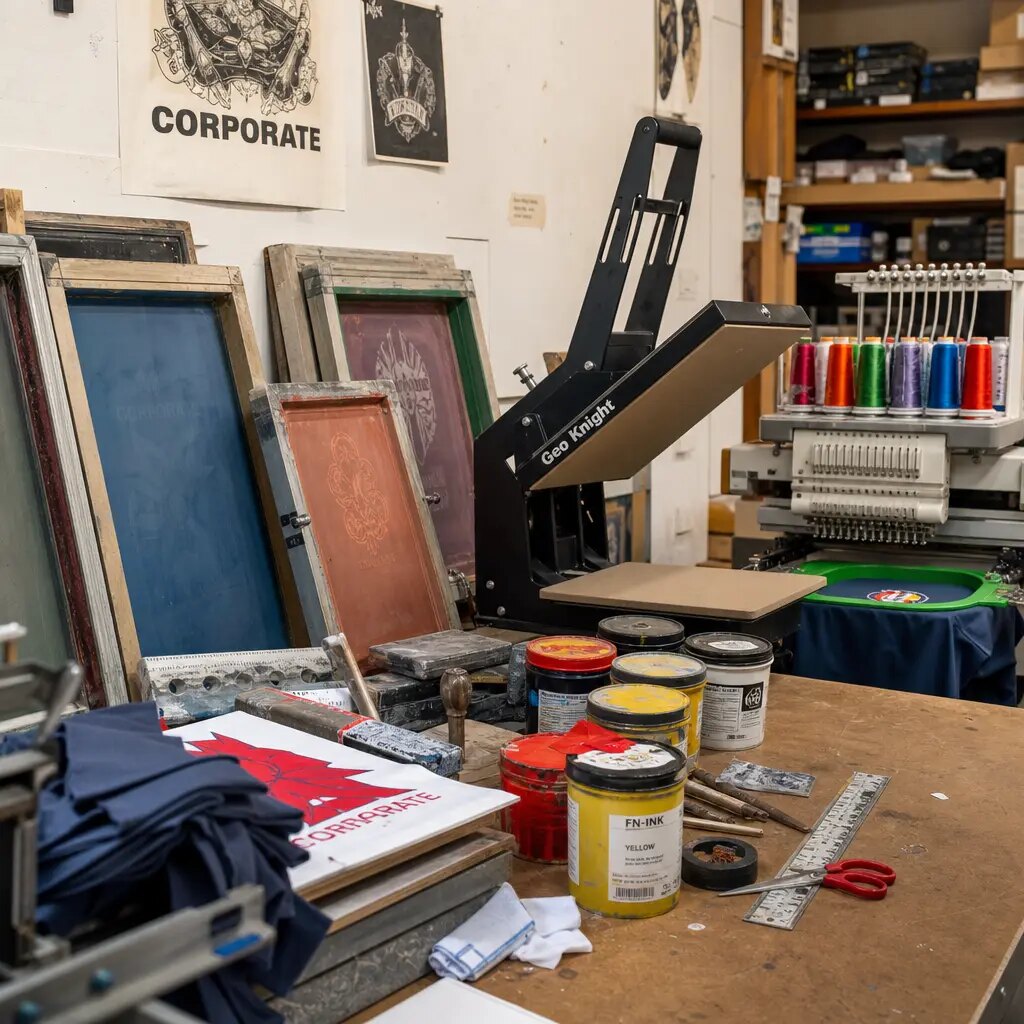
For many canvas zipper portfolios, screen printing is the most dependable branding method. It works well for one to three solid colors and usually gives the best opacity on natural canvas. Buyers should define the print area, the placement reference, the color references, and the tolerance in millimeters. A logo that sits a few millimeters off center may not matter on a rough utility pouch, but on a flat portfolio with a large front panel it can be obvious. If the product will be displayed on a craft fair table, the print has to look deliberate from a short viewing distance, not just in a digital proof.
Heat transfer can be useful when the artwork is detailed, colorful, or ordered in smaller volumes. But it needs a physical test on the final fabric, because textured canvas can make edges look less clean and repeated folding may cause cracking or lifting. Embroidery can work as a premium detail, yet dense stitching can pucker a lighter canvas or distort a panel that already carries a zipper opening and lining. If the buyer wants a quieter brand presence, a woven side label or interior label may be the better option. That often gives a more durable look with less risk of front-panel distortion.
The right choice depends on how the unit will be judged at the point of sale. A bold printed logo can help if the product is meant to be recognized quickly from across a booth. A small woven label may suit a cleaner retail aesthetic where the canvas texture itself is part of the appeal. If the portfolio is a merchandise item, print must feel intentional and repeatable across reorder batches. If it is a support item for event staff or exhibitors, low-cost durability may matter more than decoration.
Canvas texture changes how a print reads. A rough weave can soften edges slightly, which is normal, but it should not make the logo look blurred or crooked. Ask for a strike-off on the actual fabric that will be used in production, then inspect it under the same kind of light the product will face at a fair or on a shelf. If the front panel is large, check the relationship between the logo and the zipper line. A print that is centered on paper can still look wrong if it drifts relative to the seam or panel grain.
A strong RFQ should say more than “logo print on front.” It should identify method, size, location, color count, placement tolerance, and the test the print must pass after bending or rubbing. That gives the supplier enough detail to quote accurately and keeps the approval conversation focused on the finished portfolio rather than on assumptions about decoration.
- Use screen print for solid logos and clean brand marks on natural canvas.
- Use heat transfer only after testing it on the real canvas texture and with repeated folding.
- Use embroidery sparingly because dense stitching can pucker lighter canvas.
- Woven labels are useful when the brand wants a refined look with lower print risk.
- Request a strike-off on the actual bulk fabric before production approval.
Read MOQ as a material and setup issue, not just a sales answer
MOQ for canvas zipper portfolios usually comes from a mix of fabric sourcing, zipper procurement, print setup, labor planning, and packaging requirements. A stock natural canvas with a standard zipper and one-color screen print is far easier to source in flexible quantities than a custom dyed canvas with branded pulls, custom lining, and retail-ready packaging. Two quotes can look similar at first glance and still have very different minimums. The factory is not always inflating the number; sometimes the minimum is driven by one component that cannot be bought in small lots.
The cleaner way to compare suppliers is to ask which part actually sets the floor. Is it the fabric mill, the zipper source, the print screen, the label, or the packing material? Once that is known, the buyer can decide whether to simplify the spec, increase quantity, or accept longer timing. For craft fair buyers, that decision matters because some orders are seasonal. If the product must arrive before the fair calendar starts, a lower MOQ is useful only if the build can be made on time. A cheaper unit that misses the event is not a good buy.
Variant count also changes MOQ pressure. A single size in one color is easy. Three colors with different puller finishes and two artwork versions quickly become several mini-orders in the factory schedule. If the portfolio is being tested for market response, it is usually smarter to keep the first run simple and concentrate on the version most likely to move at the booth or through resale accounts. One good, repeatable unit is often more useful than a broad but shallow range that leaves leftovers in the wrong color or trim style.
Custom trim is another hidden driver. Branded zipper pulls, special woven labels, or custom zipper tape can make the product stand out, but they also raise the complexity of sourcing. If the first run is meant to learn demand rather than build a permanent line, stock trims often make more sense. The buyer can add custom trim later once the product has proved itself in the channel. That keeps the first order practical and avoids paying for detail that shoppers may not value enough to justify the cost.
For the quote record, ask the factory to state the minimum order for the exact construction, not the general product family. That distinction saves time and prevents a buyer from assuming that a plain sample quantity can scale into a more complex bulk order without changes.
- Stock canvas plus standard zipper usually gives the most flexible MOQ.
- Custom dyed fabric often introduces fabric minimums and extra approval steps.
- More colorways and artwork versions increase setup time and inventory risk.
- Keep first-run variants limited if the product is being tested at craft fairs.
- Ask which component actually causes the MOQ floor.
Approve the sample as a production reference, not a visual placeholder
A sample is only useful if it mirrors the production stack. For a canvas zipper portfolio, the approved sample should use the final outer canvas, final lining, final zipper, final print method, and final packing method whenever possible. A sales sample made from substitute materials can help with shape and layout, but it should not be accepted as the bulk standard if the factory later changes fabric weight or trim. The difference between 10 oz and 12 oz canvas, for example, can change seam bulk, zipper glide, and how well the front panel takes print.
The approval record should contain measurable data rather than vague sign-off language. Record finished size, canvas weight, lining type, zipper size, print location, label placement, pocket size, and any acceptable variation. Keep one signed or otherwise documented sample with the buyer and one with the supplier. If more than one person is involved in approval, name one owner of the final file. That prevents arguments later about which comment was accepted or whether a minor change was agreed verbally but never written down.
The best sample test is practical. Fill the portfolio with the actual documents or event contents and check how the zipper behaves when the unit is full. Open and close it several times. Look at it on a flat table under normal lighting, not only in a studio. If the product is meant to be sold at a fair, inspect it at the distance a shopper would naturally stand from the booth. The sample should answer one question: does this feel like something someone would pay for, carry home, and use again?
If the order includes woven labels, hang tags, custom zipper pulls, or printed inside labels, those details need to be part of the sample approval too. Small trim changes can alter the sewing sequence. A side label may sit well on paper but interfere with a seam in production. A hang tag attachment might seem quick in a mockup but add time to every unit during packing. A good sample reveals those operational realities before the purchase order is locked.
Once approved, photograph the sample from the front, back, inside, zipper edge, pocket area, and label positions. Add short notes explaining why each material choice was accepted. That creates a useful reference for reorders and reduces confusion when the same portfolio is produced later for another craft fair season or a different distribution channel.
- Approve the sample with final fabric, final zipper, and final lining whenever possible.
- Measure the sample instead of relying on visual judgment alone.
- Load it with the actual contents it is meant to hold.
- Keep a controlled physical reference on both buyer and supplier sides.
- Photograph the sample from multiple angles before bulk sign-off.
Set QC thresholds that catch problems before cartons leave the factory
A clear quality standard keeps the order from turning into a debate at the warehouse. Because a canvas zipper portfolio is a flat item with visible edges, off-center logos, twisted seams, and zipper problems are easy to spot. The quality standard should cover dimension tolerance, print placement, zipper operation, seam finish, fabric shade, and cleanliness. If the product is being resold, cosmetic consistency matters more than it would for a rough utility item. Buyers should assume downstream customers will inspect the portfolio closely, especially if it is sold next to other handmade goods.
Inspection should combine appearance and function. Random units should be opened, loaded, and zipped. Check for raw edges inside, loose threads, dirty lining, skipped stitches, pocket alignment problems, and any catching around the zipper track. For printed fronts, compare placement to the approved sample and check for bleeding, under-curing, or surface cracking after bending. Natural canvas is allowed to have small specks if they were visible in the approved fabric standard, but oil marks, mildew odor, heavy shade patches, and large stains should be rejected. The key is that normal variation must have a known baseline.
The seam around the zipper is the most important technical area to inspect. A raw edge should not show through when the unit is half-open. The lining should not twist toward the teeth or pull the front panel out of alignment. Reinforcement at the zipper ends and at pocket corners matters because those are the stress points that fail first when shoppers repeatedly open the portfolio at a fair or when staff pack and unpack it during travel. If the portfolio includes a fold or gusset, that point deserves special attention because any unevenness there becomes visible once the item is filled.
A good buyer also asks the supplier for its internal QC checklist and compares it with the buyer’s own list. If the supplier checklist does not mention zipper function, print position, carton count, and fabric shade, it is too generic to support a retail or distributor order. The goal is not to make the checklist long; it is to make it relevant to the actual product and its handling conditions.
It helps to define what is a minor defect and what is a hard reject before production starts. Examples of reject items include broken sliders, missing stitches, dirt on the front panel, badly skewed logos, mixed zipper colors in the same carton, and carton shortages. Clear rules prevent late-stage arguments and make final inspection faster for both sides.
- Finished size tolerance is usually plus or minus 5 mm for standard document portfolios.
- Print placement tolerance is usually plus or minus 3 mm on a flat front panel.
- Zipper should cycle smoothly with no catching, skipped teeth, or broken puller.
- No oil marks, heavy chalk marks, mildew odor, or long loose threads should be accepted.
- Require a reject list before bulk production starts.
Use packing choices to protect presentation, counting, and landed cost
Packing matters because canvas zipper portfolios are often handled in several stages before they reach the end customer. Some go from factory to warehouse to event location. Others are split across multiple craft fair sites. A flat-packed portfolio usually travels best. Individual polybags protect against dust and moisture, while paper bands can work when recyclable packaging is a stronger retail concern. The right choice depends on the channel. A distributor may want clear SKU identification and easier carton counts, while a booth seller may care more about presentation and less about extra packaging.
Carton loading is where many good products get damaged. If cartons are too tight, zipper pressure can leave impressions across the canvas and corners can flatten. If they are too loose, the units move and rub against each other in transit. This is especially relevant for natural cotton canvas, which can pick up crease memory more easily than synthetic fabrics. Buyers should ask for carton quantity, carton size, gross weight, and photos of packed cartons. Those details help logistics teams plan storage and make sure the cartons fit the receiving workflow at each event or warehouse.
Packing should also support retail presentation. A portfolio may look excellent when unpacked but still disappoint if the front panel is crushed or the zipper pull is bent from compression. If the unit needs a stiffener card or tissue insert, decide that early and confirm the effect on carton size and cost. If the product is going straight to retail, a barcode or SKU sticker on the polybag or paper band can save time in receiving without marking the product itself. Those small choices often matter more than decorative outer packing.
For multi-location craft fair distribution, carton labels should be easy to read and specific enough to separate variants without opening every box. Include SKU, color, size, quantity, purchase order number, and any warehouse mark required. If there are seasonal or event-specific versions, the carton mark should tell the receiver exactly which box goes where. That reduces handling errors when stock is split across several fair dates or distributor accounts.
One small practical detail: keep the zipper puller facing the same way in each unit if possible. It helps the portfolio stack flatter and opens more neatly when unboxed. Consistent packing like this makes the supplier look more disciplined and reduces the chance of pressure marks during transit.
- Flat packing is usually the safest option for shape and carton efficiency.
- Use individual polybags or paper bands according to the sales channel.
- Avoid over-compression that leaves permanent zipper impressions or creases.
- Add clear carton labels for SKU, quantity, color, and purchase order number.
- Ask for packed carton photos before shipment.
Specification comparison for buyers
| Spec decision | Recommended option | When it fits | Buyer risk to check |
|---|---|---|---|
| Outer canvas weight | 12 oz canvas, about 400 GSM, preshrunk or shrink-tested | Best balance for craft fair portfolios that need body, clean sewing, and manageable carton weight | Below 10 oz can feel promotional and show contents; above 14 oz can make seams bulky and zipper action stiffer unless the sample proves otherwise |
| Canvas construction | Tight plain-weave cotton canvas rather than a loose duck weave | Helps keep panel edges square, supports cleaner print definition, and reduces distortion on the zipper run | A loose weave can skew after finishing, soften logo edges, and create visible panel waviness on a long flat portfolio |
| Fiber content | 100% cotton for natural-brand positioning; cotton-poly blend only if the buyer explicitly accepts it | Use cotton when the craft fair story depends on natural materials; use a blend when shrink control, crease recovery, or price matter more than fiber purity | A blend may conflict with hang-tag claims or country-market labeling if the product is still marketed as cotton canvas |
| Lining material | 210D polyester lining or cotton sheeting lining | Polyester lining is usually smoother and more cost-efficient; cotton lining fits a more natural retail story | Unlined construction saves cost but exposes seam allowances and thread ends that many retail buyers reject |
| Zipper type | No. 5 nylon coil zipper for most bulk orders | Reliable choice for smooth operation, lower sewing resistance, and reduced scratch risk for paper inserts | Low-grade metal zippers can misalign or feel heavy if tooth spacing, slider quality, or end reinforcement is inconsistent |
| Print method | Screen print for one to three solid colors; heat transfer only for fine detail or short runs | Screen print usually gives the best opacity and repeatability on textured canvas | Transfers can crack or lift if the fabric is coarse or if the buyer does not approve a rub and bend test |
| Closure and puller detail | Standard fabric or metal puller with reinforced zipper end bar tacks | Good for buyers who want functional portfolios without unnecessary trim cost | Decorative pullers add cost and can fail transit handling if end stitching is weak |
| Pocket layout | One main zipped compartment plus one internal slip pocket or card slot | Useful for order forms, receipts, stickers, business cards, and small catalog sheets used at craft fairs | Too many pockets add labor, create more defect points, and complicate reorders at low MOQ |
| Packing method | Flat packed in individual polybag or paper band, then export carton with moisture protection | Keeps portfolios clean, stackable, and easy for distributors to count and allocate by event | Over-compressed cartons create zipper impressions, creases, and crushed corners on natural canvas |
Buyer checklist before sampling
- Define the portfolio by what it must hold: A4 sheets, US letter documents, postcards, receipt books, tablets, sample cards, or mixed event materials.
- Select the outer canvas weight in both oz and GSM and require the supplier to quote against the same basis.
- Decide whether the product is lined, half-lined, or unlined before comparing prices or requesting samples.
- Specify fiber content, weave type, finish, zipper size, zipper tape color, puller style, and the exact reinforcement at zipper ends.
- Provide artwork size, color count, placement reference, and acceptable print tolerance in millimeters.
- Request one pre-production sample made with final fabric, final zipper, final lining, and final logo process whenever the order size justifies it.
- Set acceptance criteria for fabric shade, seam alignment, print position, loose threads, zipper smoothness, and finished dimensions.
- Confirm individual packing, carton quantity, carton dimensions, gross weight, and whether cartons need SKU or event labels.
- Ask for lead time split into material sourcing, sample approval, bulk production, QC, and packing rather than one vague delivery date.
- Compare quotes using the same MOQ, Incoterm, packing method, inspection standard, and label specification so the numbers are truly comparable.
Factory quote questions to send
- What exact canvas weight are you quoting in oz and GSM, and is that measurement taken before or after dyeing and finishing?
- Is the canvas 100% cotton, cotton-poly blend, recycled cotton blend, or another composition, and can you provide a fabric swatch before sample making?
- What shrinkage and colorfastness results do you normally see for this canvas, and can you test the order fabric if required?
- What zipper brand level, zipper size, tape color, slider finish, and puller type are included in the unit price?
- Is the lining included, and what is its fabric type, GSM or denier, color, and seam finishing method?
- Which print method is included in the price, how many colors are included, and what is the setup or screen-charge logic?
- What is the minimum order quantity for this portfolio if we use stock natural canvas, and how does MOQ change for custom dyed canvas or custom lining?
- How many samples are included, what is the sample lead time, and will the sample cost be refunded or credited after bulk order?
- What are the bulk production tolerances for finished size, print position, fabric shade, zipper function, and carton quantity?
- Please quote FOB and EXW separately with unit price, sample cost, tooling or screen cost, carton packing data, lead time, and payment terms.
Quality-control points to confirm
- Finished size tolerance should normally stay within plus or minus 5 mm for small portfolios and plus or minus 8 mm for larger document sizes.
- Print placement should be controlled within plus or minus 3 mm when the artwork is centered on a flat front panel.
- Zipper must open and close smoothly at least 20 cycles during random inspection without catching lining or loose threads.
- Seam allowance should be secure and consistent, with no raw edge showing through the zipper opening or inside pocket.
- Corner stitching should be reinforced where the zipper tape, side seam, and gusset or fold point meet.
- Canvas shade should be compared against an approved swatch under consistent light, especially for natural, black, navy, and dyed earth tones.
- Individual units should be free from oil stains, chalk marks, loose threads longer than 10 mm, and crushed zipper teeth.
- Cartons should be dry, clean, export-strength, and not packed so tightly that the front panels crease before retail handling.
- If the order includes lining, the lining should not twist, buckle, or show a different finished size from the approved sample when the portfolio is half-open.
- For printed units, inspect rub resistance, edge sharpness, and whether the print sits square to the zipper line instead of drifting with the fabric grain.