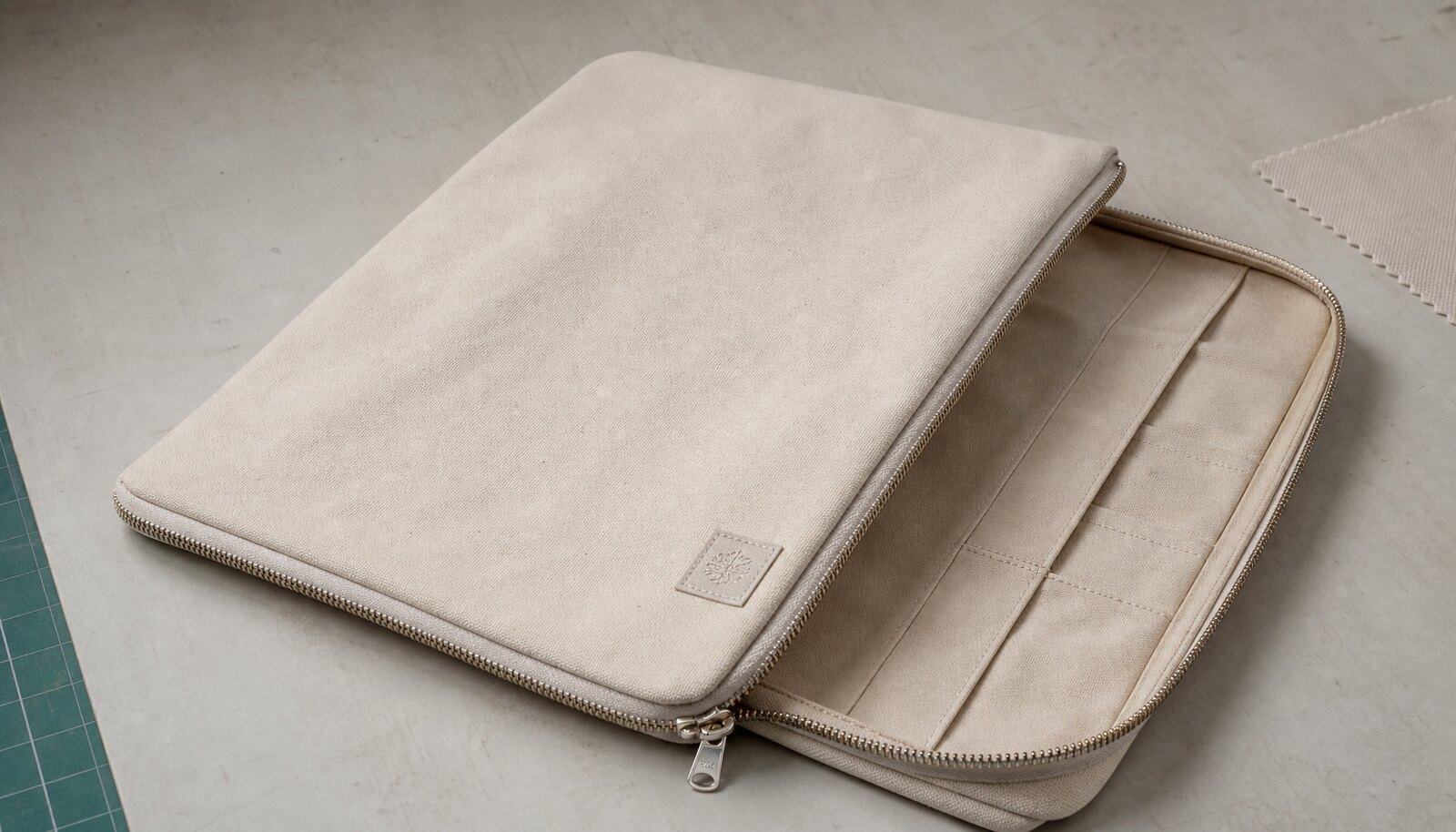
1. Why boutique wineries need a different portfolio spec than a generic document pouch
A canvas zipper portfolio in a boutique winery is not just a storage item. It may be handed to guests at a tasting, carried by staff between rooms, included in a club shipment, or used in a sales meeting with distributors. Each of those settings changes what "good" looks like. A folder that works in a back office can still fail in the tasting room if the zipper feels rough, the body slumps on the table, or the logo sits crooked on coarse canvas.
That is why the spec should start from the guest experience and the working environment, not from the product category. Front-of-house use asks for visual polish, clean handling, and a premium touch. Staff use asks for durability, easy opening, and reinforcement. Retail or club use asks for repeatable branding, carton protection, and a format that looks deliberate when opened. The same portfolio can support all three, but only if the buyer defines the primary use first.
The buyer mistake is to stop at size and decoration. In wine hospitality, material choices influence how the brand is perceived before a word is spoken. A stiff zipper, a baggy lining, or a printed logo that sinks into the weave can undermine the look of a cellar-door presentation. The right procurement approach is to treat the portfolio as a brand touchpoint with mechanical requirements, not as a soft accessory with a logo on it.
- Separate guest-facing, staff-use, and retail/club use cases before requesting quotes.
- Define what the portfolio must carry in real terms, not just by external dimensions.
- Decide whether the priority is premium appearance, daily durability, or low landed cost.
2. Lock the use case and contents before you choose fabric
The contents determine the construction. A portfolio that holds tasting notes and a few cards can be lighter and more flexible than one built for menu sets, event materials, and a branded pen. If it needs to carry a tablet or thick brochure stack, the body needs more structure, the zipper needs more stability, and the interior lining must reduce drag when papers are inserted or removed.
For boutique wineries, the most common sizes are still A4 and letter-size formats, but the real question is usable clearance. A portfolio that technically fits paper but makes the corners catch is not a good fit for repeated front-of-house use. Confirm the actual insert size, the binding thickness if one is included, and whether the portfolio must close cleanly when full. If the product will be used in a tasting room, also test how it looks when it sits open on a table; shape matters as much as capacity.
Think in terms of service flow. A guest folder should open smoothly, present the contents neatly, and close without fighting the zipper. A sales portfolio should survive travel, repeated handling, and quick repacking between meetings. A club packet may need cleaner packing and more polished branding because the unboxing moment is part of the brand experience. When the use case is clear, the fabric, zipper, and lining choices become easier to defend.
- Measure the real insert stack, not only the paper size.
- Test the folder full and empty because the shape changes under load.
- If it will be used at tastings, check how it sits and opens on a tabletop.
3. Canvas weight, weave, finish, and color behavior
Canvas weight is the first material decision that changes the way the portfolio feels in the hand. For most boutique winery programs, 14 oz canvas, or roughly 340-400 GSM, is the most balanced option. It usually gives enough body for a neat silhouette without turning the portfolio into a stiff industrial case. That matters when the product has to look composed in a guest setting and still remain easy to sew at the corners and along the zipper line.
A 12 oz build can work when the goal is a lighter hand feel, lower freight, or a test order that does not justify a heavier structure. It is the safer entry point for first runs, but it is more likely to slouch, show seam imprint, or ripple along the zipper if the contents are uneven. A 16 oz build gives a more substantial presentation and can suit a gift-set insert or premium front-of-house program, but the factory may need a revised pattern, stronger needles, and more careful seam management.
Finish is where many quotes become misleading. Washed canvas softens the hand and can look more refined, but it also introduces more lot-to-lot variation if the mill and finishing process are not controlled. Pre-shrunk canvas helps when the buyer wants better dimensional stability after storage or humidity changes. Light calendering can make the surface look cleaner and improve print clarity, but it may reduce the natural texture that some wineries want to preserve. Ask which finish was used on the approved sample and require the same finish in bulk.
Color behavior matters as well. Natural canvas can vary in warmth from lot to lot. Dyed canvas can change under different lighting conditions, especially in tasting rooms with warm interior lights. If brand color control is important, ask for a lab dip or a physical swatch against the approved reference. The key is not to chase perfection in the abstract; it is to keep the bulk order visually close to the approved sample under the actual lighting where the product will be seen.
- Use 14 oz canvas as the default unless the use case clearly calls for lighter or heavier construction.
- Ask for measured GSM, not just ounce language or trade shorthand.
- Confirm finish, shrink behavior, and color reference against the actual approval sample.
4. Zipper, lining, and reinforcement determine daily usability
The zipper is the functional center of the portfolio, so it deserves a precise spec. For most A4 or letter-size programs, a nylon coil zipper is the safest starting point because it opens smoothly, sits flatter than many alternatives, and is easier for suppliers to source consistently. A #5 zipper is usually the best compromise between appearance and durability. Smaller sizes can feel too light for repeated use, while larger zippers may look heavy unless the portfolio is oversized or carries thick contents.
The pull style should match the brand tone. A minimal pull reads cleaner in a tasting room. A larger pull may be easier for staff use, but it can make the portfolio look more utilitarian. Ask the factory to show the actual pull and tape color in a sample photo, because the visible zipper line can change the whole impression of the piece. If the zipper is a design feature, treat it as one instead of hiding it in the quote.
Inside the portfolio, the lining needs to support paper handling. A smooth woven lining usually works well because it reduces drag and keeps the interior looking tidy. If the folder will be opened and closed repeatedly, reinforce the bottom panel, the zipper ends, and the side seams. Bartacks are useful where stress concentrates. A firmer base insert can stop the body from folding in on itself when the portfolio is partially filled. These details matter more than they seem; they are what separate a neat sample from a product that still looks good after a season of use.
Ask the supplier how the zipper is stitched into the body, whether the corners are reinforced, and what happens if the zipper tape and canvas shrink differently during finishing. Those questions are practical, not academic. They reveal whether the supplier has built this category before or is simply adapting a generic pouch pattern.
- Default to nylon coil and #5 unless you have a specific functional or visual reason to change.
- Specify pull size, pull finish, tape color, and whether the zipper should blend or contrast.
- Ask for close-up photos of zipper ends, corners, and interior seams before approval.
5. Branding method should follow the weave and the order size, not the other way around
Canvas is textured, so decoration has to work with the surface. Screen printing is often the most efficient option for simple logos, one- or two-color artwork, and larger quantities. It can deliver strong contrast and a clean brand mark, but the ink and curing process have to be controlled or the result will sit unevenly on the weave. On a coarse fabric, poor print control shows quickly in small text and thin lines.
Embroidery creates a more tactile and premium impression, which can suit wineries that want a quieter, more crafted look. It is especially effective for emblems, initials, and simplified marks. The tradeoff is that embroidery can distort fine details, pull lighter canvas, and create a raised surface that feels too bulky if the portfolio must stay flat. That is why embroidery should be tested on the actual canvas weight, not judged from a digital proof.
Woven labels, sewn side labels, and small patches are often a strong fit for boutique wineries because they keep the branding restrained while still feeling deliberate. They also tend to be more repeatable across reorders. Heat transfer can work for more complex artwork or smaller runs, but it should not be accepted without rub testing. If the logo sits on the exposed face of the portfolio, ask how it will hold up to hand contact, abrasion from packing, and repeated opening and closing.
The right question is not which method looks best in isolation. It is which method still looks intentional after shipping, storage, and daily handling. For a guest-facing wine product, that standard is higher than for a generic promotional pouch.
- Use screen print for simple graphics and efficient scaling.
- Use embroidery only after checking fine detail, fabric pull, and bulk thickness.
- Use a label or patch when the brand wants subtle, repeatable branding with lower risk.
- For any printed method, test on the actual finished canvas, not on a separate swatch.
6. Supplier qualification and lead-time risk are part of the material decision
A good material spec is only useful if the supplier can actually hold it. For boutique winery programs, the supplier route matters: a direct factory can give better control over construction and substitutions, a trading company can simplify coordination across multiple items, and a small regional maker can work well for limited runs but may struggle with repeatability. The buyer should choose the route based on how often the product will be reordered and how tightly the brand wants to control the final build.
Supplier qualification should go beyond a price sheet. Ask where the fabric, zipper, lining, and packaging are sourced, whether those components come from the same region or from different supply lines, and what happens if a component is delayed. Lead times often slip because one item is available while another is not. That risk grows during holiday shutdowns, seasonal peak periods, and long transit routes between component suppliers and the sewing line. If the order needs to arrive before harvest events or a trade show, the supplier should be able to explain the realistic lead-time buffer, not only the nominal production time.
Request proof of process, not just product images. A serious supplier should be able to share a material swatch, zipper specification, inside-construction photos, and a written inspection checklist. If they cannot explain how they inspect stitch quality, zipper operation, or print adhesion, they may be relying on the sample to carry more quality than the bulk order will receive. That is a procurement risk, not a minor communication issue.
For lead-time planning, separate what can be fixed early from what can change late. Canvas color, zipper family, and branding method should be locked early. Artwork adjustments, minor pull changes, and packaging details can often move later if the supplier is flexible. The more you freeze before production, the less you depend on a fragile component chain.
- Ask where fabric, zipper, lining, and pack materials are sourced and which of those items drive schedule risk.
- Get the supplier to state holiday shutdown windows and likely delay points before you issue the PO.
- Prefer suppliers that can show a written inspection routine and real sample photos from the same build path.
- Treat the supplier route as a quality decision, not only a commercial one.
7. Compare quotes only after you normalize the spec
The cheapest quote is often the one built on the weakest assumptions. Two suppliers can both offer a "canvas zipper portfolio" while quoting very different realities: one may use lighter fabric, a basic stock zipper, thinner lining, and simpler packing; the other may include a heavier canvas, reinforced corners, a better pull, and cleaner unit wrap. If the buyer compares only the total price, the result is noise instead of a usable sourcing decision.
Normalize the quote first. Every supplier should quote the same canvas weight, same finish, same zipper family, same lining, same branding method, and same pack format. If one quote includes tissue and a polybag while another does not, the unit price is no longer comparable. If one supplier uses a pre-existing stock zipper color and another needs to source a special pull or tape, the lead-time and risk profile also differ. Procurement gets sharper when the quote becomes a technical document instead of a sales response.
The commercial question is not only whether the price is lower. It is whether the order can be repeated without a material surprise. A quote that looks slightly higher but includes better sewing control, clearer packing, and fewer substitutions may be the safer buy for a boutique winery that needs consistency across tastings, events, and club shipments. That kind of comparison protects margin later by reducing rework and complaints.
- Make suppliers quote identical specs before you compare prices.
- Ask whether sample and bulk materials will come from the same mill, zipper source, and sewing line.
- Include packing, labels, and inserts in the landed-cost view, not as optional extras.
- Ask for quantity breaks only after the build is normalized.
8. Sampling should lock the build, not just the appearance
A sample that only looks right is not enough. The sample should lock the full build: fabric weight, finish, zipper spec, lining, reinforcement, logo method, and packing method. That matters because many production problems show up only after the folder is used. A beautiful front panel can still hide a poor zipper turn, a weak corner seam, or a lining that grabs paper and makes the product unpleasant in service.
The sample should be tested with the actual insert stack. Put in the tasting sheets, brochure thickness, cards, or pen that the portfolio is expected to carry. Close the zipper fully, open it repeatedly, and check whether the portfolio keeps its shape when full. Also inspect it in normal daylight, not only under workshop lighting. Canvas color, print contrast, and label placement can look different in a tasting room than they do in a sample room.
Write the approval down in a way a factory can follow. Record the exact size tolerance, the approved zipper pull, the accepted logo placement, and the approved packing format. Keep one sealed reference sample and one working sample with notes. If bulk production drifts, you need a physical reference, not just a memory of what looked good in a video call.
Be clear on what can change without reopening approval. A minor pull finish may be acceptable if the function and overall look stay the same. A different canvas weight, a different zipper family, or a different decoration method should usually trigger a new sign-off. That distinction saves time later because it separates cosmetic flexibility from structural change.
- Test the sample with real inserts and under the actual lighting where it will be used.
- Freeze the material list in writing before bulk production starts.
- Keep one sealed approved sample as the reference for final inspection.
- Treat any change to fabric, zipper, or decoration method as a formal revision.
9. QC needs exact tests, not generic quality language
Quality control gets stronger when it becomes measurable. Terms like "good stitching" or "clean finish" do not tell the factory what to inspect or what to reject. For this category, the QC plan should define critical, major, and minor defects, plus the exact tests used for zipper function, print durability, seam strength, and measurement tolerance. That is especially important for winery orders, where the product may be distributed to guests, clients, and partners rather than used only internally.
For zipper durability, use a simple cycle test on approval samples: open and close the zipper at least 20 full cycles, including the corner turns, and watch for catching, splitting, or wobble in the seam line. For print durability, run a dry rub test after curing, then a light tape-pull check on a non-critical edge of the printed area if the decoration method allows it. For embroidery, inspect for tunneling, puckering, or thread breaks under normal handling. These are practical tests that match how the product will actually be used.
Measurement control should be written in millimeters. Finished size tolerance, logo placement tolerance, and the location of reinforcement points should all be measured from agreed reference edges. If the buyer needs a production photo set, ask for front, back, interior, zipper-end, and corner photos from the final inspection batch. That creates a visible record of whether the bulk order matches the approved sample.
The acceptance rule should be explicit. If a zipper fails to close, if print peels, if the logo is placed outside tolerance, or if seams open at stress points, those defects should be treated as major or critical depending on severity. Clear thresholds make inspection faster and reduce dispute later.
- Define critical, major, and minor defects before production begins.
- Use a zipper cycle test on approval units and verify corner performance.
- Apply dry-rub and light tape-pull checks to printed logos after curing.
- Measure size and placement in millimeters, not by visual estimate alone.
- Require final inspection photos of front, back, interior, and stress points.
10. Packing, receiving, and the final RFQ checklist
Packing is part of product quality because it determines what arrives at receiving. Flat packing usually makes the most sense for canvas zipper portfolios, but it still needs protection. Tissue wrap, a polybag, a small insert board, or carton-level moisture protection may be appropriate depending on the destination and the storage conditions. If the winery will hand the item directly to guests or place it in club shipments, the unboxing and first touch matter enough to justify cleaner unit packing.
Receiving teams should also know what to expect before the carton arrives. Ask for the pack count, carton size, gross weight, and the packing sequence. If the order is shipping through humid or variable routes, ask how the factory protects the goods from moisture or compression. A pristine sample can still arrive with bent zipper pulls, scuffed canvas, or crushed corners if the packing method is too aggressive.
A practical RFQ should read like a controlled brief rather than a style note. State the use case, contents, exact canvas spec, zipper spec, lining, decoration method, quantities, pack format, and the inspection standards. Then state what the supplier must return: swatches, zipper info, artwork proof, interior-construction photos, and a written QC checklist. That is the point where a custom portfolio project becomes manageable. If the order is for a recurring winery program, standardize the base build and vary only the artwork or label so the reorder path stays stable.
- Ask for unit wrap, carton count, carton dimensions, and gross weight in the quote.
- Confirm whether zipper pulls are protected during packing to avoid scuffs and dents.
- Keep the packing format fixed once the sample is approved.
- Use the RFQ to lock the build, the inspection standards, and the packaging method in one place.
- For repeat winery programs, standardize the body and vary only the branding where possible.
Specification comparison for buyers
| Spec decision | Recommended option | When it fits | Buyer risk to check |
|---|---|---|---|
| Base canvas weight | 14 oz canvas, roughly 340-400 GSM | Best balance for tasting-room folders, guest inserts, and reusable sales materials | Confirm the quote states measured GSM and not only a vague "heavy canvas" description |
| More structured build | 16 oz canvas, roughly 400-450 GSM | Use for front-of-house presentation pieces, club packets, or gift-set inserts | Check seam bulk, edge stiffness, and whether the factory needs a revised pattern |
| Lighter first-run build | 12 oz canvas, roughly 300-340 GSM | Useful for test launches, lower freight, or staff-only use with lighter contents | Watch for slouching, zipper waviness, and weak corner recovery |
| Canvas finish | Pre-shrunk, washed, or lightly calendered canvas | Helpful when the winery wants consistent sizing and a cleaner finished hand feel | Ask which finish was on the approved sample and whether bulk fabric matches it |
| Zipper type | Nylon coil zipper, usually #5 for A4 or letter-size portfolios | Smooth opening, broad supplier availability, and lower bulk at the seam | Confirm pull style, tape color, and how the zipper was tested at the corners |
| Lining | Smooth poly-cotton or plain woven lining | Good for paper handling, inserts, and repeated opening during tastings or events | Check for puckering, loose cut edges, and color transfer |
| Decoration method | Screen print for simple art; woven label or embroidery for a more restrained premium look | Matches the logo complexity and the order size without adding unnecessary cost | Verify logo placement tolerance and rub resistance after handling |
| Reinforcement | Bartacks, zipper-end reinforcement, and optional base insert board | Useful for repeated open-close use or portfolios carrying thicker inserts | Request close-up proof of stress-point construction |
| Packing | Flat pack with tissue or polybag, plus carton protection as needed | Reduces freight cost while keeping the product neat on arrival | Confirm pack count, carton size, and moisture protection before approval |
Buyer checklist before sampling
- Define the exact use case first: tasting sheets, guest folders, sales decks, event notes, member packets, or a retail gift insert.
- List the contents that must fit inside: paper size, brochure thickness, pen loop, card pocket, or tablet sleeve if needed.
- Choose the presentation setting before choosing the fabric: tasting room, cellar door, trade event, hospitality kit, or distributor meeting.
- Specify canvas weight and finish together, not as separate afterthoughts.
- State zipper type, zipper size, pull style, and tape color in the RFQ so the visible hardware matches the brand tone.
- Choose a lining based on handling: smoother lining for paper-heavy folders, tougher lining for staff use, and cleaner edges for guest-facing programs.
- Decide whether the portfolio needs a firmer base, corner reinforcement, extra topstitching, or bartacks at the zipper ends.
- Provide vector logo files and a measured placement guide with dimensions from the top edge, side seam, and centerline.
- Confirm the decoration method by sample, not by mockup alone, and require the same canvas, thread, and zipper colors intended for bulk.
- Require a pre-production approval sheet that records size, GSM, finish, zipper spec, logo method, packing method, and inspection tolerances.
Factory quote questions to send
- What is the exact canvas GSM, weave density, and surface finish you are quoting, and can you send a swatch from the same lot?
- Is the canvas pre-shrunk, washed, calendered, or lightly coated, and what changes should we expect in size stability or print adhesion?
- What zipper type, zipper size, pull style, and tape color are included in the quote, and are those stock items or custom-sourced components?
- Where are the fabric, zipper, lining, and packaging components sourced from, and which of those supply lines create the biggest lead-time risk?
- What is the MOQ by canvas color, zipper color, and logo method, and do setup charges change when any of those variables change?
- Will the sample be made with bulk-grade fabric, zipper, lining, and thread, or with substitute materials?
- What are your standard stitch, measurement, and visual defect tolerances for this portfolio size?
- How do you test zipper durability, seam strength, and print or label adhesion before shipment?
- Can you share the packing method, carton size, unit wrap, and moisture protection included in the quoted price?
- If we need a second sampling round, what can be reused from the first sample and what will be charged again?
Quality-control points to confirm
- Canvas GSM stays within the agreed range, with no obvious thin areas, open weave gaps, or panel-to-panel weight drift beyond the written tolerance.
- Finished size stays within ±5 mm for smaller formats and within ±8 mm for larger formats unless the supplier confirms a different standard in writing.
- The zipper runs smoothly through at least 20 full open-close cycles on the approval sample, including corner turns, without catching, gaping, or separating.
- Stitch density is even and consistent; there should be no skipped stitches, loose thread ends, broken bartacks, or seam puckering around the zipper line.
- Logo placement stays within ±3 mm of the approved position for print, label, or patch placement on the front panel.
- Screen print passes a dry-rub test and a light tape-pull check after cure, with no blotching, peeling, or incomplete coverage across the canvas texture.
- Embroidery is cleanly tensioned with no tunneling, thread breaks, puckering, or distorted small text.
- The lining lies flat, with trimmed seams and no raw-edge fraying visible inside, and no corner puckering that could snag paper.
- Reinforcement is present at the zipper ends, side seams, and other stress points that flex during repeated use.
- No visible oil stains, glue marks, needle strikes, shade contamination, or zipper tape defects appear on the finished unit.