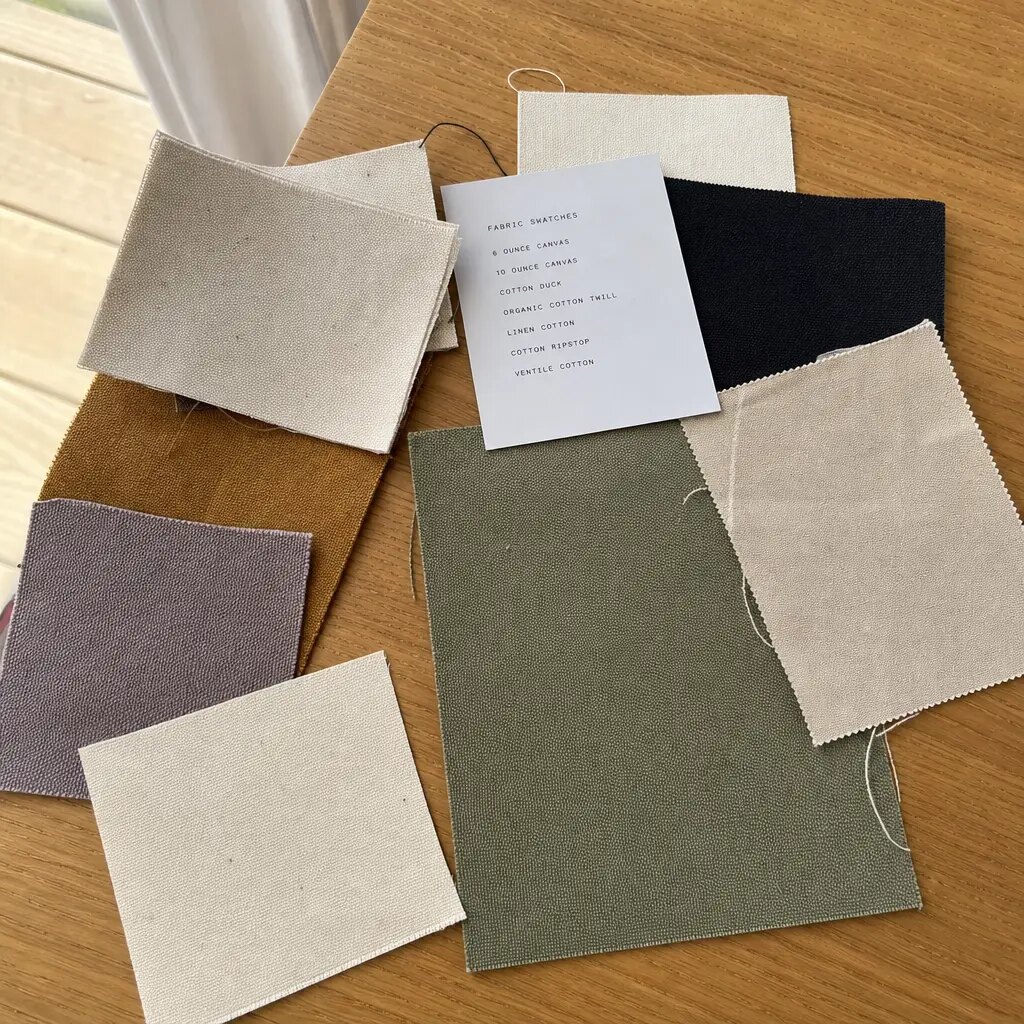
Start With the Hotel Retail Use Case
A canvas zipper portfolio for hotel retail should not be specified like a basic conference pouch. The item may be sold in a resort gift shop, placed inside a guestroom, used as a welcome-kit holder, packed with spa vouchers, or offered as a reusable travel document organizer. Each scenario changes the right logo size, logo position, construction level, and packing method. A bold centered logo may suit a hotel merchandise wall. A quiet woven side label may be better for a boutique property that wants the product to feel like an accessory rather than a giveaway.
Before artwork approval, procurement teams should decide where the portfolio will be seen and how it will be handled. Will guests see it stacked flat at the front desk, standing upright in a shelf display, hanging on a peg, or sitting beside stationery and amenity products? Will staff hand it over with documents already inside, or will it be sold empty? The same logo can read differently when the portfolio is closed, opened like a book, carried under the arm, or pulled from a packed retail shelf.
Brand scale needs the same kind of judgment. Oversized branding can reduce perceived retail value, especially on natural canvas where the material itself is part of the appeal. Too little branding can make the item hard to connect with the hotel identity or weak in e-commerce photos. The strongest sourcing brief explains why the logo belongs in a specific zone, how large it should be, and how that decision supports the display environment.
Hotel groups and distributors also need repeatability. One portfolio body may carry several property logos, including short names, long wordmarks, crests, monograms, and co-branded marks. It is usually safer to create one controlled logo area than to adjust the sewing pattern or placement logic for every property.
- For gift shops, test the logo view when the portfolio is stacked flat, stood upright, hung, and photographed for online listings.
- For welcome kits, confirm whether the logo should face the guest when staff hand over the portfolio at check-in.
- For boutique hotels, consider a woven side label or lower-corner mark to keep the product retail-ready.
- For resort or chain merchandise, a larger front logo can work if the panel stays flat and avoids zipper bulk.
- For distributors, create one repeatable logo zone that can handle several hotel marks without changing the body pattern.
Define the Portfolio Body Before the Logo
Logo placement becomes reliable only after the body is defined. A buyer should specify finished size, orientation, zipper opening, gusset, lining, pocket layout, and corner shape before approving artwork. For an A4 document portfolio, internal usable space matters more than the outside measurement. A portfolio can measure correctly on the outside and still fail if the zipper opening is too short or the internal pocket is too shallow for menus, welcome letters, vouchers, or tablet sleeves.
Hotel retail portfolios are often flat zip-around, L-zip, or top-zip designs. A zip-around style gives wider access and a more structured retail feel, but zipper tape and corner bulk reduce the flat logo area. A top-zip sleeve is simpler and often lower cost, yet it may not present as strongly on a shelf. A gusseted portfolio can hold bulkier amenity sets or stationery, but the gusset fold changes how a side label and front logo sit when the item is filled.
Finished dimensions should be written in millimeters and linked to the contents. If A4 paper is required, allow clearance for paper size, pocket seam allowance, lining thickness, and zipper opening. If a tablet is intended, state the target device dimensions and whether padding or soft lining is required. These details affect sewing tolerance, carton volume, freight weight, and the usable decoration area.
Avoid phrases such as standard size or premium canvas. Suppliers may interpret them in very different ways. A procurement-ready specification states the target external size, target internal capacity, canvas weight, lining, zipper type, decoration method, packing format, and inspection tolerances. That level of detail makes supplier quotes easier to compare and reduces avoidable sampling loops.
- State external width and height, internal usable space, zipper opening length, pocket depth, and gusset if any.
- Specify whether the portfolio is flat, gusseted, top-zip, L-zip, or zip-around because each style changes logo space.
- Confirm the contents to be carried: A4 papers, menus, vouchers, stationery, tablet, amenity items, or mixed inserts.
- Define corner radius and seam allowance when the logo sits near a corner or lower front edge.
- Ask the factory to mark the usable decoration area on the blank sample before final artwork placement.
Map the Logo Zone Before Artwork Approval
One common sourcing mistake is approving artwork before defining the physical logo zone. A canvas zipper portfolio has limits that are easy to miss in a digital proof: zipper tape thickness, seam allowance, corner radius, folded edges, pocket layers, inner stiffener, lining, and sometimes a gusset. If the logo crosses a raised or curved area, a screen print can break, embroidery can pucker, and a patch can sit unevenly. The factory needs placement instructions measured from finished product edges, not only a visual mockup.
For a front logo, specify whether the mark is centered on the total front panel or centered on the visible flat area excluding zipper tape and seam bulk. Those are not the same instruction. A logo centered mathematically on the full panel may look visually low if the zipper tape dominates the top edge. A logo placed by eye can look right on one sample but become difficult to repeat unless the approved sample and tolerance are clear.
Lower-right placement is often a safe retail choice because it behaves like an accessory detail and avoids a promotional look. Lower-center can work for clean modern branding if the portfolio is displayed flat. Centered front placement gives stronger identity, but it must be scaled carefully. Side seam labels are subtle and useful for multi-SKU programs, yet visible length and reading direction must be specified before sewing.
A useful RFQ includes a placement diagram, a marked product photo, and measurements in millimeters. The file should show finished edges, zipper line, seam allowance, pocket edges, folds, and the intended logo baseline. If the logo is close to a corner, confirm the final corner radius because a 3-5 mm shift can be obvious on a compact portfolio.
- Use millimeter measurements from finished left edge, right edge, bottom edge, zipper line, pocket edge, or seam line.
- Keep screen prints at least 20-30 mm away from bulky seams unless the factory confirms a flat printing surface.
- Avoid embroidery over folded edges, thick seam intersections, or areas with pocket layers underneath.
- Specify whether the logo is centered by geometry, visual balance, or alignment to another feature such as a zipper or pocket.
- Approve a marked blank sample when placement is important or when several hotel logos will share one body pattern.
Compare Front, Side, Inside, and Zipper Branding
Hotel retail buyers do not need to rely on one logo position, but the best programs avoid clutter. A strong specification often uses one primary brand mark and one secondary traceability detail. For example, a lower-right front screen print can carry the hotel identity while a small inside woven label carries private-label information. A centered logo can be paired with an unbranded zipper pull to control cost. A side label can be paired with a branded pull tab for a quieter premium finish.
Front placement is easiest for guests to notice and easiest for online retail photography. It is also where defects are most visible. Any crooked print, color mismatch, pressure mark, patch wrinkle, or embroidery pucker sits on the display face. The front panel should be checked after the product is fully sewn, not only as a decorated fabric panel before assembly.
Side labels create less visual risk, but they need disciplined sewing. If the label is inserted too deeply into the seam, the product may technically carry the brand while the brand is barely visible. Specify visible length, fold type, seam position, logo reading direction, label background color, and whether the label must be visible when portfolios are stacked.
Inside branding is useful when the exterior should stay clean. It can carry a logo, care note, SKU code, origin information, or co-branding. The risk is transfer or abrasion if the inside print contacts paper inserts, menus, or tablet screens. Inside prints should be tested after curing and after packing compression. Woven labels inside pockets should not scratch contents or create a lump that marks the outer panel.
Zipper pull branding is small, but it is not minor. Guests touch the zipper before they notice many construction details. A cotton tape pull, stamped PU pull tab, genuine leather pull tab, or custom metal puller can improve perceived value. It also adds component decisions: tooling, plating, color matching, pull strength, sharp-edge control, and separate component MOQ should all be confirmed.
- Use front branding when retail visibility, shelf recognition, or photography impact matters most.
- Use side labels when the product should feel minimalist, boutique, or consistent with other canvas accessories.
- Use inside branding for traceability, private-label ownership, or subtle co-branding without changing the exterior look.
- Use zipper pull branding when the target retail price justifies component tooling and extra approval time.
- Avoid stacking too many visible marks; hotel retail usually looks stronger with one intentional exterior logo.
Match Canvas Weight to Decoration Method
Canvas weight affects logo quality as much as handfeel. A 10 oz canvas may be acceptable for a low-cost document sleeve, but it often lacks the structure expected in hotel retail unless lining or interlining is added. A 12 oz canvas, approximately 380-410 GSM depending on yarn and finish, is a practical baseline for many zipper portfolios. A 14 oz canvas generally gives more body and a stronger retail handfeel. A 16 oz canvas can feel premium, but it increases sewing difficulty around zipper ends, corners, pocket layers, and turned seams.
Decoration must be chosen with the fabric surface in mind. Natural cotton canvas often has slubs, uneven yarns, and small shade variation. These details can be part of the appeal, but they can interrupt fine print lines. Water-based screen print works well for clean one-color or two-color marks, especially when the panel is printed before sewing. Fine typography, small registered marks, and thin lines require a strike-off on production fabric, not only a digital proof.
Embroidery adds texture and perceived value, yet it can distort a flat portfolio panel if the canvas is too light or the stitch density is too high. A small crest, monogram, or short wordmark is safer than a dense filled logo. Patches work best on heavier canvas, but they add layers that can affect packing and corner sewing. Woven labels work across many fabric weights and are practical for repeat hotel programs, provided label MOQ and seam placement are planned early.
Do not specify canvas weight only by ounce. Ask for GSM, finish, weave, shrinkage status, and whether the fabric is stock or custom dyed. Two fabrics described as 14 oz can feel different if one is washed and soft while another is stiff and tightly woven. The approved sample should represent the actual bulk fabric finish because logo sharpness, panel flatness, shade, and packing marks can change when the fabric changes.
- 12 oz canvas suits one-color screen print, woven labels, light embroidery, and portfolios needing moderate structure.
- 14 oz canvas improves shelf presence and supports patches, larger portfolios, and lined document organizers.
- 16 oz canvas feels premium but needs careful sewing, realistic tolerances, and stronger packing protection.
- Washed canvas has softer handfeel but may reduce print crispness and increase shade variation.
- Custom dyed canvas improves brand color direction but often adds fabric MOQ, lab dip approval, and schedule risk.
Choose Decoration That Can Scale
A logo method that looks good on one sample must also be repeatable across bulk production. Screen printing is usually efficient for flat one-color to three-color logos. It is most reliable when the canvas panel is printed before assembly because the printer can work on a flat surface. Printing after sewing reduces usable area and raises the risk of uneven pressure near seams, zipper tape, raised pockets, and corners.
Embroidery should be quoted by stitch count and thread colors, not only by logo size. A small but dense hotel crest can cost more than a larger simple wordmark. Request an embroidery strike-off on the intended canvas and check both the front appearance and the reverse side. Backing should be clean, soft enough for the intended contents, and trimmed so it does not catch on paper, tablet sleeves, or menus.
Woven labels are useful when a hotel group wants consistent branding across portfolios, totes, amenity pouches, and zipper bags. Once the label is approved, it can often be reused for multiple products if the size and fold type work. Specify label material, fold type, visible length, background color, logo color, seam insertion depth, and orientation. If the label is placed in the side seam, the sewing team must know which direction the logo should face when the portfolio is closed.
Patches can make a canvas portfolio feel more substantial, especially in resort retail. PU patches, genuine leather patches, cotton patches, and debossed patches each have different cost, tooling, compliance, and lead-time implications. Patch edges, stitching color, thickness, and backing material should be specified. Buyers should also test whether the patch leaves an impression on the opposite panel when portfolios are packed flat under carton pressure.
Heat transfer can reproduce detailed artwork, but textured canvas is not always an easy surface for clean edge adhesion. If heat transfer is proposed, require a sample on the exact canvas. Check edge lifting, handfeel, cracking after flexing, and whether the film looks too synthetic for the intended hotel retail position.
- Screen print is best for clean flat marks, moderate logo size, controlled cost, and repeatable front placement.
- Embroidery is best for small premium marks where texture matters more than fine line detail.
- Woven labels are best for subtle retail identity and multi-SKU private-label consistency.
- Patches are best for heavier canvas and programs where tooling, labor, and packing protection are acceptable.
- Heat transfer should be sampled carefully on textured canvas because edge adhesion and handfeel can vary.
Build a Procurement-Ready RFQ
A strong RFQ reduces quote confusion. For canvas zipper portfolios, include finished dimensions, reference sample or sketch, canvas weight, fabric color, lining, pockets, zipper type, logo method, logo size, placement diagram, packing, quantity tiers, per-logo quantities, delivery destination, and required shipment date. If these details are missing, one supplier may quote a thin unlined pouch while another quotes a lined retail portfolio. The numbers will not be comparable.
Separate the portfolio body from decoration and packing. This matters for hotel retail programs where one body may be used for several properties. A distributor may order 3000 pieces total but split them across six hotel logos. The factory needs total body quantity for cutting and sewing efficiency, and per-logo quantity for printing, embroidery, labels, patches, pullers, barcodes, and carton marks.
Quote options are useful when they are controlled. For example, request pricing for 12 oz natural canvas with one-color screen print, 14 oz natural canvas with woven side label, and 14 oz dyed canvas with patch. That structure helps procurement compare value. Asking only for the best price often produces under-specified quotes that exclude the retail details needed later.
Artwork files should be production-ready. Vector files are preferred for screen print, patches, woven labels, and metal pullers. Pantone references should be supplied where color is important, but ink on natural cotton canvas will not look identical to ink on coated paper. The correct approval is a strike-off on the actual fabric or component material.
The RFQ should also identify the commercial basis of the quote. Ask whether the price includes sample cost, setup charges, tooling, lab dips, retail packing, carton markings, export carton, inspection support, and documents. For imported goods, request carton dimensions, gross weight, net weight, and estimated CBM so logistics teams can compare landed cost, not only unit price.
- Include finished size, zipper opening, pocket layout, lining, interlining, and size tolerance.
- State canvas ounce or GSM, fabric color, finish, shade standard, and whether fabric is stock or custom dyed.
- Provide vector artwork, Pantone references, logo size, decoration method, placement diagram, and placement tolerance.
- Request quantity tiers such as 300, 500, 1000, 3000, and 5000 pieces, plus quantity per logo version.
- Ask suppliers to itemize sample charge, tooling charge, decoration setup, packing cost, carton data, and lead time.
Understand MOQ and Cost Drivers
MOQ is not determined only by the portfolio shape. It can be driven by fabric purchasing, dyeing, zipper color, lining fabric, label weaving, patch tooling, metal puller tooling, print setup, packing materials, and factory line efficiency. A stock natural canvas portfolio with one-color screen print may support a lower MOQ than a custom dyed canvas portfolio with a branded zipper puller and private woven label.
Decoration MOQ can differ from sewing MOQ. A factory may be willing to sew 300 portfolios, but the woven label supplier may require a higher label quantity. A metal zipper puller may need tooling and a component MOQ that exceeds the first purchase order. A leather patch may require die cutting or embossing setup. Ask which MOQ belongs to which component so the final quote does not change after artwork approval.
Cost also changes with placement. A print on a flat panel before sewing is usually more efficient than decoration after assembly. A patch on a simple front panel may be straightforward, while a patch near a zipper or seam requires more handling and inspection. A side label can be inexpensive per unit, but it adds sewing control requirements if the visible length must be precise.
Retail packing is another cost driver. Individual paper sleeves, barcode labels, tissue wrap, hangtags, silica gel, and inner cartons all add material and labor. They can also increase carton volume, which affects landed cost. Procurement should compare unit price and freight impact together, especially for heavier canvas portfolios with structured lining.
For multi-property hotel programs, artwork variation can become a hidden driver. Six logos may require six samples, six print screens or embroidery programs, six packing labels, and separate carton marks. If each property needs a different delivery address, the factory may also need split packing and additional warehouse handling.
- Main product cost drivers include canvas weight, lining, pocket complexity, zipper grade, seam construction, and finished size.
- Main logo cost drivers include method, logo size, number of colors, stitch count, patch material, label MOQ, and tooling.
- Main program cost drivers include number of hotel logos, per-logo quantity, sample revisions, packing format, and shipment split.
- Custom dyed fabric, branded pullers, woven labels, and leather patches often create separate MOQs from the sewn product.
- Ask for landed-cost inputs such as carton size, gross weight, pieces per carton, and estimated CBM.
Approve Samples as Production Standards
Samples should be treated as production evidence, not sales images. The first sample may be a development sample used to confirm size, pocket layout, zipper direction, and general handfeel. The pre-production sample should become the standard for bulk production and should use final canvas, final fabric color, final lining, final zipper, final logo method, final logo placement, final trims, and proposed packing. Label each approved sample clearly so the factory, inspection company, and internal team refer to the same standard.
For logo placement, measurements should be taken from the finished portfolio, not from the flat fabric panel before sewing. Sewing can shift panels slightly, and turned corners can change visual alignment. The sample should be measured in the same way the final inspection will measure it. If the logo is lower-right, measure from the bottom finished edge and right finished edge. If the logo is centered, define whether the center is based on the total panel or visible flat area.
A sample review should include real use. Insert the actual items the portfolio will hold, such as A4 documents, restaurant menus, guest welcome letters, stationery, vouchers, or a tablet. Zip the portfolio closed and open it several times. Check whether the zipper pull touches the logo area, whether the portfolio lies flat, whether inner pockets twist when filled, and whether the opening is large enough for the intended contents.
Packing should also be sampled. Natural canvas is vulnerable to pressure marks, especially when metal zipper pullers or patch edges press against another panel. Keep the sample packed for 24-48 hours under light compression, then inspect the front face. This check can reveal zipper impressions, dye transfer, fold lines, barcode adhesive problems, or patch marks before bulk goods are packed.
- Approve separate development and pre-production samples when construction changes are still being tested.
- Measure logo placement on the finished product and record the approved distances in millimeters.
- Review the logo under lighting similar to the hotel shop, lobby retail area, or e-commerce photo setup.
- Test zipper movement, pocket capacity, panel flatness, print rub resistance, and packing compression.
- Keep one signed approval sample with the factory and one with the buyer or third-party inspector.
Set QC Thresholds Before Bulk Cutting
Logo placement defects are hard to repair after production. A crooked screen print cannot be moved. A patch removed from canvas can leave holes or marks. A twisted side label may require opening a seam. Quality thresholds should be agreed before fabric cutting and decoration begin. The purchase order should define tolerances, critical defects, major defects, minor defects, and the inspection standard used to accept or reject goods.
For many flat canvas zipper portfolios, finished size tolerance of ±5 mm is practical. Logo placement tolerance is often tighter because the eye notices misalignment quickly. Screen print and woven labels can commonly be controlled within ±3 mm when the process is stable. Larger embroidery or patches may need ±5 mm because the canvas can shift during hooping or sewing. If the buyer requires tighter tolerances, discuss that before pricing because tighter limits may increase setup time, inspection time, and rejection risk.
QC should begin at pre-production and continue inline. The first decorated panels should be checked before all panels are printed or embroidered. Early sewing output should be checked before the full batch is assembled. This is especially important when printing happens before sewing because a decoration error can multiply quickly across hundreds or thousands of panels.
Inspection should separate fabric character from defects. Natural canvas may include slubs and small yarn irregularities, but dirt, oil stains, severe shade mismatch, odor, and visible contamination are different issues. Approve a fabric swatch or shade band and define what level of natural texture is acceptable. Hotel retail products are often stacked together, so shade inconsistency becomes more visible than it would on single-use promotional items.
Functional QC matters even when the logo looks correct. Zipper operation, pocket alignment, seam strength, bartacks, thread trimming, corner turning, and packing marks all affect guest experience. A hotel buyer may reject a portfolio that looks good in photos but snags during opening or arrives with visible pressure lines across the display face.
- Define critical defects such as wrong logo, wrong product, unsafe sharp component, or unusable zipper.
- Define major defects such as wrong logo position, wrong color, broken zipper, open seam, dirty front panel, severe twisting, and visible packing marks.
- Define minor defects such as small thread ends, minor approved slubs, or slight shade variation within the accepted range.
- Check first printed or embroidered panels before bulk decoration continues.
- Use the signed pre-production sample as the standard for canvas handfeel, shade, logo size, placement, stitch quality, and packing.
Specification comparison for buyers
| Spec decision | Recommended option | When it fits | Buyer risk to check |
|---|---|---|---|
| Lower-right front logo | One-color screen print, woven patch, or small embroidery, typically 35-60 mm wide, placed 25-35 mm from finished bottom and side edges | Boutique hotel retail, resort gift shops, spa welcome kits, stationery sets, and understated private-label programs | Can look too small in product photos or when stacked; approve a real-size sample and display view, not only a flat artwork proof |
| Centered front logo | Screen print, embroidery, or patch, typically 70-110 mm wide on A4-size portfolios, positioned on the flat panel and clear of zipper bulk | Hotel merchandise, loyalty gifts, property-opening kits, and programs needing stronger brand recognition | Large marks can look promotional or distort on textured canvas; check print edge sharpness, embroidery puckering, patch flatness, and logo angle |
| Side seam woven label | Woven cotton or polyester label with 20-35 mm visible length, sewn into the side seam or zipper-side seam; specify fold type and reading direction | Minimalist hotel retail, multi-SKU private label, and buyers who want consistent branding across totes, pouches, and portfolios | Label can twist, sit too deep in seam allowance, or disappear when stacked; inspect visible length, orientation, and seam reinforcement |
| Inside pocket logo | Small woven label or one-color print inside flap, document sleeve, or pocket, commonly 25-50 mm wide | Premium retail where the exterior should stay clean but traceability, brand ownership, or co-branding is required | Inside print may transfer to paper inserts if curing is weak; require rub testing, packing compression review, and a clear location drawing |
| Zipper pull branding | Custom metal puller, cotton tape pull, or PU/genuine leather pull tab with embossed, debossed, stamped, or woven mark | Higher-priced hotel retail SKUs where tactile details support the guest experience and retail value | Tooling, component MOQ, plating/color matching, and pull strength can affect cost and lead time; test zipper function after adding the branded pull |
| Canvas weight | 12-16 oz cotton canvas, approximately 380-540 GSM depending on yarn, weave, and finish; add lining or interlining when structure is needed | Hotel retail portfolios carrying A4 documents, menus, welcome letters, vouchers, tablets, stationery, or amenity sets | Light canvas can collapse; heavy canvas creates bulky corners, higher freight weight, and sewing stress around zipper ends |
| Decoration method | Water-based screen print for flat marks, embroidery for small premium marks, woven label for subtle repeat branding, patch for heavier canvas | Buyers comparing cost, finish, durability, and MOQ across 300-5000 pieces or multiple hotel logos | Pantone matching shifts on natural canvas due to fiber color and ink absorption; approve strike-off on the actual production fabric lot |
| Placement tolerance | Set written tolerance before production: commonly ±3 mm for print and side labels, ±5 mm for larger embroidery or patches, and ±2° for visible logo angle where practical | Programs where several hotels, distributors, or third-party inspectors must judge the same standard objectively | Without tolerance, buyer and factory may disagree at final inspection; define critical, major, and minor defects before bulk decoration |
| Finished size tolerance | For simple flat zipper portfolios, ±5 mm on width and height is often practical; pocket opening and zipper opening should have separate tolerances if function-critical | Orders carrying documents, tablets, menus, or printed inserts that must fit reliably | A portfolio can pass visual QC but fail function if the zipper opening, pocket depth, or internal clearance is not controlled |
Buyer checklist before sampling
- Define the commercial use before decoration: retail sale, guestroom welcome-kit holder, itinerary wallet, tablet sleeve, menu holder, amenity voucher kit, stationery set, spa package, or loyalty gift.
- Confirm finished dimensions in millimeters, including width, height, gusset if any, zipper opening length, corner radius, pocket depth, pocket opening, internal clearance, and acceptable size tolerance.
- Specify canvas by ounce and GSM, fiber content, weave, color, finish, shrinkage or washed status, lining, padding, interlining, and whether fabric is stock, custom dyed, laminated, or pre-washed.
- Fix the logo zone with measurements from finished edges, zipper tape, bottom seam, side seam, pocket edge, gusset fold, or visible flat panel instead of saying only front logo.
- State logo size in millimeters, number of colors, Pantone references, artwork file type, decoration method, placement tolerance, angle tolerance if needed, and whether centering is based on the total panel or visible flat area.
- Check how the logo appears when the portfolio is stacked, hung, carried under the arm, displayed on a shelf, opened at the counter, inserted into retail packaging, and photographed for online retail.
- Confirm zipper type, zipper tape color, teeth material, slider finish, puller style, pull tab material, stopper finish, opening direction, and whether the zipper pull carries secondary branding.
- Separate total order quantity from quantity per hotel logo, colorway, packing version, barcode, destination, hangtag, carton mark, and language label in the RFQ.
- Approve a pre-production sample made with final canvas, final zipper, final lining, final decoration, final logo position, final trims, and proposed retail packing.
- Define QC acceptance before production: finished size, logo distance, logo angle, print adhesion, embroidery puckering, label visibility, zipper smoothness, seam strength, pocket flatness, shade range, cleanliness, odor, and packing marks.
Factory quote questions to send
- What exact canvas is included in the price: 12 oz, 14 oz, 16 oz, GSM range, plain weave, washed canvas, dyed canvas, laminated canvas, lined canvas, padded canvas, or canvas with interlining?
- Is the fabric stock natural canvas, stock dyed canvas, or custom dyed fabric, and what fabric MOQ, lab dip process, color tolerance, shrinkage expectation, and lead time apply to each option?
- Which decoration method is priced: water-based screen print, plastisol print, heat transfer, embroidery, woven label, cotton label, PU patch, genuine leather patch, metal puller, cotton zipper pull, or inside label?
- What logo size, number of print colors, stitch count, label size, patch size, puller size, or tooling is included before extra setup, screen, embroidery, mold, die, or component MOQ charges apply?
- Can the requested logo be placed at the specified distance from zipper tape, seam allowance, corner radius, pocket edge, interlining edge, or gusset fold without distortion during sewing, printing, or pressing?
- Will the development sample and pre-production sample use the same bulk fabric, lining, zipper, puller, label, patch, thread color, and packing method as the production order?
- What are the sample lead time, strike-off lead time, lab dip lead time if applicable, tooling lead time, bulk production lead time, inspection window, and artwork approval deadline needed to protect the shipment date?
- If multiple hotel logos are ordered on one portfolio body, what is the price impact, setup charge, decoration MOQ, sample requirement, and schedule impact for each logo version?
- What packing method is included, and how does it prevent zipper pullers, metal teeth, patch edges, dark labels, hangtags, or barcode stickers from marking the canvas surface?
- What inline and final checks are performed for logo placement, logo angle, print adhesion, color variance, zipper function, seam strength, pocket alignment, finished size, shade range, odor, contamination, and packing marks?
Quality-control points to confirm
- Finished size tolerance should be written before production. For simple flat zipper portfolios, ±5 mm on width and height is often practical; zipper opening length and pocket depth should be controlled separately when documents, tablets, or menus must fit.
- Logo placement tolerance should be agreed by method. Screen print and woven label placement are commonly controlled within ±3 mm when fixtures are used; larger embroidery or patch placement may need ±5 mm because canvas can shift during hooping or sewing.
- Logo angle should be checked in addition to edge distance. A logo within distance tolerance but visibly tilted can still be unacceptable for hotel retail; use an agreed visual standard or angle limit where inspection teams can measure it.
- Print should pass dry rub and light scratch checks after curing. Dark ink on natural canvas should show clean enough edges for the approved artwork unless broken texture from canvas slub is specifically accepted on the signed strike-off.
- Pantone color should be checked on the actual canvas color and fabric lot, not only on paper, screen, or digital proof. Natural canvas can shift beige, grey, yellow, or off-white under hotel lobby and gift shop lighting.
- Embroidery should not pucker the front panel or distort the portfolio shape. Backing should be trimmed cleanly and should not scratch paper documents, tablet sleeves, menus, or guest inserts inside the portfolio.
- Patches should have controlled edge finish, even stitching, clean corners, no glue bleed, and no loose lifting. Patch thickness should not create a permanent impression on the opposite canvas surface during carton compression.
- Woven labels should be straight, correctly oriented, and visible at the approved length after sewing. Seam reinforcement may be needed where the label is used as a visible brand feature rather than only a care label.
- Zipper must run smoothly along the full opening, including corners and zipper ends, with no skipped teeth, loose puller, rough stopper, color mismatch, thread caught in the slider path, or sharp metal edges.
- Corner sewing should be inspected closely because canvas, lining, zipper tape, inner pocket fabric, label folds, and patch layers can cause needle deflection, uneven seam allowance, bulky turning, or weak bartacks.