Why bookstore portfolio orders need a lead time plan
Canvas zipper portfolios look simple on a quote sheet, but they combine several lead-time-sensitive parts: canvas fabric, zipper, lining, logo decoration, internal pocket sewing, hangtags, and retail packing. A university bookstore order also has a fixed receiving window. If the goods miss orientation week, alumni weekend, graduation, department onboarding, or a campus conference, the product may still be sellable but the margin plan changes.
The common buying mistake is counting only bulk sewing days. A realistic schedule starts earlier, with artwork confirmation, fabric selection, zipper color approval, sample making, revision time, carton label setup, and final inspection. For a repeat order using approved materials, a factory may move quickly. For a new custom portfolio with dyed canvas, multiple logo versions, and retail packaging, the calendar can easily stretch.
- Use the bookstore receiving date as the final deadline, not the event date.
- Separate sample lead time from mass production lead time in the RFQ.
- Treat custom fabric color, custom zipper puller, embroidery, and special packing as schedule adders.
- Allow time for campus licensing approval if the university mark is used.
Build the spec around the real use case
A portfolio for a bookstore shelf is different from a giveaway document sleeve. Retail buyers need the item to feel structured, zip smoothly, present well in a carton, and survive handling by customers before purchase. The base specification should describe the finished size, fabric weight, lining, zipper, internal layout, decoration, packing, and barcode requirements. Without those details, supplier quotes will not be comparable.
For document use, many buyers choose a finished size around 250 x 330 mm for A4 or 240 x 320 mm for letter-size content, but the correct size depends on the market and what the store plans to sell with it. If the portfolio must hold notebooks, a tablet, course handouts, or a pen set, state those dimensions clearly. A few millimeters of extra allowance prevents tight pockets and zipper strain.
- For a flat document portfolio, avoid making the finished size too close to the paper size.
- For tablet use, include the device size and whether a padded lining is required.
- For orientation kits, test the thickest expected insert pack before approving the sample.
- For retail display, decide whether the item hangs, stacks flat, or stands in a bin.
Canvas weight and fabric finish affect both cost and timing
Most canvas zipper portfolios for bookstore retail programs work well in 10 oz to 12 oz cotton canvas, roughly 340 to 410 GSM. This range has enough body for a professional handfeel but is still manageable for folding, zipper sewing, and carton packing. Lighter canvas can reduce cost but often feels closer to a pouch. Heavier canvas can look premium, but it adds weight, makes corners bulkier, and may require slower sewing.
Natural canvas is usually the fastest route because stock fabric is easier to source. Dyed canvas, washed canvas, coated canvas, and organic cotton canvas need more planning. Custom dyeing adds lab dip approval, dyeing time, shade control, and minimum fabric quantity. If the university color must match a licensed shade, do not rely only on a screen view or supplier description such as navy, maroon, or forest green.
- Natural 10 oz canvas: practical for cost-sensitive bookstore programs and faster production.
- 12 oz dyed canvas: better structure and stronger color branding, but longer fabric approval time.
- Washed canvas: softer handfeel, higher variation, and more shrinkage control needed.
- Water-resistant treatment: useful for premium lines, but confirm odor, stiffness, and print compatibility.
Zipper and internal construction are not small details
The zipper is one of the first parts a customer touches. A No. 5 nylon coil zipper is often the most balanced option for canvas portfolios because it runs smoothly, handles curved sewing better than many metal zippers, and does not add much weight. The zipper tape color should be selected with the canvas color in mind. A mismatched zipper can make an otherwise good product look like a rushed order.
Internal construction drives labor time. One document sleeve, one flat pocket, and two pen loops is a practical structure for many bookstore programs. Adding card slots, mesh pockets, elastic bands, tablet padding, divider panels, or multiple compartments changes the product from a simple zipper portfolio into a more complicated organizer. That may be the right decision, but it should be quoted as a different product, not as a minor revision.
- Require zipper end reinforcement at stress points.
- Use binding or lining to cover raw internal seams where customers will see inside.
- Avoid narrow pen loops that cannot fit common pen barrel sizes.
- Test the zipper after the portfolio is filled, not only when it is empty.
Decoration choices change sampling and production flow
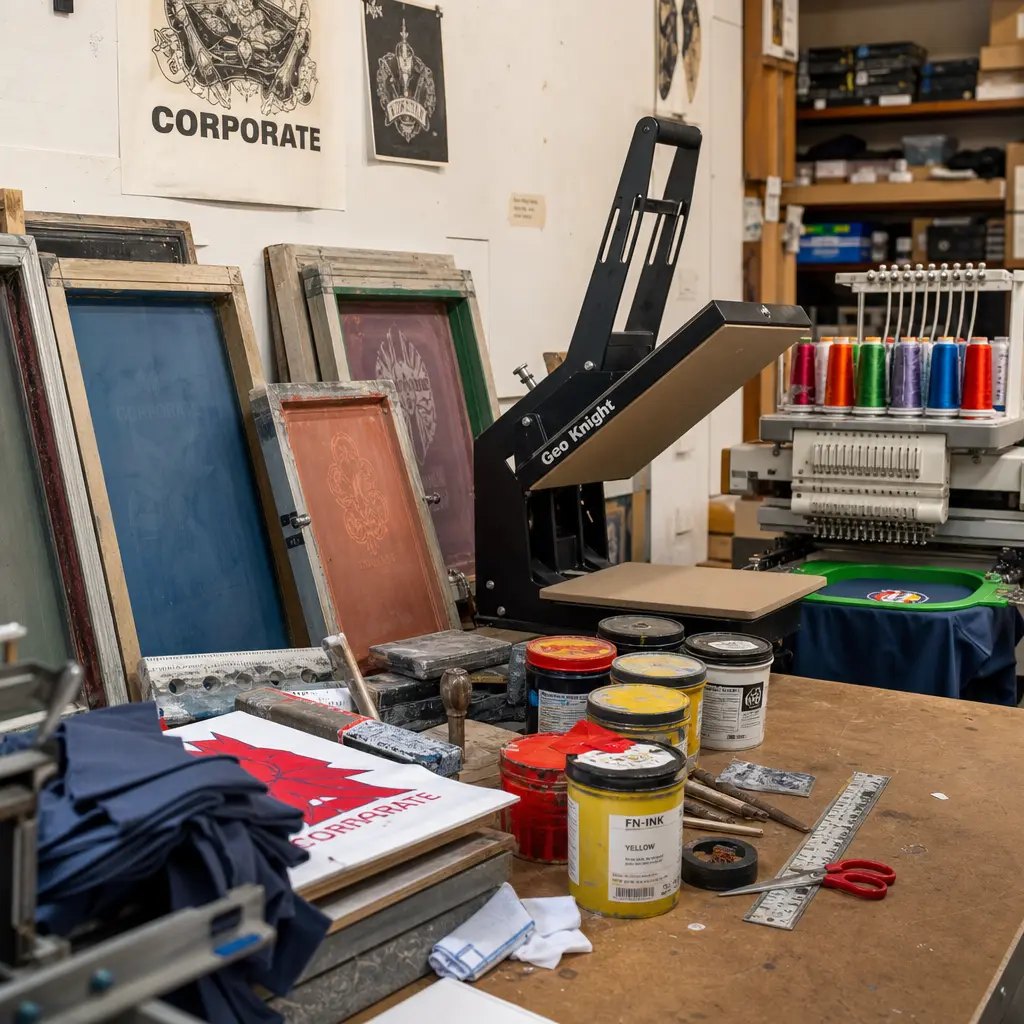
For canvas zipper portfolios, one-color screen print is usually the cleanest and most economical logo method. It works well for bookstore logos, department names, alumni marks, and simple graphic artwork. The print should be tested on the exact fabric, especially if the canvas is dyed, washed, dark colored, or treated. Ink absorption and edge sharpness can vary by fabric lot.
Embroidery, woven labels, leather patches, heat transfers, and embossed patches each have a place, but they affect lead time differently. Embroidery may pucker on thinner canvas or near zipper seams. Woven labels require label production before sewing. Leather or PU patches need cutting, debossing, and stitch placement approval. Heat transfers can look sharp but must be tested for adhesion on textured canvas.
- Screen print: efficient for stable one-color or two-color artwork.
- Embroidery: premium look, but best on reinforced or heavier fabric panels.
- Woven side label: good for subtle branding and repeat production consistency.
- Patch branding: adds perceived value but needs separate material approval.
MOQ logic for bookstore buying plans
MOQ is not only a supplier policy. It comes from fabric availability, cutting efficiency, print setup, zipper purchasing, label production, and packing requirements. For a standard canvas zipper portfolio with stock natural canvas and one logo, 300 to 500 pieces may be workable for many factories. For custom dyed canvas, special zipper color, multiple campus logos, or private retail packaging, the practical MOQ can move toward 800 to 1000 pieces or more.
University bookstore buyers often want several versions for departments, alumni associations, athletic programs, or orientation kits. Splitting one small order into many logos increases setup cost and slows production. A better structure is to keep the body color and construction common, then vary only the logo print or hangtag when possible. This lets the factory cut and sew more efficiently while still giving the buyer SKU flexibility.
- Clarify MOQ per style, per color, per logo, and per packing version.
- Group department logos under one fabric and zipper specification where possible.
- Use woven labels or hangtags for small-version branding when print setup is expensive.
- Avoid approving different pocket layouts for each campus department unless volume supports it.
Sample approval should prevent bulk production surprises
A digital proof is useful for print placement, but it does not prove fabric handfeel, zipper running quality, corner bulk, or pocket usability. For a new portfolio program, the pre-production sample should use the correct canvas weight, correct zipper, correct lining, correct logo method, and intended packing. A beautiful prototype made with substitute fabric can create false confidence and later dispute.
The sample review should be written like an acceptance note, not a casual email saying approved. List what is approved and what still needs correction. If the logo is too close to the zipper, if the document sleeve is tight, or if the zipper puller feels weak, resolve it before bulk cutting. Once canvas panels are cut and printed, changes become expensive and schedule-damaging.
- Measure finished size and pocket size with actual documents or inserts.
- Photograph logo placement with a ruler beside the print.
- Run the zipper repeatedly and inspect stitching at both ends.
- Place the packed sample in the intended carton orientation to see if corners bend.
- Keep one signed or clearly recorded approval sample for final inspection comparison.
Lead time map from RFQ to bookstore receiving
A practical lead time plan divides the work into decision stages. RFQ review and quote alignment may take two to five working days if the buyer provides a complete spec. Sample making can take about one to two weeks for a standard item, longer if the factory must source special fabric, zipper pullers, woven labels, or patches. Courier time and buyer review time should be counted separately.
Bulk production time depends on order quantity, construction complexity, decoration, and factory capacity. For standard production, a planning range of three to five weeks after pre-production sample approval is more realistic than assuming only sewing days. Add time for final inspection, carton correction if needed, export documentation, and shipping. Ocean freight, air freight, and domestic delivery to the bookstore distribution point must be planned outside factory production time.
- RFQ and quote clarification: 2-5 working days when specs are complete.
- Sample production: 7-15 working days for standard materials; longer for custom components.
- Sample courier and review: commonly 4-10 calendar days depending on buyer location.
- Bulk production: often 3-5 weeks after final approval for a normal custom order.
- Inspection and packing release: 2-4 working days if no major issue appears.
- Freight and customs: plan separately by Incoterm, destination, and shipping mode.
Packing details protect margin at receiving
Canvas portfolios can be damaged by poor packing even when sewing quality is acceptable. Overfilled cartons bend corners. Loose cartons allow items to shift and crease. If the product has a zipper puller, patch, or raised embroidery, packing pressure can leave marks. The RFQ should state whether each piece is flat packed, individually bagged, tissue wrapped, hangtagged, barcoded, or bundled.
For bookstore retail, packing accuracy is part of product quality. Carton marks must match purchase order data, SKU, color, logo version, and quantity. If the bookstore uses a distribution center, carton labels and barcode placement may be mandatory. These tasks take time and should not be added after production is finished, because relabeling cartons before shipment can delay vessel cutoff or air cargo booking.
- Use individual bags when the item has a light-colored canvas surface that can pick up dirt.
- Keep carton weight manageable for retail receiving teams, often below about 15-18 kg when practical.
- Avoid carton quantities that force portfolios to fold or curve.
- Request packing photos before shipment when the order has multiple SKUs.
- Include barcode and hangtag files in the RFQ package, not after bulk sewing.
Cost drivers that make quotes look different
Two supplier quotes for canvas zipper portfolios may differ because the products are not actually the same. One factory may quote 8 oz canvas while another quotes 12 oz. One may include lining and reinforced pockets, while another leaves raw seams inside. One may include screen setup and individual bags, while another excludes them. A low unit price can disappear once missing components are added.
To compare landed cost, separate the base product, logo setup, sample cost, packing cost, inland freight, export fees if applicable, and international freight. Carton dimensions matter because portfolios can ship by volume, not only by weight. A heavier canvas may raise product quality, but it can also increase freight cost. Buyers should request carton CBM and gross weight before choosing between air, sea, or consolidated shipment.
- Fabric weight and color: heavier or custom dyed fabric raises material cost and time.
- Zipper quality: better pullers and tape reduce complaints but cost more.
- Internal pockets: each extra part adds cutting, sewing, and inspection labor.
- Logo method: embroidery, patches, and multi-color prints require more setup.
- Packing: barcodes, hangtags, and individual bags are small per unit but important at scale.
- Freight profile: flat portfolios may be volume-sensitive when packed with protective space.
Specification comparison for buyers
| Spec decision | Recommended option | When it fits | Buyer risk to check |
|---|---|---|---|
| Outer fabric weight | 10 oz to 12 oz canvas, about 340-410 GSM | Most bookstore retail programs needing structure without becoming too heavy for shelf display | Under 300 GSM may feel like a document pouch; over 450 GSM increases cost, carton weight, and zipper stress |
| Lining construction | 210D polyester or cotton lining with bound internal seams | Orders requiring a cleaner inside finish for notebooks, tablets, or orientation kits | Unlined canvas sheds lint and may expose seam allowance; lining adds sampling and sewing time |
| Zipper type | No. 5 nylon coil zipper with branded or plain metal puller | Balanced choice for A4 or letter-size portfolios sold at campus stores | Cheap zipper tape waves after sewing; metal zippers look premium but add weight and can scratch contents |
| Logo method | One-color screen print or woven side label | Bookstore replenishment programs with stable artwork and moderate cost targets | Full-area print or embroidery on thick canvas needs extra sampling to avoid registration or puckering issues |
| Internal features | One document sleeve, one flat pocket, two pen loops | Useful retail SKU without turning the item into a complicated organizer | Too many pockets slow sewing, raise defect risk, and make quote comparisons unfair |
| MOQ structure | 300-500 pcs for standard fabric and print; 800-1000 pcs for custom dyed canvas | Seasonal campus launches, alumni shop programs, and department-branded merchandise | Very low MOQ may use available fabric only; custom color approval usually needs higher volume |
| Packing format | Individual OPP or recycled polybag, 20-40 pcs per export carton | Retail receiving teams that need clean units and easy carton counting | Over-tight packing can bend portfolio corners; oversized cartons increase freight volume |
| Production route | Factory-direct cut-and-sew with in-house printing or controlled print partner | Importers and distributors needing predictable specs, pre-production samples, and repeatable production records | Trading-only quotes may hide subcontracted print, zipper substitutions, and weaker lead time control |
Buyer checklist before sampling
- Define exact finished size, not only document size; include tolerance for width, height, and gusset if any.
- Specify canvas weight in oz and GSM, plus whether fabric must be natural, dyed, washed, or water-resistant treated.
- Lock the zipper size, zipper color, puller finish, and opening direction before sample approval.
- State logo placement in millimeters from edge or seam, with print size, Pantone reference, and allowed color tolerance.
- List every internal feature separately: sleeve, pocket, card slot, pen loop, elastic band, divider, or label.
- Require one pre-production sample using correct fabric, zipper, lining, logo method, and packing before bulk cutting.
- Set carton packing rules including individual bag, carton quantity, carton drop concern, barcode labeling, and master carton marks.
- Build the delivery calendar backward from bookstore receiving date, not from campus event date.
- Reserve buffer for artwork approval, fabric booking, sample courier time, and possible zipper or label remake.
- Compare quotes using the same Incoterm, carton dimensions, net weight, gross weight, and estimated CBM.
Factory quote questions to send
- What canvas weight in oz and GSM is included in the quote, and is it stock fabric or newly woven fabric?
- Is the quoted color natural canvas, standard dyed fabric, or custom Pantone dyed fabric?
- Which zipper size, zipper material, puller style, and zipper brand or quality grade are included?
- Is the logo priced as screen print, heat transfer, embroidery, woven label, leather patch, or another method?
- How many print colors and positions are included, and what is the setup cost for each artwork version?
- What is the MOQ for the base item, and what is the MOQ per color, per logo, and per packaging version?
- How many days are needed for digital proof, physical sample, pre-production sample, bulk production, and final inspection?
- Will the factory provide carton dimensions, carton weight, packing photos, and production photos before shipment?
- What tolerance does the factory apply for finished size, fabric GSM, print position, and quantity overrun or underrun?
- Which parts are subcontracted, such as printing, embroidery, zipper puller engraving, or woven label production?
Quality-control points to confirm
- Finished size tolerance should normally be within plus or minus 5 mm for flat portfolios unless the design has thick padding or binding.
- Canvas GSM should be checked against the approved swatch; visible thin sections, slubs beyond approved standard, or color lots mixed in one order should be rejected or segregated.
- Zipper must open and close smoothly for at least three full cycles during inspection, with no skipped teeth, loose stopper, or sharp puller edge.
- Logo position should stay within the approved tolerance, commonly plus or minus 3 mm to 5 mm depending on print area and seam structure.
- Screen print should pass a dry rub check and should not crack when the portfolio is gently folded at normal use points.
- Seams at zipper ends, corners, handle points if any, and internal pocket openings need reinforcement or clean backstitching.
- Interior pockets must fit the intended document or device size without forcing, especially for letter-size, A4, tablet, or orientation packet use.
- Cartons should not be crushed, overfilled, or loosely packed; corner bending on portfolios is a common receiving complaint.
- Barcode labels, hangtags, and campus retail labels should match the purchase order SKU, color, and carton count.
- Final inspection should include appearance, function, measurement, packing, labeling, and quantity verification, not only logo appearance.