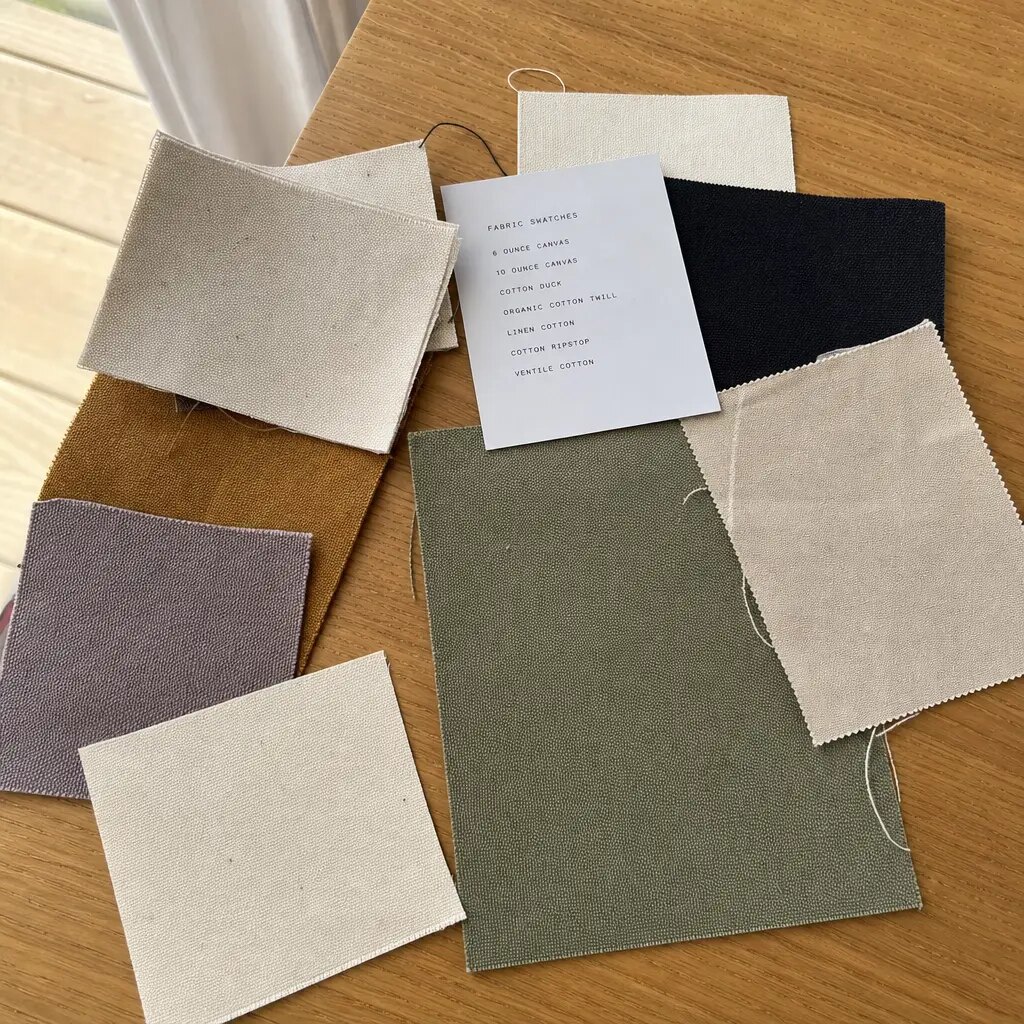
Why Print Proofing Is the Main Risk
Canvas zipper portfolios for hotel retail usually look simple on a quotation sheet: canvas body, zipper closure, printed logo, individual packing. In production, the risk is not the sewing alone. The bigger issue is whether the printed logo still looks like the approved hotel brand after the ink touches real canvas, after the zipper is sewn in, after the product is packed flat, and after cartons move through export handling.
Hotel buyers often sell these portfolios as conference accessories, welcome-kit holders, spa document cases, loyalty gifts, or boutique retail items. The guest sees the logo first, so a slightly crooked print, weak opacity on natural canvas, or poor registration on a crest can make the item look like a cheap giveaway. A useful RFQ must treat print proofing as a production control process, not as one PDF approval.
- Main buying problem: prevent bulk production from drifting away from the approved logo proof.
- Key approval sequence: artwork file, print strike-off, full pre-production sample, bulk reference sample.
- Best control point: print on the actual fabric lot or a confirmed equivalent canvas quality.
- Common mistake: approving a digital layout without testing ink absorption, fabric color, or zipper sewing distortion.
Define the Portfolio Before Artwork Approval
Before a factory can make a reliable proof, the portfolio structure must be fixed. A canvas zipper portfolio is not the same as a flat tote bag panel. The zipper tape, seam allowance, fold line, padding if any, inner pocket, and corner construction all affect where the logo can sit without distortion. If the buyer sends only a logo and a target size such as A4 or letter size, suppliers may quote different finished dimensions and still appear comparable on price.
For hotel retail, a practical finished size is usually based on what the portfolio needs to hold. If it must fit A4 documents, menus, spa brochures, or conference handouts, the finished size must allow document clearance plus seam allowance. If it is intended for gift shop display, the buyer may prefer a slimmer style with a flatter front panel and less internal hardware. These decisions should be locked before print placement is approved.
- State finished outside dimensions and usable inside dimensions separately.
- Define whether the product opens like a folder, pouch, sleeve, or document case.
- Show zipper position: top edge only, L-shape, three-side opening, or around two sides.
- List internal items: document sleeve, flat pocket, business card slot, pen loop, mesh pocket, or no inner features.
- Confirm whether the logo sits on a single flat panel or crosses a fold, seam, or reinforced area.
Choose Canvas Weight by Use Case
Fabric weight is one of the fastest ways to create price differences between quotes. For zipper business bags and portfolios, 10 oz to 12 oz canvas is common for a retail-grade feel. A 12 oz canvas, roughly 380-420 GSM depending on weave and finishing, gives better body for hotel retail without becoming too stiff around the zipper. An 8 oz canvas may be acceptable for a budget document pouch, but it often wrinkles and shows seam pulling more clearly.
Heavier fabric is not always better. A 14 oz or 16 oz canvas can make the product feel premium, but sewing around the zipper and corners becomes slower, the packed carton weight rises, and the product may not lie flat. If the print area includes fine hotel branding, thick weave texture can also reduce edge sharpness. The correct fabric is the one that supports the product function, retail price point, and print method together.
- 8 oz canvas: lighter cost, softer body, higher wrinkle risk near zipper seams.
- 10 oz canvas: balanced option for promotional retail and distributor programs.
- 12 oz canvas: stronger handfeel for hotel boutiques, corporate hospitality, and conference retail.
- 14 oz and above: premium touch, higher sewing difficulty, bulkier corners, higher freight weight.
- Natural canvas: good eco look, but color flecks can affect logo clarity and must be accepted in writing.
Match Print Method to Hotel Branding
Most canvas zipper portfolios for hotel retail use screen printing because it gives solid color, good opacity, and predictable cost on medium to large runs. For one-color or two-color hotel logos, screen print is usually the cleanest option. The buyer should provide vector artwork, Pantone references, and the required print size. The factory should return a layout showing logo position measured from fixed product edges, not only a centered visual mockup.
Heat transfer may be needed for gradients, small photo-style graphics, or complex full-color artwork. Embroidery can look premium but may distort thinner canvas and add backing inside the panel. Woven labels and leather patches are alternatives when buyers want a subtler retail look. The proofing method should match the final production method; a paper printout or digital image is not enough to approve ink behavior on canvas.
- Screen print fits solid logos, clear typography, and better unit cost after screen setup.
- Heat transfer fits gradients or full-color art but needs testing for handfeel and edge durability.
- Embroidery fits simple marks but can pucker canvas if stitch density is too high.
- Woven label fits a premium minimalist look and reduces risk of ink color mismatch.
- Debossed patch fits boutique positioning but adds trim sourcing time and MOQ pressure.
Build a Practical Print Proofing Standard
A useful print proof is not just a pretty sample photo. It is a measured reference that production and inspection teams can use. The proof should show exact print size, position from left and bottom or top reference edges, ink color, curing result, and whether the logo remains visible after normal handling. For natural canvas, the buyer should approve a realistic tolerance because the weave and cotton specks may create small visual variation.
Procurement teams should avoid open wording such as “logo must look good.” A better instruction is to define measurable acceptance criteria. For example, print position within plus or minus 3 mm from the approved pre-production sample, no visible ink bleeding at normal viewing distance, no serious pinholes in solid logo areas, and no color mismatch beyond the approved strike-off under standard lighting. This gives the factory and third-party inspector a workable target.
- Approve a print strike-off on actual canvas before approving the full bag sample.
- Use the same Pantone target and viewing light for buyer, factory, and inspector.
- Record logo width and height in millimeters, not only percentage scale.
- Measure placement from fixed sewn edges after the portfolio is finished.
- Rub test the print lightly with dry white cloth to catch poor curing before bulk shipment.
- Keep one signed or sealed reference sample at the factory for production comparison.
Control Zipper and Sewing Details
The zipper is part of the retail experience. A portfolio with a good print but a weak zipper will still feel low grade. For canvas portfolios, a #5 nylon coil zipper is often a safe choice because it is flexible, smooth, and easier to sew around corners than metal. Resin or metal zippers may be selected for style, but they can add cost and may not sit as flat on softer canvas.
Sewing construction should be reviewed on the pre-production sample, especially where the zipper ends, corners, and inner pocket meet. Loose lining can catch the slider. Thick corner layers can cause uneven stitching and needle marks. If the product includes a branded puller, leather tab, woven side label, or metal logo plate, those trims should be included in the proof, not added later after the main approval.
- Zipper tape must lie flat without waves along the front panel.
- Slider should move smoothly across corners without catching fabric or lining.
- Thread color should match the approved sample or be stated as contrast stitching.
- Topstitching should be even, with no skipped stitches on corners or zipper ends.
- Puller finish should resist obvious scratching during packing and normal handling.
- Inner pocket edges should be reinforced if the portfolio will hold documents repeatedly.
Understand MOQ and Cost Drivers
MOQ depends on material availability, print setup, trim sourcing, and factory line efficiency. If the buyer accepts standard natural canvas, standard zipper tape, and one-color screen print, a factory may support a lower trial order. When the project requires custom dyed canvas, custom zipper color, branded metal puller, special lining, or retail packaging with printed inserts, the MOQ usually moves upward because suppliers must meet fabric mill and trim supplier minimums.
A low unit price can hide missing details. One supplier may quote 10 oz canvas with a standard zipper and bulk packing, while another quotes 12 oz canvas, individual bags, barcode labels, and a full strike-off process. Procurement teams should compare line items rather than headline unit price. For hotel retail programs, the cheapest quote often becomes expensive when sample revisions, packing upgrades, or print corrections are added later.
- Fabric weight changes raw material cost and carton weight.
- More print colors add screen setup, registration time, and reject risk.
- Custom zipper tape or puller increases trim MOQ and lead time.
- Inner pockets add cutting, sewing, inspection, and rework time.
- Individual retail packing adds material cost and packing labor.
- Small orders carry higher setup cost per piece even when the sewing is simple.
Sample Approval Workflow That Prevents Rework
A reliable workflow starts with a spec sheet and artwork layout, then moves to a strike-off, then a full pre-production sample. The strike-off confirms print color, opacity, and edge quality on the canvas. The full sample confirms the finished product: zipper, sewing, logo placement after construction, inner features, label, and packing. Skipping either step creates risk, especially when hotel brand standards are strict.
When reviewing samples, buyers should mark comments directly against the approved spec. If the logo is too low, state the required movement in millimeters. If the canvas is too soft, request a specific weight or a stiffer finishing. If the zipper pull feels weak, define the alternative. Vague sample comments create long email chains and slow the order more than a clear correction sheet.
- First review: artwork file, logo size, Pantone references, and placement drawing.
- Second review: print strike-off on actual or confirmed canvas quality.
- Third review: complete sample with final zipper, stitching, label, inner pocket, and packing.
- Final reference: signed pre-production sample kept for bulk inspection.
- Revision control: every change should update the spec sheet date and sample version.
Packing for Hotel Retail and Export Handling
Packing decisions affect both presentation and damage rate. A canvas zipper portfolio can be packed flat in an individual recycled polybag, glassine-style paper sleeve, paper belly band, or retail insert card depending on the hotel’s sustainability and display requirements. If the product is sold in a boutique shop, barcode labels and clean individual packing may be needed. If it is used for conferences or room amenities, simple protective packing may be enough.
The carton plan should protect corners and printed panels. Portfolios packed too tightly can arrive with crushed edges or zipper impressions on the print. Portfolios packed too loosely can rub against each other and collect canvas lint or scuffs. Carton dimensions, pieces per carton, gross weight, and pallet preference should be included in the RFQ so freight cost and warehouse handling can be estimated before the order is placed.
- Place printed faces in the same direction or use protective sheets when zipper pullers may rub.
- Avoid folding portfolios unless the design is made to fold without creasing the logo.
- Use carton marks that match the buyer’s SKU, color, PO number, and destination rules.
- Confirm whether individual barcode labels are factory-applied or handled after import.
- Request carton drop resistance suitable for normal export handling, not only local delivery.
Lead Time and Schedule Risk
Lead time should be built from approval milestones, not only from the day the deposit is paid. Artwork correction, strike-off, sample making, sample courier time, buyer review, material booking, production queue, inline QC, final inspection, packing, and export documentation all take time. A factory may quote a bulk production time, but the real calendar depends on how quickly the buyer approves each gate.
Hotel retail programs often connect to openings, seasonal travel periods, conferences, or brand launches. If the schedule is tight, reduce variables: use stock canvas, stock zipper colors, simple one-position print, and standard packing. Custom dyed fabric, branded pullers, printed retail sleeves, or multiple sample revisions can be done, but they need calendar space. The RFQ should request a milestone schedule, not just one ship date.
- Artwork proof: usually the fastest step if vector files and Pantone data are complete.
- Strike-off: needed before full sample when logo color is critical.
- Pre-production sample: should use final fabric, zipper, trim, label, and packing.
- Material booking: depends on standard stock versus custom fabric or trims.
- Bulk production: sewing and printing capacity must be reserved after approval.
- Final inspection and packing: should not be squeezed into the same day as vessel cutoff.
Specification comparison for buyers
| Spec decision | Recommended option | When it fits | Buyer risk to check |
|---|---|---|---|
| Outer fabric weight | 12 oz canvas, roughly 380-420 GSM, with stable shrinkage control | Hotel retail portfolios that must feel structured but still fold and zip smoothly | Very light 8 oz canvas can wrinkle around the zipper; very heavy 16 oz canvas can raise sewing cost and make corners bulky |
| Print method | Screen print for solid hotel logos; heat transfer only for gradients or small full-color artwork | Most resort, boutique hotel, and conference retail programs with 1-3 logo colors | Transfers may feel less natural on canvas and can crack if curing, pressure, or washing expectations are not defined |
| Artwork placement | Front lower corner or centered front panel with 10-15 mm clearance from seams and zipper tape | Retail display where the logo should be visible but not distorted by stitching or bending | Artwork placed too close to the zipper seam may shift during sewing and fail visual alignment checks |
| Zipper specification | Nylon coil zipper size #5 with color-matched or contrast tape and metal or molded puller | Business portfolios for documents, menus, spa materials, welcome kits, or conference packs | Cheap zipper tape can wave on canvas; puller plating and slider movement should be checked on the pre-production sample |
| Internal construction | One main document compartment plus optional flat pocket, pen loop, or card slot | Hotel retail items that need practical use beyond souvenir value | Too many inner features increase labor minutes and create uneven panels if not costed separately |
| MOQ logic | 300-500 pieces for simple one-color print; 800-1,000 pieces when custom dyeing, custom zipper, or multiple trims are required | Test orders, seasonal hotel launches, or distributor catalog programs | Low MOQ quotes may use available fabric and standard zipper colors; repeat orders may vary unless material lots are locked |
| Sample approval route | Digital layout, strike-off on production fabric, then full pre-production sample with final trims | Projects where logo color and hotel brand standards matter more than fastest sampling | Approving only a PDF proof does not verify ink absorption, zipper sewing, shrinkage, or final handfeel |
| Retail packing | Individual recycled polybag or paper belly band, master carton with flat packing and corner protection | Gift shops, room amenities, conference retail, and distributor warehouse handling | Over-tight cartons can crush portfolio corners; loose packing can scuff natural canvas during inland transport |
| Quote data | Separate line items for fabric weight, print colors, zipper type, inner pockets, packing, sample fee, and freight carton size | Importers comparing several factories or presenting landed cost to hotel groups | A single lump-sum unit price hides cost drivers and makes later artwork or packing changes difficult to negotiate |
Buyer checklist before sampling
- Define the finished portfolio size, not only the document size it should hold; include seam allowance and acceptable size tolerance.
- State the canvas weight in oz or GSM and require the same fabric quality for strike-off, pre-production sample, and bulk.
- Send vector artwork with Pantone or brand color references, plus a placement drawing showing distance from zipper, seams, and edges.
- Approve print on the actual canvas color, because natural, bleached, dyed, and black canvas all change ink appearance.
- Set print acceptance criteria for color, registration, opacity, edge sharpness, rubbing resistance, and placement tolerance.
- Confirm zipper size, tape color, puller material, slider smoothness, and whether any logo puller or branded trim is included.
- Require one full pre-production sample using final fabric, zipper, lining, thread, print, label, and packing.
- List packing method, carton quantity, carton dimensions, gross weight target, barcode or label rules, and any hotel retail display requirement.
- Build the purchase schedule around artwork approval, strike-off time, sample approval, material booking, production, QC, and export packing.
- Compare supplier quotes using the same spec sheet, not only the headline unit price.
Factory quote questions to send
- What canvas weight, yarn construction, and shrinkage range are included in the quoted price?
- Is the quoted zipper nylon coil, resin, or metal, and what size, tape color, and puller type are included?
- Which print method is quoted, how many colors are included, and what is the extra cost for each added print color or position?
- Can the factory provide a strike-off on actual production canvas before making the full sample?
- What is the MOQ for standard fabric with print only, and what changes if we require custom dyed fabric, custom zipper, or branded puller?
- What sample fee, sample lead time, and courier charge apply, and is the fee refundable after bulk order?
- What are the expected bulk lead time stages after artwork approval and deposit?
- What packing is included in the quote: individual bag, paper band, insert card, barcode label, inner carton, or only export carton?
- What are the master carton dimensions, pieces per carton, and estimated gross weight for freight calculation?
- What inspection standard and AQL level can be supported before shipment?
Quality-control points to confirm
- Finished size tolerance within an agreed range, commonly plus or minus 5 mm for length and width on soft canvas portfolios.
- Print placement tolerance defined from the same reference edge on every piece, commonly plus or minus 3-5 mm depending on artwork size.
- Logo color compared against approved strike-off under consistent lighting, not judged from phone photos only.
- Print surface checked for pinholes, ink bleeding, poor opacity, ghosting, registration shift, and rubbing marks.
- Zipper opens and closes smoothly for the full length without catching canvas, lining, or loose threads.
- Corners are squared and not over-bulky; seam allowance is secure and topstitching is even.
- Inner pocket, pen loop, and card slot measurements match the approved sample if included.
- Loose threads, oil marks, dirt, needle holes, fabric slubs beyond agreed natural-canvas allowance, and scuffed packing are sorted before carton sealing.
- Carton packing protects the portfolio shape and keeps printed panels from rubbing directly against zipper pulls or rough carton surfaces.
- Final inspection report includes photos of print position, zipper function, packing, carton marks, and randomly selected defects.