Buying Problem: Retail Durability Is Not the Same as a Giveaway Pouch
Canvas zipper portfolios sold through hotel retail channels have a different risk profile from low-cost event pouches. Guests may open them repeatedly in the shop, pack them with toiletries or documents, squeeze them into luggage, and still expect the item to look clean enough for gifting. A failure at the zipper or corner seam is visible immediately and can damage the hotel brand even if the unit cost was low.
The buying problem is usually not whether a factory can sew a rectangle with a zipper. The problem is whether the quote includes the right fabric weight, zipper grade, stitching method, print process, and packing plan for retail handling. Procurement teams should treat durability as a specification package, not a final inspection surprise.
- Use retail handling as the baseline: repeated zipper use, shelf display, customer touching, luggage compression, and gift presentation.
- Separate cosmetic defects from functional defects; zipper failure, seam opening, and print transfer should be major defects.
- Do not compare quotes unless all suppliers are pricing the same canvas weight, zipper type, lining, artwork, and packing method.
Base Specification That Makes Quotes Comparable
A clear RFQ starts with the finished dimensions and the usable opening, not only the flat size. A portfolio quoted at 30 x 22 cm can feel very different if the zipper opening is narrow, the corners are too rounded, or the seam allowance reduces internal capacity. For hotel retail, common use cases include travel document storage, spa kit packaging, stationery sets, conference welcome packs, and boutique merchandise.
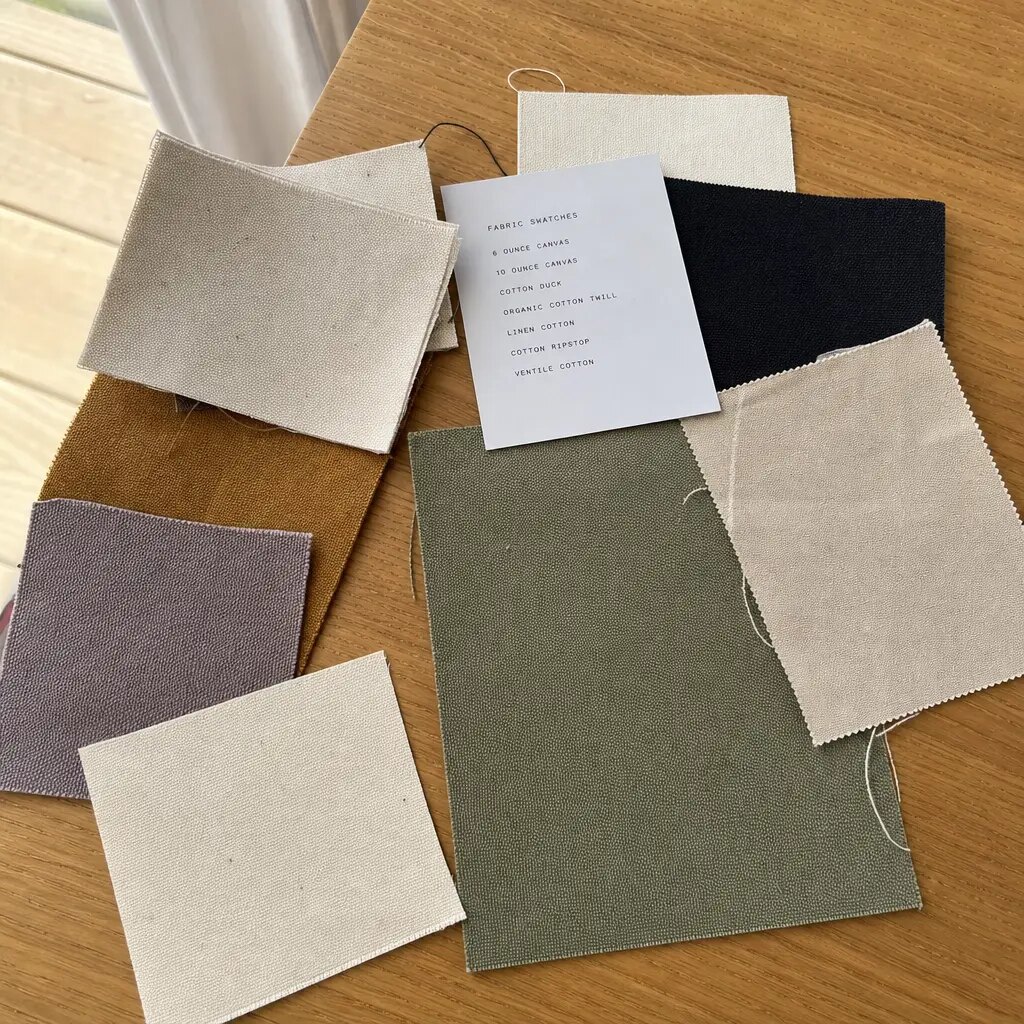
Canvas weight is one of the biggest quote variables. Many buyers say “heavy canvas” and receive prices based on 10 oz, 12 oz, or 14 oz fabric from different suppliers. For zipper portfolios, 12 oz to 14 oz cotton canvas is usually a strong commercial starting point. It gives better shelf body and seam strength than lighter canvas while remaining sewable and packable. If the item must hold shape for premium retail display, move toward 14 oz or add lining support; if it must be lightweight for amenity kits, 10 oz to 12 oz may be acceptable after testing.
- State finished size, zipper opening length, seam allowance expectations, and any gusset depth.
- Quote canvas as oz and approximate GSM, for example 12 oz around 400 GSM or 14 oz around 470-480 GSM depending mill standard.
- Specify fabric color as natural, bleached, dyed Pantone match, washed, or coated because each changes shrinkage, shade control, and cost.
- Define whether fabric should be soft-hand, stiff-hand, brushed, organic cotton, recycled cotton blend, or conventional cotton canvas.
Zipper and Puller Choices That Affect Failure Rate
The zipper is the most-used component on a canvas portfolio, so it should not be treated as a decorative line item. For most hotel retail orders, a No. 5 nylon coil zipper is the safest default because it runs smoothly around slight fabric movement and is less likely to scratch contents. A metal zipper can look more premium, but it brings more risk around rough pulling, plating quality, oxidation, and higher unit cost.
Puller design also matters. A thin metal puller can feel cheap and bend during use. A larger puller, fabric tab, cord pull, leather tab, or branded metal pull can improve the guest experience, but every added piece needs its own test. If the puller is too heavy for the zipper tape, the slider can sit unevenly and cause early failure. For a hotel retail item, the pull should feel smooth without needing two hands to close.
- Use No. 5 zipper as a practical baseline; smaller No. 3 zippers often feel weak on heavier canvas.
- Require zipper end stops to be securely sewn and protected from fraying.
- Test at least 50-100 open-close cycles on pre-production samples for smoothness and tooth alignment.
- Avoid sharp puller edges that can scratch paper goods, toiletry bottles, or the user's hand.
Print, Label, and Branding Durability
Hotel retail buyers often want the portfolio to carry a subtle brand mark rather than a large promotional logo. Screen printing is the normal choice for flat canvas surfaces and gives good cost control at MOQ. Heat transfer can reproduce detail but must be tested carefully on textured canvas. Embroidery adds perceived value but can pucker lighter fabric and may not suit thin lettering. Woven side labels are useful for boutique-style branding because they remain clean and understated.
Durability testing should match the branding method. A print that looks good on a sample table can fail after rubbing against other bags in a carton or after a guest handles it with lotion on their hands. The factory should provide an actual printed sample using the same ink, curing process, and fabric batch planned for production. If the fabric is washed or coated, print adhesion must be checked after that treatment, not before.
- For screen print, define artwork size, position tolerance, Pantone color, ink handfeel, and acceptable edge sharpness.
- For woven labels, confirm label size, fold type, sewing position, thread color, and whether the label edge scratches the hand.
- For patches, test edge lifting, stitch security, color migration, and whether the patch stiffens the portfolio unevenly.
- Set dry rub and light wet rub acceptance criteria before production, especially for dark ink on natural canvas.
MOQ Logic and Cost Drivers
MOQ is not only a factory preference. It is usually tied to fabric purchasing, dyeing minimums, zipper color minimums, label weaving, print setup, and line efficiency. A natural canvas zipper portfolio with one-color screen print may have a lower workable MOQ than a dyed canvas version with custom zipper tape, metal logo puller, lining, hangtag, and barcode sticker. Buyers who understand the cost drivers can negotiate the right simplification instead of pushing for an unrealistic price.
The most common quote trap is comparing a simple unlined natural canvas item against a lined dyed canvas item as if both are the same product. Labor time increases when the bag has lining, binding, rounded corners, zipper tabs, inner pockets, foam padding, or patch branding. Each detail may look small in a sample, but multiplied across a bulk order it changes sewing speed, rejection rate, carton cube, and landed cost.
- Lower MOQ version: natural 12 oz canvas, No. 5 nylon zipper, one-color screen print, no lining, standard packing.
- Mid-range version: 14 oz canvas, woven side label, lined interior, custom zipper tape color, retail hangtag.
- Premium version: dyed canvas, branded puller, patch or embroidery, inner divider, tissue insert, retail-ready carton labeling.
- Cost-sensitive buyers should simplify branding and lining before reducing fabric weight below the durability requirement.
Sample Approval Must Lock the Production Standard
A sales sample is often made with available fabric and zipper stock. That is acceptable for shape discussion, but it is not enough for bulk approval. A pre-production sample should use the actual fabric weight, fabric color, zipper tape, zipper puller, thread, lining, label, print ink, and packing method. If any component is substituted, it should be listed clearly with the expected production replacement.
Approval should be based on measurable acceptance criteria. A buyer can approve the look while still rejecting the production readiness if the zipper feels rough, corners pucker, print is tacky, or the portfolio does not fit the intended contents. The sample should be loaded with realistic items such as hotel stationery, amenity bottles, spa menu cards, or travel documents to confirm usable capacity.
- Measure three sample points: width, height, zipper opening, corner radius, and gusset if used.
- Photograph approved seam details, zipper ends, label position, print position, and inside finishing.
- Keep one signed approval sample with the buyer and one sealed reference sample at the factory.
- Record all approved deviations so final inspection does not become a subjective argument.
Durability Testing Checklist for Hotel Retail
Durability testing does not need to be complicated, but it must reflect the product's real weak points. For canvas zipper portfolios, the main tests are zipper cycling, seam stress, corner abrasion, print rub, fabric tear resistance, odor inspection, and packing compression. A general bag inspection may miss these because the item looks flat and simple until it is handled repeatedly.
Buyers can set practical thresholds based on order value and sales channel. A luxury hotel boutique may need stricter cosmetic acceptance than a conference welcome pack, while a distributor selling to multiple properties may prioritize consistent carton packing and barcode accuracy. The key is to decide thresholds before production starts and include them in the purchase order or inspection booking.
- Zipper cycle: open and close selected samples 50-100 times with no tooth skipping, slider jamming, or end-stop failure.
- Seam pull: apply firm manual stress at zipper ends and bottom corners with no seam opening, broken thread, or fabric tearing.
- Print rub: perform dry rub and light wet rub on the printed logo with no obvious transfer or peeling.
- Corner abrasion: rub corners against clean kraft board or carton surface to detect weak coating, loose fibers, or exposed seams.
- Odor check: seal samples in a polybag for several hours, then open and reject strong chemical, mildew, or oily odor.
- Packing compression: stack filled cartons or apply controlled pressure to confirm zippers and corners are not bent or crushed.
Packing Plan for Retail Presentation and Freight Control
Packing affects both retail condition and landed cost. A portfolio packed too tightly can arrive with bent zipper corners, heavy creases, or print scuffs. A portfolio packed too loosely wastes cube and raises ocean or air freight cost. Hotel retail buyers should review the carton plan before bulk production because changing packing after sewing often means repacking labor and shipment delay.
Individual packing depends on the sales channel. A simple recycled polybag protects against moisture and dirt during export. A paper sleeve or glassine-style bag may fit sustainability positioning but must still protect print and fabric from rubbing. Tissue inserts can help shape retention, but they add labor and carton volume. If the product will be scanned in a hotel shop or distributor warehouse, barcode position and retail labels must be tested on the packed item, not added as an afterthought.
- Confirm pieces per inner bundle, pieces per master carton, carton dimensions, gross weight, and carton ply.
- Keep carton gross weight manageable for warehouse handling; very heavy cartons increase drop and compression damage.
- Use interleaving paper or face-to-face packing direction if printed surfaces are at risk of rubbing.
- Define shipping marks, barcode stickers, country-of-origin labeling, and polybag warning text where required.
Lead Time Risks Hidden Inside a Simple Portfolio
Canvas zipper portfolios look simple, but several lead-time risks sit inside the bill of materials. Custom dyed canvas can wait for mill scheduling and shade approval. Custom zipper tape or branded pullers can add component time. Woven labels, hangtags, and retail barcode stickers may be produced by separate vendors. If the buyer approves artwork late, the sewing line may be ready while branding components are not.
A practical schedule separates sampling, material booking, production, inspection, and packing. For a new hotel retail item, allow time for one development sample and one pre-production sample if branding or structure is important. Repeat orders can move faster when the same fabric, zipper, and artwork are used, but buyers should still verify raw material availability before launching a promotion date.
- Sampling can be delayed by custom fabric color, complex logo placement, or unavailable zipper hardware.
- Bulk production should not start until the pre-production sample and packing method are approved.
- Inline inspection is useful after the first finished pieces because zipper-end sewing issues appear early.
- Final inspection should happen only after goods are fully packed with correct labels and shipping marks.
Quote Data Needed for Landed-Cost Comparison
A low FOB unit price does not always produce the lowest landed cost. A heavier canvas portfolio with bulky packing may increase carton cube and freight cost, while a cheaper zipper may raise inspection failure risk. Importers and distributors should collect enough quote data to compare product cost, defect risk, packing efficiency, and timeline reliability. Without carton size and gross weight, landed-cost comparison is incomplete.
The quote should show what is included and what is not. Setup charges, sample charges, custom label costs, print screens, export carton markings, inner packing, test fees, and inspection support can be handled differently by each supplier. A clean quote makes internal approval easier and prevents commercial disputes after the purchase order is issued.
- Request unit price by quantity tier, for example MOQ, 1,000 pcs, 3,000 pcs, and 5,000 pcs where relevant.
- Collect fabric weight, zipper specification, lining specification, print method, label details, and packing method in the same quote sheet.
- Ask for estimated carton dimensions, pieces per carton, gross weight, net weight, and total CBM.
- Separate tooling, artwork, sample, courier, testing, and inspection-related costs from the unit price.
- Require validity period for the quote because cotton fabric, freight, and exchange rates can move.
Specification comparison for buyers
| Spec decision | Recommended option | When it fits | Buyer risk to check |
|---|---|---|---|
| Canvas body weight | 12 oz to 14 oz cotton canvas, about 400-480 GSM before washing or coating | Best for hotel retail portfolios that need a premium handfeel without becoming too stiff for guest use | Quote may hide lighter 10 oz fabric under the same size description; require GSM or oz, test report, and approved cutting swatch |
| Zipper type | No. 5 nylon coil zipper with smooth puller, or No. 5 metal zipper for a heavier boutique look | Nylon coil fits most retail orders because it is smoother, lighter, and less likely to scratch packed items | Metal teeth can look premium but may oxidize or snag if plating is poor; run pull-cycle and salt-air suitability checks |
| Seam construction | Lockstitch with 8-10 stitches per inch, back-tacked ends, bound inner seam where stress is high | Useful for portfolios carrying menus, notebooks, guest documents, spa kits, or retail gift sets | Loose stitch density and missing back-tacks cause corner seam opening after display handling and luggage compression |
| Branding method | Screen print for flat logos, woven side label for subtle retail branding, leather or PU patch only after rub testing | Screen print gives stable cost at MOQ; woven labels work when the hotel wants a less promotional look | Thick ink, low curing temperature, or patch edges can fail rub testing; approve print handfeel and edge durability on pre-production samples |
| Lining choice | Unlined for lower cost and washable simplicity; 190T polyester lining for smoother interior and higher perceived value | Lining fits higher retail price points, amenity sets, or portfolios containing paper goods that need less canvas lint | Poor lining attachment creates puckering near zipper corners; add lining seam pull and inside visual checks |
| Shape support | Moderate body stiffness from fabric weight plus neat corner radius; avoid excessive foam unless protection is required | Good for flat hotel retail display and easy packing into export cartons | Overly soft canvas collapses on shelf; overly padded construction raises cube, freight cost, and sewing variation |
| Packing format | Individual recycled polybag or glassine-style paper sleeve, tissue insert if shape must hold, 50-100 pcs per export carton depending size | Fits hotel gift shops, in-room retail replenishment, and distributor warehouse handling | Overpacked cartons crush zipper corners; underfilled cartons increase freight cube and scuffing during transit |
| Inspection level | AQL 2.5 major / 4.0 minor with added functional zipper and seam-strength sampling | Works for most importers balancing inspection cost and commercial risk | Standard visual inspection alone misses zipper fatigue, print rub, and corner seam weakness; add product-specific checkpoints to the QC booking |
Buyer checklist before sampling
- Define the real use case: guest document pouch, retail gift portfolio, amenity kit, conference pack, or boutique merchandise item.
- State finished size, usable internal opening, gusset depth if any, and acceptable tolerance before asking factories to quote.
- Specify canvas weight by oz and approximate GSM, not only by the word canvas.
- Decide whether the portfolio must stand neatly on a shelf or remain soft enough to fold inside luggage.
- Choose zipper material, zipper size, puller style, opening direction, and any puller branding before sampling.
- Confirm whether the portfolio is unlined, lined, bound inside, or padded, because each version changes labor time and defect risk.
- Provide artwork size, Pantone color, print position, and branding method with rub-test requirements.
- Request a pre-production sample using actual bulk fabric, zipper, thread, lining, label, and packing materials.
- Set acceptance criteria for zipper smoothness, seam strength, print adhesion, odor, stains, and carton compression.
- Ask for carton dimensions, gross weight, packing quantity, and barcode or retail label placement before comparing landed cost.
Factory quote questions to send
- What exact canvas weight are you quoting in oz and GSM, and is it greige, dyed, washed, coated, or pre-shrunk?
- Is the zipper No. 5 nylon coil, No. 5 metal, or another type, and what pull-cycle test can you perform before shipment?
- Which seams are lockstitched, overlocked, bound, or reinforced, and where will back-tacking be applied?
- What is the MOQ for this construction at the quoted fabric color, and what price break applies at higher quantities?
- Will the sample use actual bulk materials or available substitute materials, and which parts may change after approval?
- What print method is included in the quote, how many colors are included, and what curing or adhesion test will be used?
- How many pieces per carton are planned, what are the estimated carton dimensions and gross weight, and is carton drop testing available?
- What is the normal lead time for sampling, material purchase, bulk sewing, inline inspection, final inspection, and export packing?
- Which defects are treated as major defects in your inspection standard for zipper portfolios?
- Can you provide photos of similar zipper portfolio construction details without disclosing other buyers' logos?
Quality-control points to confirm
- Fabric weight variance should normally stay within the agreed tolerance, commonly plus or minus 5 percent unless the buyer accepts wider mill variation.
- Finished size tolerance should be written by dimension; for many portfolio bags, plus or minus 5 mm is workable for length and height, while zipper opening must remain usable.
- Zipper should open and close smoothly across the full length without tooth skipping, fabric catching, rough pull, or end-stop separation.
- Corner seams should show no skipped stitches, loose threads, needle holes, cracking coating, or exposed raw edges after stress handling.
- Print should pass dry rub and light wet rub checks without obvious color transfer, cracking, peeling, or tacky handfeel.
- Portfolio should be free from strong chemical odor, mildew smell, oil stains, metal rust marks, weaving slubs beyond agreed standard, and visible dirt.
- Labels, hangtags, barcode stickers, and inner care labels should match the approved layout and be readable after packing.
- Cartons should meet the agreed ply, size, gross weight, sealing method, shipping marks, and pallet or loose-loading requirements.