Start With the Carton, Not Only the Portfolio
Canvas zipper portfolios for hotel retail shipping carton planning should be developed backwards from the retail shelf, warehouse rule, and freight method. Many buyers approve a good-looking sample first, then discover the packed carton is too heavy, too large, or too easy to crush. For flat fabric goods, a few millimeters of extra panel size, lining thickness, or zipper pull height can change the carton count more than expected.
A hotel retail portfolio is usually not a single-purpose pouch. It may hold spa brochures, resort maps, conference papers, welcome documents, amenity vouchers, or retail stationery. That means the buyer needs a finished product that opens smoothly, presents well on a shelf, and survives transport without curled corners. The RFQ should connect the product specification to the packing plan instead of treating them as separate items.
- Define the largest insert the portfolio must hold before setting the finished size.
- Decide whether the item ships flat, lightly folded, or filled with paper inserts.
- Set a target carton gross weight before the supplier calculates pieces per carton.
- Request a packed sample if the portfolio has thick zipper pulls, foam padding, or a rigid insert.
- Avoid approving carton count based only on theoretical cubic calculation.
Fabric Weight Choices That Affect Shelf Feel and Freight
For hotel retail, 10 oz to 12 oz cotton canvas is usually the practical range for zipper portfolios. A 10 oz canvas, roughly 300-340 GSM depending on weave and finish, can work for promotional or conference use when price and freight efficiency matter. A 12 oz canvas, roughly 380-400 GSM, gives better hand-feel for paid retail and premium resort shops without making sewing corners too bulky.
Heavy 14 oz or 16 oz canvas can look impressive in a single sample, but it creates production and packing tradeoffs. Thick fabric can cause zipper waviness at curved corners, heavier seam build-up, slower sewing speed, and fewer pieces per carton. If the portfolio is lined, padded, or has inner pockets, the buyer should test the total construction rather than judging the outer canvas alone.
- Use 10 oz canvas for value programs, conference kits, and larger quantity giveaways.
- Use 12 oz canvas for hotel retail where the customer handles the product before purchase.
- Reserve 14 oz or heavier canvas for structured designs with tested sewing allowance.
- Specify whether GSM is before or after washing if fabric shrinkage matters.
- Ask for fabric swatches from the same lot standard planned for production.
Zipper and Construction Details Buyers Often Underspecify
The zipper is the part hotel guests will test first. A No. 5 nylon coil zipper is usually the safest choice for canvas portfolios because it bends around corners better than many metal zippers and keeps unit weight under control. Metal zippers can support a more premium look, but they increase cost, risk surface scratching, and need more careful packing if the pullers press into nearby fabric.
Construction should be written in the RFQ with enough detail for factories to quote the same product. State whether the portfolio is flat or gusseted, lined or unlined, bound or overlocked inside, and whether it includes card slots, mesh pockets, pen loops, or document dividers. Each added interior feature affects labor minutes and carton thickness, so a low quote may simply be missing construction elements.
- Quote zipper size, tape color, teeth color, puller type, and opening direction.
- Use bound inner seams for cleaner retail presentation and less thread shedding.
- Add bartacks or reinforced stitching at zipper ends and handle points if included.
- Keep inner pockets simple if the product must ship in high carton density.
- Confirm whether the zipper pull is packed flat or protected with tissue.
Print and Branding Methods for Canvas Portfolios
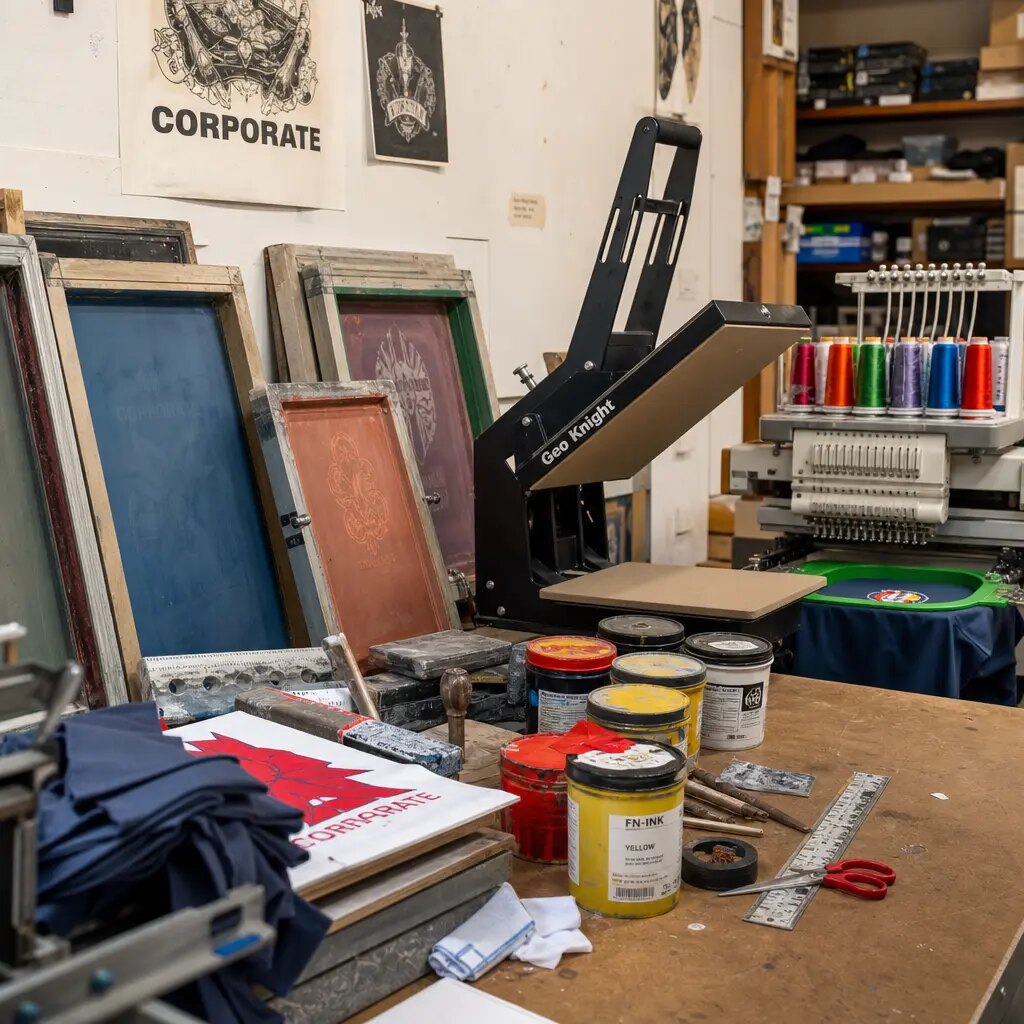
Screen printing is still the most common branding method for canvas zipper portfolios because it handles solid hotel logos, one to four color artwork, and repeat production efficiently. It works best when the artwork has enough line thickness to sit cleanly on woven canvas. Fine script, thin serif text, gradient artwork, and very small destination names should be tested by strike-off before the pre-production sample is approved.
For a more retail-oriented look, a woven side label, cotton patch, or embossed leather-like patch can reduce print risk and make the product feel less promotional. These options usually carry their own MOQ and setup logic. A custom woven label may require 500 to 1,000 pieces or more depending on supplier policy, while custom metal pullers or rubber patches can push MOQ higher because they involve molds or specialized subcontractors.
- Use screen print for bold logos, resort names, and simple graphic marks.
- Use heat transfer only after testing adhesion on the exact canvas finish.
- Use embroidery carefully because dense stitching can pucker lighter canvas panels.
- Use woven labels for understated hotel retail branding and repeat programs.
- Approve a print strike-off under natural and store lighting before bulk printing.
MOQ Logic Behind a Real Factory Quote
MOQ is not one number. For canvas zipper portfolios, the factory may have separate minimums for cutting, fabric dyeing, zipper color, custom label, print setup, and carton printing. A supplier can sometimes produce 300 pieces using stock natural canvas and stock zipper tape, but the same design in a custom dyed canvas with branded zipper pull may require a much higher order because the upstream material minimums are different.
Importers and retail buyers should compare quotes by identifying which MOQ is driving the price. If the factory is using stock 12 oz natural canvas, MOQ can be lower and lead time shorter. If the hotel brand requires a matched navy canvas, custom lining color, metal logo puller, and individual barcode sticker, the order becomes a more complex retail production job. A low MOQ promise without material details is not useful for planning.
- Separate MOQ for stock fabric and custom dyed fabric.
- Separate MOQ for standard zipper and custom zipper tape or puller.
- Separate MOQ for printed logo and woven label production.
- Separate MOQ for retail barcode stickers, hangtags, and carton marks.
- Request price breaks at practical levels such as 500, 1,000, 2,500, and 5,000 pieces.
Sampling Should Test Packing, Not Just Appearance
A photo sample can confirm general styling, but it cannot approve the shipping plan. For hotel retail portfolios, the buyer should approve a physical sample for size, fabric hand-feel, zipper movement, print clarity, lining behavior, and corner shape after packing pressure. If the portfolio will be sold as a premium item, the sample should be handled like a retail customer would handle it: open it, fill it, zip it, stack it, and look at the corners after one day under weight.
The pre-production sample should match the bulk method, not a sample-room shortcut. A common mistake is approving a sample made with available zipper, substitute lining, or hand-cut panels, then expecting the same result in mass production. The approved sample should include final fabric weight, final zipper color, final logo method, final inner construction, and the intended individual packing method.
- Measure finished length, height, gusset, zipper opening, and logo placement.
- Load the sample with intended inserts to test zipper stress and corner tension.
- Rub the printed logo lightly after curing to check ink adhesion.
- Leave the packed sample compressed overnight to see if crease marks remain.
- Approve the carton packing method before bulk goods are fully packed.
Shipping Carton Planning for Hotel Retail Orders
Carton planning should balance freight efficiency with product protection. Flat canvas portfolios are often packed in stacks, but the zipper pull, seam ridge, and any patch can create pressure marks if all pieces face the same direction. Alternating orientation, using tissue at pressure points, or reducing the stack height can prevent damage, even if it slightly reduces carton count.
For export cartons, buyers should request carton dimensions, gross weight, net weight, pieces per carton, and carton board specification before final approval. A 5-ply carton is common for many export shipments, but heavier portfolios, long sea freight, humid routes, or high stacking conditions may justify double-wall cartons. The buyer should also consider destination warehouse rules: some retailers and hotel distributors dislike cartons above 15 kg or 20 kg because they slow receiving.
- Keep carton gross weight within the receiver's manual handling limit.
- Avoid cartons so tall that lower portfolios take permanent zipper or seam marks.
- Use moisture control for sea freight routes where canvas may absorb humidity.
- Print carton marks clearly with SKU, color, quantity, PO number, and carton number.
- Request pallet loading estimates if the order ships to a retail distribution center.
Cost Drivers Hidden Inside Similar Quotes
Two supplier quotes can look close at the unit price level but describe different products. One may include 12 oz canvas, lined interior, No. 5 zipper, woven label, individual polybag, and export carton. Another may be based on 10 oz canvas, no lining, standard zipper, single color print, bulk pack, and lighter carton. Without a quote sheet that separates material, branding, accessories, packing, and inland freight, the buyer cannot compare landed cost.
For hotel retail, the cheapest ex-factory price is not always the cheapest delivered result. A portfolio packed too loosely may increase cubic volume and ocean freight. A carton packed too tightly may increase claims, repacking, or markdowns. Better RFQs ask the factory to show both product specification and packing data, so procurement can compare cost per sellable unit rather than only cost per manufactured unit.
- Compare fabric weight and lining before comparing unit price.
- Separate print setup, sample charge, label cost, and mold cost from unit price.
- Review carton volume because freight may change the real landed cost.
- Account for inspection, repacking, barcode labeling, and destination handling.
- Ask whether quoted pricing is EXW, FOB, FCA, or another Incoterm.
Lead Time Risks and Production Sequence
A realistic production calendar starts before sewing. Material booking, fabric dyeing, zipper sourcing, label production, print screen making, sample approval, bulk cutting, printing, sewing, trimming, packing, and inspection all sit in sequence. If the buyer delays artwork approval or changes carton packing after the pre-production sample, the factory may lose the planned sewing line window.
For a straightforward stock canvas portfolio, a sample may move faster than a fully custom retail order. Custom dyed canvas, branded zipper pullers, woven labels, barcode stickers, and carton printing add supplier coordination time. Procurement teams should request a milestone schedule instead of a single lead time number, especially when the order supports a hotel opening, seasonal resort retail launch, or conference date.
- Lock artwork before screen making and print strike-off.
- Approve fabric color before bulk cutting, especially for dyed canvas.
- Confirm zipper and label arrival dates before sewing line booking.
- Schedule inspection after packing but before container loading.
- Build buffer for public holidays, port congestion, and buyer-side approval delays.
QC Thresholds for Accepting Bulk Production
Quality control should reflect how the portfolio will be used and sold. For hotel retail, visible defects on the front panel, crooked logo placement, zipper catching, dirty canvas, and crushed corners are more serious than minor internal thread ends. The inspection checklist should classify defects by customer visibility and function, not only count defects generically.
Common acceptance criteria include finished size within tolerance, clean zipper operation, correct fabric weight, stable print color, centered branding, neat stitching, and correct packing. If the buyer uses AQL inspection, the defect classification should be agreed before production. A zipper that fails to close should be treated as a major defect. A loose thread inside an inner pocket may be minor unless it affects appearance or function.
- Classify non-working zipper, wrong logo, mildew odor, and severe stains as major or critical defects.
- Classify small internal thread ends as minor when they do not affect use or retail appearance.
- Test random pieces with intended documents to confirm fit.
- Check first packed cartons for compression marks before the full order is sealed.
- Keep approved sample, color standard, and packing sample available during inspection.
Specification comparison for buyers
| Spec decision | Recommended option | When it fits | Buyer risk to check |
|---|---|---|---|
| Outer canvas weight | 12 oz cotton canvas, about 380-400 GSM before washing | Hotel gift shops and resort retail where the portfolio must feel substantial but still fold into efficient cartons | Very heavy 16 oz canvas may raise freight cost and make zipper corners bulky; light 8 oz canvas can look limp on shelf |
| Lining construction | 210D polyester or 6 oz cotton lining with bound inner seams | Retail programs needing a cleaner interior for documents, menus, welcome kits, or conference materials | Unlined portfolios may be cheaper but can show loose threads, print strike-through, and uneven seam allowance inside |
| Zipper type | No. 5 nylon coil zipper with metal puller or branded webbing pull | Most hotel retail orders where smooth opening, lower cost, and carton-friendly packing matter | Metal zippers add weight and can scratch neighboring pieces unless each portfolio is wrapped or interleaved |
| Logo method | Screen print for solid hotel logo; woven side label for understated retail branding | Best for natural canvas, black canvas, or dyed canvas where artwork has limited colors | Fine serif fonts and metallic ink need strike-off approval because canvas texture can break small details |
| Portfolio size | A4 or letter-size body with 10-15 mm document clearance | Hotel retail, conference welcome sets, spa brochure kits, and in-room retail packs | Exact paper-fit dimensions differ by market; oversized panels increase carton volume faster than buyers expect |
| Retail packing | Individual recyclable polybag or paper band, then 10-25 pieces per inner carton depending on size | Programs needing barcode control, clean shelf presentation, and lower handling damage | Over-tight cartons can bend corners, wave the zipper, or create permanent crease marks on canvas |
| Master carton plan | Double-wall export carton for heavy assortments; 5-ply carton with moisture barrier if sea freight | Import shipments with mixed hotel retail SKUs or long ocean transit | Carton weight above buyer warehouse limits can trigger repacking, labor charges, or retailer refusal |
| Factory sourcing route | Direct factory for custom specs; trading company only if consolidating many small hotel retail items | Direct route fits repeat zipper portfolio programs with controlled fabric, print, and packing data | A consolidator may quote faster but must disclose the actual factory, sample room capability, and carton drop-test standard |
Buyer checklist before sampling
- Define final use: hotel gift shop resale, in-room amenity, conference kit, or branded document holder.
- State finished size in millimeters, document clearance, gusset requirement, and whether the portfolio must stand flat when filled.
- Specify canvas weight by ounce and approximate GSM, not only the word canvas.
- Confirm lining material, inner pocket layout, zipper size, puller style, and seam binding requirements.
- Provide print artwork with Pantone references, logo size, print position, and minimum readable text height.
- Set sample approval criteria for size tolerance, zipper smoothness, print color, seam strength, odor, and packing method.
- Request carton dimensions, gross weight, net weight, pieces per carton, inner pack details, and pallet loading estimate.
- Align carton weight with destination warehouse limits before approving mass production packing.
- Separate unit price, mold or screen charge, sample charge, label charge, packing charge, and inland freight in the quote.
- Require production photos or pre-shipment inspection covering fabric, zipper, logo, inner construction, and carton marking.
Factory quote questions to send
- What canvas weight and GSM are included in the quoted price, and is the fabric greige, dyed, or washed?
- Is the portfolio lined or unlined, and how are the inner seams finished?
- Which zipper specification is quoted: size, coil or metal, puller material, color, and brand if applicable?
- What is the MOQ for the bag body, dyed fabric color, custom zipper puller, woven label, and printed logo?
- Which print method is included, how many colors are quoted, and what artwork detail may fail on canvas texture?
- What are the finished size tolerances for length, height, gusset, zipper opening, and logo placement?
- How many pieces fit in each inner carton and master carton, and what are the carton dimensions and gross weight?
- Can the factory provide a packed sample or carton mock-up before bulk packing starts?
- What lead time applies to material booking, pre-production sample, bulk cutting, printing, sewing, packing, and inspection?
- Which QC tests are performed in-house for zipper cycling, seam strength, colorfastness, carton compression, and drop handling?
Quality-control points to confirm
- Finished size tolerance should normally stay within +/-5 mm for flat portfolios and +/-8 mm for gusseted styles unless the design is oversized.
- Zipper must open and close smoothly for repeated cycles without catching lining fabric at the corners.
- Logo placement should stay within +/-3 mm to +/-5 mm from the approved sample depending on print size and panel construction.
- Screen print surface should show no cracking, heavy bleeding, pinholes in key logo areas, or visible color mismatch against the approved strike-off.
- Seam allowance should be consistent, with no skipped stitches, loose thread ends, broken bartacks, or exposed raw edges inside the portfolio.
- Canvas odor should be neutral after airing; strong dye, glue, or mildew smell is a rejection risk for hotel retail goods.
- Each retail pack should protect zipper pulls and corners from pressure marks during carton loading.
- Master cartons should meet buyer weight limits, use clear shipping marks, and pass reasonable handling without corner collapse.