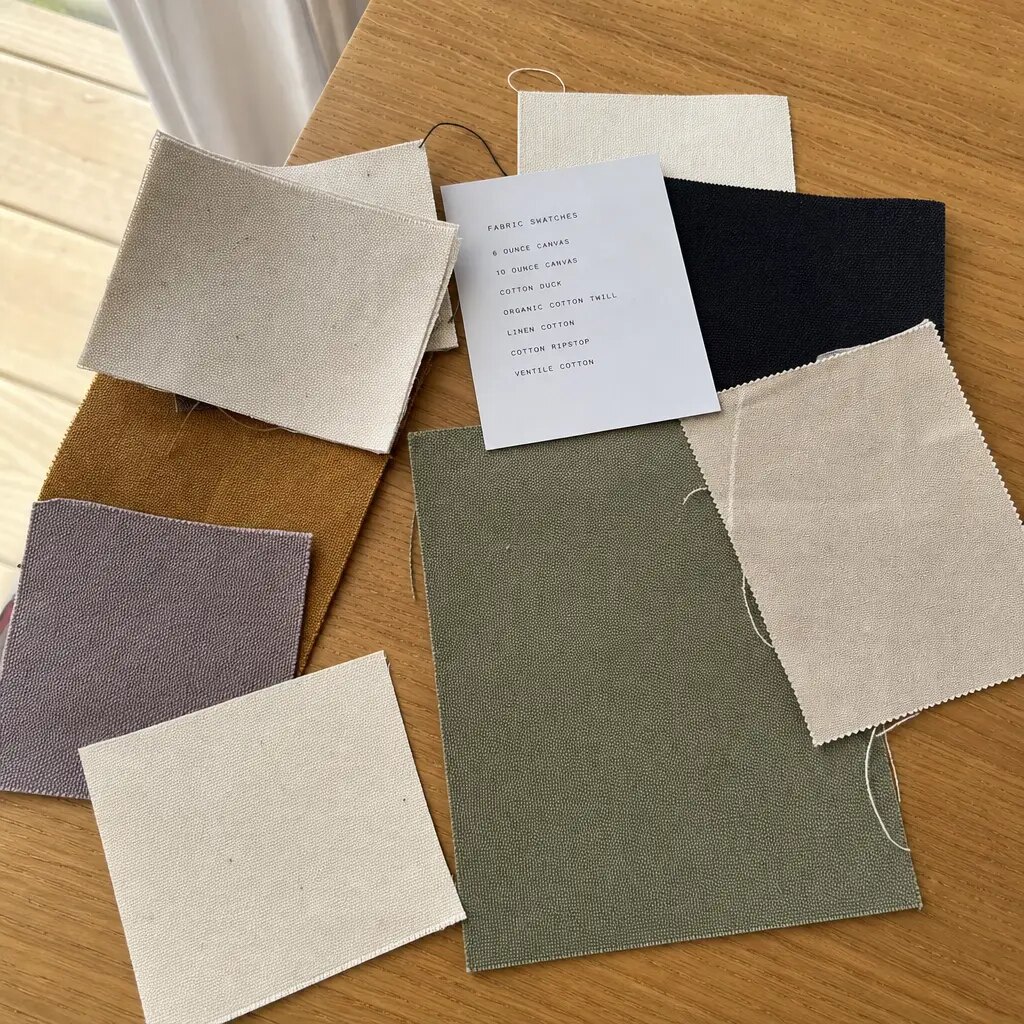
Buying Problem: Bulk Price Without Spec Drift
Canvas zipper portfolios look simple in a supplier catalog, but the bulk price can move sharply when the specification is not locked. A hotel retail buyer may compare three quotes that all say “canvas zipper portfolio,” while one supplier priced 10 oz fabric with a basic nylon zipper, another priced 12 oz canvas with an inner sleeve, and a third excluded print setup, woven label MOQ, and retail packing. The cheapest quote is often not the same product.
For hotel retail, the buying problem is not only unit cost. The portfolio must sit flat on a shelf, protect paper inserts or travel documents, carry the hotel brand cleanly, and arrive packed in cartons that a distributor or hotel warehouse can handle. A useful bulk pricing plan connects the product specification, MOQ, sample approval, packing method, and lead time into one quote structure so procurement can compare suppliers without hidden changes.
- Use one master specification sheet for every supplier quote.
- Separate base portfolio cost from logo, label, packaging, and sample charges.
- Request price breaks using the same fabric weight, zipper grade, and packing method.
- Treat any missing cost line as a quote risk, not a saving.
Portfolio Size and Construction Choices
Start with the contents the portfolio must hold. A hotel retail canvas zipper portfolio may be used for guest documents, spa brochures, travel vouchers, amenity cards, resort maps, notebooks, or a small tablet. If the buyer only gives an outside size, the factory may make a visually correct sample that is too tight after seam allowance, zipper tape, and inner pockets reduce the usable opening.
For most retail programs, the finished size should include enough clearance for easy insertion and removal. A4 documents need a different internal allowance than US letter inserts. If the portfolio includes a gusset, lining, pen loop, card slot, or inner divider, those details change sewing time and packing thickness. The RFQ should show a simple drawing with finished width, height, zipper opening length, seam allowance preference, and pocket dimensions.
- For flat document use, allow practical internal clearance instead of matching paper size exactly.
- For tablet or amenity kits, confirm product thickness and corner radius before sampling.
- For retail display, define whether the portfolio must stand, hang, or lie flat.
- For repeated reorders, approve a size tolerance before first bulk cutting.
Canvas Weight, GSM, and Handfeel
Canvas weight is one of the largest cost and quality drivers. A 10 oz canvas may be economical and easy to sew, but it can feel light for a retail portfolio if there is no lining or stiffener. A 12 oz canvas is a common balanced choice for hotel retail because it gives better structure while keeping the product foldable and carton weight manageable. A 14 oz canvas or lined construction can support a higher retail price point, but the buyer must accept thicker seams, higher freight weight, and more careful sewing at the corners.
Ask suppliers to quote both oz and GSM because regional mills and factories may describe cotton canvas differently. A rough reference is that 10 oz canvas is often around 280 to 340 GSM, 12 oz around 340 to 410 GSM, and 14 oz around 410 to 475 GSM, depending on finishing and measurement method. Natural canvas also has visible cotton seeds and slubs. These can look authentic in a hotel retail product, but only if the brand approves them in advance.
- 10 oz canvas: cost-sensitive, lighter handfeel, better for promotional or pilot orders.
- 12 oz canvas: balanced retail feel, suitable for most zipper portfolios.
- 14 oz canvas: premium feel, higher sewing difficulty and freight weight.
- Lined canvas: cleaner interior, higher labor cost, longer sample approval path.
Zipper, Puller, and Edge Finish
The zipper is where many low-price portfolios fail in use. A zipper that works on a flat sample table may catch after bulk packing if the corner seam is too bulky or the zipper tape is sewn too close to the edge. For hotel retail, the zipper should move smoothly, the puller should feel secure, and the opening should match the contents. A one-side zipper is cheaper, while a two-side or three-side zipper gives better access but adds labor and failure points.
Specify zipper material and color clearly. Nylon coil zipper is common and cost-effective. Metal zipper gives a heavier retail look but can scratch inserts and increases cost. Resin zipper is less common for slim portfolios unless the design is more casual. Pullers can be standard metal, fabric tab, leather-like tab, or branded. Each option changes MOQ logic because zipper tape color, puller finish, and custom pullers may require separate purchasing.
- Define zipper opening: one long side, L-shaped two sides, or three-side access.
- Set zipper tape color and puller finish in the approved sample.
- Test zipper smoothness after the product is packed and unpacked.
- Avoid bulky corner seams that force the zipper to bend sharply.
Branding Method and Print Risk
Screen print is usually the most practical logo method for canvas zipper portfolios in bulk. It handles solid hotel logos, destination artwork, and simple retail graphics well, especially on natural or dyed canvas. The cost depends on number of colors, print area, ink coverage, and whether the print happens before or after sewing. Printing before sewing gives better access to flat panels but requires accurate cutting and placement control.
Heat transfer can reproduce gradients and small details, but it may not match the natural handfeel expected on cotton canvas. Embroidery can look premium, but it adds stitch tension and may pucker lighter fabric. Woven labels and leather-like patches give a retail-grade finish and avoid print cracking concerns, yet they add MOQ, label lead time, and attachment labor. The safest RFQ includes artwork size, Pantone colors, print position from edges, and minimum text height.
- Use screen print for bold solid artwork and repeat bulk orders.
- Use woven labels when the brand wants a clean retail finish with less print risk.
- Use embroidery only after testing puckering on the selected canvas weight.
- Approve a strike-off on actual fabric before bulk print panels are released.
MOQ Logic and Bulk Pricing Breaks
MOQ is not only a factory preference. It comes from fabric purchasing, zipper tape dyeing, label production, cutting table setup, print screen setup, line balancing, and carton packing. A plain stock-size portfolio with one-color screen print may be possible at a lower MOQ than a custom size with dyed canvas, custom zipper tape, woven label, lining, and retail hangtag. Procurement teams should not force all specifications into one MOQ expectation.
For a practical bulk pricing plan, request price breaks at several volumes using the same specification. Common comparison points are 500, 1,000, 3,000, and 5,000 pieces, but the best breakpoints depend on fabric roll yield and carton quantity. The quote should identify which price drop comes from better material purchasing and which comes from spreading setup costs. If the supplier only gives a single unit price, the buyer cannot plan retail margin or reorder strategy.
- Lower MOQ usually fits stock fabric, standard zipper, and simple print.
- Higher MOQ is normal for dyed fabric, custom zipper tape, woven labels, and custom packaging.
- Price breaks should use the same approved spec, not lighter fabric at higher volume.
- Tooling and setup charges should be visible instead of hidden inside the unit price.
Quote Data That Makes Suppliers Comparable
A complete quotation for canvas zipper portfolios should read like a production plan, not a one-line product offer. The buyer needs finished size, fabric weight, fabric color, zipper type, pocket layout, logo method, packing method, MOQ, sample fee, sample time, bulk lead time, carton data, payment terms, and shipment terms. Without these fields, a low price may simply mean missing labor or packing assumptions.
For hotel retail and distributor buyers, carton data is especially important because warehousing, barcode receiving, and replenishment planning depend on predictable packing. Unit price also needs to state whether it includes retail insert cards, hangtags, barcode stickers, individual polybags, moisture protection, and master carton marks. These details may look small, but they add labor and can create shipment delays if raised after the deposit.
- Quote currency, Incoterm, and validity period.
- Finished size and tolerance, with drawing reference.
- Fabric weight in oz and GSM, including color and finishing.
- Logo method, print size, setup cost, and approval sample cost.
- Pieces per carton, carton dimensions, gross weight, and packing sequence.
- Lead time split by sample, material purchasing, production, inspection, and packing.
Sample Approval Before Bulk Cutting
The sample stage should remove uncertainty, not create a pretty but unrealistic reference. A blank size sample can confirm dimensions, pocket usability, zipper opening, and sewing construction. A printed pre-production sample should then confirm actual canvas, actual zipper, logo color, print placement, label, inner packing, and carton direction. If the supplier uses substitute fabric or a different zipper for sampling, procurement should treat approval as conditional.
A strong sample approval note includes measurable acceptance criteria. For example, finished size tolerance may be plus or minus 5 mm, print placement tolerance plus or minus 3 mm, and stitch density within the agreed factory standard. Zipper smoothness should be tested several times, especially around corners. The buyer should also place the intended insert inside the portfolio and leave it packed overnight to see whether corners bend or print areas rub.
- Approve the sample with written dimensions, not only photos.
- Keep one sealed approval sample with the buyer and one with the factory.
- Confirm whether bulk fabric is already available or still needs purchase.
- Do not approve bulk cutting until print strike-off and zipper function are accepted.
Packing, Cartons, and Retail Handling
Packing affects both landed cost and product condition. Canvas zipper portfolios are flat, but they can still arrive with bent corners, compressed zipper pulls, scuffed print areas, or moisture marks if the carton plan is weak. Individual polybags protect against dirt and rubbing, while tissue paper or paper bands may support a more plastic-reduced retail approach. The choice should match the hotel brand’s sustainability policy and the distributor’s warehouse requirements.
The carton plan should be tested with real product thickness after all pockets, labels, and hangtags are added. A carton that fits 100 blank pieces may only fit 60 finished retail-packed pieces. Overpacking can deform corners and make the zipper area wavy. Underpacking wastes freight cube. Buyers should request carton dimensions, gross weight, net weight, pieces per carton, carton marks, and pallet guidance if the shipment moves through a retail distribution center.
- Use flat stacking with aligned zipper pulls to avoid pressure marks.
- Add moisture protection when shipping in humid seasons or long ocean routes.
- Confirm barcode label placement before carton printing or carton sealing.
- Run a simple drop and compression review for retail-packed cartons.
Lead Time and Schedule Risk
Lead time for canvas zipper portfolios depends on how many components must be purchased or made before sewing can begin. Stock natural canvas and standard zipper tape can move quickly. Dyed canvas, custom woven labels, branded pullers, special hangtags, and retail packaging extend the timeline. Printing also affects the schedule because panels may need to be printed before sewing, inspected, dried, and then moved to the sewing line.
A realistic schedule separates sample development, sample approval, material procurement, bulk cutting, printing, sewing, inline inspection, final inspection, packing, and export booking. The risk is usually not one long production step; it is waiting for one component that blocks the line. Hotel retail buyers working toward opening dates, seasonal gift shop resets, or distributor catalog launches should build approval deadlines into the purchase order.
- Sample development often needs more time when construction and logo method are both custom.
- Dyed fabric and custom labels should be treated as critical-path components.
- Late artwork changes can restart print strike-off and panel approval.
- Final inspection should happen before cartons are sealed for export.
Specification comparison for buyers
| Spec decision | Recommended option | When it fits | Buyer risk to check |
|---|---|---|---|
| Direct factory bulk order | Best route for 1,000+ pieces with custom size, lining, logo, and carton plan | Hotel retail programs, resort gift shops, distributor catalog lines, and branded amenity retail sets | Confirm the quoted unit price includes fabric shrinkage allowance, zipper grade, inner pocket labor, export carton, and logo setup |
| Trading company consolidation | Useful when portfolios ship with towels, slippers, pouches, or other hotel retail items | Mixed-category programs where the buyer wants one invoice and one container loading plan | Portfolio factory may be subcontracted, so require pre-production sample approval and factory-level QC photos |
| Stock blank portfolio with local decoration | Fastest option when launch timing is tight and logo complexity is low | Small pilot orders, test stores, or short-term hotel events | Blank size, zipper color, and canvas shade may not match future custom production |
| Cut-and-sew custom canvas | Best for controlled retail presentation and repeat orders | Programs needing specific menu insert size, tablet pocket, gift packaging, or brand color zipper tape | MOQ and lead time increase because fabric cutting, sewing line setup, and print panels must be planned together |
| Natural 12 oz canvas body | Balanced handfeel, structure, and cost for zipper portfolios | Hotel retail shelves where the item must feel substantial but not become too heavy | Light color canvas shows stains and print defects; define acceptable slubs and shade tolerance before approval |
| 14 oz canvas or lined construction | Premium route for higher retail price points | Boutique hotel shops, corporate guest programs, and travel document organizers | Higher GSM adds sewing difficulty at corners and increases carton weight; sample the zipper curve and corner bulk |
| Screen print logo | Most economical for solid one- to three-color artwork on canvas | Bulk retail programs with repeatable brand marks, hotel names, or simple destination graphics | Artwork with small serif text or fine lines may fill in on coarse canvas; approve strike-off at actual size |
| Woven label or leather patch branding | Cleaner appearance when the portfolio is meant to look retail-grade rather than promotional | Brand owners selling through gift shops, travel stores, and resort boutiques | Label MOQ, patch attachment labor, and needle marks can affect both cost and lead time |
| Individual polybag plus master carton | Standard export packing for clean arrival and barcode handling | Distributor warehouses, hotel central purchasing, and retail backroom storage | Over-tight packing can bend portfolio corners; carton size should be tested with actual folded product thickness |
Buyer checklist before sampling
- Define the finished portfolio size by the documents or retail contents it must hold, not only by outside dimensions.
- Specify canvas weight in oz or GSM, and state whether the quoted fabric is greige, dyed, washed, or pre-shrunk.
- Confirm zipper type, zipper length, puller finish, and whether the zipper must open around two sides or one long side only.
- Send logo artwork with Pantone references, print size, print position, and minimum readable text height.
- Request one blank size sample and one printed pre-production sample before authorizing bulk cutting.
- Set acceptable tolerance for finished size, canvas shade, print position, zipper smoothness, and stitch density.
- Require carton dimensions, gross weight, pieces per carton, and inner packing method in the quotation.
- Separate tooling, sample, label, print screen, and carton costs from the unit price so price breaks are comparable.
- Confirm whether retail barcode labels, hangtags, insert cards, or suffocation warnings are included in packing labor.
- Lock the approval sequence and shipment date around fabric arrival, printing, sewing, inspection, and final packing.
Factory quote questions to send
- What canvas weight are you quoting in oz and GSM, and is it the weight before or after washing or finishing?
- What is the MOQ for this portfolio if we customize size, zipper color, lining, woven label, and screen print?
- Which cost items are included in the unit price: fabric, zipper, puller, label, print, inner pocket, polybag, carton, and export handling?
- What are the price breaks at 500, 1,000, 3,000, and 5,000 pieces using the same approved specification?
- What zipper brand or grade will be used, and can you provide a pull test or cycle test standard for approval?
- Can you make the sample using actual bulk fabric, actual zipper tape, and the final logo method rather than substitute materials?
- What finished size tolerance, print placement tolerance, and stitch density will your QC team apply during inspection?
- How many pieces fit per export carton, and will the portfolio corners stay flat after stacking and transit?
- What is the production lead time after sample approval and deposit, and which steps are on the critical path?
- Can you provide photos of fabric inspection, print panels, sewing line production, finished QC, and packed cartons before shipment?
Quality-control points to confirm
- Finished size tolerance should normally stay within plus or minus 5 mm for standard document portfolios unless a tighter retail insert fit is required.
- Canvas shade should be compared under consistent lighting against the approved swatch, with clear limits for natural slubs and darker cotton seeds.
- Zipper must run smoothly across corners without catching on seam allowance or printed fabric edges.
- Stitching should be even at stress points, with no skipped stitches, loose back-tacks, open seams, or exposed raw edges.
- Print adhesion should pass a dry rub and light scratch check suitable for unwashed canvas retail goods.
- Logo position should stay within the approved placement tolerance, especially when the portfolio is displayed face-out on shelves.
- Inner sleeves or pockets should hold the intended document, menu, tablet, or retail insert without tight bending.
- Carton packing should prevent corner crushing, zipper deformation, moisture exposure, and barcode label abrasion.