Why canvas zipper portfolios get misquoted
The first pricing mistake is treating a canvas zipper portfolio like a simple flat pouch. It is not. Once you add a zipper across the top, seam allowances, optional lining, print registration, and carton packing, the real cost structure changes fast. Buyers often compare quotes that look similar on paper but differ in fabric weight, zipper grade, or sewing labor hidden inside the unit price.
For craft fairs, the product also sits between promotional item and retail accessory. That means the right spec is usually more important than the absolute lowest quote. A portfolio that looks fine in a sample photo can still fail in bulk if the canvas is too soft, the zipper tape curls, or the inside seams are left rough. The RFQ needs to describe the finished product, not just the material name.
- Do not compare a 10 oz unlined quote with a 14 oz lined quote as if they were the same product.
- A zipper portfolio with a printed logo and a sewn side label is a different production job from a blank stock item.
- If your retail channel is sensitive to claims, ask for zipper cycle testing and stitch photos before approving mass run material.
Build the spec around the actual buyer use
For craft fair resale, the portfolio usually serves one of three roles: document organizer for vendors, branded merchandise accessory, or giftable storage item. Each use case changes the ideal structure. Vendor buyers usually want durability and easy cleaning. Retail brands care more about finish, hand feel, and print sharpness. Distributors often want stable repeatability and flexible packing counts.
The practical starting point is a letter-size or A4-friendly format with enough ease to avoid corner strain. A zipper that closes across the top should not rub directly against thick seam intersections. If your buyer wants a more premium shelf presence, add a light lining or a structured insert. If price is the priority, unlined canvas with a clean turned edge may be enough, provided the inside seam finish is acceptable.
- Typical finished size range: A4/letter plus 1 to 1.5 cm ease on width and height, depending on document thickness.
- Common fabric choice: 12 oz canvas for balanced retail feel; 14 oz when structure matters more than shipping weight.
- Optional add-ons that change cost quickly: inner pocket, pen loop, reinforced zipper ends, woven label, hangtag.
Fabric weight and finish: where the bulk price really moves
Canvas pricing is driven by weight, yarn quality, weave consistency, and finishing. On a product like a zipper portfolio, the buyer should specify both the fabric weight and the desired hand feel. Two suppliers may both say canvas, but one may be using a looser, softer cloth that looks thin under light, while another uses a denser weave that holds shape and prints better. For craft fairs, that visual difference matters on a table display.
A realistic bulk order plan usually starts at 12 oz canvas unless the item is purely promotional. Ten oz can work if the design is simple and price is the main goal, but it tends to show creasing after packing. Fourteen oz gives stronger structure and a more substantial feel, but it raises sewing effort and freight weight. If you are comparing quotes, ask the factory to state GSM or ounces and whether the fabric is raw, washed, or coated.
- 10 oz: lower cost, lighter hand, more likely to wrinkle in carton and on shelf.
- 12 oz: common tradeoff point for retail-friendly look and manageable cost.
- 14 oz: better structure, stronger appearance, and higher freight cost; useful for premium channels.
- If the fabric is pre-washed or enzyme-washed, ask whether shrinkage has already been stabilized before cutting.
Print method choice for a clean craft-fair look
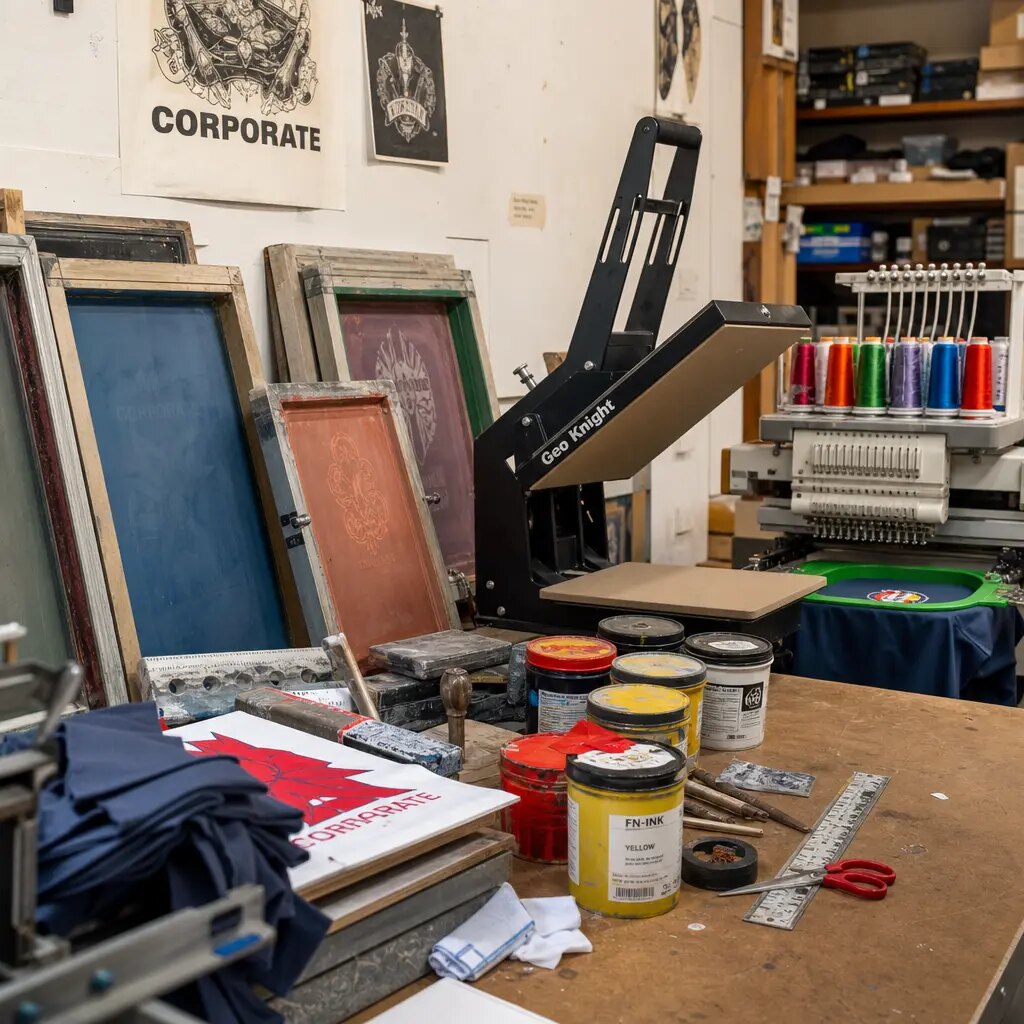
The print method should match both the artwork and the order size. For a simple one- or two-color logo, screen printing is usually the most cost-efficient and the most repeatable in bulk. It gives sharper edges on canvas and is easier to reorder later because the setup is stable. If the design has gradients, fine lines, or multiple colors, digital print or heat transfer may be needed, but the buyer should expect a different feel and a different durability profile.
The big mistake is approving art on a flat digital proof and assuming it will look the same on canvas. Canvas texture changes ink coverage, especially on dark fabrics. If your logo has thin text, request a strike-off or pre-production sample on the final fabric. For retail buyers, print placement tolerance matters more than people think; a slightly off-center logo can make a good bag look cheap.
- Screen print: best for flat spot colors, repeated bulk runs, and lower unit cost after setup.
- Heat transfer: useful for short runs or detailed artwork, but review cracking and edge lift after packing.
- Digital print: useful for complex graphics, but ask for color shift expectations on natural canvas.
- Keep the print area clear of zipper pulls and seam folds so the logo does not distort.
MOQ logic: what suppliers mean when they say minimum order
MOQ for canvas zipper portfolios is rarely one single number. It usually depends on fabric color, zipper color, logo color count, and whether the order uses a custom label or special packing. A supplier may quote a low overall MOQ, but once you split by colorway, the effective MOQ per variant becomes much higher. That is why a buyer should ask for MOQ by component, not just by total pieces.
For distributors and brand owners, the smart approach is to design around shared components. Keep the canvas base color constant, use one zipper color, and avoid unnecessary label variations in the first order. If you need multiple SKUs, order the best-selling color in one larger run and hold the less certain colors for a later replenishment. This keeps setup costs from eating the margin.
- Ask for MOQ per fabric color, per print color, and per label version.
- If the supplier uses outsourced printing or embroidery, separate those minima from sewing MOQ.
- A low MOQ quote may hide a high sample-to-production setup fee; request both line items.
How to compare supplier routes without wasting time
The comparison is not just factory versus trading company. It is about how much control you need over material consistency, artwork accuracy, and packing detail. A direct factory source is usually better for repeat bulk orders with stable specs. A sourcing agent or trading company can help when the order combines several product types, when you are still testing the market, or when your internal team does not have time to manage multiple workshops.
For a buyer of canvas zipper portfolios for craft fairs bulk pricing plan, the right route depends on whether you are optimizing cost, flexibility, or speed. The table below shows the practical differences buyers should use when they compare quotes.
Supplier route comparison for bulk buying
Use the same spec sheet across all routes, then compare only the variables that matter. A direct factory may quote lower on paper, but a trading company may include better packaging coordination or mixed-SKU flexibility. The point is not to pick the cheapest headline number. The point is to choose the route that produces the least risk-adjusted landed cost.
If a supplier refuses to separate material cost, print cost, and packing cost, the quote is harder to audit. That does not automatically mean the supplier is weak, but it does make reorders and negotiation more difficult. For a product with simple construction, transparency should be part of the buying criteria.
- Write decisions in measurable language, not only descriptive wording.
- Ask for sample photos plus one physical approval sample for important orders.
- Keep quotation, sample approval, and inspection notes tied to the same spec version.
The real quote structure: what should be on one page
A usable bulk quote should show the fabric spec, zipper grade, print method, sewing details, packing method, sample charge, production lead time, and carton details. If the supplier gives only a single unit price, you cannot compare one option against another when you later change the logo or order quantity. Unit price should be tied to a specific spec, not a vague description.
A buyer should also request separate setup items. These include screen charges, embroidery digitizing if relevant, special labels, and any extra packaging inserts. Once those charges are visible, it becomes easier to calculate the real break-even point for the next reorder. That is especially important for distributors who need a stable margin across multiple restocks.
Sample approval: what must be right before mass production
The sample stage is where most avoidable production mistakes are caught. For canvas zipper portfolios, the approval sample should confirm fabric weight, zipper movement, stitching at the corners, print placement, and carton packability. A good sample is not just visually acceptable. It must also close cleanly, sit flat when opened, and survive repeated handling without twisting the zipper tape.
When reviewing a pre-production sample, do not focus only on the logo. Look at seam turns, zipper end finishing, and inside thread trimming. Hold the piece under light to see whether the canvas weave is even and whether the print has any spots of uneven coverage. If the product is sold in craft fairs, buyers will handle it directly, so the hand feel matters as much as the image.
- Approve final fabric swatch and zipper sample together, not separately.
- Measure finished dimensions after the portfolio is packed flat for a short period.
- Confirm that the puller, label, and print color all match the approved reference.
- If there is a pocket or divider, test whether documents snag when the zipper is half-open.
Packing and carton planning to protect margin
Packing affects both damage rate and freight cost. Canvas zipper portfolios should be packed flat, usually in individual polybags or kraft sleeves depending on the channel. Flat packing keeps the product in shape and helps maximize carton density. If the portfolio includes any structure or lining, the supplier should also define how the zipper pull is positioned so it does not press into the canvas during transit.
For humid routes or long sea shipments, include desiccant if the product is sensitive to moisture marks or odor pickup. Carton marks should clearly show SKU, color, and pack count. If you are distributing across multiple retail locations, ask for inner cartons or manageable subpacks. That reduces warehouse handling damage and makes store replenishment easier.
- Common bulk pack: 1 piece per polybag, 50 to 100 pieces per master carton depending on size.
- Specify a carton weight target that your warehouse team can handle safely.
- Ask whether the factory uses corner protection or simple stacking for the zipper heads.
- If retail-ready packaging is required, confirm barcodes, hangtags, and insert card placement before mass production.
Specification comparison for buyers
| Spec decision | Recommended option | When it fits | Buyer risk to check |
|---|---|---|---|
| Fabric weight | 12 oz or 14 oz canvas, with 10 oz only for low-cost promo runs | Best balance of hand feel, structure, and print clarity for craft fair resale | Too light can wrinkle and feel thin; too heavy raises freight and may overbuild the product |
| Zipper grade | Nylon coil zipper with matching or self-fabric tape; YKK or equivalent if retail brand positioning matters | Useful when buyers need smoother operation and fewer claims on teeth separation | Cheap metal-look zippers can jam, discolor, or break pull tabs in transit |
| Print method | Screen print for 1-2 spot colors; heat transfer or digital print only for complex art and short runs | Best when artwork is simple and repeat orders matter | Overly detailed prints on thick canvas can look muddy or crack after packing and handling |
| Lining choice | Unlined for cost-sensitive bulk orders; light lining for premium presentation | Unlined suits basic document storage and event resale; lined fits branded gift or office channels | Skipping lining can expose rough seam interiors; adding lining may change MOQ and sewing time |
| Size format | A4/letter size with 1-1.5 cm ease and zipper top closure | Matches common document use for craft fairs, vendor paperwork, and tote-in-bag organization | Too tight creates jammed corners; too large wastes fabric and increases shipping volume |
| Supplier route | Direct factory source for repeat bulk orders; trading company for mixed specs or small combined SKUs | Direct sourcing works when artwork, sizing, and packing are stable | Intermediaries may hide fabric substitutions or split production across different workshops |
| MOQ strategy | Set MOQ by fabric color + print color + zipper color combination | Keeps pricing logical and avoids one-off setup losses | A low headline MOQ can hide high per-unit adders for each colorway or logo variation |
| Packing method | Flat pack in polybag with carton count and carton mark; add desiccant for humid routes | Best for e-commerce, retail replenishment, and freight efficiency | Loose packing causes zipper dents, crease marks, and poor carton utilization |
| Quote structure | Request separate lines for material, printing, zipper, sewing, packing, and freight-ready cartonization | Essential for comparing suppliers on an apples-to-apples basis | All-in quotes can disguise weak materials or change orders after sample approval |
Buyer checklist before sampling
- Confirm the exact use case: craft fair document portfolio, vendor order organizer, branded giveaway, or retail accessory, because the required stiffness and finish are not the same.
- Lock the finished size with tolerance, including zipper top clearance and whether an internal pocket is needed.
- Specify canvas weight in GSM or ounces, and state whether you accept raw canvas, washed canvas, or coated canvas.
- State the zipper type, puller style, and whether the zipper tape must match the canvas or contrast intentionally.
- Define the print area, number of colors, and acceptable registration tolerance.
- Request sample photos of stitch density, zipper end finishing, and inside seam binding before mass production.
- Ask for carton pack count, master carton size, gross weight target, and whether polybags are required.
- Ask the factory to separate unit cost from setup cost so reorders can be evaluated fairly.
Factory quote questions to send
- What is the exact fabric weight in GSM and what is the finished shrinkage allowance after cutting and sewing?
- Which zipper brand or zipper grade will be used, and is the puller metal, plastic, or woven tape?
- How many sewing operations are included, and are inside seams raw-finished, bound, or piped?
- What is the MOQ per color, per logo version, and per carton configuration?
- What is the sample lead time, mass production lead time, and what events trigger a schedule reset?
- What packing method is included in the quoted price, and are polybags, insert cards, or barcode stickers extra?
- What print method is quoted, and what is the charge for each additional color or artwork position?
- Can you provide photos or a pre-production sample showing the exact canvas, zipper, and label material that will be used?
Quality-control points to confirm
- Fabric GSM tolerance should stay within a practical band for the quoted spec; large swings usually indicate lot substitution.
- Zipper must run smoothly from end to end with no snagging at the corner seam and no wavy tape after sewing.
- Logo print should be aligned within the agreed tolerance and show consistent ink coverage without pinholes or heavy bleeding.
- Stitch density should be even, with no skipped stitches, loose ends, or visible seam puckering around the zipper line.
- Finished dimensions should be measured after packing and light handling, not only at the cut stage.
- Edge binding or seam finishing should be consistent across every bag, especially on the inner corners near the zipper stop.
- Carton packing should meet the agreed count and compression level so the zipper heads are not bent in transit.