Buying Problem: Structure Without Overbuilding
Canvas zipper portfolios look simple in a product photo, but the fabric weight decision controls most of the buyer experience: handfeel, shape retention, logo result, zipper load, carton weight, and final landed cost. For tech startups, the portfolio usually has to look cleaner than a giveaway pouch but still stay within a realistic event or onboarding budget. The wrong weight creates one of two common problems: a floppy folder that feels cheap, or an overbuilt case that costs too much to ship and is difficult to sew cleanly.
The practical target for many custom canvas zipper portfolios is 12 oz cotton canvas, roughly 400 GSM, combined with a modest lining and a No.5 nylon coil zipper. This gives enough body for documents, stickers, welcome letters, charging cables, or a thin tablet sleeve without forcing the factory into heavy-duty bag construction. Buyers should treat fabric weight as a system decision, not a single line item. Canvas, lining, interlining, zipper size, seam binding, and packing method must work together.
- Use 10 oz canvas when the order is price-sensitive and the portfolio is mainly for paper documents.
- Use 12 oz canvas when the product must feel substantial but still pack flat and ship efficiently.
- Use 14 oz canvas when the portfolio is part of a premium kit and zipper reinforcement is included.
- Avoid approving fabric weight without checking closed shape, corner bulk, and zipper movement.
Fabric Weight Ranges That Actually Work
Canvas is often quoted in ounces per square yard, while many purchasing teams compare textile weight in GSM. The conversion is not exact in daily factory communication because weaving density, yarn count, finishing, and moisture content affect handfeel. Still, useful buying ranges are clear. A 10 oz canvas is usually around 340 GSM, 12 oz is around 400 GSM, 14 oz is around 475 GSM, and 16 oz is around 540 GSM. For zipper portfolios, these differences are visible in folding, stitching, and packing.
A very light canvas can be acceptable if the portfolio has lining, binding, and a simple document purpose. It will not feel like a rigid organizer. A very heavy canvas can look premium but may become bulky at the zipper corners, especially when the design has inner pockets, card slots, padding, or a gusset. If the startup wants a clean, modern product, over-thick seams can look worse than a lighter fabric sewn neatly.
- 8 oz canvas is usually too soft for zipper portfolios unless it is only a low-cost document sleeve.
- 10 oz canvas works for event folders where price and weight are important.
- 12 oz canvas is the safest RFQ starting point for balanced quality and cost.
- 14 oz canvas suits premium programs if the pattern and zipper are adjusted.
- 16 oz canvas should be used only after sample testing because corner sewing and freight cost increase.
How Canvas Weight Changes the Quote
Fabric weight affects more than the fabric cost. Heavier canvas uses more cotton per square meter, may require slower sewing, creates thicker seam allowances, and can require a larger zipper, stronger needle, heavier thread, or reinforced zipper ends. A buyer comparing a 10 oz quote against a 14 oz quote is not comparing the same product, even if the dimensions and logo look similar on the quotation sheet.
MOQ logic also changes with fabric choice. Natural canvas in common weights may be easier to source at lower MOQ because factories or fabric mills keep stock. Custom dyed canvas, especially in a startup brand color, normally pushes MOQ higher because the mill has dyeing minimums. A custom zipper tape color, matching lining, and woven label can each carry separate minimums. For importers and distributors, the cleanest way to control cost is to separate must-have brand elements from nice-to-have customizations.
- Fabric cost rises with GSM, but labor cost can also rise because thick seams slow the sewing line.
- Dyed canvas usually costs more than natural canvas and needs color approval under a light box or daylight standard.
- Custom zipper tape, lining, and labels can each create separate MOQ constraints.
- A low MOQ quote may use stock fabric colors and standard zipper colors; confirm this before presenting to a retail buyer.
Recommended Spec for Tech Startup Programs
For a balanced startup portfolio, a practical RFQ spec is 12 oz natural or dyed cotton canvas, 210D polyester lining, No.5 nylon coil zipper, bound inner seams, one document pocket, one pen loop, and one flat logo on the front. This is not the most luxurious build, but it gives enough perceived value for onboarding kits, conference speaker packs, sales demo folders, partner welcome packs, and retail tech accessory bundles.
If the portfolio must hold a tablet, add a padded sleeve or reinforced pocket rather than simply increasing outer canvas weight. Padding and pocket placement protect the device better than a heavier shell alone. For a portfolio used mainly for documents, keep the inside simple. Too many pockets add sewing time, increase defect points, and make the portfolio harder to close when users insert real items.
- Standard size can follow A4 or letter documents, but add allowance for documents inside sleeves.
- A tablet pocket should state usable device size, not only outside portfolio size.
- A pen loop should be tested with the buyer’s actual pen diameter if a branded pen is included.
- Inner elastic bands look useful but can deform the portfolio if tension is too high.
- A small woven side label can carry brand detail better than tiny screen-printed text on coarse canvas.
Logo Method and Fabric Surface Control
Canvas texture affects logo sharpness. A solid, simple tech startup logo normally works well with screen printing, especially one to three colors. Fine lines, small letters, gradients, and very tight registration are less reliable on coarse canvas. If the logo includes small product marks, legal text, QR codes, or detailed icons, a woven label, rubber patch, or printed cotton label may be safer than printing everything directly on the portfolio body.
The print method should be approved on the actual bulk fabric weight and color, not on a smooth substitute swatch. Natural canvas can contain slubs and seed flecks that interrupt ink coverage. Dark dyed canvas may need an underbase for light logos, which changes handfeel and cost. Large ink coverage can stiffen one side of the portfolio and cause slight curling if the fabric is light.
- Screen print fits bold logos, flat colors, and controlled budgets.
- Heat transfer can show cleaner detail but may feel less natural on cotton canvas.
- Embroidery adds texture but can pucker lighter canvas unless the panel is reinforced.
- Woven labels are useful for small text, version marks, or retail-style branding.
- Approve print position from seam references, for example 40 mm from bottom seam and centered horizontally.
Zipper, Lining, and Construction Details
The zipper is the part users touch most, so it can make a decent canvas portfolio feel cheap or reliable. For most 10-12 oz canvas zipper portfolios, a No.5 nylon coil zipper is enough. When the design uses 14 oz canvas, padding, or a thicker gusset, a No.8 zipper may be more appropriate. Metal zippers can look premium but are heavier, less flexible around corners, and can scratch inserted devices if the inside design is careless.
Lining is not only cosmetic. It hides seam allowances, improves document sliding, reduces lint transfer, and can protect electronics from raw canvas fibers. However, lining also creates a failure risk if it is cut too loose or not anchored properly. Loose lining can catch in the zipper teeth or bunch at corners. In the sample stage, open and close the portfolio repeatedly with documents inside, not empty on a table.
- Use bound seams to reduce fraying and improve the inside finish.
- Reinforce zipper ends because they carry pulling stress when the portfolio is full.
- Match thread thickness to canvas weight; thin thread can cut into heavy fabric under tension.
- Use radius corners where possible because sharp square corners stress the zipper and create sewing bulk.
- Confirm whether the quoted zipper puller is standard, custom metal, fabric tab, or branded pull.
Sample Approval Before Bulk Cutting
A canvas zipper portfolio sample should prove the complete build, not just show the logo. Procurement teams should require a material swatch approval first if color is important, then a full pre-production sample made with the same fabric weight, lining, zipper, logo method, and reinforcement as the bulk order. A sample made with substitute zipper or different canvas weight is useful for pattern checking only; it should not be treated as final approval.
The sample review should include measurement, function, appearance, and packing simulation. Place the real documents, brochure, notebook, pen, cable, or tablet inside and close the zipper. If the product bulges, the pattern needs more allowance or the inside layout needs simplification. If the logo looks tilted, measure it from seams. Soft goods can look visually uneven when judged by eye, so fixed measurement points avoid argument later.
- Measure length, width, zipper opening, pocket depth, pen loop width, and logo position.
- Cycle the zipper at least 30 times and record any catching at corners.
- Rub the printed logo lightly with dry and damp white cloth for basic transfer observation.
- Load the expected contents and check whether the zipper closes without forcing.
- Photograph the approved sample from front, back, inside, zipper corner, and logo close-up.
QC Thresholds for Bulk Inspection
Bulk inspection should focus on defects that affect brand presentation and user function. Small natural slubs in canvas are normal, especially on unbleached cotton, but oil stains, mildew smell, large color shade differences, broken stitches, skipped stitches, and zipper catching should not pass. Buyers should define the difference between natural fabric character and unacceptable contamination before production.
Dimensional tolerance must be realistic for sewn canvas goods. A common working tolerance is plus or minus 5 mm for main dimensions, with tighter control on logo placement if the logo is near a pocket or edge. Zipper portfolios are flat products, so twisted panels and uneven topstitching are visible. If the portfolio is sold through retail or included in a premium kit, the inspection level should be stricter than a mass event giveaway.
- Critical defects include broken zipper, sharp metal burrs, mold, wrong logo, and unsafe contamination.
- Major defects include obvious stains, serious print damage, open seams, missing pocket, and zipper catching.
- Minor defects include small thread ends, slight natural slubs, and small measurement variation within tolerance.
- Inspect loaded function by inserting standard documents or buyer-specified contents into selected samples.
- Keep one approved golden sample at the factory and one with the buyer for comparison.
Packing, Carton Data, and Landed Cost
Canvas zipper portfolios should normally pack flat. Rolling or tight compression saves space but can leave creases, distort the zipper line, and create a poor first impression when the buyer unpacks cartons. Individual polybags protect against dust and moisture, but some startup brands prefer paper bands or glassine-style bags for presentation. If sustainability messaging matters, specify the packing material rather than using a vague eco-friendly request.
Carton data is part of the commercial quote, not an afterthought. A heavier 14 oz portfolio can change gross weight enough to affect air freight and courier cost, especially for urgent event deadlines. Buyers should request pieces per carton, carton dimensions, gross weight, net weight, and estimated CBM before confirming a quote. This helps compare FOB cost against landed cost and avoids surprise charges when the forwarder books space.
- Use flat packing with interleaving if the logo surface is sensitive to rubbing.
- Limit carton height so lower pieces are not crushed under excessive weight.
- Add silica gel or moisture control when shipping in humid seasons or long sea transit.
- Mark cartons with item number, color, quantity, PO number, carton number, and gross weight.
- Request CBM per 1,000 pieces to compare freight impact between fabric weights.
Lead Time Risks and RFQ Data Discipline
Lead time risk usually comes from late decisions, not only factory capacity. Custom dyed canvas, custom zipper tape, custom pullers, and woven labels all add approval steps. If the event date is fixed, the buyer should lock the practical spec early and avoid changing logo size, fabric color, or pocket layout after the sample is approved. Every change after sample approval can restart material purchasing or cutting.
A strong RFQ gives the supplier enough data to quote the same product every time. Include artwork files, finished size, fabric weight, color reference, lining, zipper grade, logo method, packing, target quantity, delivery term, inspection requirement, and required delivery date. If comparing several suppliers, do not let each factory choose its own canvas weight and accessory grade. That creates attractive low quotes but weak sourcing decisions.
- Allow time for fabric approval, sample making, sample shipping, revision, material booking, production, inspection, and export packing.
- Separate sample lead time from bulk production lead time in the purchase schedule.
- State whether the delivery term is EXW, FOB, CIF, DDP, or another agreed term.
- Request quote validity because cotton fabric and freight costs can change.
- Keep an approved spec sheet with revision date so sales, design, factory, and inspector work from the same document.
Specification comparison for buyers
| Spec decision | Recommended option | When it fits | Buyer risk to check |
|---|---|---|---|
| Outer canvas weight | 12 oz / about 400 GSM cotton canvas for most startup event portfolios | Good balance for A4 documents, tablet sleeve, screen print, and regular shipping weight | Below 10 oz can feel soft and collapse; above 16 oz can raise sewing difficulty, zipper stress, and freight cost |
| Premium structure | 14 oz / about 475 GSM canvas with light interlining | Executive onboarding kits, investor packs, retail gift sets, or higher perceived value programs | Thick corners may create bulky seams; sample the closed zipper shape before approving bulk |
| Budget structure | 10 oz / about 340 GSM canvas with 210D or 300D lining | High-volume conference giveaways where unit weight and budget matter more than rigid handfeel | Portfolio may wrinkle after compression packing; logo area can look uneven without proper pressing |
| Lining fabric | 210D polyester for basic lining or 300D polyester for stronger tablet-pocket areas | Useful when buyers need smoother inside finish, color contrast, and better document protection | Loose lining causes zipper catching; require lining tolerance and inner pocket measurement in the sample report |
| Zipper specification | No.5 nylon coil zipper for standard use; No.8 nylon coil for heavier 14-16 oz builds | No.5 works for most folders; No.8 fits thicker padded portfolios and frequent office use | Cheap sliders lose paint or jam at corners; test at least 30 open-close cycles on pre-production samples |
| Logo method | Screen print for solid startup logos; woven label for small text; embroidery only on reinforced panels | Screen print keeps cost stable at 1-3 colors; woven labels protect fine logo details on textured canvas | Fine print can break on coarse canvas; approve logo size, ink coverage, and position with a physical sample |
| Closure and edge build | Full perimeter zipper with bound internal seams and reinforced zipper ends | Best for portfolios carried between office, trade show, hotel, and client meeting environments | Unreinforced zipper ends are common failure points; add bar tack or extra stitch passes at stress areas |
| Packing method | Individual polybag or paper band plus flat carton packing with moisture control | Needed for brand programs where surface cleanliness and shape are important on arrival | Over-compressed cartons create permanent fold marks; specify maximum carton height and no tight rolling |
Buyer checklist before sampling
- Define the real use case first: event giveaway, employee onboarding, retail kit, distributor sample case, or executive gift.
- State outer fabric weight in oz and approximate GSM, not only the word canvas.
- Specify portfolio size, usable document size, tablet pocket size, gusset depth, and closed thickness allowance.
- Confirm whether the portfolio needs lining, interlining, padding, cardboard reinforcement, or a soft foldable structure.
- Match zipper size to fabric thickness and corner shape; request zipper cycling on the approved sample.
- Choose logo method based on fabric texture, logo detail, ink coverage, and brand color tolerance.
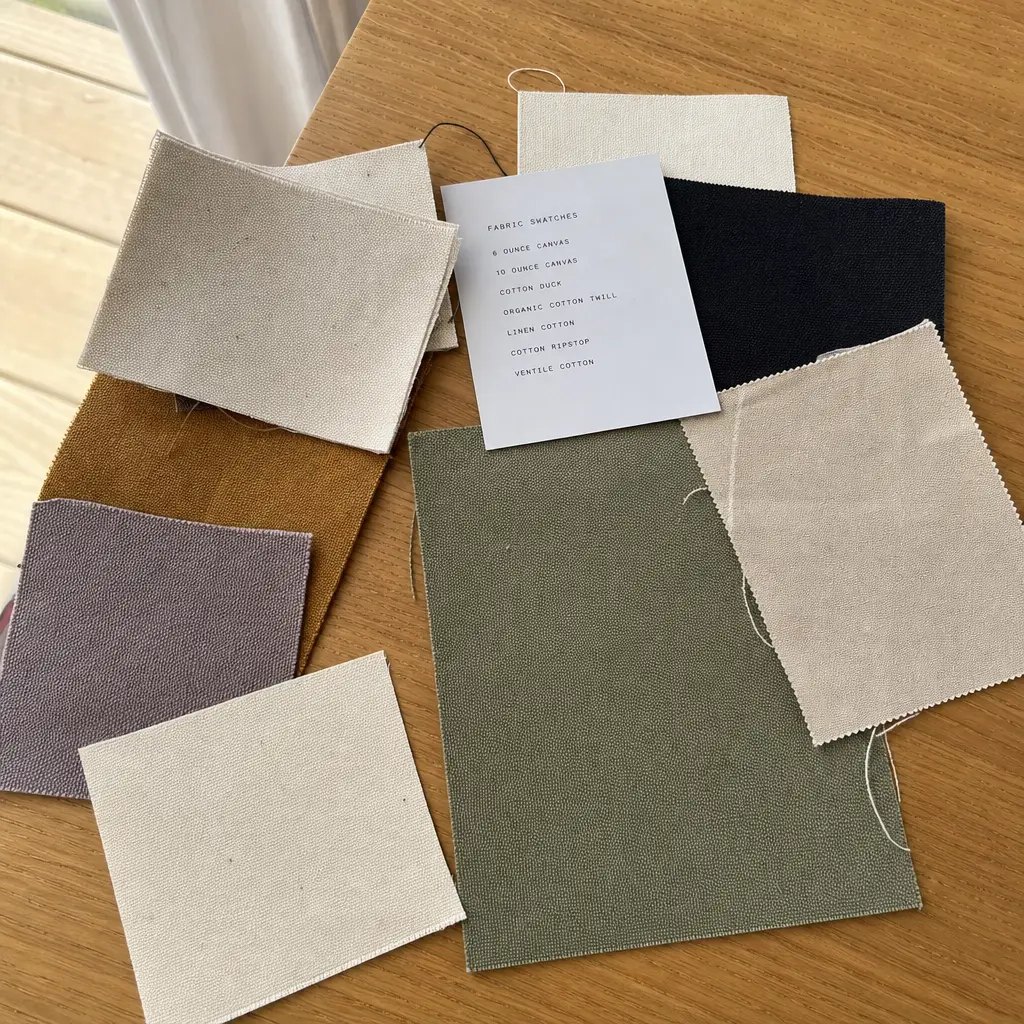
- Request photos of fabric swatches, zipper tape, slider, lining, thread, and label before sample cutting.
- Set sample approval criteria for dimensions, seam allowance, print position, zipper smoothness, odor, and surface stains.
- Require packing details including inner bag type, carton quantity, carton size, gross weight, and moisture protection.
- Compare quotes using the same fabric weight, accessory grade, logo method, packing method, and inspection standard.
Factory quote questions to send
- What exact canvas weight are you quoting in oz and GSM, and is the fabric dyed, natural, washed, or laminated?
- Is the quoted fabric 100% cotton canvas, cotton-poly canvas, recycled cotton blend, or another blend?
- What lining fabric, interlining, padding, or stiffener is included in the quoted unit price?
- Which zipper size, zipper material, slider type, puller style, and zipper brand level are included?
- What logo method is included, how many colors, what maximum print size, and what setup charges apply?
- What is the MOQ for the quoted fabric color, zipper color, lining color, and custom label?
- How many pre-production samples are included, what is the sample lead time, and what changes trigger a resample fee?
- What are the estimated carton quantity, carton dimensions, gross weight, and CBM per export carton?
- What production lead time applies after sample approval and deposit, and what is the latest date for artwork and material approval?
- What inspection standard will you accept for zipper function, stains, dimensions, print defects, and packaging?
Quality-control points to confirm
- Outer dimensions should stay within agreed tolerance, commonly plus or minus 5 mm for length and width on soft goods.
- Zipper must open and close smoothly around corners without catching lining, skipped teeth, or slider paint loss.
- Logo position should be measured from fixed seam references, not visually centered by the sewing operator.
- Canvas surface should be free from oil marks, large slubs, serious color shading, mildew smell, and visible needle damage.
- Stress points at zipper ends, handles if used, pen loops, and tablet pocket corners should have reinforcement stitches or bar tacks.
- Interior lining should lie flat enough that documents slide in without snagging, bubbling, or exposed raw edges.
- Bulk pieces should match the approved sample for fabric handfeel, thickness, zipper color, thread color, and label placement.
- Cartons should protect flat shape; reject crushing, water damage, incorrect assortment, and missing carton marks.