Start With the Buying Use Case
Canvas zipper portfolios look simple in a product photo, which is why university bookstore buyers get handed quotes that are hard to compare. One supplier may be pricing a thin document sleeve. Another may be including lining, stronger seams, and a heavier zipper. If the RFQ only says portfolio or zip case, the factory will fill in the blanks differently and the quotes will not be equivalent.
Begin with the actual use case. A retail SKU on a bookstore shelf needs a clean appearance, repeatable packing, and enough zipper life to survive browsing. An admissions kit may only be opened a few times, but it can still need a better print finish and cleaner carton presentation. A course-material bundle needs dimensional accuracy and fewer cosmetic defects because the buyer will judge it against the contents, not just the bag itself.
The most useful brief does not just name the product. It names the job to be done and the failure you want to avoid. For university bookstores, that usually means documents that should stay flat, a zipper that should not snag, a logo that should not crack in the fold zone, and packaging that should not crush the corners before the item reaches the shelf.
- Name the channel: retail shelf, orientation kit, department giveaway, or alumni gift.
- List the contents and the real loaded weight.
- Separate visual requirements from functional requirements.
- Use one approved sample as the reference for later inspection.
- Write the product spec so a second supplier could quote the same build.
Dimension the Portfolio Around Real Contents
Paper size is not the same thing as portfolio size. An 8.5 x 11 inch sheet does not fit into an 8.5 x 11 inch sewn item once seam allowance, zipper tape, and corner shaping are included. The same problem shows up with A4 packets, notebooks, and mixed kits. If the buyer only gives a nominal paper size, the factory can still deliver something that technically matches the drawing and fails in use.
Specify outside dimensions and usable internal dimensions separately. Outside size affects shelf presence, carton planning, and how the item looks in retail packaging. Usable inside size is what matters when documents slide in and out. If the portfolio has a pocket, divider, or pen loop, mark those on a simple dimensioned sketch. A small pocket shift or zipper placement change can matter more than a wider color palette.
For bookstore programs, test the worst-case contents, not the easiest stack. A packet with inserts, a notebook, a pen, and a folded campus map creates a different load than loose paper. If the portfolio will be pre-packed before shipping, check whether the contents press into the logo panel or distort the zipper line. That kind of fit issue often appears too late when the RFQ only describes the flat outside size.
- State the document format: letter, A4, legal, notebook, or custom kit.
- Provide usable internal dimensions, not only outside dimensions.
- Include corner radius, seam allowance, and pocket depth.
- Confirm whether the contents must fit flat without bending.
- Test the actual insert set before bulk approval.
Choose Canvas Weight and Finish With Intent
For most canvas zipper portfolios used by university bookstores, 12 oz to 16 oz cotton canvas is a practical starting range. That often lands around 390-540 GSM, but the supplier needs to say when the fabric was measured. Weight after washing or finishing is not the same as weight before. If the mill pre-washes or coats the fabric, the finished handfeel and size can change enough to affect quoting and QC.
Lighter canvas can work for document-only portfolios, orientation kits, or price-sensitive giveaways. It tends to feel less structured and can wrinkle more easily near the zipper. Heavier canvas improves body and retail presence, but beyond a point it raises sewing difficulty, corner bulk, and rejection risk. Buyers often get a cleaner result from better seam construction or a light lining instead of just asking for more fabric weight.
Finish is a sourcing decision, not an afterthought. Natural canvas is common and economical, but lot variation can be more visible. Bleached canvas gives a brighter print field and a more polished shelf look, but it can show dirt sooner. Dyed canvas is the better path for school colors, yet color tolerance and repeatability need to be set early. Washed or coated canvas can improve feel or spill resistance, but both can change print adhesion and lead time.
- Use 12 oz to 16 oz canvas as the normal retail starting range.
- Ask whether fabric weight is measured before or after wash or finish.
- Confirm shade tolerance for repeat orders and school colors.
- Do not assume heavier canvas automatically means a better product.
- Test decoration on the exact finished fabric, not just a lab swatch.
Specify the Zipper and Interior Build Like a Functional Part
The zipper is the first moving part the customer will test, and often the first point of failure. For standard letter-size or A4 portfolios, a No. 5 nylon coil zipper is usually the best default because it bends smoothly around corners and keeps weight under control. A No. 8 coil zipper makes sense only when the product is oversized, padded, or carrying a heavier load that justifies the extra bulk.
The quote should name the zipper type, size, tape material, tape color, slider material, slider finish, puller shape, zipper length, and end-stop method. Ask whether the factory uses finished zippers or cuts continuous coil tape during production. If they are cutting on the line, length tolerance and end reinforcement become especially important because a neat front view can still hide weak ends.
Interior finish changes how the portfolio feels in use and how it ages in the bookstore. An unlined product can be fine if the inside seams are bound or overlocked cleanly. A lined version usually feels more premium and protects the interior from fraying, but it also adds cost and can hide weak construction if no one inspects the inside. During sampling, open the piece fully and inspect the inside as carefully as the front panel.
- Default to No. 5 nylon coil for standard flat portfolios.
- Use No. 8 coil only when size or load truly requires it.
- Lock zipper tape color early if the item must match school branding.
- Require back-tacks, bar-tacks, or approved end stops at zipper ends.
- Inspect the interior for raw edges, loose thread, and seam quality.
Lock Decoration and Branding Before You Buy Bulk
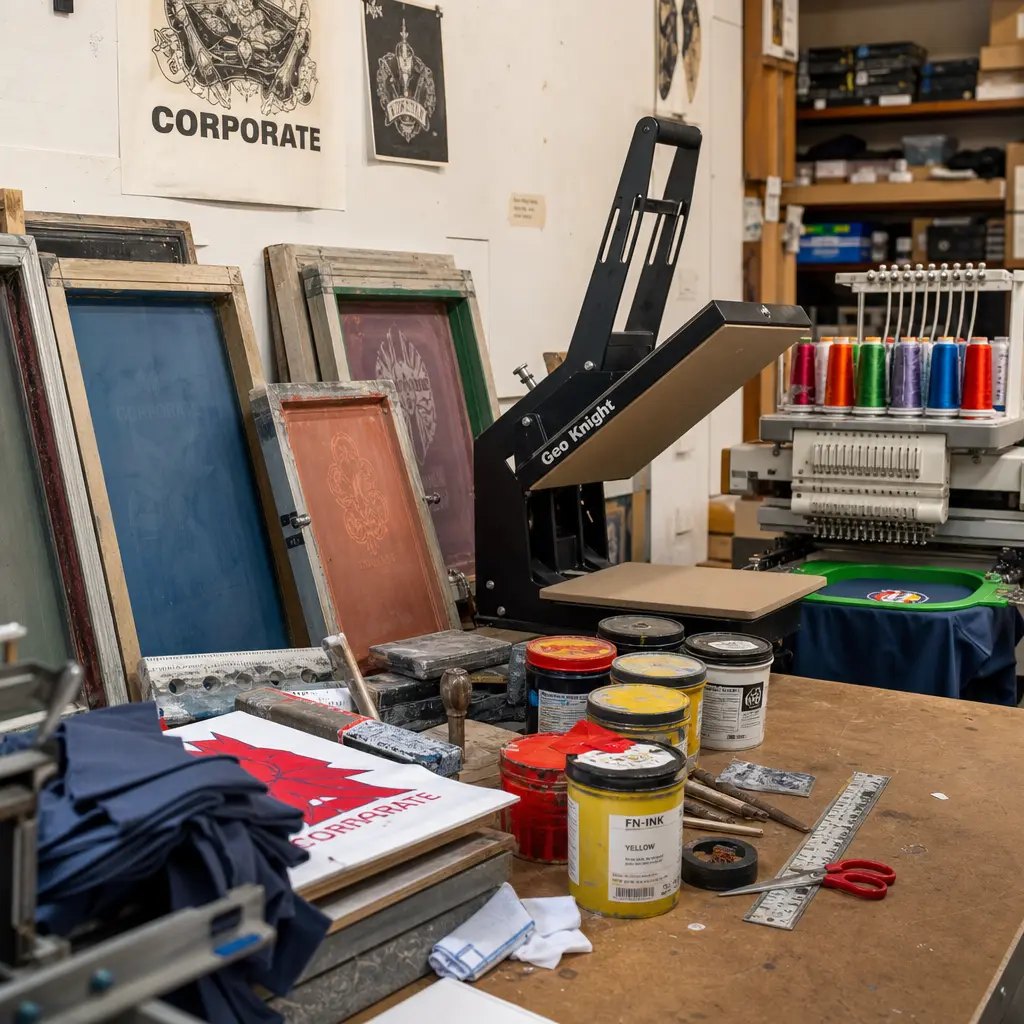
University bookstore portfolios usually carry marks that need more control than a generic tote bag. That can mean a school name, bookstore logo, department mark, event graphic, or licensed mascot. For one to three spot colors on cotton canvas, screen print is often the most practical option. It is economical and durable when the ink, mesh, and cure are matched to the actual fabric.
Heat transfer is useful when the artwork is detailed or full color, but it should never be approved from a smooth sample sheet alone. Rough canvas, washed canvas, and coated canvas can all affect adhesion. Ask for dry rub, fold, and edge-lift checks on the actual production fabric. If the design will cross a crease or sit close to a zipper seam, request that the supplier call out the risk before production.
Woven labels, patches, embroidery, and branded pullers can all be valid choices, but each one changes sewing time, placement risk, and inspection points. Embroidery adds texture and can read as premium, but it can also distort a thin panel. A woven label may be cleaner for a small logo. A patch can elevate the look, but it adds another sewn component that has to pass inspection. Keep artwork approval separate from construction approval when the mark is licensed.
- Use screen print for clean spot-color logos on standard canvas.
- Use heat transfer only after rub, bend, and edge-lift testing.
- Set logo placement tolerance, commonly plus or minus 3 mm to 5 mm.
- Confirm Pantone, LAB, or approved swatch references for school colors.
- Document who approves licensed artwork and when that approval is required.
Build a Durability Test Plan That Matches Store Use
A canvas zipper portfolios durability testing checklist for university bookstores should test how the item will actually be handled, not how hard it can be abused in a lab. The main failure modes are predictable: zipper jam, seam opening, print cracking, corner crush, size drift, odor, contamination, and a finish that does not survive retail handling. The point is to catch those failures before bulk cutting starts.
Use the real contents or a realistic load pack and leave the sample packed for at least 24 hours. Then open and close the zipper repeatedly, inspect the corners, and check whether the shape still works as a retail SKU. If the portfolio will be shipped flat and then stored in cartons, pack the sample the same way and inspect it again after compression. That step often reveals zipper puller marks or corner flattening that were invisible on a fresh sample.
Do not separate print tests from construction tests. Dry rub on the logo, bend the printed area, and check the edge of the transfer or screen print near stress points. If the item is going into a bookstore or kit program, the buyer needs to know whether the logo survives the same handling that the portfolio itself survives. A good sample should look correct after handling, not only when it comes out of the sewing room.
- Load test with the actual contents or an agreed equivalent pack.
- Run 50-100 full zipper cycles on the approved sample.
- Check the sample after 24 hours of packed load and again after carton compression.
- Perform a dry rub and fold check on the printed area.
- Inspect corners, zipper ends, and seam junctions after handling.
Define QC and Acceptance Criteria Before Production Starts
Inspection works best when the defect language is written before the purchase order. Many buyers use an ANSI/ASQ Z1.4 or ISO 2859-1 style sampling plan, often with General Inspection Level II, but the plan only helps if the defect definitions are specific to this product. Critical defects should cover safety, contamination, and unauthorized artwork. Major defects should cover function, fit, and brand presentation. Minor defects should cover cosmetic issues that do not stop sale or use.
For this product, a major defect usually includes zipper jamming, skipped teeth, seam opening, size outside tolerance, unusable internal opening, poor logo placement, obvious print cracking, wrong fabric weight, wrong zipper type, or carton damage that affects the sellable unit. Critical defects should include mold, live contamination, sharp broken hardware, severe odor, or an unauthorized university mark. A loose thread or a slight wrinkle can be minor if it does not change function or appearance in a retail setting.
Inspection should not be limited to the top piece from one carton. Pull samples from multiple cartons and from different positions in the pack. Measure outside size and usable inside size, open and close the zipper, compare color to the approved sample, inspect the inside seams, and review packing labels. If the order is large, add a defined number of zipper cycle tests or load checks to the inspection routine so the factory knows the product will be evaluated against a real standard.
- Set the sampling plan and AQL before production starts.
- Treat safety, contamination, and unauthorized artwork as critical defects.
- Treat zipper failure, seam opening, and size miss as major defects.
- Measure usable internal size as well as outside size.
- Pull samples from multiple cartons and packing positions.
- Ask for photos of zipper ends, inside finish, logo placement, and carton labels.
Price the Order Around MOQ, Lead Time, and Cost Drivers
MOQ is rarely driven by one thing. For canvas zipper portfolios, the main constraints are often fabric availability, dyeing, zipper tape color, print setup, labels, and packing materials. The lower-MOQ path is usually stock natural canvas, a standard No. 5 zipper, one logo placement, and simple packing. Custom dyed canvas, custom zipper color, multiple trims, and several SKU variants can raise MOQ quickly.
Ask for tiered pricing at 500, 1,000, 3,000, and 5,000 pieces using the same spec at every tier. If the quote gets cheaper only because the factory quietly changes canvas weight, zipper length, lining, or packing, then the quote is not comparable. Buyers can usually save money more safely by simplifying print colors, using stock trim, combining department orders, or switching from a complex patch to a woven label.
Lead time should be tied to the longest dependency, not a generic promise. Custom fabric dye, licensed artwork approval, custom zipper tape, and sample sign-off can all add days or weeks. Ask the supplier which line item is the scheduling bottleneck. A useful quote tells you where the delay lives, not just the ship date.
- Request price breaks using the same specification at each quantity.
- Ask which component drives MOQ: fabric, zipper, print, labels, or packing.
- Use stock natural canvas and standard trim when you need a lower MOQ.
- Make any value-engineering change visible, not hidden in the unit price.
- Tie lead time to the slowest approved component, not to the simplest one.
Lock the Sample and Production Handoff
A pre-production sample should use the actual fabric, actual zipper, actual decoration method, actual label, and intended packing. A substitute-material sample can help confirm the layout, but it cannot prove final handfeel, shrinkage, print adhesion, or zipper sewing quality. For university bookstore orders, especially first runs or licensed products, photo approval alone leaves too much room for interpretation.
Record the approval in concrete terms: outside dimensions, usable internal dimensions, canvas weight, zipper size, zipper color, slider finish, print method, placement tolerance, packing format, and carton count. Keep one sealed sample with the factory and one with the buyer or inspection agency. That reference matters when production questions come up later and the parties need to judge whether a piece matches what was approved.
Do not release bulk cutting until the key approvals are complete. That should include artwork release, sample approval, fabric confirmation, zipper and trim confirmation, packing approval, and any university licensing sign-off. Bookstore deliveries are often tied to hard campus dates, so the production calendar should reflect the approval path, not an idealized factory schedule.
- Approve construction and artwork as separate checkpoints.
- Use actual materials for the pre-production sample when durability is the issue.
- Retain sealed approval samples for future comparison.
- Document every approved tolerance and deviation before bulk cutting.
- Keep licensing approvals visible in the production timeline.
Specification comparison for buyers
| Spec decision | Recommended option | When it fits | Buyer risk to check |
|---|---|---|---|
| Fabric body | 12 oz to 16 oz cotton canvas, usually about 390-540 GSM, with the measurement stage named in the RFQ | Document portfolios, bookstore retail SKUs, orientation kits, and light accessories | A low quote may hide lighter fabric, a different measurement stage, or post-finish shrinkage that reduces finished size |
| Fabric finish | Natural, bleached, dyed, washed, coated, or pre-shrunk finish with shade and shrinkage tolerance stated | Natural canvas for neutral merchandising, dyed canvas for school colors, washed canvas for softer handfeel | Finish changes print adhesion, lead time, repeatability, and sometimes carton odor or size stability |
| Interior build | Unlined with bound or overlocked seams for economy, or lined with 210D/300D polyester for a cleaner interior | Unlined for simple document carry, lined for premium bookstore retail or gift sets | A lined sample can look clean while hiding weak seam allowance or loose thread inside |
| Zipper type | No. 5 nylon coil zipper for standard flat portfolios; No. 8 coil only for oversized or heavier builds | Most letter-size and A4 portfolios with moderate load | Metal zippers can look premium but may be stiff on corners, add weight, and scratch contents |
| Zipper reinforcement | Back-tacked or bar-tacked zipper ends with approved end stops and consistent corner radius | Repeated student use, retail display handling, and pack-flat shipping | A clean sample can still fail if zipper ends are not anchored for repeated pulling |
| Decoration method | Screen print for 1-3 spot colors; woven label or patch for smaller marks; heat transfer only after fabric testing | University logos, bookstore branding, department marks, and licensed artwork | Thick ink can crack on fold lines and transfers can lift on rough or washed canvas |
| Size tolerance | Outside size plus or minus 5 mm as a starting point, with usable internal size stated separately | Standard SKUs that must pack cleanly and hold documents flat | Outside size alone can pass while the internal opening is too tight for the actual contents |
| Stitching target | Typically 7-9 stitches per inch on medium-heavy canvas, confirmed on the approved sample | Durable side seams, zipper installs, and retail-facing construction | Too few stitches can open under load; too many can perforate canvas or cause puckering |
| Packing format | Individual polybag, paper sleeve, or belly band plus master carton count and label format | Retail shelf presentation, campus event distribution, and fulfillment by unit | Overpacked cartons can crush corners, scuff logos, or mix barcode and destination labels |
Buyer checklist before sampling
- Define the use case first: retail SKU, admissions kit, department giveaway, alumni gift, or course-material pack. List the expected handling pattern and whether the item will be opened once or used repeatedly.
- Specify the contents the portfolio must hold, then state both outside dimensions and usable internal dimensions. Include corner radius, seam allowance, pocket depth, and any divider or pen loop placement.
- Set the loaded weight using the real contents or a realistic test pack. If the item will carry notebooks, inserts, pens, or a small tablet accessory, test with that mix rather than an empty shell.
- State canvas weight in oz and approximate GSM, and require the supplier to name whether the measurement is before washing, after washing, before finishing, or after finishing.
- Choose the fabric finish early: natural, bleached, dyed, washed, coated, or pre-shrunk. Add shade tolerance if the product must match university colors or a previous production run.
- Name the zipper type, size, tape color, slider finish, puller shape, zipper length, and end-stop method. Do not leave the factory to decide whether the zipper is coil, metal, or custom colored.
- Set zipper durability expectations on the sample, such as 50-100 full open-close cycles with no skipped teeth, jamming, tape separation, or puller looseness.
- Approva the decoration method for the exact fabric. Confirm artwork size, placement tolerance, Pantone or LAB reference if needed, and the curing or adhesion standard for screen print or transfer.
- Request a pre-production sample made with actual fabric, actual zipper, actual decoration method, actual label, and intended packing. Keep one sealed reference sample for later inspection.
- Write the inspection standard before the purchase order. Define what counts as critical, major, and minor defects for this SKU, including logo errors, zipper failure, stains, and packing damage.
Factory quote questions to send
- What exact canvas are you quoting: weave, weight, color, finish, and whether the GSM is measured before or after washing or finishing?
- What finished size and clear internal opening are you pricing, and what seam allowance and corner radius are assumed in that price?
- What zipper type, size, tape material, zipper length, slider finish, puller style, and end-stop method are included in the unit price?
- Is the zipper a finished trim item or coil tape cut during production? If it is cut on the line, how do you control length tolerance and end reinforcement?
- What seam construction is included: stitch density range, thread type, seam allowance, binding or lining, and reinforcement at zipper ends and corners?
- Which decoration method is priced, and what setup charges apply by color, placement, or artwork revision?
- Can you print or transfer on the actual canvas we plan to use, then show dry rub, fold, and edge-lift results on that sample?
- What MOQ applies to the full spec, and which element drives it most: fabric, zipper tape, dyeing, print setup, labels, or packing materials?
- What price breaks do you offer at 500, 1,000, 3,000, and 5,000 pieces, and what spec changes if the quote drops at each tier?
- What is the sample fee, what materials are used in that sample, and does it include the final fabric, final zipper, final logo method, and final packing format?
Quality-control points to confirm
- Zipper function: pass only if the zipper opens and closes smoothly through full travel, including both ends and the corner radius, with no skipped teeth, jamming, tape separation, or puller loosening. Fail if the slider catches, waves, or needs repeated force to close.
- Zipper reinforcement: pass if zipper ends are secured with back-tacks, bar-tacks, or approved end stops and the seam does not open after repeated pulls. Fail if end stitching is loose, asymmetric, or visibly under-captured.
- Load performance: pass if the portfolio holds the agreed contents for the agreed period without seam pop, stitch slippage, fabric tearing, or shape distortion that prevents normal use. Fail if corners collapse or the opening narrows so much that documents bind.
- Size control: pass if outside dimensions remain within the agreed tolerance and the usable internal opening still fits the real content set. Fail if the product measures correctly on the outside but the inside is too tight because of seam allowance or lining.
- Fabric quality: pass if the canvas lot matches the approved swatch for color, weight, and finish, with no oil marks, holes, heavy slubs, dye streaks, mold, or contamination on visible panels. Fail if lot variation is visible across cartons.
- Stitching: pass if stitch lines are even, with no skipped stitches, broken threads, wandering topstitch lines, or visible puckering on the front panel and zipper area. Fail if needle damage or long thread tails are left on saleable units.
- Interior finish: pass if raw edges are bound, overlocked, or lined exactly as approved and do not catch paper corners. Fail if loose fibers, exposed seam edges, or thread tails make the interior look unfinished.
- Decoration durability: pass if screen print, transfer, patch, or woven label matches the approved artwork and survives dry rub, light bend, and edge review without obvious cracking, lifting, or color transfer. Fail if the logo distorts near fold lines or stitching.
- Placement and color: pass if the logo size, angle, and placement stay within the approved tolerance and the color matches the agreed reference closely enough for retail display. Fail if the mark is visibly off-center or the color drifts beyond the accepted range.
- Packing and carton control: pass if unit count, inner pack, barcode, carton marks, and destination labels match the approved packing spec and cartons protect corners and logo faces. Fail if pieces arrive crushed, scratched, mislabeled, or short-shipped.