Buying Problem: Pretty Samples Still Fail at the Fair
Canvas zipper portfolios look straightforward in a product photo: flat cotton canvas, a zipper, a front logo, and maybe an inside pocket. At a craft fair, they work harder. Staff load them in batches, visitors open them repeatedly, wholesale buyers carry them between booths, and sales teams may reuse them after the event. The real buying question is not, "Does it look good on a sample table?" It is, "Will it still open smoothly, hold the documents cleanly, and present the brand well after the event day?"
The weak points are usually small. A zipper stop pulls loose. The opening is too short for a catalog stack. A logo scuffs because the ink was not fully cured before packing. Natural canvas sheds lint onto white order forms. Corners crush in the carton. None of these issues are unusual in cut-and-sew canvas goods, but they become costly when the delivery date is fixed and the event kit must be assembled on schedule.
Procurement teams should define the handling cycle before they ask for price. A giveaway portfolio holding two sheets does not need the same canvas weight, zipper grade, lining, or inspection level as a buyer appointment folder holding catalogs, price sheets, sample cards, and a thin notebook. The more accurately the RFQ describes the real use, the easier it is to compare suppliers on the same product instead of on vague photos.
- Procurement target: a repeatable document holder that survives event handling, not simply the lowest-priced flat canvas pouch.
- Primary failure points: zipper slider, zipper end stop, zipper tape fraying, front-panel print, corner seam, edge binding, interior lint, and carton compression marks.
- RFQ mistake to avoid: sending only a product photo and logo file without dimensions, contents, zipper standard, print method, tolerance, QC method, and packing rules.
- Commercial risk: late replacement, event-kit rework, sponsor dissatisfaction, retail presentation problems, inconsistent reorder quality, and unnecessary air freight.
Start With Contents, Not a Generic Size
Size drives durability because stress appears when the product is forced to carry more than the pattern allows. A portfolio can meet the outside dimension and still feel wrong in use. Seam allowance, zipper tape, binding, fabric thickness, lining, and corner shape all reduce the usable internal space. If staff have to bend catalogs to make them fit, the zipper and corners will take the strain.
For A4 programs, buyers often begin around 34 x 24 cm or larger, then test with the actual insert pack. For US letter programs, 13 x 10 inches is a common reference point, but it should not be treated as proof of fit. A thick catalog, swatch card set, tablet insert, notebook, or business card sleeve can change the loading angle. State the maximum load thickness in the RFQ so the factory can adjust the pattern and zipper opening.
Ask for three measurements: finished outside size, usable internal size, and zipper opening length. The third one is easy to miss. A short zipper opening can slow event-kit assembly, scrape document corners, and put pressure on the end stop even when the flat dimensions look correct. If the portfolio includes inner pockets, dividers, elastic loops, or a tablet sleeve, measure those areas separately.
- Finished size: define width and height with tolerance, usually +/- 5 mm for standard cut-and-sew canvas portfolios.
- Usable space: test with the real document pack, not blank copy paper only.
- Opening length: confirm the zipper opens far enough for documents to slide in without scraping teeth or catching corners.
- Corner shape: square corners maximize capacity; rounded corners soften the look but reduce usable internal space.
- Thickness target: state the maximum document stack or item thickness so the factory can judge zipper stress, seam allowance, and pattern clearance.
- Inspection note: measure samples after they are relaxed flat, not while compressed, folded, or distorted by packaging.
Choose Canvas Weight by Job
Canvas weight should be quoted in both ounces and GSM. This prevents confusion when suppliers use different fabric descriptions. Light 8-10 oz canvas, roughly 270-340 GSM, can work for simple paperwork giveaways, but it may feel soft and may collapse at the corners on a booth table. A 12 oz canvas, commonly about 380-410 GSM, is often the most practical middle ground for reusable craft fair zipper portfolios because it gives body without making the zipper corners too bulky.
Heavier is not always better. A 14-16 oz canvas, roughly 450-540 GSM depending on the mill, can feel premium, but it also adds sewing difficulty, carton weight, and corner bulk. When heavy canvas, zipper tape, binding, and lining meet at the same corner, the portfolio may pucker or the zipper may run roughly unless the factory controls needle size, thread, tension, seam allowance, and handling.
Natural cotton canvas brings visible variation. Slubs, seed flecks, and slight shade movement may be acceptable, but only if the buyer approves the level on a physical swatch. If the fabric is dyed, bleached, washed, pre-shrunk, coated, water-resistant, or untreated, that status belongs in the quote. It affects shade control, print adhesion, hand feel, shrinkage, and lead time. Unless wash performance has been tested, spot-clean positioning is usually safer for event portfolios.
- Light program: 8-10 oz, about 270-340 GSM, for simple paperwork giveaways where structure is less important.
- Balanced program: 12 oz, about 380-410 GSM, for reusable buyer kits, registration packs, wholesale folders, and distributor programs.
- Premium program: 14-16 oz, about 450-540 GSM, only when higher freight, thicker corners, and slower sewing are accepted.
- Fabric approval: keep a signed swatch showing shade, hand feel, slub level, thickness, and any washing, dyeing, or pre-shrinking process.
- Bulk control: require the factory to confirm GSM tolerance before cutting, because substitution is harder to dispute after the product is sewn.
- Cleaning claim: use spot-clean language unless shrinkage, print, zipper, and lining performance are tested after washing.
Write the Zipper Spec Before Pricing
The zipper is where low-cost sourcing often shows. For canvas zipper portfolios, a No. 5 nylon coil zipper is a strong baseline because it is flexible, smooth, and easier to sew into canvas than a heavy metal zipper. Smaller coil zippers may save money but can feel weak under repeated handling. Metal zippers can look premium, yet they add weight, may scratch inserts, and can make a flat pouch harder to sew cleanly.
A useful zipper specification includes size, tape color, tape width if relevant, slider finish, puller style, end-stop construction, and reinforcement method. A plain puller may be enough for event kits. A fabric pull tab can improve grip but should be checked for fraying. A custom puller can support branding, but it adds tooling, MOQ, sampling time, and replacement risk if the component runs late.
Do not approve the zipper by appearance only. Test the approved zipper and slider combination after it is sewn into the portfolio. A practical sample approval target is at least 100 full open-close cycles without tooth separation, tape fraying, slider looseness, puller deformation, or end-stop failure. Run the test with the intended document pack inside when possible because a loaded portfolio changes zipper tension.
- Recommended baseline: No. 5 nylon coil zipper with colorfast tape and a smooth, stable slider.
- End reinforcement: bar tack, folded fabric tab, boxed stitch, or equivalent construction to prevent the slider from forcing the seam open.
- Function check: open and close the full length, including corners, while the portfolio is loaded with the intended contents.
- Failure signs: fabric catching, zipper wave, broken stop, loose slider, separated teeth, rough pull, puller deformation, or tape fraying.
- Quote requirement: zipper grade, tape color, slider finish, puller style, and reinforcement method should be written in the quotation.
- QC sample: keep the approved zipper tape and slider reference with the golden sample so bulk components can be compared.
Control Seams, Binding, and Interior Finish
A canvas zipper portfolio succeeds in the sewing details. The design may use a single canvas shell, bound inner edges, a lining, a divider, an internal document pocket, a business card sleeve, or an elastic pen loop. Each option changes cost and risk. A single-shell design is economical, but raw edges can shed fibers unless they are bound or clean-finished. A lining makes paper slide more smoothly, but it adds thickness and may create puckering if the materials are not controlled.
Stitch density should match the fabric and construction. Around 8-10 stitches per inch is a practical range for many canvas portfolios, but the factory should confirm based on needle, thread, canvas thickness, and whether the seam passes through zipper tape or binding. Too few stitches can open under load. Too many can perforate heavy canvas and weaken the seam line.
Interior cleanliness matters more than many teams expect. These portfolios often carry white paper, contracts, wholesale order forms, catalogs, and sponsor inserts. Loose lint, untrimmed threads, rough seam edges, or exposed overlock tails can make the product feel unfinished. For retail resale, inspect the inside almost as carefully as the outside. For cost-controlled giveaways, simplify the interior, but still define thread trimming, lint, and seam-tail standards.
- Seams: define lockstitch, overlock, binding, lining attachment, pocket top finish, seam allowance, and bar tack locations.
- Stitch density: request a stated range and check it on the pre-production sample and inline production pieces.
- Stress points: reinforce zipper ends, pocket corners, handle points, and any strap, pull-tab, or divider attachment.
- Interior cleanliness: require trimmed threads, limited lint, no loose seam tails, and no rough edges that catch paper.
- Panel control: inspect for twisted panels, zipper wave, uneven binding, puckering, and corner distortion before goods are packed.
- Pocket check: confirm pocket size, opening direction, attachment seam, and whether paper can slide in without catching the seam edge.
Test the Logo on Final Canvas
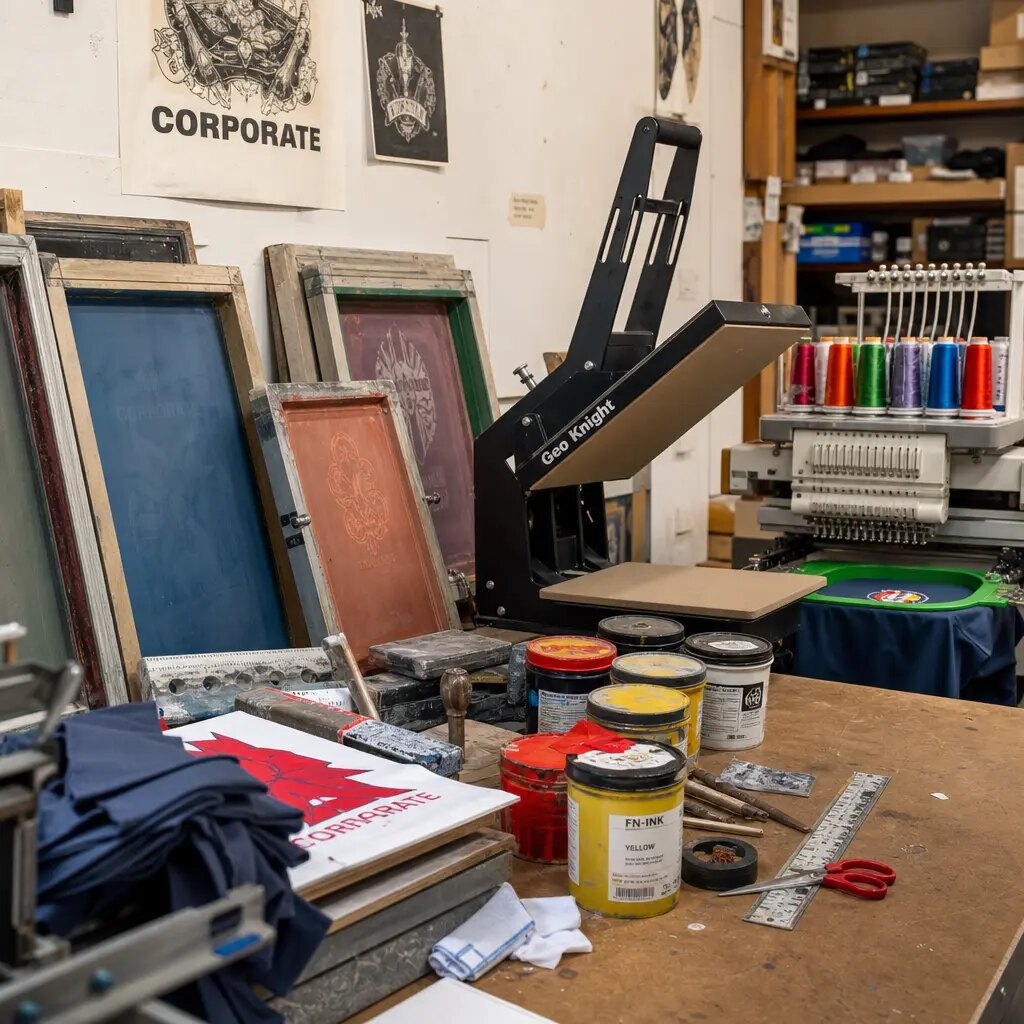
Screen printing is usually the most efficient logo method for solid artwork, event marks, and repeat bulk orders. It can perform well on cotton canvas when ink deposit and curing are controlled. Still, natural canvas texture changes the final result. A digital mockup will not show whether the print edge is sharp, whether ink fills the weave evenly, or whether the color shifts on natural fabric. Approve a physical strike-off on the final canvas.
Heat transfer can work for multicolor graphics, gradients, or sponsor artwork, but it needs a different durability check. Look for shiny edges, edge lift, cracking on folds, and pressure marks after packing. Embroidery is durable for small marks, yet large dense embroidery can distort a flat document panel and create an uneven interior surface. A woven side label may be cleaner when subtle branding is preferred.
Set placement before production. Flat portfolios show rotation clearly because the front panel is a simple rectangle. Define logo width, height, distance from top edge, distance from side edge, ink color reference, and placement tolerance. For many bulk orders, +/- 3-5 mm may be workable depending on design and cutting method, but the factory needs a written rule. Also ask how printed panels are dried and protected before stacking, because under-cured prints can scuff or transfer in cartons.
- Screen print: best for solid logos, event marks, sponsor branding, and repeat bulk orders.
- Heat transfer: useful for multicolor graphics, but test fold lines, dry rub, edge adhesion, surface shine, and packed pressure marks.
- Embroidery: suitable for small premium marks, not ideal for large dense designs on a flat document panel.
- Woven label: define label size, fold type, placement, stitch color, and whether it sits on the side seam, front panel, or inside pocket.
- Print QC: check color, registration, curing, rub resistance, placement, rotation, cracking, adhesion, and transfer marks after packing.
- Approval file: keep the print strike-off on final canvas, not only a Pantone reference or digital artwork file.
Compare MOQ, Price Breaks, and Cost Drivers
MOQ is shaped by more than the factory's preference. Fabric purchasing, zipper tape color, cutting setup, printing screens, woven labels, lining material, packing supplies, and production-line efficiency all matter. A natural canvas portfolio with a stock black zipper may fit a lower MOQ. Dyed fabric, a custom zipper tape, special puller, lining, retail sticker, or printed carton mark can raise the practical minimum or add separate setup charges.
Use a structured quote table. A low unit price may exclude screen charges, sample fees, label sewing, upgraded cartons, barcode stickers, inspection sorting, or inland freight. Ask for price breaks at 500, 1,000, 3,000, and 5,000 pieces so setup costs are visible. For seasonal craft fair programs, the right quantity is not always the lowest MOQ. Sometimes a planned buffer is cheaper than a rushed reorder and air freight.
Incoterms and carton data belong in the buying decision. EXW, FOB, CIF, and DDP quotes are not equivalent. Heavier canvas may raise gross weight, while flat packing may increase cube. Folding can reduce freight but may crease the print or deform the zipper corners. Compare landed cost, not just unit price.
- MOQ pressure points: dyed canvas, custom zipper tape, custom puller, lining, woven label, retail packing, and printed carton marks.
- Cost drivers: canvas GSM, zipper grade, number of compartments, print colors, print area, seam finishing, packing method, and carton strength.
- Quote table: request unit price, setup fees, sample fee, screen fee, packing cost, Incoterm, port, payment terms, lead time, and quote validity.
- Landed cost: compare carton cube, gross weight, duty estimate, inland freight, ocean or air freight, inspection, and warehouse handling.
- Seasonal decision: for fixed fair calendars, planned inventory may be safer than depending on a rushed reorder with air freight.
- Payment risk: confirm whether tooling, sample, strike-off, and inspection costs are refundable, included, or charged separately.
Make Sample Approval a Control File
A pre-production sample is not just a sales sample. It is the control item for bulk production. If the sample uses substitute canvas, a temporary zipper, hand-cut panels, or a different logo process, it cannot prove bulk performance. The useful sample uses final fabric weight, final zipper tape, final slider, final thread, final print method, final label, intended lining, and planned packing style.
Approval should cover more than appearance. Measure the sample. Load it with the real document set. Open and close the zipper repeatedly while the contents are inside. Rub and fold the printed area in a realistic way. Leave the sample packed flat for several days if the program timeline allows, then check for print transfer, zipper-corner deformation, and panel creases.
Keep one sealed golden sample and one working sample when possible. The sealed sample protects the agreed standard. The working sample helps inspection, warehouse, and sales teams understand function and packing. The approval file should include the fabric swatch, zipper tape swatch, slider reference, thread sample, print strike-off, measurement sheet, carton mark, and packing reference. This is also useful for repeat orders, where shade, hand feel, zipper quality, and print color can drift over time.
- Confirm final materials: canvas, zipper tape, slider, thread, lining, label, print, binding, and packing.
- Measure key points: outside width, outside height, usable internal space, zipper opening, pocket position, logo placement, and seam allowance.
- Run practical tests: real-load fit, zipper cycling, dry rub, fold observation, tape pull where suitable, and packed-flat observation.
- Document approvals: sign or date the physical sample, swatches, strike-off, measurement sheet, and packing method.
- Avoid approval gaps: do not release bulk production from photos only when fit, zipper feel, print hand, or packing flatness matters.
- Reorder control: retain the approved standard so future lots can be checked against the same material and construction references.
Inspect in Stages, Not Only at the End
Durability control works best when it is split across production. Incoming QC checks the materials before cutting: canvas GSM, shade, odor, moisture, zipper tape, slider movement, thread, labels, print materials, and packing supplies. This is the best time to catch substitutions. Once fabric is cut and sewn, a wrong GSM or shade issue becomes harder to fix and harder to debate.
Inline QC protects sewing quality while repair is still practical. Inspect zipper alignment, seam allowance, stitch density, skipped stitches, binding, pocket placement, panel squareness, bar tacks, and thread trimming. If zipper wave or corner puckering appears early, the factory can adjust tension, needle size, folder, sewing speed, or operator handling. Waiting until final inspection leaves sorting or rejection as the main options.
Final QC should combine visual review with function checks. Measure finished size and usable opening. Load the product with the intended document pack. Run the zipper. Check print curing, placement, interior cleanliness, odor, moisture, stains, and packed presentation. Many buyers use ANSI/ASQ Z1.4 or ISO 2859-1 sampling concepts with agreed AQL levels, but the inspection checklist still needs product-specific tests. Generic soft-goods inspection can miss the zipper and document-fit issues that matter most for portfolios.
- Incoming checks: GSM, fabric shade, fabric cleanliness, moisture, zipper tape color, slider movement, thread, label, print material, and packing supplies.
- Inline checks: stitch density, skipped stitches, seam allowance, zipper alignment, pocket placement, binding quality, panel twist, and bar tacks.
- Final function checks: zipper opens smoothly, documents fit, corners remain square, print is cured, and the packed product presents cleanly.
- Critical defects: broken zipper, sharp burr, mold, wrong logo, wrong material, wrong size preventing intended use, or serious contamination.
- Major defects: open seam, cracked print, severe stain, misaligned zipper, missing label, severe panel twist, or zipper catching repeatedly.
- Minor defects: small thread end, slight approved slub, minor shade variation, or small interior fiber that does not affect presentation or use.
- Inspection method: define sampling plan, defect classes, functional test count, and acceptance rules before production starts.
Protect Presentation Through Packing and Distribution
Packing is part of product quality. Flat packing usually gives the best presentation for a logoed canvas portfolio because it reduces hard fold lines across the front panel and zipper. It may increase carton cube, but it helps goods arrive ready for event-kit assembly. Folding can save space, but approve it only after checking print cracking, zipper-corner deformation, and permanent crease marks.
Individual polybags protect natural canvas from dust and moisture during export, warehouse handling, and fair-site distribution. Some buyers prefer paper bands or reduced-plastic packing. Either route can work, but decide before sampling because packing affects labor, barcode placement, carton configuration, product appearance, and moisture exposure. If portfolios will be allocated by booth, region, store, artist group, or sponsor package, inner bundles of 25-50 pieces can reduce sorting time.
Ask for carton dimensions, gross weight, net weight, pieces per carton, cubic meters, carton marks, and barcode plans before comparing landed cost. Weak cartons can crush corners. Over-compressed cartons can leave pressure marks on the print. For ocean freight or warehouse storage, natural cotton canvas also needs reasonable moisture protection. The product has to arrive clean, flat, and easy to allocate; otherwise, the final handling cost can erase the savings from a cheaper quote.
- Flat pack: best for logo presentation, clean handoff, and lower crease risk.
- Folded pack: possible for freight savings, but test print cracking, zipper deformation, and permanent fold marks first.
- Inner bundles: 25-50 pieces per bundle can support event-kit assembly, warehouse picking, and regional distribution.
- Carton data: require pieces per carton, carton size, gross weight, net weight, cubic meters, carton mark, and barcode plan.
- Moisture control: use suitable export cartons and moisture protection when natural cotton canvas ships by sea or sits in warehouse storage.
- Arrival check: inspect for odor, moisture, crushed corners, pressure marks, carton damage, incorrect inner counts, and barcode or carton mark errors.
Specification comparison for buyers
| Spec decision | Recommended option | When it fits | Buyer risk to check |
|---|---|---|---|
| Outer canvas weight | 12 oz cotton canvas, typically about 380-410 GSM, with an agreed GSM tolerance before cutting | Reusable craft fair buyer kits, wholesale order folders, registration packs, sponsor document sets, and sales rep portfolios | Under 10 oz can collapse at the corners; over 16 oz can create bulky zipper corners, sewing strain, puckering, higher carton weight, and slower output |
| Zipper type | No. 5 nylon coil zipper with colorfast tape, stable slider, smooth pull, and reinforced end stops | Frequent booth handling, event registration kits, buyer appointments, artist welcome packs, mobile sales kits, and branded merchandise | Low-grade zippers often fail at the slider, tape edge, or stop before the canvas fails; test the approved zipper and slider combination |
| Usable opening | Opening length confirmed with the real document stack, not only the finished outside size | A4 sheets, US letter sheets, catalogs, order forms, price lists, swatch cards, thin notebooks, or tablet inserts | A portfolio can meet outside dimensions but still be hard to load if the zipper opening is short, the corners are tight, or the lining catches paper |
| Finished size tolerance | +/- 5 mm for normal cut-and-sew canvas portfolios; tighter only with controlled cutting and clear rejection rules | Most B2B craft fair programs where consistent packing and document fit matter | Unrealistic tolerances increase rejection risk and cost; loose tolerances can cause document fit problems and uneven stacked presentation |
| Seam construction | Lockstitch at about 8-10 stitches per inch, clean-finished or bound inner edges, bar tacks at zipper ends and stress points | Orders expected to survive multiple fair days, distributor handling, retail staff reuse, or wholesale buyer appointments | Too few stitches may open under load; too many stitches can perforate heavy canvas and weaken the seam line |
| Panel structure | Single canvas shell with bound edges for cost control; light lining or divider when documents must slide cleanly | Distributor programs, event buyer folders, retail line-sheet holders, and branded document organizers | Unlined canvas can shed lint onto white paper; heavy lining adds thickness, labor, zipper corner bulk, and potential puckering |
| Logo method | Screen print for solid artwork; heat transfer for multicolor graphics only after fold, rub, and adhesion checks | Brand logos, event marks, sponsor logos, artist-market merchandise, and wholesale buyer packets | Ink cracking, poor curing, edge shine, color shift on natural canvas, and off-register placement must be checked on a physical strike-off |
| MOQ structure | 500-1,000 pieces for common custom size, logo, and stock zipper color; higher for dyed fabric, special puller, lining, custom label, or retail packing | Importers, event organizers, promotional distributors, and retail buyers balancing landed cost with seasonal demand | Very low MOQ quotes may use substitute fabric, limited zipper colors, hand-cut inconsistency, higher setup charges, or weaker packing |
| Sample approval | Pre-production sample in final canvas, zipper, thread, print, lining, label, and planned packing configuration | Any order with brand standards, fixed event date, retail presentation, sponsor requirements, or repeat reorder plans | A sample made from substitute fabric can mislead GSM, shrinkage, print hand feel, zipper fit, packed appearance, and sewing quality |
Buyer checklist before sampling
- Define the real contents: A4 or US letter documents, catalogs, order forms, line sheets, price lists, sample cards, notebook, tablet sleeve, pens, business cards, or only lightweight giveaway paperwork.
- Specify finished outside dimensions, usable internal dimensions, zipper opening length, maximum load thickness, and tolerance; do not rely on paper size alone.
- Choose canvas weight by use case: 8-10 oz for light handouts, 12 oz for reusable buyer kits, and 14-16 oz only when premium hand feel is worth higher bulk and freight.
- Request both oz and GSM, plus fabric status: greige, natural, dyed, bleached, washed, pre-shrunk, coated, water-resistant, or untreated cotton canvas.
- Set fabric tolerances before the quote: GSM range, shade tolerance, shrinkage expectation if washing is relevant, and acceptable slub or seed-fleck level for natural canvas.
- Require zipper testing on the approved zipper and slider combination, not only a visual check on a loose zipper sample or catalog component.
- Define the zipper standard: No. 5 nylon coil, tape color, tape width if relevant, slider finish, puller style, end-stop construction, reinforcement method, and colorfastness expectation.
- Define seam method, stitch density, seam allowance, edge binding, bar tack locations, pocket construction, thread color, and loose-thread acceptance before sample approval.
- Set logo size, placement tolerance, ink color reference, print method, curing requirement, dry-rub expectation, fold observation, and acceptable print hand feel.
- Review inside finishing for the real use: raw seam, bound seam, lining, divider, mesh pocket, paper pocket, elastic loop, or business card sleeve.
Factory quote questions to send
- What exact canvas weight in oz and GSM is included, and is the fabric greige, natural, dyed, bleached, washed, pre-shrunk, water-resistant, coated, or untreated cotton?
- What GSM tolerance, shade tolerance, shrinkage expectation, and fabric width are included, and will bulk fabric come from the same mill lot or approved quality standard as the sample?
- What zipper specification is included: nylon coil size, slider material, puller style, tape color, tape width, end stop type, and reinforcement method?
- How many full zipper open-close cycles do you test during sample approval, inline QC, or final QC, and what counts as failure?
- What is the tested usable opening length, and have you loaded the sample with our intended document pack, catalog thickness, or tablet insert?
- Which seams are lockstitched, bound, overlocked, lined, or bar-tacked, and what stitch density will production follow for each seam area?
- What thread type, thickness, and color are quoted, and is the thread suitable for the canvas weight, dye process, and any washing or finishing process?
- Which print method is quoted, what is the maximum print area, and are screen charges, film charges, color matching, strike-off charges, or setup fees separate?
- Can you make a print strike-off on the final bulk canvas before full sample approval, and what dry rub, fold, tape-pull, curing, or adhesion checks do you use?
- Can the pre-production sample be made in final bulk fabric, final zipper tape, final slider, final thread, final lining, final label, and final packing, or will any substitute be used?
Quality-control points to confirm
- Finished size tolerance should normally stay within +/- 5 mm for standard canvas portfolios; tighter tolerances require controlled cutting, pattern confirmation, and clear rejection planning.
- Usable internal space and zipper opening length should be checked with the real document pack because outside dimensions alone do not prove the portfolio works.
- Zipper must run smoothly across the full opening without fabric catching, skipped teeth, tape fraying, slider looseness, broken puller, weak stop, or tooth separation.
- A practical sample approval target is at least 100 full open-close cycles on the approved zipper without tooth separation, end-stop failure, tape fraying, or slider deformation.
- Canvas weight should be checked against the approved GSM range before cutting because fabric substitution is difficult to identify after sewing and packing.
- Fabric shade, slub level, seed flecks, stains, odor, and moisture condition should be checked against the approved swatch, especially for natural cotton canvas.
- Seams should show consistent stitch density, no skipped stitches, no broken thread, no needle cuts, no open seam, and reinforcement at zipper ends and pocket corners.
- Print should pass dry rub testing, reasonable fold observation, tape pull where suitable, curing review, and color comparison against the approved strike-off.
- Logo placement should be measured from fixed edges, with written tolerance for horizontal position, vertical position, rotation, and print size.
- Corners should remain square after packing, with no severe panel twist, zipper wave, edge binding roll, or heavy puckering caused by uneven sewing.