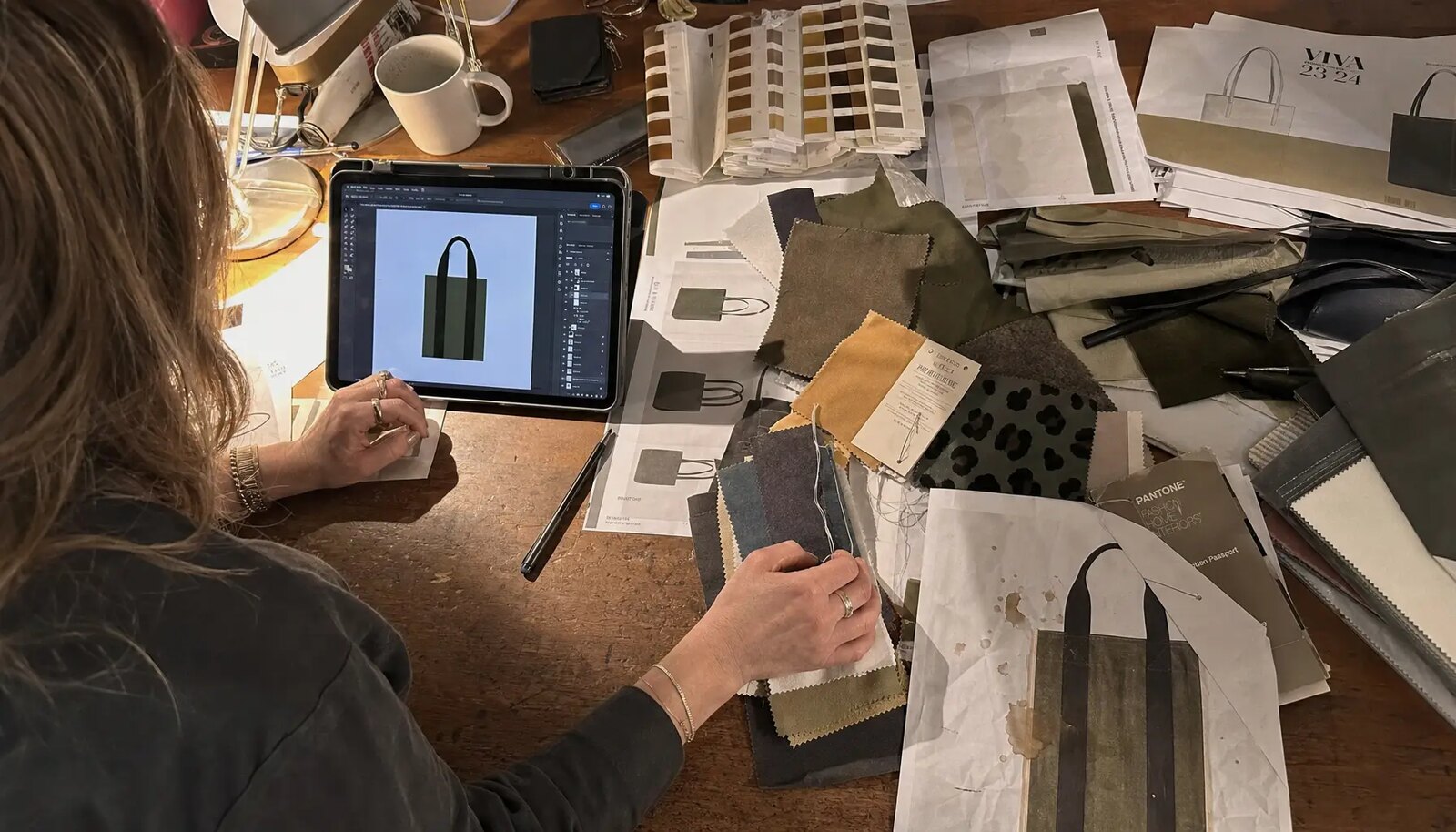
The buying problem: attractive samples do not guarantee usable bulk portfolios
Canvas zipper portfolios for craft fairs look simple, but they combine several risk areas in one product: natural fabric variation, zipper function, flat document sizing, print adhesion, and visible sewing. A sample room can make one piece look clean. Bulk production has to cut hundreds or thousands of panels from different fabric rolls, keep the zipper line straight, prevent fraying, and deliver cartons that can be opened by a distributor without re-sorting dirty or creased stock.
For procurement teams, the main mistake is treating the item like a basic cotton pouch. A portfolio is flatter, larger, and more exposed. If the front panel twists, if the zipper waves, or if a logo is printed 12 mm off center, the defect is immediately visible at retail tables. This guide focuses on inspection and RFQ control, so buyers can compare quotes based on the same construction, not on vague descriptions such as 'heavy canvas zipper bag'.
- Best use cases: craft fair vendor kits, handmade product documentation, catalog wallets, wholesale order folders, giftable stationery sets, and event retail merchandise.
- Common failure points: weak zipper ends, uneven topstitching, fabric shade mismatch, under-cured screen print, raw seam fraying, and carton crease marks.
- Buyer priority: lock construction and QC standards before price comparison, because a cheap quote often removes lining, reinforcement, or fabric weight.
Start the RFQ with size and use, not with a generic product name
The correct size depends on what the portfolio must hold. A4 paper, US letter documents, postcards, notebooks, stickers, catalogs, and small craft tools require different clearances. If the buyer only requests 'canvas zipper portfolio', suppliers may quote a standard pouch shape that fits paper in theory but bends corners once the zipper seam and internal seam allowance are added.
A practical RFQ states the finished external size, the minimum internal usable size, and the load expectation. For example, a portfolio made for 20 sheets of paper can use a lighter construction than one meant for a notebook, pencil set, and printed catalog. If a tablet is involved, padding and lining become a different product decision and should not be assumed inside a basic canvas quote.
- For A4 documents: confirm internal usable width and height after zipper and seam allowance, not only external dimensions.
- For US letter: avoid copying A4 dimensions without checking document orientation and retail market.
- For craft kits: provide a content list and approximate weight, then let the factory evaluate gusset, reinforcement, and zipper size.
- For retail display: specify whether the unit must hang, stand in a bin, or lie flat, because this changes label and packing choices.
Canvas weight and construction choices that affect quality and cost
For most craft fair portfolios, 10 oz to 12 oz cotton canvas, roughly 340-410 GSM, is a sensible range. It gives enough body for a clean flat portfolio while avoiding excessive bulk at the zipper and corners. Lighter 8 oz canvas can work for low-cost document sleeves, but it shows wrinkles, print bleed, and seam distortion more easily. Heavy 14 oz canvas feels premium but increases sewing difficulty, carton weight, and corner thickness.
Fabric description should include more than weight. Natural cotton canvas has slubs and shade variation, which may be acceptable for a handmade craft fair style but not for a polished retail brand. Dyed canvas requires shade control between lots. Washed canvas has a softer hand but less predictable shrinkage. If a supplier quotes from available stock fabric, the buyer should record the approved roll quality and require the same or equivalent bulk material.
- Budget programs: 8 oz to 10 oz canvas, unlined, one-color print, standard zipper.
- Balanced wholesale programs: 10 oz to 12 oz canvas, seam binding or lining, No.5 zipper, reinforced zipper ends.
- Premium retail programs: 12 oz canvas, custom lining, woven label, branded zipper puller, stricter color and packing controls.
- Avoid vague terms: 'thick canvas' and 'premium cotton' are not measurable inspection standards.
Zipper, seams, and reinforcement: the details buyers notice only after returns
A zipper portfolio fails quickly when the zipper specification is too light or the zipper is sewn into a wavy edge. A No.5 nylon coil zipper is usually the safest choice because it is flexible, cost-efficient, and strong enough for document portfolios. Metal zippers can look premium, but they add weight and may create scratching or rust concerns if plating quality is poor. For craft fair products that will be opened repeatedly on sales tables, smooth zipper action matters more than decorative hardware.
Seam construction should match the fabric. Unlined canvas portfolios need neat internal seams, either overlocked, bound, or enclosed depending on the price level. Raw edges on cotton canvas can fray during use and shed fibers onto paper goods. Reinforcement is especially important at zipper ends, corners, handle tabs if any, and pen loops. One weak bartack can create a return even when the main fabric is strong.
- Zipper acceptance: opens smoothly for repeated cycles, no skipped teeth, no slider grinding, no loose stopper.
- Stitching target: consistent stitch length, straight topstitching, no loose thread knots on visible panels.
- Reinforcement options: bartack, box stitch, double-layer patch, folded seam, or bound zipper end.
- Inspection trigger: any zipper tape twisting, corner puckering, or frayed seam near zipper end should be treated as a functional risk, not only appearance.
Print and branding decisions for canvas surfaces
Screen printing is usually the most stable and economical branding method for solid craft fair logos on canvas zipper portfolios. It works well for one to three colors when the artwork is not too small. The buyer should define ink color, logo size, placement, and print tolerance. Natural canvas is textured, so tiny letters, thin lines, and large solid ink blocks need a real strike-off before bulk approval.
Heat transfer can handle detailed or multi-color artwork, but the hand feel may be less natural, and adhesion must be tested on the selected canvas. Embroidery works for small logos or monograms but can pucker lightweight canvas and becomes costly on large designs. Woven labels are often a better choice for small brand marks because they avoid print curing risk and create a retail-ready appearance.
- Screen print: best for solid logos, slogans, and simple artwork; require curing and rub testing.
- Heat transfer: best for full-color small graphics; inspect edge lifting and flexibility after folding.
- Embroidery: best for small premium marks; avoid large filled areas on flat document panels.
- Woven label: useful for brand identity without changing the front panel print process.
- Logo placement: measure from fixed edges after sewing, not from raw cut panels.
MOQ logic: why the same portfolio can have very different minimums
MOQ is not only a sales policy. It comes from fabric roll minimums, dyeing minimums, zipper purchase quantities, print setup, label weaving, and cutting efficiency. A simple natural canvas portfolio with one-color screen print may be feasible at 300-500 pieces if the factory has suitable stock fabric. The same design in custom dyed canvas, with a custom lining and metal logo puller, may need 800-1,000 pieces or more because each component has its own supplier minimum.
Buyers comparing quotes should separate base MOQ from customization MOQ. Some suppliers accept low quantities by using leftover stock fabric or substituting accessories, which may be fine for a short craft fair run but risky for repeat programs. If the brand expects reorders, the RFQ should request material continuity information and whether the same fabric, zipper tape, and label can be repeated.
- Low MOQ friendly: stock natural canvas, standard zipper color, one-color screen print, no lining, simple carton packing.
- MOQ increases with: custom dyed fabric, custom woven label, branded puller, multi-color print, retail paper insert, individual barcode label.
- Repeat order risk: supplier may not hold the same fabric shade unless roll references or reserved material are agreed.
- Quote comparison tip: a lower MOQ may carry higher unit cost because cutting, printing, and setup labor are spread over fewer pieces.
Sample approval should include function, not only look
A pre-production sample should be made with the same fabric weight, zipper, print, lining, label, and packing method intended for bulk. A salesman sample made from similar material is useful for concept review, but it should not become the final approval standard. For canvas zipper portfolios, small changes in fabric stiffness, zipper tape, or seam allowance can change the final fit and appearance.
When reviewing the sample, insert the actual contents and operate the zipper several times. Lay the portfolio flat and measure whether the panel twists. Check logo position after the sample is fully sewn, because printing before sewing can shift visually when seams are folded. If the portfolio will be sold at craft fairs, also review how it looks after being handled, stacked, and repacked.
- Measure finished external size and internal usable size with contents inserted.
- Run the zipper fully open and closed at least ten times on the sample.
- Check whether paper corners catch on internal seams or zipper tape.
- Rub the print with dry white cloth and lightly with a damp cloth after proper curing time.
- Photograph approved details: zipper end, inside seam, label position, print placement, carton packing, and folded condition.
- Sign and retain a golden sample for factory production and third-party inspection reference.
Quality inspection checklist for bulk canvas zipper portfolios
Inspection needs measurable limits. Without agreed tolerances, the factory may treat size variation, zipper drag, or print offset as normal handmade variation. For a flat canvas portfolio, typical finished size tolerance can be +/- 5 mm, while gusseted or washed styles may need a wider tolerance. Stitching defects should be judged by visibility and function: skipped stitches near stress points are more serious than a small thread end inside the bag.
QC should cover materials, workmanship, function, appearance, packing, and carton count. It is not enough to inspect only the top units in each carton because canvas products can hide dirt, crease marks, or shade differences inside the stack. If the order has multiple colors or artwork versions, sampling must be spread across each SKU. AQL can be used, but the defect list should be customized for this product.
- Critical defects: broken zipper, sharp metal, mold, strong chemical odor, wrong artwork, wrong size preventing document fit.
- Major defects: zipper jamming, open seam, loose reinforcement, severe print misplacement, obvious stain, shade mismatch between panels.
- Minor defects: small thread end, slight slub within approved fabric standard, minor crease that can relax after unpacking.
- Functional test: zipper cycle test, content fit test, seam pull review by hand, and corner stress review.
- Appearance test: front panel flatness, logo centering, stitch line straightness, clean surface, and matching fabric direction.
Packing choices influence damage, freight, and retail handling
Canvas portfolios can be packed flat, folded once, or individually wrapped. Flat packing gives the best appearance but increases carton size. Folding reduces carton volume but may create a crease across the printed panel or zipper line. For craft fair retail programs, the right packing depends on whether the buyer needs clean individual units for resale or efficient bulk stock for distributors.
Individual polybags protect against dirt and moisture, but some craft-focused brands prefer paper belly bands or no individual plastic. If the product uses natural canvas, some protection is still needed during export because cotton can absorb moisture and odors. Carton weight should stay practical for warehouse handling; very dense cartons can crush lower units and create zipper impressions on the fabric.
- Distributor packing: individual polybag, SKU sticker, flat pack, export carton with moisture barrier.
- Eco retail packing: kraft paper band, recyclable carton liner, clear carton quantity marking.
- Avoid: tight compression around zipper pullers, mixed SKU cartons without divider labels, cartons above buyer warehouse weight limits.
- Confirm: units per carton, carton dimensions, gross weight, net weight, carton marks, barcode placement, and whether desiccants are required.
Lead time and schedule risks buyers should build into the order
A realistic schedule includes artwork confirmation, sample making, sample shipping, sample revision if needed, material booking, cutting, printing, sewing, finishing, inspection, packing, and export handover. The shortest quoted lead time often assumes stock fabric, no sample correction, and immediate artwork approval. That may be possible for repeat blank goods, but it is risky for a new branded portfolio.
The highest schedule risks are custom dyed fabric, delayed print approval, zipper or label shortages, and peak season sewing capacity. Craft fair programs are often date-sensitive because merchandise is needed before event season. Buyers should not plan inspection on the same day as vessel cutoff. Leave time for rework if zipper failures, print curing issues, or packing mistakes appear during inspection.
- Fastest route: stock fabric, standard zipper, approved existing pattern, one-color print.
- Slower route: new pattern, custom dyed canvas, custom puller, printed lining, retail insert, barcode labeling.
- Schedule buffer: keep several days between final inspection and freight pickup.
- Approval discipline: freeze artwork, logo position, zipper color, and packing before bulk cutting begins.
- Risk control: request production photos at cutting, printing, sewing line setup, and packed carton stage.
Specification comparison for buyers
| Spec decision | Recommended option | When it fits | Buyer risk to check |
|---|---|---|---|
| Canvas weight | 10 oz to 12 oz cotton canvas, about 340-410 GSM before washing | Good balance for craft fair portfolios that need structure but still pack flat | Underweight fabric can collapse around documents; overweight fabric raises freight and makes corners bulky |
| Lining construction | Unlined for low cost or 210D polyester lining for cleaner interior | Unlined works for rustic maker branding; lined fits retail gift sets and corporate programs | Raw interior seams must be bound neatly if unlined; lining can wrinkle if shrinkage is not controlled |
| Zipper type | No.5 nylon coil zipper with metal or branded puller | Suitable for A4 or letter-size portfolios, frequent opening, and better flexibility at corners | Cheap zippers may wave, jam, or fail pull tests; color matching matters on natural canvas |
| Printing method | Screen print for solid logos, heat transfer for small multi-color artwork, embroidery only for small marks | Screen print fits most craft fair branding and bulk orders above practical setup quantities | Heavy ink on rough canvas can crack if not cured; embroidery can pucker lightweight panels |
| Panel reinforcement | Double-layer canvas at zipper edge, handle tabs, or stress points if included | Needed when portfolios carry catalogs, notebooks, samples, or craft tools | Single-layer stress areas may tear during retail handling even if sample looks acceptable |
| Size tolerance | Finished size tolerance within +/- 5 mm for standard portfolios and +/- 8 mm for gusseted styles | Keeps document fit consistent and cartons easier to load | Loose cutting control causes mixed sizes, poor stack appearance, and retailer complaints |
| MOQ logic | 300-500 pcs for simple blank or one-color print; 800-1,000 pcs for custom lining, dyed canvas, or custom zipper pull | Helps buyers separate real factory minimums from artificial sales minimums | Low MOQ with too many custom parts may cause sample approval but unstable bulk consistency |
| Packing style | Individual polybag or paper belly band, then flat-packed in export carton with moisture protection | Polybag fits distributor inventory; paper band fits eco-positioned craft fair resale | Overpacked units increase labor and freight; underpacked canvas may pick up dirt and crease marks |
| Inspection level | AQL inspection with functional zipper test, seam strength review, print rub check, and size sampling | Best for importers buying mixed colors or printed retail lots | Visual-only inspection misses zipper failures, weak bartacks, and curing problems |
Buyer checklist before sampling
- Define the document size first: A4, US letter, catalog, tablet, or craft kit contents, then add clearance for zipper and seam allowance.
- Specify fabric by both ounce and GSM, and state whether the weight is before washing, after washing, or based on supplier stock fabric.
- Choose unlined, bound-seam, or lined construction according to target retail price and expected use, not only sample appearance.
- Require zipper details in writing: No.5 nylon coil, puller style, zipper tape color, end-stop method, and whether a spare zipper sample is provided.
- Send artwork at final scale and name the print method, ink color reference, logo position, and acceptable registration tolerance.
- Approve a physical pre-production sample using the same fabric, zipper, print, lining, label, and packing as bulk production.
- Set measurable QC thresholds for size, seam allowance, stitch density, zipper function, print curing, color shade, and carton quantity.
- Review carton dimensions, gross weight, units per carton, and packing method before production, not after goods are ready.
- Separate quote lines for product cost, mold or screen charges, sample charges, custom label, packing, inland freight, and export terms.
- Build the schedule around artwork approval, material booking, sample correction, bulk production, inspection, and shipping cutoff dates.
Factory quote questions to send
- What canvas weight in oz and GSM will be used, and is it greige, bleached, dyed, washed, or pre-shrunk?
- Is the fabric stock fabric or custom ordered, and what is the minimum fabric purchase requirement for this color and weight?
- What zipper specification is included in the quoted price: size, material, tape color, puller type, and zipper brand or grade?
- Will the portfolio be unlined, seam-bound, or fully lined, and how are inside seams finished to prevent fraying?
- Which print method is quoted, how many colors are included, and what curing or adhesion test is used for canvas?
- What is the MOQ for the base product, and what changes if we add custom zipper pullers, woven labels, dyed fabric, or individual retail packing?
- How many days are needed for first sample, revised sample, material preparation, bulk sewing, QC, and packing after deposit?
- What size tolerance, stitching tolerance, and AQL standard do you recommend for this product, and can these be written into the order?
- How many pieces per export carton, what carton size and gross weight, and can the goods be packed flat to reduce creasing?
- What quote terms are included: EXW, FOB, CIF, DDP option, sample cost, screen charge, label charge, carton mark, and bank fee?
Quality-control points to confirm
- Finished portfolio size should remain within the approved tolerance, typically +/- 5 mm for flat document portfolios.
- Canvas fabric must match approved hand feel, shade, and weight; random rolls should be compared against the signed standard sample.
- Zipper must open and close smoothly at least five full cycles during inspection without teeth separation, slider sticking, or tape distortion.
- Stitching should be straight, with no skipped stitches, loose thread chains, broken threads, or needle holes outside the seam line.
- Stress points such as zipper ends, corners, handle tabs, pen loops, and label seams should include reinforcement where specified.
- Print must match approved color, position, and scale; dry rub, wet rub, and fingernail scratch checks should not remove cured ink easily.
- Interior seams must not expose excessive fraying; binding tape or lining must cover raw edges where the approved construction requires it.
- Metal pullers, eyelets, rivets, or snap parts should be free from rust, sharp edges, plating flakes, and oil marks.
- Each unit should be clean, dry, odor-free, and free from fabric stains, weaving defects, glue marks, or heavy crease damage.
- Cartons should match confirmed quantity, carton marks, barcode or SKU labels, moisture protection, and weight limits for warehouse handling.