Why Logo Placement Matters
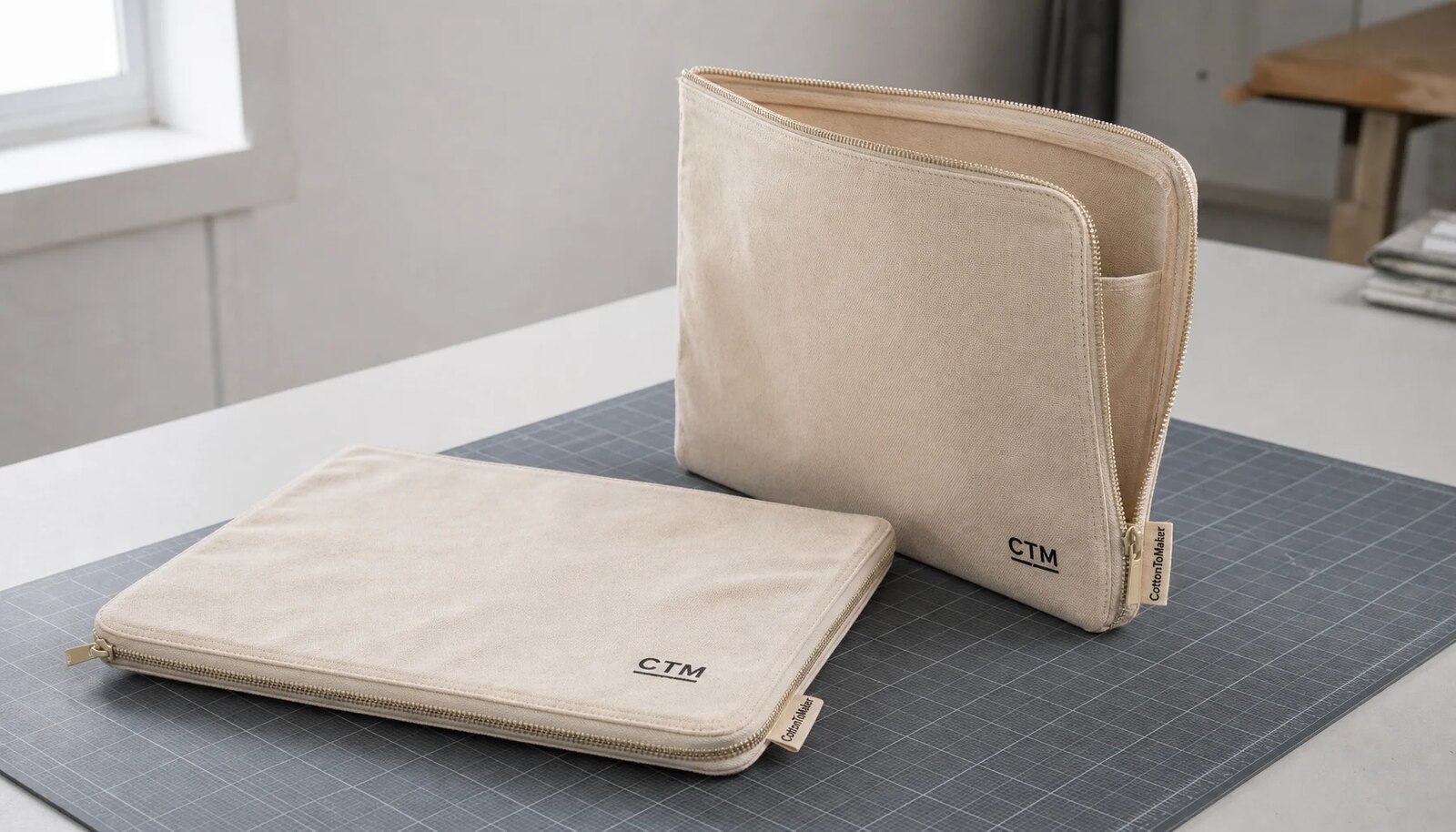
Canvas zipper portfolios for craft fairs are not ordinary flat tote bags. The front panel is interrupted by zipper tension, seam allowance, internal pockets, and the way the item is handled on a booth table. A logo that looks balanced on a flat digital mockup can shift too low after sewing, sit too close to a rounded bottom corner, or become partly hidden when the portfolio is filled with catalogs and order sheets.
For procurement teams, the buying problem is simple: you need one decoration layout that looks intentional, survives production, and can be repeated across hundreds or thousands of units. The placement guide should be part of the RFQ, not something left for the sample room to interpret. A factory can print accurately, but only when the buyer defines the finished-product reference points.
- Use finished-product distances, not only artwork coordinates.
- Measure from seams, zipper edge, pocket opening, or bottom edge.
- Keep logos away from bulky sewn areas that can distort print or embroidery.
- Approve the logo on a complete sample before bulk cutting and printing.
Portfolio Size and Use Case
Craft fair buyers usually need zipper portfolios for vendor kits, exhibitor welcome packs, receipt and order form storage, product lookbooks, or retail packaging for handmade goods. The size should start from the contents. If the portfolio must hold A4 papers, use enough width and height after seam allowance and lining shrinkage. If the main use is US letter sheets, confirm whether buyers also insert a tablet, pen, business cards, fabric swatches, or product tags.
A common sourcing mistake is selecting a slim document pouch and then adding pockets, zipper binding, and a thicker canvas without recalculating capacity. The finished piece may look good empty but become tight in real craft fair use. For RFQ clarity, list both the nominal finished size and the intended contents so the factory can adjust seam allowance, zipper opening, and inner pocket layout.
- A4-friendly size should leave practical clearance after lining and zipper are installed.
- US letter formats need enough opening width so papers do not scrape the zipper teeth.
- Tablet use requires padding or lining decisions, not only a logo placement decision.
- Pen loops and card slots should not sit under the front logo area if embroidery is planned.
Canvas Weight and Structure
For canvas zipper portfolios, fabric weight affects both perceived value and logo quality. A 10 oz canvas, roughly 300-340 GSM, can work for lighter promotional folders, but it may feel soft if the buyer expects a retail-ready organizer. A 12 oz canvas, about 380-420 GSM, is a practical middle ground for craft fair programs because it supports the zipper structure and gives screen printing a stable surface. Heavier 14 oz to 16 oz canvas can look premium, but the zipper corners and seam stacks become harder to sew cleanly.
The fabric finish also matters. Natural cotton canvas shows slubs and shade variation, which many craft brands like, but those slubs can cross the logo area. Bleached or dyed canvas gives a cleaner color field but may require higher MOQ and longer material lead time. If the portfolio includes lining, the front panel may feel firmer, but the buyer should still define whether the lining is cotton, polyester, or nonwoven and whether it changes the inside label position.
- 10 oz canvas: lower cost, lighter feel, suitable for basic event packs.
- 12 oz canvas: good standard for branded craft fair portfolios with zipper.
- 14 oz canvas: stronger hand feel, higher sewing bulk, better for premium retail use.
- Custom-dyed canvas: better brand color control, but often higher MOQ and longer lead time.
Front Logo Placement
The safest front logo position is usually centered on the lower front panel, away from the zipper seam and away from the bottom corner radius. For many A4 or letter-size portfolios, an 80-130 mm wide logo sits well when placed 60-90 mm above the bottom seam. That range keeps the logo visible when the portfolio is carried, stacked, or displayed on a craft fair table.
Do not approve logo placement only from a flat template if the product has a front pocket, handle strap, metal zipper pull, or curved corners. Those features change the visual center. A brand mark may need to move slightly upward if the bottom edge has boxed construction, or slightly to the side if the front pocket opening interrupts the panel. The buyer should request a finished sample photo taken straight-on with a ruler or measurement marks before confirming production.
- Recommended logo width: 80-130 mm for most business portfolio sizes.
- Recommended vertical distance: 60-90 mm above bottom seam, adjusted by finished size.
- Avoid placing ink directly over folded seam bulk, pocket seam lines, or zipper tape.
- For two-sided branding, keep the back logo smaller or use an inside label to avoid a crowded product.
Print and Branding Methods
Screen printing is the most practical method for bulk canvas zipper portfolios when the logo uses one to three solid colors. It is cost-efficient, durable, and predictable when the artwork has adequate line thickness. On textured canvas, very fine type, thin outlines, and reversed small letters can fill in or break during production. A good factory will review artwork before quoting, but the buyer should still specify print size, Pantone colors, and whether the logo is solid, gradient, or full-color.
Heat transfer can handle gradients and small full-color graphics, but it changes the hand feel and may not match the natural character of canvas. Embroidery gives a premium result, especially on small corner logos or patches, but dense stitching can pucker the fabric. Woven labels are useful for subtle branding, inside brand identity, or co-branded retail programs where the front face needs to stay clean.
- Screen print: best for bulk, solid logo colors, and clean cost control.
- Heat transfer: useful for full-color art, but test adhesion and edge feel on canvas.
- Embroidery: premium texture, higher cost, and higher risk of puckering.
- Woven side label: good for discreet branding and repeat retail programs.
- Embossed or debossed leather patch: premium option, but requires material compliance and extra sewing steps.
Cost Drivers in the Quote
The unit price is shaped by more than canvas and logo size. Zipper quality, lining, pocket layout, sewing time, print setup, cutting waste, packing method, and inspection requirements all affect the quote. Two suppliers can quote the same product name while including different zipper gauges, different canvas GSM, and different inner construction. That is why the RFQ should define the portfolio as a product, not as a loose description.
MOQ logic also needs careful reading. A factory may quote 300 pieces if the order uses stock natural canvas and one-color screen print. The same product may need 500 or 1,000 pieces when the buyer requests custom-dyed canvas, special zipper color, metal puller logo, custom lining print, or woven labels. Buyers comparing quotes should separate fixed setup costs from unit costs so they can see whether the supplier is absorbing setup or simply hiding it in the unit price.
- Fabric cost: canvas weight, dyeing, washing, lining, and cutting waste.
- Trims: zipper gauge, puller style, metal finish, labels, patches, and thread color.
- Decoration: screen setup, color count, print area, embroidery stitch count, or heat transfer film.
- Labor: zipper sewing, pocket construction, binding, bartacks, and final trimming.
- Packing: individual sleeves, barcode labels, master carton strength, and export marks.
Sample Approval Workflow
A serious sample process usually has two steps: a logo strike-off and a complete pre-production sample. The strike-off confirms ink color, print coverage, line clarity, and adhesion on the same canvas planned for bulk. The complete sample confirms finished size, zipper function, pocket layout, seam quality, logo placement, label position, and packing presentation. Skipping the strike-off may save a few days, but it increases the chance of bulk print disappointment.
The buyer should evaluate the sample as a working craft fair item. Put actual papers, price sheets, catalogs, or tablet accessories inside. Open and close the zipper repeatedly. Place the portfolio flat on a table and stack several together. Look at whether the logo remains visible and whether the zipper pull scratches the print area. Factory sample photos are useful, but physical approval is better for texture, weight, and function.
- Approve print strike-off before bulk printing screens are finalized.
- Approve one complete sample with final canvas, zipper, thread, lining, and logo.
- Record logo placement measurements from the finished sample.
- Keep the approved sample as the inspection reference.
- Do not approve bulk production from a digital mockup alone.
QC Thresholds for Bulk
Logo placement tolerance should be written into the inspection criteria. For most front-panel prints, plus or minus 5 mm from the approved sample is a realistic target. Tighter tolerance may be possible, but it can slow production and increase rejection rate, especially on canvas products cut and sewn with natural fabric movement. The inspection team should measure from a stable finished edge, not from a loose fabric edge before sewing.
Quality control should also cover print durability and product function. A clean logo is not enough if the zipper catches at the corners or the portfolio cannot hold the intended documents. For craft fair distribution, visible stains, loose threads, crooked labels, and scuffed prints are more damaging than minor hidden construction variation because the item is often handed directly to vendors, exhibitors, or shoppers.
- Logo position: within plus or minus 5 mm unless a stricter tolerance is agreed.
- Print surface: no heavy ink bleeding, missing strokes, obvious pinholes, or dirty marks.
- Zipper function: smooth opening and closing, no fabric trapped in slider path.
- Stitching: no skipped stitches, broken thread, loose bartacks, or open seams.
- Finished size: enough clearance for the stated paper or tablet contents.
- Appearance: front logo area should be free from major slubs, stains, oil marks, and fold damage.
Packing and Shelf Presentation
Packing is not only a shipping detail. For craft fairs, the portfolio may arrive at a venue, distributor warehouse, retail back room, or brand event team before it reaches the final user. Individual polybags protect the logo and canvas from carton dust, but some buyers prefer paper sleeves or no individual plastic for sustainability positioning. The RFQ should state the preferred packing format so suppliers quote the same handling and material cost.
Logo protection matters during packing. Fresh screen print must be fully dry before stacking. Metal zipper pulls should not press directly into printed logos. If portfolios are folded or compressed too tightly, natural canvas can develop hard creases across the logo area. Carton quantity should balance freight efficiency with product presentation; overpacked cartons can reduce CBM but increase scuffing and deformation.
- Common packing: one piece per polybag or paper sleeve, then export carton.
- Carton quantity: often 20-40 pieces depending on size, fabric weight, and accessories.
- Require carton marks with PO number, SKU, color, quantity, gross weight, and destination.
- Use interleaving or careful orientation when zipper pulls may rub against printed panels.
- Request carton dimensions and CBM early for landed-cost planning.
Lead Time and Schedule Risk
A realistic schedule starts when final artwork, material specification, and sample comments are approved. For a standard natural canvas portfolio with one-color print, the sample stage may be relatively quick, while bulk production depends on factory capacity, trim availability, and inspection timing. Custom fabric dyeing, special zipper colors, metal accessories, custom woven labels, and multi-color artwork add more coordination and more risk.
Procurement teams should build the calendar around decision points, not only the final ship date. Artwork approval, strike-off approval, pre-production sample approval, material booking, cutting, printing, sewing, finishing, inspection, packing, and shipment all need room. Craft fair programs often have fixed event dates, so a late sample revision can create air freight pressure that wipes out savings from the lower unit quote.
- Standard stock canvas and one-color print usually carries less schedule risk.
- Custom-dyed fabric should be booked only after color approval and MOQ confirmation.
- Embroidery and woven labels can add sampling time before the complete product sample.
- Inspection should be scheduled before final carton sealing when possible.
- For event orders, include a buffer for sample revision and export documentation.
Specification comparison for buyers
| Spec decision | Recommended option | When it fits | Buyer risk to check |
|---|---|---|---|
| Front logo position | Centered on lower front panel, 60-90 mm above bottom seam | Best for craft fair sellers who want the logo visible while the portfolio lies on a table or is carried under the arm | Logo can look too low after seam allowance and bottom curve are sewn; approve placement from finished sample, not flat artwork only |
| Logo size | 80-130 mm wide for most A4 or letter-size portfolios | Good balance for brand recognition without making the item look like a giveaway pouch | Oversized logos may crack on heavy canvas folds or compete with zipper, handle, or front pocket details |
| Fabric weight | 12 oz cotton canvas, about 380-420 GSM, with light lining if needed | Suitable for craft fairs where the portfolio carries order forms, brochures, tablets, swatches, or receipt books | Lower GSM can feel promotional; very heavy canvas increases sewing bulk around zipper corners |
| Print method | Screen print for solid CTM or brand marks; heat transfer only for gradients or small full-color runs | Screen print is the usual bulk order choice when the logo is 1-3 spot colors | Ink coverage on textured canvas can lose fine lines; request print strike-off on production fabric |
| Embroidery option | Small embroidered logo on front corner or stitched patch, not across the zipper fold area | Works for premium artisan, retail, or distributor programs needing a textured brand finish | Dense embroidery can pucker canvas and slow production; confirm backing, stitch density, and color tolerance |
| Inside logo | Woven label or printed care/brand label inside the pocket seam | Useful when front decoration must stay clean for resale or co-branding | Labels placed too near the zipper can rub documents or catch when users insert papers |
| MOQ logic | 300-500 pcs for standard canvas and one-color print; higher MOQ for dyed fabric, custom lining, or metal logo plates | Fits importers testing craft fair channels before placing national retail quantities | Very low MOQ quotes may use stock fabric, manual cutting, or higher unit labor cost; compare the specification, not only the price |
| Packing format | Individual polybag or paper sleeve, 20-40 pcs per export carton depending on size and accessories | Protects printed logo from abrasion and keeps portfolios clean for booth resale | Fresh ink, metal zipper pulls, or rough carton packing can scuff front logos; require dry print and abrasion check before packing |
Buyer checklist before sampling
- Define the portfolio size by actual contents: A4 papers, US letter sheets, catalogs, tablet, pen loop, business cards, or craft fair order forms.
- Specify fabric in oz and GSM, such as 12 oz cotton canvas at about 380-420 GSM, instead of using only words like heavy duty.
- Mark logo position on a finished-product diagram with distance from seam, zipper, handle, pocket opening, and bottom edge.
- State logo method, color count, maximum logo width, Pantone references, and whether the artwork has thin lines or reversed text.
- Require a print strike-off on the same canvas color and weight before bulk production.
- Approve one complete pre-production sample with final zipper, lining, thread color, logo placement, and packing method.
- Set QC tolerances for logo position, print color, print adhesion, zipper function, seam strength, stains, and carton labeling.
- Clarify whether craft fair buyers will resell the item, use it as exhibitor packaging, or include it in a vendor kit, because this changes finishing expectations.
- Request carton dimensions, gross weight, CBM, packing quantity, and inner packing details for landed-cost comparison.
- Lock the production calendar by artwork approval date, sample approval date, material booking date, production start, inspection window, and ship-ready date.
Factory quote questions to send
- What canvas weight and GSM are included in your quote, and is the fabric greige, bleached, dyed, or washed?
- Can you place the front logo at a fixed distance from the bottom seam on the finished portfolio, and what is your normal placement tolerance?
- Which print method do you recommend for our logo on textured canvas, and what line thickness is too fine for stable bulk production?
- Is the quoted MOQ based on stock canvas, custom-dyed canvas, custom lining, or only the logo printing setup?
- What zipper type, zipper gauge, puller material, and slider color are included in the price?
- Will the portfolio include lining, inside pocket, pen loop, card slot, or document divider, and are these costed separately?
- Can you provide a production fabric print strike-off before the complete sample?
- What sample cost, sample lead time, and revision cost should we expect if logo placement or print color needs adjustment?
- How many pieces are packed per carton, what is the estimated carton size and gross weight, and can you pack each piece in a paper sleeve instead of polybag?
- What inspection standard do you use for print defects, stains, skipped stitches, zipper failure, and logo misplacement?
Quality-control points to confirm
- Logo placement tolerance should normally stay within plus or minus 5 mm from the approved finished sample for front-panel printing.
- Printed logo color should match approved strike-off under consistent light, with no obvious ink bleeding, pinholes, or patchy coverage from canvas texture.
- Zipper must open and close smoothly for at least three full cycles during inspection without slider catching at corners or fabric seam bulk.
- Seam allowance and bartack areas should be secure at zipper ends, handle joins, pen loops, and pocket openings.
- Canvas surface should be free from oil marks, heavy slubs across the logo area, loose threads, needle holes, and visible fold dirt.
- Embroidery, patches, or woven labels should sit flat without puckering, crooked edges, frayed label corners, or exposed backing.
- Finished size tolerance should be controlled so A4 or US letter inserts fit without bending after lining and zipper are sewn.
- Packing should prevent logo-to-zipper abrasion, moisture transfer, and carton compression marks before shipment.