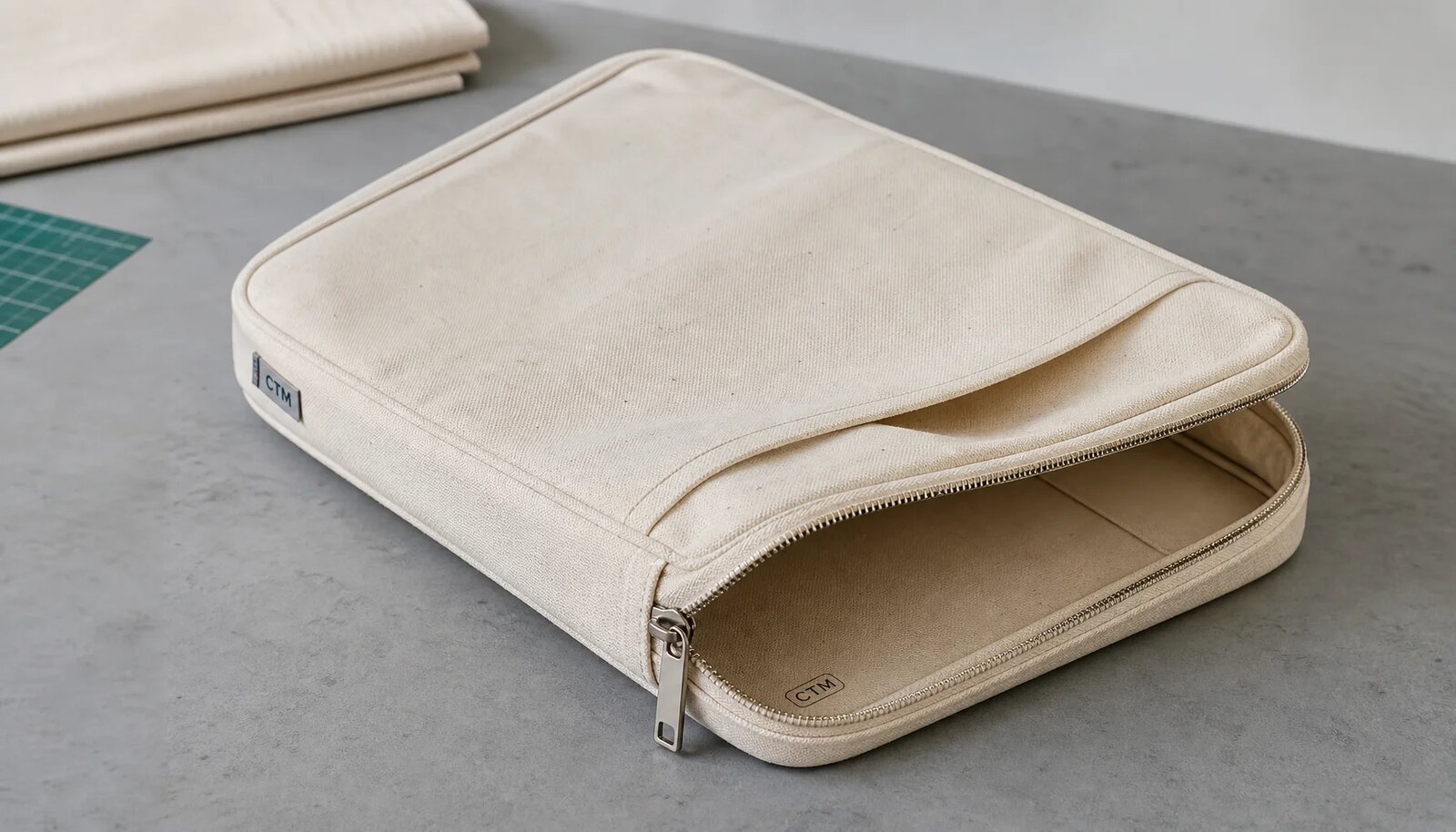
Start With the Hotel Retail Use Case
A canvas zipper portfolio may look simple, but the buying brief changes fast once it enters a hotel retail program. One property may sell it in a resort boutique. Another may use it as a welcome document holder. A conference team may need it for sponsor materials, while a spa may fill it with treatment menus and amenity cards. Those uses share a silhouette, not the same sourcing priorities.
Write the job of the item in one clear sentence before asking for bulk pricing. For example: "natural 12 oz canvas A4 zipper portfolio for resort boutique resale, one-color logo, individual barcode packing." That single line tells the supplier the likely fabric direction, size class, sales channel, decoration method, and packing requirement. A different brief, such as "black canvas document portfolio for conference retail with property-specific logos and carton allocation by event," signals a very different cost and risk profile.
This step protects price comparison. If the RFQ only says "custom canvas folder," one factory may quote 10 oz canvas, a basic zipper, and bulk packing. Another may include 12 oz canvas, reinforced zipper ends, barcode labels, individual bags, and stricter inspection. Both quotes may sound valid. They are not pricing the same product.
- Boutique resale: prioritize shelf shape, logo placement, clean packing, barcode readiness, and low visible defect tolerance.
- Document holder: confirm A4, US letter, folded brochure, itinerary, menu, or room collateral fit before fixing size.
- Tablet sleeve: identify the exact device and whether padding is required; padding changes cost, thickness, zipper length, and carton cube.
- Amenity kit: test filled thickness with actual inserts because overfilled portfolios strain corners and zipper ends.
- Hotel group rollout: separate the common body style from property-specific logos, hangtags, barcodes, and carton marks.
Write a Specification Suppliers Can Price
A useful RFQ turns a style idea into measurable purchasing language. For many hotel retail programs, a sensible baseline is 12 oz cotton canvas, approximately 380-410 GSM after finishing, an A4-friendly finished size near 34 x 24 cm, No. 5 nylon coil zipper, one-color screen print, reinforced zipper ends, and clean interior seam finishing. This is not the only correct build, but it gives every supplier the same starting point for fabric consumption, sewing time, decoration cost, inspection effort, and carton cube.
Use finished dimensions, not cutting dimensions. Canvas can shrink during dyeing, washing, pressing, and sewing. Zipper insertion can also pull one edge slightly shorter than another. If the portfolio must hold A4 documents, US letter papers, a tablet, menus, or amenity inserts, state the finished outside size, usable internal size, zipper opening length, orientation, and tolerance. A common tolerance for a standard flat portfolio is +/-5 mm on width and height unless the buyer approves another standard in writing.
Also define the problems you will not accept. Raw fraying inside the pouch, dirty natural canvas, sharp puller edges, strong odor, crooked logo placement, and untrimmed thread are not minor style preferences in hotel retail. They can make the item unsellable or unsuitable for a guest-facing amenity.
- Fabric: state oz weight, GSM range, fiber content, color, dyeing process, shrinkage expectation, and handfeel target.
- Size: provide finished outside dimensions, usable internal dimensions, zipper opening length, orientation, and allowed tolerance.
- Zipper: specify No. 5 nylon coil or chosen alternative, tape color, slider finish, puller style, puller length, and end treatment.
- Construction: define seam allowance, binding or overlock, reinforcement, pocket layout, lining decision, and raw-edge prohibition.
- Logo: provide vector artwork, color reference, size, placement from edges, placement tolerance, and decoration method.
- Packing: quote individual pack, barcode, hangtag, carton quantity, carton marks, carton weight limit, and allocation rules with the product spec.
Choose Canvas Weight With Cost and Handling in Mind
Canvas weight drives cost, handfeel, sewing difficulty, and freight. Heavier is not automatically better. An 8 oz canvas can suit lightweight document sleeves or value event items, but it may look weak on a boutique shelf unless lined or reinforced. A 10 oz canvas is often a practical economy option for conference merchandise and simple guest folders. A 12 oz canvas usually gives the best balance for a canvas zipper portfolios bulk pricing plan for hotel retail: enough structure to feel substantial, still sewable, and still reasonably flat in export cartons.
A 14 oz or 16 oz canvas can look premium, especially for a resort shop or gift-set component. It also creates new checks. Corners become bulkier. Zipper curves can feel stiff. Needles work harder through seam build-up. Cartons gain weight and cube. Before approving a heavier fabric, test actual zipper operation, corner shape, stitch holes, and packed recovery after compression.
Ask for both oz and GSM because supplier conventions vary. A 12 oz cotton canvas commonly lands around 380-410 GSM after finishing, but weave, yarn, dyeing, washing, and finishing can shift the result. Dyed canvas adds lab dips, bulk shade control, shrinkage review, crocking risk, and possible handfeel changes. Natural canvas has its own QC profile: small approved slubs may be acceptable, while oil marks, dirty fingerprints, broken yarns, mold, wet marks, damp smell, or harsh chemical odor should not pass.
- 8 oz canvas: lower material cost and easy sewing, but weaker shelf body unless lined or reinforced.
- 10 oz canvas: suitable for value retail, meeting merchandise, and document holders where cost control is the main goal.
- 12 oz canvas: balanced default for resort shops, boutique resale, welcome portfolios, and premium document kits.
- 14 oz canvas: stronger handfeel, but inspect zipper smoothness, bulky corners, stitch holes, shape distortion, and carton weight.
- Dyed canvas: require lab dip approval, bulk shade tolerance, shrinkage check, and colorfastness expectation before cutting.
- Washed canvas: review size change, texture, shade variation, and print adhesion because washing can change both handfeel and dimensions.
Set MOQ and Price Breaks Around Production Reality
MOQ is more than a supplier preference. It reflects fabric ordering, dye lot size, cutting setup, screen preparation, zipper sourcing, label production, sewing-line efficiency, packing labor, and inspection control. A factory may accept a small order, but the unit cost will usually rise because fixed work is spread across fewer pieces.
For hotel procurement, ask for price breaks at 500, 1,000, 2,000, and 5,000 pieces per color, size, and artwork. Keep the specification unchanged across the breaks. This shows where the cost curve improves and helps a hotel group decide whether to combine demand across properties instead of running many small orders.
The easiest way to distort bulk pricing is to split the first order into too many variations. Four canvas colors, three zipper colors, two sizes, and eight property logos can create dozens of small lots. Even if the total order is large, each variant may fall below a comfortable factory run. That raises cutting loss, setup charges, packing complexity, and the risk of wrong-logo or wrong-barcode cartons. A cleaner plan uses one common body and varies the logo, woven label, hangtag, or barcode later in the process, provided the quote separates shared body cost from variable decoration and packing cost.
- Quote by break: request 500, 1,000, 2,000, and 5,000 pieces with all assumptions held constant.
- Define MOQ level: confirm minimums per total order, fabric color, zipper color, size, artwork, label, patch, and packing style.
- Reduce first-run variables: use one size, one or two canvas colors, one zipper tape color, and limited artwork versions.
- Separate setup costs: show screen charge, label setup, patch tooling, digitizing, sample charge, and barcode packing labor separately.
- Plan allocation: require carton-level packing lists for property name, SKU, artwork, color, barcode, and quantity.
- Treat blank-body storage carefully: agree storage time, dust protection, shade consistency, and redecoration responsibility before approving it.
Select Branding That Can Be Inspected
Branding is where a plain sewn portfolio becomes a retail product. One-color screen printing is often the most efficient choice for bulk hotel programs because it scales well, keeps cost under control, and works for many simple property marks. It still needs a strike-off on the actual canvas. Textured fabric can create pinholes, uneven opacity, bleeding edges, or weak ink coverage, especially with large solid areas or light ink on dark canvas.
Woven side labels suit understated resort branding and repeat programs where the body stays the same while property identity changes. Embroidery can feel premium, but it can pucker lighter canvas, add backing inside the portfolio, and increase production time. Heat transfer can handle fine lines and multiple colors, but buyers should test cracking, edge lift, peel resistance, and handfeel. Patches can support a stronger retail story, but they bring tooling, material review, sewing alignment, and MOQ questions.
Avoid the vague instruction "custom logo." Specify the logo method, size, color count, artwork file, Pantone or thread reference, placement from edges, and tolerance. For small corner prints, woven labels, and centered marks, +/-3 mm is a practical starting point when a positioning jig is used. Keep artwork away from bulky seams, corners, and zipper tape so the finished piece does not look crooked after sewing.
- Screen print: strong default for simple hotel logos, repeat orders, and medium to high volumes.
- Woven label: good for subtle branding, resort aesthetics, and property variations on a shared body style.
- Embroidery: review puckering, reverse-side backing, stitch density, thread shade, and added production time.
- Heat transfer: test edge lift, cracking, peel resistance, handfeel, and adhesion on actual canvas.
- Patch: confirm patch material, tooling cost, sewing method, compliance needs, placement tolerance, and patch MOQ.
- Hangtag and barcode: include paper weight, string type, label size, barcode file, retail price sticker rule, and placement.
Use Samples to Lock the Bulk Standard
Samples should prove construction, not just appearance. A showroom sample or supplier photo can show the general style. It cannot prove bulk canvas handfeel, zipper tension, internal finish, odor, print adhesion, or packed shape. For a meaningful hotel retail order, use two stages: a prototype for layout and dimensions, then a pre-production sample made with bulk canvas, final zipper, final thread, final logo method, final inside finishing, and final individual packing.
Inspect the pre-production sample the same way bulk goods will be inspected. Measure finished width and height at more than one point. Check the usable internal space, not only the outside dimensions. Run the zipper several times and feel for waves, catching, tight corners, or loose thread near the slider path. Insert the actual contents or a size dummy to test filled thickness. Rub the print with a dry white cloth to screen for weak adhesion, dusty ink, or surface transfer.
Packing deserves its own sample review. Leave the portfolio in the proposed individual pack and carton compression method for at least 48 hours, then check for permanent creases, zipper waves, distorted corners, or rubbing marks. Record approvals in writing with date, version, photos, and comments. Keep one approved sample with the buyer and one at the factory line. If the supplier changes fabric, zipper, thread, logo method, or packing after approval, require written confirmation of any effect on price, lead time, and inspection standard.
- Prototype sample: verify dimensions, construction, zipper direction, pocket layout, and design balance.
- Material sample: approve canvas weight, color, handfeel, zipper tape, puller finish, thread shade, and label quality.
- Logo strike-off: approve print color, opacity, edge quality, rub behavior, placement reference, and scale.
- Pre-production sample: require bulk materials, final sewing method, final logo, final packing, and all labels.
- Filled test: insert real contents or a size dummy to check zipper stress, usable space, and corner strain.
- Approval record: keep sample version, date, comments, photos of key details, and signed approval before bulk production.
Build a Quote Sheet That Explains Price Differences
A low unit price is not useful if it hides lighter fabric, cheaper zipper tape, no individual packing, excluded setup charges, or weaker inspection rules. Two suppliers can quote the same product name while costing two different products. A procurement-ready quote for canvas zipper portfolios should show the assumptions behind the price: canvas weight, fabric finish, zipper grade, construction, logo method, packing, carton dimensions, trade term, and quote validity.
Separate ex-factory price from landed-cost inputs. A 12 oz portfolio with individual bags, barcode labels, and protective cartons may cost more per unit, but it can arrive cleaner and more retail-ready. A thinner portfolio packed tightly may look cheaper at first and then lose value through creasing, dust, poor shelf shape, or rework. With textile accessories, carton cube and gross weight can change the final landed cost as much as a small sewing-price difference.
Trade terms must be compared exactly. EXW, FOB, CIF, and DDP prices include different responsibilities. If one supplier quotes FOB and another quotes EXW, the lower number may exclude inland freight and export handling. If carton dimensions and gross weight are missing, freight estimates are incomplete. Ask for a line-item quote instead of a single blended price.
- Material line: canvas GSM, fabric finish, lining or interlining, zipper type, puller, thread, reinforcement, and label materials.
- Decoration line: screen charge, ink colors, label weaving, patch tooling, embroidery digitizing, transfer setup, and minimum charges.
- Labor line: seam type, pocket count, zipper-end reinforcement, binding, trimming, pressing, and inspection time.
- Packing line: individual bag, paper band, hangtag, barcode sticker, inner carton, export carton, carton strength, and palletization.
- Export line: trade term, inland freight, documents, loading method, carton dimensions, gross weight, and shipment readiness date.
- Risk line: sample revisions, dye resubmission, urgent artwork changes, split shipments, rework, and air freight exposure.
Define QC Before Cutting Bulk Fabric
Quality control should be agreed before bulk cutting, not argued over after cartons are packed. For hotel retail, the key checks are shape, finished size, usable space, fabric appearance, zipper function, stitching, logo quality, odor, and packing condition. A portfolio may technically open and close, yet still fail commercially if it has a visible oil mark, a crooked logo, a damp smell, or a crushed shape.
Defect classes help remove guesswork. Critical defects include wrong hotel logo, broken zipper, mold, wet cartons, unsafe contamination, sharp metal edges, or mixed artwork that cannot be sold to the intended property. Major defects include obvious stains, open seams, poor zipper operation, severe size deviation, shade mismatch, distorted shape, broken stitches, and logo placement outside tolerance. Minor defects may include small loose threads or slight natural slub within the approved canvas standard.
Stage the inspection. A first-piece review catches construction mistakes before the sewing line repeats them. Inline checks catch zipper waves, print placement drift, seam allowance changes, trimming issues, and early packing problems. Final inspection confirms finished quantity, carton marks, SKU allocation, barcode labels, property split, and random functional testing before shipment release. If the buyer uses AQL, write the inspection level and defect classification into the purchase order or inspection booking.
- Measurement: check width, height, usable opening, logo distance from edge, zipper length, seam allowance, and carton quantity.
- Zipper test: open and close at least five cycles during inspection and reject catching, split teeth, rough sliders, or weak stops.
- Stitch check: target consistent stitch density, often 8-10 SPI, with no skipped stitches, loose loops, open seams, or missing back-tacks.
- Print check: inspect opacity, dry rub, cracking, bleeding, ghosting, pinholes, placement, and color against approved sample.
- Fabric check: reject oil marks, mold, damp smell, dirty handling marks, broken yarns, severe creasing, holes, and unacceptable shade variation.
- Packing check: verify carton marks, barcode labels, SKU mix, property allocation, carton weight, dryness, compression, and carton condition.
Plan Packing for Warehouses and Shelves
Packing has a direct effect on sell-through readiness. Individual recycled polybags protect natural canvas from dust, fingerprints, and moisture during export and make barcode handling easier. Glassine bags or paper bands can support a lower-plastic presentation, but they offer less moisture protection. If goods move through humid conditions or sit in a dusty hotel warehouse, the cleaner-looking packing choice may not be the lowest-risk choice.
Cartons should protect the flat shape without wasting freight space. Over-compression can leave permanent creases, zipper waves, and pressed corners. Loose cartons allow rubbing, shifting, edge stains, and distorted shapes. Many hotel buyers prefer a maximum gross carton weight around 12-15 kg for easier handling, but the exact limit should follow the buyer's warehouse rules. Confirm pieces per carton after the pre-production packing sample rather than guessing from an early prototype.
Multi-property orders need strict carton discipline. Avoid mixed-SKU cartons unless the buyer approves them. If mixed cartons are necessary, carton labels and packing lists should identify hotel property, artwork, color, barcode, SKU, and quantity by carton number. A boutique receiving team should not have to open every carton to locate the right property logo.
- Individual pack: choose recycled polybag, glassine bag, paper band, hangtag, header card, or no individual pack based on channel risk.
- Barcode control: provide barcode file, size, placement, SKU naming, retail price sticker rule, and scan-test requirement if applicable.
- Carton control: set pieces per carton, carton dimensions, board strength, maximum gross weight, inner carton need, and pallet requirement.
- Shape control: pack flat with moderate compression and avoid folding unless the product has been tested and approved for folding.
- Allocation control: require packing list by carton number, property, artwork, color, barcode, SKU, and quantity.
- Receiving control: inspect dryness, crushed corners, unclear marks, wrong SKU mix, excessive compression, and stained outer cartons.
Control Lead Time and Approval Risk
Lead time is rarely just sewing time. Artwork correction, lab dip approval, sample making, sample transit, zipper sourcing, label production, print strike-off, cutting, inline inspection, final packing, carton marking, export documents, and booking can all affect the date. For hotel openings, seasonal resort launches, conferences, or boutique refreshes, build the schedule backward from the required in-store date.
The critical path depends on the specification. Stock natural canvas and standard zipper colors usually move faster than custom dyed canvas, woven labels, branded pullers, patches, or multi-color transfers. A late change to zipper puller, logo method, or packing can force new samples, new components, or sewing adjustments. Barcode labels and property allocation files also need early approval because packing can stop even when sewing is complete.
Rush choices should be judged against margin and risk. Air freight may rescue a launch, but canvas portfolios are relatively bulky for their unit value, so air shipment can erase retail margin. Skipping the pre-production sample saves days but increases the chance of repeating a defect across thousands of pieces. A safer timeline freezes artwork early, approves materials before cutting, checks first finished pieces, books inspection before loading, and finalizes packing files before the packing line starts.
- Artwork freeze: approve vector files, Pantone references, logo size, placement, and property versions before sampling.
- Material approval: review lab dips, canvas handfeel, shrinkage, zipper tape, puller finish, labels, and thread color before bulk cutting.
- Production gate: do not cut bulk fabric until the pre-production sample and main material approvals are complete.
- Packing freeze: finalize barcode files, carton marks, property allocation, hangtags, and packing list format before packing starts.
- Inspection booking: schedule final inspection before the planned shipment date, not on the same day as loading.
- Delay control: track custom labels, patches, pullers, dyed fabric, and print strike-offs as separate lead-time risks.
Specification comparison for buyers
| Spec decision | Recommended option | When it fits | Buyer risk to check |
|---|---|---|---|
| Outer canvas weight | 12 oz cotton canvas, approximately 380-410 GSM after finishing, with roll-to-roll GSM and shrinkage checked before bulk cutting | Balanced handfeel for hotel boutiques, resort retail, guest document kits, conference shops, and premium amenity programs without making the corners too thick | 8-10 oz may collapse on shelf unless lined; 14-16 oz can increase sewing difficulty, zipper stiffness, carton weight, and freight cube |
| Finished size | Quote finished dimensions, not cutting dimensions; common A4-friendly size is about 34 x 24 cm with +/-5 mm tolerance unless otherwise approved | Useful for A4 documents, US letter papers, welcome itineraries, spa collateral, maps, menus, and lightweight retail inserts | If finished size is not controlled, zipper sewing and canvas shrinkage can reduce usable space and cause documents to bend |
| Portfolio construction | Flat zipper portfolio with one main compartment, optional divider, reinforced zipper ends, and controlled seam allowance of about 8-10 mm | Good base design for hotel retail because it is simple to inspect, packs flat, and supports multiple logo programs | Thin seam allowance, missing back-tacks, and unreinforced zipper ends often fail first when guests overfill the pouch |
| Zipper type | No. 5 nylon coil zipper with stable tape, smooth slider, color-approved tape, and metal, matte enamel, cord, or fabric puller as specified | Best balance of smooth operation, lower scratch risk, sewing repeatability, and practical bulk cost for canvas portfolios | Low-grade zipper tape can wave after sewing; require zipper cycling, puller finish approval, tape color approval, and end-stop checks |
| Logo application | One-color screen print for standard volume programs; woven side label, small patch, or hangtag for subtle boutique branding | Works for natural canvas, black canvas, and earth-tone hotel palettes while keeping unit cost and reorders manageable | Large solid prints need opacity, dry rub, cracking, and placement tests; embroidery and patches need puckering and backing review |
| MOQ planning | Request price breaks at 500, 1,000, 2,000, and 5,000 pieces per color, size, and artwork, with setup costs shown separately | Helps hotel groups test several properties while understanding the cost of artwork splits and allocation complexity | Many small color, zipper, and logo splits create cutting loss, setup charges, packing errors, and weaker inspection control |
| Interior finish | Bound seams for premium retail; neat overlock for value programs; lining only when the retail price supports extra material and labor | Bound seams improve perceived quality when the guest opens the portfolio; overlock can work if thread trimming is clean | Raw fraying, loose threads, or bulky seam allowance can catch the zipper and make the product look unfinished |
| Packing method | Individual recycled polybag, glassine bag, or paper band, then flat export carton with moderate compression and clear SKU labels | Supports barcode handling, hotel property allocation, warehouse cleanliness, and boutique-ready receiving | Over-compression can create permanent creases and zipper waves; loose cartons cause rubbing, stains, and distorted corners |
| Sample route | Prototype for size and layout, then pre-production sample using bulk canvas, final zipper, final thread, final logo, and final packing | Reduces the gap between the approved sample and repeatable bulk production across many cartons | Photo approval alone misses handfeel, odor, zipper tension, print adhesion, inner finishing, and packed shape |
Buyer checklist before sampling
- Define the commercial role: boutique resale item, document holder, tablet sleeve, spa welcome kit, conference merchandise, loyalty gift, in-room amenity, or retail gift-set component.
- State finished size, usable internal size, and tolerance; confirm whether the portfolio must fit A4, US letter, a specific tablet, menus, welcome letters, maps, or amenity inserts.
- Specify canvas weight in oz and GSM range, fiber content, fabric color, dyed or natural finish, shrinkage expectation, and whether the handfeel should be crisp, washed, structured, or soft.
- Choose zipper size, zipper type, tape color, slider color, puller material, puller length, opening direction, end finish, and whether branded pullers or custom colors are included.
- Limit the first RFQ to comparable price breaks such as 500, 1,000, 2,000, and 5,000 pieces per artwork, color, and size so supplier quotes are not distorted by hidden splits.
- Provide logo method, artwork file type, Pantone or thread reference, print size, placement from edges, placement tolerance in millimeters, and whether woven labels, patches, hangtags, or barcodes are included.
- Require a pre-production sample made with bulk canvas, bulk zipper, final thread, approved logo method, final internal finishing, and final individual packing before authorizing bulk cutting or printing.
- Define inspection checks for finished size, usable opening, zipper operation, stitch density, seam allowance, back-tacks, print adhesion, shade, odor, stains, loose threads, sharp parts, and carton condition.
- Set packing rules including individual bag or paper band, barcode location, SKU label, carton mark, pieces per carton, maximum carton gross weight, pallet need, and hotel property allocation plan.
- Ask the supplier to separate unit price, fabric surcharge, logo setup, sample cost, packing cost, carton cost, inland freight, export documents, palletization, and trade term assumptions.
Factory quote questions to send
- What canvas weights do you currently hold or commonly source for zipper portfolios, and what GSM tolerance, shrinkage range, and roll-to-roll shade control can you maintain in bulk?
- Is your quotation based on natural greige canvas, dyed canvas, washed canvas, pre-shrunk canvas, organic cotton canvas, recycled cotton blend, or a stock color from your warehouse?
- What is the MOQ per fabric color, size, zipper color, logo artwork, woven label, patch, and packing style, and how does the unit price change at 500, 1,000, 2,000, and 5,000 pieces?
- Which zipper type, zipper grade, tape width, slider material, puller finish, and end reinforcement are included, and can you send zipper tape and puller samples before the pre-production sample?
- Which logo methods are included in the base price, and which require screen charges, embroidery digitizing, label MOQs, patch tooling, mold cost, color matching fees, or minimum order charges?
- Can the pre-production sample be made with actual bulk canvas, final zipper, final thread color, final logo method, actual internal finishing, barcode label, hangtag, and final individual packing?
- What finished size tolerance, print placement tolerance, stitch density, seam allowance, zipper performance check, and shade tolerance do you normally apply to this product?
- How many pieces per export carton will you pack, what are the estimated carton dimensions and gross weight, and what method prevents creasing, zipper waves, and corner deformation?
- What production lead time applies after sample approval and deposit, and which steps are on the critical path: fabric dyeing, zipper procurement, label weaving, print strike-off, sewing, inspection, packing, or booking?
- Can you provide a line-item quote showing unit price, material assumptions, logo cost, setup cost, sample charge, packing cost, carton dimensions, inland cost, pallet cost, export term, and quote validity date?
Quality-control points to confirm
- Finished size should normally stay within +/-5 mm for width and height on standard flat portfolios unless the buyer approves a different tolerance in writing; measure at top, middle, and bottom where relevant.
- Usable internal space should be checked separately from outside dimensions because bulky seams, lining, and zipper tape can reduce document or tablet fit.
- Zipper must open and close smoothly for at least five cycles during inline and final inspection without catching lining, seam allowance, loose threads, zipper-end fabric, or printed areas.
- Stitch density should be consistent, commonly around 8-10 stitches per inch for medium canvas, with no skipped stitches, loose loops, open seams, or weak back-tacks at stress points.
- Logo placement should remain within the approved tolerance, often +/-3 mm for small corner prints, woven labels, and centered retail logos when a positioning jig is used.
- Screen print should pass a dry rub check and show no obvious cracking, pinholes, ghosting, ink bleeding, weak opacity, misregistration, or dusty ink surface on the approved canvas.
- Canvas panels should be free from oil marks, dirty fingerprints, weaving holes, broken yarns, mold, strong odor, wet marks, unacceptable shade variation, and severe creasing.
- Corners, zipper ends, pull-stress points, and pocket openings need reinforcement, back-tacking, clean binding, or other approved construction because these areas carry the most handling stress.
- Interior seams should not fray, scratch contents, shed loose threads, or leave bulky seam allowance that can jam the zipper slider or look unfinished to retail customers.
- Cartons should meet the buyer carton weight limit, protect flat shape, remain dry and square, and carry correct carton marks; wet, crushed, over-compressed, or mixed-SKU cartons should be rejected or reworked.