Start With The Use Case, Not The Unit Price
For coffee roasters, a canvas zipper portfolio is usually a sales tool, not a fashion item. The buyer may be handing it to a wholesale rep, a cafe owner, a distributor, or a retail partner, so the real question is how the portfolio will be used: to carry sell sheets, sample cards, order forms, pricing sheets, or a small brand presentation kit. If that use case is unclear, every factory quote will be built on a different assumption, and the lowest price will not be the lowest landed cost.
A useful RFQ starts with the function. State whether the portfolio is meant to hold A4 or letter inserts, whether it needs one main compartment or a layout with pockets and dividers, and whether it should look premium enough for client meetings or durable enough for daily field use. Once the factory knows the job, it can recommend a canvas weight, zipper grade, closure style, and print method that actually match the handling pattern instead of overbuilding or underbuilding the product.
- Define the documents or inserts the portfolio must carry, including their size and thickness.
- State whether the portfolio is a presentation item, a field-sales tool, or a distributor handout.
- Decide early whether the buyer values appearance, durability, or lowest unit cost most.
Choose The Canvas Weight That Matches The Job
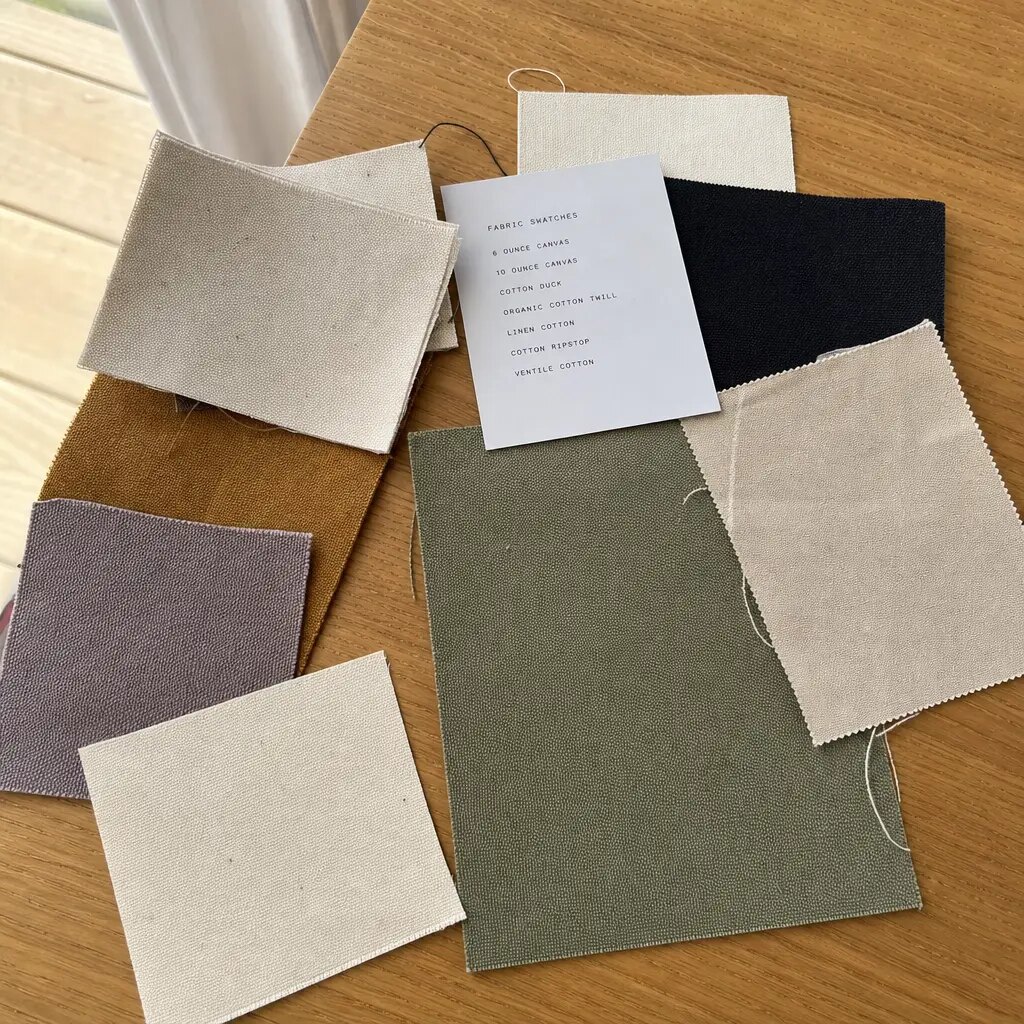
Canvas weight is one of the fastest ways to change the quote. For this product, many buyers end up around 12 oz to 16 oz canvas, which is roughly 407 GSM to 545 GSM, depending on the finishing. A 12 oz body can work for a slim portfolio with light daily use, but a coffee roaster that wants a structured presentation piece usually lands closer to 14 oz or 16 oz so the bag keeps its shape and the zipper track sits cleaner. The heavier the canvas, the better the body, but the more fabric cost and sewing resistance you add.
The right choice depends on how much structure you need and how often the item will be opened, filled, and carried. If the portfolio has an internal pocket layout, you may want a medium-heavy canvas with a reinforced binding or facing so the corners do not collapse. If the buyer wants a lighter promo kit, a lower GSM body with a strong zipper and clean print may be enough. The factory should quote the same construction with at least two fabric weights so you can see how much of the unit price is actually coming from the canvas rather than from labor or packing.
- Use 12 oz canvas only if the portfolio stays light and the buyer accepts a softer hand feel.
- Use 14 oz canvas for the most common balance of structure, cost, and print clarity.
- Use 16 oz canvas when the portfolio must hold shape in client-facing use or when internal inserts add weight.
Lock The Logo Method Before You Request Quotes
Print method changes both the price and the visual result. For a coffee roaster logo, one- or two-color screen print is usually the cleanest bulk option when the artwork is simple and the order size is large enough to spread setup costs. If the design has more detail or gradient work, heat transfer or digital print may be easier for samples, but those methods can become a liability in bulk if the buyer expects a long service life and repeated handling. Embroidery can look premium, but it is not always the best choice on a portfolio because dense stitching can distort fine lettering or pull light canvas out of shape.
For quote comparison, ask the factory to price the same product with the same artwork in two methods if possible. That lets you compare setup cost, per-piece labor, and finish quality on equal terms. A woven label, PU patch, or printed side label may also be better than direct print when the brand wants a cleaner surface or needs the logo to survive scuffing from notebooks and metal tools. The right answer is not the most expensive method; it is the method that fits the product's handling pattern and the buyer's brand position.
- Use screen print for simple logos and larger runs where setup can be amortized.
- Use woven labels or patches when the brand wants a premium, low-smudge finish.
- Avoid embroidery for very fine type or narrow strokes unless the sample proves legibility.
Compare Sourcing Routes Before You Compare Prices
A lot of quote confusion comes from comparing different sourcing routes as if they were the same supplier type. A direct factory quote usually has better control over sewing and packing, but it can be slower to quote if the factory is busy or only wants production-ready specs. A trading company can be faster and more flexible, especially if you are still deciding between constructions, but you should expect some margin embedded in the quote and more need for clarity on where each component is actually coming from. Local decoration on imported blanks can be useful for speed, but it rarely gives you the same construction control as a dedicated factory build.
For canvas zipper portfolios bulk pricing plan for coffee roasters, the right route depends on how fixed the spec is. If the bag needs a unique pocket layout, a specific GSM, and branded zipper pulls, go direct to a factory or a strong contract manufacturer. If you are testing demand and need a fast launch, a trading company or local decorator may be acceptable, provided the sample approval is strict and the quote clearly states what is included. The key is to avoid paying one supplier type for the role of another.
- Direct factory is best when you need repeatability and control over fabric and sewing.
- Trading companies are useful when the spec is still moving and you need market speed.
- Imported blanks are only acceptable if the blank quality and zipper grade already fit the buyer's standard.
Read MOQ And Price Breaks Correctly
MOQ logic matters more than many buyers expect. A factory is not only spreading fabric and labor across the order; it is also recovering cutting setup, print setup, zipper procurement, and packing labor. If you add a second print color, a custom pull tab, an internal divider, or a retail hang tag, the MOQ may rise because each extra step adds handling. This is why a 300-piece quote and a 1,000-piece quote can have very different economics even when the bag size looks identical on paper.
The best way to read the quote is to separate fixed costs from variable costs. Ask which line items are setup-only, which are per-piece, and which disappear at a higher quantity. In many cases the fabric choice changes the unit price less than the construction choice does, especially once stitching complexity and packing labor are included. If your brand needs a lower MOQ, keep the design simple and leave room for a second production phase after the first sell-through. If the portfolio is a permanent line item, it is usually cheaper to simplify early and scale later than to try to force a premium build into a pilot quantity.
- Treat print setup, sample development, and tooling as fixed-cost items unless the factory says otherwise.
- Watch for hidden MOQ jumps when adding pockets, binding, or branded pull tabs.
- Use a first run that validates demand before locking in a more complex premium spec.
Approve The Sample Like A Production Buyer
A sales sample is not enough. For a portfolio that will represent a coffee brand in front of wholesale customers, the sample should prove the same things that can fail in production: zipper alignment, pocket dimensions, canvas stiffness, logo registration, and stitching density at the stress points. Ask for a pre-production sample or a photo proof after the factory has all materials in hand, not only a digital mockup. Digital artwork can look correct while the actual sewn piece shifts because of seam allowance or zipper tape tension.
A good sample review is short but disciplined. Compare the sample against a golden sample or a signed spec sheet, and write down any acceptable deviation before the bulk order starts. Check zipper movement across the full length, inspect inside corners for bulk or puckering, and confirm that the logo still reads clearly when the product is filled. If the bag is supposed to sit flat in a drawer, table, or retail display, test that shape before approval. Once production starts, the factory will build to the approved sample, not to a verbal explanation from a sales rep.
- Approve the sample in writing against a signed spec sheet or golden sample.
- Test the portfolio with real inserts, not only by handling it empty.
- Reject samples that hide poor seam allowance, weak zipper end finishes, or distorted artwork.
Plan Packing So The Portfolios Arrive Flat And Clean
Packing is a cost item and a quality issue. Canvas zipper portfolios often arrive with wrinkles, scuffs, or corner crush if the pack-out is not planned around the final carton size. For retail or distributor orders, decide whether the item ships with tissue, a polybag, a barcode sticker, or a simple bulk pack. If the product is meant to look premium at opening, lightweight tissue and a clean fold direction can prevent a cheap first impression without adding much cost. If the buyer is focused on warehouse efficiency, the packing plan should maximize carton density without deforming the zipper track.
Carton planning should be part of the quote, not an afterthought. Ask the factory to state the unit pack, inner pack if any, master carton count, carton dimensions, and gross weight. Those numbers affect freight more than many buyers expect. A portfolio that ships flat can save volume, but if the fold line creates a permanent crease or bends a divider, that saving is false economy. For coffee roasters supplying wholesale partners, consistent pack-out matters because store teams often inspect the item before accepting it into inventory.
- Specify whether the portfolio ships flat, lightly folded, or fully stuffed with tissue.
- Set a carton count that keeps the zipper and corners from crushing in transit.
- Treat barcode placement and carton marks as part of the production spec.
Build Lead Time With Real Risk Buffers
Lead time is rarely just sewing time. For these portfolios, the schedule usually includes fabric procurement, zipper sourcing, print setup, sample approval, pre-production checks, bulk sewing, trimming, packing, and export booking. If any one of those steps slips, the whole shipment moves. Buyers often lose time because they approve artwork before confirming the zipper color, then discover the hardware needs a new purchase cycle or a second sample. A realistic plan separates sample lead time from bulk lead time and leaves buffer for one round of revision if the first sample exposes a problem.
The safest way to protect a coffee roaster launch is to treat the portfolio as a dependent item in the broader merchandise calendar. If it has to arrive with a seasonal roast launch, distributor meeting, or trade show, move the RFQ earlier than you would for a simple tote bag. Ask the supplier for the critical path: what they can start immediately, what depends on approval, and what will sit in queue if another order is ahead of yours. Buyers who ask for the actual production sequence usually get better dates than buyers who ask only for the final ship week.
- Split the schedule into sample lead time, bulk lead time, and packing or export time.
- Hold buffer for artwork corrections, zipper procurement, and approval delays.
- Tie the portfolio schedule to the brand's launch calendar, not to the factory's fastest promise.
Translate Quotes Into Landed Cost Before You Choose A Supplier
The lowest factory price is not always the best landed cost. A portfolio with a slightly higher factory quote may be cheaper once you account for better carton density, fewer damaged units, lower remake risk, or a more reliable lead time. This is where many buyers make the wrong comparison: they compare a bare sewing price from one supplier against an all-in quote from another. You need to normalize the numbers first. Separate product cost, print setup, packing, sample fees, inland transfer, and freight assumptions so you know what is actually comparable.
When you build the landed-cost view, the key quote data points are more important than the headline unit price. For example, a 14 oz canvas body with one-color screen print and simple retail packing may look more expensive than a lighter bag at first glance, but if the lighter bag needs extra insert protection or creates more freight volume, the real cost gap narrows. A serious supplier should be able to quote the same portfolio with at least one alternate fabric weight and one alternate logo method so you can see where the cost is coming from. If the quote cannot be broken into its drivers, it is not good enough for a purchasing decision.
- Normalize every quote to the same Incoterm, carton pack, and logo method.
- Compare landed cost, not only factory price, especially when freight volume is high.
- Use alternate quotes for fabric weight and logo method to identify the real cost driver.
Specification comparison for buyers
| Spec decision | Recommended option | When it fits | Buyer risk to check |
|---|---|---|---|
| Direct factory with in-house sewing and printing | Best for repeat orders where you need one owner for fabric, zipper, print, and packing | Programs above a few hundred pieces with stable artwork and a clear spec sheet | Confirm they really control production, not just trade the order and mark it up |
| Trading company bundling multiple factories | Useful when you need fast quotes across different constructions or mixed accessory sourcing | Early-stage sourcing, uncertain volumes, or when you want one contact for several SKUs | Watch for spec drift between quote and sample because each component may come from a different source |
| Local decorator on imported blanks | Good for ultra-short lead times or test runs with simple branding | Small launches, event kits, or market tests where speed matters more than factory economics | Blank quality and zipper grade are often fixed, so the final product may look generic |
| Low-MOQ offshore workshop | Fits small importers who need flexibility more than the lowest unit price | First-time buyers, pilot runs, or seasonal trials under a narrow budget | Check whether the workshop can hold the same stitch quality across the full order |
| Higher-spec factory with a structured QC process | Best when the portfolio is part of a premium brand presentation kit | Coffee roasters selling wholesale, equipment, or subscription programs where appearance matters | Verify sample approval steps and inspection criteria before you release bulk production |
| Split sourcing: printing at one site, sewing at another | Can lower cost when print complexity is high and the body construction is simple | Large programs with internal sourcing control and a strong product manager | More handoffs mean more risk on color matching, registration, and schedule slippage |
| Sample-first supplier with tooling included | Works when artwork, pocket layout, or closure details are still being refined | New launches where the buyer needs one or two sample iterations before bulk | Make sure sample fees, tooling, and remake terms are spelled out in writing |
| Full-service supplier including cartons and insert packing | Appropriate when you want the factory to handle retail-ready pack-out and carton labeling | Distributor orders, fulfillment-sensitive deliveries, and export cartons with strict counts | Check whether packing labor, inserts, and barcode labels are part of the quoted price or added later |
Buyer checklist before sampling
- Lock final size in inches and millimeters, including gusset depth and pocket count.
- Specify canvas GSM or ounce weight, not just "heavy canvas" or "premium canvas".
- Choose the zipper size, zipper tape color, slider style, and any pull tab branding.
- Approve the logo method before sampling: screen print, woven label, embroidery, emboss, or patch.
- State whether the inside needs dividers, card slots, document sleeves, or a pen loop.
- Confirm if the portfolio ships with tissue, polybag, hang tag, barcode sticker, or retail insert.
- Ask for a pre-production sample or photo proof before mass sewing starts.
- Set carton pack count, master carton size, and outer carton marking format.
- Request lead time split by sample approval, bulk sewing, and export packing.
- Ask for a landed-cost quote that separates product cost, packing, freight, and duty assumptions.
Factory quote questions to send
- What exact canvas weight are you quoting, and is it measured in GSM or oz/yd2?
- Is the zipper a nylon coil, molded plastic, or metal zipper, and what size is it?
- Which logo method is included in the price, how many colors are included, and what is the setup cost?
- How many pockets, dividers, and internal features are included in the quoted construction?
- Does the quote include sewing labor, packaging, polybags, tissue, and carton labels?
- What is the MOQ for the quoted spec, and how does the unit price change at higher breakpoints?
- Can you share a sample lead time, bulk lead time, and an estimated production start date after approval?
- What carton quantity, carton dimensions, and gross weight should I use for freight planning?
- Which tolerances do you hold for size, print placement, and zipper function?
- Is this quote from your own factory line, or are you outsourcing any steps?
Quality-control points to confirm
- Canvas weight matches the agreed GSM or ounce spec within the supplier's stated tolerance.
- Zipper opens and closes smoothly across the full length with no snagging, skipping, or misaligned tape.
- Logo placement is centered or positioned within the agreed measurement tolerance on the approved artwork proof.
- Stitching is even, with no broken threads, loose ends, skipped stitches, or weak corner reinforcement.
- All pockets and dividers hold the approved dimensions and do not collapse because of poor seam allowance.
- Bag size, gusset depth, and panel symmetry match the golden sample and do not distort after finishing.
- Print ink or label adhesion resists normal rub handling without visible peeling or smearing.
- Packing count, carton labels, and master carton quantities match the packing list before shipment.