Start with the trade show use case
A canvas zipper portfolio for a trade show is not just a promotional bag with a zipper. It is usually part of a booth workflow: sales teams hand it to qualified visitors, executives use it for meetings, speakers carry it to sessions, or distributors receive it as a pre-packed information kit. That end use changes the buying decision. A portfolio that only carries a brochure can be lighter and simpler. A portfolio that holds catalogs, order forms, samples, a notepad, business cards, and a tablet needs more structure, a smoother zipper, and stronger interior sewing.
Procurement teams get better pricing when they define the role of the item before they ask for quotes. The supplier needs to know whether the portfolio is a low-cost handout, a mid-level sales folder, or a premium meeting kit. Otherwise one factory may quote a soft canvas shell with a basic pocket while another quotes a lined, reinforced piece with multiple compartments. Both may call the item a canvas zipper portfolio, but they are not the same product. This is where many bulk pricing comparisons become misleading.
For exhibitors, the order also has a fixed deadline. Unlike general merchandise, trade show goods often have a hard receiving date at an advance warehouse, hotel, convention center, or regional office. A late shipment can force air freight, local repacking, or emergency substitute products. A good canvas zipper portfolios bulk pricing plan for trade show exhibitors should therefore balance unit cost with sample approval speed, production control, packing discipline, and delivery certainty.
- Define the item as a giveaway, sales kit, press kit, speaker folder, internal staff kit, or VIP meeting portfolio.
- Confirm what must fit inside: letter paper, A4 paper, catalog, tablet, pen, business cards, forms, samples, or badge inserts.
- Decide whether the product must look premium at close range or simply keep documents organized during booth traffic.
- Set the receiving deadline before negotiating price so rush freight does not erase the savings from a lower unit cost.
Build a quote-ready specification
A strong RFQ for canvas zipper portfolios should be short enough for suppliers to price quickly but specific enough to prevent guesswork. The core specification should include finished size, gusset depth, canvas weight, lining material, zipper size, puller type, interior pocket layout, logo method, packing method, target quantity, delivery location, and required delivery date. If any of those items are missing, suppliers will fill in the blanks based on their own cost structure, not necessarily based on your intended product.
Finished size is the first anchor. A letter-size portfolio and an A4 portfolio may look similar in a photo, but the pattern, zipper length, fabric consumption, carton size, and insert fit can differ. If the portfolio must hold a standard notepad or printed catalog, include the insert dimensions and thickness. If it must fit a tablet, provide the device size and whether it needs padding. A few millimeters may not matter for a loose brochure, but they matter when the pocket is fitted.
The RFQ should also state what is fixed and what may be optimized. For example, you might require 12 oz canvas, #5 nylon coil zipper, one front screen print, and one document sleeve, while allowing the factory to recommend lining weight or carton count. This keeps the comparison fair while still letting a capable factory suggest practical production details. The goal is not to over-engineer the product. The goal is to make every quote refer to the same build.
- Finished size: state width, height, gusset depth, and whether dimensions are measured closed, open, or after packing.
- Material: specify canvas gsm or oz weight, color reference, lining fabric, and any stiffener or backing requirement.
- Hardware: name zipper size, zipper type, tape color, slider finish, puller shape, and one-way or two-way opening.
- Interior: list document sleeve, pen loop, card pocket, tablet sleeve, sample pocket, and any elastic or Velcro closure.
- Branding: provide artwork file type, print size, Pantone or brand color, placement, and acceptable tolerance.
- Packing: define individual bag, barcode label, carton count target, carton marks, pallet requirement, and delivery term.
Understand the main price drivers
The unit price of a canvas zipper portfolio is driven by material consumption, construction time, decoration, packing, and order efficiency. Fabric is visible, but sewing labor is often the more sensitive variable. A rectangular flat folder with one sleeve is much faster to make than a portfolio with rounded corners, a full lining, several pockets, a pen loop, zipper tape sewn around three sides, and a reinforced front panel. Each extra operation adds time, inspection points, and potential rework.
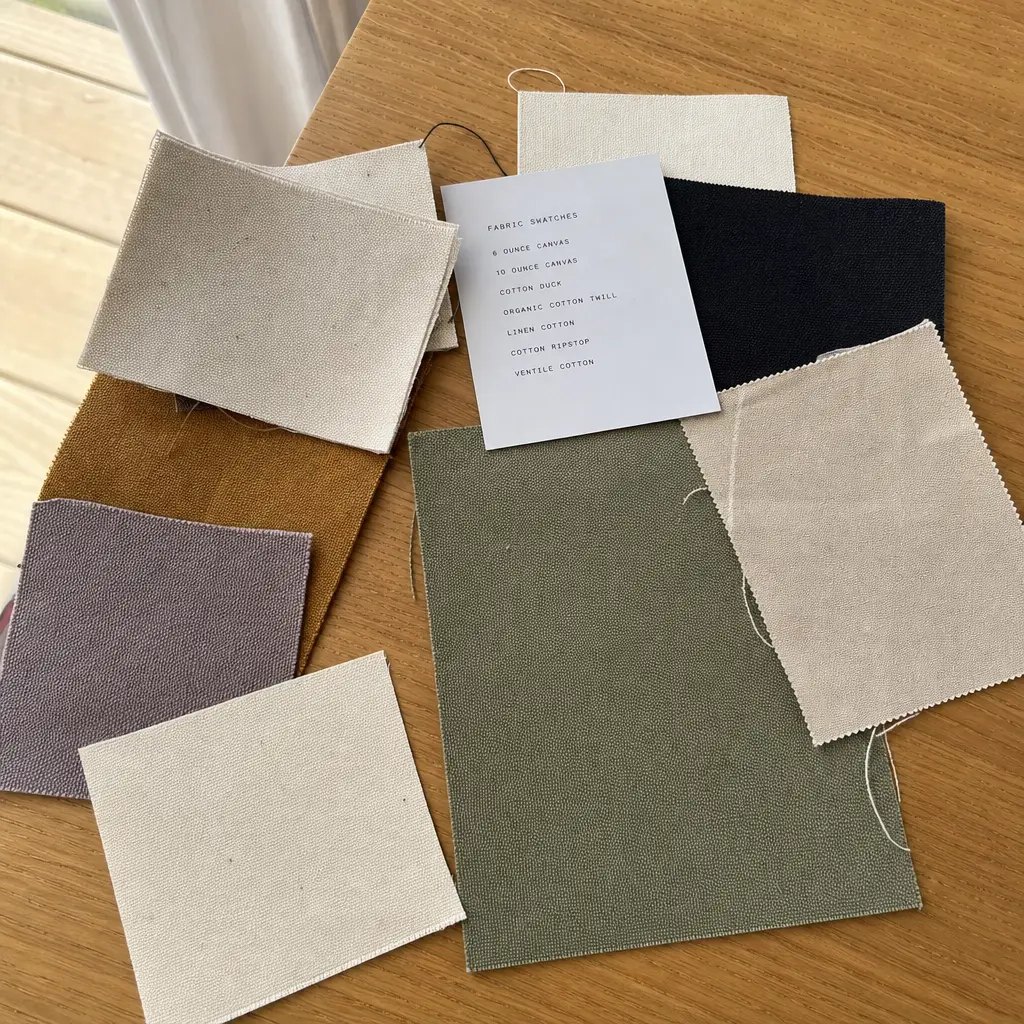
Canvas weight is an obvious cost driver, but it is not the only material question. Dyed canvas, washed canvas, organic cotton canvas, recycled cotton blends, coated canvas, and pre-shrunk canvas can all price differently. The same applies to lining. A thin nonwoven lining may lower cost, but it may not hold up if the portfolio is opened repeatedly at a booth. A polyester lining can improve usability but adds material and sewing requirements. Procurement should ask suppliers to identify the exact materials rather than using broad words such as heavy canvas or premium lining.
Branding can be low-cost or surprisingly expensive depending on artwork. A one-color screen print in a standard position is efficient. Multi-color printing, tight registration, large ink coverage, woven labels, embroidered patches, or custom pullers can add setup cost and extend lead time. Packaging also affects the final number. A bulk carton without individual labeling is cheaper, but many trade show programs need scan labels, SKU separation, event-specific carton marks, or repacking by destination.
- Material cost changes with canvas weight, dyeing, finishing, lining, stiffener, zipper quality, and puller finish.
- Labor cost rises with pockets, curved zipper paths, reinforced seams, lining attachment, label sewing, and tight tolerances.
- Decoration cost depends on print colors, ink coverage, label MOQ, artwork changes, and sample rounds.
- Packing cost increases with individual bags, barcode labels, inner cartons, destination marks, palletization, and compliance labels.
- Efficiency improves when the buyer keeps one base body, one zipper spec, one packing method, and fewer color or artwork versions.
Choose canvas weight and structure carefully
Canvas weight affects the look, hand feel, sewing behavior, freight weight, and user experience. A 10 oz canvas, around 340 gsm, can work for a simple document holder or giveaway folder where the buyer needs a natural canvas appearance without heavy structure. It is usually easier to fold and less expensive to ship, but it may feel too soft if the portfolio is expected to stand up to repeated booth handling or hold heavier inserts.
A 12 oz canvas, around 400 gsm, is often the most practical middle ground for B2B trade show portfolios. It gives the front panel enough body for a clean printed logo while keeping the item manageable for packing and freight. It also sews more easily than very heavy canvas when the product includes lining and zipper tape. For many buyers, this weight provides the best balance between perceived value and total program cost.
A 14 oz canvas, around 470 gsm, creates a firmer product and can suit premium meeting kits or sales folders with heavier documents. The trade-off is bulk. Thick canvas can create stiff corners, harder zipper movement, and higher carton weight. If the interior includes multiple pockets or a tablet sleeve, heavy fabric may make the portfolio feel overbuilt. Before approving 14 oz canvas, test the sample fully loaded and zipped, not empty on a table.
Structure should be chosen with the same discipline. A thin board insert can help the portfolio hold shape, but it adds weight and can crease if packed poorly. A full lining improves appearance and hides raw seams, but it adds sewing steps. Reinforced corners improve durability, but they can make zipper turns more difficult. The best structure is the one that supports the actual contents without making the closure fight the user.
- Use 10 oz canvas for lower-cost handouts, paper-only contents, and programs where freight weight is a major concern.
- Use 12 oz canvas for most exhibitor sales kits that need a clean look, moderate stiffness, and dependable sewing.
- Use 14 oz canvas only when the brand wants a firmer premium feel and the sample still closes smoothly when loaded.
- Add lining when interior appearance matters or when raw seams would reduce perceived quality.
- Avoid unnecessary stiffeners if the packed carton may compress the front panel or create permanent creases.
Specify zipper, pockets, and interior layout
The zipper is one of the most important quality signals on this product. A portfolio can use attractive canvas and clean printing, but if the zipper snags at the corner or the puller feels weak, the user reads the whole item as cheap. For most trade show zipper portfolios, a #5 nylon coil zipper with a metal puller is a practical choice. It is smoother around corners than many rigid zipper options and usually strong enough for repeated document access. A #3 zipper can feel too light for a larger portfolio, while a #8 zipper may be unnecessary unless the product is oversized or heavily loaded.
Zipper path should be discussed before sampling. Some portfolios open around three sides, while others use a shorter top or side opening. A three-sided opening improves access to documents but requires more zipper length and more careful sewing at corners. If the portfolio needs to lie flat, the pattern and zipper stops must support that behavior. Buyers should also confirm whether the zipper is one-way or two-way, whether the puller can be branded, and whether the zipper tape color must match the canvas, lining, or brand color.
Interior layout should be useful rather than crowded. A common trade show configuration is one document sleeve, one pen loop, and one business card pocket. That combination supports meetings without adding excessive labor. Tablet sleeves, mesh pockets, elastic loops, sample slots, or multiple card pockets can be added, but every extra compartment creates more seam lines and more inspection points. If the portfolio will hold printed catalogs or sample sheets, test the pocket opening with the real inserts instead of relying on drawings.
Procurement should treat interior features as functional requirements. A pen loop that is too loose looks unfinished. A card pocket that is too tight tears business cards. A sleeve that is too shallow lets papers slide out when the portfolio is opened. The physical sample should be loaded with the actual show materials and opened repeatedly before approval.
- Choose #5 nylon coil zipper for most document-size trade show portfolios.
- Specify zipper tape color, slider finish, puller style, zipper direction, and zipper end treatment.
- Test zipper movement around corners with the portfolio loaded to the expected insert thickness.
- Keep the interior layout focused: document sleeve, pen loop, and card pocket are enough for many programs.
- Add tablet or sample pockets only when the dimensions and load weight are known.
Select branding that survives booth handling
Trade show portfolios are handled repeatedly by sales reps, visitors, warehouse teams, and event staff. Branding should be chosen for durability as well as appearance. A one-color screen print is usually the best value for a simple logo and a large order. It works well when placed on a flat front panel away from zipper seams and folds. The buyer should confirm ink type, curing process, color target, and rub resistance before approving production.
A woven label or sewn patch can be a stronger choice when the brand wants a more finished look or when artwork is difficult to print cleanly on textured canvas. Labels also reduce the risk of large ink areas cracking across creases. However, labels have their own MOQ, lead time, and placement tolerance. A label sewn too close to an edge can skew during mass production, and thick patches can leave pressure marks during packing if cartons are too tight.
Heat transfer may be useful for smaller runs or multi-color artwork, but it must be tested on the exact canvas finish. Some transfers sit on top of the fabric and may show edge lift after bending or repeated handling. Embroidery can look premium but may pucker canvas panels, especially if the front panel is not stabilized. Custom metal pullers can be attractive but usually add tooling, higher MOQ, and additional approval steps. For procurement, the best method is the one that meets brand standards without creating avoidable production risk.
Logo placement deserves its own approval. The artwork should not cross a fold line, zipper seam, piping, or heavy corner area unless the design has been engineered for it. Ask the supplier for a marked layout showing distance from top edge, side seam, zipper tape, and centerline. Then approve a decorated physical sample, not only a digital mockup.
- Use screen print for simple logos, one or two colors, and larger quantity programs.
- Use woven labels or sewn patches for a premium look, repeated handling, or textured fabric where print detail may suffer.
- Use heat transfer only after checking adhesion, edge durability, and appearance on the approved canvas finish.
- Avoid printing across folds, zipper seams, gussets, corners, and high-friction handling zones.
- Approve logo placement with measured distances, not only a visual mockup.
Plan MOQ and price breaks like a buyer
MOQ is often treated as a supplier preference, but in this category it usually comes from real production constraints. Canvas dye lots, zipper tape colors, lining rolls, print setup, woven label production, cutting efficiency, and sewing line changeovers can each create a minimum. A supplier quoting 500 pcs may be using stock fabric and standard zipper tape. Another quoting 1000 pcs may be custom dyeing canvas or producing a private label. The number only makes sense when the buyer knows what it applies to.
The most important question is whether MOQ is counted per order, per color, per artwork, or per full specification. A 2000 pc order with four fabric colors and four logos may function like several small orders, each with its own setup cost. That can raise the unit price and extend lead time. If the goal is a better price break, standardize the body spec and vary only what truly needs to change. For example, use one canvas color and one zipper color, then change the insert card by region instead of changing the portfolio itself.
Procurement teams should ask for tiered pricing at realistic quantities, such as 500, 1000, 2500, and 5000 pcs. The quote should keep the same specification at each tier. If a lower tier uses 10 oz canvas and a higher tier uses 12 oz canvas, the comparison is not useful. Ask the supplier to show which costs are fixed setup charges and which costs improve with volume. This helps the buyer decide whether it is worth combining demand from multiple shows or departments.
Reorder pricing is also valuable. If the first order includes sample development, print screens, label setup, or pattern work, the second order may price differently. Ask the factory to quote the first run and a repeat run under the same spec and artwork. For recurring trade show programs, that gives a more accurate view of annual cost.
- Ask MOQ separately for fabric color, zipper tape color, artwork, woven label, puller, and packing label.
- Request tiered pricing at 500, 1000, 2500, and 5000 pcs using the same exact product specification.
- Separate one-time costs from repeatable unit costs so the reorder price is visible.
- Aggregate demand across events only if the base spec, color, logo, and packing can remain stable.
- Use artwork inserts, belly bands, or carton labels for regional variation when changing the portfolio would break MOQ.
Control samples and production approval
Sampling is where the bulk order becomes real. A good sample should confirm the full construction: canvas weight, fabric color, zipper quality, puller finish, lining, pocket layout, logo method, stitch appearance, finished size, and packing concept. A photo can help with communication, but it cannot prove hand feel, zipper resistance, pocket usability, or whether the portfolio closes properly when filled. For trade show use, the sample should be tested with the same documents, catalogs, and inserts planned for the event.
A useful approval process has stages. First, approve the artwork layout and material references. Second, review a prototype or development sample if the structure is new. Third, approve a pre-production sample made with production-intent materials and decoration. Finally, seal the approved sample as the golden reference for inspection. If the supplier changes canvas lot, zipper supplier, lining, print process, or puller finish after approval, the buyer should require re-approval before bulk production continues.
Procurement should document sample feedback in measurable terms. Instead of saying the zipper feels cheap, state that the zipper snags at the upper right corner when the portfolio contains a 6 mm document stack. Instead of saying the logo is too low, state the required distance from the top edge or zipper seam. Clear feedback reduces repeat sample rounds and protects the schedule.
Do not skip the packed sample. A portfolio can look correct at the sewing table and still arrive creased if it is packed badly. Ask the supplier to show how units are folded or stacked, where the zipper puller sits, how many pieces fit per carton, and whether the printed face touches any hard hardware. For printed canvas, packing marks can become a visible quality problem.
- Approve artwork layout before physical sampling to avoid unnecessary remake cost.
- Use real event inserts to test pocket fit, zipper closure, and finished weight.
- Seal one approved pre-production sample for the buyer and one for the factory.
- Require written approval for any material, zipper, print, label, or packing substitution.
- Review a packed sample or packing photo set before bulk cartons are produced.
Set inspection standards before shipment
Quality control should be agreed before production, not after problems appear. For canvas zipper portfolios, inspection should cover dimensions, fabric appearance, color consistency, stitching, zipper function, logo quality, interior construction, odor, labeling, and carton condition. If the buyer uses AQL inspection, define which defects are critical, major, and minor. If AQL is not used, still define an inspection checklist and acceptance standard so the supplier understands what will be rejected.
Zipper function should be checked on more than one empty sample. Inspectors should open and close units through the full zipper path and check for snagging at corners, separation, uneven tape, misaligned ends, and weak puller attachment. They should also test a loaded unit if the portfolio is designed for a known insert thickness. Zipper issues are hard to fix after packing, and they damage the user's first impression immediately.
Stitching requires close attention because many defects are small but visible. Loose threads, skipped stitches, uneven seam allowance, twisted lining, poorly finished bar tacks, and crooked labels can make the product look rushed. Stress points such as pocket openings, pen loops, zipper ends, and handles if included should receive extra attention. For canvas, needle marks and thread tension can also affect appearance.
Print and color checks should use the approved sample or color standard, not warehouse memory. Canvas texture naturally creates some variation, but the buyer should define what level is acceptable. Check for smearing, heavy ink buildup, thin coverage, color drift, off-center placement, cracking, or transfer marks from packing. If the brand color is critical, approve a lab dip or strike-off before mass printing.
- Critical defects: broken zipper, unsafe sharp hardware, wrong logo, wrong size preventing intended use, mildew odor, or major contamination.
- Major defects: zipper snagging, crooked front print, open seams, missing pocket, wrong lining, heavy panel crease, or visible color mismatch.
- Minor defects: small loose thread, slight stitch waviness, minor canvas slub within approved range, or slight removable surface dust.
- Inspection timing: check materials before cutting, review first finished pieces, and inspect packed goods before shipment.
- Evidence: require inspection photos of dimensions, zipper operation, logo placement, interior pockets, labels, carton marks, and packed cartons.
Design packing for event distribution
Packing is not an afterthought for trade show exhibitors. The product may move from factory to freight forwarder, customs, warehouse, advance show receiving, booth storage, and finally the sales floor. Every transfer creates a chance for carton damage, miscounts, label confusion, or front-panel creasing. The packing plan should protect the product and make receiving simple for the event team.
Individual polybags are common because they keep the portfolio clean and make counting easier. The buyer should confirm bag thickness, ventilation if needed, suffocation warnings where required, and whether the bag material creates odor during long transit. If the goods are being kitted with brochures or other items after arrival, the bag should be easy to open without damaging the product. If the portfolio will be handed out directly from the booth, the bag should not leave heavy wrinkles or moisture marks.
Carton density needs careful balance. Overpacked cartons can press zipper heads into the canvas face, create permanent marks, or bend board inserts. Underpacked cartons allow movement, corner wear, and collapsed stacks. Ask the supplier for carton size, pieces per carton, gross weight, net weight, and a photo of the stacking method. For larger programs, request a pallet plan so the warehouse knows how many cartons will arrive and how they should be staged.
Labeling should match the purchase order and event receiving rules. Trade show shipments often require event name, booth number, destination, SKU, carton count, and sometimes advance warehouse labels. If the order has multiple versions, each SKU should have clear carton marks and barcode labels. A low unit price does not help if the team must open every carton at the venue to find the right version.
- Use individual polybags when cleanliness, counting, or warehouse scanning matters.
- Keep zipper pullers positioned so they do not press into the printed front panel during transit.
- Confirm pieces per carton, carton dimensions, gross weight, net weight, and carton compression risk.
- Match carton marks to event name, booth number, SKU, PO number, destination, and carton sequence.
- Ask for packed carton photos before shipment, especially when the front logo must stay presentation-ready.
Specification comparison for buyers
| Spec decision | Recommended option | When it fits | Buyer risk to check |
|---|---|---|---|
| Supplier route | Direct factory with in-house canvas cut-and-sew capacity | Best for custom dimensions, controlled sampling, repeat trade show programs, and consistent zipper portfolio construction | Confirm the quoted supplier owns or directly manages the sewing line, cutting room, inspection process, and final packing |
| Supplier route | Trading company or sourcing office | Useful when the buyer needs portfolios, totes, lanyards, apparel, and other event goods consolidated under one vendor | Ask which factory will make the portfolio, who approves substitutions, and whether material details will be visible on the order sheet |
| Fabric weight | 10 oz canvas, about 340 gsm | Works for lighter document folders, handout kits, and cost-sensitive exhibitor giveaways with limited insert weight | Check whether the finished product feels too soft, collapses when held, or shows print distortion across the front panel |
| Fabric weight | 12 oz canvas, about 400 gsm | Balanced option for most trade show portfolios that need structure, printability, and manageable freight weight | Confirm shrinkage control, fabric finish, color consistency, and whether the quoted fabric is washed, dyed, or greige |
| Fabric weight | 14 oz canvas, about 470 gsm | Fits premium sales kits, heavier inserts, speaker folders, or buyer programs that want a firmer hand feel | Risk of higher sewing labor, bulky corners, stiffer zipper turns, and higher carton weight |
| Zipper hardware | #5 nylon coil zipper with metal puller | Most practical for daily booth handling, repeated opening, and low snag risk on document-size portfolios | Verify zipper tape color, puller finish, slider smoothness, corner performance, and whether the zipper matches the sealed sample |
| Branding method | 1-color screen print on flat front panel | Good for volume orders with simple logos, fixed artwork, and tight unit cost targets | Check ink curing, rub resistance, placement tolerance, and whether the print area stays clear of folds and zipper seams |
| Branding method | Woven label or sewn patch | Useful for premium-looking exhibitor kits, recurring programs, and designs where a large print would wear or distort | Confirm label MOQ, edge finish, stitch color, label placement, and whether label production adds days to the schedule |
| Interior structure | One document sleeve, one pen loop, and one business card pocket | Best when the portfolio is a working sales kit rather than a luxury organizer | Too many pockets add sewing time, create uneven bulk, and raise the chance of loose stitching or zipper strain |
Buyer checklist before sampling
- Confirm the intended use: giveaway folder, sales kit, press kit, speaker portfolio, internal event folder, or VIP meeting kit.
- Set finished size for letter, A4, tablet plus documents, or custom inserts before requesting price.
- Define gusset depth, opening direction, zipper path, corner radius, and whether the product must lie flat when open.
- Lock canvas weight, fabric color, shrinkage expectation, lining fabric, zipper size, zipper tape color, and puller finish.
- Choose one primary logo method and specify artwork size, placement, color reference, and acceptable placement tolerance.
- Request separate quote lines for sample fee, print setup, label tooling, packaging, carton labeling, freight, and any rush charge.
- Ask MOQ by fabric color, artwork, zipper tape color, woven label, and packing label so hidden minimums are visible.
- Require a physical pre-production sample using the same fabric, zipper, lining, print, and packing planned for bulk production.
- Set acceptance standards for zipper movement, seam strength, stitch density, print quality, pocket alignment, odor, and carton condition.
- Confirm inspection timing, AQL level if used, defect definitions, and who pays for rework or replacement if inspection fails.
Factory quote questions to send
- What exact canvas weight in gsm and oz is included in this price, and is the fabric dyed, washed, pre-shrunk, coated, or untreated?
- What lining material, backing, or stiffener is included, and can you show the material swatches before sampling?
- Is the zipper #3, #5, or #8, and is it nylon coil, resin, or metal? What puller material and finish are included?
- Will the portfolio use one-way or two-way zipper opening, and how do you prevent zipper snagging at the corners?
- What is the MOQ per fabric color, per zipper tape color, per artwork, per woven label, and per packing label?
- What unit price applies at 500, 1000, 2500, and 5000 pcs under the same exact specification?
- What is included in the unit price: print, lining, pocket sewing, barcode label, individual polybag, inner carton, export carton, and carton marks?
- What sample fee, print setup fee, screen fee, label tooling fee, and courier fee apply, and which charges are credited after bulk order placement?
- What tolerance do you hold for finished size, gusset depth, stitch alignment, pocket placement, zipper length, and logo placement?
- Can you provide photos or video of current canvas portfolio production, similar zipper goods, or your cutting, sewing, and inspection areas?
Quality-control points to confirm
- Finished width and height should stay within plus or minus 0.5 cm unless a tighter tolerance is agreed for fitted inserts or tablet sleeves.
- Gusset depth and zipper path should be consistent so the portfolio closes cleanly when loaded with the intended document stack.
- Canvas color should match the approved lab dip or sealed sample under daylight viewing, with no obvious panel-to-panel shade variation.
- Fabric should be free of stains, weaving defects, excessive slubs outside the approved character, mildew odor, and oil marks from sewing.
- Stitch density should be consistent across body seams, pockets, zipper tape, labels, and stress points.
- Stress points such as pen loops, pocket openings, zipper ends, and label corners should show secure backstitching or reinforcement.
- The zipper must run smoothly around the full path in both directions without snagging, splitting, waviness, or corner resistance.
- Pullers should match the approved finish and should not show plating chips, burrs, sharp edges, or weak attachment rings.
- Print registration, ink coverage, and color should match the approved sample, with no smearing, cracking, ghosting, or heavy variation.
- Logo placement should stay within the agreed tolerance from zipper edge, side seam, bottom edge, or centerline.