Buying Problem: A Portfolio Is Not Just a Flat Bag
Canvas zipper portfolios for artisan bakeries durability testing checklist sounds narrow, but it points to a common sourcing mistake: buyers treat the item like a simple promotional pouch. In use, the portfolio may carry wholesale price lists, menu sheets, bakery story cards, sample order forms, loyalty materials, or a small tablet. It is handled by sales reps, café buyers, store staff, and sometimes retail customers. The zipper, corners, and print area take more stress than a normal document sleeve.
For the Zipper Business Bags category, the buying problem is not only appearance. The product has to protect paper, open smoothly, lie flat enough for presentation, and still look like part of a bakery brand. A weak zipper or thin canvas makes the item feel cheap even if the logo is correct. A good RFQ should define the load, document size, fabric weight, zipper type, and test method before factories quote, otherwise every supplier will price a different product.
- Use case to define: sales kit, retail gift pack, document holder, event handout, or staff organizer.
- Main stress points: zipper ends, top corners, bottom fold, logo area, and any internal pocket opening.
- Common failure: factory quotes 10 oz promotional canvas when the buyer expects a structured business portfolio.
- RFQ rule: include finished size, usable inner size, material, zipper, print, packing, and inspection criteria in one file.
Fabric Weight and Handfeel
For bakery portfolios, 12 oz canvas is often the practical starting point. In GSM terms, this is commonly around 380-410 GSM, depending on weaving density and finishing. It gives enough body for a clean presentation without becoming too stiff at the zipper corners. If the portfolio is oversized or intended for retail sale, 14 oz or 16 oz may be considered, but heavier fabric increases sewing difficulty, carton weight, and the chance of bulky corners.
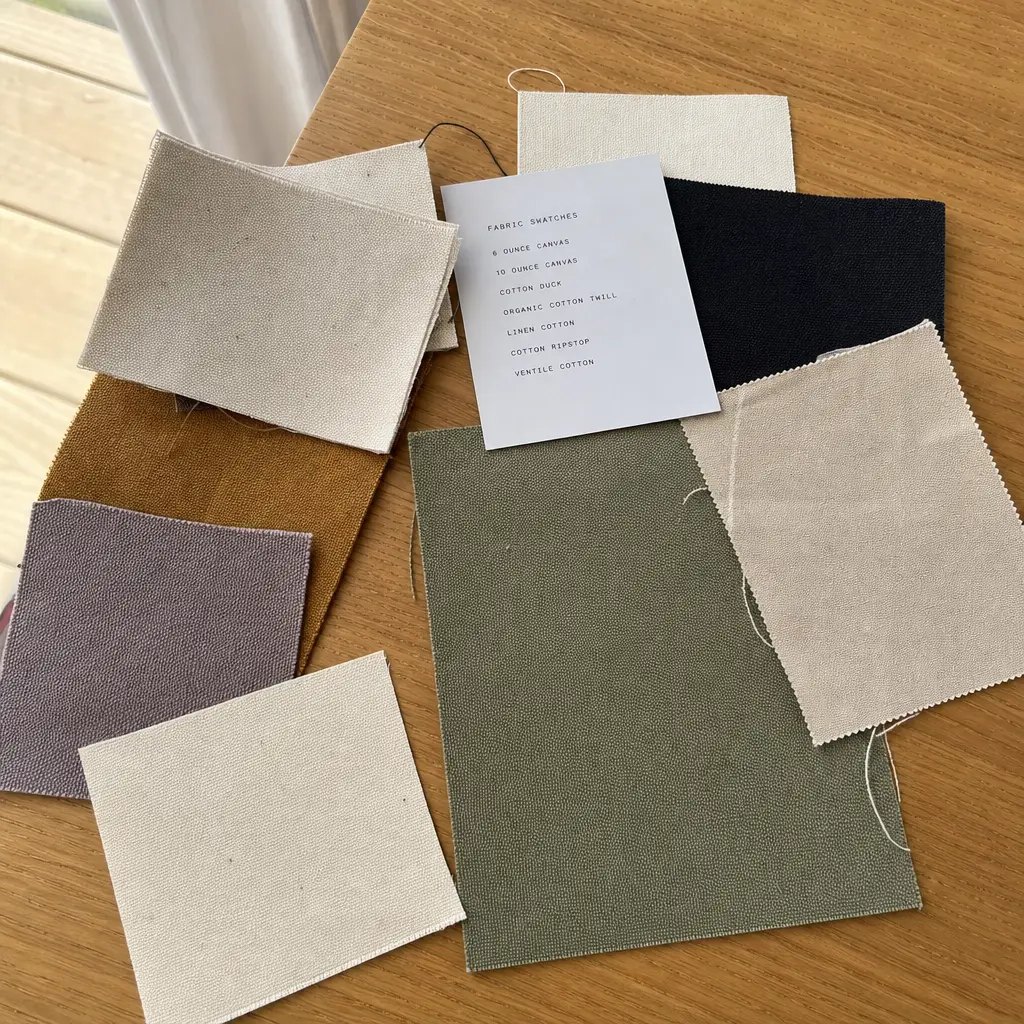
Do not approve fabric by ounce alone when suppliers are in different markets. Ask for ounce and GSM range, and request a physical swatch. Natural cotton canvas can show seed flecks, slubs, and shade movement between lots. That can suit an artisan bakery brand, but only if the buyer accepts it in writing. If the brand expects a clean cream or dyed color, specify shade tolerance and whether the fabric must be bleached, dyed, pre-shrunk, or enzyme washed.
- Budget presentation use: 10 oz canvas, about 300-340 GSM, only if the portfolio carries light paper.
- Balanced bakery sales kit: 12 oz canvas, about 380-410 GSM, with reinforced zipper stitching.
- Premium retail or gifting use: 14-16 oz canvas, but sample the zipper corners before approving bulk.
- Washed finish risk: shrinkage and shade variation need pre-production sample approval from actual bulk fabric.
Zipper Specification Drives Real Durability
Many portfolio failures start with the zipper, not the fabric. A No. 5 nylon coil zipper is usually the safest option for repeated opening because it runs smoothly around slight curves and has less tooth breakage risk than a cheap metal zipper. For a more premium bakery retail item, antique brass metal can look strong and natural against canvas, but it needs careful testing because the slider, teeth, and zipper tape add weight and can leave marks during packing.
The RFQ should name the zipper size, tooth type, tape color, slider finish, puller shape, and whether the zipper is closed-end or runs around two or three sides. If the portfolio opens like a book, the corner radius matters. A tight square corner makes the zipper look sharp in a flat photo, but it can jam in daily use. For distributor teams and retail buyers, smoothness is part of perceived quality.
- Standard choice: No. 5 nylon coil zipper with color-matched or contrast tape.
- Premium choice: No. 5 metal zipper with tested slider smoothness and protected packing.
- Avoid: very small zipper size on heavy canvas, especially around tight corners.
- Acceptance point: no sticking, tooth separation, sharp burrs, slider wobble, or tape waviness on inspected pieces.
Construction Details That Stop Seam Failure
A canvas zipper portfolio looks simple on the outside, but the sewing method changes the usable life. The zipper tape needs enough seam allowance and even feeding under the presser foot. Corners should not be forced through with heavy puckering. Stress points at zipper ends, pocket openings, handle tabs if any, and label attachments should have back-tack, bar tack, or box stitch reinforcement depending on the pattern.
For bakery use, the portfolio may be opened on counters dusted with flour, placed in delivery vans, or carried to trade events. Loose thread ends and uneven seams lower the perceived value quickly. A practical acceptance target is 8-10 stitches per inch for most canvas portfolio seams, with stronger thread for heavier fabric. The buyer should not simply write “durable stitching” in the RFQ; that phrase is too easy to interpret loosely.
- Set stitch density: typically 8-10 SPI, adjusted after sample review for fabric thickness.
- Protect zipper ends: add back-tack or bar tack where the slider receives pulling force.
- Control seam allowance: enough fabric beyond the stitch line to prevent fraying under pull.
- Inspect inside: no loose threads, skipped stitches, raw edges rubbing against documents, or needle damage.
Logo Method for Bakery Branding
Bakery buyers often prefer a natural, tactile brand look. Screen printing works well for solid logos, simple taglines, and one to three colors on canvas. Water-based ink gives a softer hand, while plastisol or thicker ink can create stronger opacity but may sit on the surface. On coarse canvas, very fine lines can break visually. Artwork should be reviewed at actual size, not only as a vector file on screen.
Heat transfer can reproduce small details, gradients, or multi-color marks, but the film edge and adhesion need testing on textured canvas. Embroidery is possible, but it can pucker flat panels and may not suit a thin document portfolio. Woven labels or side labels are useful when the front panel must stay clean or when the product will be handled often. The buyer should match the print method to the expected use rather than choose only by unit price.
- Best for simple bakery logos: screen print with tested ink coverage on actual canvas.
- Best for detailed graphics: heat transfer, only after wash, rub, and bend checks on the sample.
- Best for understated branding: woven side label or sewn patch with controlled placement tolerance.
- Print approval detail: specify Pantone reference, logo size, print position, curing standard, and rub-test result.
Durability Testing Checklist for Approval
Testing should match the real risk. A bakery portfolio does not need the same test plan as a heavy tool bag, but it does need evidence that zipper, seams, print, and packing can survive normal distribution and handling. The best time to set these checks is before sampling, because the factory can build the sample with the correct reinforcement instead of repairing problems later.
For a practical buyer-side test, insert the actual documents or a paper stack equal to expected use, close the zipper, carry and open the portfolio repeatedly, then inspect the corners. If the zipper catches only when loaded, the usable inside size is too small or the corner design is wrong. If the print cracks when the panel bends, the print method or ink deposit must change before bulk production.
- Zipper cycling: 50 manual open-close cycles on sample, then random bulk checks during final inspection.
- Loaded fit: insert target documents plus 5-8 mm clearance so zipper tape does not scrape the paper edge.
- Seam pull: apply firm hand pull at zipper ends and bottom corners with no stitch opening.
- Print rub: dry rub and light wet rub using white cloth, with no obvious transfer or flaking.
- Carton drop: drop a packed export carton from practical handling height and inspect corner deformation.
- Odor check: reject strong chemical, mildew, oil, or damp warehouse smell before shipment.
MOQ and Cost Drivers
MOQ depends less on the sewing shape and more on materials. If the buyer accepts stock natural canvas, stock zipper tape, standard slider, and screen print, a factory can usually discuss a lower MOQ. If the buyer needs custom dyed canvas, matched zipper tape, custom metal puller, custom woven label, special lining, or printed retail sleeve, the MOQ rises because each component has its own supplier minimum.
Unit price also changes with cutting efficiency. A portfolio with rounded corners, lining, internal pockets, pen loops, or gussets uses more labor and may create more fabric waste. The cheapest quote may be missing reinforcement, using a lighter zipper, or packing more pieces per carton than is safe. Importers should compare quotes line by line instead of sorting only by FOB price.
- Lower MOQ path: stock 12 oz natural canvas, standard No. 5 zipper, one-color screen print, bulk carton packing.
- Higher MOQ path: custom dyed canvas, custom zipper tape, branded puller, lining, and individual retail packaging.
- Hidden cost item: artwork screen charge, label setup, puller mold, sample remake, courier, and inspection handling.
- Quote comparison rule: require fabric GSM, zipper type, print method, packing, carton data, and lead time in every supplier quote.
Sample Approval Without Surprises
A photo sample is not enough for this product. The buyer needs to feel zipper resistance, insert actual documents, bend the printed panel, and inspect the inside seams. If the sample is made from substitute fabric or substitute zipper, it should be treated only as a shape sample, not a production approval. For bulk approval, the pre-production sample should use actual materials and actual packing.
Keep the signed sample sealed and dated. The factory should keep one duplicate, and the buyer should keep one for inspection reference. The approval should define which variations are acceptable. Natural canvas may have small seed dots and slubs; that can be normal. Crooked zipper tape, oil marks, thread nests, print offset, and panels that do not lie reasonably flat should not be normalized.
- Prototype sample: confirms size, shape, pocket layout, and document fit.
- Print strike-off: confirms ink color, coverage, handfeel, and edge sharpness.
- Pre-production sample: confirms bulk fabric, zipper, stitching, print, label, and packing.
- Approval record: include photos, measurements, material notes, print position, and tolerance comments.
Packing Plan for Canvas and Zipper Protection
Canvas can pick up dirt and moisture during storage, and zipper parts can create pressure marks if pieces are packed too tightly. For B2B distribution, one piece per recyclable polybag or paper sleeve is common. If the brand wants plastic reduction, confirm whether glassine-style paper, kraft sleeve, or tissue wrap gives enough protection against rubbing. For natural canvas, clean handling during folding and packing matters as much as the outer carton.
Carton loading should protect the portfolio shape. Overfilling cartons can bend corners or press zipper sliders into the front panel. Underfilling increases movement and rubbing. The RFQ should request carton quantity, carton dimensions, net weight, gross weight, and pallet information if the goods ship to a retailer warehouse. For sea freight, humidity control with a suitable desiccant is worth discussing, especially for long routes or rainy-season production.
- Inner pack: one piece per protective sleeve unless buyer accepts bulk pack for cost reasons.
- Carton count: usually 40-60 pcs per export carton, adjusted by size, fabric weight, and packing style.
- Marking: item number, PO number, color, quantity, carton number, gross weight, and destination requirement.
- Moisture control: dry goods before packing and use desiccant where climate and transit time justify it.
Lead Time and Schedule Risk
A realistic timeline includes artwork checking, material booking, sample making, sample courier time, buyer review, bulk production, inline inspection, final packing, and export handling. A simple stock-material order can move faster than a custom dyed or custom zipper order, but the schedule should still include sample approval before cutting bulk fabric. Cutting before approval may save a few days and create a full order of wrong inventory.
The highest schedule risk is usually not sewing capacity; it is component delay and late artwork changes. A bakery logo may need color adjustment after seeing ink on natural canvas. A custom zipper puller may need tooling approval. Retail packaging may need barcode or compliance label changes. Procurement teams should freeze artwork and component specs before the factory starts bulk material ordering.
- Typical sequence: artwork proof, material confirmation, sample, buyer approval, bulk cutting, sewing, printing, QC, packing.
- Risk item: custom dyed canvas can extend lead time and requires shade lot approval.
- Risk item: print curing time can delay packing if production is rushed.
- Risk item: late carton or barcode changes can hold shipment even when goods are finished.
Specification comparison for buyers
| Spec decision | Recommended option | When it fits | Buyer risk to check |
|---|---|---|---|
| Outer fabric weight | 12 oz canvas, roughly 380-410 GSM, pre-shrunk if washed finish is required | Good balance for bakery distributor sales kits, menu folders, sampling paperwork, and retail gift packs | Below 10 oz can crease and collapse; above 16 oz raises freight weight and may stress zipper turns |
| Zipper type | No. 5 nylon coil zipper for smooth opening, or No. 5 antique brass metal zipper for premium look | Nylon fits repeated daily use; metal fits giftable retail or brand presentation ranges | Metal teeth can scratch printed inserts; weak sliders fail before the fabric fails |
| Construction style | Flat portfolio with gusseted document pocket and stitched zipper tape reinforcement | Fits A4 or US Letter bakery catalogs, wholesale order forms, loyalty materials, and sample cards | A tight flat pattern looks neat empty but jams when buyers insert real documents |
| Seam reinforcement | 8-10 stitches per inch with bar tack or box stitch at zipper ends and corner stress points | Needed when portfolios are carried to markets, cafés, and distributor visits | Loose SPI, skipped stitches, or no back-tack at zipper stops will open during pull testing |
| Print method | Screen print for 1-3 solid colors; heat transfer only for detailed art on smooth canvas; woven side label for frequent handling | Screen print fits bakery brand marks and simple slogans; label fits long-term wear areas | Heavy ink on coarse canvas can crack at folds; transfer film can lift if packed before curing |
| Lining choice | Unlined for cost control; cotton lining or RPET lining when the interior must protect paper samples | Unlined works for trade use; lining works for retail sets or gifting | Lining adds labor and can shrink differently from outer canvas if washing is requested |
| MOQ logic | 300-500 pcs for standard fabric and existing zipper colors; higher MOQ for custom dyed canvas, custom zipper tape, or shaped pullers | Suitable for bakery groups, regional distributors, and seasonal brand campaigns | A low MOQ quote may switch fabric stock, zipper color, or print position unless these are locked in |
| Packing method | One piece in recyclable polybag or glassine-style paper sleeve, then 40-60 pcs per export carton with desiccant if humidity risk exists | Protects natural canvas from rubbing, dust, and moisture during sea freight or warehouse storage | Over-tight cartons deform corners; no inner protection can transfer zipper marks onto front panels |
| Approval testing | Pre-production sample plus bulk inline zipper cycling, seam pull, print rub, and carton drop checks | Required when the portfolio carries customer-facing bakery branding or retail packaging | Approving only a photo sample misses zipper smoothness, fabric odor, carton crush, and document fit |
Buyer checklist before sampling
- Define the document size first: A4, US Letter, menu card set, sample sheet, or tablet sleeve, then add clearance for zipper movement.
- Specify outer fabric by ounce and GSM range, not only by the word canvas.
- Choose zipper material, zipper size, slider finish, puller shape, and zipper tape color before requesting final pricing.
- Set acceptance criteria for seam strength, zipper cycling, print rub, fabric shade tolerance, and carton drop testing.
- Request a pre-production sample made with actual bulk fabric, actual zipper, actual print method, and final packing materials.
- Require photos of cutting, stitching, zipper setting, printing, and carton packing during bulk production.
- Confirm MOQ differences for stock canvas, dyed canvas, custom lining, custom label, and custom puller.
- Approve carton dimensions and gross weight before shipment booking, especially for air freight or retailer DC delivery.
- State whether natural slubs, seed marks, and slight shade variation are acceptable for the bakery brand aesthetic.
- Keep one approved sealed sample with both buyer and factory for comparison during final inspection.
Factory quote questions to send
- What exact fabric weight, GSM range, yarn count if available, and shrinkage tolerance are included in this quote?
- Is the zipper No. 5 or another size, and is it nylon coil, resin, or metal? What slider and puller material are quoted?
- What is the maximum document size the finished portfolio can hold without stressing the zipper corners?
- Which print method is included, how many colors are priced, and what curing or drying time is required before packing?
- Are zipper ends, corners, and pocket openings reinforced with bar tack, back-tack, or extra stitching?
- What is the MOQ for this exact specification, and which parts change if the order quantity is reduced?
- How many days are needed for artwork proof, sampling, material booking, bulk production, inspection, and packing?
- What packing method, carton quantity, carton size, gross weight, and moisture protection are included?
- Can you provide test photos or short videos for zipper cycling, seam pull, print rub, and carton drop checks?
- What quote items are excluded: mold charge, custom label, custom zipper puller, sample courier, export carton marking, or inspection support?
Quality-control points to confirm
- Finished size tolerance should normally stay within plus or minus 5 mm for length and width unless the pattern has complex curves.
- Zipper should open and close smoothly through at least 50 manual cycles on approved sample and selected bulk pieces without slider sticking.
- Corner and zipper-end seams should resist a practical hand pull without stitch opening, thread breakage, or fabric tearing.
- Print should pass dry rub and light wet rub checks without obvious color transfer onto white cotton cloth.
- A4 or US Letter test sheets should insert and remove without catching on zipper tape, lining seams, or loose threads.
- Natural canvas shade should match the approved swatch within an agreed tolerance under consistent lighting.
- Bulk pieces should be free from strong odor, oil marks, needle holes, broken stitches, metal burrs, and zipper tape waviness.
- Export cartons should survive a reasonable drop check without crushed portfolio corners, zipper impressions, or dirty outer panels.