The Buying Problem
Canvas zipper portfolios for artisan bakeries are usually not bought as ordinary office folders. They are often used for franchise opening kits, catering proposal packs, wholesale buyer documents, bakery class materials, loyalty program launches, or premium gift sets. That means the product must look like a brand item, protect printed materials, and arrive flat enough for retail or sales use. The carton packing plan is not a back-office detail; it directly affects whether the portfolios look acceptable when unpacked.
The common sourcing mistake is to approve the portfolio by front photo only. A sample may look clean on a table, but mass production can fail after stacking, folding, compression, and mixed carton handling. For bakery brands that use natural canvas and soft brand colors, scuffs, crease lines, ink rub, and zipper pull pressure marks are easy to see. A good RFQ should connect the product specification with the packing method from the start.
- Define whether the portfolio is for retail resale, staff use, franchise documents, buyer kits, or gifting.
- Decide whether the logo area must remain perfectly flat or whether light fabric creasing is acceptable.
- Treat carton size and packing count as quote items, not as details left until shipment booking.
- Require a sample review that includes packed condition, not only sewing and print appearance.
Core Product Specification
For a bakery portfolio, the safest base specification is usually 12 oz to 14 oz cotton canvas, roughly 390 to 475 GSM before any washing or finishing. This range gives enough body for a document carrier without making zipper corners too bulky. Lighter 10 oz canvas may reduce unit cost and carton weight, but it can collapse around the documents and show more wrinkles. Heavier 16 oz canvas can look premium, yet it increases sewing difficulty, carton volume, and the chance of thick corner puckering.
Size should be confirmed by the documents the bakery will actually insert. A4 and US letter are close but not identical, and the usable internal size after seam allowance is smaller than the cutting size. If the portfolio will hold a bakery catalog, wholesale order form, gift certificate sheet, or tasting menu, allow 10 to 15 mm clearance on both width and height. If it will hold a tablet or sample booklet, build that into the spec instead of assuming a standard office dimension.
- Practical fabric range: 12 oz for lighter promotional use, 14 oz for stronger handfeel and better structure.
- Common construction: flat zipper pouch style with one internal document pocket and optional pen loop.
- Recommended zipper: No. 5 nylon zipper for smoother operation and better durability than small zipper sizes.
- Dimension rule: specify finished external size and internal usable document size separately.
Print and Branding Choices
Most artisan bakery portfolios use natural, black, navy, dark green, or warm beige canvas with a single-color logo. Screen printing is normally the most reliable and economical method for this style, especially for solid bakery marks, shop names, branch logos, or simple line illustrations. It gives good opacity on canvas and predictable cost at wholesale quantity. The factory should print on the actual canvas, because ink behavior on coarse cotton differs from paper proofs and digital mockups.
Heat transfer can work for small multicolor artwork, gradient labels, or detailed retail graphics, but it changes the handfeel and may sit on top of the fabric. Embroidery is possible for a premium look, yet it can distort the panel if the logo is large or placed near the zipper. Woven labels are a clean option when the brand wants a subtle side mark rather than a large front print. The buying decision should be based on the bakery’s distribution channel and expected use, not only on the artwork file.
- Screen print fits solid logos, short slogans, and most bakery brand marks on natural canvas.
- Heat transfer fits detailed artwork but needs rub testing and edge adhesion review.
- Embroidery fits small premium logos but can pucker lighter canvas if the stitch count is high.
- Woven side labels reduce print risk and can support multi-location bakery programs.
MOQ and Cost Drivers
MOQ depends on more than sewing capacity. For a simple stock-color canvas portfolio with one-color screen print, many factories can discuss trial quantities around 500 to 1000 pieces, depending on material availability and workshop schedule. The MOQ rises when the buyer requests custom dyed canvas, custom zipper tape color, branded zipper pullers, woven labels, individual retail packaging, or special carton printing. Each added component may have its own supplier MOQ, which can be higher than the bag factory’s sewing MOQ.
Buyers should compare the full quote structure instead of pushing only for a lower unit price. Canvas weight, zipper grade, print color count, inner pockets, packaging method, carton strength, and inspection requirements all move the cost. A portfolio with fewer compartments but better canvas and better packing often performs better than a complex organizer made with weak zipper and thin fabric. If the portfolio supports a bakery launch or distributor kit, failure at arrival is more expensive than a small saving at order stage.
- Low-cost levers: simplify inner pockets, use stock canvas color, keep print to one color, avoid custom pullers.
- Cost-increasing levers: dyed fabric, multiple print colors, padded structure, metal zipper puller, retail sleeve.
- Hidden charges: screen setup, sample courier, carton mark printing, barcode labeling, and rework after artwork changes.
- MOQ pressure point: component MOQs often matter more than sewing MOQ for custom trims.
Carton Packing Plan
Canvas zipper portfolios are flat products, but they do not always ship efficiently. The zipper, puller, seams, and inner pocket create uneven thickness. If too many pieces are forced into one carton, pressure marks can appear across the front panel or zipper puller. If cartons are too loose, the products shift during transport and rub against each other. A workable plan is usually 25 to 40 pieces per export carton, adjusted after measuring the approved packed sample thickness.
For bakery brands, the front logo area is the main visual surface, so packing should protect it. Individual polybags control dust and moisture but may not fit brands avoiding plastic. Paper bands or glassine sleeves can reduce plastic use, but they must still prevent scuffing. Bulk packing with tissue between layers can work for internal staff use, but it is risky for retail or presentation kits. The RFQ should require the supplier to quote the packing style and carton data before order confirmation.
- Flat pack is preferred when the logo surface must remain clean and crease-free.
- Avoid folding through the printed logo unless the buyer has approved a folded packing sample.
- Use tissue, paper sleeve, or individual bagging when dark prints may rub against natural canvas.
- Keep gross carton weight practical for manual handling, commonly below about 18 to 20 kg where possible.
- Confirm export carton strength when shipping by ocean or through multiple distributor warehouses.
Sample Approval Workflow
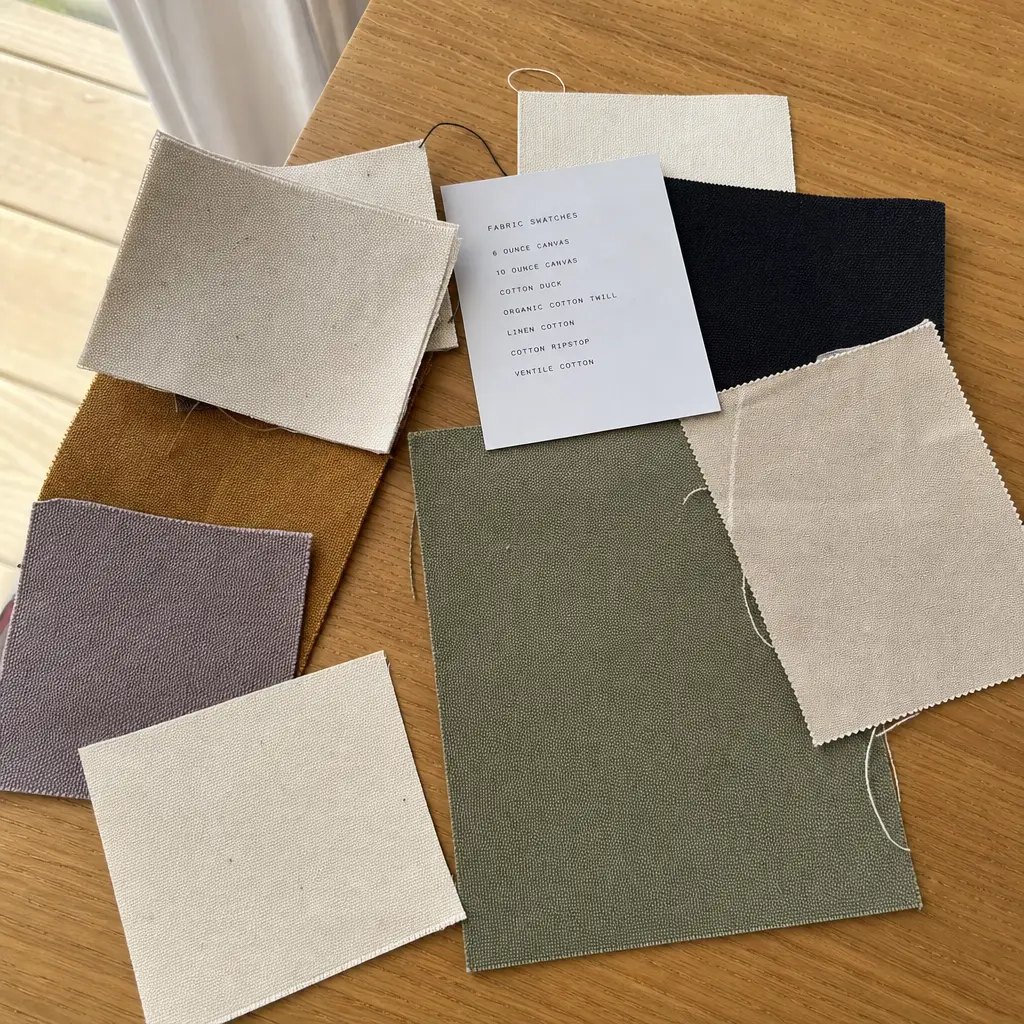
A useful sample process has several checkpoints. The first is a material and trim confirmation: canvas swatch, zipper tape, zipper puller, thread color, label, and print ink reference. The second is a print strike-off on the selected fabric, not on substitute cloth. The third is a prototype or pre-production sample made with the correct dimensions and construction. For higher-risk orders, the final approval should include the portfolio packed in the proposed carton method.
Do not rely only on a digital mockup for logo position. Canvas moves during cutting and sewing, and zipper placement can make a design appear off-center even when the measurement is correct. The approval sample should state logo size, distance from top edge, distance from side edge, and allowed tolerance. If the bakery has several branch logos or seasonal artwork, approve the most difficult artwork first, usually the smallest text, thinnest line, or lightest ink color.
- Approve fabric handfeel, weight, color, and shrinkage expectation before printing.
- Approve zipper function with the portfolio filled by the intended document stack.
- Approve print color under normal daylight and indoor retail lighting if color matching matters.
- Approve packed condition after at least one day under light carton compression.
- Record approval by signed sample, dated photos, and written tolerance notes.
QC Acceptance Criteria
QC criteria should be written in a way that an inspector can apply at the packing table. For dimensions, plus or minus 5 mm is a practical tolerance for many sewn canvas portfolios, but the buyer should tighten or loosen it based on document fit. For print placement, plus or minus 3 to 5 mm may be acceptable depending on logo size. For zipper function, every inspected piece should open and close smoothly without catching, skipped teeth, or slider separation.
Defects should be classified before production. Major defects include broken zipper, open seam, missing label, wrong logo, visible stain on front panel, severe print misregistration, and carton quantity error. Minor defects can include small loose threads, slight canvas slub outside the logo area, or very small print edge roughness that is normal on woven cotton. The important point is to separate natural canvas character from unacceptable workmanship.
- Dimension tolerance: set finished size tolerance and internal usable size requirement.
- Print tolerance: define position, color, opacity, and acceptable edge softness on canvas texture.
- Sewing tolerance: no open seams, no broken stitches, clean zipper end reinforcement.
- Material tolerance: natural slubs may be acceptable; oil stains and large color patches are not.
- Packing tolerance: correct quantity per carton, no mixed artwork unless clearly labeled and approved.
Lead Time and Schedule Risk
The lead time clock should start after deposit, final artwork, and sample approval, not after the first inquiry. A straightforward canvas zipper portfolio order may move faster than a fully custom retail bag, but several steps still need time: fabric booking, cutting, print setup, print drying or curing, sewing, thread trimming, QC, packing, and export carton preparation. If the buyer needs cartons delivered before a bakery opening event, wholesale fair, or distributor launch, the approval schedule must be managed tightly.
Schedule risk usually comes from late artwork changes, unclear Pantone targets, custom components, and packing revisions after production starts. A buyer can reduce risk by freezing the specification before sampling, approving the print strike-off quickly, and requiring the factory to send carton packing data early. If a custom zipper puller or woven label is required, treat it as a separate timeline item because trim suppliers may need their own sampling and production days.
- Fastest path: stock canvas, stock zipper, one-color screen print, standard export carton.
- Common delay: artwork revised after screens are made or after print strike-off is approved.
- Component risk: custom dyed fabric, custom puller, custom woven label, and printed retail sleeve.
- Packing risk: carton dimensions changed after forwarder calculates shipment volume.
- Inspection risk: final QC scheduled too late to allow sorting, repair, or replacement.
Quote Data for Landed Cost
For importers and distributors, the most useful supplier quote is not just a unit price. It should include incoterm, production lead time, sample fee, setup charge, carton quantity, carton dimensions, gross weight, net weight, and estimated total CBM. Canvas zipper portfolios can look inexpensive per piece but become less attractive if the carton volume is high. Because they are structured around documents and zippers, they do not compress like thin cotton totes.
A proper comparison may show that a slightly higher unit price gives better landed cost if the factory designs a cleaner carton pack with lower CBM and fewer damaged pieces. Buyers should also check whether the quote includes individual packing, carton marks, barcode labels, and inner carton protection. If one supplier quotes bulk packing and another quotes individual paper sleeves, the prices are not comparable until packing is aligned.
- Quote line data: unit price, currency, incoterm, MOQ, sample fee, setup charge, and payment terms.
- Packing data: pieces per carton, carton size, gross weight, net weight, and total CBM by order quantity.
- Product data: fabric GSM, zipper type, print method, number of colors, and included accessories.
- Compliance data: buyer-required labeling, packaging restrictions, and destination market requirements.
- Risk data: sample approval time, production lead time, inspection window, and shipment handover date.
RFQ Mistakes to Avoid
The biggest RFQ mistake is describing the item only as a canvas zipper portfolio with logo. That leaves too many choices open: fabric weight, zipper quality, inner pocket, print method, packing method, carton count, and inspection level. Different suppliers will quote different assumptions, and the lowest price may simply reflect a weaker product. A clear RFQ makes quotes comparable and prevents the buyer from discovering tradeoffs only after sampling.
Another mistake is separating product design from logistics. If the portfolio must be inserted into bakery gift boxes, shipped to retail stores, or distributed through several warehouses, carton marks and packing count matter early. A wrong carton plan can create repacking labor, damaged logos, and higher freight cost. Buyers should build the carton packing plan into the RFQ as a required quote field, then verify it during sample approval.
- Do not approve artwork without confirming print method and actual canvas texture.
- Do not compare quotes that use different fabric weights or zipper sizes.
- Do not accept carton data after mass production if freight budget matters.
- Do not rely on a single front-view sample photo for a product with zipper and inner structure.
- Do not reduce MOQ by accepting mixed leftover fabric unless color consistency is not important.
Specification comparison for buyers
| Spec decision | Recommended option | When it fits | Buyer risk to check |
|---|---|---|---|
| Body fabric weight | 12 oz to 14 oz cotton canvas, about 390-475 GSM before washing | Good balance for bakery welcome packs, sales kits, franchise documents, and reusable retail gifts | Too light can wrinkle and collapse in cartons; too heavy raises freight and makes seams bulky near zipper corners |
| Portfolio size | A4 or US letter fit with 10-15 mm document clearance | Works for menus, order forms, loyalty material, catering contracts, and brand brochures | If artwork is approved before final paper size, documents may curl or zipper may catch at the corner |
| Zipper type | No. 5 nylon zipper with metal or molded puller | Suitable for light business use and lower breakage risk than small No. 3 zippers | Cheap zipper tape can wave after sewing; weak sliders fail during sample pull testing |
| Print method | Screen print for solid bakery logo; heat transfer only for complex small-color artwork | Screen print fits most artisan bakery branding on natural canvas and keeps unit cost stable | Fine flour-dust style graphics can fill in on canvas; request strike-off on actual fabric, not paper |
| Inner structure | One flat document pocket plus optional pen loop, no overbuilt organizer unless needed | Keeps portfolio useful for sales reps, retail buyers, franchisees, and bakery event staff | Extra compartments increase sewing time, needle marks, and carton compression thickness |
| Carton packing | Individual polybag or paper band, 25-40 pcs per export carton depending on thickness | Controls dust and scuffing during ocean or truck shipment while keeping carton weight manageable | Overpacked cartons bend zipper pulls and leave pressure marks on printed logos |
| MOQ logic | Start from 500-1000 pcs for simple screen print; higher for dyed fabric, custom zipper puller, or woven labels | Fits distributor trial orders and retail bakery chain rollouts without forcing unnecessary inventory | A low MOQ quote may hide stock fabric limits, mixed dye lots, or higher sampling and setup charges |
| Sample approval | Pre-production sample with final fabric, zipper, print position, packing fold, and carton layout | Needed before PO release when portfolios are used as visible brand packaging or retail merchandise | Approving a photo sample without packing test can miss crease lines, carton rub, and zipper deformation |
| Quote comparison | Compare unit price together with carton CBM, gross weight, sample fee, setup fee, and incoterm | Shows real landed-cost difference between similar supplier quotes | The cheapest FOB unit price can lose value if cartons are oversized or packing causes rework at destination |
Buyer checklist before sampling
- Define the document size the portfolio must hold, including clearance for menus, contracts, or bakery sales sheets.
- State fabric weight in oz and approximate GSM, and require the same fabric for strike-off and pre-production sample.
- Specify zipper size, zipper color, puller style, opening direction, and any branded puller requirement before quoting.
- Limit artwork to realistic canvas printing details; provide Pantone references and minimum line thickness for approval.
- Request carton dimensions, pieces per carton, gross weight, net weight, and packing method in the first quotation.
- Approve one packed sample or packing photo showing fold direction, polybag or paper band, carton layer count, and logo protection.
- Set acceptance criteria for print position tolerance, zipper function, seam strength, loose threads, and carton crush resistance.
- Compare supplier quotes by landed cost, not only unit price, especially if cartons are large because portfolios ship with trapped air.
- Confirm production lead time after sample approval, not after inquiry date, and leave buffer for print strike-off corrections.
- Require final inspection before shipment with AQL level, carton drop condition, barcode or carton mark review, and photo records.
Factory quote questions to send
- What exact canvas weight will be used, in oz and GSM, and is it greige, bleached, dyed, or washed?
- Can the portfolio fit A4 or US letter documents without bending, and what is the internal usable size after sewing?
- Which zipper size, zipper tape quality, slider material, and puller style are included in the quoted price?
- Which print method is quoted, how many colors are included, and what setup or screen charges apply?
- What MOQ applies to the base fabric, printing, zipper color, woven label, and custom carton marks separately?
- How many pieces are packed per export carton, and what are the carton size, gross weight, net weight, and CBM?
- Will each unit be packed flat, folded once, in a polybag, in a paper sleeve, or bulk layered with tissue protection?
- What sample types are included before mass production: material swatch, print strike-off, proto sample, and pre-production sample?
- What is the production lead time after deposit and sample approval, and how many days are needed for carton packing and inspection?
- What inspection standard, AQL level, and defect classification will be used for zipper failure, print defects, stains, and carton damage?
Quality-control points to confirm
- Canvas weight should match approved standard within a practical mill tolerance, commonly about plus or minus 5 percent.
- Finished portfolio dimensions should remain within the agreed tolerance, usually plus or minus 5 mm for length and width.
- Zipper must open and close smoothly for repeated cycles without slider jamming, skipped teeth, or loose end stops.
- Print position should stay within the approved tolerance and avoid zipper seam distortion or heavy ink build-up on canvas texture.
- Seams at zipper ends and corners must be reinforced with clean backstitching and no open seam, puckering, or broken thread.
- Visible stains, oil marks, heavy slubs, and color patches on the front logo area should be classified as major defects.
- Packed portfolios should not show permanent crease marks across the printed logo after carton compression simulation.
- Cartons must use correct export strength, readable shipping marks, accurate quantity labels, and no mixed-color cartons unless approved.
- Random carton checks should verify piece count, polybag or paper band consistency, barcode placement, and carton gross weight.
- Final inspection photos should include front, back, zipper close-up, inside pocket, print detail, carton layout, and carton marks.