Why Wine Clubs Need a Dedicated Canvas Zipper Portfolio Supplier
Wine clubs ship glass bottles, often as gifts or event takeaways. A canvas zipper portfolio that tears at the seam or has a zipper that jams mid-use damages your brand reputation and increases return rates. Standard tote bags or open-top carriers don't secure the bottle, and cheap zippers fail after a few cycles. You need a supplier who understands the specific demands of bottle transport: fabric strength, zipper durability, and print longevity.
This guide walks you through the key spec decisions, supplier evaluation criteria, and cost drivers so you can write a precise RFQ and compare quotes apples-to-apples. We'll cover fabric weight (12 oz twill minimum), zipper type (#5 coil with auto-lock), print method (screen print preferred), MOQ logic (500-1,000 pieces), sample approval (physical, not photos), packing (individual polybag + corner protectors), lead time (30-45 days), and landed cost ($6.00-$9.50 per piece). By the end, you'll know exactly what to ask and what to look for in a sample.
The stakes are high: a single defective portfolio can cost you a customer. Use this guide to build a supplier evaluation framework that prioritizes quality over price. The comparison table and checklist will help you compare suppliers on objective criteria, not just sales pitches.
- Canvas zipper portfolios protect bottles and present a premium image for wine clubs
- Poor zipper or seam quality leads to returns, brand damage, and lost customer trust
- A dedicated supplier guide helps you avoid common sourcing mistakes like fabric downgrades or missing QC steps
Fabric Weight: Why 12 oz Canvas Is the Minimum for Bottle Portfolios
Canvas weight is measured in ounces per square yard (oz/yd²) or grams per square meter (GSM). For a portfolio that will carry a wine bottle, 12 oz (340 GSM) is the practical minimum. Lighter canvas (8 oz or 10 oz) may look fine in a sample but will stretch and tear at the zipper seam when loaded with a full bottle (approximately 1.2 kg). Heavier canvas (14 oz or 16 oz) adds unnecessary weight and cost without significant benefit for this application.
When requesting quotes, specify the exact fabric weight and construction (plain weave, twill, or duck). Twill weave is more durable and resists fraying due to its diagonal rib structure. Duck canvas is even denser but heavier and stiffer. For most wine club portfolios, 12 oz twill canvas offers the best balance of strength, feel, and cost. Ask the supplier for a fabric swatch (minimum 4x4 inches) and confirm the weight with a GSM cutter test during sample approval. Reject any swatch that is more than 5% below the specified weight.
Also consider the fabric's tear strength. A simple test: cut a 1-inch slit in the fabric and pull. If the tear propagates easily, the fabric is too weak. For 12 oz twill, tear strength should exceed 5 kg in both warp and weft directions. Request tear strength data from the supplier or test it yourself during sample approval.
- 12 oz / 340 GSM twill canvas is the recommended minimum for bottle-carrying portfolios
- Lighter fabrics (8-10 oz) risk tearing at the zipper seam under load; test with a spring scale
- Request a fabric swatch and verify weight with a GSM cutter test; reject if more than 5% below spec
- Twill weave is preferred for durability; duck canvas is heavier and stiffer
Zipper Selection: Coil vs. Molded Tooth and the Importance of Cycle Testing
The zipper is the most failure-prone component on a canvas portfolio. For wine clubs, a #5 nylon coil zipper with an auto-lock slider is the best choice. Coil zippers are smoother, more flexible, and less likely to jam than molded tooth zippers. The auto-lock slider keeps the zipper from sliding open when the portfolio is carried by the handle. Avoid non-brand zippers; they often fail after 50 cycles. Insist on YKK or an equivalent brand (e.g., SBS, Opti) with a cycle test report showing at least 10,000 cycles.
The zipper tape attachment is equally critical. The tape should be double-stitched with a 1/4-inch seam allowance and a minimum of 8 stitches per inch. Single-stitch tape pulls out under the weight of a bottle. During sample approval, perform a simple pull test: grip the zipper tape and canvas on opposite sides and pull firmly with a spring scale set to 10 kg. If the tape separates or the stitches break, reject the sample. Ask the supplier for their zipper cycle test data and seam strength specifications.
For added durability, consider a zipper with a metal puller (nickel or matte black) instead of plastic. Metal pullers are less likely to break and give a premium feel. Also check the zipper's resistance to corrosion: if the portfolio will be stored in a damp environment (e.g., wine cellar), request a salt spray test report.
- Use #5 nylon coil zipper with auto-lock slider for smooth operation and security
- Require a cycle test report showing minimum 10,000 cycles from a reputable brand (YKK, SBS, Opti)
- Double-stitched zipper tape with 1/4" seam allowance and 8 SPI prevents seam failure
- Perform a 10 kg pull test on the sample; reject if tape separates or stitches break
- Consider metal pullers for durability and premium feel; request corrosion test if needed
Print Method Comparison: Screen Print vs. Heat Transfer vs. Embroidery
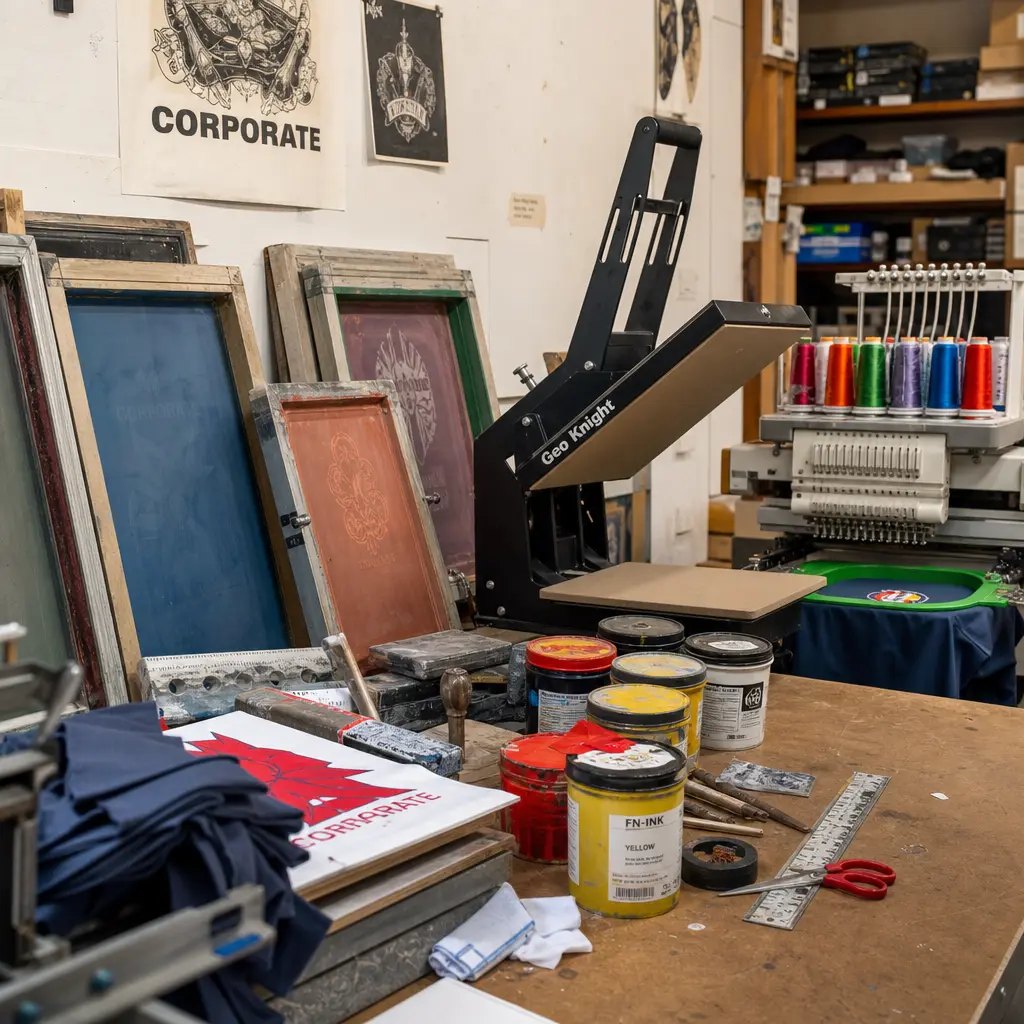
Wine club portfolios often carry logos, event names, or member numbers. The print method must withstand repeated handling and occasional cleaning. Screen print with PVC-free ink is the most durable option for canvas. It bonds with the fibers and resists fading. Heat transfer (silicone or polyurethane) works well for small runs and complex designs but may peel after several washes. Embroidery looks premium but adds weight and cost, and it can snag on other items.
For most wine club orders of 500–1,000 pieces, screen print offers the best cost-to-durability ratio. Request a wash-fastness test: wash the printed sample five times in cold water with mild detergent and air dry. If the print cracks, peels, or fades significantly (ΔE > 2.0), reject the method. DTG (direct-to-garment) printing is not recommended for canvas portfolios because the ink sits on the surface and wears off quickly.
For heat transfer, specify silicone or polyurethane material. Avoid vinyl heat transfer, which cracks and peels after a few washes. For embroidery, use a minimum of 5,000 stitches per design to ensure coverage. Embroidery adds approximately 15-20 grams to the portfolio weight and increases cost by $0.50-$1.00 per piece. Consider using a woven label instead of embroidery for a lighter, more durable option.
- Screen print with PVC-free ink is most durable for canvas; test wash-fastness after 5 washes
- Heat transfer (silicone or polyurethane) is acceptable for small runs but test for peeling
- Embroidery is premium but adds weight (15-20g) and cost ($0.50-$1.00 per piece); consider woven labels as alternative
- DTG printing is not recommended for canvas portfolios due to poor durability
MOQ Logic: How to Match Supplier Minimums to Your Wine Club Volume
Most Asian canvas bag factories set MOQs between 500 and 1,000 pieces per design. This covers the cost of fabric cutting, pattern setup, and print screen creation. For wine clubs with annual gifting programs (e.g., 2,000-5,000 pieces per year), this MOQ is manageable. If you need a lower MOQ (200–300 pieces), look for suppliers who offer standard colors (natural, black, navy) and stock fabrics. They can skip the fabric dyeing step and reduce setup costs.
Be wary of suppliers who quote MOQs below 200 pieces without a clear explanation. They may use lower-grade materials or skip QC steps to hit the low price. Always request a production-equivalent sample before placing a low-MOQ order. The sample should be made from the same fabric, zipper, and print method as the bulk order. If the supplier cannot provide this, consider a different supplier.
For multi-design orders (e.g., different logos for different wine clubs), ask about combined MOQ. Some suppliers allow you to mix designs within a single production run, as long as the total quantity meets the MOQ. This can reduce your per-design cost and simplify logistics.
- Standard MOQ is 500-1,000 pieces per design for Asian factories; combined MOQ may be available for multi-design orders
- Lower MOQs (200-300) possible with standard colors and stock fabric; verify with production-equivalent sample
- Suppliers with MOQ below 200 may compromise on quality; request sample and verify against checklist
- Ask about combined MOQ for multiple designs to reduce per-design cost
Sample Approval: What to Check Before Giving the Green Light
Sample approval is your last chance to catch problems before production. Don't rely on photos; request a physical sample shipped to your office. Check the fabric weight with a GSM cutter or scale. Measure the zipper length and confirm the slider locks. Test the seam strength by pulling the zipper tape with a spring scale. Wash the printed area five times to check for fading. Also verify the dimensions: the portfolio should fit a standard 750 ml wine bottle with some room for a gift card or note.
Document every check and compare the sample against your spec sheet. If the sample deviates, ask the supplier to explain and provide a corrected sample. Do not approve a sample that has loose threads, uneven stitching, or misaligned zippers. These issues will multiply in production. Keep the approved sample as a reference for the final inspection.
Create a sample approval form that includes: fabric weight (measured), zipper brand and model, seam strength (measured), print method and wash-fastness result, dimensions (measured), and any deviations. Both you and the supplier should sign the form. This creates a clear record and reduces disputes during production.
- Request a physical sample, not just photos; check fabric weight, zipper operation, seam strength, and print wash-fastness
- Document deviations and request corrected sample before approval; do not approve samples with loose threads or uneven stitching
- Keep approved sample as reference for final inspection; create a signed sample approval form
- Use a spring scale for seam strength test (10 kg minimum) and a spectrophotometer for color consistency (ΔE ≤ 2.0)
Packing and Shipping: Protecting Portfolios from Damage in Transit
Canvas zipper portfolios are susceptible to scuffing, zipper damage, and moisture during shipping. The standard packing method is individual polybag (2 mil thickness) plus master carton with corner protectors (cardboard or foam). Each portfolio should be folded neatly and placed in a clear polybag to prevent scratches. The master carton should be lined with corner protectors to prevent crushing. Ask the supplier for photos of actual packing from a recent order, not just a diagram.
For air freight, use double-wall cartons with a minimum burst strength of 200 lbs per square inch. For sea freight, add a moisture barrier (desiccant packs or a plastic liner) inside the master carton. Confirm the carton dimensions and weight to calculate shipping costs. Standard carton size for 20 portfolios: 18x12x10 inches, weight approximately 8 kg. If you are shipping to multiple destinations (e.g., direct to wine club members), ask the supplier about individual drop-shipping packing. This adds cost ($0.50-$1.00 per piece) but saves you warehouse handling.
Also consider labeling requirements. Each master carton should have a label with: product name, quantity, SKU, carton number (e.g., 1/50), and destination. For retail-ready orders, barcode labels on two adjacent sides are required. Confirm with your logistics provider if any additional labeling is needed.
- Individual polybag (2 mil) + master carton with corner protectors is standard; request actual packing photos
- Use double-wall cartons for air freight; add moisture barrier (desiccant packs) for sea freight
- Standard carton size: 18x12x10 inches for 20 portfolios; confirm dimensions and weight for shipping cost calculation
- Ask about drop-shipping packing if shipping directly to members; adds $0.50-$1.00 per piece
- Ensure master carton labels include product name, quantity, SKU, carton number, and destination
Lead Time: Understanding the Timeline from Sample Approval to Delivery
A typical production lead time for 500–3,000 canvas zipper portfolios is 30–45 days after sample approval. This includes fabric cutting (3-5 days), sewing (15-20 days), printing and curing (5-7 days), packing (3-5 days), and final inspection (2-3 days). Shorter lead times (under 25 days) are possible but risky: the supplier may skip the ink curing time (minimum 24 hours) or rush the sewing, leading to quality issues. Always confirm that the lead time includes curing time for prints.
Sample lead time is usually 7–10 business days for stock fabric and 12–15 days for custom fabric. If a supplier promises samples in 3 days, be skeptical. They may use a different fabric or zipper to rush the sample, which won't represent the production quality. Build buffer time into your schedule: add 2 weeks for sample revisions and 1 week for shipping delays.
For urgent orders, ask about expedited production. Some suppliers can reduce lead time to 20-25 days for a 10-15% premium. However, this should only be used for repeat orders where the spec is already approved. For new designs, stick to the standard timeline to ensure quality.
- Production lead time: 30-45 days after sample approval, including curing time for prints
- Shorter lead times (under 25 days) may skip ink curing; confirm curing time is included
- Sample lead time: 7-10 days for stock fabric; 12-15 days for custom fabric
- Build buffer time: 2 weeks for sample revisions and 1 week for shipping delays
- Expedited production (20-25 days) available for repeat orders at 10-15% premium
Landed Cost Comparison: Beyond the Unit Price
The unit price quoted by the supplier is only part of the total cost. You also need to account for freight, duties, insurance, inspection fees, and any bank transfer charges. A supplier with a lower unit price may use slower shipping (sea freight vs. air) or lower-quality materials that increase your returns and brand damage costs. Always ask for a landed cost quote that includes all charges to your port or door.
For a 1,000-piece order of canvas zipper portfolios, expect the unit price to range from $4.50 to $7.00 FOB (Free on Board) from an Asian factory, depending on fabric weight, zipper quality, and print complexity. Add $1.00–$2.00 per piece for sea freight to the US West Coast (Los Angeles), plus 8–12% duty (under HTS code 4202.92.30 for textile bags). Total landed cost typically falls between $6.00 and $9.50 per piece. Compare quotes on a landed cost basis, not just FOB.
Also consider inspection fees ($200-$500 per order for third-party inspection), bank transfer fees ($25-$50 per transaction), and any customs broker fees ($100-$300). These add 2-5% to the total cost. Request a full cost breakdown from each supplier and compare using a spreadsheet. The cheapest FOB price may not be the cheapest landed cost.
- Landed cost includes FOB, freight, duties (8-12%), insurance, inspection fees, and bank fees
- Unit price range: $4.50-$7.00 FOB for 1,000 pieces; sea freight adds $1.00-$2.00 per piece
- Total landed cost: $6.00-$9.50 per piece; compare quotes on landed cost, not just FOB
- Include inspection fees ($200-$500), bank fees ($25-$50), and customs broker fees ($100-$300) in total cost
- Use a spreadsheet to compare landed costs from multiple suppliers; cheapest FOB may not be cheapest landed
Top 5 Supplier Evaluation Criteria for Wine Club Canvas Zipper Portfolios
When comparing suppliers, focus on five key areas: fabric quality, zipper durability, print method, MOQ flexibility, and inspection standards. These criteria directly affect the final product's performance and your brand's reputation. A supplier who excels in all five areas is worth the higher unit price. A supplier who cuts corners on any one area will cost you more in returns and lost customer trust.
Use the comparison table in this guide as a checklist when evaluating supplier quotes. Ask each supplier to fill in their spec for each row. Then compare the responses side by side. If a supplier cannot provide a clear answer (e.g., 'We use a good zipper' without a brand name), that is a red flag. Move on to a supplier who can provide specific, verifiable data.
Also consider the supplier's communication and responsiveness. A supplier who answers your questions promptly and clearly is more likely to be reliable during production. Request references from other wine club or beverage industry clients. A supplier with relevant experience will understand your specific needs and reduce the learning curve.
- Fabric quality: weight (12 oz min), weave (twill preferred), and tear-strength test data (5 kg min)
- Zipper durability: brand (YKK or equivalent), cycle test report (10,000 cycles min), and seam strength (10 kg pull test)
- Print method: type (screen print preferred), wash-fastness test (5 washes), and curing time (24 hours min)
- MOQ flexibility: minimum per design (500-1,000 standard), combined MOQ option, and standard color availability
- Inspection standards: AQL levels (2.5 critical, 4.0 major, 6.5 minor) and third-party inspection availability (SGS, Intertek, QIMA)
Specification comparison for buyers
| Supplier option | What to verify | Commercial advantage | Buyer risk to control |
|---|---|---|---|
| Direct sewing factory | zipper source record, production-line zipper test photos, approved trim card, cutting marker photos, and final open-carton count | Better sample-to-bulk control and faster production feedback | May be weaker on export paperwork or branded packing unless checked early |
| Trading company | Factory name, production photos, trim-source proof, and who owns QC decisions | Can coordinate small mixed orders and extra services | Markup can hide real factory capability and slow defect decisions |
| Specialized bag workshop | zipper gauge, zipper tape width, puller finish, binding tape, corner reinforcement, seam allowance, and document-size tolerance | More practical for detailed construction, trims, and repeat programs | Capacity may be limited during peak seasons |
| Low-price general supplier | 300D-600D polyester, 10-12 oz canvas, or recycled PET with backing stiffness matched to document weight | Useful for simple promotional runs with loose specs | Material downgrades, weak packing, and vague inspection scope can erase savings |
| Retail-ready supplier | flat packing, insert board if needed, SKU bundles, carton weight limit, moisture protection, and barcode visibility | Can handle labels, SKU separation, carton marks, and receiving rules | Higher unit cost must be compared against reduced warehouse work |
| Compliance-focused supplier | Fabric records, labeling review, test plan, and production traceability | Safer for retail programs and repeat brand orders | Documentation claims need evidence, not only sales language |
| Local sample room plus bulk factory | Signed sample, bulk factory handoff, first-piece photos, and deviation owner | Good for complex branding before large production | Sample room quality may not match bulk line unless handoff is controlled |
Buyer checklist before sampling
- Confirm fabric weight is at least 12 oz / 340 GSM twill canvas for bottle-carrying portfolios. Request a 4x4 inch swatch and weigh it on a calibrated gram scale.
- Request zipper cycle test report (min 10,000 cycles) from the supplier. Accept only YKK or equivalent brand (e.g., SBS, Opti). Reject unbranded zippers.
- Check seam strength on sample by pulling the zipper tape away from the canvas with a spring scale. Accept only if tape holds at 10 kg force without separation.
- Ask for wash-fastness test if using screen print or heat transfer. Wash printed sample 5 times (cold water, mild detergent, air dry). Reject if print cracks, peels, or fades more than 10%.
- Verify MOQ aligns with your annual volume. Avoid suppliers with MOQ below 200 without sample verification. For low MOQ, request a production-equivalent sample from the same fabric and zipper as bulk.
- Inspect sample for zipper alignment (straight, no puckering), thread tension (no loops), and canvas weave consistency (no slubs or thin spots).
- Request packing photos from a previous order to confirm individual polybag (2 mil thickness minimum) and corner protection (cardboard or foam).
- Confirm lead time includes curing time for prints (minimum 24 hours at room temperature). Shorter curing times risk print failure.
- Ask for AQL inspection report or arrange third-party inspection before shipment. Use AQL 2.5 for critical defects, 4.0 for major, 6.5 for minor.
Factory quote questions to send
- What is the exact fabric weight (GSM/oz) and construction (plain weave, twill, or duck) you use for this portfolio? Can you provide a fabric swatch and a GSM cutter test result?
- Which zipper brand and model do you use (e.g., YKK #5 coil)? Can you provide a cycle test report from the zipper manufacturer showing at least 10,000 cycles?
- What is the seam allowance on the zipper tape, and is it double-stitched? What is the stitch count per inch (minimum 8 SPI)?
- What print methods do you offer for canvas (screen print, heat transfer, embroidery)? What is the wash-fastness rating (e.g., 4 out of 5 after 5 washes)?
- What is your MOQ per design, and can you do a lower MOQ with a standard color (e.g., natural, black, navy) and stock fabric?
- What is your sample lead time, and will the sample be made from the same fabric and zipper as production? Can you provide a 'golden sample' signed by QC?
- What is your production lead time, and does it include ink curing time (minimum 24 hours)? What is your buffer for delays?
- How do you pack the portfolios for shipment? Can you provide photos from a recent order showing individual polybag, corner protection, and master carton labeling?
- What AQL standards do you use for inspection? Can you share a recent inspection report from a third-party (e.g., SGS, Intertek, QIMA)?
- What is the landed cost (including FOB, freight, insurance, duty, and any port fees) for a 1,000-piece order to my port (e.g., Los Angeles, Rotterdam)?
Quality-control points to confirm
- Fabric weight tolerance: ±5% of specified GSM. Reject if below 11.5 oz for a 12 oz order. Use a calibrated GSM cutter and scale during inspection.
- Zipper operation: smooth open/close without catching or jamming. Slider must lock when released (auto-lock). Test 10 times per sample.
- Seam strength: zipper tape should not separate from canvas when pulled with 10 kg force (measured with spring scale). Reject if stitches break or tape pulls out.
- Print adhesion: no peeling, cracking, or fading after 5 home wash cycles (cold water, mild detergent, air dry). Use a gray scale to measure fading (accept ΔE ≤ 2.0).
- Stitching: minimum 8 stitches per inch (SPI). No skipped stitches, loose threads, or puckering. Check all seams, especially zipper and handle attachment.
- Dimensions: length and width within ±3 mm of spec. Corners squared (90°). Measure with calibrated tape. Reject if portfolio does not fit a standard 750 ml wine bottle with 5 mm clearance.
- Color consistency: ΔE ≤ 2.0 between sample and production batch (measured with spectrophotometer). For natural canvas, accept slight shade variation (±1.5 ΔE) due to fiber origin.
- Packing: each portfolio in individual polybag (2 mil thickness). Master carton lined with corner protectors (cardboard or foam). Carton weight under 22 kg for manual handling. Barcode labels on two adjacent sides.