Why reorder planning is different for salon chain portfolios
A canvas zipper portfolio for a salon chain is not just another promotional bag. It often holds treatment menus, consultation forms, training manuals, retail vouchers, hair color charts, stylist onboarding papers, or membership documents. The user may be a branch manager, receptionist, stylist, franchisee, or customer receiving a paid package. That means a poor zipper, tight document fit, or dirty canvas surface becomes visible at branch level very quickly.
Reorder planning matters because salon chains rarely consume these portfolios in one single pattern. New store openings may need a large launch quantity. Training teams may draw from stock every month. Marketing may change a logo or seasonal campaign after the first shipment. Procurement needs a reorder system that protects unit cost, keeps brand appearance consistent, and avoids emergency air freight when branches run out.
A structured reorder plan also helps the factory plan material purchases, maintain consistent production quality, and offer better pricing. Without it, each reorder becomes a new negotiation, risking delays, shade mismatches, and higher costs.
- Treat the portfolio as a repeat program item, not a one-time giveaway.
- Build the RFQ around usable document size and branch consumption, not only the outside dimensions.
- Keep the same approved construction across reorders unless there is a clear reason to change.
- Record every change request because small changes to lining, zipper, or print often reset sample approval.
Start the RFQ with the documents the portfolio must hold
The most common sourcing mistake is sending a factory a rough outside size and then discovering that A4, US letter, or a salon booklet does not fit comfortably after sewing. A zipper portfolio loses internal space through seam allowance, zipper tape width, corner rounding, lining bulk, and fabric shrinkage after pressing. For salon chains, this can create branch complaints because staff cannot insert training documents without bending corners.
A better RFQ states the document set first. For example, list whether the portfolio must fit 20 A4 sheets, a 6 mm training booklet, a voucher envelope, a tablet, sample cards, or a pen. Then state the required internal clearance. For paper documents, 15-20 mm clearance on width and height is practical. For a booklet or tablet, extra thickness allowance and zipper opening shape become more important than the flat panel size.
Providing the factory with a clear document set also helps them recommend the best construction, such as adding a gusset or adjusting the zipper placement. This upfront clarity reduces the risk of costly sample revisions and ensures the final product meets branch needs.
- For A4 paper: internal target around 230 x 320 mm or larger, depending on pocket structure.
- For US letter paper: internal target around 235 x 300 mm or larger.
- For booklets: provide actual booklet thickness and ask for a loading test during sample approval.
- For tablets: provide model dimensions and state whether padding is required.
- For mixed paperwork: use the largest item plus handling clearance, not the smallest document size.
Fabric weight and finish choices that affect repeat orders
Canvas weight should be specified in both ounces and GSM. Many buyers say '12 oz canvas' but receive different handfeel from different mills because oz conversion, yarn count, and finishing can vary. For a zipper portfolio, 10 oz canvas may be acceptable for low-cost promotional distribution, but it tends to feel soft and may wrinkle in cartons. A 12 oz canvas, roughly 390-420 GSM, is a stronger middle option for salon chains that want the portfolio to feel substantial without becoming heavy.
Heavier canvas, such as 14 oz or 16 oz, gives more structure but increases material cost, sewing difficulty, needle marks, and carton weight. It can also make zipper corners stiff if the portfolio has lining or inner pockets. Natural canvas may show cotton seed flecks and shade variation; bleached or dyed canvas gives a cleaner brand surface but usually costs more and needs better shade control between batches.
For repeat orders, the fabric finish is critical. Pre-shrunk canvas reduces the risk of size variation after washing or in humid conditions. Dyed canvas requires a shade band approval to manage batch-to-batch variation. Natural canvas needs a clear statement on acceptable slubs and seed marks to avoid disputes. Including these details in the specification ensures consistency across reorders.
- 10 oz canvas: lower cost, lighter handfeel, best for short-term promotional use.
- 12 oz canvas: balanced durability and cost, suitable for most salon chain reorder programs.
- 14 oz canvas: more premium structure, but higher freight weight and sewing complexity.
- Natural canvas: warm eco-style appearance, but expect cotton seed marks and shade variation.
- Dyed canvas: stronger brand color control, but shade approval and colorfastness checks are more important.
Zipper, puller, lining, and pocket decisions before price comparison
Zipper quality drives user satisfaction more than many buyers expect. A canvas portfolio may be opened repeatedly at reception desks, training rooms, or customer consultations. A No. 5 nylon zipper is usually the practical choice because it is smoother and more cost-effective than metal for this type of product. A metal zipper can look premium, but it adds weight, may scratch documents, and needs careful sewing to avoid waviness.
Lining and pocket structure should be decided before comparing supplier quotes. An unlined portfolio is cheaper and easier to inspect, but the inside seams are visible unless bound neatly. A polyester lining, such as 210D or 300D, improves appearance and can hide seams, but it adds labor and can catch in the zipper if poorly controlled. Inner pockets, pen loops, and card slots are useful for salon training kits, but each extra component adds cutting, positioning, and stitching variation.
The zipper puller is another detail that affects brand perception. A branded metal puller with a logo adds a premium feel but may require a mold fee and higher MOQ. A plain puller is more cost-effective but may not match the brand image. The decision should be based on the portfolio's end use: retail merchandise vs. internal training kits.
- Use No. 5 nylon zipper for standard B2B salon portfolios unless a premium briefcase look is required.
- Specify zipper tape color, slider finish, puller style, and whether the puller needs a logo.
- Choose lining only when the product is sold, gifted to VIP members, or opened frequently in front of customers.
- Set pocket depth by real contents; shallow pockets lose documents, deep pockets can crease paper near the zipper.
- Avoid too many small interior features unless the reorder volume can support stable workmanship.
Logo application: choose repeatability before decoration complexity
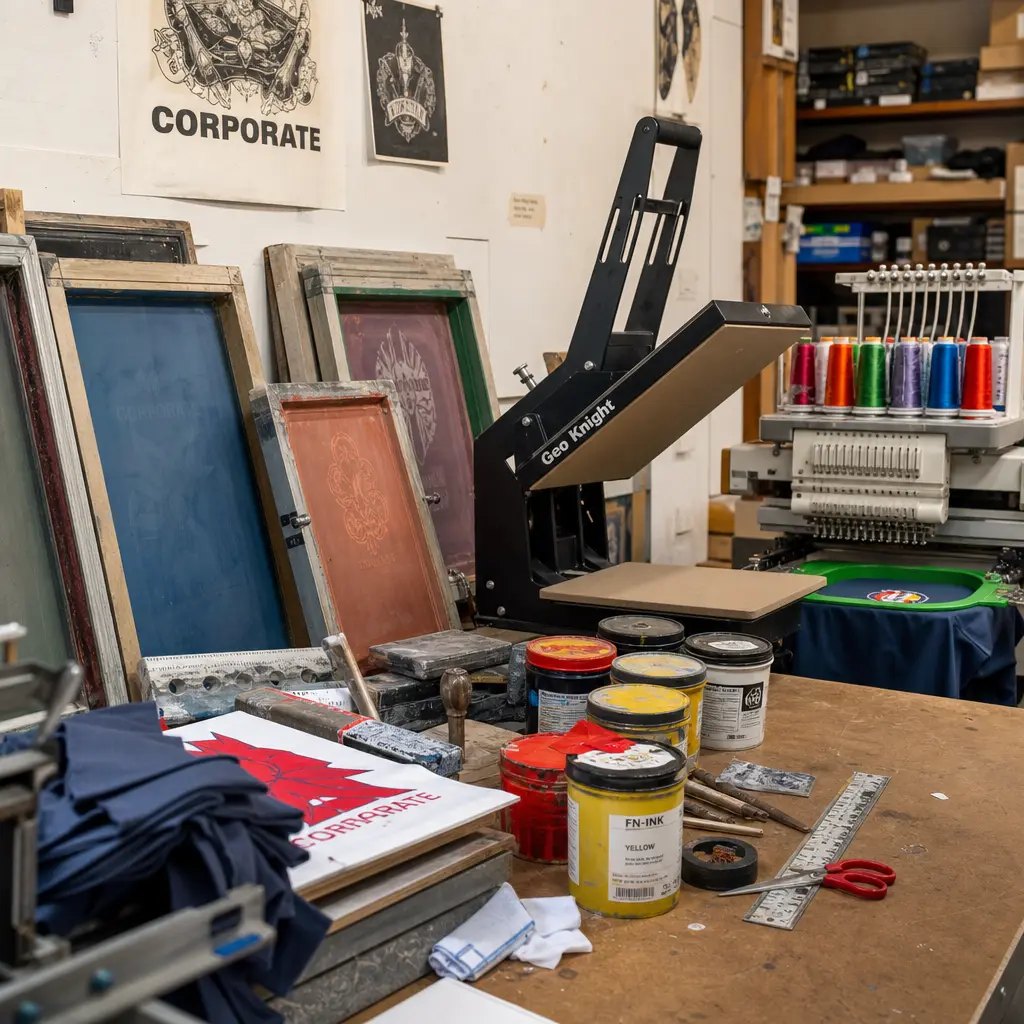
For salon chains, brand consistency across locations is usually more important than a complicated decoration. Screen printing works well for solid logos and one- or two-color artwork on canvas. It is cost-effective for repeat orders, but the buyer should approve the print size, ink thickness, curing, and position tolerance. Fine hairline typography can fill in on textured canvas, so artwork may need adjustment before production.
Heat transfer can reproduce gradients or small details better, but it may change the handfeel and can be less suitable for a natural canvas look. Embroidery gives a premium textile feel, but on a flat zipper portfolio it can pucker the panel unless backing and stitch density are controlled. Woven labels are useful for long-running reorder programs because they keep the brand element consistent even if the canvas shade changes slightly.
For repeat orders, the logo method should be chosen for repeatability, not just first-order appearance. Screen printing requires consistent mesh tension and ink viscosity. Heat transfer requires precise temperature and pressure. Woven labels require consistent thread color. The buyer should request a print tolerance statement from the factory and keep a physical print sample for comparison.
- For a standard salon chain logo: screen print is usually the best cost-to-consistency option.
- For small detailed artwork: test heat transfer or simplify the print file before bulk production.
- For a subtle brand mark: woven side label or sewn patch keeps placement repeatable.
- For premium merchandise: embroidery may work, but require a stitched sample on the final canvas weight.
- Never place critical small text over zipper seams, thick folded edges, or heavy fabric slubs.
MOQ logic for salon chains: annual demand, not only first order quantity
MOQ should be negotiated around the real reorder pattern. A factory may quote a minimum of 500 or 1000 pieces per logo or color because cutting, printing setup, zipper purchasing, and packing labor need a reasonable production run. If a salon chain has 80 branches but only orders 200 pieces at a time, the unit price may remain high and the factory may use leftover fabric or different lots for each small reorder.
A practical approach is to forecast annual demand and release it in planned batches. For example, the buyer may forecast 6000 pieces per year, approve a fixed specification, and order 1500 pieces per quarter. This helps the factory plan material purchase and gives the buyer better price leverage. However, holding too much stock can be risky if the salon chain changes logo, campaign color, service menu, or franchise packaging.
The MOQ should also consider the number of colors and logo variations. A chain with multiple franchise brands may need separate MOQs for each. Consolidating orders for the same specification across branches can help reach higher volume breaks. The buyer should ask for price breaks at 500, 1000, 3000, 5000, and 10000 pieces to find the most cost-effective reorder level.
- Estimate monthly branch consumption by usage type: welcome kits, staff training, retail gift sets, or franchise packs.
- Add new store opening demand separately because launch kits usually consume stock faster than normal replenishment.
- Keep a safety buffer for 6-10 weeks if production and ocean freight are involved.
- Avoid one large annual buy if brand artwork or service offers are likely to change.
- Use price breaks at 500, 1000, 3000, 5000, and 10000 pieces to find the practical reorder level.
Cost drivers that explain why supplier quotes differ
Two quotes for a canvas zipper portfolio can look very different even when the product name is the same. The main reasons are fabric weight, canvas finish, zipper grade, lining, pocket structure, logo method, packing, carton weight, and inspection support. A quote based on 10 oz unlined natural canvas with a basic zipper should not be compared directly with a 12 oz dyed canvas portfolio with lining, inner pocket, branded puller, and individual polybag.
Procurement teams should request quote data in a format that shows what is included. This prevents a low initial price from becoming expensive after sample approval. If the factory excludes screen setup, custom zipper puller mold, barcode labels, stronger export cartons, or pre-shipment inspection assistance, the final landed cost may move after purchase order release.
Other hidden cost drivers include fabric waste from cutting, labor for quality checks, and packing materials. A factory with better cutting efficiency may offer a lower price even with the same fabric. The buyer should ask for a breakdown of material, labor, and overhead costs to compare quotes fairly. This also helps identify which supplier offers the best value for the required specification.
- Fabric: higher GSM and dyed finishing increase material cost and sometimes minimum fabric order.
- Zipper: branded pullers, metal sliders, and special colors can add tooling or MOQ pressure.
- Construction: lining, pockets, binding, gussets, and reinforcement add labor minutes.
- Logo: each color, print position, and special ink affects setup and reject risk.
- Packing: individual polybags, barcode labels, inserts, and retail cartons increase labor and material.
- Freight: heavier canvas and oversized cartons can raise landed cost even when FOB price looks acceptable.
Sample approval should simulate a real branch pack
A sample should not be approved only because it looks clean on a desk. For a salon chain reorder program, the sample must be tested with the actual items used by branches. Insert the training sheets, vouchers, service menu, product cards, or retail inserts. Close the zipper fully. Open it several times. Check whether the corners bend, whether the zipper catches lining, and whether the portfolio still lies flat enough for carton packing.
The approved sample should become the golden sample. Keep one with procurement, one with the supplier, and if needed one with the inspection company. Mark the sample with date, fabric weight, zipper type, print color reference, finished size, and approved packing. For repeat orders, do not rely on old email photos. Photos help, but they cannot show fabric stiffness, zipper smoothness, or print handfeel.
The sample approval process should also include a fit test with the actual document set. This is especially important for portfolios with inner pockets or pen loops, as these can interfere with document insertion. The buyer should also test the zipper under load, with documents inside, to ensure smooth operation. Any issues found at this stage are much cheaper to fix than after bulk production.
- Measure outside size and internal usable size separately.
- Load the real document set and check the zipper closing path.
- Rub the print lightly after curing and inspect cracking or ink buildup.
- Check zipper ends and corner sewing for reinforcement and neatness.
- Confirm the sample packing method because folding can change the final appearance.
- Record all approved tolerances on a sample approval sheet before bulk production.
QC thresholds for repeat orders and branch-level complaints
Repeat orders create a special problem: buyers compare the new batch with the previous batch. Even if the new production is acceptable in isolation, differences in canvas shade, logo position, zipper puller finish, or stiffness can create complaints. The purchase order should state which variations are acceptable and which are not. Natural canvas especially needs realistic tolerance because cotton seed marks and weaving texture are inherent to the material; the buyer should specify an acceptable range for these characteristics rather than expecting their complete elimination.
AQL inspection is useful, but the defect list must be product-specific. General bag inspection may miss the issues that matter for portfolios: document fit, zipper travel, print alignment, corner shape, panel stains, and inside pocket usability. For chain distribution, carton labeling and count accuracy are also critical because shortages may be discovered at branch level weeks after delivery.
The buyer should define critical, major, and minor defects in the purchase order. Critical defects include broken zipper, wrong logo, wrong size, severe stains, or wrong color. Major defects include zipper catching, print misplacement, open seams, or dirty panels. Minor defects include loose threads or slight creases. The inspection should also include a functional test for zipper open-close cycles and a fit test with a document template.
- Critical defects: broken zipper, wrong logo, wrong size that prevents document fit, severe stains, wrong color shipment.
- Major defects: zipper catching, print misplacement beyond tolerance, open seams, skipped stitches, dirty panels, wrong packing count.
- Minor defects: light loose threads, small natural canvas slubs within approved range, slight crease removable by handling.
- Functional test: zipper open-close cycles should be included in inspection sampling.
- Fit test: inspector should use a supplied paper template or real document size, not only the outside measurement.
- Carton audit: mixed colors, branch labels, or SKU labels need separate verification before shipment.
Packing and export handling for canvas zipper portfolios
Packing should match the distribution route. If the portfolios go to a central warehouse and then to branches, bulk packing with tissue interleaving may be enough. If each portfolio is sold as salon merchandise or included in a premium retail kit, individual polybags, inserts, barcode labels, or hangtags may be needed. The buyer should decide this before quote comparison because packing labor and carton volume can change the unit cost.
Canvas can absorb moisture and dust during production and shipping. Export cartons should be strong enough for stacking, with reasonable gross weight so warehouse teams can handle them safely. Over-compressing portfolios into cartons may crease corners, bend zipper tracks, or transfer print marks. For natural or light canvas, factories should keep finished goods away from dirty floors and use clean packing tables.
The buyer should also consider the destination climate. For humid destinations, silica gel packs may be necessary to prevent mold or mildew. For long ocean transit, the cartons should be palletized and wrapped to protect against moisture. The packing list should include carton dimensions, gross weight, and any special handling instructions. This ensures the portfolios arrive in good condition and are ready for branch distribution.
- Bulk pack: lowest packing cost, suitable for internal branch distribution.
- Individual polybag: cleaner presentation, but adds plastic cost and unpacking waste.
- Tissue interleave: helps reduce rubbing and print transfer for light-colored canvas.
- Silica gel: useful in humid seasons or long ocean transit, subject to destination rules.
- Carton marks: include PO, SKU, color, quantity, carton number, and destination code if required.
- Carton weight: keep gross weight practical, often under 15-18 kg depending on buyer warehouse rules.
Specification comparison for buyers
| Spec decision | Recommended option | When it fits | Buyer risk to check |
|---|---|---|---|
| Canvas fabric weight | 12 oz cotton canvas, 390-420 GSM, pre-shrunk if tight size control matters | Salon welcome kits, stylist training folders, retail membership packs, and repeated handling across 50+ branches | Below 10 oz may wrinkle and collapse; above 14 oz raises sewing time, carton weight, and freight cost |
| Portfolio size | A4 or US letter internal fit with 15-20 mm clearance around documents | Branches distributing treatment menus, contracts, training sheets, gift vouchers, or brand booklets | A portfolio measured only by outside size can be too tight after seam allowance, zipper tape, and fabric shrinkage |
| Zipper type | No. 5 nylon zipper with branded or plain metal puller; test full travel on final sample | Mid-volume chain use where smooth opening matters more than a luxury metal zipper look | Cheap zipper tape can wave after sewing; weak sliders cause claims even when the fabric is acceptable |
| Lining and inner pocket | Unlined for cost control, or 210D/300D polyester lining with one flat document pocket for higher perceived value | Unlined fits simple promotional kits; lined fits paid retail bundles or VIP membership packs | Lining adds labor and defect points; pocket depth must not block zipper closing or crease A4 documents |
| Logo method | Screen print for solid one- or two-color logos; heat transfer for fine gradients; woven label for repeat program consistency | Salon chains with many branch reorders usually need stable color and repeatable placement more than complex artwork | Large prints over zipper seams or thick fabric texture can crack, blur, or vary by batch if artwork is not simplified |
| MOQ planning | Set annual forecast, then release 2-4 production batches based on branch rollout calendar and warehouse capacity | Works when salon chains open new locations, run seasonal campaigns, or replenish training kits quarterly | Too-small reorders increase unit cost and shade variation; too-large reorders tie cash and may become obsolete after a brand update |
| Packing method | Individual polybag only when required; otherwise tissue interleave or bulk pack with moisture control and carton size limit | Bulk B2B distribution to salons usually does not need retail packaging unless portfolios are sold as merchandise | Overpacking raises labor and plastic cost; underpacking can lead to zipper scratches, dust marks, and crushed corners |
| QC acceptance | AQL inspection with focused checks on size, zipper function, seam strength, print position, stains, and carton count | Useful for importers and distributors combining several branch shipments into one receiving process | Canvas color variation, loose threads, and zipper waviness are common repeat-order disputes if tolerances are not written |
Buyer checklist before sampling
- Lock the internal document size first: A4, US letter, tablet sleeve, brochure kit, or mixed salon paperwork.
- Define fabric as oz plus GSM range, not only 'heavy canvas' or 'natural cotton'.
- Specify whether the portfolio is unlined, lined, has inner pockets, has pen loops, or includes card slots.
- Keep a signed golden sample with actual zipper, puller, fabric shade, logo print, stitching color, and packing method.
- Set repeat-order tolerances for size, print position, fabric shade, zipper smoothness, and carton weight.
- Plan reorder quantity from branch consumption, new store openings, training events, retail sell-through, and buffer stock.
- Separate urgent air sample timing from bulk sea shipment timing in the internal buying calendar.
- Require quote data to show fabric weight, zipper grade, print method, packing unit, carton dimensions, gross weight, and lead time.
- Confirm whether the factory will use the same fabric lot, zipper supplier, and print ink formula for repeat orders when possible.
- Approve pre-production sample again after any change in logo size, lining, zipper puller, fabric weight, or packing.
Factory quote questions to send
- What exact canvas weight will you use in oz and GSM, and is it greige, dyed, bleached, washed, or pre-shrunk?
- What are the finished outside dimensions and usable internal document dimensions after seam allowance and zipper installation?
- Which zipper size, zipper tape material, slider type, and puller finish are included in the quote?
- Is the quoted price for unlined construction or does it include lining, inner document pocket, pen loop, or card pocket?
- Which logo process is quoted, what is the maximum print size, how many colors are included, and what print tolerance do you use?
- What is the MOQ per color, per logo, and per shipment, and how does the unit price change at 500, 1000, 3000, 5000, and 10000 pieces?
- How many days are needed for sample making, pre-production approval, bulk production, inspection, and export packing?
- What packing method is included: individual polybag, bulk pack, tissue interleave, silica gel, carton size, and carton gross weight?
- Will you provide production photos or inline inspection results before final packing for repeat orders?
- What quote validity period applies if cotton fabric, zipper, carton, or local labor costs change before reorder release?
Quality-control points to confirm
- Finished size tolerance should be written, commonly plus or minus 5 mm for portfolio width and height when documents must fit.
- Internal usable size must be checked with actual A4 or US letter sheets, not only with a ruler outside the bag.
- Zipper must open and close smoothly for the full length at least three times during inspection without catching fabric or lining.
- Print position tolerance should be defined from fixed edges, for example plus or minus 5 mm from bottom and side seam.
- Logo color should be compared to approved Pantone reference or approved production sample under consistent lighting.
- Seams at zipper ends, corners, handles if any, and pocket openings should be reinforced and free of skipped stitches.
- Canvas panels should be checked for oil marks, weaving slubs beyond approved level, dark cotton seed marks, and handling dirt.
- Carton count, inner packing count, carton marks, barcode labels if used, and mixed-color separation should match the packing list.