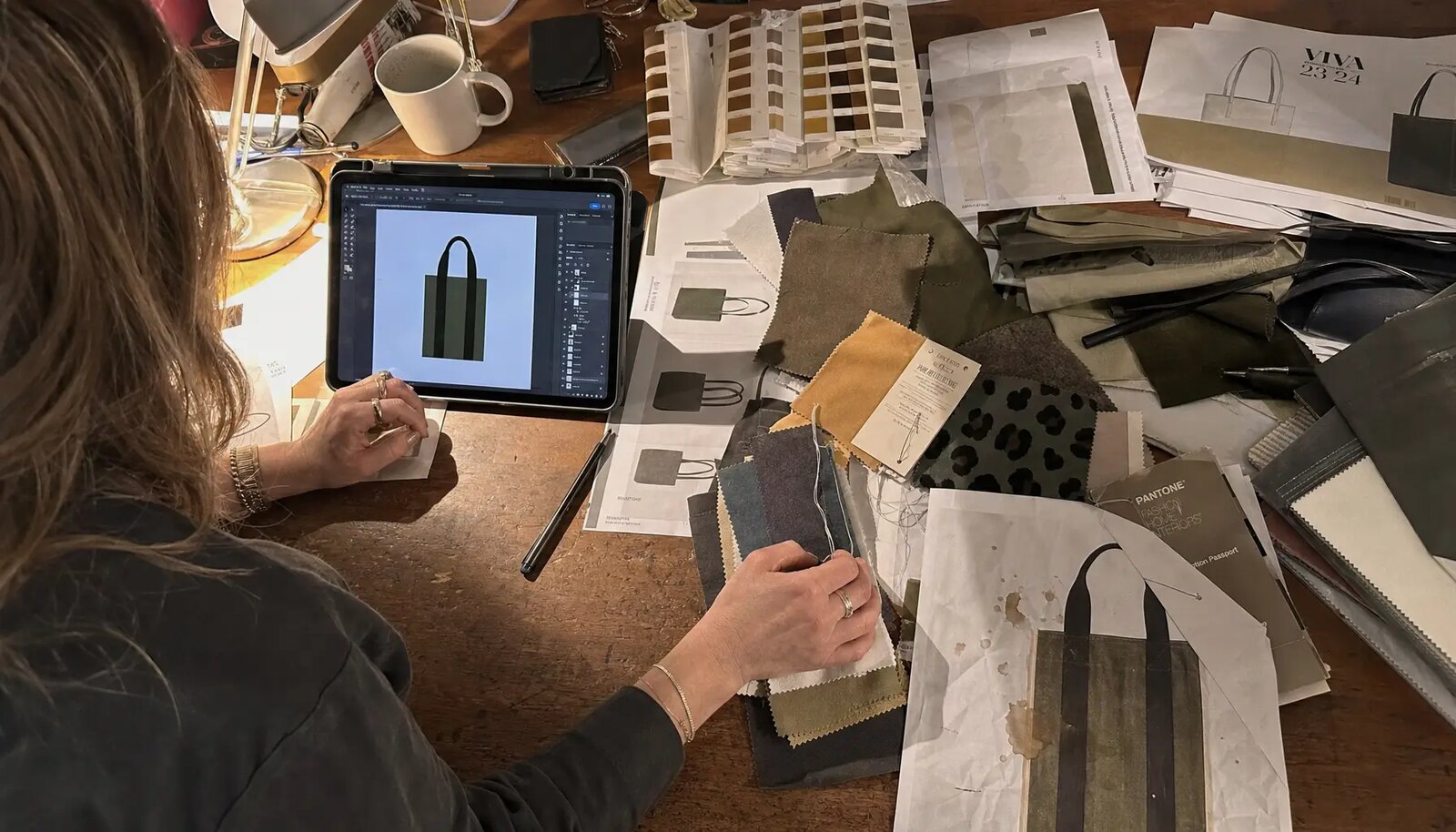
Why Print Proofing Matters For Canvas Zipper Portfolios
A canvas zipper portfolio looks simple in a mockup, but the finished product is built through cutting, sewing, zipper insertion, seam turning, reinforcement, and packing. Each step changes the visible front panel. A logo that sits neatly in a PDF can drift toward the zipper, shift after seam allowance is taken up, or read off-center once the portfolio is loaded with documents. For eco apparel brands using these portfolios for line sheets, buyer meetings, swatch kits, or retail packaging, that drift is not cosmetic. It changes how the brand is perceived before the contents are even opened.
Print proofing should be treated as a production gate. The question is not only whether the logo looks good. It is whether the supplier can repeat the approved artwork size, color, placement, fabric character, zipper function, and packing result across bulk production. A useful canvas zipper portfolios for eco apparel brands print proofing checklist ties the artwork file to the sewn object. It includes measurements from finished seams, the behavior of the print on the selected canvas, the zipper clearance, loading with intended contents, and the way the product survives carton packing.
The biggest source of error is split approval. Design approves a digital file. Print approves a flat swatch. Sewing later shifts the panel to hit a seam target. Packing compresses the finished item and the puller presses into the face. None of that is unusual in soft-goods production. That is why the sewn pre-production sample needs to become the control reference, not just an internal milestone. Keep the proofing record usable for procurement, but specific enough that the factory does not have room to reinterpret the brief on the line.
- Approve artwork on a finished-size construction drawing, not only on a generic rectangle.
- Measure print placement from zipper seam, side seams, bottom edge, and center line.
- Treat zipper tape, seam allowance, gusset depth, lining tension, and corner radius as print-placement factors.
- Require a sewn pre-production sample for first orders, new artwork, new construction, lining, gussets, pockets, or custom pullers.
- Use the signed physical sample as the reference for bulk inspection and reorders.
Start With End Use, Not Artwork
The strongest RFQ starts with how the portfolio will be used. A portfolio for wholesale line sheets may only need to protect documents and look clean in a buyer meeting. A showroom swatch kit may need internal sleeves, more gusset depth, and a zipper that closes comfortably around thicker contents. A retail gift-with-purchase item may need a smoother front face, individual packing, barcode labeling, and lower carton scuffing. A press kit may need a firmer body so the contents photograph well. Each use case changes the size, canvas weight, lining, reinforcement, zipper gauge, pocket layout, and packing method.
Procurement gets better quotes when the contents are defined in measurable terms. Instead of writing custom canvas document pouch, specify the actual use case: fits A4 sheets without curling, holds a 10 mm document stack, usable internal size at least 230 x 315 mm, and zipper opening clear of contents. If the market is the United States, confirm US Letter. If the portfolio must hold line sheets plus swatch cards, test the usable size and gusset with the real insert set, not an estimate from a catalog dimension. The supplier needs to see the load, not just the look.
Eco positioning should also be translated into facts. Natural-looking does not prove fiber content. Lower-plastic packaging does not prove a recycled claim. Ask for composition, finish, and the claim language the brand is prepared to support. Then keep the proofing checklist anchored to inspectable items: canvas weight, shade variation, print durability, zipper function, label placement, packing material, and carton control.
- List the exact contents the portfolio must hold, including document size and stack thickness.
- Separate finished outside size from usable internal size.
- State whether the front panel must stay smooth when filled.
- Define pockets, sleeves, loops, dividers, handles, labels, and gusset before final pricing.
- Keep sustainability claims tied to documented material specifications and packaging choices.
Canvas Specification: Weight, Weave, Finish, And Tolerance
Canvas weight drives structure, print result, sewing difficulty, carton weight, and landed cost. For zipper portfolios, 10 oz to 12 oz canvas can work for lightweight document sleeves and event kits, but it may collapse or wrinkle when the zipper is sewn in. A 12 oz to 14 oz range, roughly 340-400 gsm depending on weave and mill conversion, is often the practical middle ground for B2B apparel programs because it gives a credible hand feel without unnecessary seam bulk. Sixteen oz and heavier canvas can create a firmer presentation, but it also increases corner thickness, zipper stress, needle wear, carton gross weight, and freight volume.
Weight alone is not enough. A tight, even weave supports sharper screen-print edges and better legibility for fine marks. A looser, slubbier weave can look more natural, but ink breaks over yarn texture more easily and small type may look incomplete. If the brand wants visible cotton character, approve that texture on the physical sample rather than expecting paper-like clarity. Low-contrast logos are especially sensitive here. Cream ink on natural canvas, muted green on unbleached canvas, or tonal brown on raw cotton can shift in perceived color from one fabric lot to another.
The spec should also include tolerance language. Suppliers may work with weight variation, and natural canvas can show shade variation. Do not stop at 14 oz natural canvas and assume every delivery will feel identical. Ask for the expected weight tolerance, shade tolerance, shrinkage if washed, and whether the bulk fabric comes from stock or a booked mill lot. If the program will repeat, request fabric and trim retention or at least a clear statement of what can change on reorders.
- Quote canvas in oz and gsm where possible, with fiber composition and expected tolerance.
- Ask for swatches showing surface texture, shade, weave tightness, and slub level.
- Use tighter weave for small text, thin logo lines, and clean screen-print edges.
- Approve natural canvas shade on physical material, not on a screen image.
- Confirm whether the product is unlined, lined, board-reinforced, foam-padded, washed, dyed, coated, or treated.
Zipper And Construction Details That Affect Print Approval
The zipper is not a minor trim on a business bag. It changes the usable opening, panel tension, top-edge straightness, and how the product behaves when filled. A nylon coil zipper is common for soft-goods portfolios because it is flexible and generally lighter than metal teeth. Metal zippers can look more premium, but they add weight and may create more pressure points during packing. Resin or plastic teeth may suit certain looks, but the gauge and stiffness still need to match the canvas weight. If the gauge matters, name it. Many buyers reference #3 for lighter builds and #5 for many mid-weight portfolios, while confirming the supplier's actual standard.
Zipper length and end construction should be verified on the sample. A zipper that is too short makes document insertion awkward. A zipper that is too long or poorly set can create waves, corner distortion, or a bulky end. The puller needs to be easy to grip without denting the printed face when units are stacked. If a custom puller is part of the order, plating, logo engraving, edge smoothness, and puller orientation should all be checked before bulk approval.
Construction decisions also affect whether the print stays where the buyer approved it. A lined portfolio may reduce visible puckering and create a cleaner interior, but lining tension can pull the front panel. A gusset adds capacity, but it changes corner geometry. Binding protects edges but can visually shrink the print field. Board reinforcement or foam can keep the panel smooth, but it changes flexibility and carton count. These are not aesthetic details only. They are quote drivers, lead-time drivers, and print-control variables.
- Specify zipper type, gauge, tape color, teeth material, slider, puller, finish, length, and end stops.
- Test zipper opening with the actual intended documents or inserts.
- Check whether the puller contacts the printed face during stacking or transit.
- Confirm lining, binding, gusset, foam, board, pockets, labels, and reinforcement before comparing quotes.
- Review zipper waviness and panel tension as part of print proof approval.
Decoration Method And Artwork Prepress
Screen print is usually the most practical option for bold one-color or two-color artwork on cotton canvas. It can provide strong opacity, a matte or semi-matte appearance depending on ink, and efficient repeat production after setup. It works best when artwork is vector-based, line thickness is suitable for the weave, and the print is applied to flat panels before assembly. The tradeoff is that the sewing operation must maintain cutting accuracy and seam allowance so the printed mark lands correctly on the finished portfolio.
DTF, heat transfer, and other transfer methods can be useful for detailed artwork, gradients, many colors, or lower initial quantities. They reduce some screen setup constraints, but they introduce different approval risks. Transfers may look glossier than the surrounding canvas, create a visible edge halo, collect lint, crack when folded, or lift at the edges after repeated handling. Those are not automatic rejection points. They are reasons to test the decoration on the actual canvas, in the actual finished construction, with packing simulation.
Before sampling, lock the prepress basics: file format, final print size, approved color reference, minimum line thickness, minimum text height, and whether the factory needs bleed or trapping. If the portfolio has a round corner, gusset, side label, or patch, show those features in the layout. A centered logo on a flat panel is not enough if the actual finished face loses usable space to seam allowance or zipper tape. For eco apparel brands, restrained branding often works best, but restrained branding still needs precise control.
- Use screen print for bold logos, simple color counts, repeat orders, and integrated canvas appearance.
- Use transfer methods for small runs, gradients, fine color detail, or many-color artwork, with physical durability checks.
- Use embroidery, patches, woven labels, or pullers when tactile branding supports the brief.
- Set minimum line thickness and text height based on actual canvas texture and print method.
- Confirm whether one print pass is enough for opacity, especially for white or light ink on natural or dyed canvas.
RFQ Format That Produces Comparable Factory Quotes
A vague RFQ produces quotes that look competitive but are not comparable. One supplier may price 12 oz unlined canvas with a basic coil zipper and no packing detail. Another may price 14 oz canvas with lining, an interior pocket, a metal puller, individual paper wrap, carton labels, and a sewn pre-production sample. The lower unit price may simply omit required components. For that reason, a canvas zipper portfolio RFQ should force every supplier to quote the same construction and disclose every variable.
Send a complete spec pack. Include a dimension sketch with finished outside size and usable internal size, target canvas weight and finish, zipper type, decoration method, artwork file, logo placement, internal features, packing method, order quantity, shipment market, inspection expectation, and sample requirement. If the brand is still deciding between options, ask suppliers to price the base version and the upgrade items separately. For example: base 12 oz unlined portfolio with 1-color screen print; option A add lining; option B add gusset; option C add woven side label; option D add recyclable individual paper wrap.
Ask for a line-by-line response. The supplier should list unit price, MOQ, sample fee, setup fee, screen or film charge, mold or puller charge if any, packing cost, carton data, incoterm, payment term, quote validity, sample lead time, production lead time, and reorder assumptions. Any line that says standard should be challenged. Standard zipper, standard packing, and standard canvas mean different things from one factory to another.
- Send one dimension sketch, artwork file, reference image or sample, and packing requirement sheet.
- Ask suppliers to quote the same fabric, zipper, print, construction, and packing format.
- Separate base product price from optional upgrades and custom trim costs.
- Require setup charges, sample charges, MOQ, lead time, incoterm, carton data, and quote validity.
- Do not compare suppliers until missing construction details are clarified.
Print Proofing Checklist For Buyer Approval
The proofing checklist should start with artwork identity. Record the file name, revision number, date, logo dimensions, color reference, print method, and approval owner. For B2B programs with several artwork versions, this prevents carton mixing and reorder confusion. The checklist should also carry the exact print location on the finished portfolio: distance from zipper seam, side seam, bottom edge, and center line. If the portfolio has a rounded corner, gusset, handle, patch, or side label, the layout should show those features clearly.
Next, inspect print behavior on the chosen canvas. For screen print, check opacity, ink coverage over slubs, edge clarity, registration between colors, small text legibility, and whether ink fills fine negative spaces. For transfers, check surface gloss, film edge, halo, stretch or cracking, hand feel, and lint pickup. For embroidery or patches, check thread color, stitch density, backing, edge finish, and whether the fabric puckers. Review the proof under consistent neutral light with the physical swatch or signed reference beside it.
Then test the proof as a product, not as a graphic. Fill the portfolio with the intended contents, zip and unzip it repeatedly, hold it upright, lay it flat, and view the logo at normal presentation distance. Rub the print lightly with a clean dry cloth and watch for fiber pickup, ink transfer, or edge movement. Stack samples if possible to see whether pullers, patches, or seams leave marks. Insert the sample into the proposed individual packing and remove it again. The proof is not ready until decoration, zipper, construction, and packing work together.
- Record artwork file name, version, logo size, color reference, print method, and approval date.
- Measure print from finished seams and zipper line, not only from the flat cut panel.
- Check opacity, edge clarity, registration, small type, and color on actual canvas.
- Test filling, folding, rubbing, zipping, stacking, and individual packing.
- Mark approval as approved, approved with mandatory corrections, revise and resubmit, or rejected.
Sample Approval Sequence And Reference Control
Sampling should move from low-cost confirmation to production-level proof. A digital proof can confirm layout and relative placement. A material swatch can confirm canvas shade and hand feel. A print strike-off can confirm ink or transfer behavior on the fabric. A blank sewn sample can confirm size and construction. The critical approval for first production is the sewn pre-production sample made with final canvas, final zipper, final lining if used, final decoration, final labels, and intended packing. That is the sample that should control bulk production.
When the sample arrives, measure before judging the design. Confirm finished outside dimensions, usable internal dimensions, zipper opening, gusset depth, corner shape, and pocket measurements. Then inspect construction: seam allowance, stitch density, zipper smoothness, label placement, lining fit, reinforcement, puller finish, and packing. Only after those checks should the buyer approve the logo appearance. A strong print on a portfolio that is too small for the intended documents is still a failed sample.
Reference control matters after approval. Mark the physical sample with supplier name, product code, artwork revision, material specification, approval date, and approval status. Keep one signed sample with the buyer and require the factory to keep a duplicate. If approval is conditional, list mandatory corrections separately from acceptable notes. For reorders, ask for a top-of-production sample and compare it against the retained reference before bulk continues. That is the simplest way to keep canvas shade, zipper quality, logo position, and packing style from drifting.
- Do not release bulk production from digital artwork alone for a sewn zipper portfolio.
- Approve a final sewn sample using final fabric, trims, decoration, labels, and packing.
- Measure dimensions and usable space before approving appearance.
- Keep signed buyer and factory reference samples.
- Use the same reference standard for reorders and top-of-production checks.
QC Tolerances, Defects, And Inspection Planning
Quality control should be written before bulk production starts. For canvas zipper portfolios, the inspection plan should include finished dimensions, usable dimensions, print placement, print quality, zipper function, stitching, material cleanliness, internal features, packing, carton marks, and barcode accuracy. If the buyer uses AQL inspection, define critical, major, and minor defects in advance. A broken zipper, wrong artwork, incorrect size that prevents document fit, or mixed-SKU carton may be critical or major depending on the program. A few loose threads may be minor if they can be trimmed without damaging the seam.
Set realistic tolerances for sewn canvas. Buyers commonly use millimeter tolerances rather than vague visual language. Print placement may be controlled at plus/minus 3 mm for small logos or plus/minus 5 mm for larger front-panel prints when the construction allows it. Finished size may allow plus/minus 5 mm on shorter dimensions and plus/minus 8-10 mm on larger panels, but those figures should be adjusted if the portfolio must fit a strict insert. Usable internal size is often more important than outside size because seam allowance, lining, and zipper ends reduce actual capacity.
Print inspection should compare bulk pieces against the signed reference sample under consistent light. Inspectors should look for color drift, weak opacity, smears, pinholes beyond the approved fabric texture, off-registration, broken fine lines, transfer lift, gloss mismatch, stains, and scuffs. Construction inspection should include zipper operation across the full track, seam security at stress points, pocket strength, label alignment, panel symmetry, and odor or contamination checks. Packing inspection should confirm that the print face is protected and carton information matches the purchase order.
- Define critical, major, and minor defects before production.
- Use measurable tolerances for size and print position.
- Check usable internal dimensions with the intended contents.
- Test zipper function on inspected pieces, not only appearance.
- Inspect packing orientation, carton count, carton marks, SKU, barcode, and artwork version.
Packing, Carton Data, And Transit Protection
Packing can preserve a good print or damage it before delivery. Canvas can scuff, pick up dust, absorb moisture, shed fibers, and show pressure marks from metal pullers or raised patches. Eco apparel brands often want to reduce plastic, but the portfolio still needs protection appropriate to the print method and shipment route. Options include recyclable individual bags where accepted, paper wrap, tissue, kraft belly bands, glassine-style sleeves, paper separators, or carton liners. The right choice depends on whether the product ships to a warehouse, showroom, retail location, event, or direct-to-buyer kit.
Carton loading should be validated from the final sample. A gusseted, lined, or reinforced portfolio may not pack as flat as expected. A thick puller may press into the next unit. A raised patch may leave a mark when cartons are compressed. Increasing pieces per carton can reduce freight cost but increase abrasion and corner deformation. Reducing pieces per carton can protect the product but raise landed cost. Procurement should request carton dimensions, pieces per carton, gross weight, net weight, packing orientation, and a packing photo set before shipment, then verify the same data during inspection.
Carton labeling is part of quality control, not just logistics. Marks should include PO number, SKU, product description, artwork version, color, quantity, carton number, destination, and any barcode or warehouse-required label. If the order includes multiple artwork versions or canvas colors, mixing should be controlled by carton label and inner packing. Mislabeling can create expensive rework even when the product itself is acceptable.
- Protect the print face from rubbing, zipper pull pressure, dust, and moisture.
- Confirm individual packing material and whether it supports the brand's packaging policy.
- Approve carton dimensions, pieces per carton, gross weight, net weight, and loading orientation.
- Keep artwork versions, colorways, and packing versions clearly separated.
- Verify carton marks and barcode labels during pre-shipment inspection.
Specification comparison for buyers
| Decision area | Recommended option | When it fits | Buyer risk to check |
|---|---|---|---|
| Supplier route | Direct factory with sewing, printing, and packing control | Best for repeat B2B programs where one production owner must manage fabric lot, print position, zipper consistency, sample retention, and bulk QC | Confirm which steps are truly in-house. If printing, dyeing, zipper assembly, or packing is outsourced, ask who approves incoming quality and who signs the final inspection record. |
| Supplier route | Trading company coordinating nominated factories | Useful when the order combines bags, pouches, garment packaging, and business accessories under one sourcing contact | Ask for the producing factory name, audit status if required, and written confirmation that the bulk order will run in the same factory that made the approved sample. |
| Supplier route | Print specialist plus sewing subcontractor | Works when artwork complexity is the highest priority, such as fine type, gradients, or multiple logo versions | Require a sewn pre-production sample made with final fabric and construction. A printed swatch alone does not prove print location after sewing. |
| Canvas weight | 10 oz to 12 oz cotton canvas, about 280-340 gsm depending on weave | Light document sleeves, event kits, or cost-sensitive programs that do not need a rigid body | Check panel collapse, corner wrinkling, and whether the zipper creates wave tension across the front panel. |
| Canvas weight | 12 oz to 14 oz cotton canvas, about 340-400 gsm depending on mill conversion | Most branded zipper portfolios for line sheets, swatch cards, showroom documents, and practical buyer kits | Lock the gsm or oz tolerance and approve print on the actual fabric lot, not on a representative photo or coated-paper proof. |
| Canvas weight | 16 oz or heavier canvas, often 450 gsm and above depending on construction | Premium structured portfolios, heavier document sets, or applications where stiffness is part of the perceived value | Check needle size, seam bulk, zipper stress, carton gross weight, and whether the finished portfolio still lies flat. |
| Canvas finish | Raw or unbleached natural canvas with shade tolerance defined | Eco-positioned brands that want visible cotton character and a lower-intervention look | Natural shade variation changes print perception. Approve a physical shade band or signed swatch, especially for white, cream, pale green, brown, or tonal logos. |
| Canvas finish | Dyed, washed, softened, or brushed canvas | Lifestyle presentation kits where hand feel or a specific brand color matters more than raw canvas appearance | Confirm shrinkage before and after washing, crocking risk on dark colors, print edge clarity, and whether washing happens before decoration. |
| Print method | 1-color or 2-color screen print on flat panels before assembly | Bold logos, repeat orders, strong opacity, and efficient bulk production after setup | Specify logo size, position tolerance, ink reference, cure requirement, and whether one or two passes are included for opacity. |
Buyer checklist before sampling
- State the intended contents in measurable terms: A4 documents, US Letter sheets, lookbooks, swatch cards, hangtags, order forms, or a document stack thickness such as 8 mm, 10 mm, or 15 mm.
- Confirm finished outside size and usable internal size separately. Usable size must account for seam allowance, zipper tape, lining, gusset, and corner radius.
- Specify canvas weight in oz and/or gsm, fiber composition, finish, weave appearance, color, and acceptable tolerance. Avoid vague descriptions such as heavy canvas, eco canvas, or premium cotton without numeric support.
- Define whether the portfolio is single-layer, lined, bound, board-reinforced, foam-padded, gusseted, washed, dyed, coated, or treated. These choices affect print placement, thickness, and carton quantity.
- Lock zipper details: type, gauge, tape color, teeth material, slider type, puller shape, puller finish, zipper length, end-stop method, and whether the zipper is nylon coil, metal, or resin/plastic teeth.
- Specify logo placement from finished reference points: distance from top zipper seam, left side seam, right side seam, bottom edge, and center line. Include tolerance in millimeters.
- Ask whether decoration happens before or after sewing. For pre-assembly printing, confirm how the factory controls cutting accuracy, seam allowance, and panel shift.
- Confirm artwork file format, final print dimensions, number of colors, color reference, minimum line thickness, minimum text height, and whether screens, films, plates, or digital setup are included.
- Approve a sewn pre-production sample made with final canvas, zipper, lining, decoration, label, puller, and packing. Do not approve mass production from a digital mockup only.
- Set measurable QC tolerances for finished size, usable size, print position, print color, seam alignment, zipper function, loose threads, stains, odor, carton count, and barcode or carton label accuracy.
Factory quote questions to send
- What is the exact canvas weight in oz and gsm, fiber composition, weave type if known, and weight tolerance allowed on bulk fabric delivery?
- Is the canvas raw, unbleached, bleached, dyed, washed, brushed, coated, laminated, or treated? Can you provide a bulk-lot swatch or shade band before cutting?
- What finished outside size and usable inside size are you quoting? Please include expected tolerance after sewing, not only cut-panel dimensions.
- Which construction is included: single-layer canvas, lined canvas, bound seams, interior sleeve, gusset, foam, board reinforcement, handle, card pocket, pen loop, or divider?
- Is production handled by your own factory, or will printing, sewing, dyeing, zipper assembly, label making, inspection, or packing be subcontracted?
- Which print method is included, how many colors or passes are covered, what ink or transfer type is used, and what curing or setting process is required?
- What artwork file format, color reference, minimum line thickness, minimum text height, and trapping or bleed requirement do you need before sampling?
- Does the quote include screens, films, plates, digital setup, artwork adjustment, sample freight, color matching revisions, and one sewn pre-production sample?
- What zipper specification is quoted: coil, metal, or resin; gauge such as #3, #5, or #8 if applicable; tape color; teeth color; slider type; puller material; puller finish; and end stops?
- What branding details are included: front print, side woven label, interior label, printed care or material label, custom zipper puller, patch, belly band, hangtag, or barcode sticker?
Quality-control points to confirm
- Finished outside size should be measured after sewing and normal packing relaxation. For sewn canvas goods, buyers often set tolerances around plus/minus 5 mm for small dimensions and plus/minus 8-10 mm for larger panels, but the final tolerance should match document-fit needs.
- Usable internal size must fit the intended contents without forcing the zipper. Test with the actual A4, US Letter, swatch card, lookbook, or specified stack thickness.
- Logo placement must match the approved finished portfolio, measured from fixed seams, zipper line, and bottom edge. A common print-position tolerance is plus/minus 3 mm for small logos and plus/minus 5 mm for larger front-panel marks, unless the buyer requires tighter control.
- Print color should be checked on the approved canvas lot under consistent daylight-equivalent lighting, with the signed physical reference sample beside the bulk piece. Do not approve color only from a screen or coated-paper reference.
- Screen print should show acceptable opacity, clean edges, no pinholes beyond the approved canvas texture effect, no smearing, no ink buildup in fine type, and no major registration shift between colors.
- Transfer decoration should be checked for edge halo, gloss mismatch, lint pickup, cracking, bubbling, delamination, and edge lift after folding, rubbing, zipper operation, and packing simulation.
- Zipper must open and close across the full track without snagging lining, catching seam allowance, twisting the puller, separating teeth, or creating visible wave tension along the front panel.
- Stitching around zipper ends, corners, label inserts, handles, pocket openings, and gusset seams must be secure. Record skipped stitches, broken thread, loose thread, open seams, uneven seam allowance, and exposed raw edges unless intentionally specified.
- Canvas panels should remain reasonably flat and symmetrical after assembly, with no severe puckering, twisting, front/back tension mismatch, uneven gusset height, or corner distortion outside the approved sample standard.
- Interior pockets, sleeves, dividers, card slots, and pen loops should hold the intended contents without tearing, sagging, excessive tightness, or blocking the zipper path.