Why Museum Shops Need a Canvas Zipper Portfolio Pricing Worksheet
Museum shops are not typical retail. Your customers expect a product that reflects the institution's quality and curatorial standards. A canvas zipper portfolio must hold catalogs, maps, and small merchandise without looking worn after a few weeks. That means fabric weight, zipper durability, and print quality matter more than in a mass-market bag.
A pricing worksheet helps you compare quotes from different suppliers on the same spec basis. Without one, you risk comparing apples to oranges—one supplier quotes 8 oz canvas with a basic zipper, another quotes 14 oz with YKK. The worksheet forces both you and the factory to align on the exact spec before price negotiation.
- Museum shops have higher turnover per square foot than general retail; bag durability affects repeat purchase
- A standardized spec sheet prevents misunderstandings on fabric weight, zipper grade, and print method
- Using a worksheet reduces the chance of paying for upgrades you didn't request or receiving downgrades you didn't approve
Fabric Weight: The First Cost Driver
Canvas weight is measured in ounces per square yard (oz/yd²) or grams per square meter (GSM). For a zipper portfolio that will be handled daily, 12 oz (about 400 GSM) is the minimum. 14 oz (about 475 GSM) offers more structure and longevity but adds 15-20% to the fabric cost. Lighter canvas (8 oz or 10 oz) may feel flimsy and sag under the weight of a catalog.
When you request a quote, specify the exact weight and ask for a swatch. Some factories quote 'heavy canvas' but deliver 10 oz. Request a tear strength test report—ASTM D1424 or equivalent—to confirm the fabric meets your durability requirement. The test cost is minimal (around $50) and can save you from a batch of bags that tear at the zipper seam.
- 12 oz canvas: good balance of cost and durability; suitable for most museum shops
- 14 oz canvas: premium feel and longer life; ideal for high-traffic shops or heavy catalogs
- 8 oz canvas: only for lightweight promotional use; not recommended for retail sale
- Request a swatch card with 3-5 color options before committing to bulk
Zipper Grade: A Small Part with Big Impact
The zipper is the most common failure point in a canvas portfolio. A cheap zipper jams, separates, or breaks after a few hundred cycles. For museum shop use, specify YKK #5 nylon coil or #5 metal zipper. YKK is the industry standard for durability and smooth operation. Some factories offer generic zippers that save $0.20-$0.30 per unit but fail faster.
Ask the factory for a zipper pull test report—500 open-close cycles minimum. If they cannot provide one, request a sample and test it yourself. Also specify the zipper pull style: a leather pull or metal pull adds a premium feel but costs $0.10-$0.15 extra. For museum shops, a metal pull with the museum logo embossed is a popular upgrade.
- YKK #5 nylon coil: smooth, quiet, and cost-effective for most portfolios
- YKK #5 metal: more durable and premium look; slightly louder operation
- Generic zippers: save $0.20-$0.30 per unit but risk failure after 300 cycles
- Zipper pull upgrade: leather or metal with logo embossing adds perceived value
Print Method: Matching Your Museum Brand
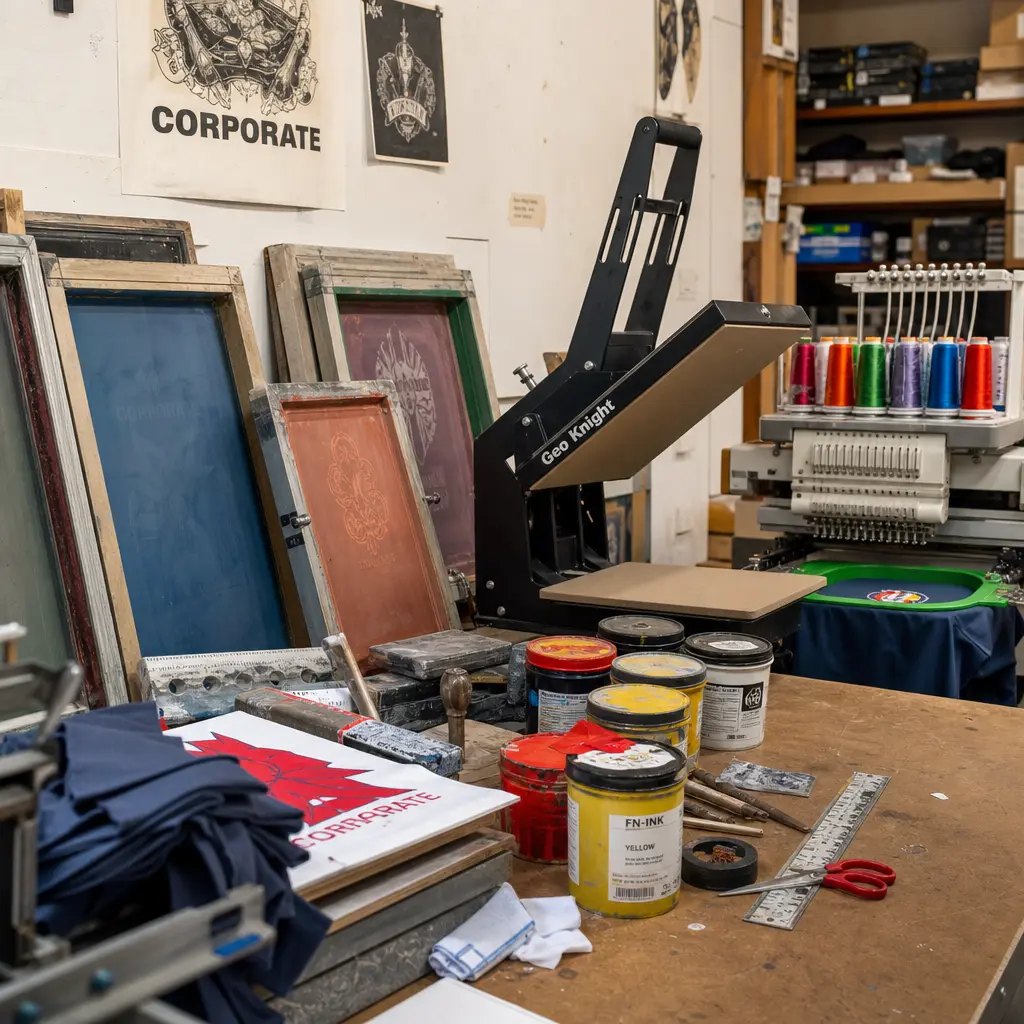
Canvas zipper portfolios for museum shops usually carry the museum logo, a special exhibition graphic, or a simple pattern. The print method affects both cost and durability. Screen printing is the most common for 1-2 color logos on canvas. It is cost-effective at volume (around $0.30-$0.50 per print) and holds up well to handling. For more complex designs, woven labels or embroidery offer a premium look.
Avoid full-color digital printing on canvas unless the design is photographic. Digital prints can fade or crack after a few months of use. If you need full color, request a UV-resistant ink and a washfastness test. Also consider a woven label sewn onto the portfolio—it adds a tactile, high-end feel and lasts the life of the bag. The cost is $0.40-$0.70 per label depending on complexity.
- Screen print: best for 1-2 color logos; cost-effective and durable
- Woven label: premium look; suitable for museum logo or brand name
- Embroidery: high-end but adds weight and cost; best for small logos
- Digital print: only for photographic designs; require UV-resistant ink and wash test
MOQ and Sample Logic for Museum Shop Programs
Museum shops often start with a small test order—200 to 500 pieces per design—to gauge demand. Most canvas bag factories have a standard MOQ of 500-1000 pieces per design. If you need a lower MOQ, expect a higher unit cost or limited color options. Some factories offer a 'sample MOQ' of 100-200 pieces at a premium price (20-30% higher per unit).
Always request a pre-production sample (PPS) before bulk production. The sample cost is typically $50-$100 per design and is often refundable with a bulk order. Use the sample to check fabric weight, zipper function, print alignment, and overall construction. Approve the sample in writing, with photos, to avoid disputes later. A sample approval form should include dimensions, color, print placement, and zipper type.
- Standard MOQ: 500-1000 pieces per design; split colors/sizes may be allowed
- Low MOQ option: 100-200 pieces at 20-30% higher unit cost
- Sample cost: $50-$100 per design; ask if refundable with bulk order
- Sample lead time: 10-14 business days; rush samples available at extra cost
- Always approve PPS in writing with photos and spec checklist
Lead Time and Schedule Risk Management
Production lead time for canvas zipper portfolios is typically 30-45 days after sample approval. This includes fabric sourcing, cutting, sewing, zipper installation, printing, packing, and final inspection. If you need the bags for a specific exhibition or holiday season, add 2-3 weeks buffer for shipping and customs clearance.
Rush orders (20-day lead time) are possible but risky. Factories may skip QC steps or use overtime labor, which can lead to defects. If you must rush, request a mid-production inspection and a final pre-shipment inspection. Also agree on a penalty clause for late delivery—typically 1% of order value per week of delay, capped at 10%.
- Standard lead time: 30-45 days after sample approval
- Rush lead time: 20 days; request mid-production inspection
- Shipping buffer: add 2-3 weeks for ocean freight and customs
- Late delivery penalty: 1% per week, capped at 10% of order value
Packing and Labeling for Museum Shop Retail
Museum shops often receive bags in small quantities for individual store locations. Specify individual poly bag packing to protect the portfolio from dust and scratches during shipping. Standard carton quantity is 50 pieces per carton, but you can request 25 or 100 depending on your distribution needs. Each carton should have a label with product name, quantity, and destination store.
If the bags are for retail display, consider adding a hang tag with the museum logo and price. Hang tags cost $0.05-$0.10 each and can be attached at the factory. Also specify whether you need UPC barcodes printed on the poly bag or on a sticker. Clear packing instructions in the RFQ prevent the factory from using generic packing that may not suit your retail channel.
- Individual poly bag: protects from dust and scratches; standard for retail
- Carton quantity: 50 pcs/carton standard; 25 or 100 available on request
- Carton label: include product name, quantity, and destination store
- Hang tag: $0.05-$0.10 each; add museum logo and retail price
- UPC barcode: specify if printed on poly bag or as sticker
Landed Cost Comparison: FOB vs CIF vs DDP
When comparing supplier quotes, always ask for the Incoterms. Most Chinese factories quote FOB (Free on Board) from a port like Shanghai or Ningbo. The FOB price includes the bag, packing, and loading onto the vessel. From there, you pay ocean freight, insurance, customs duties, and inland freight to your warehouse. A CIF (Cost, Insurance, Freight) quote includes shipping to your destination port but not customs or inland delivery.
For museum shops buying small quantities (500-2000 pieces), DDP (Delivered Duty Paid) can simplify logistics. The factory handles everything, including customs clearance and delivery to your door. DDP quotes are typically 15-25% higher than FOB, but they eliminate the risk of unexpected customs fees or shipping delays. Use a landed cost calculator to compare FOB + freight + duty + handling vs DDP.
- FOB: factory price + loading; buyer arranges shipping and customs
- CIF: includes ocean freight and insurance to destination port
- DDP: all-inclusive; factory handles shipping, customs, and delivery
- Landed cost = FOB + freight + insurance + duty + handling + inland freight
- DDP premium: 15-25% over FOB but reduces logistics risk
Supplier Comparison: What to Look For
Not all canvas bag factories are equal. Some specialize in promotional bags with thin fabric and basic zippers. Others focus on retail-quality products with YKK zippers and reinforced stitching. For museum shops, look for a factory that has experience with cultural institutions or retail brands. Ask for photos of similar projects and contact references.
A good supplier will provide a detailed spec sheet, sample photos, and a clear timeline. They should also offer a pre-shipment inspection report or allow a third-party inspector. Avoid factories that are vague about fabric weight, zipper brand, or lead time. A professional factory will answer your quote questions in writing and provide a sample within 14 days.
- Look for factories with retail or museum shop experience
- Request photos of similar canvas zipper portfolio projects
- Ask for a detailed spec sheet and sample timeline
- Prefer factories that offer pre-shipment inspection or allow third-party QC
- Avoid factories that are vague about fabric weight, zipper brand, or lead time
Final Checklist Before Placing Your Order
Before you sign a purchase order, run through this final checklist. Confirm the fabric weight and zipper grade in writing. Approve the pre-production sample with photos. Agree on packing, labeling, and lead time. Request a mid-production inspection if the order is large (over 1000 pieces). And finally, compare the landed cost with your budget.
A well-prepared buyer gets better pricing and fewer surprises. Use the pricing worksheet in this article to organize your specs and compare quotes. Share it with your team and the factory to ensure everyone is aligned. The time you spend on the front end will save you from costly mistakes on the back end.
- Fabric weight and zipper grade confirmed in writing
- Pre-production sample approved with photos
- Packing and labeling specifications agreed
- Lead time and late delivery penalty defined
- Mid-production inspection scheduled for orders over 1000 pieces
- Landed cost compared with budget
Specification comparison for buyers
| Spec decision | Recommended option | When it fits | Buyer risk to check |
|---|---|---|---|
| Fabric weight | 12 oz or 14 oz cotton canvas | Museum shops needing durability for daily handling | Lighter canvas (8 oz) may sag under heavy catalogs; ask for tear strength test data |
| Zipper grade | YKK #5 nylon coil or #5 metal | High-traffic retail or gift shop with frequent opening | Cheap zippers jam after 500 cycles; request zipper pull test report |
| Print method | Screen print (1-2 colors) or woven label | Brands with simple logos or museum logo embroidery | Full-color digital print fades on canvas; specify washfastness standard |
| MOQ | 500-1000 pieces per design | First-time order or test run for 2-3 museum locations | Lower MOQ (100-300) often means higher unit cost or limited color options |
| Sample lead time | 10-14 business days for pre-production sample | Before committing to bulk production | Rush samples (5 days) may skip QC; request sample approval form |
| Production lead time | 30-45 days after sample approval | Standard order for museum seasonal launch | Shorter lead time (20 days) may indicate overtime or skipped inspection |
| Packing | Individual poly bag + master carton (50 pcs/carton) | Retail display or direct-to-store shipment | Bulk packing without poly bags risks dust and scratches; specify inner packing |
| Landed cost per unit | $4.50 - $7.00 FOB (for 12 oz canvas, YKK zipper, screen print) | Budget-friendly museum shop program | Check if price includes zipper pull, logo print, and poly bag; ask for EXW vs FOB breakdown |
| Sample cost | $50-$100 per design, refundable with bulk order | When comparing 2-3 suppliers | Non-refundable sample cost may indicate low commitment; ask if sample fee covers courier |
Buyer checklist before sampling
- Confirm fabric weight (12 oz or 14 oz) and request a swatch card for color matching
- Specify zipper type (YKK #5 nylon coil or metal) and request zipper pull sample
- Define print method (screen print, woven label, or embroidery) and request color proof
- Set MOQ per design and confirm if split sizes/colors are allowed
- Request pre-production sample (PPS) for approval before bulk production
- Agree on packing: individual poly bag, carton quantity, and labeling
- Confirm lead time (sample + bulk) and penalty for late delivery
- Request inspection report (fabric weight, zipper function, print adhesion) before shipment
- Compare FOB vs EXW pricing and include freight cost in landed cost calculation
- Ask for reference orders from similar museum or retail clients
Factory quote questions to send
- What is your standard canvas weight for zipper portfolios? Can you provide a tear strength test report for 12 oz canvas?
- Which zipper brand and model do you use? Do you offer YKK #5 as standard or as an upgrade?
- What is your MOQ per design? Can we split the MOQ across 2-3 colors or sizes?
- What is the sample cost for a pre-production sample? Is it refundable with a bulk order?
- What is your typical production lead time after sample approval? Do you offer rush delivery?
- What packing options do you offer? Can we request individual poly bags and specific carton labeling?
- Do you provide a pre-shipment inspection report? What QC checks are included?
- What is your FOB port? Can you provide a CIF or DDP quote for our destination?
- Do you have experience producing for museum shops or cultural retail? Can you share a reference?
Quality-control points to confirm
- Fabric weight verification: Measure GSM or oz/yd² on 3 random samples per lot
- Zipper function test: 500 open-close cycles without jamming or separating
- Print adhesion test: Rub test (20 cycles) with no ink transfer or fading
- Stitch tension check: Seam strength test (minimum 15 lbs per inch)
- Color fastness: AATCC wash test (3 cycles) with no bleeding or fading
- Dimensional accuracy: Length and width tolerance ± 1/8 inch
- Packing check: Poly bag seal integrity, carton weight, and label accuracy