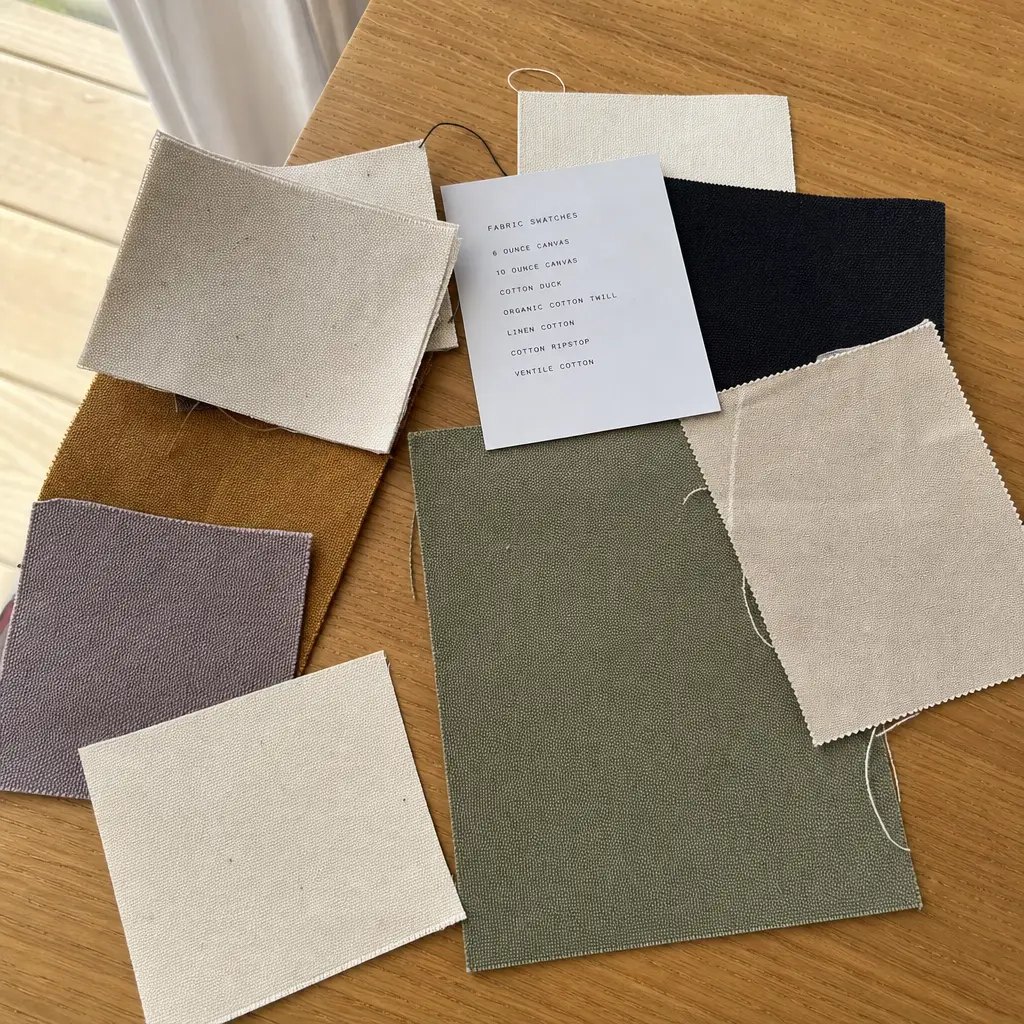
Plan MOQ Around Store Reality, Not Only Factory Minimums
For a salon chain, the practical MOQ for a canvas zipper portfolio is rarely just the factory's lowest number. The real planning unit is the combination of size, canvas color, zipper color, logo artwork, inside layout, and packing method. A supplier may say the MOQ is 300 pieces, but that usually means 300 pieces for one stable specification. If the chain has 40 branches, two regional logos, and separate opening kits for new stores, the order can split into several small production lots that behave like separate orders.
Start from the business use. A portfolio for stylist education needs to hold training sheets and product charts. A consultation portfolio used at the front desk may need a cleaner logo position and more durable zipper. A retail gift portfolio for VIP customers may need individual packaging and tighter appearance control. These uses can share one base construction, but MOQ changes once different artwork or packing is introduced.
- Calculate base demand: number of salons multiplied by portfolios per location, plus head office and training stock.
- Add operating buffer: usually 5-10 percent for damaged cartons, new staff, sample rooms, and late franchise requests.
- Separate artwork versions before requesting price; do not hide them inside one total quantity.
- Avoid very small color splits unless the visual merchandising requirement justifies the extra cost.
- For first orders, keep size and inner structure common across locations so the MOQ is spent on usable stock, not variations.
Choose a Canvas Weight That Survives Salon Handling
Canvas zipper portfolios are handled differently from tote bags. They are opened flat, pulled from drawers, stacked in training rooms, and often rubbed against paper edges, combs, product bottles, and reception desks. For most salon chain orders, 12 oz canvas, roughly 380-410 GSM depending on yarn and finish, gives a good balance between structure and sewing efficiency. It feels substantial enough for a branded business item without becoming too bulky around the zipper.
Lighter canvas around 8-10 oz can work for promotional events or short-term paperwork, but it may show wrinkles and corner collapse. Heavier canvas around 14-16 oz improves perceived value but can make the zipper edge bulky and may require slower sewing, larger needles, and stronger finishing control. If the chain wants dyed canvas, black canvas, or a washed finish, the buyer should include shrinkage and color-fastness expectations in the RFQ because those treatments affect size tolerance and shade consistency.
- Common practical range: 10-12 oz for promotional and office use, 12-14 oz for heavier daily handling.
- Specify GSM or ounce weight, but understand that ounce descriptions can vary by supplier and market.
- Natural canvas may show cotton seed flecks; this is normal unless the brand requires a cleaner bleached surface.
- Dyed canvas needs shade approval by lab dip or fabric swatch, especially for salon brand colors.
- If a laminated or coated canvas is requested, confirm whether it changes print adhesion and recyclability claims.
Size the Portfolio From the Documents It Must Carry
Many quotation problems start with a vague size such as "A4 zipper pouch" or "letter portfolio." A finished outer size is not the same as usable inner space. Zipper seams, corner radius, binding, and inner dividers all reduce the space available for paper. A salon buyer should test the largest item that will go inside: laminated service menus, color consultation forms, training manuals, tablet sleeves, sample cards, or product launch sheets.
For A4 paper, the finished portfolio usually needs enough clearance so documents slide in without curling. For US Letter, the pattern may be slightly different. If the same portfolio will be used in multiple countries, the safest approach is to approve one universal size based on the larger document format plus allowance. Oversizing slightly is normally cheaper than producing two separate sizes, as long as the final carton volume stays reasonable.
- State both outer finished size and required usable inner size in millimeters or inches.
- Allow at least 15-20 mm clearance beyond the document on width and height for smooth insertion.
- Check whether the zipper opening length allows the document to enter without bending.
- If including a divider pocket, specify pocket depth and whether it is sewn into side seams or floating.
- For tablet use, test the actual tablet case thickness instead of relying only on screen size.
Control Cost Drivers Before the Supplier Prices the Order
The largest cost drivers for a canvas zipper portfolio are fabric consumption, zipper length and quality, sewing complexity, decoration method, order split, and packing. A flat zipper portfolio with one divider and one-color screen print is a very different cost structure from a lined portfolio with multiple inner pockets, metal logo plate, embroidery, and retail box. If the RFQ does not define these elements, suppliers will quote based on different assumptions, and the cheapest offer may simply be missing parts.
For salon chains, the decoration method needs to match the order structure. A single-color screen print is cost-efficient for medium and large runs and works well on natural or dyed canvas. Embroidery gives a textured look but can pucker lighter canvas and costs more on large filled logos. Woven side labels are useful when the same blank portfolio is shared across locations or when the front logo changes by campaign. Heat transfer can reproduce gradients, but buyers should test adhesion on textured cotton canvas before approving bulk.
- Fabric: heavier GSM increases material cost and freight weight.
- Zipper: longer zipper path and better slider quality increase cost but reduce complaints.
- Sewing: inner pockets, lining, binding, and curved corners add labor minutes.
- Printing: number of colors, print size, and artwork versions affect screen setup and unit cost.
- Packing: individual bagging, barcode labels, store kits, and retail packaging affect both labor and carton CBM.
- Order split: multiple colors or logos lower production efficiency even when total volume looks large.
Use MOQ Tiers to Avoid Bad Quantity Decisions
A buyer should request tiered pricing instead of one price for one quantity. Useful tiers for canvas zipper portfolios are often 300, 500, 1,000, 2,000, and 5,000 pieces, but the right tiers depend on the supplier's fabric stock and production line. The purpose is not only to get a lower unit price. It is to see where the cost changes: fabric purchasing, printing setup dilution, zipper sourcing, packing labor, and carton utilization.
Salon chains often underestimate reorder demand. A first purchase may be used for store openings, head office training, academy classes, and retail campaigns at the same time. If the initial MOQ is too close to the launch quantity, the chain may need an urgent reorder before the supplier can match the original canvas shade. Reorders also carry risk if the original zipper or fabric lot is no longer available. A small overage in the first order may be cheaper than a rushed second production.
- Ask for price tiers by identical specification, not mixed colors unless the supplier agrees in writing.
- Calculate landed cost per unit at each tier, including freight and carton volume, not just FOB unit price.
- Consider 2-3 months of onboarding stock if staff turnover or training classes are frequent.
- Keep one approved reference sample and one fabric swatch from the first bulk lot for reorder matching.
- If cash flow limits quantity, reduce decoration complexity before reducing the order below efficient MOQ.
Sample Approval Should Test Function, Not Just Appearance
A canvas zipper portfolio sample is useful only if it represents the bulk production method. A handmade showroom sample using substitute zipper, different canvas, or digital print may help with concept review, but it should not be the final approval sample. For a salon chain order, the pre-production sample should use the confirmed canvas weight, zipper type, logo method, inner layout, and packing format. Otherwise, the first real test happens after bulk cutting, when corrections are expensive.
The sample should be tested with actual salon materials. Put in the service menu, consultation sheet, training guide, color chart, or tablet sleeve. Open and close the zipper repeatedly. Check whether the portfolio lies flat enough on a reception desk. Evaluate whether the print is readable at the intended viewing distance and whether the logo position is blocked when the item is stacked or held. Sample approval should end with written comments, not only a photo with "OK".
- Measure finished size at top, middle, and bottom to catch pattern distortion.
- Test zipper operation at least 30 cycles and inspect the corner area for thread catching.
- Rub the printed logo lightly with a clean white cloth after full curing to check surface stability.
- Insert the thickest document set and leave it overnight to see whether corners deform.
- Photograph approved details: front, back, zipper end, inside pocket, label, print close-up, and packing.
Set Clear QC Thresholds for Bulk Inspection
Canvas products have natural variation, but a branded salon chain item still needs consistent appearance. The QC plan should separate functional defects from cosmetic defects. A zipper that jams, a pocket that is too small, or a broken seam is a major issue. A minor yarn slub outside the logo area may be acceptable for natural cotton canvas if it was disclosed and approved. Without these thresholds, inspection becomes subjective and late-stage disputes are harder to solve.
For bulk inspection, practical checkpoints include fabric cleanliness, size tolerance, zipper function, seam strength, print position, print coverage, carton count, and packing label accuracy. If the item ships by store allocation, the carton label becomes part of quality control. A perfect portfolio in the wrong branch carton still creates operational cost for the buyer.
- Major defect examples: non-working zipper, open seam, wrong artwork, wrong size, missing inner pocket, heavy stain on front panel.
- Minor defect examples: small thread end, slight canvas slub away from logo, minor print edge roughness within approved standard.
- Recommended size tolerance for flat items: commonly plus or minus 5 mm unless the pattern requires tighter control.
- Recommended logo placement tolerance: commonly plus or minus 3 mm from approved sample for screen print.
- Inspect mixed cartons carefully when multiple branches, languages, or artwork versions are packed in one shipment.
Packing Method Can Change MOQ and Landed Cost
Packing is often treated as a final detail, but it can affect MOQ, lead time, and freight cost. A simple export pack may be one portfolio per recycled polybag, then 50 or 100 pieces per carton depending on size and weight. A salon chain may need something more specific: store allocation cartons, franchise opening kits, barcode labels, belly bands, or retail-ready packaging. Each packing style changes labor and may require additional materials with their own MOQ.
Carton cube matters. A heavier 14 oz canvas portfolio with inner divider and zipper may not look bulky one by one, but thousands of pieces can create meaningful CBM. If the buyer compares two supplier quotes without carton size and gross weight, the lower FOB price may lose its advantage after ocean or air freight is calculated. For urgent salon launches, air freight can be especially sensitive to dimensional weight.
- Request units per carton, carton dimensions, gross weight, net weight, and estimated CBM.
- Confirm whether portfolios are packed flat or lightly folded; folding can create crease marks on canvas.
- Use store allocation labels if cartons go directly to regional warehouses or franchise locations.
- Avoid oversized retail boxes unless the portfolio is sold as a premium retail item.
- For natural canvas, individual dust protection is useful because cotton picks up warehouse dirt easily.
Build a Realistic Lead Time With Artwork and Allocation Data
Production lead time does not begin when the first email is sent. It normally begins after quotation agreement, deposit, final artwork, sample approval, fabric confirmation, and packing instructions are complete. For a standard canvas zipper portfolio, a practical schedule may include 3-7 days for technical review and quote, 5-10 days for sample making, revision time if needed, and 25-40 days for bulk production after approval. Larger quantities, dyed canvas, complex packing, and multi-artwork orders can extend this.
Salon chains often run these items alongside campaign calendars, new location openings, academy classes, or franchise meetings. The schedule risk is usually not sewing alone. Late logo files, uncertain store allocation quantities, undecided packing labels, and changes to zipper color can stop production planning. A cleaner RFQ shortens lead time because the factory can reserve fabric, zipper, and print capacity earlier.
- Provide vector artwork before sample making, preferably AI, PDF, EPS, or SVG with Pantone references if needed.
- Freeze the store allocation sheet before packing materials are ordered.
- Approve fabric color under consistent lighting; salon brand colors can look different under warm retail lighting.
- Reserve time for courier transit when physical samples must be reviewed by head office.
- If shipment date is fixed, simplify the specification instead of forcing a complex custom pack into a short schedule.
Compare Supplier Quotes Using Complete Data, Not Unit Price Alone
A complete quote for canvas zipper portfolios should make assumptions visible. It should state fabric weight, material composition, size, zipper specification, logo method, number of print colors, inner structure, MOQ by variation, sample cost, sample lead time, bulk lead time, packing method, carton data, payment terms, and trade term. If these details are missing, the buyer cannot compare offers fairly.
For importers and distributors, the landed-cost comparison is especially important. A supplier offering a lower unit price may be using lighter canvas, lower-grade zipper, fewer stitches per inch, no individual packing, or larger cartons. Another supplier may look higher at FOB level but reduce after-sales risk because the zipper is smoother, carton labeling is cleaner, and the sample process is controlled. The best quote is the one that matches the salon chain's actual operating use with fewer hidden assumptions.
- Normalize all quotes to the same size, GSM, zipper type, print area, inner pocket layout, and packing.
- Add estimated freight, duty, customs clearance, inland delivery, and warehouse handling to compare landed cost.
- Review whether tooling, screen setup, sample fee, label fee, and packing label cost are included or separate.
- Reject quotes that do not define MOQ per artwork or color if the order has several versions.
- Keep a quotation comparison sheet with technical assumptions, not only price columns.
Specification comparison for buyers
| Spec decision | Recommended option | When it fits | Buyer risk to check |
|---|---|---|---|
| Canvas weight | 12 oz canvas (380-410 GSM), preshrunk if washed finish is required | Most salon chain training kits, stylist onboarding packs, retail consultation folders, and event documents | Too light below 10 oz may wrinkle around the zipper; too heavy above 16 oz can increase sewing difficulty and freight weight |
| Portfolio size | A4 or US Letter plus 15-20 mm clearance on all sides | When the bag must hold price menus, consultation forms, training sheets, or tablets in slim sleeves | A tight pattern causes curled documents and zipper stress at corners; specify usable inner size, not only outer size |
| Zipper type | No. 5 nylon coil zipper with metal or molded puller, smooth corner sewing | Balanced cost and durability for repeated store use and staff training kits | Low-grade zipper tape may wave on canvas; compare zipper samples after 30 open-close cycles |
| Logo method | Single-color screen print for 300+ pieces per artwork; woven side label for multi-location reuse | Salon chains needing clean brand display without high setup cost | Large print over seam or zipper area can crack or distort; approve print position from the actual paper pattern |
| MOQ planning unit | Plan MOQ by artwork version, color, size, and packing SKU, not total chain volume only | Multi-branch salon groups with regional logos, language versions, or gift set packing | Supplier may quote 1,000 pieces total but require 300-500 pieces per color/artwork to keep production efficient |
| Inner structure | One main pocket plus one flat document divider; add pen loop only if used daily | Training folders, consultation forms, product launch packs, and back-office document use | Extra compartments raise labor time and defect points; unclear pocket dimensions create sample revisions |
| Packing method | Individual recycled polybag or paper belly band, then export carton by store allocation | Direct distribution to salon branches, franchise kits, or warehouse pick-pack operations | Retail-style packaging can raise MOQ and carton volume; store allocation labels must be included in the packing file |
| Sample approval | Pre-production sample using bulk fabric, zipper, label, print ink, and final packing | Orders with multiple store packs, seasonal campaigns, or strict brand color requirements | Photo approval alone misses zipper feel, corner turning, print hand feel, and actual document fit |
| Lead time buffer | Allow 7-10 days for sample revision and 25-40 days for bulk after approval, depending on quantity and decoration | Normal bulk runs between 500 and 5,000 pieces across one or several salon locations | Late artwork, color changes, and split packing can push shipment more than fabric sewing time itself |
Buyer checklist before sampling
- Define the portfolio use case: staff training, consultation documents, retail gift with purchase, franchise opening kit, or event handout.
- List order quantity by artwork, canvas color, size, zipper color, and packing SKU instead of only stating the total quantity.
- Confirm the document size to be carried and specify required usable inner dimensions with clearance.
- Select canvas weight in GSM or ounces and state whether the fabric should be natural, dyed, washed, or laminated.
- Decide whether the logo will be screen printed, heat transferred, embroidered, woven label, or a combination.
- Set an acceptable zipper standard: No. 5 nylon coil, matching or contrast tape, puller type, and opening direction.
- Prepare store allocation data before quotation if cartons must be packed by branch or franchisee.
- Request carton dimensions, gross weight, units per carton, and packing photos for landed-cost calculation.
- Approve a physical sample using final materials before bulk cutting, especially for first-time production.
- Reserve extra stock for new staff onboarding, store openings, damaged packaging, and delayed franchise orders.
Factory quote questions to send
- What is your MOQ per canvas color, per logo artwork, per size, and per packing SKU for this zipper portfolio?
- Which canvas weights do you keep in regular stock, and what are their approximate GSM, shrinkage, and color lot risks?
- Can the quoted zipper be specified as No. 5 nylon coil, and can you provide zipper tape, slider, and puller samples?
- What is the maximum screen print area without changing the print cost, and how many colors are included in the quote?
- Is the price based on simple flat construction or does it include inner divider, pen loop, card pocket, lining, or edge binding?
- What sample charge, sample lead time, and sample revision policy apply before bulk approval?
- How many pieces fit per export carton, and what are the estimated carton size, gross weight, and CBM?
- Can you pack by salon branch or franchise kit, and what data format is needed for allocation labels?
- What production lead time starts after sample approval and deposit, and what factors could extend it?
- What QC standard will be used for zipper function, print placement tolerance, stitch defects, stain control, and carton drop condition?
Quality-control points to confirm
- Fabric weight should match the approved tolerance, commonly plus or minus 5 percent from the confirmed GSM.
- Finished outer size should stay within the approved tolerance, commonly plus or minus 5 mm for flat portfolio construction.
- Usable inner pocket size must hold the intended documents without bending, based on real A4 or US Letter test sheets.
- Zipper should open and close smoothly through the corners with no skipped teeth, trapped threads, or tape waving.
- Logo placement should follow the approved sample, with practical tolerance such as plus or minus 3 mm for screen print position.
- Screen print should have even coverage, no pinholes visible at normal viewing distance, and no ink bleeding into the canvas grain.
- Stitching should be straight at visible edges, with secure back-tacking at zipper ends and stress points.
- Canvas panels should be free from oil stains, dark yarn contamination, heavy slubs in the logo area, and noticeable shade mismatch within the same carton.
- Individual packing should protect the portfolio from dust and zipper scratching during export handling.
- Carton labels should match the purchase order, store allocation sheet, color, artwork version, quantity, and gross weight.