Why this product needs a tighter procurement brief
Canvas zipper portfolios look simple, but they sit in the middle of three different buying problems: document protection, branded presentation, and shipping efficiency. That is why they are easy to over-specify. A buyer may ask for a stronger canvas, a smoother zipper, a printed logo, a lined interior, and retail packing in one request, then receive quotes that are difficult to compare. The issue is usually not price alone. It is that the request mixes functional requirements with presentation upgrades and leaves the supplier to guess what matters most.
For tech startups, the product often supports onboarding kits, sales decks, investor meetings, conference handouts, or customer success packs. In that context, the portfolio is not just a bag. It is a carrying device for a brand moment. That makes the procurement brief more important than a generic product name. If the buyer does not state the intended contents, the delivery channel, and the durability expectation, the supplier cannot tell whether the job is a simple handout or a premium reusable item.
The fastest way to improve the quote is to separate the body spec from the cosmetic options. Body fabric, size, zipper build, and lining determine the core manufacturing route. Logo method, patch type, puller customization, and packing style determine the customization load. When those two groups are mixed together, MOQ tends to rise and the quote loses clarity. When they are separated, the supplier can quote a base version and the buyer can see which options actually move the minimum order.
This is also where procurement discipline matters. A clean RFQ should let the factory estimate fabric booking, sewing steps, decoration setup, and packing labor without follow-up questions. The more the supplier has to interpret, the more likely the quote is to contain hidden assumptions. Clear specs do not only help price. They improve sample accuracy, lead-time confidence, and the likelihood that the re-order looks like the first approved piece.
Lock the body spec before you negotiate the logo
The body spec drives the real cost structure, so it should be settled before decoration. Canvas weight affects hand feel, drape, structure, sewing difficulty, and freight. A lighter body can be acceptable for a simple handout, but it may feel too soft for a client-facing kit. A heavier body often looks and feels more substantial, but it also raises material cost and can add sewing strain at corners and seams. The right choice depends on the use case, not on a default product listing.
For buyer discussions, it is usually enough to compare three ranges: lighter canvas for promotional use, mid-weight canvas for general business use, and heavier canvas for a firmer presentation feel. The exact ounce-to-GSM conversion should come from the supplier’s mill spec rather than a generic chart. Avoid treating one number as universal. Fabric finishing, weave density, and supplier sourcing can change the hand feel even when the nominal weight is similar. Ask for the fabric spec sheet or at least a sample cut before you compare quotes.
Finished size matters just as much as fabric. A portfolio can be the right outer dimension and still fail if the usable interior space is tight after seam allowance and zipper construction are added. Buyers should confirm finished height, finished width, zipper opening length, and the clear internal space after sewing. If the item must hold A4, letter, or a specific tablet sleeve, test it with the actual insert rather than a flat paper mock-up. That is especially important when the order will be used in field sales or executive meetings, where a jammed opening creates an immediate quality impression.
If the product is meant for repeated daily use, ask for reinforcement at stress points and a zipper that can survive frequent open-close cycles without rough travel. If the product is mainly for an event handout, the spec can stay simpler. The negotiation point is not just how much you can reduce the MOQ, but whether the body spec matches the actual life of the product. A portfolio that looks premium on day one but deforms after a few uses is expensive in a different way: it damages the buyer’s brand.
Match the decoration method to the artwork and order size
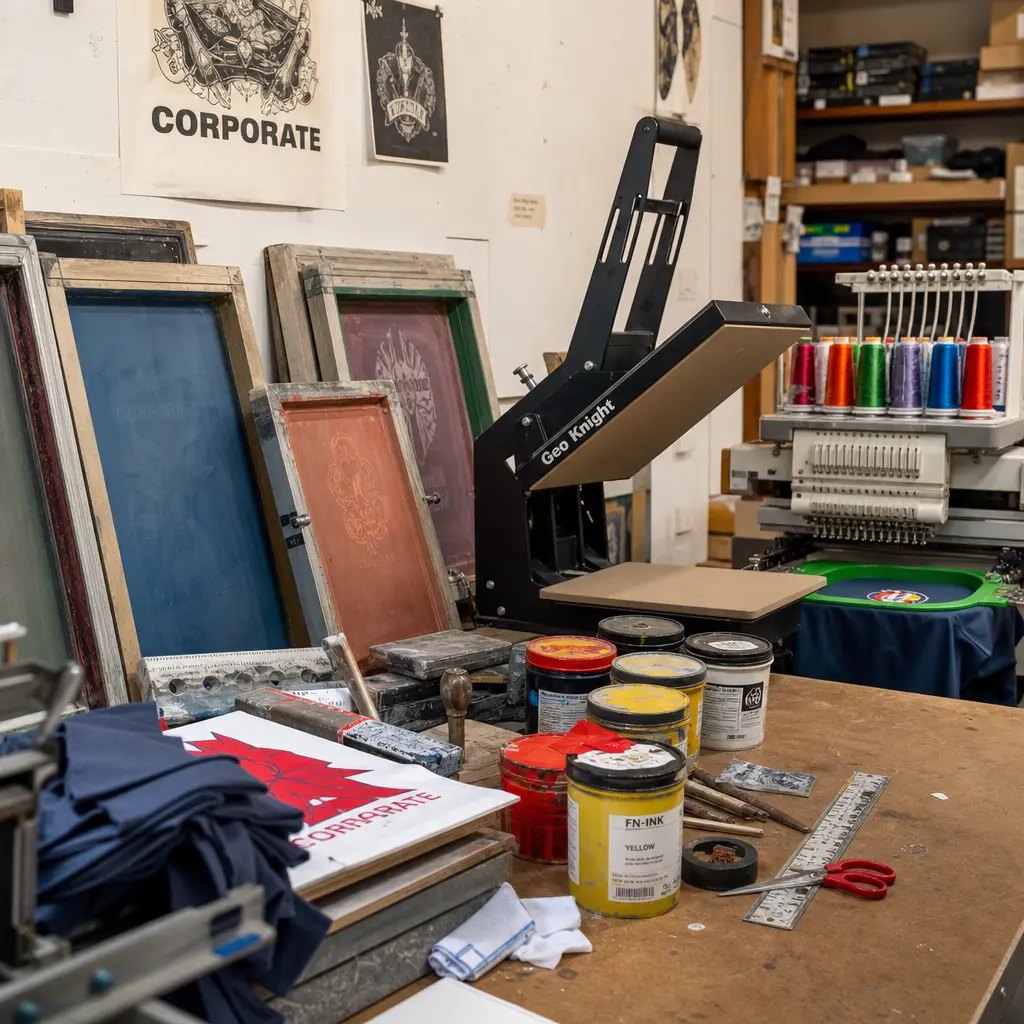
Decoration method is one of the biggest drivers of both MOQ and defect risk. Screen printing is usually the most efficient choice for simple logos, repeat orders, and strong color blocks. It handles clean brand marks well when the artwork is not too fine. Heat transfer can support more detail or more color variation, but it adds another process step and another point where adhesion, edge finish, or placement can go wrong. A woven label, patch, or stitched badge can be the better option when the buyer wants a premium look and a more durable brand mark.
The right method depends on the artwork, not the preference of the quote sheet. Small text, thin rules, gradients, and intricate marks can disappear into canvas weave or become unstable on production runs. A buyer that insists on exact reproduction from a sharp digital file is asking for trouble if the artwork is too fine for the material. In procurement terms, the better move is to simplify the logo before forcing an unsuitable process to carry it. That often lowers reject risk more than it lowers the price.
A proper quote should show decoration assumptions clearly: artwork area, number of colors, print side, register tolerance, and whether the supplier will send a strike-off or color proof. If the logo sits close to the zipper or edge seam, ask the factory to confirm placement relative to those construction lines. Canvas is not a flat sheet after sewing. A logo that looks centered in the artwork file may shift once the panel is assembled and pressed. Buyers should ask for a finished sample with decoration on the actual sewn item, not just on a loose fabric swatch.
For recurring programs, also ask how the decoration setup is stored for repeat orders. The real procurement value is not just getting one sample approved. It is being able to reorder with the same placement, same color reference, and same finish without rediscovering the spec from scratch. That is where a supplier with clean records becomes worth more than the lowest first quote.
Understand where MOQ comes from in the factory
MOQ is not a single number pulled from thin air. It is usually the result of material booking, cutting efficiency, decoration setup, and packing labor. A plain body in an in-stock color may support a lower minimum. The same item with a custom zipper puller, stitched label, lined interior, or retail pack can push the minimum higher because each extra feature adds setup or handling time. That is why the cheapest-looking quote can become the least flexible option once the buyer asks for a small change.
The best procurement move is to ask the supplier to show the MOQ driver, not just the MOQ result. Is the minimum caused by canvas purchase quantity, zipper tape booking, print setup, or a packing workflow? When the supplier can identify the bottleneck, the buyer can negotiate the right thing. If the real constraint is a custom puller, then reducing the puller complexity may be enough. If the bottleneck is a dyed-to-order canvas, then changing color or using stock fabric may have a bigger effect.
It helps to request three versions of the same product: a base version, a slightly upgraded version, and a cost-down version. Keep the body and size fixed, then vary only one element at a time. For example, compare bulk packing against retail packing, or one-color print against two-color print. This makes the MOQ logic visible. It also prevents the common problem where a buyer asks for a lower quantity while quietly adding three more custom features that erase the savings.
The most useful negotiation question is simple: if we reduce one feature, which feature gives the most production relief? In many cases, the answer is not the logo. It is the combination of lining, packing, and trim variety. A supplier who can explain that clearly is usually more reliable in production because they understand their own workflow. A supplier who cannot explain it may still quote a number, but the order is more likely to drift later.
Use a buyer decision matrix, not a simple price comparison
A real sourcing comparison should read like a decision matrix, not a generic spec sheet. The buyer needs to see tradeoffs across cost, flexibility, sample speed, and supplier fit. A factory-direct quote may be lower, but it usually requires tighter tech-pack discipline. A trading company may quote more clearly across multiple items, but the pricing can carry an added margin and some process steps may sit outside their direct control. A stock supplier can win on speed, but the branding options are naturally limited. Those are not good or bad choices; they are different risk profiles.
When you compare suppliers, ask them to quote the same assumptions line by line. Include body fabric, zipper build, decoration method, packing format, sample cost, and lead time. If one supplier is much cheaper, check whether they left out artwork setup, zipper pull customization, individual bagging, or carton reinforcement. A low ex-factory price is not useful if the freight footprint is larger or if the packing must be upgraded later. Landed cost is the number that matters for procurement.
The decision matrix should also include supplier behavior. How fast do they answer questions? Do they send useful photos of current work? Can they explain the difference between their sample room and bulk line? Do they quote the same way twice? Those details matter because portfolios are often part of a wider kit program, and the supplier’s communication quality affects the whole schedule. A slightly higher quote from a disciplined supplier may cost less in rework and delay.
For buyers managing several SKUs, trading companies can sometimes be useful for coordination, especially if the portfolio must ship with notebooks, pouches, or other branded items from different factories. The tradeoff is reduced transparency. If you use a middle layer, ask for the actual production site, the process owner for each step, and the person responsible for final inspection. That keeps the comparison honest and prevents confusion over who is accountable when the order moves into bulk.
Sample approval should verify function, finish, and packing
A sample is only useful if it tests the real product path. A blank sample proves that the shape exists. It does not prove that the print lands correctly, the zipper runs smoothly, the pocket works, or the packing survives the warehouse. For procurement, the right sample is a pre-production sample built with final materials, final decoration, and final packing style. Anything less leaves too much room for interpretation.
The sample should be checked as a working item. Open and close the zipper several times. Load the intended insert and see whether the corners catch or the opening feels cramped. Check whether the zipper slider meets the stops cleanly and whether the tape is seated evenly on both sides. If the portfolio will carry heavier materials, test it with realistic contents rather than just a sheet of paper. A buyer does not want to discover during distribution that the item only looks correct when empty.
Appearance checks still matter, but they should be specific. Is the logo centered where the proof says it should be? Is the label straight? Is the seam line even? Is the puller direction consistent from unit to unit? These checks are easy to overlook when everyone is focused on the mock-up photo. The sample stage is the last chance to catch those issues before bulk production locks them in. Ask for the sample to be photographed from front, back, open interior, zipper close-up, and packed condition so the approval record is clear.
A written sign-off sheet is worth the time. It should state the approved size, fabric, zipper style, decoration method, packing format, and any agreed tolerance. If the buyer later sees a difference in bulk, there should already be a reference point. For repeated programs, keep the approved sample labeled with version number and date. That becomes the baseline for reorders and avoids re-litigating the spec every time the program comes back.
Quality control needs stage-by-stage acceptance criteria
Generic QC notes are not enough for a product with several visible and functional touchpoints. The inspection plan should separate incoming materials, in-process checks, and final acceptance. At incoming stage, check canvas consistency, zipper tape quality, puller finish, and label accuracy. During production, verify cutting accuracy, stitch alignment, and decoration placement. At final inspection, confirm function, appearance, pack count, carton condition, and labeling. Each stage catches different problems, and skipping one usually means the defect moves downstream.
The most useful defect criteria are operational, not vague. For example, the zipper should travel smoothly across the full opening without snagging, waviness, or exposed tape at the ends. Stitching should be even at zipper ends, pocket corners, and stress points. Print should remain clean and legible without heavy smearing, pinholes, or clear misregistration. Lining, if used, should be flat enough that it does not twist the body or shrink the usable opening. Those checks give the factory something measurable and give the buyer something defendable during receiving.
It also helps to define defects by severity. A functional failure is a zipper jam, a broken seam, or a pocket that cannot be used. A major appearance issue may be a centered logo that is visibly off or a label sewn crooked enough to be obvious. A minor issue may be a slight thread end or a small cosmetic mark that does not affect function. This distinction matters because it keeps inspection decisions consistent and prevents subjective arguments at the dock.
Do not rely on one random sample from the top of the carton. Ask for lot-based checks, especially if the order is split across multiple production days or if different workers handle cutting and sewing. If your team uses AQL, set the defect classes before the inspection begins. If not, create a simple written reference with acceptable and unacceptable examples. The goal is not to over-police the factory. It is to make sure the product that ships matches the product the buyer approved.
Carton control should also be part of QC. Count the units, check the carton marks, verify no mixed lots, and make sure the load method does not crush the portfolio edges or stress the zipper line. A clean bag can still arrive looking poor if the carton is overfilled or badly stacked.
Packing decisions change freight, handling, and resale value
Packing is not a final cosmetic detail. It is a cost and handling decision. Bulk polybag packing is usually the best route for internal distribution, storage, or kitting because it keeps labor and carton volume under control. Individual sleeves, retail bags, barcode labels, and insert cards improve presentation, but they add steps and can increase freight. Buyers often overpay here because they do not state the packing requirement early enough.
For startup programs, the right pack format depends on the channel. Internal onboarding kits may be better in bulk because the items are repacked with other materials anyway. Channel or ecommerce orders may need retail-ready packing so the product can move directly into resale or gifting. If both channels exist, do not ask the supplier to guess. Separate them in the RFQ and quote them as distinct pack options. That prevents a compromise pack that is acceptable for neither use case.
Carton size is another hidden lever. A small change in how the portfolio folds or is nested can change the freight footprint materially. Ask for carton dimensions, packed quantity, net weight, gross weight, and carton loading method before final approval. If the shipment will move by air or if warehouse storage is tight, volume can matter more than unit weight. In that case, a slightly different folding pattern or a better inner pack plan may save more than a minor material change.
If the buyer cares about presentation, ask for a packed sample or carton photo. That is especially valuable when the product will be used in client-facing kits, events, or retail channels. A product can still look sloppy if the cartons are crushed, overfilled, or missing basic markings. Confirm whether the supplier uses inner dividers, corner protection, or compression wrap when stacking. The best packing plan is the one that protects the product without adding unnecessary air to the shipment.
Negotiate landed cost, not just unit price
The best negotiation sessions focus on total landed cost and program fit rather than a one-line unit price. A portfolio that looks inexpensive at the factory can become costly once freight, sample charges, packing upgrades, duty, and rework risk are added. The buyer should ask which cost components are fixed, which are variable, and which can be simplified without hurting the product. That shifts the conversation from pressure tactics to real value engineering.
The most effective levers are usually fabric weight, decoration complexity, lining choice, pocket count, and packing format. Reducing one print color may save more than a small fabric change. Switching from retail packing to bulk packing can lower both material and freight volume. Removing a pocket may save labor if the pocket is not actually needed for the use case. But do not cut the features that the end user will notice first. If the portfolio is part of a client presentation, visible quality cues matter.
Ask the supplier for three quote paths when possible: a base version, a premium version, and a cost-down version. That gives procurement a clean comparison and helps isolate the real tradeoff. If the supplier is willing, request a value-engineering option that preserves the outside look while simplifying the inside build or packing format. This is a much more productive ask than demanding a blanket discount, because it lets the factory keep the product viable while trimming cost where it hurts least.
For budget control, compare like for like. If one supplier quotes on a blank body and another quotes on a decorated, retail-packed item, the numbers are not truly comparable. Normalizing the quote assumptions is one of the fastest ways to avoid false savings. The goal is not to win the lowest sticker price. It is to buy the version that will arrive on time, match the approved sample, and fit the channel without surprise charges.
Lead time risk sits in approvals, materials, and packing
Lead time should be managed as a sequence, not a single promise. The project usually has separate clocks for artwork approval, sample production, material booking, sewing, decoration, final inspection, and packing. If the buyer only hears one blended number, it becomes hard to know where the schedule is actually exposed. That matters a lot for launch kits, trade shows, and onboarding dates, where missing the delivery window can reduce the value of the whole order.
Artwork and sample approval are often the real bottlenecks. If the logo is complex, if there are multiple placements, or if the buyer keeps changing zipper color or label style, the schedule can slip before bulk even starts. The cleanest way to protect timing is to freeze the spec early, approve the sample once, and avoid late edits unless they are truly necessary. Every change after that creates new risk in cutting, decoration, or packing.
Ask the supplier for milestone dates rather than one final ship date. Good milestones include sample ready, material booked, production started, final inspection complete, packed, and dispatched. This lets procurement see where the order stands and makes escalation easier if one step drifts. It is also a simple way to learn whether the supplier actually understands its own workflow. A factory that can explain the milestones usually manages the order more reliably than one that only repeats a single promise.
If the delivery date is fixed, build in buffer for freight and customs, especially if the order is international. A clean production run can still be delayed by transport or document issues. The buyer’s job is not only to push for faster lead time. It is to make sure the supplier can execute the plan without improvising. Clear specs, fast sample approval, and stable packing are usually more helpful than last-minute pressure.
Specification comparison for buyers
| Buying route | Best fit | Main tradeoff | Procurement note |
|---|---|---|---|
| Factory-direct custom build | Brand-led programs with repeat orders, exact size requirements, and controlled decoration | Lower quote potential, but more responsibility for tech pack clarity and sample discipline | Best when you need stable specs, clear QC, and a long-term reorder path. Ask who owns fabric, decoration, and packing in-house. |
| Trading company or sourcing agent | Mixed-category purchases, split suppliers, or buyers who need coordination across several products | Easier communication, but less visibility into the real factory and fewer levers on cost-down | Useful if you are bundling portfolios with notebooks, pouches, or other kits. Confirm which steps are subcontracted and whether the quote includes their margin. |
| Stock or semi-custom supplier | Short launches, event handouts, and urgent replenishment where speed matters more than exact customization | Fastest route, but limited control over canvas weight, zipper style, and branding | Check what can be changed without a new mold or new material booking. Stock is often the fastest way to test demand before committing to custom MOQ. |
| Two-stage sourcing | Pilot run first, then full custom program after the spec is proven | Requires discipline to keep the pilot from drifting into a one-off spec | Good for startups validating a kit or channel launch. Lock the pilot sample as the reference for the second order. |
| Direct import with consolidated freight | Larger shipments where landed cost and carton efficiency matter | More planning up front, but better visibility into freight and warehouse cost | Ask for carton dimensions, packed quantity, and gross weight before you compare unit prices. |
| Material | 300D-600D polyester, 10-12 oz canvas, or recycled PET with backing stiffness matched to document weight | Before price comparison | Different cloth weights, backing, or certification claims make quotes hard to compare |
| Construction | zipper gauge, zipper tape width, puller finish, binding tape, corner reinforcement, seam allowance, and document-size tolerance | Before sampling | Weak stress points create returns and failed inspections |
| Decoration | screen print, heat transfer, woven label, or rubber patch placed away from zipper stress and fold lines | Before artwork approval | The wrong method can crack, bleed, pucker, or fail on the chosen fabric |
Buyer checklist before sampling
- Confirm the finished size, zipper opening, and usable internal dimensions before you ask for price.
- Choose the canvas weight by end use: light handout, everyday carry, or premium client kit.
- State whether the portfolio must fit A4, letter, or a specific insert such as a tablet sleeve.
- Define the decoration method, logo size, print colors, and placement on the front and back.
- Decide early whether you need unlined, lined, or lightly structured construction.
- Specify zipper type, zipper color, puller style, and whether the zipper should be hidden or exposed.
- Ask for a pre-production sample that includes final artwork, trim, and packing.
- Separate bulk packing, retail packing, and kit packing into different quote lines.
- Request carton size, gross weight, and pack count before freight is booked.
- Ask which single spec drives MOQ so you can negotiate the highest-impact lever first.
Factory quote questions to send
- What is your MOQ by body fabric, decoration method, and packing format, and which element actually sets the minimum?
- Can you quote the same portfolio in 10oz, 12oz, and 16oz canvas so we can compare cost and hand feel?
- What exactly is included in the unit price: zipper, puller, label, print setup, polybag, carton mark, and carton reinforcement?
- Which steps are done in-house, and which steps are outsourced to another workshop?
- How many sample rounds are included, and what changes create a new sample charge?
- What is your bulk lead time after sample approval, and where do delays usually happen?
- What tolerances do you use for size, placement, stitch alignment, and zipper run?
- Can you share a decorated pre-production sample, not just a blank sample?
- How do you pack the goods per inner bag and per master carton?
- If we remove a pocket or reduce print colors, how much can you reduce MOQ or price?
Quality-control points to confirm
- Canvas weight should match the approved spec within the agreed tolerance before cutting starts.
- Finished length and width should be checked against the approved sample and tech pack, not a generic marketplace standard.
- Zipper travel should be smooth from end to end with no snagging, skipping, or tape exposure at the stops.
- The puller, stop, and tape color should match the approved reference and be consistent across the order.
- Print placement should stay inside the approved window, with no smearing, misregistration, or visible weave break-up that obscures the logo.
- Stitching should be even at zipper ends, pocket corners, side seams, and any reinforcement points.
- If lining is used, check for loose threads, twisted seams, and pocket openings that are too tight for the intended insert.
- Measure critical dimensions on a small sample lot before bulk release, then verify during in-line and final inspection.
- Define defect limits separately for functional failures, major appearance defects, and minor cosmetic issues.
- Cartons should match the agreed count, label content, and loading method, with no mixed lots or crushed corners.