Start With The Studio Use Case
The best material decision starts with the role of the portfolio, not with a fabric swatch. A yoga studio selling the item at the front desk needs a cleaner hand feel, better zipper reliability, and stronger retail presentation than a studio ordering a low-cost event giveaway. A teacher training kit may need room for papers, certificates, and a tablet. A corporate wellness gift may need quieter branding and cleaner packing because it will be judged before it is used.
Write the use case in one sentence before sending the RFQ. For example: natural canvas portfolio for premium studio resale, or cost-controlled zip portfolio for a 1,000-piece member welcome program. That one sentence helps suppliers quote the same product instead of guessing. It also prevents a common sourcing problem: one factory quotes heavy canvas with YKK and flat packing, while another quotes lighter fabric, generic trim, and folded packing.
Yoga studio conditions also matter. These products may sit near changing rooms, be handled with lotion or damp hands, or travel in staff bags with towels and water bottles. The item does not need to be a waterproof dry bag, but it should tolerate light humidity, repeated opening, and normal retail handling.
- Define resale, gifting, onboarding, corporate wellness, or event use before asking for price.
- Record likely contents and weight, not just outside dimensions.
- Note whether the portfolio will be displayed, mailed, packed in a kit, or stored in a humid studio area.
- Set the commercial priority: premium feel, balanced value, or lowest landed cost.
Choose Canvas Weight By Structure And Cost
Canvas weight controls structure, hand feel, freight weight, and how well the product holds its shape after packing. For yoga studio portfolios, 12 oz, 14 oz, and 16 oz cotton canvas are the practical range. A 12 oz body can work for promotional orders but often feels soft unless the factory adds board or foam. A 14 oz body is the common middle ground. A 16 oz body feels more substantial and supports a cleaner premium presentation, but it raises material and freight cost.
Do not compare canvas weight alone. A tightly woven 14 oz canvas can look cleaner and sew better than a loose 16 oz canvas. A supplier may also quote lighter fabric with hidden stiffener to mimic the structure of a heavier build. That is not automatically wrong, but it must be disclosed because it affects cost, durability, and inspection criteria.
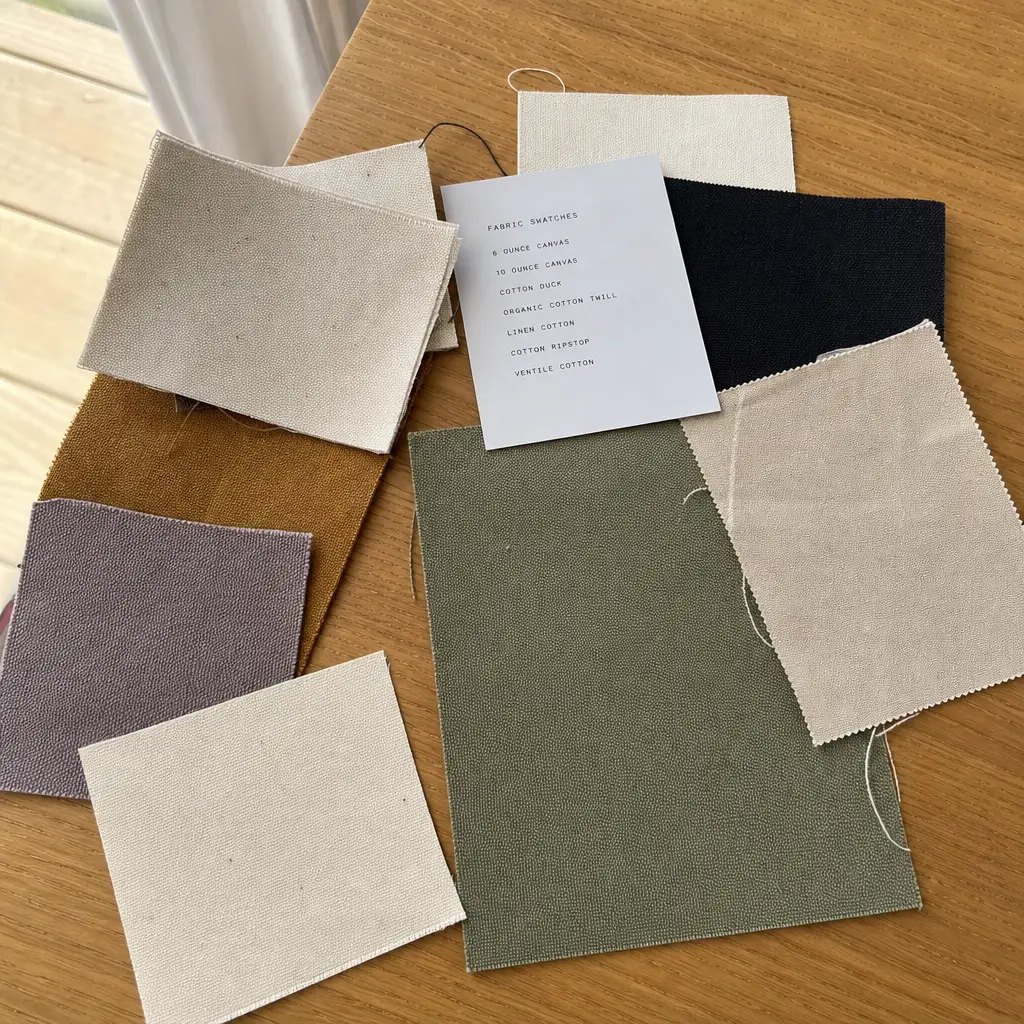
Ask for cut swatches from the current bulk lot or planned mill lot. Sample-book fabric is useful for early selection, but it may not show the stiffness, hairiness, shade, or fray behavior of the fabric used in production. For custom colors, approve a lab dip and then a bulk-lot swatch before cutting.
- Use 12 oz canvas for cost-driven giveaways only when soft structure is acceptable.
- Use 14 oz canvas for balanced studio merchandise and repeat programs.
- Use 16 oz canvas for premium retail, deboss branding, and better flat-packed presentation.
- Compare weave density, stiffness, and surface hairiness in addition to oz and GSM.
- Confirm whether structure comes from canvas weight, board, foam, or reinforcement.
Specify The Zipper Precisely
The zipper is the component most likely to create a functional complaint. If it jams, separates, or waves around the corners, the canvas quality no longer matters. A first sample that opens smoothly is not enough; bulk consistency depends on the zipper supplier, chain type, slider quality, tape behavior, and how the pattern handles corners.
YKK #5 metal or VISLON is a low-risk choice for premium retail and branded membership programs. It costs more, but it gives better traceability and more predictable performance. A generic #5 zipper can be acceptable for budget-sensitive programs if it is specified and tested. The PO should not say only metal zipper or good zipper. It should state tooth type, size, tape color, finish, slider style, puller, and test expectations.
Integration is as important as brand. A good zipper can still look poor if the length is wrong or the canvas is too stiff at the curve. Review close-up photos of the zipper corners on the pre-production sample and include zipper function in final inspection.
- Specify zipper brand or approved equivalent, size, tooth type, tape, finish, slider, and puller.
- Use branded zippers when resale value and warranty risk matter.
- If using generic zippers, require a pre-production cycle test and bulk function checks.
- Reject severe corner puckering, stuck sliders, separation, and uneven closure.
- Keep an approved zipper trim card with the final sample file.
Match Lining To Moisture And Brand Feel
Lining choice affects both the studio's brand impression and the product's practical use. Unbleached cotton drill suits a natural, low-sheen aesthetic. It feels consistent with cotton canvas and works well for document portfolios, retail accessories, and teacher training kits. The tradeoff is that natural cotton can vary in shade, absorb moisture, and show marks more easily.
A 210D polyester lining with light PU coating is more practical when the portfolio may touch damp towels, water bottles, or post-class items. It is easier to wipe and less absorbent. The tradeoff is a more synthetic hand feel and possible odor after sealed packing. If coated polyester is selected, add an air-out step, odor review, and chemical compliance documents where required by the buyer's market.
Interior construction should also be specified. Bound seams cost more but reduce fray and loose threads. A simple turned seam may be acceptable for lower-cost programs. For a product displayed at a studio counter, customers will open it before buying, so the inside finish should support the price point.
- Choose cotton drill for natural hand feel and low-gloss presentation.
- Choose PU-coated polyester for wipe-clean performance and light moisture exposure.
- Set lining shade tolerance for unbleached or custom-colored cotton.
- Add odor review and coating checks for PU-lined versions.
- Specify whether interior seams are bound, turned, or taped.
Select Branding That Works On Canvas
Canvas is textured, so logo methods behave differently than they do on paper proofs or smooth polyester. Water-based screen print is usually the most practical option for yoga studio portfolios. It gives a matte finish, a softer hand, and reasonable cost for repeat orders. The limitation is detail: very fine lines can fill in or disappear into the weave.
Blind debossing works well when the studio wants subtle branding. It is strongest on 14 oz or 16 oz canvas because denser fabric holds the impression better. The buyer should approve deboss depth on the actual production canvas. A clean paper proof does not predict whether the final mark will be visible or consistent.
Thick heat transfers, rubber patches, or glossy applications can work for some sports products, but they may feel out of place on a natural canvas portfolio unless the design direction supports that contrast. Whatever method is chosen, define measurable standards: logo size, placement tolerance, color reference, minimum line weight, crocking result, and acceptable variation.
- Use water-based screen print for soft, matte logos on cotton canvas.
- Use blind deboss for understated premium branding on heavier canvas.
- Approve strike-offs on production fabric before bulk production.
- Define minimum line weight and placement tolerance in the tech pack.
- Test printed logos for dry and wet crocking before shipment.
Do Not Ignore Reinforcement
Small construction details often decide whether the bulk order performs like the approved sample. If the portfolio includes a handle, loop, strap tab, pen loop, or D-ring, those stress points need their own specification. Same-fabric handles can look clean, but they need backing patches, correct thread, and bartacks. Without reinforcement, the item may pass a visual review and still fail during normal use.
Even when the product is intended for documents, users often add notebooks, chargers, small retail items, or personal belongings. If the design includes a carry feature, define a realistic static load test. The required load should match the intended use and product size; do not let the factory invent the standard after production starts.
Edge handling also matters. Canvas can fray at cut edges, especially with looser weaves. Binding, seam allowance, and interior cleanup should be reviewed on the PP sample. Ask for photos of hidden reinforcement before the lining closes if those details will not be visible later.
- Specify reinforcement patch size and material at handles, loops, and tabs.
- Define bartack count and thread type for stress points.
- Use a static load test when the portfolio has a carry handle.
- Review hidden construction photos before bulk sewing continues.
- Check fray control and loose threads inside the finished portfolio.
Packing Protects Retail Presentation
Canvas portfolios can be well made and still arrive looking poor if packing is under-specified. Common arrival problems include front-panel creases, zipper pressure marks, edge distortion, mildew spots, and stale odor. These are not only logistics issues; they affect sell-through and acceptance at destination.
Flat packing with an insert board is usually best for structured portfolios. The board helps protect the silhouette and reduces pressure marks from the zipper pull or stacked cartons. Tissue interleave reduces abrasion between units. Folded packing saves carton volume, but it increases the chance of a visible crease line across the front panel.
For ocean freight or humid destinations, moisture control should be written into the PO. Cotton canvas absorbs humidity, so desiccant, a carton liner, and sensible container-loading precautions are practical safeguards. Ask suppliers to quote packing details as a visible line item. A lower unit price may simply reflect no board, thinner polybags, higher carton compression, or no moisture protection.
- State flat pack or folded pack in the PO.
- Specify insert board thickness for structured retail presentation.
- Use tissue interleave to reduce abrasion on natural canvas.
- Add desiccant and carton liner for ocean freight or humid routes.
- Confirm carton dimensions and carton count for landed cost planning.
Compare Suppliers On Commercial Risk
A useful supplier comparison matrix should include more than the technical specification. Procurement needs to see landed cost, MOQ, lead time, approval workload, and quality risk side by side. A supplier quoting 16 oz canvas, YKK, bound interior seams, flat packing, and inspection support should not be compared directly with a supplier quoting 12 oz canvas, generic zipper, simple seams, and folded packing.
Normalize each quote to the same baseline before selecting a factory. At minimum, align outer fabric, lining, zipper, logo method, reinforcement, packing, carton count, inspection standard, and payment terms. Then separate recurring unit cost from one-time costs such as logo screen, deboss mold, custom zipper pull mold, lab dips, PP sample, courier charges, and third-party inspection.
MOQ and lead time should be tied to sourcing assumptions. If the quote uses natural in-stock canvas, the timeline may be shorter. If it needs custom dyeing, custom weaving, or special trim, the MOQ and approval schedule may change. The lowest first quote is not always the lowest landed cost once missing requirements are added back.
- Compare unit price, setup cost, packing cost, estimated carton volume, and inspection cost.
- List MOQ per style, per color, and per fabric lot.
- Flag vague terms such as export packing, cotton lining, and quality zipper.
- Ask where the lead-time risk sits: fabric, trim, logo approval, sewing, or booking.
- Use the same approved spec sheet for every supplier quote.
Set Lead Time Assumptions Clearly
Lead time ranges are only useful when the assumptions are visible. For a first order using available natural canvas, standard zipper, simple screen print, and quick approvals, a 7 to 10 week production path can be realistic in many established export supply chains. That assumes the buyer approves artwork, trims, PP sample, and packing without long revision loops. It also assumes material availability and stable factory capacity.
If the order requires custom-dyed canvas, custom woven labels, molded zipper pulls, special lining color, or multiple colorways, 12 to 15 weeks is a more cautious planning range. The longer path is not only sewing time. It includes lab dips, trim sourcing, strike-offs, sample revision, bulk material lead time, inspection scheduling, and freight booking.
Ask the factory to break the schedule into dates: deposit received, lab dip submitted, trims ready, PP sample sent, PP sample approved, bulk fabric ready, cutting start, sewing finish, final inspection, and cargo handover. This exposes bottlenecks early and makes buyer-side approval speed part of the plan.
- Confirm whether timing starts after deposit, artwork approval, lab dip approval, or PP sample approval.
- Ask if canvas, zipper, lining, and packing materials are already available.
- Plan extra time for custom dyeing, custom pullers, multiple colorways, or revised samples.
- Separate production lead time from freight transit and destination clearance.
- Keep approved carryover materials for repeat studio programs when possible.
Use QC Gates Before Final Inspection
A good QC process has checkpoints before the goods are fully packed. Start with material approval: canvas swatch, lining, zipper, logo strike-off or deboss, thread, binding, and packing materials. This confirms the ingredients before production money is committed.
The pre-production sample should be made with production materials and final construction. Review dimensions, zipper action, panel symmetry, lining fit, logo placement, handle reinforcement, interior finish, and packing fit. Replace subjective comments such as feels premium with measurable criteria: GSM tolerance, stitch density, deboss depth, logo placement tolerance, zipper cycle result, and acceptable odor level.
Top-of-production review is the next control point. Pull early pieces from the line and compare them with the approved PP sample. This is the right time to correct zipper waviness, weak debossing, shade drift, or lining twist before the full order is complete. Final inspection should then focus on the defects most likely to create claims: fabric marks, zipper function, stitching, logo quality, odor, reinforcement, and packing accuracy.
- Approve material card, PP sample, and TOP sample as separate gates.
- Keep signed photos of the approved sample from front, back, inside, zipper corners, and logo close-up.
- Use AQL 2.5 Level II for major defects unless the buyer requires a different standard.
- Separate critical zipper failures from cosmetic issues in the inspection checklist.
- Do not release shipment until packing and moisture controls match the PO.
Specification comparison for buyers
| Sourcing option | Typical commercial fit | Landed cost impact | MOQ and lead-time risk | Quality risk to control |
|---|---|---|---|---|
| 12 oz cotton canvas, generic #5 zipper, simple cotton or polyester lining | Event giveaways, low-price member gifts, mailer programs | Lowest material cost and lower freight weight, but may need insert board to feel structured | Often easier if fabric is in stock; custom color can still push MOQ up | Soft body, zipper waviness, transit creasing, and weak perceived value |
| 14 oz cotton canvas, quality generic or YKK #5 zipper, 8 oz cotton drill lining | Balanced studio merchandise, teacher training kits, mid-market resale | Moderate unit cost; good value when reinforcement and packing are included | Usually practical for repeat programs if natural or carryover colors are used | Confirm stiffness, zipper cycle result, lining shade, and stitch consistency |
| 16 oz cotton canvas, YKK #5 metal or VISLON zipper, cotton drill lining | Premium retail, flagship studio merchandise, corporate wellness gifts | Higher material cost and higher freight weight; better structure may reduce presentation claims | May require longer sourcing if weight, weave, or color is not available locally | Check GSM tolerance, deboss depth, corner puckering, and carton compression |
| 14 oz or 16 oz canvas with 210D PU-coated polyester lining | Hot yoga studios, damp-contact environments, wipe-clean requirement | Slight lining cost increase, usually offset by easier maintenance | Lead time depends on lining color and coating availability | Odor after sealed packing, coating consistency, and chemical compliance documents |
| Natural canvas with blind deboss branding | Minimal retail branding, boutique studio aesthetic | Higher setup and sampling attention; no ink cost on repeat orders | Requires sample approval on actual bulk canvas before production | Weak impression, uneven depth, fabric distortion, or poor logo visibility |
| Custom-dyed canvas with custom puller and woven label | Multi-location studio chains, branded launch collections | Higher setup cost, lab dip cost, trim cost, and approval workload | MOQ usually driven by dye lot, puller mold, and label minimums | Approval delays, shade variation, trim mismatch, and late artwork changes |
Buyer checklist before sampling
- Define the buying purpose first: retail resale, teacher onboarding, membership gift, corporate wellness kit, or event giveaway.
- List expected contents by weight and shape: documents only, tablet plus papers, notebook set, small retail inserts, or mixed use.
- Request current-lot canvas cut swatches and record both oz and GSM on the approval sheet.
- Ask whether quoted structure comes from heavier canvas, internal board, foam, or reinforcement so supplier prices are comparable.
- Write zipper brand, size, tooth type, tape color, finish, slider type, and puller style into the purchase order.
- Approve logo strike-off or deboss on production canvas, not on smooth substitute fabric or paper artwork.
- Set lining requirements for material, shade tolerance, odor, wet crocking, and interior seam finish.
- Specify packing format: flat or folded, insert board thickness, tissue interleave, polybag type, carton count, and carton liner.
- Break lead time into fabric, lab dip, trims, PP sample, production, inspection, and freight booking stages.
- Require final inspection with separate checks for zipper function, stitching, logo, odor, moisture protection, and carton readiness.
Factory quote questions to send
- Which canvas weight, GSM, weave, composition, and mill source are included in this quote?
- Is the quoted fabric in stock, greige stock to be dyed, or a new mill order? What MOQ applies per color?
- What is the unit price difference for the same design in 12 oz, 14 oz, and 16 oz canvas?
- Does the quoted construction include board, foam, binding, reinforcement patches, or added stiffener? If yes, what material and thickness?
- Which zipper supplier, size, tooth type, slider, finish, and tape material are quoted?
- Can you provide branded zipper traceability or authorized distributor documentation if YKK or another named brand is specified?
- What zipper cycle test do you perform before packing, and what sample size is checked from bulk production?
- What lining material and finish are quoted, and how do you control shade, odor, and wet crocking?
- What stitch density, thread type, bartack count, and reinforcement method are used at stress points?
- Can you separate unit cost, one-time charges, packing cost, sampling cost, inspection support, and estimated carton dimensions for landed cost comparison?
Quality-control points to confirm
- Canvas GSM tolerance: +/-5% from approved specification, measured from at least 3 rolls per lot with circular cutter and digital scale.
- Fabric appearance: no major oil marks, mildew spots, large slubs, excessive hairiness, or visible shade panels on the front face.
- Color consistency: compare bulk rolls to approved swatch or lab dip under standard lighting; isolate rolls outside the agreed shade band.
- Zipper function: AQL 2.5, General Inspection Level II; reject stuck sliders, missing teeth, separation, severe puckering, or uneven closure.
- Zipper alignment: corners must close smoothly without twisting, bulging, or visible chain distortion beyond approved sample.
- Stitch density: 8-10 stitches per inch on main seams, with no skipped stitches longer than 3 mm and no loose thread clusters on visible panels.
- Bartack reinforcement: minimum 28 stitches per bartack on handles, loops, or tabs, with reinforcement patch present where specified.
- Print durability: dry crocking minimum grade 4 and wet crocking minimum grade 3 per AATCC 8 for printed logos.
- Deboss control: compare depth and clarity to approved production-fabric standard; reject shallow, uneven, or distorted marks.
- Packing inspection: verify insert board, tissue, desiccant, carton liner, carton count, and no front-panel pressure marks before shipment.