Start with the retail use, not the fabric name
A canvas zipper portfolio for a museum shop is not a generic document pouch. The material decision depends on what the shop will sell inside or alongside it: exhibition prints, postcards, children’s art sets, sketch books, archival-looking stationery, or branded membership packs. Each use changes the required stiffness, opening size, lining color, and zipper strength. If the RFQ only says “canvas zipper portfolio, natural cotton, custom logo,” the factory can quote a wide range of products that look similar in a photo but perform very differently in retail handling.
Procurement teams should define the selling format before asking for price. A portfolio sold empty needs good handfeel and neat retail presentation. A portfolio bundled with prints must protect corners and avoid dye transfer. A portfolio used for workshop kits may need stronger zipper ends and easy cleaning. Material selection becomes easier when the product is described by load, insert size, and shelf presentation instead of by a vague bag category.
- For A4 or US letter paper goods, build the finished size around internal usable space, not just outer dimensions.
- For fine art prints or premium postcards, avoid dark or unstable lining unless rub testing is passed.
- For children’s kits, select a zipper pull that is easy to grip and a fabric that tolerates repeated handling.
- For high-value museum retail, prioritize consistent fabric shade, neat sewing, and flat packing over the lowest fabric cost.
Choose canvas weight by structure, not by habit
Canvas weight is usually quoted in ounces per square yard, while many factories also convert to GSM. For zipper portfolios, 10 oz is often the light commercial entry point, 12 oz is a balanced retail specification, and 14-16 oz creates a stronger, more premium feel. In approximate terms, 10 oz is around 340 GSM, 12 oz around 400 GSM, 14 oz around 475 GSM, and 16 oz around 540 GSM. Actual GSM can vary by weave and finishing, so the quote should show both the named weight and the measured range.
The common mistake is assuming heavier is always better. Heavy canvas gives structure but also makes zipper corners thick, raises sewing difficulty, and increases shipping weight. A flat portfolio made from 16 oz canvas can become bulky at the seams unless the pattern, seam allowance, and binding are designed for it. For most museum shop programs, 12 oz canvas with good reinforcement gives a stronger commercial result than an unnecessarily heavy fabric cut to a weak pattern.
- 10 oz canvas: acceptable for budget document sleeves, light inserts, and promotions where soft structure is fine.
- 12 oz canvas: recommended for standard museum shop zipper portfolios with retail-quality handfeel.
- 14 oz canvas: useful for premium collections if the factory can control corner bulk and zipper sewing.
- 16 oz canvas: consider only when a very rigid, rugged appearance is required and freight impact is accepted.
Natural, dyed, washed, or laminated canvas changes the risk profile
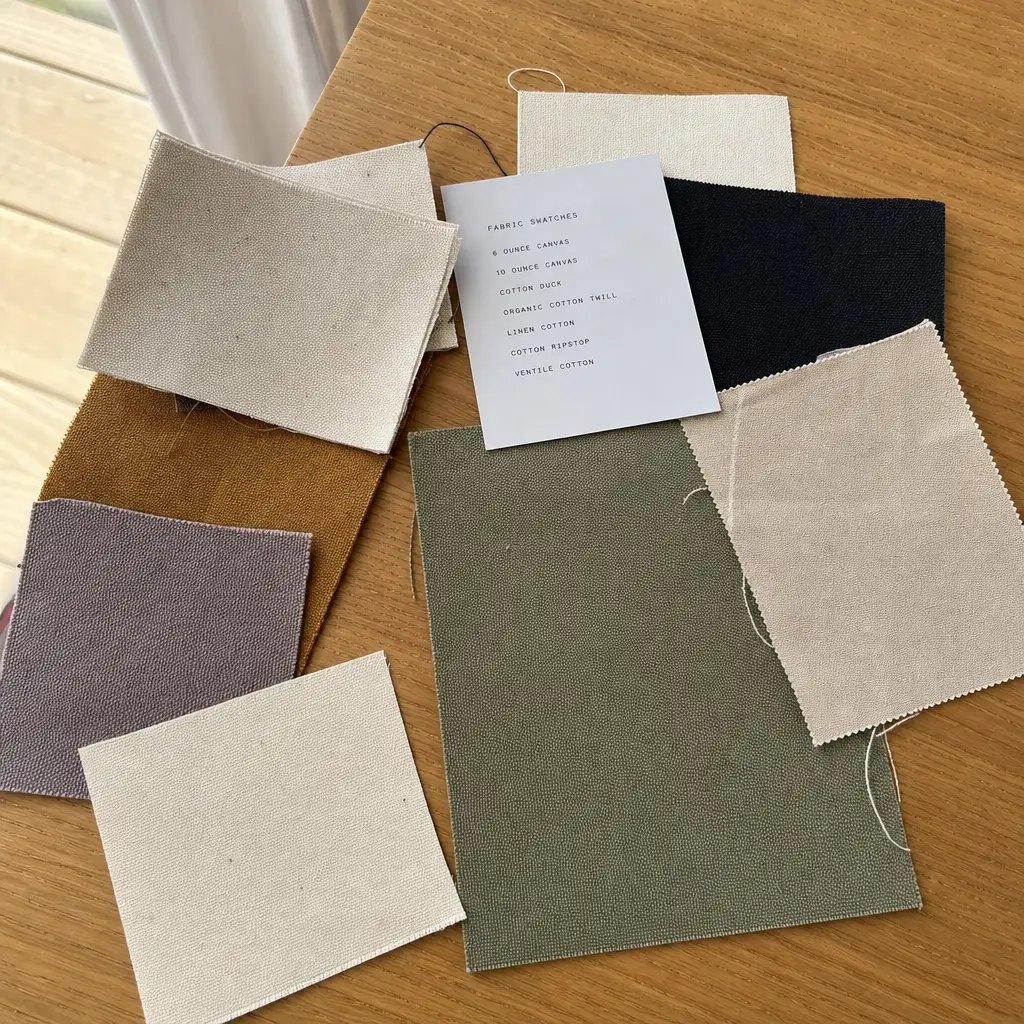
Natural unbleached canvas is popular for museum shops because it feels authentic and pairs well with art, heritage, and sustainability messaging. Buyers still need to control expectations. Natural cotton can show seed specks, yarn slubs, shade differences, and small weave irregularities. These are not always defects unless the approved standard says so. The correct way to manage this is to approve a fabric reference swatch and define what level of natural variation is acceptable for retail sale.
Dyed canvas gives stronger brand control but adds color matching, dye fastness, and MOQ risk. Washed canvas gives a softer touch and can reduce later shrinkage, but it may create a more relaxed surface and slight size variation. Laminated canvas can improve wipeability and structure, but it changes the handfeel and may not suit a natural museum shop aesthetic. The material choice should match the brand position and the defect tolerance of the retail channel.
- Natural canvas: lower color development complexity, but shade and speck variation must be accepted within limits.
- Dyed canvas: better brand color control, but usually higher MOQ and longer lead time.
- Washed canvas: softer and more stable, but final size tolerance should be checked carefully.
- Laminated canvas: cleaner surface and more stiffness, but less natural touch and possible crease marking.
Lining is a cost driver and a product protection decision
Many buyers focus on the outer canvas and treat lining as a minor detail. For museum shops, lining can decide whether the portfolio protects or damages the product inside. Polyester lining in 150D to 210D is cost-efficient, smooth, and relatively stable. Cotton lining feels more consistent with a natural canvas product, but it may wrinkle, shrink, or cost more. If the portfolio carries prints, postcards, or catalog sheets, the lining must be smooth enough to avoid abrasion and color-safe enough to prevent transfer.
The safest specification for paper goods is a light or medium lining color with documented rub performance. Black lining looks premium but should be tested against white paper, especially in humid conditions. If a buyer wants custom printed lining with exhibition artwork, the MOQ and sample path change. Printed lining often needs separate artwork approval, fabric preparation, and color tolerance. It can be a good retail feature, but it should not be added late in development without schedule allowance.
- Use polyester lining when cost control, smoothness, and stable sewing are priorities.
- Use cotton lining when the brand story requires a fully textile, natural feel.
- Avoid unstable dark lining for portfolios packed with white or light-colored paper goods.
- Budget extra sample time for printed lining, contrast piping, or custom inside labels.
Zipper selection should match opening size and corner stress
For canvas zipper portfolios, a No.5 nylon zipper is usually the practical choice. It is stronger than No.3, smoother than many metal zippers, and easier to sew around fabric thickness. No.3 zipper can work for small flat pouches, but on A4 or larger portfolios it may feel undersized and less durable. Metal zippers create a premium look but add cost, weight, and possible scratching risk if the portfolio holds paper prints or coated materials.
The zipper is also a design component. Museum shops often prefer a quiet, refined look: natural canvas with black, beige, or antique brass zipper details. The RFQ should specify zipper tape color, slider finish, puller style, and whether a custom fabric pull tab or metal logo puller is required. The factory should also explain how zipper ends are reinforced. A zipper that looks neat in a flat photo can fail when the buyer repeatedly opens the portfolio at the corner.
- Use No.5 nylon zipper for most A4, US letter, and medium portfolio sizes.
- Choose zipper tape color early because it affects stock availability and MOQ.
- Add fabric pull tabs when the product needs easier grip or a more crafted look.
- Require functional testing after the portfolio is loaded with realistic inserts.
Print and branding method must fit rough canvas texture
Screen printing is normally the most reliable logo method for a canvas zipper portfolio when the artwork is solid and not too fine. It works well for museum names, exhibition titles, simple icons, and one to three spot colors. Water-based ink can keep a softer handfeel, while plastisol or rubberized inks may sit more visibly on the surface. The right choice depends on the design, the canvas texture, and whether the buyer wants a refined or handmade appearance.
Fine typography, thin lines, gradients, and detailed artwork are difficult on coarse canvas. Heat transfer can hold more detail but may look less integrated with natural fabric and can raise adhesion questions. Embroidery gives a premium textile feel but may pucker the panel, especially on flat portfolios where smoothness matters. Woven labels are often the best long-term branding option for museum retail collections because they are consistent, durable, and can be sewn into a side seam or front panel.
- For solid logos and exhibition marks, use screen print and approve a strike-off on final canvas.
- For repeat stock programs, consider a woven CTM-style side label plus optional printed artwork.
- For high-detail images, test transfer print before committing to bulk production.
- For embroidery, specify backing, stitch density, and acceptable puckering limits.
MOQ logic depends on the materials behind the quote
MOQ for a canvas zipper portfolio is not only a factory policy. It is driven by fabric availability, dyeing lot size, lining purchase minimums, zipper color, printing setup, and packing materials. A simple natural canvas portfolio with stock lining and stock zipper may be feasible at 300-500 pieces per size and design. A dyed canvas version with custom lining, custom zipper tape, and several print colors may require 500-1000 pieces or more to keep production efficient.
Buyers comparing quotes should identify whether each supplier is quoting the same MOQ basis. Some factories quote MOQ per total order, while others mean per color, per size, or per artwork. This distinction matters for museum shops, where buyers may want three exhibition designs in smaller quantities. A low MOQ can be useful, but it may rely on stock fabric, limited color choices, higher unit cost, or less strict shade continuity for repeat orders.
- Clarify MOQ per size, per canvas color, per lining color, per zipper color, and per print design.
- Separate one-time development cost from repeat order unit cost.
- For exhibition programs, plan artwork versions early to avoid multiple small inefficient production runs.
- If repeat ordering is expected, reserve the fabric specification and color reference for future lots.
Sample approval should prove material behavior, not only appearance
A good sample process for museum shop portfolios has more than one step. The buyer may first approve fabric swatches, lining swatches, zipper options, and logo strike-offs. After that, a fit sample proves size, construction, and insert clearance. The pre-production sample should use the final canvas weight, final lining, final zipper, final logo method, and final packing approach. Skipping these steps often creates surprises in bulk production, especially with shrinkage, zipper tension, or logo clarity.
The sample should be tested with the real contents. If the portfolio is meant for an A4 print set, place the print set inside, close the zipper, stack several samples, and check corner pressure. If it is sold as a sketch kit, load the sketch pad, pencils, and booklet to see whether the zipper catches or the panel distorts. Approval comments should be written with measurable changes, not only “make it better” or “looks too soft.”
- Measure finished outer size and internal usable size after sample pressing and packing.
- Open and close the zipper at least 30-50 times during sample review to find catching points.
- Rub printed areas by hand and with tape according to the intended print method.
- Place white paper against lining and dark canvas to check visible transfer risk.
- Photograph approved seam details, zipper ends, label position, and carton packing for production reference.
Packing decisions affect shelf condition and freight cost
Flat canvas portfolios can be damaged by poor packing even when sewing quality is good. Natural canvas picks up dust easily. Zippers can leave pressure marks if pieces are compressed unevenly. Heavy cartons can bend corners when oversized portfolios are packed without support. For retail buyers, packing is not just export protection; it controls how much work the shop staff or distributor must do before goods reach the shelf.
Common options include individual polybags, recyclable polybags, paper bands, glassine-style sleeves, hangtags, barcode stickers, and inner cartons by design. Some museum shops prefer less plastic, but a completely unprotected natural canvas product can arrive dusty or scuffed. A balanced solution is often a recyclable protective bag or paper band inside a clean master carton, with cartons lined if the canvas is light colored. The RFQ should request carton quantity, carton dimensions, gross weight, and whether items are packed flat, nested, or separated by paper.
- Use individual protection when the portfolio is natural canvas, light colored, or retail-ready.
- Add paper interleaving if dark zipper pullers or printed surfaces may mark adjacent pieces.
- Avoid over-compression that creates zipper lines or corner distortion.
- Request carton measurements early for freight quoting and warehouse planning.
Lead time risk sits in fabric finishing, printing, and approvals
A typical production schedule starts only after final sample approval, artwork approval, and deposit. Stock natural canvas with simple screen print may move faster than dyed or washed canvas, but buyers should still allow time for material purchase, cutting, printing, sewing, inspection, packing, and export preparation. Custom dyed canvas, custom zipper tape, custom lining, or printed lining can extend the schedule because each component needs its own approval and production slot.
Museum shops often buy around exhibition openings, holiday retail, or membership campaigns. Late approval of artwork or packaging is a major risk because the factory cannot cut and print confidently without final dimensions and logo placement. A practical schedule includes buffer for one sample revision and one packaging correction. The supplier’s lead time should be quoted as “after pre-production sample approval,” not from the first inquiry date.
- Fastest route: stock natural canvas, stock zipper, stock lining, one-color screen print.
- Medium route: washed canvas, custom label, two to three print colors, retail hangtag.
- Longer route: dyed canvas, printed lining, custom zipper puller, multiple artwork versions.
- Highest schedule risk: late artwork, unclear size, unapproved packing, or changing lining after sampling.
Specification comparison for buyers
| Spec decision | Recommended option | When it fits | Buyer risk to check |
|---|---|---|---|
| Outer canvas weight | 12 oz / about 400 GSM cotton canvas for a structured retail portfolio | Best for museum shops selling A4 prints, exhibition notes, sketch sets, or premium stationery bundles | Too light below 10 oz can wrinkle after packing; too heavy above 16 oz increases freight and may make corners bulky |
| Canvas finish | Washed natural or dyed canvas with controlled shrinkage before cutting | Useful when the buyer wants a soft handfeel and less post-production distortion | Unwashed canvas can shrink after printing or steaming; confirm shrinkage tolerance and final size after finishing |
| Lining material | 150-210D polyester or 6 oz cotton lining depending on price and brand feel | Polyester lining keeps cost and weight down; cotton lining supports a more natural museum-store story | Dark lining may stain light inserts if dye fastness is poor; cotton lining can shrink and wrinkle more |
| Zipper type | No.5 nylon zipper with metal puller or branded pull tab | Suitable for portfolios holding paper goods, tickets, catalog sheets, tablets, or small gift sets | No.3 zipper can feel weak on larger sizes; metal zipper may scratch inserts and costs more |
| Logo method | Screen print for solid artwork; woven label for repeat collections; embroidery only for small simple marks | Screen print suits exhibition logos and museum branding with clean color; labels suit ongoing stock programs | Fine typography can fill in on rough canvas; embroidery can pucker the panel if the backing is not specified |
| Reinforcement | Binding on edges plus bartack or reverse stitching at zipper ends and pull stress points | Important for portfolios handled repeatedly on retail shelves and at checkout | Flat portfolios often fail at zipper ends first; sample must be opened and closed under load |
| Retail presentation | Individual recyclable polybag or paper band plus carton packing by color and design | Works for distributors needing barcode control and museum shops needing clean shelf stock | Unprotected natural canvas can pick up carton dust; over-tight packing can leave zipper dents |
| MOQ logic | 300-500 pcs per size/color for plain canvas; 500-1000 pcs for dyed canvas or custom printed lining | Good planning range for museum shop seasonal launches and exhibition-specific runs | Low MOQ quotes may hide stock fabric limitations, higher unit price, or color variation between batches |
Buyer checklist before sampling
- Define the exact insert size first: A4, US letter, postcard set, print pack, sketch pad, tablet, or mixed retail kit.
- Set the finished portfolio size with internal clearance, not only outer dimensions; add practical allowance for lining and zipper binding.
- Choose canvas weight by use case: 10 oz for budget flat goods, 12 oz for standard retail structure, 14-16 oz for premium heavy-duty handling.
- State whether natural canvas specks, slubs, and shade variation are acceptable; this prevents disputes on unbleached cotton.
- Specify lining material, lining color, and whether colorfastness against paper inserts is required.
- Confirm zipper size, zipper tape color, slider finish, puller style, and whether the zipper must pass repeated open-close testing.
- Match the artwork to the fabric surface; avoid small serif text on coarse canvas unless a test print is approved.
- Approve a pre-production sample using final fabric, final zipper, final lining, and final print or label method.
- Define packing style for retail: individual bag, paper band, barcode sticker, hangtag, carton quantity, and carton orientation.
- Require quote data by size, fabric GSM, logo method, packaging, MOQ tier, sample charge, production lead time, and carton measurements.
Factory quote questions to send
- What exact canvas weight in oz and GSM will be used, and is it stock greige, washed, dyed, or custom finished?
- What is the expected shrinkage tolerance after washing, dyeing, printing, or pressing, and how is final size controlled?
- Which lining options are available at the target MOQ, and what is the colorfastness performance for dark or dyed lining?
- Which zipper specification is included in the quote: No.3 or No.5, nylon or metal, tape color, slider finish, and puller type?
- What logo methods are suitable for our artwork on this fabric, and what is the minimum printable line width you recommend?
- Does the quoted MOQ apply per design, per fabric color, per lining color, per zipper color, or per total order?
- What sample types are included: material swatch, print strike-off, fit sample, pre-production sample, and shipment sample?
- What is the estimated production lead time after sample approval and deposit, and what processes are on the critical path?
- What are the packed carton dimensions, gross weight, carton quantity, and whether portfolios are packed flat or slightly folded?
- Which QC tests are normally performed for zipper function, seam strength, print adhesion, color shade, odor, size tolerance, and needle damage?
Quality-control points to confirm
- Finished size tolerance should normally be controlled within +/-5 mm for small to medium portfolios and agreed separately for oversized art print cases.
- Zipper must run smoothly across the full opening without catching lining, binding, or corner seam bulk.
- Zipper end points and pull stress points should be bartacked, reverse stitched, or otherwise reinforced according to the approved sample.
- Print adhesion should be checked by tape test or rub test suitable for the selected ink and canvas surface.
- Logo position tolerance should be agreed before production; +/-3 mm to +/-5 mm is more realistic than visual judgment only.
- Natural canvas shade, seed specks, and yarn slubs must be evaluated against an approved reference swatch, not against a digital photo.
- Dark lining or dyed canvas should pass dry rub checks against white paper or light cloth before packing with museum prints.
- Stitch density, thread color, and skipped stitches should be inspected on zipper seams, binding seams, corners, and label attachment.
- Odor and moisture should be checked before carton closing, especially for washed canvas, heavy ink coverage, or rainy-season production.
- Carton drop and compression risk should be reviewed when portfolios are packed with rigid cardboard inserts or retail gift sets.