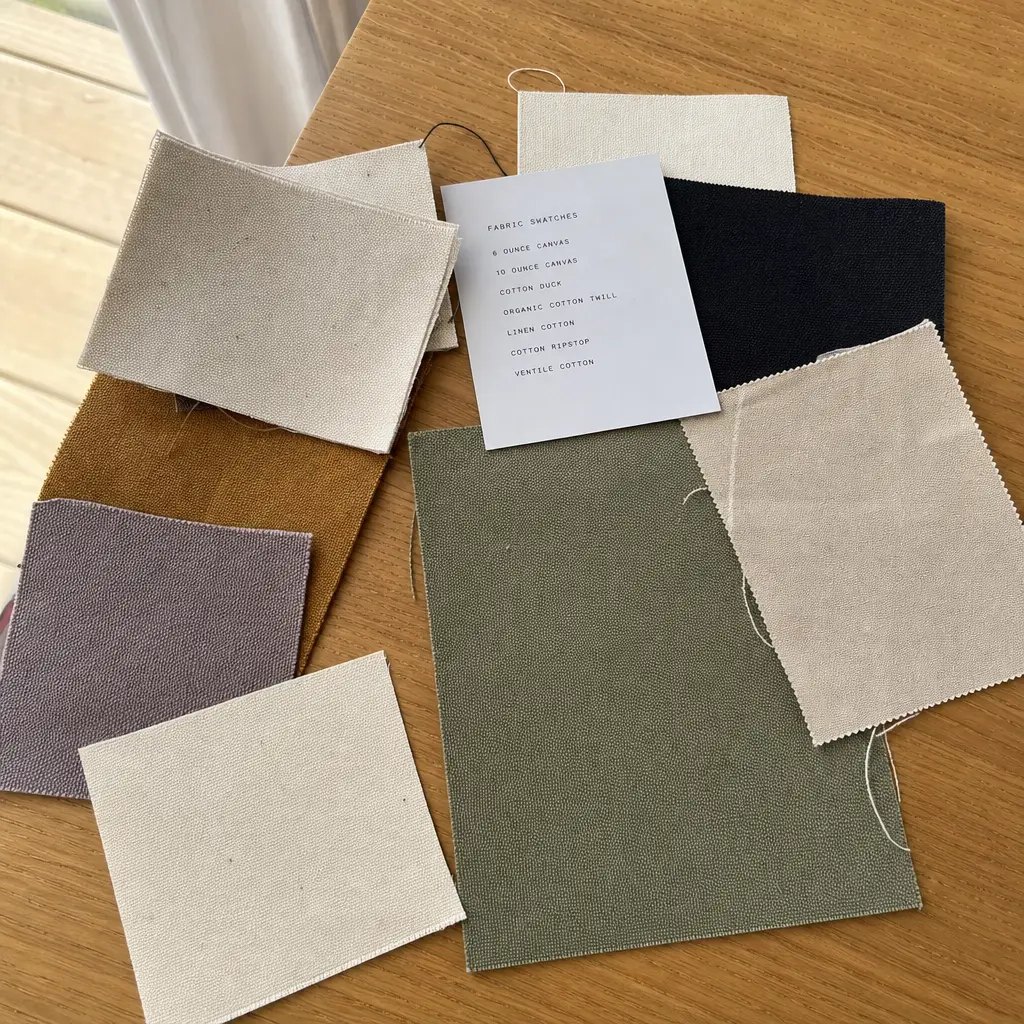
Start with the portfolio's job, not the fabric name
A canvas zipper portfolio for a coffee roaster is rarely just a document pouch. In B2B use, it may carry wholesale price sheets, cupping forms, origin cards, menu templates, training manuals, tablet accessories, loyalty program materials, distributor agreements, or a retail gift bundle. The material decision should follow that job. A portfolio given to cafe partners needs to look durable after months of field use. A portfolio sold beside beans needs a clean retail finish and consistent shelf presentation. A trade show handout can be simpler, but it still needs a zipper that does not fail before the buyer gets home.
Before requesting quotes, define who will use the portfolio, how often it will be opened, and what must fit inside. A roaster's wholesale team may open and close it multiple times per day in cafes, while a holiday gift set portfolio may be opened occasionally but must look premium when unboxed. This difference affects canvas weight, lining, zipper grade, logo method, structure, and packing. A supplier cannot quote accurately if the RFQ only says "canvas zipper portfolio with logo" because that phrase leaves too many cost and quality variables open.
Procurement teams should also decide whether the portfolio is a reusable business tool or a brand impression item. A business tool needs stronger zipper components, practical pockets, dark color options, and clear tolerance for document size. A brand impression item may need better fabric handfeel, refined labeling, retail tags, and flatter packing. These choices should be documented in the specification before price comparison so all suppliers quote the same product.
- For wholesale sales kits, prioritize zipper strength, structure, stain-resistant darker colors, and pocket durability.
- For retail merchandise, prioritize clean sewing, flat packing, surface cleanliness, logo finish, and consistent fabric shade.
- For cupping and training materials, prioritize document fit, lay-flat opening, pen storage, and easy paper removal.
- For distributor onboarding, prioritize carton labeling, SKU separation, repeatable logo placement, and reorder consistency.
- For event giveaways, simplify pockets and use standard components, but avoid fabric and zipper grades that feel disposable.
Choose canvas weight by handfeel, sewing risk, and freight impact
Most commercial canvas zipper portfolios use cotton canvas in the range of 10 oz to 16 oz, roughly 280 GSM to 540 GSM depending on weave and finishing. For coffee roasters positioning themselves as premium, 12 oz to 14 oz is often the workable middle ground. It feels stronger than thin cotton sheeting but does not become too bulky around zipper corners. A 16 oz canvas can look excellent on a simple, rugged portfolio, but it needs careful seam planning, suitable machines, and realistic expectations for carton weight.
Buyers often compare quotes by unit price and miss that one supplier quoted 10 oz stock canvas while another quoted 14 oz dyed canvas with lining. Those are not equal products. Fabric weight should be stated in both oz and GSM where possible because mills and bag factories may use different references. The quotation should also state whether the GSM is before or after washing, dyeing, coating, or finishing. A washed canvas may feel heavier or softer even when the base fabric is similar.
Fabric weight alone does not determine structure. A 12 oz canvas with interlining may feel more presentation-ready than a 16 oz unlined canvas that curls at the edges. A tight weave can print better than a loose weave at the same weight. Heavy fabric can create thick seam stacks at zipper ends, which may cause skipped stitches, uneven corners, or high rejection rates if the pattern is not adjusted. For bulk purchasing, the best material is not always the heaviest one; it is the one that meets the use case with repeatable sewing quality and predictable freight cost.
- 10 oz canvas: acceptable for budget or event use, but may wrinkle, collapse, and feel more promotional.
- 12 oz canvas: practical for branded coffee portfolios with screen print, woven label, lining, or binding.
- 14 oz canvas: stronger handfeel for retail or wholesale kits, with moderate sewing complexity.
- 16 oz canvas: premium and rugged, but quote zipper corners, seam bulk, needle size, and freight weight carefully.
- Ask for the quoted GSM tolerance and a swatch from the same fabric source intended for bulk production.
- Compare carton gross weight and units per carton because heavier canvas can change landed cost even when unit price looks attractive.
Natural, dyed, pigment dyed, or washed canvas: what changes in production
Natural canvas works well for specialty coffee brands because the unbleached cotton look matches kraft packaging, roasting equipment, and earthy retail displays. It is also easier to manage than custom dyed fabric when the buyer accepts natural shade variation. The risk is that natural cotton is never perfectly uniform. Seed flecks, slubs, and tone variation are normal unless the buyer specifies a cleaner bleached, combed, or selected-grade fabric. Those changes may improve appearance but can also change cost and the intended natural look.
Dyed canvas gives stronger brand control, especially for black, navy, olive, charcoal, or dark brown portfolios used by sales teams and distributors. However, custom dyeing introduces MOQ logic, lab dip approval, shade tolerance, and possible colorfastness checks. If the portfolio touches white menus, catalogs, or light-colored packaging, dark dyed canvas should be checked for dry and wet rubbing. Pigment dyed canvas can create a lifestyle look but may show intentional surface variation, which must be approved by brand and quality teams before bulk production.
Washed canvas can create a softer handfeel and vintage appearance, but it may shrink and distort panels if the process is not controlled before sewing. For zipper portfolios, post-wash distortion can make the zipper wave, corners curl, or pockets become uneven. If a washed effect is required, it should be developed during sampling with the actual pattern, zipper, and lining. Adding a wash after price approval is risky because it can change dimensions, logo appearance, and packing behavior.
- Natural canvas: lower color development burden and suitable for earthy coffee branding, but shade variation must be accepted in writing.
- Bleached or cleaner natural canvas: smoother appearance for retail, but less rustic and often higher cost.
- Dyed canvas: stronger brand color and more uniform programs, usually with higher MOQ and lab dip approval.
- Pigment dyed canvas: casual lifestyle effect, but expect surface variation and possible rubbing considerations.
- Washed canvas: soft touch and vintage look, but higher risk of shrinkage, panel distortion, zipper waviness, and size variation.
- Dark dyed canvas should be rub tested if it will touch white documents, menus, stickers, or light-colored coffee packaging.
Lining and structure determine whether the portfolio feels retail-ready
A canvas exterior can look good in photos but feel weak if the inside is unfinished. For coffee roaster portfolios, common lining choices include 210D polyester, 300D polyester, cotton sheeting, or no lining with bound seams. Polyester lining is cost-effective, reduces friction, and helps documents slide in and out. Cotton lining gives a more natural material story but can wrinkle and may require more careful cutting and sewing. No lining can work for simple portfolios, but the seams must be bound cleanly so the product does not look unfinished when opened.
Structure is a separate decision from lining. Some buyers want a soft folder that packs flat and can be carried inside a tote or backpack. Others want a firm presentation portfolio that protects price sheets, menus, certificates, or distributor materials. A light interlining can improve body without making the folder stiff. Board reinforcement can create a premium presentation effect, but it adds weight and can crack, bend, or dent if the portfolio is folded, packed tightly, or shipped under compression.
Interior design should be practical rather than overbuilt. A common layout is one large document sleeve, one smaller card pocket, one pen loop, and optionally one flat pocket for stickers, tasting cards, or coupons. Every extra pocket adds cutting, alignment, sewing time, and tolerance risk. If the loaded portfolio becomes too thick, the zipper may strain or the corners may deform. The final sample should be tested with the actual insert stack, not only blank paper.
- Use 210D or 300D lining when durability, clean interior appearance, and easy document insertion matter more than all-natural material claims.
- Use cotton lining when the brand story requires cotton inside and outside, but approve wrinkle appearance and shrinkage behavior in the sample.
- Use seam binding for unlined portfolios to avoid raw edge fraying and a cheap interior look.
- Use light interlining for better shape while keeping the portfolio packable and easier to sew.
- Use board reinforcement only when the packing method protects flat panels and the buyer accepts added weight.
- Test actual inserts because inner pocket size can shrink after seam allowance, binding, lining, and corner construction.
Zipper selection is a functional decision, not a decorative detail
For most canvas zipper portfolios, a No.5 nylon coil zipper is the safest standard. It bends around corners better than metal teeth, runs smoothly, and keeps cost under control. Nylon coil is also forgiving when the portfolio is flat packed and later handled by sales teams or retail customers. If the design has a long zipper path around two or three sides, coil zipper is usually more reliable than a stiff metal zipper.
Metal zippers can add a premium look, especially in antique brass, nickel, or gunmetal finishes, but they add weight and require more careful pattern design. If the zipper turns around corners, metal teeth may feel stiff or uneven unless the corner radius is generous. Metal teeth can also scratch papers or printed panels if the interior is poorly arranged. For premium coffee gift sets, metal may be appropriate, but the sample must be tested with real inserts and repeated opening cycles.
The slider and puller deserve the same attention as the zipper tape. A well-made canvas body with a weak puller creates immediate quality complaints. Coffee roaster buyers may request a branded metal puller, leather tab, cotton tape pull, or simple molded puller. Each option affects MOQ, tooling, lead time, and QC. A custom metal puller may require tooling and higher minimums, while a fabric pull tab can be made more flexibly but must be reinforced so it does not tear away from the slider.
- Specify zipper size, zipper type, tape color, tooth color, slider finish, puller style, and puller attachment method.
- Use No.5 nylon coil for reliable daily opening on most portfolio shapes and curved zipper paths.
- Use metal zipper only after approving smoothness around corners, pull effort, document protection, and total product weight.
- Include zipper open-close cycling in QC, not just visual inspection of the finished portfolio.
- Check that lining, seam allowance, and loose threads stay away from the zipper path to prevent catching.
- If using custom pullers, confirm tooling cost, MOQ, lead time, finish tolerance, and whether replacement sliders are available.
Logo method should match coffee artwork and reorder plans
Coffee roaster artwork often includes small origin names, roast level marks, mountain lines, fine typography, certification icons, or QR codes. These details do not always print well on coarse canvas. Screen printing is efficient for bold logos, one to three colors, and medium-to-large production runs. It gives a strong branded look on natural or dyed canvas, but fine text can break if the fabric surface is rough or the ink spreads into the weave. Ink opacity also matters on dark canvas.
Heat transfer can handle more detail and more colors, but it may not match a natural canvas handfeel if the film edge is visible or glossy. Embroidery is durable and premium for simple marks, but it can pucker lighter panels and is not suitable for tiny coffee origin text. Woven labels, cotton labels, leather patches, cork patches, and PU patches are useful when the same portfolio body is used across multiple roaster programs or distributor SKUs. A sewn label also avoids some print registration issues on textured fabric.
For B2B procurement, logo selection should consider reorders. If multiple coffee locations, blends, or distributor territories need the same base portfolio, a standard body with a changeable label or printed panel may reduce inventory risk. If the portfolio is a retail item, logo placement should feel intentional and balanced when the portfolio is closed and when it is displayed open. Approve a real strike-off or label sample before the PP sample when artwork includes small text, tight registration, or a color-critical brand mark.
- Screen print: best for bold logos and clear brand blocks; confirm ink opacity on dark canvas and ink penetration on rough canvas.
- Heat transfer: useful for detailed artwork, gradients, or QR codes; test edge feel, gloss level, and adhesion.
- Woven label: flexible for repeat programs and lower artwork risk; approve label density, color matching, cut edge, and stitch placement.
- Cotton printed label: natural look with lower surface impact; check fraying and print clarity.
- Leather, cork, or PU patch: premium look; confirm material expectations, compliance requirements, edge finish, and stitch strength.
- Embroidery: durable for simple marks, but check puckering, thread color, backing, and suitability for small typography.
MOQ logic: fabric, zipper, label, and color each have their own minimums
The stated MOQ for a canvas zipper portfolio is not a single fixed number in real production. It depends on whether the order uses stock canvas, custom dyed canvas, standard zipper tape, custom zipper color, printed logo, woven label, patch, custom puller, or special packing. A factory may accept a lower quantity using stock natural canvas and standard black zipper, while the same design in custom Pantone dyed canvas may require a higher fabric minimum from the dye house.
Procurement teams should separate MOQ by component. This prevents a common mistake: approving a small trial order with custom details that the factory cannot repeat economically. For coffee roasters planning distributor rollouts, it can be smarter to keep the base body standard and change only the printed logo, sewn label, hangtag, or insert card. That gives better reorder flexibility and reduces dead stock risk. It also helps the factory plan material usage more efficiently.
MOQ also affects price breaks. The first quantity may carry screen charges, sample cost, label setup, fabric minimum surcharge, or unused material cost. A reorder may be cheaper only if the same materials remain available and the supplier can reuse screens, labels, or components. Ask whether fabric, zipper tape, labels, and pullers are stock items or custom-produced items. If a buyer expects repeat orders, this information is more important than the first unit price alone.
- Stock natural canvas usually supports lower MOQ than custom dyed canvas.
- Standard zipper colors such as black, natural, navy, and white are easier to source than custom tape colors.
- Woven labels may have a label supplier MOQ even if the bag factory accepts a smaller sewing quantity.
- Custom metal pullers, branded sliders, and embossed patches usually involve tooling and higher minimums than fabric pull tabs.
- If multiple roaster locations share one portfolio body, quote total fabric quantity and separate logo or label runs.
- Ask which components can be stored for reorders and who owns leftover labels, patches, screens, or custom hardware.
Sample approval should reproduce the final production path
A prototype made from available sample-room canvas can show shape, pocket layout, and general size, but it cannot prove the final product. For serious orders, the pre-production sample should use the approved bulk fabric, final zipper, correct lining, actual logo process, real label or patch, intended interlining, and final packing. This is especially important when the portfolio is used for retail sale, distributor presentation, or a major wholesale launch. The approved sample becomes the control reference for cutting, sewing, printing, inspection, and dispute resolution.
The sample should be loaded with the actual documents or materials it will carry. A portfolio designed around A4 paper may not fit US Letter folders cleanly, and a tablet sleeve may become too tight after binding. Coffee brands often include catalogs, cupping sheets, stickers, postcards, tasting cards, discount cards, or small manuals. These inserts change thickness and affect zipper closing. Testing the loaded sample prevents a good-looking empty portfolio from becoming impractical in use.
Approval should include measurements and photos, not only a general comment such as "sample approved." Record finished outside dimensions, inner usable size, pocket depth, zipper length, logo location, print color, label size, and packing method. If the buyer accepts a specific natural shade variation, fabric slub level, or washed effect, that should also be documented. When production begins, the factory and buyer should be comparing against the same physical standard.
- Measure outer size, inner usable size, pocket depth, zipper opening width, corner shape, and thickness when loaded.
- Test the portfolio with actual inserts, not only blank paper or empty pockets.
- Review logo color under consistent lighting and against a physical print proof, label proof, or approved brand standard.
- Open and close the zipper repeatedly before approving the PP sample, especially around corners.
- Approve packing together with the product because tight packing can crease even a well-made sample.
- Keep one sealed approval sample with the factory and one with the buyer if the order is high value or repeatable.
Cost drivers that make two supplier quotes look unfairly different
A low unit price may exclude the exact features that make the portfolio usable. Fabric weight, lining, zipper grade, print area, number of pockets, binding method, interlining, individual packing, and carton strength all affect cost. Labor is significant because zipper portfolios have more alignment points than a simple tote bag. Corners, zipper ends, inner pockets, pen loops, and logo placement all slow production when tolerance is tight.
For quote comparison, build a simple landed-cost view instead of focusing only on ex-factory unit price. Heavier canvas increases carton gross weight. Rigid structure may reduce units per carton. Individual paper wrapping may support retail presentation but add material and packing labor. Air freight for a late retail launch can erase savings from a cheaper supplier. A practical RFQ should request enough data to estimate duty, freight, warehouse handling, receiving compliance, and repacking risk.
Buyers should also separate one-time and repeat costs. Screen charges, label tooling, patch molds, custom puller tooling, lab dips, and PP samples may be charged once, while fabric, zipper, sewing, and packing repeat every order. A supplier that bundles all setup costs into the unit price may look expensive on the first order but easier on accounting; another supplier may show a low unit price but list many extras. Neither approach is wrong, but the buyer needs an apples-to-apples comparison.
- Main material cost: outer canvas weight, lining, interlining, binding tape, zipper, slider, puller, labels, patches, and pocket fabrics.
- Labor cost: zipper sewing, pocket construction, corner turning, binding, trimming, inspection, folding, and individual packing.
- Logo cost: screens, ink colors, transfer film, label MOQ, patch tooling, embroidery stitch count, or custom puller tooling.
- Packing cost: polybag, recycled paper wrap, tissue, silica gel, hangtag, barcode label, export carton quality, and inner divider if required.
- Logistics cost: carton CBM, gross weight, units per carton, palletization, receiving labels, and whether the product can remain flat.
- Risk cost: sample revisions, late approvals, shade rejections, rework, repacking, or expedited freight caused by incomplete specifications.
Packing and lead time risks for roaster launches and distributor programs
Canvas zipper portfolios are often ordered for a fixed launch date: a trade show, new wholesale program, holiday retail set, barista training rollout, subscription campaign, or distributor onboarding. The production schedule must include artwork proofing, material purchase, lab dip if dyed, sample making, sample courier time, buyer comments, sample revision, bulk cutting, printing, sewing, inspection, packing, and export handover. A quoted production lead time that starts only after sample approval is not the full calendar time.
Packing deserves early attention because canvas creases under pressure. Flat packing is usually safer than folding for a portfolio, but flat cartons may increase CBM. If the product has board reinforcement, over-compression can permanently dent corners. If it uses natural canvas, moisture control matters during ocean freight or humid warehouse storage. Retail buyers should also decide whether the portfolio needs barcode stickers, hangtags, insert cards, carton-level SKU separation, or retailer-specific labels before final packing begins.
Lead time should be managed by decision gates. Artwork should be frozen before strike-off. Fabric color should be approved before bulk dyeing. PP sample approval should happen before bulk cutting. Packing approval should happen before carton ordering if carton size is custom. These gates reduce the chance of late changes that create rework or delay shipment. For distributor programs, request a packing list format that matches receiving needs, including SKU, color, quantity, carton count, gross weight, and destination.
- For stock fabric and standard logo, sample development may be shorter, but courier and approval time still matter.
- For custom dyed canvas, allow time for lab dip, bulk dyeing, shade approval, fabric inspection, and possible re-dye risk.
- For woven labels, patches, or custom pullers, component lead time can be longer than sewing time.
- Use flat export cartons with controlled quantity per carton to reduce zipper corner distortion and surface creasing.
- Request carton marks and packing list format aligned with distributor, warehouse, or retailer receiving rules.
- Confirm whether products will ship by ocean, air, courier, or consolidated freight because packing strength and lead time buffers differ.
Specification comparison for buyers
| Spec decision | Recommended option | When it fits | Buyer risk to check |
|---|---|---|---|
| Outer canvas weight | 12 oz to 16 oz cotton canvas, roughly 340-540 GSM depending on weave and finish | Good balance for coffee roaster sales kits, training folders, cupping notes, distributor onboarding packs, and retail gift sets | Too light may wrinkle and feel promotional; too heavy can make zipper corners bulky, reduce carton quantity, and increase freight weight |
| Canvas finish | Natural, dyed, pigment dyed, or washed cotton canvas with pre-shrink and shade discussion | Natural canvas fits specialty coffee positioning; dyed canvas supports brand colors and multi-location distributor programs | Uncontrolled shrinkage and dye lot variation can change panel size, zipper fit, and logo color after sewing |
| Structure and handfeel | Canvas plus light interlining or 210D/300D lining when the portfolio must hold shape | Useful for wholesale account presentations, menu sheets, training materials, and gift-with-purchase packs | Over-stiff boards can crack at fold points; under-structured folders may curl, sag, or crease after packing |
| Zipper specification | No.5 nylon coil zipper for most orders; No.5 metal zipper only when added weight, stiffness, and cost are accepted | Nylon coil is smoother for daily use and easier to sew around curved corners; metal creates a premium look for select programs | Low-grade sliders cause early claims; metal teeth can scratch printed panels or documents if layout is poorly planned |
| Logo method | Screen print for bold one- to three-color artwork; woven label, cotton label, or patch for repeat programs and smaller artwork changes | Screen print suits event and retail branding; labels suit multiple SKUs sharing the same base portfolio body | Fine coffee origin maps, small roast notes, QR codes, and thin typography may fail if the method is not matched to canvas texture |
| Interior layout | One large document sleeve, one card pocket, pen loop, and optional flat mesh or cotton pocket | Enough function for cupping sheets, wholesale price lists, loyalty materials, menus, stickers, or training documents | Too many pockets raise labor cost, create sewing tolerance issues, and can make the portfolio hard to close when loaded |
| Edge finishing | Bound seams for heavy or unlined canvas; clean turned seams for lighter structured portfolios | Binding is reliable on thicker canvas; turned seams look cleaner when the lining and interlining are well controlled | Raw edges, narrow seam allowance, or weak corner stitching can fray after repeated zipper opening and closing |
| Packing format | Individual polybag, recycled paper wrap, or tissue wrap; flat pack in export carton; silica gel where humidity risk is relevant | Flat packing protects shape and keeps retail presentation clean for distributors, chain rollouts, and coffee shop shelf display | Over-tight cartons can crease canvas and dent board; loose packing can distort zipper corners during ocean freight |
| Sample approval scope | Pre-production sample using bulk fabric, bulk zipper, approved logo color, final lining, pocket layout, and final packing | Best for orders where the portfolio is customer-facing, sold in retail, or bundled with premium coffee | Approving only a prototype made from stock fabric may hide shrinkage, shade, zipper, print, lining, and packing problems |
Buyer checklist before sampling
- Define the portfolio use case: retail merchandise, wholesale sales kit, distributor welcome pack, barista training folder, trade show handout, corporate gift, or subscription add-on.
- List every item the portfolio must hold, including A4 sheets, US Letter sheets, cupping forms, price lists, menus, postcards, stickers, pens, tasting cards, tablet sleeves, or small coffee samples.
- Specify outer fabric by oz and GSM, fiber content, weave, color, finish, and whether pre-shrink control is required before cutting.
- State whether shade variation is acceptable for natural canvas, and set a lab dip or physical color standard for dyed canvas.
- Choose the required handfeel: soft and foldable, lightly structured, presentation-grade, or board-reinforced.
- Define the exact finished size and inner usable size, including tolerance for inserts and the thickness of loaded documents.
- Choose zipper type, zipper size, tape color, tooth color, slider finish, puller style, and whether a branded puller or fabric tab is required.
- Match logo method to artwork detail, quantity, handfeel, abrasion exposure, retail positioning, and reorder flexibility.
- Decide whether the portfolio needs lining, interlining, binding, board reinforcement, pen loop, business card pocket, mesh pocket, or elastic strap.
- Set sample approval points for dimensions, zipper smoothness, print color, print rubbing, fabric shade, seam strength, pocket fit, and packing.
Factory quote questions to send
- What exact canvas weight are you quoting in oz and GSM, and is the fabric greige, natural, bleached, yarn dyed, piece dyed, pigment dyed, washed, or finished after dyeing?
- What is the quoted fabric composition, weave, shrinkage range, and GSM tolerance before cutting?
- Is the quoted fabric stock fabric or custom dyed fabric, and what color tolerance will apply for first orders and repeat orders?
- Can you provide fabric swatches or lab dips for natural, black, navy, olive, brown, and any requested brand colors before sample approval?
- Will the pre-production sample be made with the same bulk fabric, lining, zipper, slider, label, logo process, interlining, and packing as mass production?
- What zipper brand, zipper grade, or quality level is included, and what zipper pull test and open-close cycle test do you use during inspection?
- What zipper size, tape color, tooth color, slider finish, and puller style are included in the quoted unit price?
- Which logo process is included in the unit price, how many colors are included, and what is the maximum print or patch area without surcharge?
- Can you run a print strike-off or label proof on the selected canvas before the PP sample, especially for small text, origin maps, or QR codes?
- What is the minimum order quantity by fabric color, by logo design, by zipper or hardware color, by woven label, and by custom puller?
Quality-control points to confirm
- Outer dimensions should meet the approved sample tolerance, commonly within plus or minus 5 mm for length and width unless a tighter document fit is required.
- Inner usable dimensions should be checked separately from outside dimensions because lining, binding, seam allowance, and pocket construction reduce usable space.
- Canvas fabric weight should be verified against the quoted GSM or oz range before cutting, not only after finished goods are sewn.
- Fabric shade should be checked by lot and panel position to avoid visible mixing of different natural canvas or dyed canvas tones on the same order.
- Zipper must run smoothly around corners without catching lining, loose threads, seam allowance, pocket fabric, or reinforcement material.
- Slider and puller should pass a practical pull and open-close cycle test; weak pullers are a common complaint on business portfolios.
- Logo placement should match approved artwork position, with color judged under consistent lighting and against the approved print proof, strike-off, label sample, or patch sample.
- Screen print or transfer logo should be checked for adhesion, rubbing, cracking, opacity, registration, and ink bleeding into coarse canvas texture.
- Seams at zipper ends, corners, handle points if any, pocket openings, pen loops, and label or patch attachment points should have secure backstitching or reinforcement.
- Interior pockets must hold the intended document, card, pen, or insert size without tearing at the opening, distorting the outer panel, or blocking zipper closure.