Buying Problem: A Portfolio That Looks Premium but Ships Predictably
Canvas zipper portfolios for hotel retail sit between a soft bag and a business accessory. A guest may buy one in a resort shop for documents, spa papers, conference materials, tablet storage, or a welcome gift. The product must feel better than a basic pouch, but it cannot become so overbuilt that the landed cost no longer works for retail margin.
The common sourcing mistake is starting with a photo and a target price, then letting each supplier interpret the material differently. One quote may use 10 oz canvas with a light zipper and no lining, while another uses 16 oz canvas, cotton lining, foam padding, and metal zipper. Both may call the item a canvas zipper portfolio, but they are not the same product. Procurement teams need a material decision sheet before they compare prices.
- Use a finished product target before quoting: flat document portfolio, padded tablet sleeve, travel organizer, or executive retail gift.
- Set the intended retail price and expected margin early, because material choices can move cost, carton cube, and defect risk at the same time.
- Require suppliers to quote against the same sample drawing, fabric weight, zipper grade, lining, logo method, and packing method.
Outer Canvas Weight and Handfeel
For hotel retail, the outer fabric normally drives the first impression. A 10 oz canvas can work for a light document holder, but it may look soft on a shelf and show wrinkles after carton packing. A 12 oz to 14 oz canvas, roughly 380 to 475 GSM depending on yarn and finish, is often the practical middle range. It gives enough body for retail handling without making the corners too bulky.
A 16 oz canvas, often around 500 to 540 GSM, feels substantial and can support a premium positioning, but it changes production behavior. Sewing corners become thicker, zipper ends need better control, and the product may require larger cartons. If the portfolio includes lining, padding, pockets, and a patch, heavy canvas can push the seam stack beyond what a low-cost workshop can sew cleanly.
- Light retail document portfolio: 10 oz to 12 oz canvas when price and freight weight matter more than structure.
- Standard hotel retail portfolio: 12 oz to 14 oz canvas for a stable handfeel and manageable sewing.
- Premium gift-shop portfolio: 14 oz to 16 oz canvas only when the zipper, needle, thread, and corner construction are upgraded together.
- Quote control: request both oz and GSM, because fabric labels can vary by market and supplier habit.
Canvas Type, Color, and Shrinkage Risk
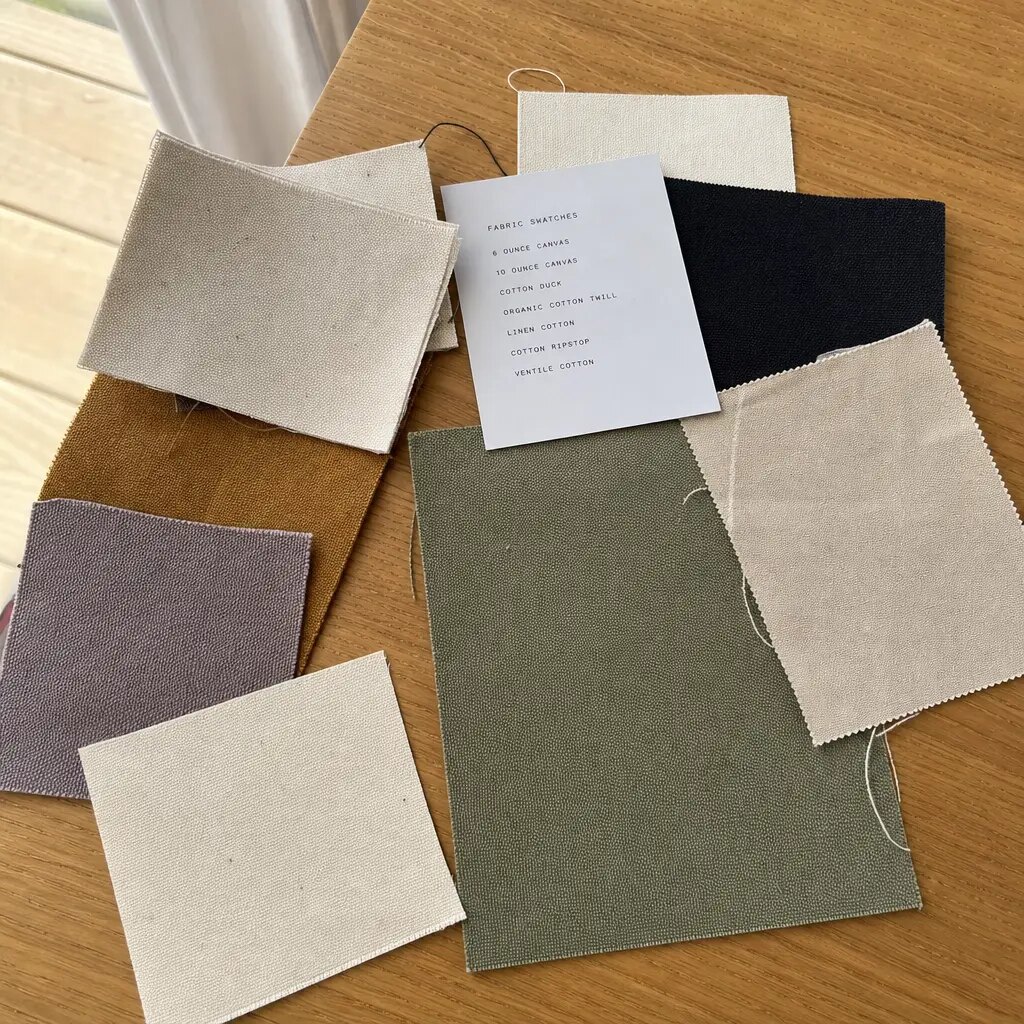
Natural cotton canvas is popular for hotel retail because it looks simple, tactile, and suitable for resort or boutique branding. It is also easier to source than a custom dyed canvas and usually avoids lab dip delays. The tradeoff is shade variation. Natural canvas from different lots may range from cream to beige, and buyers should define an acceptable shade band using a physical swatch rather than relying on screen images.
Dyed canvas gives stronger brand control, but it adds steps: lab dip, bulk dye approval, colorfastness review, and sometimes higher MOQ. Dark dyed canvas can rub onto light surfaces if dyeing and finishing are weak. For hotel environments, that matters because products may contact white linens, guest clothing, uniforms, or light retail shelving.
- Natural canvas: best for shorter lead time, lower color risk, and flexible replenishment.
- Dyed canvas: suitable when the hotel brand palette is strict and volume justifies lab dip and dye MOQ.
- Washed canvas: gives a softer premium handfeel but may create size variation and a less crisp logo edge.
- Coated or waxed canvas: attractive for travel retail, but confirm odor, surface marks, print adhesion, and packing transfer.
Lining, Interlining, and Interior Layout
Many buyers treat lining as a small detail, but it changes the perceived value and defect pattern. A portfolio without lining is cheaper and can be acceptable for a rustic document pouch, but internal seams remain visible. A 150D or 210D polyester lining gives a cleaner interior at controlled cost. A cotton lining feels more natural and supports an eco-positioned story, but it costs more, wrinkles more, and may shrink differently from the outer canvas.
Interlining and foam should be used with a purpose. A flat document portfolio may need only a light nonwoven interlining to improve body. A tablet sleeve may need foam padding, but foam thickness affects seam bulk and zipper movement. For hotel retail, excessive padding can make the product look puffy rather than refined, and it increases carton volume.
- Economy lining: 150D polyester when the target is a clean inside finish with low cost.
- Stronger lining: 210D polyester when the portfolio will hold menus, notebooks, or repeated guest paperwork.
- Premium lining: 6 oz cotton when the brand wants a natural material story and accepts higher ironing and shrinkage control.
- Padding rule: add foam only to the pocket or panel that protects a device, not automatically to the full portfolio.
Zipper, Puller, and Stress Point Selection
The zipper is the functional part most likely to create customer complaints. For most canvas zipper portfolios, a No. 5 nylon coil zipper is the safest option because it is smooth, flexible, and easier to sew around corners. Metal zippers look more premium, especially in antique brass or nickel finishes, but they add weight, cost, and more risk of rough movement if the sewing line is not controlled.
Slider and puller quality should be written into the RFQ. A nice outer canvas cannot compensate for a weak slider that separates, scratches, or jams. If the product will be opened in a retail store many times before purchase, the zipper must tolerate repeated trial handling. The zipper end should be reinforced so the puller does not tear the seam at the corner.
- Standard choice: No. 5 nylon coil zipper with matching or contrast tape.
- Premium visual choice: No. 5 metal zipper with tested slider movement and smooth teeth.
- Avoid for heavy canvas: very small zippers that look neat but fail under thick seam pressure.
- Acceptance criterion: zipper should open and close smoothly across the full curve or corner without catching lining fabric.
Logo Method and Retail Presentation
Hotel retail branding often needs to be visible but not loud. Screen printing is cost-effective for simple one-color logos and works well on flat canvas panels. It becomes less ideal when the logo has fine gradients, large ink coverage, or must sit across a seam. Heat transfer can reproduce more detail, but the handfeel may look less natural on canvas and should be tested for edge lift.
Woven labels, cotton labels, leather patches, and embossed patches can make the portfolio feel more retail-ready. They also reduce some print-color risk on uneven canvas. However, patches and labels add sewing operations and need exact placement. A patch too close to the zipper seam can distort the panel or create a thick area that affects packing.
- Screen print: best for clean hotel logos, short text, and medium order quantities.
- Woven label: useful for repeat distributor programs where the same base portfolio carries different brand labels.
- Leather or PU patch: suitable for premium resort retail, but require color, odor, and rubbing checks.
- Embroidery: attractive but can pucker lighter canvas and is not ideal for fine small text.
MOQ Logic and Cost Drivers
MOQ is rarely only about sewing capacity. For canvas zipper portfolios, MOQ is usually driven by fabric dye lot, zipper color, lining purchase, label production, print setup, and packing materials. A factory may accept 300 pieces for natural canvas with stock zipper and one-color print, but require 1,000 pieces or more for custom dyed canvas, special zipper tape, custom woven label, or retail box packing.
Buyers should separate fixed costs from variable costs in the quote. Screen charges, cutting die charges, custom patch molds, lab dip fees, barcode label setup, and sample revisions may be small compared with the unit price at large volume, but they distort small trial orders. A distributor testing hotel retail demand may be better served by a stock canvas color and custom label instead of a fully custom dyed fabric.
- Lower MOQ route: natural canvas, stock lining, stock zipper color, one-color print, flat export packing.
- Medium MOQ route: dyed canvas, custom zipper tape, woven label, and simple retail barcode label.
- Higher MOQ route: custom fabric finish, multiple compartments, metal hardware, patch tooling, and individual retail sleeve.
- Quote comparison rule: compare total order cost including setup, sample, packing, inspection, and inland freight to port.
Sampling and Approval Workflow
A portfolio sample should not be approved only because it looks close in a photo. Physical approval is important because canvas weight, zipper smoothness, corner thickness, lining behavior, and logo handfeel cannot be judged reliably from images. The first sample should confirm construction. The pre-production sample should confirm final materials, logo, color, packing, and workmanship.
For importers and brand owners, the retained sample is the production contract in physical form. It should be signed or tagged with date, version, fabric swatch, zipper reference, logo artwork version, and packing method. If the bulk factory changes material after approval, the inspection team needs a clear reference to reject or escalate the issue.
- Prototype sample: verifies size, pocket layout, zipper path, construction, and overall proportion.
- Material sample: confirms canvas GSM, lining, interlining, zipper, patch, and label quality.
- Pre-production sample: locks all details before bulk cutting and should match the purchase order.
- Approval limit: do not release bulk fabric cutting until dimensions, shade, logo position, and zipper movement are accepted.
Quality Thresholds for Bulk Inspection
Canvas zipper portfolios need inspection criteria that reflect both textile and accessory risks. Fabric defects such as stains, oil marks, heavy slubs, color streaks, and weaving holes are more visible on flat portfolio panels than on gathered bags. Cutting accuracy also matters because a small skew can make the zipper line look uneven.
Function testing should include zipper cycles, seam stress, corner shape, pocket size, and internal fit. If the portfolio is sold as tablet-compatible, the inspection team should use the target device size or a hard size template. A product that meets external dimensions but loses usable internal space because of thick seams may fail the buyer’s real use requirement.
- Dimension tolerance: define acceptable finished size variance, commonly plus or minus 5 mm for simple flat portfolios and tighter where device fit is critical.
- Stitch density: set target stitches per inch or centimeter according to fabric weight and thread size.
- Zipper function: test random units from different cartons, not only top samples from the production line.
- Logo placement: measure from fixed seams or edges, not from soft fabric folds.
- Cleanliness: require loose thread trimming, lint removal, stain sorting, and no strong storage odor.
Packing, Cartons, and Retail Handling
Packing has a direct effect on how canvas portfolios arrive. Flat packing protects shape better than over-folding, especially when the product has foam, patch branding, or stiff corners. Tissue paper can prevent zipper pullers or patches from marking the opposite panel. Individual polybags protect against moisture and dirt, but some hotel retail buyers prefer reduced plastic or paper bands for sustainability positioning.
Carton planning should balance protection and handling weight. A portfolio may look light as a single unit, but heavy canvas plus lining and metal zippers can make cartons dense. If cartons are packed too tightly, corners bend and zipper pullers press into fabric. If cartons are too loose, products shift and wrinkle. The packing plan should be quoted before production, not improvised during shipment.
- Flat packing: best for maintaining portfolio shape and reducing customer-facing creases.
- Tissue protection: useful when metal pullers, patches, or dark labels may mark the surface.
- Carton weight: keep gross weight practical for manual handling and destination warehouse rules.
- Retail labels: define barcode, country of origin, material label, warning text, and label position before bulk packing.
Specification comparison for buyers
| Spec decision | Recommended option | When it fits | Buyer risk to check |
|---|---|---|---|
| Outer canvas weight | 12 oz to 16 oz canvas, about 380 to 540 GSM depending on finish | Hotel retail portfolios that need structure, perceived value, and repeated guest handling | Too light can wrinkle and collapse; too heavy increases sewing difficulty, freight weight, and zipper stress |
| Canvas construction | Plain weave cotton canvas or cotton-poly canvas with stable shrinkage data | Natural retail look with acceptable print surface and manageable price | Uncontrolled shrinkage can distort panels after washing, steaming, or humid storage |
| Lining material | 150 to 210D polyester for economy, or 6 oz cotton lining for premium sets | Polyester works for cost-controlled retail; cotton lining fits eco-positioned boutique hotel shops | Dark lining may transfer lint; loose lining can catch the zipper if seam allowance is weak |
| Interlining and padding | Light nonwoven interlining or 2 mm foam only where structure is needed | Tablet sleeves, executive gift portfolios, or products displayed standing upright | Over-padding creates bulky seams and changes the carton cube more than buyers expect |
| Zipper specification | No. 5 nylon coil zipper for smooth retail use; metal zipper for higher visual value | Nylon coil suits most bulk orders; metal works for gift-shop lines with premium pricing | Cheap sliders fail before fabric fails; require puller strength and opening-cycle checks |
| Branding method | Screen print for simple logos, woven label for low-risk repeat orders, leather patch for premium look | Hotel logos, resort retail programs, conference shop ranges, and distributor private label lines | Large ink coverage can stiffen canvas; patch placement can interfere with folding or packing |
| Color and dye route | Natural greige canvas for stable lead time; dyed canvas with lab dip approval for brand colors | Natural is safer for seasonal retail; dyed canvas fits strict brand palettes | Dyed lots need shade tolerance and rubbing tests, especially on light hotel bedding or uniforms |
| Packing format | Flat packed with tissue, zipper closed, 20 to 50 pieces per export carton by size and weight | Retail-ready portfolios, hotel gift shops, and distributor replenishment cartons | Over-compression bends corners; cartons above practical handling weight increase damage claims |
Buyer checklist before sampling
- Define the portfolio use first: document holder, tablet sleeve, conference kit, retail gift item, or amenity upsell.
- State finished size, usable internal size, gusset depth, and whether the portfolio must fit A4, letter paper, menus, or tablets.
- Specify outer fabric weight in oz or GSM, plus acceptable tolerance, shrinkage target, and whether the canvas is natural, dyed, washed, or coated.
- Lock zipper type, zipper size, slider color, puller shape, and opening direction before sampling.
- Decide lining, interlining, internal pockets, pen loops, card slots, and whether any compartment must hold a tablet without scratching.
- Provide logo artwork with Pantone references, print size, print position, and whether color matching is required on natural or dyed canvas.
- Request pre-production sample approval for dimensions, zipper movement, logo placement, seam strength, and packing method.
- Set carton limits for gross weight, carton dimensions, inner polybag use, barcode label position, and pallet requirements if applicable.
- Compare quotes using the same fabric weight, zipper grade, lining, packing, and inspection standard, not only the unit price.
- Keep a retained approved sample with signed date, fabric swatch, zipper sample, label sample, and packing reference.
Factory quote questions to send
- What exact fabric weight are you quoting in oz and GSM, and what tolerance will you accept in bulk production?
- Is the canvas greige, bleached, dyed, washed, waxed, coated, recycled cotton blend, or cotton-poly blend?
- What is the fabric shrinkage result after standard conditioning or washing, and will the finished size be adjusted for shrinkage?
- Which zipper size, zipper type, slider material, and puller style are included in the price?
- What lining material, interlining, padding, and internal pocket construction are included in the quote?
- Which print method is included, how many colors, what print area, and what setup charge or screen charge applies?
- What is the MOQ by fabric color, logo design, zipper color, and packing style?
- What sample cost, sample lead time, and revision cost apply before bulk approval?
- What carton packing plan is included, including pieces per carton, carton size, gross weight, and barcode or retail label cost?
- What is the normal production lead time after sample approval and deposit, and which materials are the longest-lead components?
Quality-control points to confirm
- Fabric weight measured against approved swatch, with visible defects, slubs, stains, and shade variation sorted before cutting.
- Finished size checked after sewing, including internal usable width and height, not only external panel dimensions.
- Zipper opening and closing tested across random samples with no catching at lining, corners, or end stops.
- Seam allowance, stitch density, corner reinforcement, and stress points checked against the approved sample.
- Logo position, print color, ink coverage, label sewing, and patch placement checked before final packing.
- Rubbing resistance checked on dyed canvas, dark labels, leather patches, and printed areas likely to contact hotel linens or garments.
- Metal fittings, zipper sliders, and pullers checked for sharp edges, plating inconsistency, rust risk, and color mismatch.
- Carton drop, compression risk, polybag suffocation warnings, barcode readability, and retail label accuracy checked before shipment.