Start with the vendor use case
A canvas zipper portfolio for farmers market vendors is a working organizer, not only a promotional item. It may hold vendor permits, inspection papers, price sheets, order forms, receipts, maps, market rules, sponsor materials, or a tablet with paper backups. It may sit on a check-in table, travel in a van, get stacked in cartons, and be opened with dusty hands during market setup.
That handling changes the logo brief. A mark that looks balanced on a flat mockup can shift visually after seam allowance, zipper tape, binding, corner radius, padding, and filled documents change the panel shape. Procurement buyers should define the product first, then place the logo within the finished construction.
The right branding level also varies. A market association may need official program visibility. A distributor may want a discreet reusable business-bag look. A sponsor-funded kit may need a larger front mark. Those decisions affect canvas color, logo method, panel reinforcement, MOQ, packing, and QC.
- Define the use: permit holder, onboarding kit, order-book cover, document organizer, tablet-and-paper portfolio, or staff folder.
- Decide whether branding should be high-visibility, discreet, sponsor-facing, or mainly for internal identification.
- Confirm what the portfolio must carry before locking the finished size and internal layout.
- Put logo size, placement, safe zone, tolerance, and inspection method into the purchase specification.
Map the safe logo zone
The decoration area is smaller than the visible front face. Outer seams, zipper tape, binding, turned edges, gussets, internal pocket stitching, pen-loop stitching, curved corners, and patch locations remove usable space. If the portfolio carries thick documents or a tablet, the panel may bow and make an oversized logo look less controlled.
Ask for a millimeter placement drawing based on the finished sewn product, not only a cut-panel drawing. The drawing should show the front panel, zipper path, binding edge, seam allowance impact, pocket stitch lines, corner radius, fold areas, and blocked zones. It should also identify how QC will measure the logo.
A practical clearance such as 20-25 mm from seams, zipper tape, binding, folds, and curved corners can be a useful starting brief, but confirm it on the supplier's construction. Increase the margin for large marks, sewn patches, soft panels, or decoration applied after assembly.
- Use finished panel dimensions instead of only outside portfolio dimensions.
- Mark blocked areas: seam allowance, zipper tape, binding, fold lines, curved corners, pocket seams, pen-loop stitches, and patch locations.
- Define placement from fixed references such as top seam to logo top and side seam to logo centerline.
- State whether the logo is centered on the visible face, centered on the safe zone, or intentionally offset.
- Keep the signed drawing with the PO, approved sample, and inspection file.
Choose canvas weight with structure in mind
Canvas weight affects print coverage, panel stability, corner bulk, zipper movement, carton weight, and freight cost. For reusable vendor portfolios, 12 oz to 14 oz cotton canvas is often a supplier-confirmed starting range, roughly about 340-475 GSM depending on conversion and finishing. Buyers should ask for both oz and GSM rather than assuming every supplier uses the same conversion.
Lighter canvas, such as 8 oz to 10 oz, can work for lower-cost document sleeves or short-term programs. The risk is a softer panel that wrinkles around print or makes a patch look unstable. In some cases, lighter canvas with front-panel interlining gives a cleaner branded face than unsupported heavier fabric.
Heavier canvas, such as 16 oz and above, may sound stronger but should be sampled in the actual portfolio. Thick canvas can create bulky corners, needle marks, difficult turning, and zipper drag when combined with lining, internal pockets, or foam.
- 8-10 oz: lighter and cost-conscious, but higher risk of wrinkling and weak logo presentation.
- 12-14 oz: useful starting range for reusable portfolios when confirmed by supplier sample and GSM.
- 16 oz and above: check corner bulk, stitch quality, zipper ease, carton weight, and handling comfort.
- Front-panel interlining: helpful for large prints, sewn patches, and flatter business-bag structure.
- Light foam: consider for tablet-friendly portfolios or a more structured handfeel.
- Ask whether quoted fabric is stock, dyed stock, or custom sourced.
Match method to artwork and order split
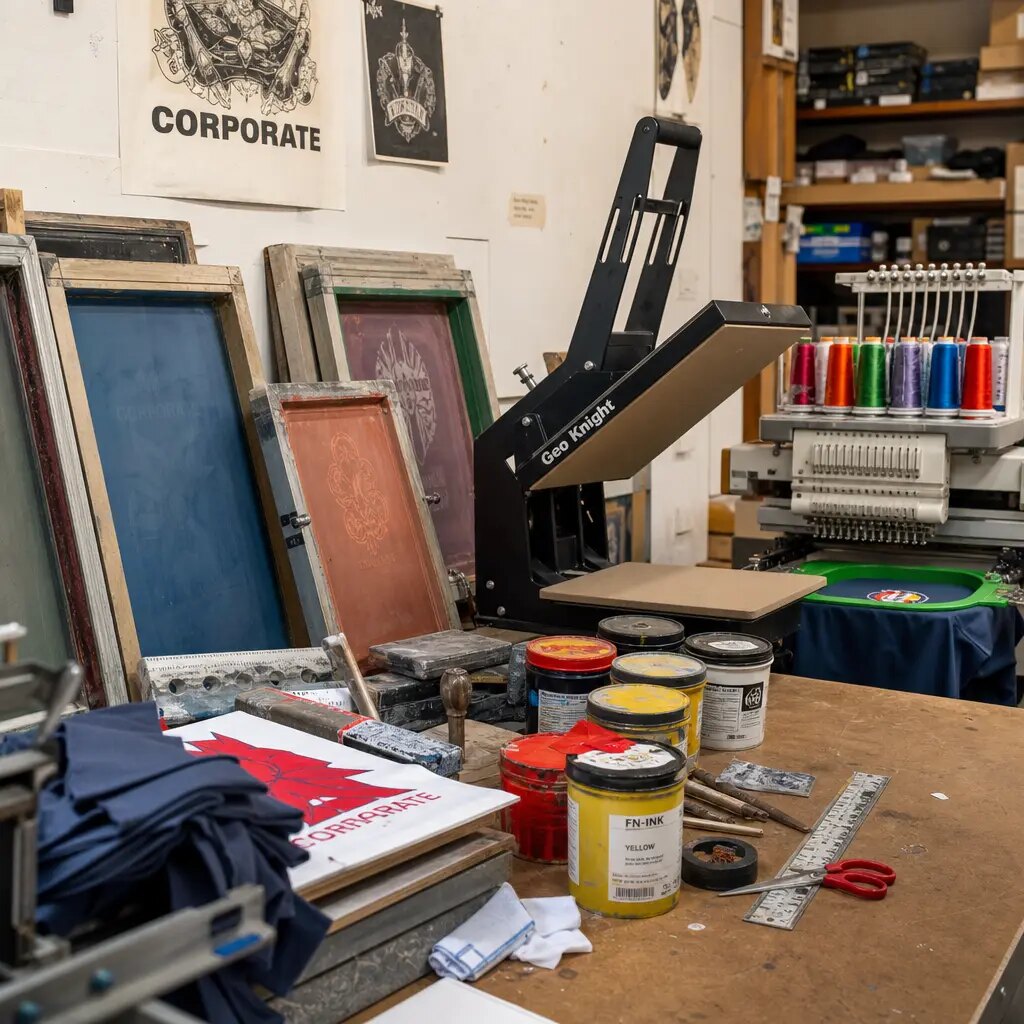
The best logo method depends on artwork detail, canvas color, order quantity, number of logo versions, and the factory's equipment. Screen printing is often a strong choice for simple one-color or two-color marks on cotton canvas. It can be efficient for repeat orders, but tiny reversed text, fine outlines, and delicate illustrations may lose sharpness on a woven surface.
Heat transfer can help when artwork has many colors, gradients, or several short-run vendor versions. It should be tested on actual canvas and the finished portfolio, especially near folds or pressure points. QC should look for edge lift, cracking, adhesive shadow, scorching, and rub wear after normal opening, closing, and stacking.
Labels and patches are useful when many farm or vendor logos share one body construction. A woven label can keep branding subtle. An embroidered label or debossed patch can look more substantial. The tradeoff is visibility, label MOQ, patch tooling, and sewing quality. Direct embroidery should be used carefully because hooping, backing, and thread tension can distort the canvas face.
- Use screen print for bold, simple artwork and repeatable medium or larger runs.
- Use heat transfer for detailed or multi-color artwork when testing confirms durability on the finished item.
- Use woven labels for subtle branding and controlled multi-logo programs.
- Use embroidered labels or patches when texture matters and the panel can support the sewing.
- Use direct embroidery only after sampling for puckering, backing visibility, and needle damage.
- For dark canvas, ask whether white ink needs an underbase or extra pass for acceptable opacity.
Size the logo for real readability
The largest possible logo is rarely the best choice on a zipper portfolio. Oversized artwork leaves less room for normal production movement, makes small placement variation more visible, and can compete with zipper lines, pocket seams, curved corners, or patch stitching. When the portfolio is filled, a very large front logo may bow with the panel.
For many A4 or US letter-size portfolios, a front-panel logo around 80-140 mm wide can be a useful discussion range, but it should be confirmed against the supplier's safe zone, artwork shape, and decoration method. A long farm name, a round market seal, and a sponsor lockup with a tagline each need different spacing.
Approve the logo at actual size on actual canvas. If the mark includes a web address, certification icon, location line, or small produce illustration, confirm whether each detail remains readable after printing, transfer, weaving, embroidery, or patch production.
- Specify logo width and height in millimeters.
- Set minimum text height, line thickness, and spacing before approving artwork.
- Leave more clearance around large logos because production movement is easier to see.
- Consider lower-corner placement, side labels, or patches for a reusable business accessory look.
- Review a sewn sample empty, filled, opened, closed, flat, and partially stacked.
Build an RFQ that compares like with like
A vague RFQ can produce prices that appear comparable but are built on different products. One quote may assume 10 oz natural canvas with no interlining. Another may include 14 oz dyed canvas, front reinforcement, individual packing, and a sewn pre-production sample. The lowest price may simply omit materials or services the buyer needs.
A useful RFQ should specify finished outside size, usable document fit, canvas weight and color, lining, interlining, zipper specification, internal pocket layout, logo method, logo size, placement references, artwork color count, sample steps, packing format, carton labels, and inspection expectations. For farmers market programs, state exactly what the portfolio must hold.
Controlled alternates help reveal real cost drivers. Ask for the same body with defined options, such as 12 oz natural canvas with one-color screen print, 14 oz black canvas with white screen print and interlining, and 12 oz olive canvas with a woven label. This keeps the comparison focused.
- Include outside dimensions and usable internal pocket dimensions.
- Attach artwork and a placement drawing with measurement references.
- Request setup charges separately for screens, transfer films, woven labels, embroidered labels, patches, debossing dies, custom pullers, and inserts.
- Ask for carton dimensions, gross weight, net weight, and CBM for landed-cost comparison.
- Require suppliers to flag artwork risks before sampling.
- Clarify when lead time starts: deposit, artwork approval, material approval, strike-off approval, or sewn sample approval.
Control MOQ by limiting variation
MOQ is shaped by more than sewing quantity. Fabric purchasing, dye lots, zipper color, puller hardware, screen setup, transfer films, woven label runs, patch tooling, packing materials, carton labels, and sorting labor can all create minimums. When every vendor version changes body color, pocket layout, zipper, logo method, and packing, one program becomes many small jobs.
For associations, distributors, agencies, and regional food programs managing multiple logos, the cleanest structure is usually one stable portfolio body. Keep size, canvas weight, zipper, layout, reinforcement, and packing consistent. Then vary only the direct print, label, or patch.
Custom fabric colors deserve caution. Stock natural, black, navy, charcoal, or olive canvas may be faster and easier to repeat. Custom dyeing can require lab dips, higher fabric minimums, longer approvals, and shade checks. If the brand goal can be met with stock canvas plus a colored logo, label, zipper pull, or patch, compare that route before committing to custom body color.
- Best MOQ structure: one body, one layout, limited fabric colors, controlled logo variants.
- Ask whether multiple logos can share one production run when construction and logo method are identical.
- Confirm MOQ by total order, fabric color, zipper color, logo version, label run, patch tooling, and packing style.
- Avoid trim, pocket, or color changes for small vendor batches unless commercially necessary.
- Define mixed-logo carton sorting rules before PO release.
- Use stock material colors when speed, repeatability, and MOQ control matter most.
Approve samples in the right order
Digital approval confirms intent; it does not prove canvas texture, ink coverage, panel flatness, zipper clearance, patch puckering, or finished visual balance. Physical approvals are especially important for dark fabric, white ink, fine detail, large logos, interlining, patches, direct embroidery, and multiple vendor versions.
A strike-off on actual canvas helps resolve decoration questions before sewing. It shows whether small text holds, whether edges bleed, whether white ink is opaque enough, and whether color is close to the approved standard. The sewn pre-production sample then confirms the complete product: fabric, zipper, pockets, reinforcement, logo method, logo position, and packing direction.
Define what requires re-approval. Enlarging the logo, moving it closer to a seam, changing canvas color, switching from print to patch, or changing reinforcement can all affect production risk. Record approvals so procurement, design, factory sales, and production teams work from the same reference.
- Approve digital artwork and placement drawing first.
- Use a swatch or lab dip when fabric shade matters.
- Use a strike-off for small text, dark fabric, white ink, multi-color print, or heat transfer.
- Approve a sewn pre-production sample with final materials, logo, construction, and packing.
- Measure the approved logo position and use it as the production reference.
- Keep the physical sample, photos, strike-off, and drawing together for QC.
Write measurable QC standards
Logo QC should be measurable. Placement should be checked from stable construction points such as the top seam, side seam, zipper seam, or binding edge. A tolerance such as +/-5 mm may be a workable target for some standard front-panel prints with enough clearance, but buyers should confirm what the factory can hold on the actual construction.
Visual alignment also matters. A logo can pass one measurement and still look tilted against the zipper line or pocket seam. QC should reject obvious skew, artwork entering blocked zones, inconsistent placement, upside-down labels, patch puckering, and logos centered on the wrong reference area.
Canvas is a textile, so the approved strike-off should define what is acceptable. Normal weave texture is different from heavy bleeding, blurred edges, ghosting, registration shift, under-cured tack, transfer lift, stains, oil marks, dark specks, broken yarns, or needle damage in the logo area.
- Measure horizontal and vertical placement from approved reference points.
- Define position tolerance, skew tolerance, and blocked-zone failures.
- Inspect print color, opacity, edge sharpness, registration, and curing against the approved strike-off.
- Check labels and patches for straightness, stitch security, loose threads, puckering, and zipper interference.
- Inspect units from multiple cartons and production bundles.
- Use an agreed inspection plan such as AQL, or define sample quantity and reject criteria before shipment.
Plan packing and receiving
Packing can damage an otherwise good order. Tight stacking can leave zipper impressions, patch pressure marks, crushed corners, or panel dents. Freshly printed faces packed too early can transfer ink to the next unit. Dark canvas can show lint and rub marks; natural canvas can pick up warehouse dust.
Individual polybags protect cleanliness and simplify distribution, but they add material and labor and can trap odor or moisture if goods are packed before fully dry. Tissue, interleaf paper, or face protection may be better when the main risk is print set-off or surface rubbing. For onboarding kits, buyers may also need insert cards, barcodes, or carton labels by vendor name or logo version.
Carton planning should include pieces per carton, gross weight, net weight, dimensions, and CBM. Mixed-logo orders need clear labels so receiving teams can identify item code, logo version, color, quantity, PO number, and carton sequence without opening every box.
- Confirm individual polybag, tissue wrap, interleaf, or no individual packaging.
- Do not pack printed or transferred goods until decoration is fully cured and surface-dry.
- Use face protection for large prints, dark canvas, patches, or labels that may rub.
- Set carton quantity by pressure risk and product thickness, not only by maximum space usage.
- Require carton labels showing PO number, item code, logo version, fabric color, quantity, and carton sequence.
- Inspect packed samples for set-off, zipper marks, patch impressions, crushed corners, dust, moisture, and sorting errors.
Specification comparison for buyers
| Logo method | Best fit | MOQ and cost implications | Placement and QC watchpoints |
|---|---|---|---|
| Screen print | Simple one-color or two-color farm, market, sponsor, or distributor logos on flat canvas panels | Usually efficient for medium and larger runs; extra colors require more setup and approval time | Confirm ink opacity, edge sharpness, curing, and placement tolerance from fixed seams. Fine reversed text can fill on textured canvas. |
| Heat transfer | Detailed artwork, gradients, full-color logos, and short logo-version splits | Can reduce setup burden for many small artwork versions, but transfer material and application labor affect unit cost | Test on actual canvas for edge lift, cracking, adhesive shadow, scorching, rub marks, and behavior near folds or zipper pressure points. |
| Woven label | Small, repeatable branding where a subtle business-bag look is acceptable | Label production may have its own MOQ, but one common portfolio body can carry multiple label versions | Check label straightness, stitch security, fraying, color match, and whether the label is readable at the chosen size. |
| Embroidered label | Textured branding with better control than direct embroidery on the main panel | Higher setup than basic print for small runs; useful when labels can be applied across repeated body production | Simplify tiny type and fine illustration. Inspect thread tension, edge finish, label puckering, and color consistency. |
| Sewn or debossed patch | Premium-looking lower-corner marks, sponsor badges, or durable program branding | Patch tooling and material MOQ may apply; cost rises with patch size, backing, deboss detail, and sewing time | Use backing or interlining if needed. Check puckering, stitch distance from patch edge, panel distortion, and zipper clearance. |
| Direct embroidery | Large simple marks only when a textured stitched logo is required | Can be slower and more costly on finished panels; may require hooping tests or decoration before assembly | Sample carefully for needle damage, backing visibility, thread tension, puckering, skew, and distortion on filled portfolios. |
Buyer checklist before sampling
- Confirm the portfolio's job: permit holder, vendor agreement folder, order-book cover, receipt organizer, tablet-and-paper kit, market staff folder, or sponsor handout.
- Ask for both finished outside dimensions and usable internal pocket dimensions after seam allowance, zipper tape, lining, padding, and pocket stitching are deducted.
- Request a front-panel measurement drawing in millimeters showing zipper path, binding, seam allowance, curved corners, pocket stitch lines, fold areas, and blocked decoration zones.
- Define logo placement from fixed construction points, such as top seam to logo top and left seam to logo centerline. Avoid approving only a visual mockup.
- State logo width, height, color count, Pantone or brand reference, minimum text height, minimum line thickness, and any artwork elements that may be removed for production clarity.
- Specify canvas by oz and GSM where possible, plus fiber content, color, finishing, handfeel, shade approval needs, and whether the fabric is stock or custom sourced.
- Confirm whether the front panel needs interlining or light foam support, especially for large prints, patches, direct embroidery, or tablet-friendly portfolios.
- Choose the logo method after reviewing artwork complexity, canvas color, logo-version split, expected use, and factory capability on the actual construction.
- Approve a strike-off on actual canvas for small text, thin lines, white ink, dark fabric, multiple colors, gradients, or heat transfers.
- Approve a sewn pre-production sample showing final fabric, zipper, internal layout, reinforcement, logo size, logo position, logo method, packing direction, and carton labeling.
Factory quote questions to send
- What are the finished outside dimensions and usable internal document-pocket dimensions after seam allowance, zipper tape, lining, padding, and pocket stitching are deducted?
- Can you provide a millimeter placement drawing showing safe logo zone, blocked areas, zipper path, binding edge, pocket seams, corner radius, and measurement reference points?
- For our artwork, what logo width and height do you recommend on this portfolio size so the mark remains readable without entering sewing, zipper, or fold-risk areas?
- Which canvas weights do you currently stock for this construction, and how do 10 oz, 12 oz, 14 oz, and 16 oz options compare in GSM, handfeel, sewing bulk, lead time, and cost?
- Is the fabric 100% cotton canvas or a cotton-blend canvas, and what shade-control process do you use for natural canvas, dyed stock colors, or custom colors?
- Can you quote the same body with no interlining, front-panel interlining, and light foam support so we can compare cost against logo flatness and finished structure?
- For this artwork and fabric color, which method is lowest risk on your line: screen print, heat transfer, woven label, embroidered label, sewn patch, debossed patch, or direct embroidery?
- What minimum line thickness, minimum text height, and minimum spacing do you recommend for the selected logo method on this canvas texture?
- Will decoration be applied before sewing, after sewing, or to a separate patch or label, and how does that affect placement tolerance, blocked zones, jig setup, and sample sequence?
- What horizontal, vertical, and skew tolerance can you hold in bulk production when measured from the approved top seam and side seam references?
Quality-control points to confirm
- Measure logo placement from stable construction points such as the top seam, side seam, zipper seam, or binding edge. Do not rely on visual centering alone.
- Confirm numeric placement tolerance with the supplier before production. A target such as +/-5 mm may be workable for some standard front-panel prints, but it is not universal.
- Define skew tolerance or visual rejection criteria. A logo that tilts against the zipper line, pocket stitch line, or top seam should fail even if one measurement is within range.
- Artwork must remain inside the approved safe zone unless the purchase order specifically allows overlap with a pocket, patch, binding, zipper feature, or fold area.
- Print color should match the approved strike-off, Pantone reference, or agreed shade range under consistent lighting and against approved physical standards.
- Solid ink areas should show acceptable textile coverage with no major pinholes, heavy bleeding, ghosting, blurred edges, registration shift, ink buildup, or under-cured tack beyond the approved sample.
- Fine text, small icons, and thin farm illustrations should remain readable at the approved actual size. If they cannot be reproduced cleanly, the supplier should flag this before bulk decoration.
- Heat transfers should show no edge lifting, bubbling, cracking, adhesive shadow, surface scorching, or distortion after normal opening, closing, light bending, and rub handling.
- Woven labels, embroidered labels, and patches should be straight, securely sewn, and free from puckering, skipped stitches, loose threads, or panel distortion that affects the zipper path.
- Direct embroidery, if used, should be checked for backing visibility, thread tension, fabric puckering, skew, and needle damage around the logo area.