Audit Goal
A canvas zipper portfolio looks simple on a quote sheet, but it combines several failure points: heavy fabric, a long zipper, flat document capacity, visible retail branding, and shelf-ready packing. For museum shops, the product often sits near prints, exhibition catalogs, stationery, or education kits, so buyers need a portfolio that looks clean enough for gifting and strong enough for repeated handling.
The purpose of a factory audit is not to collect a supplier brochure. It is to prove that the factory can control the process behind the sample: fabric selection, cutting accuracy, zipper attachment, print curing, trimming, packing pressure, and carton identification. A good audit gives the procurement team enough evidence to compare quotes with fewer hidden assumptions.
- Primary category: Zipper Business Bags.
- Main buying problem: deciding whether a factory can produce repeatable canvas zipper portfolios for museum retail.
- Best audit timing: before deposit for a new supplier, or before bulk cutting for a high-value reorder.
- Audit output needed: approved specification sheet, photo record, risk notes, and sample approval actions.
Product Scope
Start the audit by defining what the portfolio must carry. A zipper portfolio for A4 documents is not the same as a sleeve for 8 x 10 inch prints, a catalog pack, or a children’s activity kit. The outside size may look acceptable while the real usable capacity is too small because the zipper seam, lining, and corner shape steal space.
For museum shop buying teams, the safest RFQ states both the intended contents and the required inside clearance. If the portfolio must hold a matted print, a spiral sketchbook, or a bundle of postcards, the thickness matters as much as length and width. A flat sleeve can be efficient, but a small gusset may be needed if the item set is thicker than 8-10 mm.
- State the target contents, for example A4 papers, US letter sheets, 11 x 14 inch prints, postcards, or guidebook bundle.
- Define usable inside size after sewing, not only cutting panel size.
- Add 10-15 mm clearance around paper goods to avoid tight loading at store level.
- Decide whether the zipper opens on one side only, two sides in an L-shape, or three sides for full access.
- Clarify whether the product is a retail portfolio, an event gift, a packaging sleeve, or a reusable document bag.
Fabric Choices
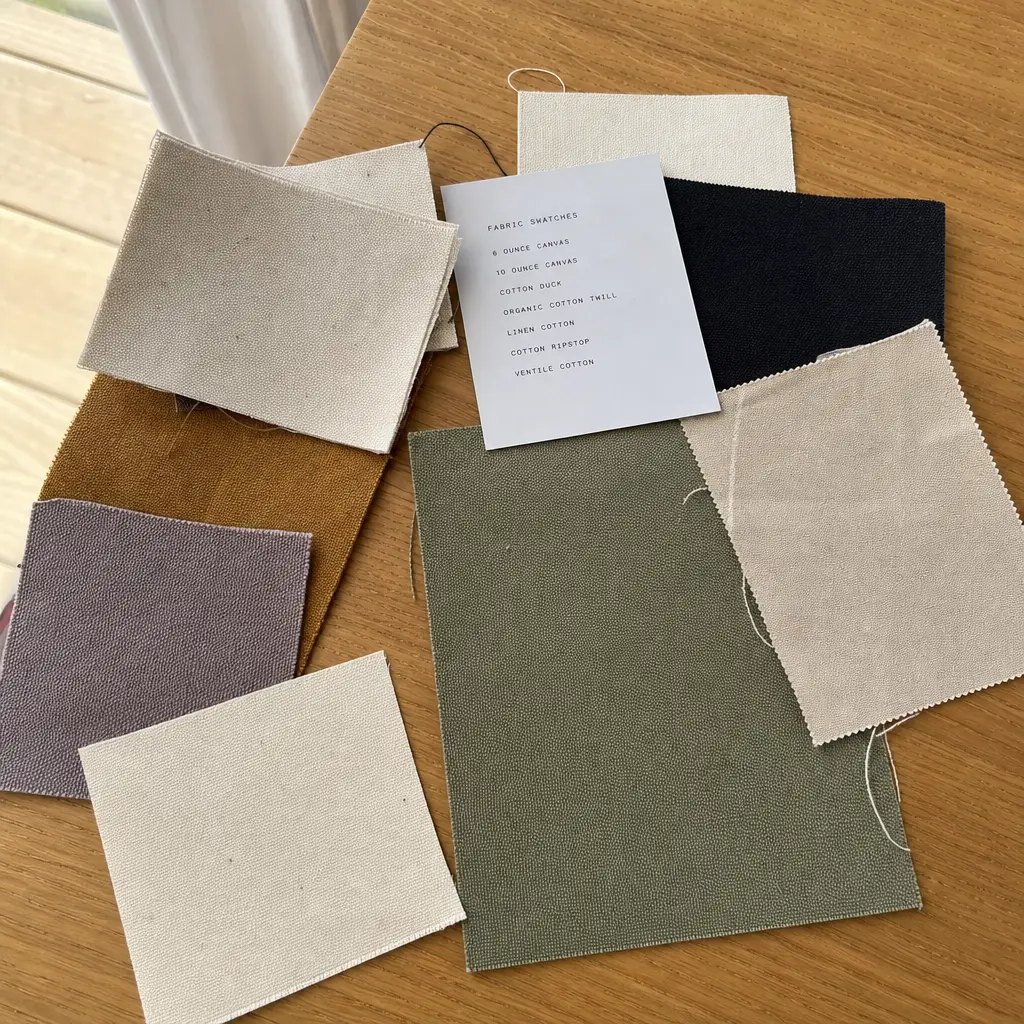
Canvas weight is one of the first quote variables that changes both cost and performance. A 10 oz cotton canvas may work for a light promotional sleeve, but museum shop retail usually benefits from 12 oz canvas, roughly 380-410 GSM, because it holds shape better and feels more substantial. For a premium portfolio, 14 oz canvas can be considered, but the thicker handfeel increases sewing difficulty and carton weight.
Natural cotton canvas has visible seed flecks and shade variation. That may suit an art museum or heritage shop, but it must be approved intentionally. Dyed canvas gives stronger retail color control, while washed canvas gives a softer feel but can introduce size variation. If the quote does not name the fabric weight, composition, and finishing process, two factories may be pricing materially different products.
- 10 oz canvas: lower cost, lighter handfeel, suitable for simple event or education pack use.
- 12 oz canvas: practical default for durable museum shop portfolios.
- 14 oz canvas: stronger shelf presence, but higher sewing, freight, and zipper waviness risk.
- Natural canvas: attractive but requires approval of flecks, slubs, and shade range.
- Dyed canvas: better brand color control, often higher MOQ and longer material lead time.
- Pre-shrunk or washed canvas: useful where tight finished size is critical, but sample and bulk must use the same treatment.
Zipper Construction
The zipper is the working part customers will test in the shop. A portfolio may pass visual inspection but fail in use if the zipper tape waves, the slider catches at the corner, or the puller feels weak. For most canvas zipper portfolios, a No. 5 nylon coil zipper is a stable choice because it bends better than many tooth zippers and is easier to sew into medium-weight canvas.
During audit, look at how the factory stores zipper rolls, cuts zipper length, finishes zipper ends, and reinforces stress points. A long zipper sewn to heavy canvas can stretch or curve if the operator feeds one layer faster than the other. This is why the golden sample should include the actual zipper tape, puller finish, and seam construction intended for bulk.
- Use No. 5 nylon coil zipper for most flat portfolios unless a heavier design requires No. 8.
- Approve zipper tape color under the same light used for fabric shade approval.
- Require smooth slider movement with no catching at corners or zipper stops.
- Add bartack or secure backstitch at zipper ends where customer force is highest.
- Avoid very thin decorative pullers if the portfolio will be handled frequently in retail displays.
- Test at least 20 open-close cycles during sample review and repeat during final inspection.
Branding Method
Museum shop artwork can range from a simple institution logo to detailed exhibition graphics. The print method should follow the artwork, not the other way around. Screen printing is usually the best value for solid logos and limited colors. Heat transfer can hold small details and gradients, but it must be tested for edge adhesion, handfeel, and long-term cracking on textured canvas.
A woven label is often the lowest-risk branding option when the buyer needs repeat orders with changing contents or multiple exhibition programs. It keeps the base portfolio consistent and avoids resetting print screens for every design. For retail-grade canvas zipper portfolios, the audit should include the supplier’s print room, curing equipment, placement controls, and rejected print samples, not just perfect counter samples.
- Screen print: strong cost control for one to three solid colors and larger production runs.
- Heat transfer: useful for detailed art, but test adhesion on the selected canvas texture.
- Embroidery: premium look, but can pucker flat portfolios and add backing stiffness.
- Woven side label: consistent branding with low risk across repeat orders.
- Debossed patch: possible for premium lines, but adds material sourcing and sewing steps.
- Artwork tolerance: set logo position tolerance such as plus or minus 3 mm for small logos and 5 mm for larger prints.
Factory Evidence
A capable supplier should be able to show more than finished bags. For a canvas zipper portfolio factory audit, the strongest evidence is process evidence: fabric roll labels, GSM measurement, shade segregation, cutting templates, zipper cards, sewing line setup, print curing control, inline inspection records, and final packing samples. These items tell the buyer whether the supplier can repeat the approved sample at quantity.
Do not treat a trading quote and a factory quote as equal unless the sourcing route is clear. A trading company may still be useful if it manages inspection and communication well, but the audit must identify where cutting, printing, sewing, and packing actually happen. If different subcontractors handle printing and sewing, lead time and responsibility for defects need to be written into the purchase terms.
- Confirm whether the quoted supplier owns the sewing line or subcontracts production.
- Record the actual location for printing, sewing, trimming, inspection, and carton packing.
- Photograph fabric stock, zipper stock, cutting dies or templates, sewing machines, and sample approval area.
- Review whether the factory has made similar zipper business bags or flat canvas document bags before.
- Check whether sample makers and bulk operators use the same seam allowance and construction method.
- Require one contact responsible for defect resolution when printing and sewing are done in separate workshops.
MOQ Logic
MOQ is not only a supplier preference. It is driven by fabric sourcing, dye lot, zipper tape color, print setup, cutting efficiency, and packing material purchase quantity. A buyer asking for five fabric colors, three zipper colors, and six artwork versions will face a very different MOQ from a buyer using one natural canvas base with several small woven labels.
For museum shops, the practical approach is to separate the base product decision from the artwork decision. If the shop needs multiple exhibitions or store locations, consider one approved portfolio body with variable belly bands, hangtags, inserts, or woven labels. This keeps production stable and reduces the chance that each small artwork split becomes a new production problem.
- Lower MOQ route: natural canvas, stock zipper tape, standard size, one-color screen print or woven label.
- Higher MOQ route: custom dyed canvas, dyed-to-match zipper, custom puller, full-color transfer, or special lining.
- Artwork split risk: each version may need setup time, print proof approval, and separate packing labels.
- Color split risk: small quantities can suffer shade inconsistency if fabric is not cut from the same lot.
- Sample cost logic: expect charges when the sample uses custom print screens, transfer films, labels, or dyed accessories.
- Reorder logic: keep a technical file so repeat orders do not depend on memory or a single merchandiser.
Sample Approval
The sample approval stage should close open decisions, not create a decorative reference. A useful pre-production sample uses bulk-intended canvas, zipper, lining, thread, print method, label, and packing. If the sample room substitutes a different zipper or available fabric, the sample can still guide shape, but it cannot prove bulk performance.
Measure the sample as a product, not only as a textile item. Check outside dimensions, usable inside size, zipper opening length, print position, pocket depth, seam straightness, corner shape, and carton fit. For a museum shop program, place the actual intended contents inside the sample and test removal at a normal retail counter speed. Tight loading is one of the easiest problems to catch early and one of the most annoying to discover after delivery.
- Approve the sample with the actual contents inside, including any print, catalog, or stationery bundle.
- Measure three points across length and width because flat portfolios can taper after sewing.
- Photograph print placement with a ruler for the golden sample record.
- Rub the printed area with dry and slightly damp white cloth to catch poor curing or ink transfer.
- Open and close the zipper repeatedly while the portfolio is filled, not only empty.
- Approve packing with the product inserted into the individual bag, belly band, barcode label, and carton.
Packing And Cartons
Packing is a commercial detail, not an afterthought. Canvas zipper portfolios are usually flat, so suppliers may overfill cartons to save freight space. That can damage sellable appearance through crushed corners, zipper impressions, print abrasion, and deep creases. Museum shops often receive goods directly into retail storage, so poor carton condition quickly becomes a receiving complaint.
The RFQ should state whether each portfolio needs an individual recycled polybag, glassine bag, paper belly band, hangtag, barcode sticker, or no individual packing. Paper-based packing may fit a museum shop’s retail positioning, but it needs a moisture and abrasion review for export shipping. Carton quantity should be tested with real packed samples before the buyer signs off.
- Flat pack when the portfolio must look smooth on shelf.
- Avoid tight folding unless creases are acceptable for the retail price point.
- Use interleaving paper if dark zipper pullers or metal hardware can mark light canvas.
- Set carton maximum gross weight so warehouse staff can handle cartons safely.
- Confirm carton dimensions for freight calculation before final quote comparison.
- Require carton drop and compression awareness for long export routes or mixed-container loading.
Lead Time Risk
Lead time for canvas zipper portfolios depends less on sewing speed than on material readiness and approval discipline. Fabric dyeing, zipper tape matching, print proofing, and label production can consume more time than final assembly. A supplier promising a short lead time should be able to explain what materials are in stock and what still needs ordering.
For museum shops tied to exhibition openings, late delivery can erase the value of a low unit price. The production calendar should include sample revision time, buyer approval time, bulk material booking, cutting, printing, sewing, inline inspection, final inspection, packing, and handover to the forwarder. Put approval deadlines in writing so both sides understand which delays affect ship date.
- Typical schedule driver: custom dyed canvas or custom zipper tape usually adds more risk than sewing.
- Print proof delay: detailed artwork may need strike-off approval before bulk printing.
- Material booking risk: fabric and zipper should be reserved only after color and sample approval are locked.
- Inspection timing: final inspection should happen after all packing is complete, not while cartons are still open.
- Split shipment risk: useful for urgent launches, but carton marks and SKU records must be controlled.
- Holiday risk: plan around factory shutdowns, port congestion, and buyer approval gaps.
Specification comparison for buyers
| Spec decision | Recommended option | When it fits | Buyer risk to check |
|---|---|---|---|
| Canvas body fabric | 12 oz cotton canvas, about 380-410 GSM, pre-shrunk if tight size tolerance is needed | Museum shops selling a durable portfolio for prints, catalogs, sketch sets, or stationery bundles | Lower GSM can collapse at the corners; untreated canvas may shrink after washing or steam pressing |
| Lining construction | Unlined for simple retail sleeve, cotton lining for premium feel, or 210D polyester lining for easier cleaning | Unlined works for cost-sensitive programs; lined construction fits gift-shop premium ranges | Lining can wrinkle, twist, or reduce inner capacity if the sample is not measured after sewing |
| Zipper type | No. 5 nylon coil zipper with color-matched tape and metal or matte painted puller | Good balance of smooth opening, lighter weight, and stable bulk production | Cheap zipper tape may wave on canvas; weak pullers can fail during repeated shop handling |
| Artwork method | Screen print for solid museum logos, heat transfer for fine multi-color artwork, woven label for low-risk branding | Screen print fits one to three color branding; transfer fits detailed exhibition graphics; label fits repeatable stock | Fine lines can fill on textured canvas; transfer edges may lift if curing and pressure are not controlled |
| Portfolio size | A4 plus allowance, US letter plus allowance, or custom print-size sleeve with at least 10-15 mm ease | Needed when the portfolio must hold exhibition prints, guidebooks, postcards, or document sets | Many quotes ignore usable inside size; zipper seam and lining thickness reduce real capacity |
| Reinforcement | Binding tape or double-fold edge seam with bartack reinforcement at zipper ends | Recommended for retail handling, repeated opening, and heavier inserts | Unreinforced zipper stops and corners are common early failure points |
| MOQ structure | Use one base fabric color and one zipper color for lower MOQ; split artwork only when setup cost is acceptable | Good for museum programs with multiple exhibitions or store locations | Too many colorways can trigger extra dyeing, zipper sourcing, and print setup charges |
| Packing method | Flat packed in individual recycled polybag or paper belly band, then inner carton with divider if corners must stay sharp | Flat packing suits portfolios sold as standalone retail goods or packed with prints | Over-compressed cartons cause zipper waves, corner dents, and fabric creasing visible on shelf |
| Audit priority | Review sample room, cutting table, zipper stock control, print curing records, inline QC, and carton compression practice | Best for first-time supplier approval or a higher-value museum shop purchase order | A factory can show good finished samples but still lack process control for repeatable bulk quality |
Buyer checklist before sampling
- Define the usable inside size, not only the outside panel size, and state the document or print format that must fit.
- Specify fabric composition, target GSM or oz weight, color standard, shrinkage requirement, and whether the canvas should be washed, dyed, or natural.
- Choose zipper type, zipper size, tape color, puller material, puller finish, and whether the zipper must pass repeated open-close testing.
- Send artwork as vector files with Pantone references and state the acceptable logo position tolerance in millimeters.
- Request a pre-production sample using bulk fabric, bulk zipper, bulk print method, and final packing style.
- Require photos or video of cutting, sewing, zipper attachment, print curing, trimming, needle inspection, and final carton packing during audit.
- Set inspection thresholds for size tolerance, zipper smoothness, print registration, seam strength, stains, loose threads, odor, and carton condition.
- Confirm how many pieces fit per carton, carton gross weight, carton dimensions, and whether flat packing or folding affects sellable appearance.
- Separate quote lines for sample fee, mold or screen fee, unit price, packing cost, inland freight, export carton, and any surcharge for split delivery.
- Approve the golden sample, signed color standard, print proof, zipper card, and carton mark before releasing bulk fabric cutting.
Factory quote questions to send
- What canvas weight and composition are you quoting, and what GSM tolerance can you maintain in bulk?
- Is the quoted fabric greige, dyed, washed, or pre-shrunk, and what shrinkage result should we expect?
- Which zipper brand or grade is included, what zipper size is quoted, and can you provide zipper tape and puller samples?
- What is the MOQ for this size and fabric color, and how does MOQ change if we split artwork or zipper colors?
- Which print method is included in the price, and what are the setup charges for screens, transfer films, or label weaving?
- Will the pre-production sample use bulk fabric and bulk accessories, or only available sample-room materials?
- What size tolerance do you accept after sewing, and how do you measure outside size versus usable inside capacity?
- How many inline inspections are done before final inspection, and what defects are classified as major for zipper portfolios?
- What is the standard packing method, carton quantity, carton size, gross weight, and compression limit?
- What is the lead time for material sourcing, sample approval, bulk production, inspection, and handover to forwarder?
Quality-control points to confirm
- Canvas GSM measured against approved standard, with fabric roll shade checked before cutting.
- Panel size measured after cutting and again after sewing to catch shrinkage, seam allowance, and lining variation.
- Zipper opens and closes smoothly across the full length without catching, waviness, broken teeth, or loose pullers.
- Print placement stays within agreed tolerance and print surface shows no cracking, ink bleeding, ghosting, or pinholes.
- Corners, zipper ends, and stress points are reinforced consistently with no skipped stitches or exposed raw edges.
- Inside pocket and lining do not twist, bunch, or reduce the agreed usable document capacity.
- Finished pieces are free from oil marks, dust, loose threads, odor, needle fragments, and excessive fabric creasing.
- Individual packing protects the front print and zipper puller from abrasion during export carton compression.
- Carton marks, SKU labels, barcode placement, and country-of-origin labeling match the museum shop receiving requirements.