Start With the Box Constraint, Not the Bag Catalog
A canvas zipper portfolio for a subscription box is not selected the same way as a retail pouch hanging on a peg. The finished portfolio must look valuable when the subscriber opens the box, but it also has to fit inside a fixed carton with other items, inserts, void fill, and sometimes an outer mailer. If the fabric is too heavy, the portfolio can create a raised corner, push against product packaging, or increase carton cube. If the fabric is too light, the item may arrive wrinkled and feel like a disposable giveaway.
The first buying problem is therefore not simply choosing 8 oz, 10 oz, 12 oz, or 14 oz canvas. It is balancing perceived value against box fit, sewing stability, printing performance, and landed cost. A good RFQ should give the factory the subscription box inside dimensions, the portfolio target use, the total kit weight, and the packing orientation. Without that information, suppliers may quote the cheapest flat pouch construction and leave the buyer to discover the fit problem during final kitting.
- Give the factory the subscription box inside length, width, and depth, not only the finished portfolio size.
- State whether the portfolio is the hero gift, a secondary organizer, or only a branded document sleeve.
- Confirm whether the unit will be folded, laid flat, or stacked under heavier products during fulfillment.
- Set a maximum packed unit thickness if the box has limited headspace.
- Request an early packing trial before approving bulk fabric weight.
Canvas Weight Ranges That Usually Make Sense
For zipper business bags and flat portfolio-style cases, the practical canvas range is usually 8 oz to 14 oz. In GSM terms, buyers will often see about 270 GSM for 8 oz, 340 GSM for 10 oz, 410 GSM for 12 oz, and 475 GSM for 14 oz. These figures vary by yarn, weave, finishing, dyeing, and whether the supplier is describing greige fabric or finished fabric. A professional quote should not hide behind oz only; procurement teams should request both oz and GSM with the measurement stage clearly stated.
For subscription boxes, 10 oz to 12 oz is often the safest center. It gives enough body for a zipper portfolio to feel reusable, accepts screen print well, and still allows flat packing. 8 oz can work for high-volume mailer programs where the portfolio only holds paper, cards, vouchers, samples, or lightweight accessories. 14 oz can look premium, but it is less forgiving: zipper edges may wave, corners become bulky, and cartons may require fewer units per layer or larger outer boxes.
- 8 oz, about 270 GSM: use for budget programs, flat inserts, and lightweight promotional kits.
- 10 oz, about 340 GSM: use for balanced hand-feel, better print coverage, and efficient packing.
- 12 oz, about 410 GSM: use for stronger retail feel and repeated handling after delivery.
- 14 oz, about 475 GSM: use only after confirming box depth, zipper smoothness, and carton cube.
- Do not compare quotes unless every supplier states the same fabric measurement basis.
How Fabric Weight Changes Real Cost
Heavier canvas affects more than fabric price. It can slow cutting, require stronger needles, increase thread consumption, create more rejects around zipper corners, and reduce carton efficiency. A quote that is only a few cents higher at unit level may become much more expensive after dimensional freight, storage, and subscription box assembly are included. Importers should compare the finished packed cube, not just the FOB unit cost.
The cost jump is also uneven across order sizes. At low MOQ, fabric sourcing, dye loss, screen setup, zipper color matching, and sample labor may dominate the unit price. At larger quantities, fabric yield and packing efficiency become more important. A buyer running a three-month subscription program should ask whether all waves can use one fabric purchase or whether each wave triggers new dyeing and setup.
- Fabric cost increases with GSM, but packing cube and reject risk may increase faster.
- Custom dye colors can create minimum fabric commitments beyond the finished bag MOQ.
- Large logo coverage consumes more ink and may require longer drying or curing time.
- Heavy canvas may need reinforced zipper ends, adding labor at both ends of the opening.
- Mixed color assortments may look attractive but can break efficient MOQ logic.
Zipper and Construction Details That Matter
A canvas zipper portfolio is only as good as the zipper installation. Most subscription box portfolios use a No. 5 nylon coil zipper because it is flexible, reasonably strong, and works well on flat fabric goods. Metal zippers can look premium, but they add weight, may scratch adjacent products in the box, and can feel stiff on a flat case. Molded plastic zippers are useful for sporty designs, but they may look too casual for stationery, beauty, or corporate subscription boxes.
Construction should be specified around the contents. For documents and paper kits, a simple unlined portfolio with bound internal seams may be acceptable. For cosmetics, pens, small tools, or products with residue risk, lining or inner coating may be needed. However, lining is not automatically better. Poorly secured lining can catch in the zipper and create customer complaints even when the outside canvas looks fine.
- Use No. 5 nylon coil zipper for most flat portfolio subscription box programs.
- Specify zipper tape color because natural canvas with mismatched white tape can look unfinished.
- Add zipper end reinforcement if the user will pull from corner to corner frequently.
- Keep seam allowance consistent so usable inner space does not vary between lots.
- If lining is used, require it to stay flat and clear of the zipper path.
Print Method Selection for Canvas Portfolios
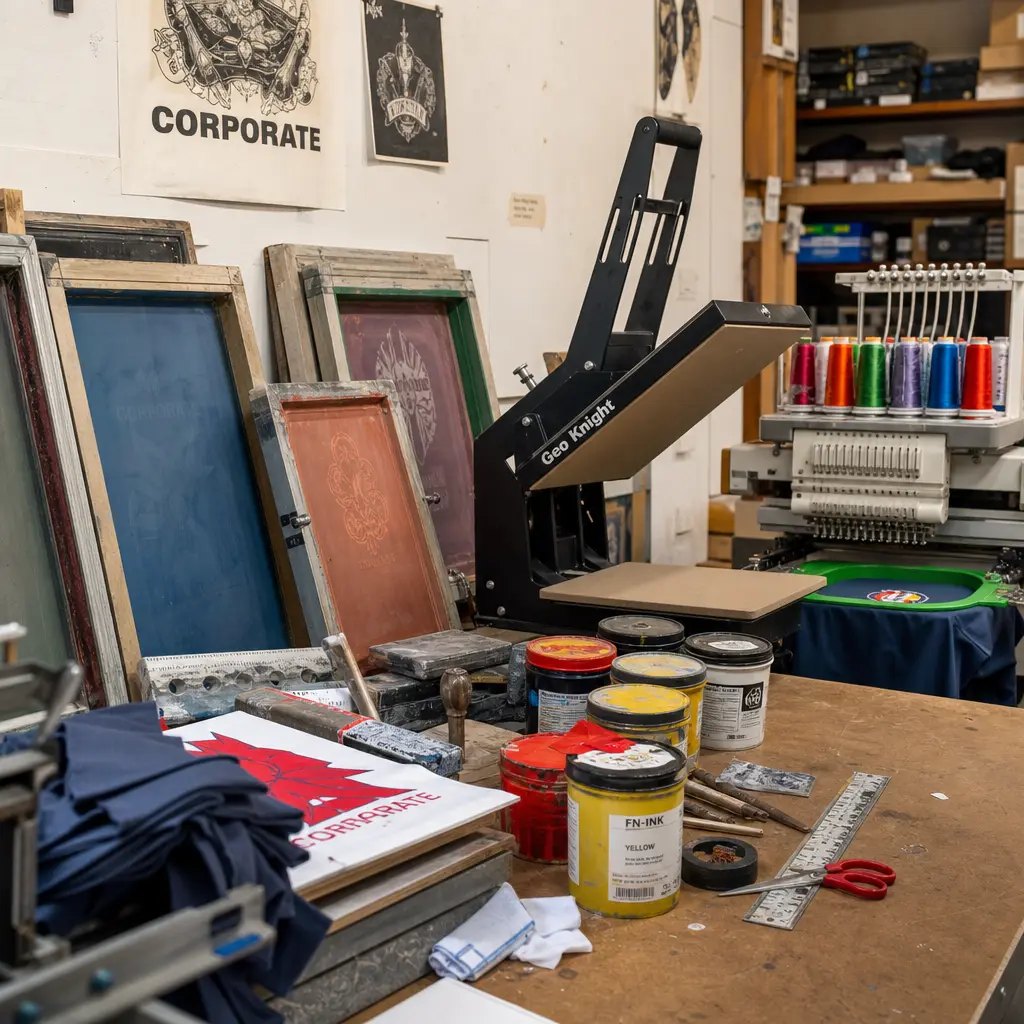
Screen printing is usually the most practical logo method for cotton canvas zipper portfolios. It works well for solid one-color and two-color marks, supports repeatable placement, and keeps the finished item flat for subscription box packing. On natural canvas, dark ink usually gives better coverage and a cleaner retail look. On dyed canvas, the factory should test opacity, curing, and rubbing because cotton texture and fabric color can affect the final logo.
Heat transfer can reproduce gradients and detailed artwork, but it changes the hand-feel and may crack or lift if placed near a fold or zipper stress area. Embroidery can look premium but adds thickness, can pucker lighter canvas, and may not be ideal for flat-packed subscription boxes. Woven side labels are efficient for repeat programs because they reduce print setup variation and can make even a simple portfolio feel retail-ready.
- Use screen print for bold logos, flat packing, and predictable bulk production.
- Use heat transfer only after testing adhesion and edge lifting on the final canvas.
- Use woven labels for repeat subscription programs with changing bag colors.
- Avoid large stiff print areas across fold lines or zipper stress zones.
- Measure logo placement from zipper or seam points, not from soft fabric edges.
MOQ Logic for Subscription Box Programs
MOQ should be discussed as a production system, not a single finished unit number. A factory may accept a lower finished bag quantity if the canvas is stock natural fabric and the logo is a simple screen print. The same factory may require a higher MOQ when the buyer wants custom dyed canvas, custom zipper tape, metal puller engraving, special lining, or several assorted colors. The biggest misunderstanding happens when the buyer treats each colorway as part of one total MOQ while the factory prices each color as a separate production run.
Subscription box buyers also need to consider wave planning. If the program ships monthly or quarterly, it may be cheaper and safer to purchase fabric for multiple waves at once and release sewing in batches, but this requires clear inventory responsibility. If the buyer changes artwork or box contents each month, keeping the same portfolio base construction can protect cost and lead time.
- Stock natural canvas usually supports lower MOQ than custom dyed canvas.
- Each body color, zipper color, lining color, and print color may affect setup.
- A lower MOQ quote may hide higher unit packing, sample, and inspection charges.
- Repeat programs should standardize fabric and zipper first, then vary label or print.
- Buyers should ask whether MOQ is per order, per color, per artwork, or per shipment.
Sample Approval Must Use Final Materials
A prototype made from near-enough fabric is useful for size discussion, but it should not be treated as approval for bulk. Fabric weight, dye color, zipper stiffness, print hand-feel, and lining behavior can all change when final materials are used. For a canvas zipper portfolio inside a subscription box, the pre-production sample should match the approved spec in every visible and functional part. If it does not, the buyer should mark it as a construction sample only.
The most common sample mistake is approving the look without testing the box fit. A portfolio that lies flat alone may curl, bulge, or press against another product once packed with the full kit. The buyer should run a packing mock-up with the actual box, product set, insert card, tissue, and shipping orientation. If the zipper pull sits at the highest point in the box, alternating orientation or moving the puller position may solve the issue before bulk packing.
- Approve one sample for construction and a later pre-production sample for final bulk materials.
- Measure outer dimensions, inner usable dimensions, zipper opening, and packed thickness.
- Test logo rubbing after the sample is inserted and removed from the box several times.
- Open and close the zipper repeatedly to detect catching, waviness, or loose threads.
- Photograph the approved sample beside a ruler and keep it as the inspection reference.
Quality Thresholds to Put in the PO
A purchase order that says good quality is not enough. Zipper portfolios need measurable acceptance points because small defects become visible when units are stacked in a subscription box line. Size tolerance, print placement, zipper smoothness, fabric shade, stitch density, seam strength, and loose thread level should be agreed before cutting. This helps the factory train operators and gives inspectors a fair standard at final inspection.
For fabric weight, many buyers use about plus or minus 5% tolerance unless a stricter lab requirement is justified. Finished size tolerance may be plus or minus 5 mm to 10 mm depending on product size and fabric behavior. Print placement should be tied to a fixed seam or zipper reference. Zipper function should include a simple cycling check, not just a visual check, because a zipper can look acceptable but catch under normal use.
- Set GSM tolerance and define whether testing is done before or after finishing.
- Set size tolerance separately for outer dimensions and usable inner space.
- Reject open seams, skipped stitches, exposed raw edges, and sharp zipper puller defects.
- Use a print adhesion test such as tape pull plus dry rub on the approved fabric.
- Define major defects for zipper failure, wrong logo, wrong fabric color, and carton shortage.
Packing Design for Kitting Lines
Packing is part of the product specification for subscription boxes. A canvas zipper portfolio can be supplied individually polybagged, packed with a paper belly band, wrapped in tissue, or bulk stacked for the fulfillment center to insert into the kit. Individual polybags protect the product but add plastic, labor, and unpacking time. Paper bands look cleaner and reduce plastic, but they need testing for scuffing and moisture exposure during transport.
Inside export cartons, zipper direction matters. If every zipper and puller is stacked on the same side, the carton can lean and create pressure marks. Alternating zipper direction helps keep stacks flat. Heavy canvas portfolios should not be over-compressed because deep creases may remain visible when the subscriber opens the box. The factory should quote carton quantity, carton dimensions, gross weight, and stacking method so the buyer can estimate warehouse handling and freight.
- Choose individual packing based on fulfillment workflow, not only product appearance.
- Alternate zipper direction in export cartons to reduce carton lean.
- Avoid tight strapping that creates permanent creases on natural canvas.
- Add a master carton drop expectation if the shipment moves through parcel-like handling.
- Request carton markings that match the subscription box SKU and wave schedule.
Lead Time Risks Buyers Often Miss
The schedule for canvas zipper portfolios is controlled by more than sewing capacity. Fabric sourcing, dyeing, lab dip approval, zipper tape color matching, print screen preparation, sample shipping, and carton material can all become critical path items. A buyer who waits to approve fabric shade until after the subscription box creative is final may leave too little time for bulk fabric and print proofing.
A realistic schedule should separate sample lead time, approval time, bulk material lead time, production time, inspection time, and handover time. During peak seasons, zipper and fabric availability can be tighter than sewing labor. If the subscription box has a fixed launch date, the buyer should freeze the base portfolio specification early and leave only artwork or label details open for the final approval stage.
- Lab dips and custom zipper colors can delay production before sewing starts.
- Print proof approval should happen on final fabric, not on paper or substitute cloth.
- Peak-season orders need capacity reservation before all artwork details are perfect.
- Inspection and rework time should be built into the delivery plan.
- Forwarder handover date is more useful than a vague factory completion date.
Specification comparison for buyers
| Spec decision | Recommended option | When it fits | Buyer risk to check |
|---|---|---|---|
| Outer canvas weight | 10 oz to 12 oz cotton canvas, about 340-410 GSM before washing | Most subscription boxes needing a flat, giftable portfolio that still packs efficiently | Too light may wrinkle around the zipper; too heavy may raise freight cost and make the box bulge |
| Economy fabric option | 8 oz canvas, about 270 GSM, with reinforced zipper ends | High-volume campaigns where the portfolio carries papers, coupons, or light cosmetics only | May feel thin after printing; require seam pull and corner abrasion checks before approval |
| Premium fabric option | 14 oz canvas, about 475 GSM, used only when the box has enough depth allowance | Retail-grade subscription gifts, stationery kits, or reusable travel organizer positioning | Can increase carton cube, zipper waviness, needle marks, and unit freight more than expected |
| Lining choice | Unlined canvas or 150D polyester lining depending on contents | Unlined for papers and flat inserts; lined for makeup, pens, or products that may stain | Lining adds labor and may trap loose threads if inner seam finishing is not specified |
| Print method | Screen print for solid logos; heat transfer for gradients; woven label for repeated programs | Screen print works best for most CTM-style brand marks on natural or dyed canvas | Ink hand-feel, crocking on dark canvas, and print cracking near zipper fold need sample testing |
| Zipper specification | No. 5 nylon coil zipper with matching or contrast tape and metal or molded puller | Reliable for flat zipper portfolios packed in mailer boxes and opened repeatedly by consumers | Low-cost zippers may wave on heavy canvas; puller plating and slider smoothness must be checked |
| Packing format | Flat-packed in inner polybag or paper band, then stacked with alternating zipper direction | Subscription box fulfillment where dimensional control and quick kitting matter | All zippers stacked on one side can create carton lean, crushed edges, and inaccurate box fit tests |
| MOQ logic | Start from fabric dye/printing efficiency, not only finished bag quantity | Best when buyers need several subscription box waves with stable color and construction | Small split-color orders may pay fabric loss, setup fees, and higher inspection cost per unit |
Buyer checklist before sampling
- Define the portfolio size by usable inside space, not only outer dimensions; allow zipper tape, seam allowance, and fabric thickness.
- State outer canvas weight in oz and GSM, and clarify whether the GSM is greige, dyed, washed, or finished fabric.
- Match fabric weight to subscription box depth, carton stacking plan, and kitting speed before approving the premium option.
- Specify zipper type, zipper size, puller material, zipper tape color, and whether the zipper must pass repeated open-close testing.
- Choose the logo process based on artwork coverage, fabric color, hand-feel target, and expected abrasion during packing.
- Require a pre-production sample with final fabric, zipper, thread, lining, print, label, and packing method.
- Approve a packing mock-up inside the real subscription box, including tissue, inserts, product items, and final carton orientation.
- Request quote lines for fabric, printing, lining, zipper, labels, packing, sample fee, mold or screen fee, inspection, and export carton details.
- Set acceptable tolerances for size, GSM, color shade, print position, zipper smoothness, seam strength, and carton weight.
- Plan buffer time for fabric dyeing, zipper color matching, print proofing, peak-season capacity, and third-party inspection if required.
Factory quote questions to send
- What canvas weights can you offer for this portfolio, and can you quote both oz and GSM after finishing?
- Is the canvas stock fabric, custom dyed fabric, or made-to-order greige fabric, and what MOQ applies to each route?
- What is the expected shrinkage or size tolerance after dyeing, washing, cutting, sewing, and pressing?
- Which zipper size, zipper tape material, slider type, and puller options are included in the base quote?
- For our artwork, do you recommend screen print, heat transfer, embroidery patch, woven label, or leather-like patch, and why?
- How many units are packed per inner bag and export carton, and what are the estimated carton dimensions and gross weight?
- Can you make a packing trial using our actual subscription box size and confirm whether the portfolio causes carton bulging?
- What tests do you run for seam strength, zipper cycling, print adhesion, colorfastness, needle damage, and metal puller plating?
- What quote validity applies to cotton fabric, zipper, and freight-sensitive packing materials?
- What is the realistic schedule for lab dip, sample approval, bulk fabric, printing, sewing, inspection, and handover to forwarder?
Quality-control points to confirm
- Fabric weight tolerance should be agreed before cutting; a practical control range is usually within about plus or minus 5% unless the buyer requires tighter testing.
- Finished size tolerance should separate outer size from usable inner size because zipper tape and seam allowance reduce working space.
- Zipper should run smoothly around the full opening without catching thread ends, canvas fuzz, or lining fabric.
- Seams should show even stitch density, no skipped stitches, no open corners, and no visible needle cutting on heavy canvas.
- Print should pass tape pull, dry rub, and light scratch checks on the approved fabric color before bulk packing.
- Logo placement should be measured from fixed seam or zipper references, not from a soft fabric edge that may vary after pressing.
- Lining, if used, should be secured so it does not invert or jam into the zipper when the consumer opens the portfolio.
- Finished units should lie reasonably flat for subscription box kitting; excessive zipper waviness should trigger sorting or rework.
- Export cartons should be drop-resistant for the intended route and marked with SKU, color, quantity, carton number, gross weight, and carton size.
- Final inspection should include a packing fit test using the actual subscription box or a same-size rigid carton.