Why carton planning belongs in the first RFQ
Wholesale canvas zipper portfolios for natural grocers look simple until the first freight estimate arrives. A portfolio is a flat product, but it is not weightless and it does not behave like a tote bag in cartons. The zipper, inner pockets, canvas thickness, and print curing all affect how many pieces can be packed safely in one export carton.
Procurement teams often quote the product first and cartonize later. That creates three common problems: the approved sample is too thick for the target carton count, the printed front panel gets marked by zipper pulls during transit, or the final carton gross weight exceeds the warehouse handling limit. A better RFQ includes product size, packing direction, unit count per carton, carton board strength, and target gross weight from the beginning.
- Treat carton planning as a cost item, not a warehouse afterthought.
- Request estimated CBM per 1,000 pieces with the first formal quote.
- State whether goods ship by ocean LCL, ocean FCL, truck consolidation, or courier sample lot.
- Keep carton gross weight realistic for store or DC handling, especially when cartons are hand-unloaded.
Define the portfolio use before choosing the canvas
Natural grocers use zipper portfolios for several different programs: vendor meeting kits, employee onboarding folders, loyalty sign-up packs, private-label launch documents, and sometimes retail gift sets. These uses do not need the same fabric. A folder handed out at a trade desk can use a lighter canvas than a retail item displayed on a shelf with printed recipe inserts.
For most canvas zipper business bags in this category, 12 oz cotton canvas, roughly 380-410 GSM, gives a stable handfeel without pushing the carton volume too high. An 8 oz canvas may be attractive on paper because it reduces material cost, but it can wrinkle around the zipper and look weak after flat packing. A 16 oz canvas feels premium, yet it adds cutting resistance, sewing time, and carton thickness.
- 8-10 oz canvas: usable for short-term document holders, but weaker shape retention.
- 12 oz canvas: balanced option for most natural grocer branded portfolios.
- 14-16 oz canvas: premium feel, but review zipper stress, needle holes, and freight volume.
- Recycled or blended cotton canvas: possible, but confirm shade variation and GSM consistency before approving.
Size and structure decisions that change carton efficiency
A zipper portfolio should be specified by the document it must protect. If the buyer only says A4 or letter size, the factory may design a tight fit that looks neat when empty but bends papers after inserts are added. A practical finished size is often around 260 x 350 mm for A4-style documents, but the correct dimension depends on seam allowance, zipper position, and whether inserts are packed inside before shipment.
Interior structure is the second hidden driver. One slip pocket and one pen loop are usually enough for grocer program kits. Extra card slots, layered dividers, gussets, or padded panels increase thickness unevenly. Uneven thickness makes cartons harder to fill because every stack leans or creates pressure points. That pressure can emboss zipper puller marks into the opposite canvas surface.
- Provide the largest insert size and thickness if papers will be packed inside.
- Avoid unnecessary padded layers unless the portfolio carries tablets or fragile materials.
- Keep pocket openings reinforced with backstitching at stress points.
- Use a paper pattern approval or dieline review before sample cutting for complex interiors.
Zipper and trim choices that survive flat packing
The zipper is a functional part and a packing risk. For flat canvas portfolios, a No. 5 nylon coil zipper is normally safer than a heavy metal zipper because it bends slightly and reduces pressure marks. Metal pullers can still be used, but the puller shape should be smooth and not sharp. A cotton tape puller or fabric tab can match a natural grocer look and reduce carton abrasion.
Trim choices should be reviewed together with carton direction. If every portfolio is stacked with the zipper puller facing the printed panel below it, print marks may appear after several weeks in a compressed carton. A simple packing change, such as alternating puller direction or placing a thin paper sheet on the front panel, can prevent a claim that otherwise looks like a production defect.
- Specify zipper size, tape color, teeth color, puller material, and puller length.
- Test zipper operation after the sample has been packed under light pressure overnight.
- Avoid sharp-edged metal pullers for natural canvas unless each unit has protective interleaving.
- Place zipper end backstitching under QC focus because this is where early failures often occur.
Print method and logo placement for natural canvas
Most natural grocer buyers prefer a low-ink, simple logo on natural canvas. Screen printing with water-based ink is the usual commercial choice for a one-color or two-color logo. It keeps cost predictable and works well on cotton canvas texture. Heat transfer can reproduce fine detail, but it may feel less aligned with an organic retail image and can crack if the portfolio is folded sharply.
Logo placement affects both appearance and packing. A large print across the center front may look strong in a catalog image, but it is also the largest surface exposed to rubbing in cartons. Printing near the lower corner, away from the zipper puller and main fold pressure, reduces risk. If a woven side label is used, the label must be positioned so it does not create a lump in stacked cartons.
- Use vector artwork and define print size in millimeters.
- Give Pantone references when color matching matters, but allow reasonable variation on natural canvas.
- Require print curing before packing; warm or tacky ink should never enter a sealed carton.
- For retail resale, consider a woven label plus modest front print instead of large ink coverage.
MOQ logic and cost drivers behind the quotation
MOQ for canvas zipper portfolios is not only about the sewing line. It is tied to fabric purchase quantity, zipper color, print setup, label production, and cutting efficiency. A factory may accept a lower MOQ if the buyer uses stock natural canvas, stock zipper tape, and one-color screen print. Custom dyed canvas, custom zipper tape, or branded zipper pullers usually raise MOQ because upstream suppliers have their own minimums.
When comparing quotes, separate the base portfolio from options. A cheaper quote may exclude inner pocket reinforcement, use lighter canvas, pack fewer pieces per carton, or quote a different zipper grade. For distributors and importers, the lowest FOB unit price can be more expensive after carton volume, inspection failures, and repacking labor are counted.
- Main cost drivers: canvas GSM, zipper grade, number of pockets, print coverage, label type, and packing material.
- Low MOQ route: stock canvas, stock zipper, standard size, simple print.
- Higher MOQ route: custom fabric color, custom trims, retail packaging, multi-color print.
- Quote comparison should include FOB cost, carton CBM, gross weight, sample cost, and mold or screen charges where applicable.
Carton count, gross weight, and CBM planning
A good carton plan balances freight efficiency with product protection. For canvas zipper portfolios, the target is often a carton that stays around 10-15 kg gross weight and can be lifted without crushing the lower stacks. The exact unit count depends on finished size, fabric weight, pocket structure, and whether each unit is individually bagged. Heavy canvas with multiple pockets may need fewer pieces per carton even if the carton looks half full.
Buyers should request carton dimensions before mass production, not after goods are packed. If the factory estimates 50 pieces per carton but the final approved sample only fits 35 without pressure, freight cost changes immediately. For natural grocers shipping to multiple DCs or store programs, carton uniformity also matters. Mixed carton dimensions complicate pallet building and routing compliance.
- Request units per carton, carton size, net weight, gross weight, and estimated CBM per 1,000 pieces.
- Use 5-ply export cartons for ocean freight or long inland trucking.
- Avoid cartons so large that flat portfolios bend at the center during handling.
- If palletizing, confirm carton footprint works with the target pallet size and stacking height.
Individual packing choices: protection versus sustainability
Natural grocer programs often prefer reduced plastic, but the product still needs to arrive clean. Natural canvas attracts dust, fibers, and moisture marks more visibly than dark dyed fabric. A recycled OPP bag, kraft paper belly band, glassine sleeve, or carton liner can all work depending on the retail requirement and the shipping route. The correct choice depends on whether the portfolio is sold directly, handed out behind a counter, or inserted into another kit.
If the buyer removes individual polybags for sustainability reasons, the carton plan must compensate. Interleaving paper may be needed between printed faces, and cartons should include a clean inner liner. The factory should pack after the print has fully cured and the product has cooled and dried. Packing warm printed canvas in a sealed carton can cause odor, print transfer, or moisture condensation.
- Retail-ready resale: individual bag or paper sleeve with barcode label if required.
- Program giveaway: belly band plus master carton liner may be enough.
- Warehouse distribution: protect zipper pullers from rubbing printed panels.
- Plastic-free request: define acceptable paper material and test abrasion during transit.
Sample approval should include a packed sample
A loose sample on a desk does not prove the carton plan. The pre-production sample should be reviewed in the proposed folded or flat-packed condition with the actual inner packing. Leave it packed for at least one or two days, then open it and inspect the print, zipper marks, canvas creasing, and pocket shape. This simple step catches many problems before bulk cutting.
Measurement review should be done after the sample is sewn and pressed, not only on the pattern. Canvas can shrink, stretch, or distort around the zipper. A buyer-approved tolerance should be written into the order. For a document portfolio, a few millimeters can decide whether an insert slides in smoothly or catches at the seam.
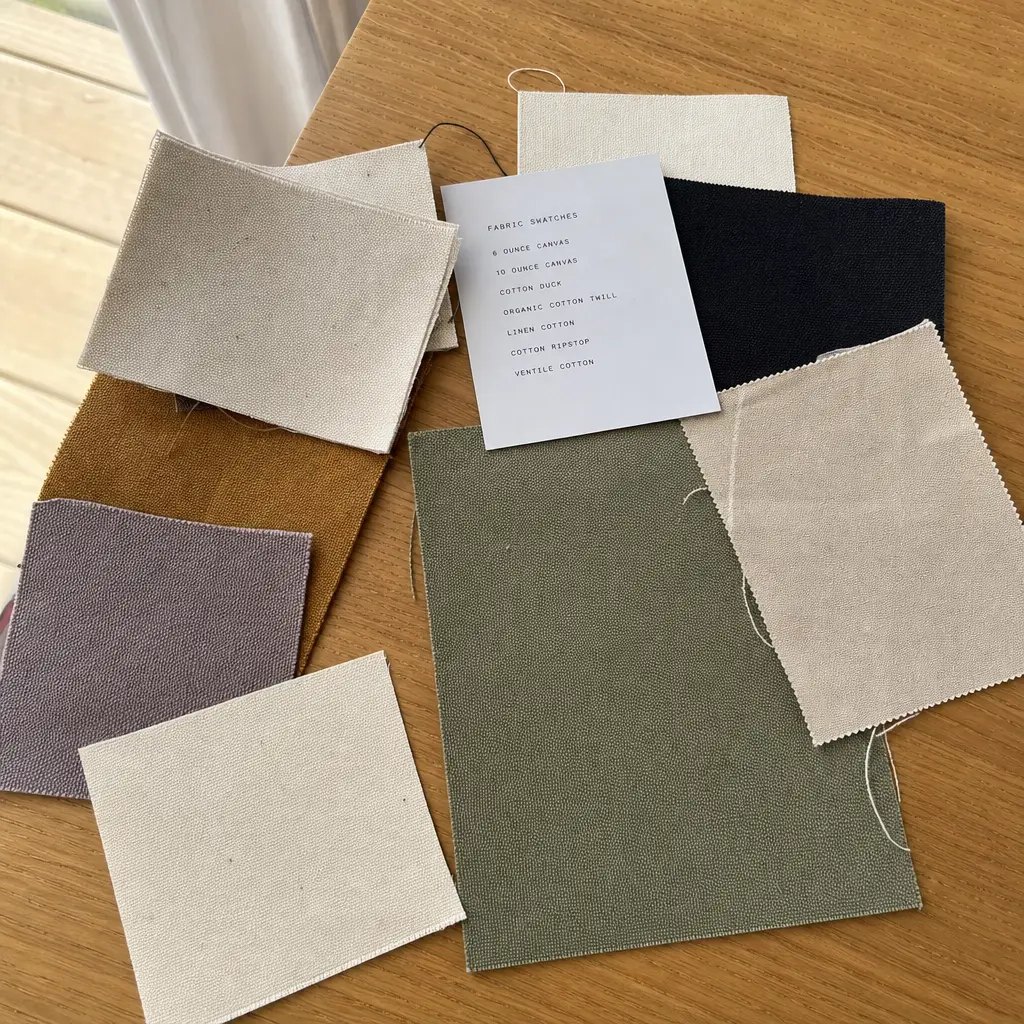
- Approve fabric handfeel and GSM with a swatch or lab weight, not only photos.
- Test the largest document insert in all pockets before sample sign-off.
- Open and close the zipper repeatedly with the portfolio filled and empty.
- Review one sample packed exactly as bulk goods will be packed.
Lead time risks that affect grocer launch schedules
Lead time for canvas zipper portfolios usually breaks into material preparation, sample making, artwork approval, cutting, printing, sewing, trimming, final inspection, and packing. Stock natural canvas and a one-color print can move faster than custom dyed fabric or special trims. The risk is not only production days; it is also the number of approvals waiting on the buyer side.
Natural grocer campaigns often connect to store openings, seasonal wellness events, supplier fairs, or private-label launches. Missing the shipping window can make the product less useful even if it arrives perfectly made. Build the schedule from the required in-warehouse date backward, including inspection booking, carton mark approval, export booking, and possible repacking time if cartons fail routing requirements.
- Freeze fabric, zipper, logo placement, and packing before bulk material purchase.
- Release print artwork early enough for screen setup or label production.
- Do not approve mass production until carton plan is confirmed with the final sample thickness.
- Keep buffer time for inspection, customs documents, and consolidation with other SKUs.
Specification comparison for buyers
| Spec decision | Recommended option | When it fits | Buyer risk to check |
|---|---|---|---|
| Outer fabric weight | 12 oz cotton canvas, about 380-410 GSM, pre-shrunk if possible | Good balance for natural grocer membership kits, vendor folders, and retail gift sets that need structure without becoming too bulky | Lighter 8-10 oz canvas may collapse in cartons; heavier 16 oz canvas increases carton CBM and zipper stress |
| Portfolio size | A4/letter document fit, around 260 x 350 mm finished size with 10-15 mm tolerance allowance before sealing packing | Fits common coupons, supplier papers, wellness forms, recipe cards, and loyalty program documents | Oversized patterns can reduce carton efficiency; undersized panels cause document corner bending and buyer complaints |
| Closure system | No. 5 nylon coil zipper with metal puller or cotton tape puller | Best for repeated store use and less carton damage than rigid metal zippers | Cheap zipper tape can wave after sewing; test smooth opening after portfolio is packed flat for several days |
| Interior structure | One main document pocket, one slip pocket, one pen loop, optional card sleeve | Enough function for retail buyer packs without high sewing minutes | Too many dividers increase labor, create uneven thickness, and reduce units per carton |
| Branding method | Single-color screen print or woven side label; use water-based ink on natural canvas | Suitable for natural grocer positioning and moderate logo detail | Large ink coverage can stiffen the front panel and transfer if not cured before packing |
| Individual packing | Flat pack in recycled OPP or paper belly band plus carton liner, depending on retailer requirement | Flat packing protects print and zipper while keeping carton count predictable | No inner protection can cause zipper pull marks and canvas abrasion during inland trucking |
| Carton plan | 5-ply export carton, 10-15 kg gross weight target, portfolios nested zipper-to-spine direction | Practical for warehouse handling, pallet stacking, and mixed-SKU consolidation | Overfilled cartons bow and crush corners; underfilled cartons waste freight and invite movement damage |
| Inspection level | AQL final inspection with functional zipper check, measurement check, print rub check, and carton drop spot checks | Appropriate for importers and distributors shipping to multiple natural grocer locations | Only checking appearance misses zipper failures, inner pocket size errors, and carton compression weakness |
Buyer checklist before sampling
- Define whether the portfolio is for resale, membership enrollment, supplier meetings, employee onboarding, or gift-with-purchase because this changes fabric weight and packing tolerance.
- State the finished size and the largest document that must fit without bending; include the document dimensions in the RFQ.
- Specify cotton canvas weight in oz and GSM, not only the word canvas.
- Decide whether the portfolio must stand structured on a retail shelf or only ship flat inside a program kit.
- Limit interior complexity before quoting; each added pocket or card slot changes sewing time and thickness.
- Confirm zipper type, zipper color, puller material, and whether the puller can touch printed panels during shipment.
- Provide logo artwork with print size, Pantone or approximate color, and placement distance from edges and zipper seam.
- Require one pre-production sample packed in the proposed inner bag or belly band, not only a loose sample.
- Request carton dimensions, gross weight, net weight, units per carton, and carton material before approving mass production.
- Set carton gross weight limits that match the receiving warehouse rules, usually safer around 10-15 kg for hand-loaded programs.
Factory quote questions to send
- What fabric weight are you quoting in both oz and GSM, and is it bleached, natural, dyed, or pre-shrunk canvas?
- What are the finished portfolio dimensions and acceptable production tolerance after sewing and pressing?
- Which zipper grade, zipper size, tape color, and puller material are included in the quotation?
- How many interior pockets, pen loops, gussets, or card sleeves are included, and how does each option affect unit price?
- Which print method is quoted, what is the maximum print area, and what curing or rub test do you use before packing?
- What is your MOQ for this construction, and does MOQ change if we use custom dyed canvas, custom zipper tape, or woven labels?
- How many pieces will be packed per inner bundle and per master carton, and what are the estimated carton dimensions and gross weight?
- Can you provide carton photos from similar flat canvas zipper portfolio packing, without disclosing another buyer's brand?
- What is the sample lead time, production lead time after sample approval, and latest date to release packaging artwork?
- Which quality checkpoints are included before shipment, and can the inspection carton be pulled from finished packed goods rather than loose stock?
Quality-control points to confirm
- Fabric GSM tolerance should be agreed before cutting; a practical range is often plus or minus 5-8 percent depending on the canvas mill lot.
- Finished portfolio dimensions should be checked at top, middle, and bottom because zipper sewing can pull one side shorter.
- Zipper must open and close smoothly at least three full cycles during inspection without catching the lining or side seam.
- Print should pass a dry rub test and basic fingernail scratch review after curing; wet rub requirements should be specified if the portfolio may contact chilled or damp grocery items.
- Interior pockets must fit the specified document or card sample; do not rely only on flat measurement.
- Seam allowance and backstitching at zipper ends, pocket openings, and pen loop ends should be checked for loose threads and unraveling risk.
- Packed cartons should be weighed and compared with quoted gross weight before shipment booking.
- Carton compression and corner condition should be reviewed after pallet stacking or warehouse holding, especially for long inland transport.
- Random pieces should be unpacked after 24-48 hours in the proposed packing to check zipper pull marking, print transfer, and fold memory.
- Carton marks should match purchase order, SKU, color, quantity, country of origin requirement, and retailer routing instructions.