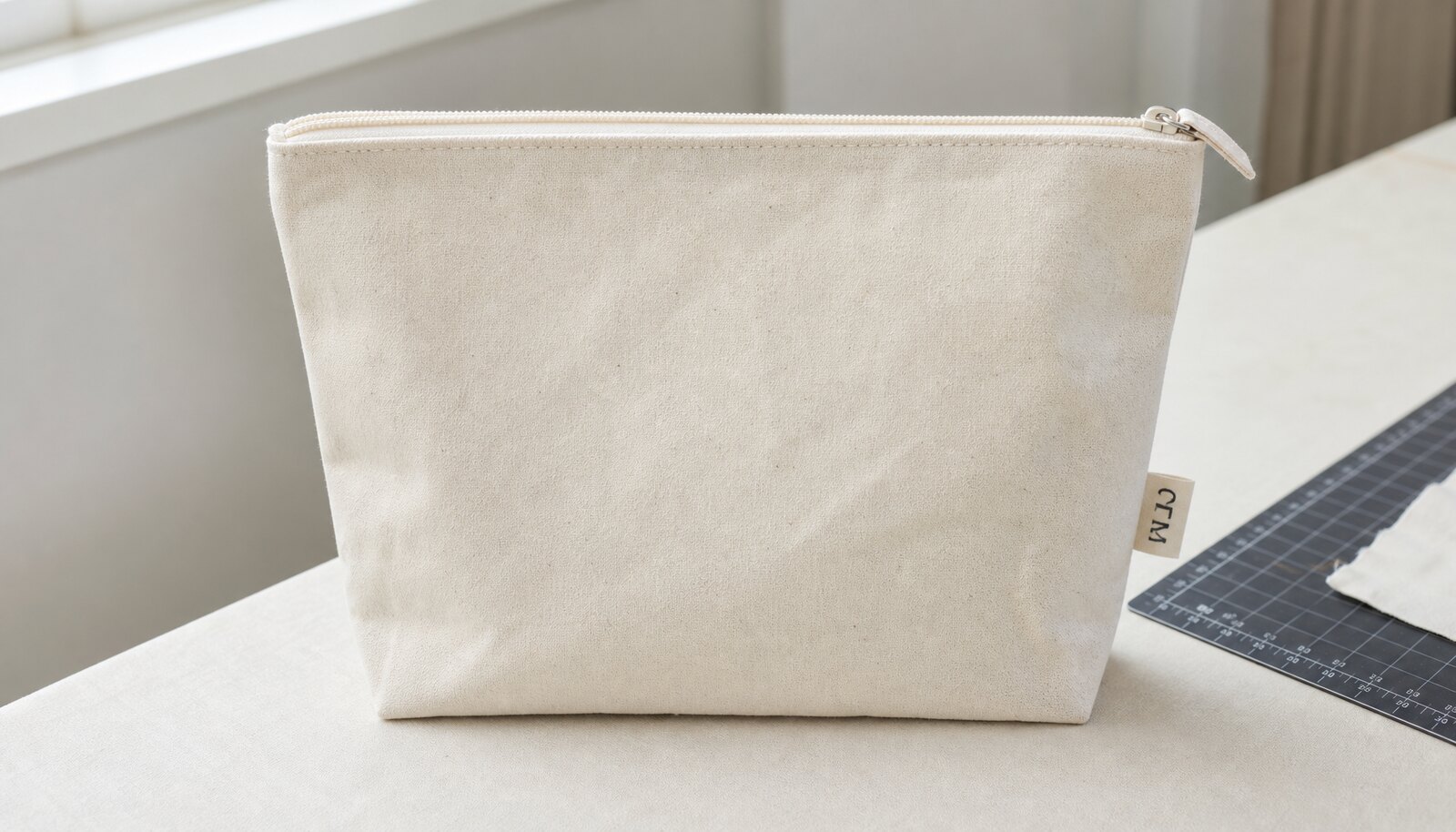
Why hotel buyers spec canvas zipper bags differently from retail bags
Canvas zipper bags for hotels are usually bought to solve a practical job: hold in-room amenities, welcome kit items, laundry accessories, or small guest-use products in a way that looks cleaner than loose packaging. That means the buying decision is not only about appearance. The bag has to survive repeated handling, stack well in cartons, and keep its shape enough to protect the contents during housekeeping, transit, and shelf display.
For procurement teams, the biggest mistake is treating the bag like a generic promotional pouch. A hotel order often needs more consistency than a one-off gift item. You need a spec that controls fabric weight, zipper grade, print area, and packing method so the supplier cannot swap in a lighter cloth or downgrade the closure to protect margin. A quote that looks cheap on paper can become expensive if the bag arrives too soft, too small, or too difficult to close cleanly.
- Think in use case first: welcome kit, toiletries, laundry, stationery, or retail resale.
- Treat appearance and durability as linked; a low-GSM canvas can wrinkle, distort the logo, and feel low-value.
- Hotels often need a cleaner neutral look, so print clarity and zipper smoothness matter more than decorative extras.
Choosing the right canvas weight, structure, and finishing
For most hotel programs, 12oz to 14oz canvas is the safest starting point. It gives the bag enough body to stand up better in use, supports screen printing well, and reduces the floppy look that weaker canvas can have after packing. If the bag only holds flat items such as cards, small brochures, or light amenity pieces, 10oz can work, but buyers should expect a softer hand feel and less structure. If the bag needs to carry heavier toiletries or multi-item sets, moving up to 14oz is usually worth the added fabric cost.
Structure matters as much as weight. A bag with a clean top zipper but no gusset may be fine for slim hotel inserts, while a bottom gusset or side gusset makes more sense when the contents are thicker. A lining is not always required, but it becomes important if you expect leakage risk from cosmetics or wet items. Natural canvas often shows the true texture better under print, while bleached canvas can present a brighter brand look but may show stains faster.
- 10oz canvas: lower cost, lighter feel, suitable for slim sets.
- 12oz canvas: balanced option for most hotel amenity bags and welcome kits.
- 14oz canvas: better structure for premium hotels, heavier contents, and stronger perceived value.
- Add lining only when it solves a real use problem; lining adds cost, sewing time, and bulk.
Print method choices that affect cost and brand consistency
Screen printing remains the most practical method for many hotel canvas zipper bags because it is stable, economical at scale, and easy to repeat across replenishment orders. A simple one-color logo usually gives the cleanest result, especially on natural canvas. When the artwork includes thin lines, small text, or multiple colors, you need to be more careful. The supplier may suggest heat transfer, woven labels, or embroidery, but each method changes both cost and appearance. The right answer depends on the logo complexity, target retail feel, and volume.
If the hotel brand wants a restrained look, a tone-on-tone print or a small woven side label can be better than a big front logo. For procurement, the important question is not which method sounds premium, but which one gives stable repeatability across orders. If the buyer expects multiple ship dates, different properties, or regional distribution, the print method should be easy for the factory to reproduce without excessive setup changes.
- Screen print: best for bold logos, one to two colors, and controlled unit cost.
- Heat transfer: useful for detailed graphics, but verify adhesion after flexing and packing.
- Woven label or sewn label: good for discreet branding and repeat orders.
- Embroidery: premium look, but can add stiffness and increase labor cost.
How supplier quotes are usually built, and where margin gets lost
A quote for canvas zipper bags for hotels should break down the real cost drivers: fabric weight, zipper type, print method, labor, inner packing, carton spec, and any special finishing. When the supplier only gives a single lump sum, you lose visibility into what changes when you adjust size, logo, or quantity. That makes it hard to compare factory-direct offers against trading-company offers or against a domestic decorator who is only adding print to imported blanks.
Most pricing swings come from a few areas. A heavier canvas increases material cost and can slow sewing. A better zipper or branded puller adds hardware cost. Multi-color printing adds setup and registration risk. Tighter packing, such as individual polybags, increases labor and carton count. Buyers should compare quotes by spec package, not by headline price alone. A lower unit price can still create a higher landed cost if the cartons are inefficient or the supplier has hidden charges for sampling, plates, or color matching.
- Watch for hidden charges: print screens, sample fees, zipper color matching, and carton art setup.
- Compare the same fabric basis and the same packing assumption across all suppliers.
- Ask for both ex-factory price and estimated carton dimensions to judge freight impact.
Supplier routes: direct factory, trading company, or local converter
The best sourcing route depends on how sensitive your program is to price, customization, and repeatability. A direct factory is usually the strongest option when you need firm control over fabric spec, zipper quality, and packing. A trading company can be useful when you want multiple product types bundled in one order, but you lose some visibility into actual production control. A local converter or printer can help when the logo and turnaround matter more than unit cost, especially for smaller hotel groups or regional rollout tests.
For hotel procurement, the decision often comes down to where your risk sits. If the bags are part of a branded guest experience, factory control matters because a small deviation in stitching or print can make the item look off-brand. If the bags are simply used as functional amenity holders, a local supplier may be enough. The buyer should still request proof of material source, sample traceability, and packing photos, because route choice does not remove the need for QC.
- Direct factory: best for spec control, repeat orders, and lower ex-factory cost.
- Trading company: better when consolidating mixed SKUs, but verify who owns production QC.
- Local converter: useful for low-volume or urgent programs, but watch unit cost and fabric sourcing consistency.
Sample approval: what a usable pre-production sample must prove
A photo approval is not enough for canvas zipper bags for hotels. The approved sample should use the final canvas weight, the final zipper, the actual print method, and the same sewing thread and packing format that the bulk order will use. If the supplier sends a hand-cut mockup with a substitute zipper or a digital print example, you are not approving the real production outcome. The sample must show how the bag feels in hand, how the zipper closes under load, and whether the logo sits flat on the fabric after stitching and packing.
The sample review should include practical tests, not only visual comparison. Insert the intended contents and run the zipper several times. Check whether the bag corners collapse awkwardly or whether the print distorts when the zipper is pulled. If the hotel item will be handed to guests, look at the appearance from a normal viewing distance, not just in close-up. Small inconsistencies in label placement or stitch direction may seem minor, but they become obvious when bags are lined up at reception or in a room amenity tray.
- Approve material, zipper, print, stitching, and packing together.
- Test the sample with real contents or a weight equivalent to the intended use.
- Sign off the sample only after dimensions, logo position, and closure performance are acceptable.
QC thresholds that prevent avoidable complaints after delivery
Hotel buyers should define acceptance criteria before bulk starts. For canvas zipper bags, the most useful thresholds are straightforward: fabric weight within tolerance, logo placement within agreed measurement, no broken stitches, smooth zipper function, and no visible stains or oil marks. If the bag has a gusset or lining, inspect symmetry and seam alignment because uneven sewing can affect the shape and make cartons stack poorly. A good supplier will already understand these checks, but your purchase order should still name them clearly.
The best QC programs do not rely on generic language like 'good quality' or 'A grade.' They specify what is unacceptable. For example: zipper must open and close without catching; no loose threads longer than a defined limit; print must not crack when folded lightly; carton count must be exact; and the packed bag should not arrive creased or crushed. If the order is for chain hotels, you should also require batch traceability so a problem can be isolated rather than repeated across replenishment shipments.
- Set measurable tolerances for dimensions and placement.
- Define cosmetic defects that are not acceptable in guest-facing items.
- Keep one approved sealed sample or signed reference sample for final inspection.
Packing and carton design: small choices that change freight cost
Packing is often overlooked because the bag itself is small. Still, the way canvas zipper bags are packed affects freight cost, damage rate, and unpacking time at the hotel or distributor warehouse. Bulk inner packing in a polybag or paper sleeve is usually enough unless the bag is sold directly at retail or handed to guests as a finished amenity. Overpacking every unit individually can inflate labor and carton volume without adding real value. Underpacking, on the other hand, can lead to dust marks, zipper dents, or folded corners that are hard to recover from after transport.
Carton count and carton dimensions should be part of the quote review. If one supplier fits 200 bags per carton and another only 120 because of a less efficient folding method, the freight difference may erase any unit price advantage. The carton mark should clearly show style, size, color, quantity, and PO number. For imported hotel supply chains, neat carton labeling reduces receiving mistakes and speeds internal distribution to properties or outlets.
- Use packing only as detailed as the end use requires.
- Compare carton volume, not just piece price.
- Ask for a packed sample photo before approving mass production.
Lead time planning and MOQ logic for hotel procurement
For standard custom canvas zipper bags, a realistic lead time is often 35 to 50 days after sample approval, depending on fabric availability, print complexity, and factory workload. If the order uses custom dyed canvas, special zipper colors, or woven labels, the timeline usually stretches because each extra component adds a separate approval and production step. Buyers who are planning hotel openings or seasonal launches should build in a buffer for re-sampling and artwork corrections, because late changes are one of the main causes of shipment slips.
MOQ should be viewed as a production efficiency tool, not a hurdle to push back against blindly. A factory may quote a lower price at 3,000 pieces because it allows cleaner fabric usage, stable machine setup, and better print efficiency. If your demand is lower, the supplier might offer a higher-unit-cost pilot order, but the buyer should understand the tradeoff. Small orders may still make sense if you are testing a new property brand, but they should be quoted with the same spec discipline as a larger program so the trial result is meaningful.
- Standard custom lead time: often 35–50 days after sample approval.
- Color changes, label changes, and special packaging can extend timing.
- Lower MOQ usually means higher unit cost or fewer customization options.
A practical quote comparison method for hotel buyers
When quotes come back, compare them with a simple sequence: material basis, zipper quality, print method, packing, MOQ, and lead time. Then convert each offer into a landed-cost view that includes cartons, freight volume, and any expected rework risk. This is especially important if the bags will be stocked across multiple hotel sites, because the cheapest factory quote may not deliver the best total cost once shipping and quality corrections are added.
A good comparison worksheet should also separate one-time setup charges from recurring unit costs. That helps you understand how the price behaves if you reorder later or split the order into two shipments. For example, if screen setup or label setup is high but the per-piece cost is low, a larger initial order may make sense. If the program is uncertain, a more flexible but slightly higher unit price can be safer. The buyer’s job is not to select the lowest number; it is to select the most stable supply path for the intended hotel use.
- Separate setup fees from unit price.
- Estimate freight using carton size and packing count.
- Judge the offer by repeat order behavior, not only first shipment cost.
Specification comparison for buyers
| Spec decision | Recommended option | When it fits | Buyer risk to check |
|---|---|---|---|
| Fabric weight | 12oz–14oz canvas for premium in-room use; 10oz for lighter amenity kits | Choose heavier fabric when the bag carries toiletries, stationery, or guest-gift items and needs a better hand feel | If the quote only says 'canvas' without GSM/oz, compare samples may look similar but wear very differently |
| Zipper type | Nylon coil zipper with matching or contrasting tape; metal puller optional | Best for repeated hotel use, smoother closing, and fewer jam issues than low-grade metal sliders | Check slider quality, end stops, and whether the pull tab finish scratches adjacent fabric or print |
| Print method | 1-color screen print for logos; woven label or heat-transfer for fine detail | Screen print suits simple hotel branding and controlled unit cost at bulk volume | Multi-color artwork can raise setup cost and create registration defects if the supplier is not experienced |
| Lining choice | Unlined for flat amenity bags; 210D/pu-coated lining for spill-prone contents | Use lining when the bag may hold cosmetics, toiletries, or wet items | Unlined bags can absorb stains and show bleed-through if the canvas is light-colored |
| MOQ route | Factory-direct custom production at 1,000–3,000 pcs per color is usually most efficient | Best for chain hotels, distributors, and importers consolidating annual demand | Very low MOQ can hide higher unit cost, limited color options, or weak quality control |
| Sampling route | Pre-production sample with actual fabric, zipper, print, and packing spec | Use before bulk for branded hotel programs or multi-branch rollouts | Photo approval only is risky because color, zipper feel, and stitch density can differ from live samples |
| Packing method | Bulk inner polybag + carton with size/quantity marking; individual bagging only if guest presentation requires it | Best for logistics efficiency and lower plastic use in back-of-house supply | Overpacking raises freight cost; underpacking risks dust, scuffing, and zipper damage |
| Supplier type | Direct factory or audited exporter with soft-goods experience | Good for importers needing stable specs, production visibility, and quote control | Trading-only quotes may miss control over material source, line capacity, and corrective action speed |
| Lead time plan | 35–50 days after sample approval for standard custom orders | Works for recurring hotel procurement and seasonal replenishment | If artwork changes late, the schedule can slip at print plate, label, or fabric-dye stage |
Buyer checklist before sampling
- Confirm canvas weight in GSM or oz, plus whether the fabric is bleached, natural, or dyed.
- State bag dimensions with tolerance, zipper opening length, handle or wrist strap requirement, and whether a gusset is needed.
- Specify logo method, print size, color references, and whether the artwork sits on one or both sides.
- Define whether the bag is for toiletries, stationery, welcome kits, laundry items, or retail resale, because that changes fabric and lining needs.
- Request a pre-production sample using final material, zipper, print, and packaging spec before bulk approval.
- Set packing rules: inner polybag requirement, carton quantity, carton mark text, and barcode or shipping label needs.
- Ask for QC photos of fabric, zipper operation, stitching, and printed logo before shipment.
- Compare unit price together with carton size, master carton count, and freight impact, not unit price alone.
Factory quote questions to send
- What canvas weight are you quoting, and is it measured in GSM or oz after finishing?
- Which zipper brand or zipper type is included, and what test standard do you use for slider endurance?
- Is the printed price based on screen print, heat transfer, or woven label, and what is included in the setup fee?
- What is the MOQ per color and per logo version, and does the MOQ change if we use stock canvas versus custom dyed fabric?
- Can you provide a pre-production sample with the final zipper, stitch density, and packing method before bulk production?
- What is the standard packing quantity per carton, carton size, and gross weight estimate for shipping calculation?
- What is your normal production lead time after sample approval, and what factors cause extension?
- What QC records can you share for seam strength, zipper function, and print adhesion on similar hotel orders?
Quality-control points to confirm
- Canvas weight matches the approved sample and vendor spec sheet within the agreed tolerance.
- Stitching is even, with reinforced stress points at zipper ends and handle attachments if present.
- Zipper runs smoothly open and closed without catching fabric or exposing sharp edges.
- Logo placement and color match the signed-off sample; print does not crack, smear, or ghost under light flexing.
- Bag dimensions, gusset depth, and zipper opening are within tolerance and usable for the intended hotel insert set.
- No loose threads, oil stains, needle marks, fabric holes, or visible shade variation between panels.
- Packing quantity is correct, cartons are properly labeled, and compressed packing does not deform zipper alignment.
- Sample approval includes both the finished bag and the packed unit, not only the bag body.