Start With Bottle Data, Not A Product Photo
A canvas wine carrier looks simple until the wrong bottle goes into it. For B2B procurement, the starting point is not a catalog photo or the phrase "standard wine bag." It is the bottle data: height, maximum diameter, shoulder shape, base diameter, filled weight, and any extra material that will travel with the bottle. A slim Bordeaux 750 ml bottle, wider Burgundy bottle, heavy Champagne bottle, sparkling wine bottle, and spirits bottle can all behave differently inside the same carrier.
Trade show use makes the fit question more practical than decorative. Staff may load bottles in a rush, hand them across a booth counter, store them under tables, or send them back to hotels with buyers. Attendees may carry the bag through aisles, shuttles, elevators, and luggage checks. A tight opening slows handout. A loose base lets the bottle lean. A weak top hem makes the gift feel risky even before it fails.
For two-bottle carriers, capacity is only half the issue. The divider should reduce glass-to-glass contact, stay upright during loading, and remain anchored after repeated lifting. A low center seam can look fine in an empty sample and still perform poorly once two filled bottles swing together. If the carrier is for VIP appointments, distributor meetings, or retailer kits, treat the divider as a safety and presentation feature, not a trim detail.
- Ask the brand, winery, or beverage team for the actual bottle drawing, or measure a filled bottle manually before quoting.
- Record bottle height, maximum diameter, widest shoulder point, base diameter, and filled weight.
- For Champagne or sparkling bottles, allow for larger diameter and higher filled weight than a typical still-wine bottle.
- If tissue, neck tags, hangtags, cards, or inserts will be added, include them in the sample fit test.
- For mixed bottle programs, quote around the largest bottle and test the smallest bottle for upright appearance.
- For two-bottle styles, specify divider height, attachment points, and whether any bottle contact is acceptable.
- Do not approve production only from an empty-bag photo; review the carrier loaded from front, side, and top.
Translate Canvas Weight Into Sourcing Terms
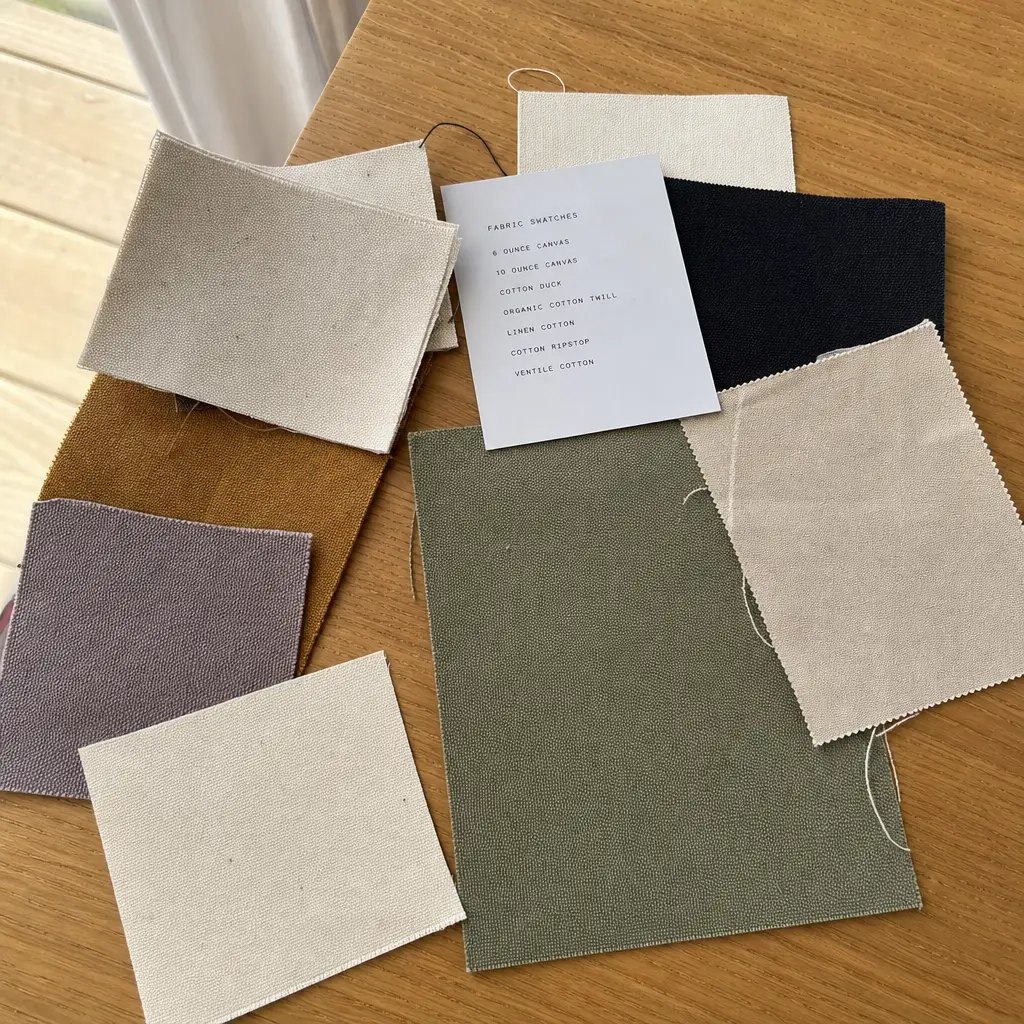
Canvas weight should be written in both ounces and GSM because suppliers, importers, and brand teams often speak in different units. For many canvas wine carriers wholesale programs, 10 oz to 12 oz cotton canvas, roughly 300-360 GSM, is a useful working range. It has enough body for a filled 750 ml bottle, prints cleanly with common screen-print methods, and avoids excessive carton weight for event shipments.
Lighter fabric can be appropriate, but the use case needs to match it. An 8 oz canvas, roughly 240 GSM, may suit a low-cost promotional sleeve or a short-use giveaway. It may also collapse when empty, wrinkle around the logo, or feel thin when paired with a premium bottle. Below about 280 GSM, a loaded sample is worth more than a long email thread.
Heavier fabric has appeal, especially when the carrier is meant to feel substantial. Still, more weight is not automatically better. Canvas above 14 oz, roughly 400 GSM or more, can require slower sewing, heavier needles, bulkier seams, and more careful folding. It may also increase gross weight and CBM. That can move the freight quote, particularly when cartons are charged by volume as well as weight.
Ask what stage the stated fabric weight refers to. Greige fabric, natural finished canvas, dyed canvas, washed canvas, and coated canvas can differ in handfeel, shrinkage, shade, and structure. If the program calls for organic cotton, recycled cotton, or another sustainability claim, require documentation that supports the claim. Do not let a product name become the evidence.
- 8 oz / about 240 GSM: cost-sensitive promotions; limited structure for premium bottle presentation.
- 10 oz / about 300 GSM: common baseline for single-bottle trade show carriers.
- 12 oz / about 360 GSM: stronger handfeel and better standing appearance for premium event gifts.
- 14 oz+ / about 400 GSM+: consider for retail or long-life programs after checking sewing and freight impact.
- Natural cotton canvas is usually the fastest and lowest color-control risk.
- Dyed canvas requires lab dip or bulk swatch approval and may need higher MOQ.
- Ask whether fabric weight tolerance is stated, such as +/- 5 percent, or controlled only against the sample.
Specify The Pattern Before Comparing Prices
Two quotes can show the same quantity and the same logo but cover very different products. The quiet differences usually sit in the pattern: top hem depth, gusset width, base construction, handle overlap, divider height, seam allowance, and reinforcement method. Each one changes material usage, sewing time, strength, and the way the bag presents when it is filled. A lower price may be a smaller carrier wearing the same product name.
A strong RFQ turns the carrier into measurable terms. Include finished width, height, gusset, boxed base width, top hem depth, handle width, handle drop, handle overlap, divider height, and printable front panel size. If the supplier proposes a standard pattern, request a measurement chart. "Single bottle" can mean a narrow sleeve for Bordeaux bottles, a wider gusseted carrier, or something in between.
Handle construction needs deliberate language. Cotton webbing handles are efficient, consistent, and strong when stitched correctly. Self-fabric handles can look more integrated with the body, though they may add bulk and sewing time. Rope handles can feel premium in some gift categories but add attachment and packing complexity. For trade show exhibitors, the best handle is the one that carries the loaded bottle comfortably and survives repeated lifting.
The base controls both stability and presentation. A boxed bottom usually stands better than a flat sleeve, but only if it fits the bottle. Too narrow, and the carrier tips. Too wide, and the bottle shifts. For two-bottle styles, the divider and base must work together so both bottles sit upright instead of pulling against each other.
- Finished dimensions should be measured flat unless the PO states another method.
- Common handle drop for hand carry is often around 10-12 cm, but confirm with the bottle height and opening shape.
- Handle width around 2.5-3.5 cm is common for comfortable webbing handles; very narrow handles can feel cheap with glass.
- Top hem depth should be deep enough to catch handle stitching securely, often 2.5 cm or more depending on construction.
- Specify box stitch, cross stitch, bartack, or double row stitching rather than saying "reinforced handle."
- For a divider, define height, fabric weight, attachment points, and whether the divider is sewn into the base.
- Ask suppliers to price construction upgrades separately so procurement can see the cost of stronger build choices.
Choose Decoration By Artwork Risk
For most wholesale canvas wine carrier orders, one-color screen printing is the safe default. It is cost-effective at volume, works well on natural canvas, and can be durable when the ink is cured correctly. Send vector art and define print size, placement, ink Pantone, number of colors, and whether the logo must match booth graphics, tasting menus, or other trade show assets. "Logo on front" leaves too much room for interpretation.
Canvas is textured, so artwork behaves differently than it does on coated paper or a smooth tote. Fine lines can break. Small reversed text can fill. Large solid areas can feel stiff. Very small text below about 5-6 pt should be avoided on coarse canvas unless the supplier proves readability with a strike-off. QR codes, gradients, halftones, metallic inks, and tight multicolor registration deserve testing before bulk approval.
Heat transfer can handle detailed multicolor art more cleanly than screen print, but it brings its own checks. Review the edge, handfeel, adhesion, and behavior after folding. A bright transfer can still be the wrong choice if it feels plastic-like or lifts at the edge. Embroidery, woven labels, and patches can work for premium small branding, especially when the mark is restrained and the placement avoids heavy seam areas.
Dark canvas requires extra control. White or light logos on black or navy often need underbase ink to reach acceptable brightness. If underbase is not priced, the finished logo may look muted. Ask how screen charges are applied: per color, per position, per artwork version, or some combination. Multiple winery logos on the same body can make decoration setup a meaningful cost driver.
- Provide vector artwork in AI, EPS, PDF, or SVG format with fonts outlined where possible.
- Define print size in centimeters or inches, not as a percentage of the panel.
- Measure placement from top edge, side seams, or base reference point.
- Ask for a printed strike-off on the actual canvas before bulk printing.
- For dark fabric, confirm underbase, curing method, and expected brightness.
- For QR codes, test scanning after printing on the selected fabric.
- For heavy ink coverage, test folding and dry rub before approving carton packing.
- For multiple logos, confirm setup cost and MOQ per logo version.
Make MOQ And Price Breaks Explainable
MOQ is not just a sales preference. It reflects fabric purchasing, dye lot size, cutting efficiency, screen setup, sewing line planning, trim sourcing, packing labor, and administration. A standard natural canvas carrier with one-color screen print may be practical from 500-1,000 pieces when fabric and webbing are in stock. Custom dyed fabric, special GSM, unusual trim, retail polybags, or several logo versions can push the workable MOQ to 2,000-3,000 pieces or more.
A very low MOQ can still be expensive in practice. It may come with substitute fabric, higher unit cost, separate sample charges, limited color options, or less inspection leverage. Instead of asking only for the lowest possible MOQ, ask for price breaks. The movement between 500, 1,000, 2,000, 3,000, and 5,000 pieces often shows whether the cost is being driven by fabric, printing, sewing, packing, or setup.
Separate body MOQ from logo MOQ. A supplier may be able to cut 3,000 natural canvas carriers and print three logos at 1,000 pieces each. Another supplier may require each logo to meet its own minimum. The same issue can apply to fabric colors, carton labels, barcodes, hangtags, and destination packing. Put the version plan into the RFQ before comparing quotes.
For reorders, ask what can be reused and what must be reapproved. Screens, patterns, approved fabric references, carton marks, and sewing instructions may shorten the process. They do not guarantee identical output if the fabric lot changes. When shade, handfeel, or print color matters, request a fresh bulk swatch or strike-off before releasing the repeat order.
- Request price breaks at 500, 1,000, 2,000, 3,000, and 5,000 pcs if forecast is flexible.
- Ask which elements have separate MOQ: fabric, dye, webbing, label, print, polybag, carton, or barcode.
- Confirm whether sample fees, screen charges, setup fees, and courier fees are included or separate.
- Clarify whether MOQ applies per artwork, per fabric color, per destination, or total order.
- For custom dye, ask about lab dip fee, dye lot minimum, shade tolerance, and extra lead time.
- For reorders, ask how long screens, patterns, and approved samples are retained.
- Compare total order value and landed cost, not only unit price.
Treat The Sample As A Production Contract
A sample is only useful if it represents the order you are about to buy. A showroom sample can show general style, but it should not approve production for a fixed trade show deadline. The pre-production sample should use actual or confirmed bulk-equivalent canvas, final handle material, final divider construction, final print method, final ink color, and the proposed packing fold.
Make the approval record specific. Tag the sample with version number, date, fabric weight, fabric color, print color, print size, dimensions, tolerances, packing method, and any approved exceptions. If approval is remote, ask for ruler photos of key dimensions, close-ups of handle attachment, inside seams, divider anchoring, base shape, print texture, and folded packing. A short loading and lifting video can be more useful than polished beauty photos.
Do not approve the empty bag alone. Insert the actual filled bottle, check how quickly it loads, and review the shape from front, side, and top. For a two-bottle carrier, insert two filled bottles and gently move the carrier by the handles to confirm the divider limits bottle contact. If booth staff will load hundreds of pieces, test the loading motion for speed and ease.
Natural cotton canvas may show small slubs or modest shade variation. That can be acceptable when the buyer wants a natural material look. The QC criteria should still reject obvious stains, oil marks, dirty fold lines, mold odor, water marks, heavy weaving defects, loose stitching, and crooked branding. Write down what is acceptable before production begins.
- Approve actual fabric or a documented bulk-equivalent fabric, not an unspecified substitute.
- Measure the sample flat and loaded because both reveal different issues.
- Check handle drop with a filled bottle inside the bag.
- Verify top opening width for fast loading at the booth.
- Confirm divider height and anchoring with actual bottles inserted.
- Review whether the packing fold crosses the logo or heavy ink area.
- Keep one control sample with the factory and one with the buyer or inspection team.
- Record approved deviations in the PO or sample approval sheet.
Build Packing Around Freight And Event Handling
Packing affects landed cost, warehouse handling, and how the logo looks when the carrier reaches the booth. For many canvas wine carriers, flat packing in export cartons is the most efficient option. Individual polybags may be required for retail distribution, barcode control, or a warehouse rule, but they add cost, labor, material, carton volume, and waste. For booth handouts, bulk packing is often faster to open and load.
Before order confirmation, request pieces per carton, carton dimensions, gross weight, net weight, total carton count, and estimated CBM. Freight quotes depend on volume and weight, and a lower unit price can disappear if cartons are inefficient. At the same time, overpacking can crush handles, create hard fold lines, or press creases into printed panels.
Logo protection belongs in sample approval. If the artwork uses heavy screen print or heat transfer, folding directly through it can create cracks, pressure marks, or scuffs. The supplier may need to fold around the print, reduce pieces per carton, add tissue, use slip sheets, or adjust logo placement. These choices are easy to approve before bulk packing and painful to discover after cartons arrive.
Event delivery adds its own label discipline. Advance warehouses may require show name, booth number, exhibitor name, PO number, piece count, destination, and receiving deadline. If cartons contain multiple logo versions or bottle programs, version labels should be obvious. Sorting unlabeled cartons at a convention center is slow and usually avoidable.
- Use flat packing when it protects the print and keeps CBM efficient.
- Avoid folding directly through heavy ink, transfers, or the visual center of the logo.
- Request carton dimensions and weights before final freight planning.
- Specify carton marks: PO, item, SKU, quantity, destination, show name, and booth number when required.
- For retail channels, confirm barcode, suffocation warning, inner pack, and polybag thickness rules.
- For mixed versions, require separate cartons or clear version labels.
- Ask for photos of packed cartons and carton marks before shipment.
- Check advance warehouse cutoff dates and appointment delivery rules early.
Work Backward From The True In-Hand Date
Trade show schedules are unforgiving because the event date does not move. The quoted lead time is only the manufacturing part of the calendar. A realistic plan includes artwork preparation, supplier review, sampling, sample freight, internal approval, revision if needed, fabric purchase, cutting, printing, curing, sewing, inline inspection, final inspection, packing, export handling, freight, customs clearance, local delivery, and event warehouse receiving.
The true deadline is often earlier than the first day of the show. Some exhibitors need goods at an advance warehouse days or weeks before opening. Others need time to load bottles, assemble VIP kits, insert cards, apply labels, or split inventory across regional teams. State the required in-hand date and ask the supplier to identify the latest safe sample approval date, production start date, inspection date, and ship date.
When the deadline is tight, reduce variables. Use stock natural canvas, a proven standard pattern, one fabric color, one print position, one-color artwork, and simple bulk packing. Custom dye, untested transfers, unusual hardware, multiple logo versions, and retail packaging are better for programs with more calendar room unless the supplier already has the exact materials and process confirmed.
Internal approval is often the quiet delay. Procurement, brand, legal, event marketing, and distributor teams may all want to review the sample or artwork. Set a comment deadline before the supplier starts work, and name one final approval owner. A clean buyer-side process lowers the odds of turning a normal order into a rush shipment.
- Plan from the in-hand date, not the public show date.
- Include advance warehouse receiving dates and appointment rules.
- Approve vector artwork before sample making whenever possible.
- Set a deadline for sample comments and a single approval owner.
- Ask for the last safe production start date and last safe ship date.
- Use stock materials for urgent programs unless custom materials are already available.
- Reserve freight upgrade decisions for real schedule risk, not avoidable approval delay.
- Confirm whether partial shipment is practical before relying on it.
Normalize Quotes To Landed Cost Per Usable Carrier
The cheapest unit price is not always the best sourcing choice. A proper quote comparison should include finished size, fabric composition, GSM, fabric color, handle material, handle reinforcement, divider details, decoration method, print size, print colors, packing method, carton dimensions, carton weight, MOQ, sample cost, screen charges, lead time, Incoterm, and payment terms. Without those details, the buyer may be comparing a durable carrier against a thinner, smaller substitute.
Keep Incoterms separate. EXW, FOB, CIF, DDP, and local delivered quotes include different responsibilities. A low EXW price can become expensive after inland pickup, export handling, freight, duty, customs entry, and final delivery. For trade show orders, also include event warehouse fees, appointment delivery, advance receiving charges, and rush handling costs if they apply.
The number to manage is landed cost per usable carrier. That means considering inspection cost, defect risk, rework, sorting, packing efficiency, and schedule reliability. A slightly higher unit cost may be the better commercial decision if the supplier provides clearer measurements, stronger samples, better carton data, and documented QC. For a fixed event, late or unusable goods can cost more than the bag itself.
Supplier responsiveness is evidence. A supplier that answers GSM, tolerance, handle, print, and carton questions precisely is easier to manage through sampling and production. A supplier that avoids specifics may still be capable, but procurement should close those gaps before issuing a PO. The RFQ stage is the lowest-cost moment to remove assumptions.
- Build quote columns for product spec, decoration spec, packing spec, Incoterm, charges, and schedule.
- Compare EXW, FOB, CIF, DDP, and delivered pricing only after normalizing included costs.
- Add screen charges, sample charges, courier cost, inspection cost, and packing upgrades.
- Calculate freight using carton CBM and gross weight, not only piece count.
- Ask whether the quote is tied to a specific fabric lot or validity period.
- Confirm payment terms and when production officially starts.
- Score sample accuracy, communication clarity, and willingness to document QC.
- Use landed cost per usable carrier for the final sourcing decision.
Set Inspection Rules Before Bulk Cutting
Quality control is strongest when acceptance rules are agreed before the factory cuts fabric. Canvas wine carrier risks are predictable: weak handles, undersized patterns, dirty fabric, crooked logos, poor print curing, divider failure, inconsistent stitching, and packing damage. These defects are much harder to correct after printing, sewing, and carton sealing.
Define major and minor defects in practical terms. Major defects should include wrong fabric, wrong color, wrong logo, wrong print method, handle failure, open seams, severe stains, mold odor, incorrect divider, wrong carton quantity, mixed versions, or packing that cannot protect the goods. Minor defects may include small thread tails or slight natural slubs within the approved material character. The distinction tells inspectors when to reject, sort, rework, or accept.
Handle testing should be explicit because the carrier holds glass. A practical test can include loading the approved filled bottle, lifting repeatedly, holding for a short period, and inspecting handle stitching and top hem afterward. For two-bottle styles, test with two filled bottles. The exact method should be agreed with the supplier and scaled to the order, but it should be documented rather than assumed.
Print inspection should cover placement, color, curing, adhesion, and clarity. A logo should have a measurable position tolerance, commonly +/- 3 mm to 5 mm where appropriate for the design. Cured ink should pass normal dry rub and tape pull checks. Small text, thin lines, underbase coverage, and multicolor registration should be compared against the approved strike-off.
Final inspection should include cartons. Confirm carton count, pieces per carton, sealing, carton marks, destination labels, version separation, and visible moisture or crushing. If no third-party inspection is used, request production photos, packed carton photos, and carton mark photos. For event shipments, carton errors can create as much trouble as product defects because there may be little time to sort inventory after delivery.
- Use the signed or tagged control sample as the inspection reference.
- Measure width, height, gusset, base, divider, handle drop, and print position.
- Check fabric GSM against the agreed range or approved bulk swatch.
- Test loaded bottle fit and standing stability for each approved bottle format.
- Test handle lifting with filled bottle weight plus an agreed safety margin.
- Reject open seams, skipped stitches, loose bartacks, broken thread, and sharp thread tails.
- Reject oil marks, dirty panels, mold odor, water damage, and severe shade mismatch.
- Inspect print adhesion, curing, clarity, underbase coverage, and placement tolerance.
- Verify carton count, pieces per carton, carton marks, and version separation.
- Agree on sorting, rework, replacement, discount, or remake rules before inspection failure occurs.
Specification comparison for buyers
| Spec decision | Recommended option | When it fits | Buyer risk to check |
|---|---|---|---|
| Bottle fit standard | Quote from actual bottle dimensions: diameter, height, shoulder width, base diameter, and filled weight | Trade show gifts, VIP kits, wine club packs, distributor samples, and mixed bottle programs where one carrier must hold real product | A generic wine bag may fit a slim Bordeaux bottle but bind on Burgundy, Champagne, sparkling wine, or spirits bottles; approve a loaded sample |
| Fabric weight | 10 oz to 12 oz cotton canvas, roughly 300-360 GSM, for most reusable single-bottle and two-bottle carriers | Balanced structure, printability, sewing efficiency, and manageable carton weight for wholesale event orders | Below about 280 GSM can feel limp with glass; above about 400 GSM may increase sewing difficulty, fold bulk, CBM, and freight cost |
| Finished size control | State finished width, height, gusset, boxed base width, handle drop, handle width, top hem depth, and divider height | Procurement teams comparing factory, importer, and decorator quotes on the same construction | Photo-based quotes can hide smaller panels, lower dividers, thinner handles, or weaker top hems |
| Handle construction | Cotton webbing or self-fabric handles with 2.5-3.5 cm width, 10-12 cm handle drop, and box stitch, cross stitch, bartack, or double-row reinforcement | Filled glass bottle carrying through show halls, hotels, shuttles, tasting rooms, and meeting rooms | Short overlap, narrow stitching, loose bartacks, or decorative-only seams can fail during repeated lifting |
| Divider choice | Two-bottle carrier with sewn divider fixed into base and side seams; divider height commonly 60-80 percent of bottle height | Retailer kits, distributor gifts, paired bottle promotions, and premium trade show appointments | A shallow divider may not stop glass contact; a loose divider can twist during loading; test with two filled bottles |
| Print method | One-color screen print for most trade show logos; tested heat transfer for detailed multicolor art; woven label or embroidery for small premium branding | Screen print is usually the best balance of cost, durability, and lead time on natural or light canvas | Coarse fabric can fill small reversed text; dark canvas may need underbase; heavy ink can crack or crease if folded through the logo |
| Color control | Natural canvas for fastest sourcing; dyed canvas only with approved lab dip or bulk swatch and agreed shade tolerance | Natural canvas works well for urgent event orders; dyed brand colors fit planned programs with longer calendars | Unapproved dye lots can shift; dark fabric changes print brightness; custom dye may require higher MOQ and more lead time |
| MOQ logic | Stock fabric and standard construction often from 500-1,000 pcs; custom dye, special GSM, custom trim, or complex packing often from 2,000-3,000 pcs or more | Buyers testing a campaign can start with standard materials, then upgrade after reorder data | Very low MOQ can mean higher unit cost, substitute fabric, separate setup fees, limited inspection leverage, or mixed production windows |
| Packing format | Flat pack in export cartons; individual polybag only when retail, warehouse, or channel rules require it | Event warehouse delivery, booth storage, and bulk handout operations where speed and freight volume matter | Over-compression can crease print panels; unnecessary polybags add labor, volume, cost, and waste |
Buyer checklist before sampling
- Identify the exact bottle format before quoting: Bordeaux, Burgundy, Champagne, sparkling wine, spirits, mini bottle, or mixed assortment.
- Measure the largest bottle diameter, widest shoulder point, total height, base diameter, and filled weight in grams or pounds.
- Specify whether the carrier must fit a standard 750 ml bottle only, a larger sparkling bottle, a 1 L bottle, or a gift set with tissue, card, tag, or insert.
- Define finished width, height, gusset, boxed base width, handle width, handle drop, top hem depth, seam allowance expectation, and divider height.
- State fabric composition and target weight in both ounces and GSM, and ask whether the value is before or after dyeing, washing, coating, or finishing.
- Confirm acceptable fabric options: conventional cotton, organic cotton, recycled cotton, cotton-poly blend, or stock canvas; require documentation for any sustainability claim.
- Select fabric color and approval method: natural, bleached, black, navy, stock dyed color, or custom Pantone dye with lab dip or bulk swatch.
- Send vector artwork and specify print method, print size, print position, ink Pantone, number of colors, underbase need, and minimum readable text size.
- Require a pre-production sample made with actual fabric, actual handle construction, final divider method, final print method, and proposed packing fold.
- State size tolerances in the PO, commonly +/- 0.5 cm for small dimensions and +/- 1.0 cm for overall height unless tighter control is agreed.
Factory quote questions to send
- What fabric weight in GSM and ounces is included, and what tolerance do you apply to bulk fabric weight?
- Is the quoted canvas in stock, or does it require weaving, dyeing, washing, or finishing before cutting?
- What is the fabric composition, and what evidence can you provide for organic, recycled, or other claimed content?
- Is the canvas greige, natural, bleached, piece dyed, yarn dyed, washed, coated, or softened, and how will bulk shade be controlled?
- What are the finished dimensions included in your quote: width, height, gusset, base width, handle width, handle drop, top hem depth, and divider height?
- What finished size tolerances do you apply for width, height, gusset, base, divider, handle drop, and print placement?
- Which handle material is included: self-fabric, cotton webbing, rope, or another material, and what is the handle width and overlap length?
- How are the handles reinforced: box stitch, cross stitch, bartack, double row stitching, or another construction?
- For two-bottle carriers, is the divider sewn into the base, side seam, top hem, or only attached at selected points?
- What load test do you perform for a filled single-bottle and two-bottle carrier, and can you document the test with photos or video?
Quality-control points to confirm
- Control sample: keep one approved sample at the factory and one with the buyer or inspection team, tagged with date, version, fabric, size, print color, stitching, divider, and packing method.
- Finished size tolerance: common working limits are +/- 0.5 cm for gusset, base, divider, and handle drop, and +/- 1.0 cm for overall height, unless the PO defines tighter tolerances.
- Fabric weight tolerance: compare bulk GSM against the approved sample or agreed range; a large deviation changes structure, print behavior, carton weight, and perceived value.
- Fabric appearance: accept normal cotton slubs only if approved; reject oil marks, dirt, mold odor, water damage, heavy weaving defects, stains, and contaminated panels.
- Bottle fit: test the actual approved bottle for loading ease, height clearance, base stability, handle comfort, and upright appearance.
- Two-bottle divider: insert two filled bottles and check glass contact, divider height, divider anchoring, twisting, and base balance.
- Handle load: test repeated lifting with the filled bottle weight plus a reasonable safety margin; inspect handle stitching and top hem after the test.
- Seam strength: check handles, side seams, divider seams, top hems, and boxed base seams for open seams, skipped stitches, broken thread, or loose bartacks.
- Stitch density: define an acceptable range if critical, such as 7-9 stitches per inch for many canvas constructions, subject to machine and fabric confirmation.
- Handle reinforcement: inspect box stitches, cross stitches, bartacks, overlap length, symmetry, thread tension, and whether reinforcement catches enough fabric layers.