Anchor the RFQ in the bottle program
Most sourcing mistakes start with a reference photo and a target price, not with the bottles that must fit. Natural grocers often merchandise more than standard 750 ml wine. Sparkling wine, cider, olive oil, vinegar, kombucha, craft spirits, and local seasonal bottles may share the same display or gift program. A carrier built around a slim Bordeaux bottle can become tight around a wider sparkling bottle, scrape a paper label, or distort the divider when two bottles are inserted.
The procurement brief should describe the commercial use, not only the appearance. A checkout add-on can prioritize low cost and quick replenishment. A holiday gift carrier needs better structure, cleaner print, and stronger shelf presentation. A distributor-packed bundle needs fast bottle insertion, label protection, and cartons that arrive ready for store allocation. These details change the best fabric weight, gusset size, divider design, and packing method.
- Measure bottle height, base diameter, shoulder width, neck finish, and label area for the largest bottle in the range.
- State whether the fit should be snug and premium or more forgiving for mixed bottle assortments.
- For two-bottle styles, confirm that each compartment allows easy insertion without label scuffing.
- Identify the channel: empty retail sale, checkout carryout, gift bundle, promotional giveaway, or distributor-packed program.
- Send photos only as support; do not let the photo replace dimensions, load expectations, and use case.
Select canvas weight for both feel and freight
For many wholesale wine carrier programs, 10 oz to 12 oz cotton canvas, roughly 340 to 407 GSM, gives the best balance of structure, sewability, print quality, and carton efficiency. It feels reusable without becoming overly stiff. Lighter 6 oz or 8 oz cotton can reduce unit cost, but it may collapse around glass bottles and feel like a short-term promotional bag rather than a durable natural grocer accessory.
Heavier canvas, such as 14 oz, can suit premium gifting, but it should not be chosen automatically. Thick fabric increases cutting resistance, sewing time, needle wear, carton cube, and sometimes freight cost. It can also make small gussets difficult to open, especially on compact single-bottle carriers. Ask suppliers to quote the same GSM and construction so price comparisons are meaningful. If a quote says only “canvas,” it is not specific enough for procurement approval.
- Value tier: 8 oz to 10 oz for simple single-bottle promotions where cost is the main driver.
- Core tier: 10 oz to 12 oz for reusable single- and two-bottle natural canvas carriers.
- Premium tier: 12 oz to 14 oz for gift sets, endcaps, and higher perceived retail value.
- Request both oz and GSM because fabric naming can vary by market and supplier.
- Check carton quantity and CBM before approving a heavier fabric for a national or multi-store program.
Verify cotton and sustainability claims before printing
Natural grocer buyers are often more sensitive to material claims than general retail buyers. Words such as organic, recycled, unbleached, plastic-free, biodegradable, low-impact, and sustainable should be treated as claim language, not decoration. If those words appear on a hangtag, website, shelf sign, carton, or bag print, procurement should confirm what documentation supports them before the order is placed.
Unbleached natural cotton is not the same as certified organic cotton. Recycled cotton is not the same as virgin cotton with a natural color. A supplier may have access to certified material for one fabric lot but not another. Ask for the document type early, and confirm whether the documentation covers fabric, yarn, finished goods, or only the mill. When the claim is important to the retailer, keep the certificate or transaction record with the PO file and approved artwork.
- Decide which claims are required, which are optional, and which should be avoided unless documented.
- Ask whether certificates apply to the specific order, fabric lot, mill, or finished product.
- Approve all claim wording before screen printing, hangtag production, or barcode label creation.
- For reduced-plastic programs, define packaging requirements separately from fabric claims.
- Keep reference swatches and documentation for repeat-order consistency.
Engineer dimensions and dividers around real use
A strong specification uses finished dimensions after sewing, not only panel size or an approximate flat measurement. For a single-bottle carrier, the key dimensions are finished height, width, gusset depth, handle drop, handle width, and bottom construction. For a two-bottle carrier, add divider height, attachment points, and usable internal compartment width. The bag should be evaluated with bottles inserted because canvas behaves differently under load than it does flat on a table.
Sewn products need practical tolerances. Zero tolerance is unrealistic, but vague tolerance can create fit problems. A small loss in compartment width can block a wider bottle; a short handle drop can make the filled carrier uncomfortable; an off-center divider can push bottles together. Use the approved sample as the physical standard, then document the critical measurement points for factory QC and third-party inspection.
- State whether measurements are taken laid flat, standing upright, empty, or filled.
- Define finished width, height, gusset, handle drop, handle width, and bottom shape in the RFQ.
- For two-bottle bags, specify whether the divider is sewn into the base, side seam, and top edge.
- Set tighter tolerance on bottle compartment width than on non-critical decorative areas.
- Test the approved sample with both the widest and tallest bottles planned for the program.
Specify handle, seam, and bottom reinforcement
Glass weight concentrates stress at the handle seam, bottom corners, and divider attachment. A single filled bottle can create a practical carrying load well above the liquid weight once glass and packaging are included, and two-bottle carriers can exceed 3 kg depending on bottle type. If the assortment includes sparkling wine, cider, olive oil, or heavy gift bottles, the design needs a safety margin rather than decorative stitching only.
Self-fabric canvas handles are a reliable default for a natural grocer aesthetic. Cotton webbing can also work when a smoother handle feel or faster sewing is preferred. The important point is reinforcement. Box-X stitching, bar tacks, reinforcement patches, or a defined equivalent should be written into the spec. Rope handles may look rustic, but grommets and reinforcement panels must be carefully designed so the canvas does not tear around the hardware.
- Require box-X, bar tack, or approved reinforcement at every handle attachment point.
- Check bottom corners because bottles press into the lower seam during lifting and setting down.
- Use lock stitching or back stitching at seam ends to prevent unraveling.
- For two-bottle carriers, test whether the divider keeps bottles separated during normal carrying.
- Do not approve production based only on a static pull; lift, hold, set down, and lightly swing a loaded sample.
Choose print and branding details that suit canvas
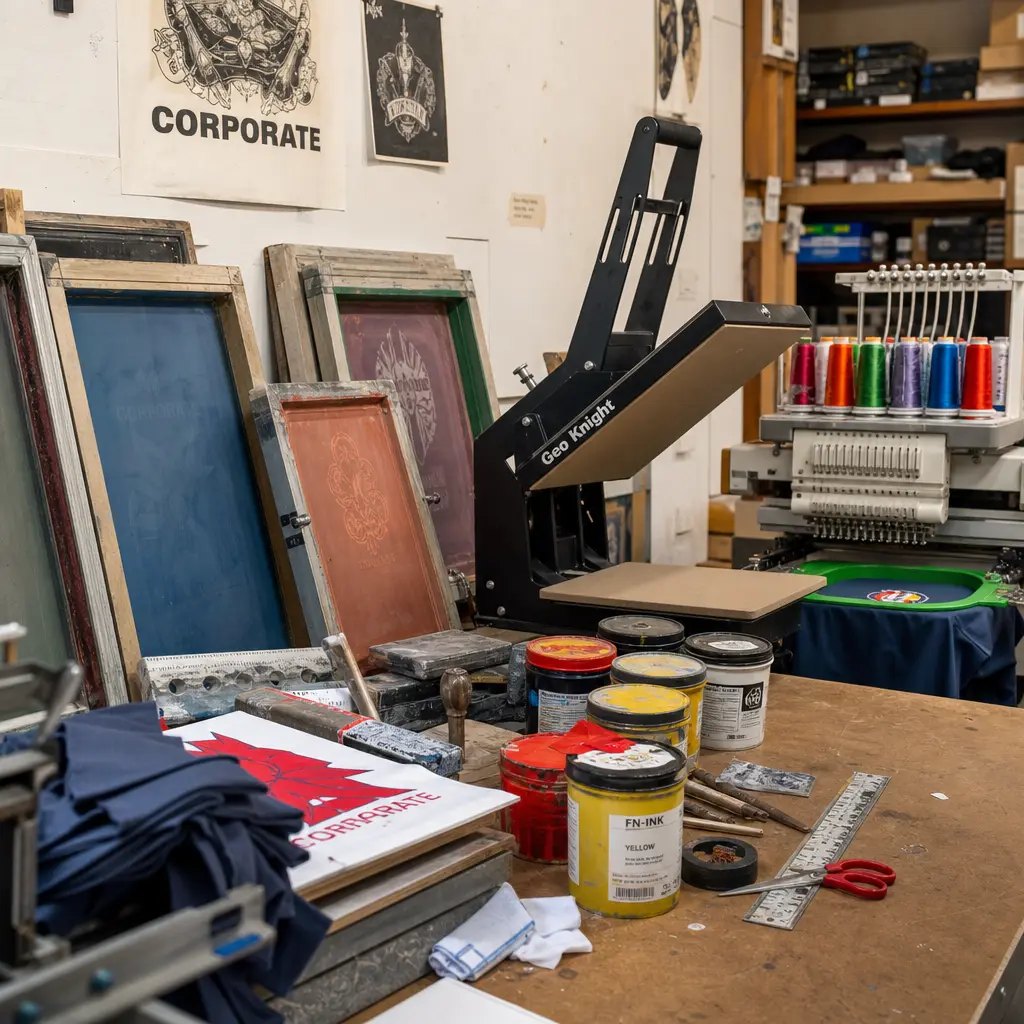
Water-based screen printing is often the best match for natural canvas wine carriers, especially for one to three spot colors. It supports simple natural grocer branding, local wine programs, and seasonal graphics without making the panel feel overly plastic. The buyer should provide vector artwork, Pantone references where needed, print size, print location, and acceptable variation on natural cotton texture.
Heat transfer can reproduce fine detail and full-color artwork, but it should be tested on the actual fabric texture for adhesion, edge quality, and cracking. Embroidery can look premium, but it adds cost, backing, stitch-density decisions, and possible panel distortion. Branding also includes sewn labels, hangtags, barcode labels, and claim language. These items affect MOQ, packing speed, and retailer receiving, so they belong in the RFQ rather than being added after price approval.
- Use screen print for bold logos, simple slogans, and spot-color natural grocer graphics.
- Use heat transfer only after testing adhesion and flexibility on the selected canvas.
- Keep heavy ink blocks away from tight folds, high-rub areas, and divider stress points.
- Approve print color on the actual fabric lot or a representative production swatch.
- List label, hangtag, UPC/EAN, and carton-mark requirements with the artwork package.
Understand MOQ, price breaks, and version control
MOQ is driven by more than factory policy. Fabric availability, dyeing minimums, cutting efficiency, print setup, label version, sewing-line changeover, and packing method all affect the true minimum. A natural unbleached single-bottle carrier with one screen print will usually be easier to consolidate than a dyed two-bottle carrier in several colors with different store-brand labels.
Procurement teams should compare quotes by version, not just by total program quantity. One supplier may quote a low unit price assuming one artwork, one carton mark, and one packing style. Another may correctly separate each artwork, UPC, hangtag, and carton label. If the program needs regional wine messages, private labels, or seasonal graphics, request a version matrix. That makes cost tradeoffs visible before the PO is issued.
- Ask for MOQ by size, fabric color, artwork, label version, and packing version.
- Request price breaks at practical quantities such as 1,000, 3,000, 5,000, and 10,000 pieces if relevant.
- Confirm whether setup charges apply per artwork, per color, or per print location.
- Ask whether overrun or underrun tolerance applies for custom fabric or printed production.
- For repeat programs, discuss whether the supplier can hold screens, fabric references, or approved samples.
Build a quote sheet that compares landed cost
A low FOB unit price can hide a weak specification. The quote sheet should force every supplier to price the same fabric GSM, finished size, handle reinforcement, divider method, print method, label requirement, packing method, carton quantity, carton dimensions, and Incoterm. Without these details, a cheaper quote may simply mean lighter fabric, weaker stitching, fewer carton labels, or a different packing assumption.
Natural grocer programs also have receiving requirements. Warehouses may require SKU-level carton marks, UPC or EAN labels, pallet labels, maximum carton weight, routing-guide compliance, or advance shipment information. If those services are added late, they can delay export packing or create rework. Include them in the first quote request so the supplier can price labor, labels, and packing materials accurately.
- Separate unit price, sample cost, screen/setup cost, labels, hangtags, packing materials, and documentation charges.
- Request carton quantity, carton dimensions, net weight, gross weight, and estimated CBM by style.
- State Incoterms clearly: EXW, FOB, CIF, DAP, or DDP should not be mixed in one price column.
- Ask whether the quote includes barcode application, carton marks, palletization, and retailer label placement.
- Compare landed cost using the same shipment mode and destination, not only the factory unit price.
Use sampling and QC to prevent retail failures
Sampling should test fit, strength, print, and packing—not just appearance. Start with a blank construction sample if the bottle fit or divider design is uncertain. Move to a printed pre-production sample once dimensions and fabric are approved. For a complex program, request a production reference sample and a sample carton pack so the team can see how the carriers arrive after compression and handling.
QC should be tied to the approved sample and written checklist. Inspectors should measure finished dimensions, confirm fabric weight, check print placement, test loaded handling, review divider security, and inspect cleanliness. Cotton goods can pick up odor, dust, oil marks, mildew, and carton transfer if storage is poor. These issues matter for natural grocers because the product may sit near food, wine, and gift displays where odor and stains are unacceptable.
- Keep one approved sample with the factory and one with the buyer or inspection company.
- Mark the approved sample with date, version, fabric weight, print method, and measurement points.
- Test with the heaviest intended bottle load, not an empty bag or a lightweight substitute.
- Inspect stitching for skipped stitches, loose threads, seam allowance, back tacking, and reinforcement consistency.
- Do not release shipment until carton marks, SKU counts, barcode labels, and packing condition match the PO.
Plan packing, reduced plastic, and lead time together
Packing choices affect both sustainability goals and logistics performance. Many natural grocers prefer to avoid individual polybags, but cotton still needs protection from moisture, dust, odor, and abrasion. Bulk packing by SKU with a master poly liner, recycled-content carton where available, paper bands, or paper interleaving may be appropriate depending on the retail presentation. If individual barcodes or hangtags are required, the supplier needs to know whether each carrier must be separately packed or only labeled.
Lead time should be built from approval milestones, not guessed from sewing time. Artwork approval, material booking, lab dips for dyed canvas, certification documentation, sample revision, printing, sewing, inspection, carton packing, export handover, and warehouse receiving appointments all add time. Seasonal wine promotions need extra buffer because a late bulky canvas order may be expensive to rescue by air freight.
- Define whether individual polybags are prohibited, allowed, or required for retail handling.
- Confirm carton quantity only after reviewing bag size, canvas weight, divider stiffness, and sample carton packing.
- Use clear carton marks: PO, SKU, artwork version, color, quantity, gross weight, carton size, and destination if needed.
- Schedule final inspection before cartons leave the factory, not after shipment is already booked.
- Lock artwork, claim language, and barcode data early for holiday, harvest, or promotional wine programs.
Specification comparison for buyers
| Buying scenario | Best-fit specification | Commercial advantage | Procurement risk to control |
|---|---|---|---|
| Checkout add-on or low-price retail sale | Single-bottle carrier, 8 oz to 10 oz canvas, one-color screen print, basic reinforced handles | Lower unit cost, simpler packing, easier store replenishment | May feel too promotional if fabric is light; confirm load test and finished dimensions |
| Core natural grocer wine program | Single- or two-bottle carrier, 10 oz to 12 oz canvas, sewn divider for two-bottle styles, water-based screen print | Good balance of reusable feel, print quality, carton efficiency, and landed cost | Natural canvas shade can vary; approve swatch range and fabric weight before production |
| Holiday gifting or premium endcap | Two-bottle carrier, 12 oz to 14 oz canvas, stronger handle reinforcement, optional hangtag or retail barcode | Better shelf presence and gift value for wine, olive oil, cider, or gourmet bottle bundles | Higher freight cube and carton compression risk; sample carton packing before final PO |
| Distributor-packed bottle bundles | Carrier sized around the actual bottle assortment, smooth insertion clearance, durable divider, SKU-level carton marks | Reduces packing-line friction and label scuffing when bottles are inserted before store delivery | Generic wine-bag dimensions may fail with sparkling, cider, or wider natural wine bottles |
| Reduced-plastic natural grocer program | Bulk packed by SKU with master poly liner or paper interleaving only where needed | Supports retailer sustainability goals and avoids unnecessary individual polybags | Cotton must still be protected from moisture, dust, odor, and carton abrasion in transit |
| Private label with verified material claims | Organic, recycled, or certified cotton only when documentation is available; claim text approved before printing | Allows credible on-pack and shelf messaging without greenwashing exposure | Supplier must provide valid certificates, transaction documents when applicable, and claim-specific traceability |
Buyer checklist before sampling
- Define the bottle set before quoting: standard 750 ml wine, sparkling wine, cider, olive oil, vinegar, kombucha, spirits, or mixed gourmet bottles.
- Measure the largest and smallest bottles for height, base diameter, shoulder width, neck/cap height, and label placement that could rub against a divider.
- Choose capacity by use case: single-bottle checkout sale, two-bottle gift carrier, four-bottle club pack, or custom bottle-and-food set.
- Specify fabric in both oz and GSM, plus natural, bleached, dyed, organic, recycled, or conventional cotton preference.
- Require documentation before making organic, recycled, unbleached, low-impact, or plastic-free claims in customer-facing copy.
- Provide finished dimensions for width, height, gusset, handle drop, handle width, divider height, divider attachment, and seam construction.
- Set a practical load expectation, such as a single-bottle bag tested with the heaviest intended bottle and a two-bottle bag tested with the full two-bottle load.
- Specify handle reinforcement: box-X, bar tack, reinforcement patch, or another approved method; do not leave handle stitching to factory default.
- Identify print method, artwork file type, Pantone or brand colors, print size, print location, ink coverage limits, and whether the artwork can tolerate natural canvas texture.
- Ask for MOQ by size, color, artwork, label version, packing version, and material claim rather than only one total order MOQ.
Factory quote questions to send
- What exact canvas weight are you quoting in oz and GSM, and is the fabric stock, custom woven, dyed, organic, recycled, or conventional cotton?
- Can you provide supporting documents for any organic cotton, recycled cotton, unbleached cotton, or other sustainability claim before we print claim language?
- What are the finished dimensions after sewing, and what tolerance will you apply to width, height, gusset, handle drop, handle width, divider position, and compartment width?
- Which bottle dimensions did you use for fit testing, and can the carrier accept wider sparkling, cider, olive oil, or natural wine bottles if our program requires them?
- How are the handles constructed and reinforced: self-fabric, cotton webbing, box-X stitching, bar tack, reinforcement patch, or only straight stitching?
- For two-bottle carriers, is the divider sewn into the base, side seam, and top edge, and what is the usable internal width of each compartment?
- Which print method is included, how many colors, what maximum print area, what ink type, and are screens, setup, or artwork adjustments charged separately?
- What is the MOQ by bag size, fabric color, artwork version, label version, packing method, and certification requirement?
- What are the price breaks at practical quantities, and do you allow split shipment, repeat-order pricing, or call-off orders from the same approved material?
- How will the bags be packed: flat, lightly folded, nested, with paper bands, with master poly liner, or individually packed?
Quality-control points to confirm
- Finished width, height, gusset, handle drop, handle width, divider height, compartment width, and bottom shape measured against the approved sample and written tolerance.
- Fabric weight verified by GSM or oz reference; natural canvas shade compared with an approved swatch range under consistent lighting.
- Material claim documentation checked before production for any organic, recycled, unbleached, certified, or reduced-impact wording used on labels, cartons, or marketing assets.
- Bottle fit tested with the buyer’s approved bottle set, including the widest bottle, tallest bottle, and any bottle with easily scuffed labels.
- Load test performed with realistic filled-bottle weight, focusing on handle attachment, bar tacks, box-X stitching, bottom corners, side seams, and divider attachment.
- Two-bottle divider checked for centering, twist, seam security, label clearance, and ability to keep glass bottles from knocking together during normal carrying.
- Print inspected for placement, color, opacity, edge sharpness, curing, rub resistance, cracking, show-through, and unwanted stiffness on natural canvas.
- Stitching checked for skipped stitches, loose threads, needle holes, broken thread, uneven seam allowance, back tacking, and reinforcement consistency.
- Cleanliness checked for odor, stains, oil marks, dust, mildew risk, insects, dampness, and transfer marks before cartons are closed.
- Packing verified for SKU separation, barcode accuracy, hangtag placement, carton marks, carton quantity, deformation risk, moisture protection, and pallet or retailer receiving requirements.