Start with the channel, not the logo
Canvas wine carriers are a simple product category, but the buying logic changes a lot by channel. A startup handing out bottles at an investor dinner needs a different carrier than a startup sending employee holiday gifts, retail bundles, or partner kits through a warehouse. The same bag can be built with different priorities: fast loading, clean presentation, repeatable carton counts, shelf readiness, or low freight volume. If the channel is not defined first, the quote will be vague and the supplier will make assumptions that are hard to undo later.
The fastest way to waste time is to send one product photo and ask for “best price.” That usually produces incomparable quotes because each factory will assume a different canvas weight, handle style, print method, packing route, and tolerance standard. A better brief starts with the use case, the bottle, the route to market, and the one or two features that matter most. For a dinner handout, it may be carry comfort and visual polish. For warehouse fulfillment, it may be carton accuracy and easy receiving. For a retail program, it may be consistent fold shape and barcode-ready packaging.
B2B buyers should also decide what this carrier is not supposed to do. If the bag is only for event handouts, do not pay for retail hanging features you will never use. If the bag must be packed inside a larger gift box, do not force a bulky closure that makes folding awkward. The right spec is the one that supports the distribution route with the least extra material and labor. That is how you keep the product useful without overengineering it.
- Investor dinner: prioritize presentation, print clarity, and easy carry.
- Conference giveaway: prioritize speed, standard sizing, and simple packing.
- Retail bundle: prioritize SKU consistency, barcode labeling, and repeatability.
- Employee kit: prioritize fit with the full kit, not only the bottle.
- Warehouse-shipped program: prioritize carton data and receiving accuracy.
Choose fabric weight for structure, not just price
For wholesale canvas wine carriers, 10 oz to 12 oz cotton canvas, roughly 280-340 GSM, is the most practical starting range. It is heavy enough to support a wine bottle without looking flimsy, but not so heavy that the bag becomes difficult to sew, fold, or ship. Buyers sometimes ask for the heaviest canvas available because they assume heavier means better. In reality, the best choice depends on how the carrier will be used, stored, and transported. A well-made 10 oz or 12 oz carrier usually looks more polished than an overbuilt heavy bag that folds poorly or adds avoidable freight cost.
Lighter canvas can still work. An 8 oz option is acceptable for low-stakes promotional use or large-volume event distribution when cost matters most and the bag is not expected to hold a premium shape. The tradeoff is that softer canvas may collapse around the bottle shoulder and can look less structured in photos. On the other end, 14 oz and above may be useful when the buyer wants a premium handfeel or a very structured carrier, but the added bulk can increase seam thickness, raise carton weight, and make logo placement less crisp around folds.
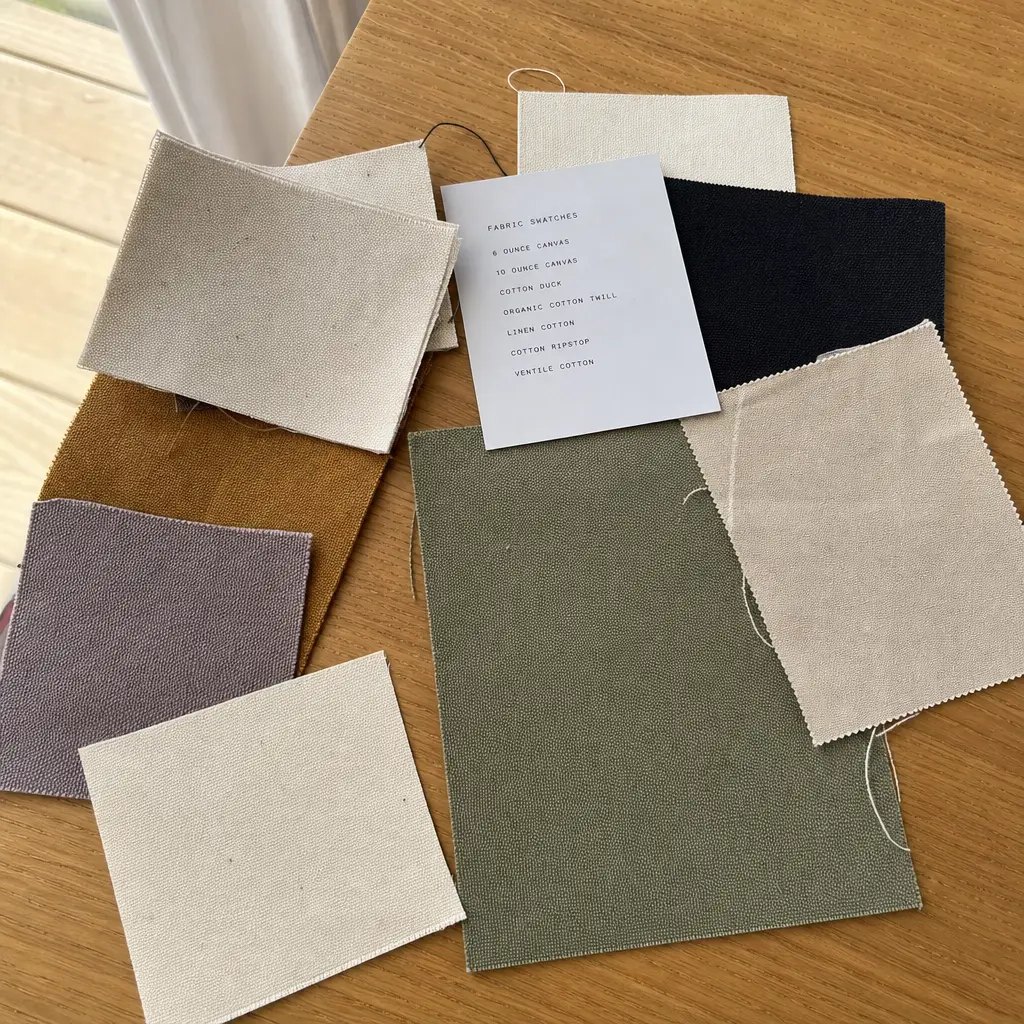
Fabric finish matters almost as much as weight. Natural canvas is the easiest stock choice, but it will vary by lot in shade and weave texture. Brightened natural or bleached canvas can make light logos look cleaner, though whitening adds sourcing and cost complexity. Dyed canvas can look more brand-specific, but dyed programs usually need tighter color control and may move MOQ upward. Ask the supplier which fabric is stock and which is made to order. That distinction affects lead time, repeatability, and how easy it is to reorder the same carrier later.
- 8 oz cotton: lower cost and softer structure for promotional use.
- 10 oz cotton: balanced starting point for most startup programs.
- 12 oz cotton: better shape retention and premium feel.
- 14 oz and above: only when structure matters more than freight volume.
- Natural canvas varies by lot; approve a swatch before bulk.
- Ask for finished bag weight and carton gross weight, not fabric weight only.
Fit the carrier to the actual bottle
A standard 750 ml wine bottle is only one fit target. Champagne bottles, sparkling wine bottles, spirits bottles, olive oil bottles, and some branded beverage bottles can differ enough in height and diameter to change the pattern. Before a factory quotes anything, send the actual bottle dimensions and, if possible, a photo with a ruler or caliper reference. The supplier needs to know the widest point, the shoulder shape, and whether the bottle will be shipped naked or wrapped in tissue, a sleeve, or a secondary carton.
Finished dimensions should be written with tolerance, not left to interpretation. If the opening is too tight, staff will struggle to insert the bottle and may stress the side seams. If the carrier is too loose, the bottle will shift and the bag will look sloppy. For a two-bottle carrier, the divider matters even more. It needs to be tall enough and firmly anchored so the bottles do not knock together when the bag is carried. Ask the factory to test the widest bottle you expect to use, not the easiest sample they have on hand.
Buyers should also think about display behavior. A flat-bottom single-bottle carrier is simple and efficient, but a boxed bottom can stand more neatly for retail shelves, gift tables, or photo setups. If standing upright matters, say so. If the carrier will always be packed flat, then the pattern can be simpler. These details sound small, but they determine whether the bag supports the real use case or only looks correct in a drawing.
- Record bottle height, maximum diameter, and shoulder shape.
- Confirm whether the bottle is bare or wrapped before sampling.
- Specify finished width, gusset, opening width, and bottom geometry.
- For two-bottle carriers, define divider height and anchoring.
- If the bag must stand empty, call that out in the spec.
- Test the widest real bottle, not a convenient sample only.
Treat handles as a load-bearing component
Handle construction is one of the most overlooked sourcing decisions in this category. Cotton webbing is often the safest choice because it is predictable in production, comfortable in hand, and easier to reinforce consistently. A webbing handle 2.5-3.0 cm wide is a practical baseline for most wholesale programs. Self-fabric handles can look more integrated with the body of the bag, but they may twist or stretch depending on fabric weight and folding method. For a carrier that may be handed to guests already carrying other items, comfort and confidence in the handle matter more than a purely decorative finish.
Handle drop should match use. A shorter drop keeps the bottle close to the body and looks more gift-like. A longer drop can be easier when the carrier is used with badges, catalogs, or other event items, but too much length can let the bottle swing. That swing becomes more noticeable with heavier glass bottles. The quote should state not only the handle length, but also the reinforcement method. Box stitching, cross stitching, bar-tack reinforcement, or an internal patch all perform differently. If the quote only says “strong handle,” it is incomplete.
The handle should be tested in context. A loaded bottle can change the seam angle and expose weak attachment points that were not obvious on an empty sample. Check whether the handle stitching sits too close to the printed panel, because nearby sewing can pucker the artwork or bend the fabric at the seam. A well-built handle should survive repeated lifting, not just pass a visual inspection on the table.
- Specify handle width, drop, color, and material.
- Require reinforcement at each attachment point, not a single straight stitch.
- Ask for the exact stitch pattern at the load-bearing seams.
- Avoid large prints too close to handle anchors.
- Use a loaded lift test during sample approval.
- For two-bottle carriers, reinforce the handle area more heavily.
Match decoration to artwork, weave, and folding
Most startup logos work best with one-color or two-color screen printing. On canvas, screen print is usually the most practical wholesale method because it scales well, is relatively durable, and keeps unit cost under control. Heat transfer is worth considering when the logo has gradients, fine lines, or more colors than a screen print can handle efficiently. It can look sharp at first, but the buyer should check how it behaves after folding, handling, and repeated contact with other packaging. Embroidery can feel premium, but on a wine carrier it is usually best kept small; heavy embroidery can distort lighter canvas and add cost quickly.
Decoration must be approved on the actual fabric, not only on a mockup. Canvas weave affects edge sharpness, especially for small type and thin lines. A logo that looks crisp on a monitor may close up once it lands on natural canvas. Ask the supplier what minimum line thickness and minimum text height are realistic for the selected fabric weight. If the wordmark includes a tiny tagline, consider moving it to a hangtag or removing it from the bag. In many cases, a cleaner logo improves the product more than forcing every brand element onto the front panel.
Placement also matters. The print should be measured from seam lines and fold points, not just centered by eye. A logo that crosses a fold line can crack or shift after packing. A mark placed too close to a side seam may skew during sewing. That is why a pre-production sample with the actual logo is essential. A blank fit sample can confirm dimensions, but it cannot prove print registration, ink density, or how the artwork behaves when the fabric is loaded and folded.
- Screen print: best for solid logos and repeatable production.
- Heat transfer: useful for gradients and finer detail, but test fold durability.
- Embroidery: useful for small premium marks, not always for large panels.
- Woven label or patch: subtle brand option for low-ink presentation.
- Approve color against the fabric, not only against a digital file.
- Ask for the minimum readable text height on the selected weave.
Use closure and lining to control presentation
Open-top carriers are the simplest and usually the most cost-efficient. They are fast to load, easy to fold, and well suited to conference handouts, office gifting, and warehouse distribution. A drawstring or tie closure is useful when the buyer wants the bottle covered during handoff or when the carrier sits inside a larger gift box. A flap can create a cleaner premium impression, but it adds pattern complexity and can slow down loading if the opening becomes too narrow for wrapped bottles or a thicker insert.
Lining is a presentation and handling choice, not a default upgrade. Unlined canvas is enough for many dry-gift applications and folds more efficiently. Light lining or lamination can improve interior cleanliness, structure, or wipeability, but it adds sewing complexity and can push up MOQ. It can also change how the carrier folds in a carton. That matters if the product is going through fulfillment, reshipment, or retail packing. Buyers should ask the factory to quote lined and unlined versions separately so the tradeoff is visible.
The right decision depends on the route to market. If staff are handing out bottles at a busy event, speed matters more than a polished closure. If the carrier is part of a launch gift that will be photographed, the unboxing effect may matter enough to justify extra material. Procurement should avoid treating closure and lining as an abstract premium feature. They should be selected only if they support the way the item is actually distributed and stored.
- Open top: best for speed and cost control.
- Drawstring or tie: better for coverage and a tidier reveal.
- Flap: useful for premium presentation, but check loading clearance.
- Unlined: easiest to fold and often the most economical.
- Light lining or lamination: use only when structure or wipeability matters.
- Ask the factory to quote closure and lining as separate line items.
Read MOQ as a production constraint, not a sales tactic
MOQ is the outcome of fabric sourcing, dyeing, cutting efficiency, print setup, labor planning, and packing complexity. For a natural canvas carrier with standard dimensions and one-color print, a lower MOQ may be feasible because the factory can use stock fabric and a simple workflow. Once the order adds custom dye, a special label, a divider, lining, closure, or retail-ready packing, the practical MOQ usually rises because more materials and setup steps need to be reserved for that project.
A low MOQ can be useful for a pilot, but the buyer needs to know what simplifications made it possible. The factory may be using stock fabric, limited trim colors, shared carton formats, or a simplified packing routine. That is acceptable for a short-run internal program. It is less acceptable if the company expects to reorder later for the same campaign or for retail, because the second batch may not match the first unless the material and print references are fixed. If repeat orders are likely, ask whether the supplier can hold the same fabric lot, trim lot, or print screen for a reorder window.
Do not let MOQ blur together with sample quantity. A factory can often make a sample or short prototype from available material even if the production MOQ is higher. Those are not the same commitment. Buyers should separate sampling, pilot run, and bulk order in their internal approval process so the team knows exactly what is being signed off at each step.
- Lower MOQ is easier with stock fabric, standard size, and one-color print.
- Higher MOQ is common for custom dye, special trim, lining, or closure.
- Sampling quantity is not the same as production MOQ.
- One-time setup fees may still apply even if the MOQ is low.
- For reorders, lock the approved swatch and print sample.
- Ask whether the supplier can retain the same material lot for repeat production.
Build quotes around landed cost and production scope
A useful quote for canvas wine carriers should show more than unit price. Procurement teams need the full scope to compare suppliers honestly: fabric weight, exact dimensions, decoration method, number of colors, closure or lining if used, sample cost, screen or setup charge, packing method, carton quantity, carton dimensions, gross weight, net weight, estimated CBM, lead time, payment terms, and Incoterm. A quote that hides carton data can make freight look cheaper than it is. A quote that omits decoration details can make one supplier appear less expensive simply because they assumed a simpler print method.
The better buying approach is to compare the production package, not the headline unit price. Ask what is included in the bag price, what is charged separately, and what is only available at a higher MOQ. Common hidden items include artwork handling, screen setup, label costs, courier charges for samples, and special packing. For a startup that ships to a warehouse or third-party logistics partner, carton marks, barcode labels, and pallet or carton configuration also matter because receiving teams need predictable units. If the quote does not make these details visible, procurement cannot use it confidently.
When asking for price breaks, request the same scope at multiple quantities. That helps you see whether the quote is truly scalable or whether a low first-tier price is hiding a sharp jump later. It also lets internal stakeholders compare the cost of a pilot run against a broader launch without changing the product spec halfway through the review.
- Request quote breaks at 300, 500, 1000, and 3000 pieces if relevant.
- Separate bag cost, print cost, label cost, packing cost, and sample cost where possible.
- Confirm Incoterm clearly: EXW, FOB, CIF, DAP, or delivered warehouse.
- Require carton size, pieces per carton, gross weight, and CBM.
- Ask for all one-time charges in writing, including setup and artwork fees.
- Compare only after aligning fabric GSM, construction, print area, closure, lining, and packing.
Use sampling to prevent expensive rework
Sampling should answer the questions that are hardest to fix later. A blank fit sample checks whether the bottle fits, whether the opening is wide enough, whether the handles feel right, and whether the divider or bottom geometry works. A blank sample does not need final artwork, but it should use the intended fabric weight or the closest equivalent. If the bottle changes after this point, the pattern may need adjustment. That is cheap during sampling and much more expensive after fabric has been cut in bulk.
The pre-production sample should confirm the final decoration, placement, stitching, trim, closure, and packing fold. This is the sample that should be approved as production reference. Buyers should avoid approving only a front photo. Side seams, bottom corners, divider anchoring, and handle reinforcement are where many issues hide. If approval has to happen remotely, ask for close-up photos with a ruler, a loaded bottle image, a folded packing image, and if possible a short video of the carrier being loaded, lifted, and set down. That combination reveals drape and stress behavior that still photos miss.
A strong sampling process also protects the schedule. If an event date is fixed, fit issues discovered late can trigger rework that pushes the shipment back. Ask the factory to mark the approved sample with SKU, revision number, date, and decoration method. Keep one sealed copy at the factory and one with the buyer or inspector so everyone is working from the same reference.
- Approve dimensions using the real bottle or verified measurements.
- Measure logo placement from seam lines, not visual centering only.
- Check print after curing and after a deliberate fold to spot cracking risk.
- Load test the handle before sample approval.
- Keep a sealed approved sample at the factory and with the buyer.
- Label the approved sample with SKU, revision date, and decoration method.
Set QC thresholds that reflect sewn canvas reality
Canvas is a woven natural material, so some slub, weave variation, and slight shade difference are normal. QC should separate acceptable fabric character from defects that affect presentation or function. Oil marks, holes, broken stitches, skipped stitches at stress points, crooked dividers, wrong logo color, misregistration, and heavy ink smudging should be rejected. If the buyer wants a very clean premium look, that standard should be written before production because fabric sorting and higher rejection rates affect cost and yield.
For inspection, AQL 2.5 for major defects and 4.0 for minor defects is a common starting point, but it should not be treated as a universal rule. The bag also needs product-specific checks. Inspectors should load the carrier with the target bottle or equivalent weight, lift it by the handle, and check whether the bottom sags, the seam opens, the divider shifts, or the handle anchor twists. For two-bottle carriers, the divider should be tested for centering and contact prevention under a normal lift and set-down. The goal is a realistic inspection routine, not a laboratory test that says nothing about real use.
It helps to define a reject list before inspection begins. Major defects should include wrong size that prevents fit, weak or broken handle stitching, wrong logo, severe stain, hole, seam failure, or divider failure. Minor defects may include loose thread ends, slight print roughness, or small natural slubs within the approved range. Once those thresholds are written, the factory, the buyer, and any third-party inspector can all work from the same standard without debating basics on the day of inspection.
- Major defects: wrong size, weak handle stitching, wrong logo, severe stains, holes, or seam failure.
- Minor defects: loose thread ends, slight edge roughness, or small natural slubs within the approved range.
- Define stitch-density expectations for load-bearing seams before production.
- Inspect the loaded bag by lifting, holding, and setting it down.
- Use the approved sample as the functional reference, not only the artwork proof.
- Reject overcompressed cartons if the logo panel creases through an unapproved fold.
Specification comparison for buyers
| Spec decision | Option A | Option B | Option C | Buyer tradeoff to check |
|---|---|---|---|---|
| Fabric weight | 8 oz cotton canvas | 10 oz cotton canvas | 12 oz cotton canvas | 8 oz is lighter and cheaper but can look soft and less structured; 10 oz is the balanced starting point for most startup programs; 12 oz holds shape better and photographs more cleanly, but adds sewing bulk and freight weight |
| Carrier style | Single-bottle | Two-bottle with divider | Single-bottle with boxed bottom | Single-bottle is best for handouts and gift kits; two-bottle works for premium bundles and holiday sets; boxed-bottom single-bottle improves display stability but usually costs more than a flat-bottom build |
| Closure | Open top | Drawstring or tie | Top flap | Open top loads fastest and costs least; drawstring or tie adds presentation value and helps the bottle stay covered; flap gives a tidier premium look but can slow loading and narrow the opening |
| Decoration | One-color screen print | Heat transfer for fine detail | Woven label or small patch | Screen print is usually the most durable and cost-efficient on canvas; heat transfer handles gradients or tiny artwork but needs folding and wash/abrasion checks; woven label is subtle and premium but may not carry a large logo well |
| Handle build | Self-fabric handle | Cotton webbing handle | Wider reinforced webbing handle | Self-fabric can look integrated but may stretch or twist; webbing is easier to standardize in production; wider reinforced webbing is the safest choice for heavier bottles or repeated event use |
| Interior finish | Unlined | Light lining | Lamination or coated interior | Unlined is the simplest and easiest to fold; light lining can improve structure; lamination may help with wipeability but usually adds labor, stiffness, and MOQ pressure |
| Packaging | Bulk packed | Individually polybagged | Retail-ready with barcode and hangtag | Bulk packing lowers cost and is best for event distribution; polybags help with cleanliness and unit control; retail-ready packing adds labor, labeling, and carton discipline but supports shelf or warehouse programs |
| MOQ profile | Stock fabric, standard size | Custom print only | Custom dye, special trim, or custom size | Stock-friendly orders can start lower; custom dye, lining, or unusual dimensions usually push MOQ up because fabric planning and sewing efficiency drop |
Buyer checklist before sampling
- Define the end use first: investor dinner, launch event, employee gift, partner bundle, retail resale, or warehouse-shipped kit.
- State the bottle type clearly: standard 750 ml wine, champagne, sparkling wine, spirits, olive oil, or a mixed gift set with inserts.
- Provide the actual bottle dimensions, including height, maximum diameter, shoulder shape, and whether the bottle will be wrapped in tissue, a sleeve, or a carton.
- Specify the carrier style in plain language: single-bottle, two-bottle, boxed bottom, divider, open top, drawstring, tie, or flap closure.
- Choose a starting fabric weight and ask the factory to quote at least two alternatives so you can compare structure against freight cost.
- Give finished dimensions with tolerances, not a product photo alone. Include height, width, gusset, opening width, handle drop, divider height, and any bottom depth.
- Clarify the canvas finish you want: natural greige, brightened natural, bleached, dyed, or recycled cotton canvas.
- State logo requirements by method and not just by appearance: artwork file type, number of colors, Pantone targets, logo placement from seam lines, and acceptable text size.
- Ask the supplier to quote decoration separately from the bag so you can see the effect of print method, screen setup, and color count.
- Confirm the packing plan before sampling: bulk packed, polybagged, carton count, carton marks, barcode label, shipper label, or retail-ready packing.
Factory quote questions to send
- What exact fabric are you quoting: stock greige, bleached, dyed, recycled cotton, or organic cotton canvas?
- What is the fabric weight in both oz and GSM, and is that the same fabric used for sampling?
- What are the exact finished dimensions and tolerances for height, width, gusset, opening width, handle drop, and divider position?
- Which bottle size and shape did you use for fit testing, and was that bottle bare or wrapped?
- Is the carrier single-bottle or two-bottle, and how is the divider anchored if one is included?
- What handle material are you quoting, what is the width, and what reinforcement method is used at the stress points?
- What stitch pattern do you use at the handle joints and bottom corners: box stitch, cross stitch, bar tack, or double row only?
- Which decoration method is included in the quote, how many colors are covered, and what is the maximum print area?
- Are you quoting a blank bag, a printed bag, or both? If printed, what is the screen setup charge or artwork fee?
- Is the bag lined, lightly lined, laminated, or unlined, and how does that affect MOQ and lead time?
Quality-control points to confirm
- Use AQL as a starting point, but define product-specific checks for this item. AQL 2.5 for major defects and 4.0 for minor defects is a common baseline, not a universal rule.
- Fabric weight should match the approved spec within the agreed tolerance, commonly plus or minus 5 percent unless the buyer and factory agree otherwise.
- Finished dimensions should stay within the approved tolerance. For simple sewn goods, plus or minus 0.5 cm for height and width is a common starting point, but the buyer should set the final limit.
- Handle drop should stay within the agreed tolerance, often plus or minus 0.5 cm, so the bag carries comfortably and does not swing excessively.
- Inspect the carrier with the actual target bottle or an agreed weight surrogate, then lift it by the handle to check seam opening, strap shift, and body collapse.
- For a single-bottle carrier, the bottle should seat without forcing the side seams apart or exposing the base more than planned.
- For a two-bottle carrier, the divider should be centered, fully anchored, and tall enough to prevent bottle-to-bottle contact during a normal lift and set-down.
- Set stitch-count expectations at critical points before production. As a practical control, buyers often ask for consistent stitch density at handle anchors, bottom corners, and divider seams rather than a vague “strong stitching” promise.
- If your team wants a measurable sewing check, ask the factory to state stitches per inch or stitches per 3 cm on the seam areas that carry load, then verify the sample matches that standard.
- Use a pull test on the handle attachment with the target bottle weight plus an agreed safety margin. The test method should be written before inspection so the factory and inspector do not improvise.