What a craft-fair wine carrier really needs to do
For craft fair buying, a canvas wine carrier is not just a tote with a bottle shape. It has to hold the bottle upright, look gift-ready on a table, and survive frequent handling by shoppers who pick up and set down products quickly. That means the first buying decision is structural, not decorative: decide whether you need a single-bottle carrier, two-bottle carrier, or a set-style carrier that includes a divider or insert. If the design feels flimsy in hand, it will usually disappoint at retail even if the print looks good.
The commercial requirement is usually simple: the carrier should protect the bottle, carry comfortably, and display branding clearly from 1 to 2 meters away. For most craft fair buyers, the product must also be easy to pack, easy to replenish, and not too bulky in transit. A good spec sheet should start with bottle dimensions, target retail use, and whether the carrier is meant for wineries, gift shops, distributors, or seasonal promotional bundles.
- Define bottle type first: standard Bordeaux, Burgundy, sparkling, or mixed gift bottle sizes.
- Choose the carry format: single bottle, dual bottle, or partitioned gift set.
- State the display goal: shelf visibility, event giveaway, or premium retail packaging.
Choose the canvas weight before you ask for prices
The most common mistake in canvas wine carriers wholesale is asking for quotes without locking the fabric weight. On paper, 'canvas' sounds straightforward, but the difference between 10 oz, 12 oz, 14 oz, and 16 oz changes the hand feel, structure, unit cost, and perceived value. For craft fair buyers, 12 oz is often the floor for a clean retail look; 14 oz is a safer midpoint; 16 oz is better when the carrier must feel premium or support heavier bottles without drooping.
If you only give suppliers a generic fabric description, they will quote very differently and you will not be comparing equal products. Ask for GSM or oz, weave type, and whether the fabric is bleached, natural, dyed, or washed. Natural canvas often shows more slubs and shade variation, which may be acceptable for rustic brands but not for a polished retail program.
- 12 oz / about 340 GSM: value-driven promotions, lighter retail packaging.
- 14 oz / about 400 GSM: balanced structure for most wholesale craft fair programs.
- 16 oz / about 450 GSM and above: premium look, stronger structure, better shelf presence.
- Confirm shrinkage allowance if the carrier will be washed or if the fabric is untreated.
Print method drives both appearance and reject risk
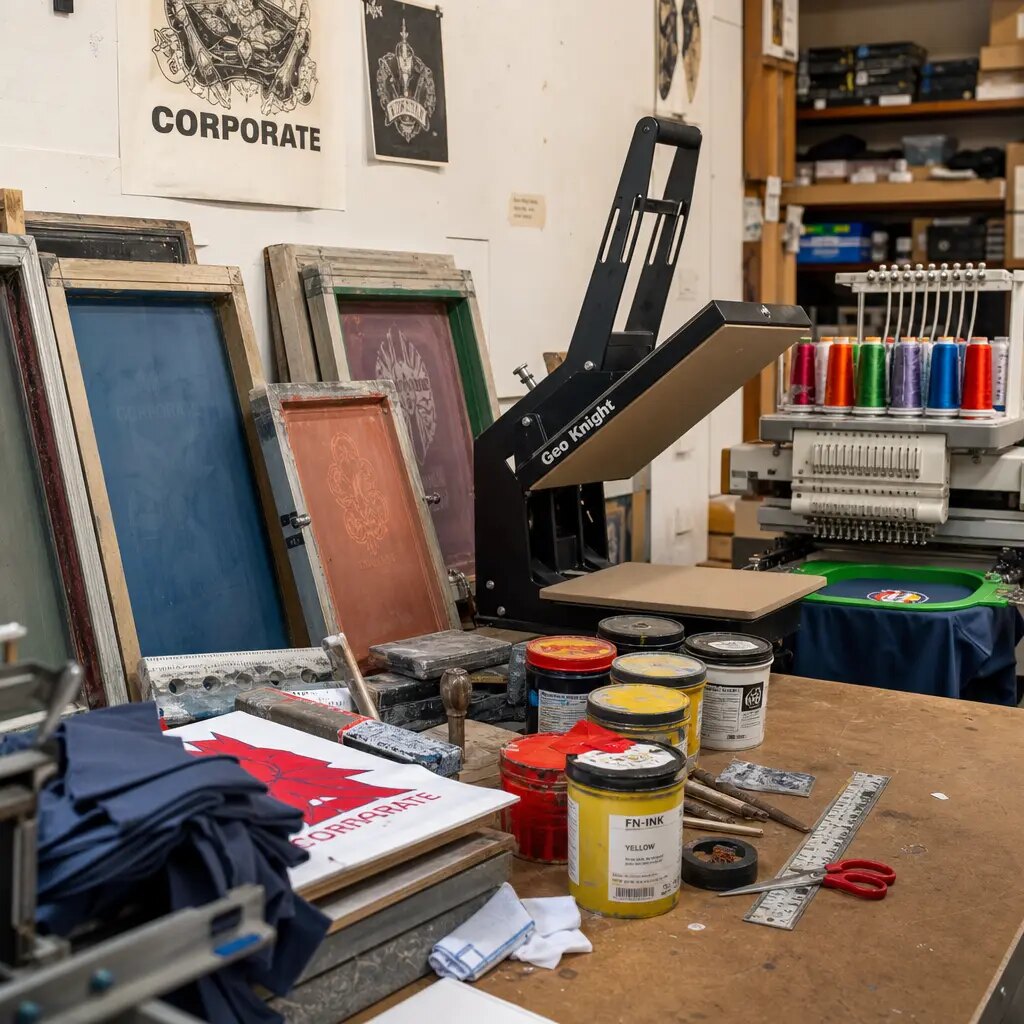
Print choice changes the whole buying outcome. Screen print is usually the best option for simple one- or two-color logos because it sits cleanly on canvas and scales well for wholesale. If the brand needs a more premium finish, a woven label, sewn patch, or small embroidery can work better than trying to force detailed artwork onto textured fabric. Heat transfer may be acceptable for short-run tests, but it is rarely the strongest choice for repeated handling and retail shelf life.
The buyer mistake to avoid is approving artwork that is too detailed for the fabric and print method. Fine lines, gradients, tiny type, and thin negative spaces can break up on rough canvas. A practical RFQ should define logo size, pantone targets, placement, and acceptable registration tolerance. If you need color accuracy, ask the factory to quote printed strike-offs on actual fabric rather than a digital mockup alone.
- Screen print: best for bold logos, low setup complexity, stable repeat orders.
- Woven label or sewn patch: good for premium branding and small artwork.
- Embroidery: durable, but verify backing and stitch density so the carrier does not pucker.
- Heat transfer: useful for testing, but specify abrasion expectations before mass production.
Comparison table: source routes and spec tradeoffs
When buyers compare canvas wine carriers wholesale quotes, the cheapest unit price is rarely the best commercial decision. A factory that controls sewing, printing, and packing usually gives better schedule control and fewer hidden costs. Trading companies can help if you need mixed items or smaller initial quantities, but you should understand where the real production step happens and who owns defect correction.
The table below is designed to separate sourcing routes from spec choices so procurement teams can compare real risk, not just catalog descriptions. Use it to decide whether you want speed, customization, or lowest landed cost.
- Write decisions in measurable language, not only descriptive wording.
- Ask for sample photos plus one physical approval sample for important orders.
- Keep quotation, sample approval, and inspection notes tied to the same spec version.
MOQ logic: where low quantity saves money and where it does not
MOQ is not only a supplier gate; it is a cost structure. The most common MOQ drivers for canvas wine carriers are fabric color, print color count, sewing setup, and any extra trim such as lining, divider boards, or woven labels. If you change all four at once, the quote will climb fast even when the style looks simple. Buyers who plan multiple craft fairs should try to standardize the base carrier and change only one visible detail, such as print color or label.
A workable approach is to ask for a base style MOQ, then separate add-ons. For example, one fabric color plus one print version may be the cleanest way to test market demand. If the supplier insists on a higher MOQ, compare that against your seasonal sell-through and carton efficiency. A smaller MOQ with poor carton packing can cost more than a slightly larger order with better shipping density.
- Ask for MOQ by style, fabric color, and print color separately.
- Treat labels, boards, and inserts as distinct cost items.
- For test orders, keep one body color and one logo version when possible.
- If multiple SKUs are required, calculate carton fill rate before agreeing to the order.
Sample approval should test the real production path
A good sample for a wine carrier is not a cosmetic sample built by hand with different materials. It should represent the actual fabric weight, seam construction, handle attachment, print method, and packing format that will be used in production. If the sample is made from a different canvas or with stronger hand stitching than the bulk order, it will hide defects that show up later. That is a common sourcing mistake in gift and retail bags.
Build the approval process around measurable points. Check whether the bottle fits without excessive wobble, whether the handles feel balanced under load, and whether the print looks crisp on the actual canvas texture. If the carrier includes a bottom board or divider, confirm that it sits flat and does not distort the seams. Keep the signed sample, measured dimensions, and approved artwork file in one control folder so the factory cannot switch versions later.
- Approve the exact fabric and print process, not a 'similar' sample.
- Measure opening width, base width, height, and handle drop.
- Load-test with the actual bottle type planned for sale.
- Reject samples with visible puckering, crooked print placement, or weak seam finishing.
Packing details affect damage rate and receiving speed
Packing is part of product quality, especially for wine carriers that may be sold as gifts or as part of a premium retail display. Bulk packing can be efficient, but it should still protect the shape of the carrier and prevent crushing in transit. If the product includes print, tissue, or a label, ask whether the factory will pack with inserts or separators to avoid ink transfer and abrasion. For retail programs, a simple inner polybag with a printed label may be enough, but for eco-positioned brands you may prefer paper bands or recycled tissue.
Carton planning should be in the quote, not handled later as an afterthought. Ask for carton count, carton dimensions, gross weight, and whether the factory can maximize carton fill without distorting the product. If the carton is too large, freight costs rise; if it is too tight, the carrier loses shape and shelf appeal. Buyers who distribute to multiple retail locations should also request a clear carton mark and style code to speed warehouse receiving.
- Request carton dimensions and gross weight before approving freight.
- Use clear carton marks if the order has multiple colorways or print versions.
- Protect print surfaces from rub damage during packing and transport.
- Match packing format to channel: bulk for wholesale, labeled unit pack for retail.
Lead time risk: where orders usually slip
Most delays on canvas wine carriers are not caused by sewing itself. They happen when artwork is late, fabric color approval takes too long, or the buyer changes the pack format after production begins. For seasonal craft fairs, the safe approach is to separate the project into milestones: sample approval, material booking, bulk production, inspection, and dispatch. Ask the factory which step starts the lead-time clock; many misunderstandings come from not defining that point.
A standard production window for a simple canvas carrier is often around 30 to 45 days after final approval, but the real schedule depends on the configuration. Multiple print colors, custom labels, and special inserts all add time. If your fair date is fixed, build in a cushion for inspection, transit booking, and any rework after sample comments. The cost of rushing usually appears later in air freight, overtime charges, or missed merchandising windows.
- Define the start point for lead time in the PO or RFQ.
- Build time for sample corrections and artwork sign-off.
- Add buffer for fabric dyeing or sourcing if you need a custom shade.
- Do not schedule freight booking before the factory confirms bulk completion.
What to compare in supplier quotes beyond unit price
A useful quote comparison for canvas wine carriers wholesale should show the full cost stack. That means fabric spec, print method, MOQ, sample charge, packing, carton size, and lead time, not just a unit price in isolation. If one supplier quotes a low ex-factory price but leaves out labels, inserts, or carton marks, the apparent savings will disappear quickly during purchasing review. Procurement teams should normalize quotes to the same spec before presenting them internally.
The landed-cost question is especially important for craft fair buyers who reorder by season. A slightly higher unit price can still win if the supplier gives better carton density, fewer defects, and faster replenishment. If the carrier is sold in a premium environment, one rejected carton can cost more than a small per-unit saving. Treat production consistency as part of margin protection, not just a quality issue.
- Normalize quotes by fabric, print, packing, and carton count.
- Compare sample cost and tooling separately from bulk unit price.
- Estimate freight by carton volume, not only by piece count.
- Weight defect risk alongside headline price when choosing a supplier.
Final buying workflow for craft fair procurement
The cleanest buying workflow is simple: freeze the bottle fit, lock the canvas weight, choose a print method that matches the artwork, approve a true pre-production sample, then compare full quote data on the same basis. Once those points are stable, you can negotiate MOQ, packing, and schedule with much better leverage. That process is especially useful for buyers who need repeat replenishment through a craft fair season rather than a one-time purchase.
If you are launching a new wine carrier style, start with one core SKU and one backup version. The core SKU should be the best balance of structure, price, and shelf appeal; the backup version can test a premium label, a different handle finish, or a stronger insert. This gives the brand useful sales data without multiplying production risk across too many versions at once.
- Freeze the bottle fit before style discussion.
- Compare factory quotes on equal specifications only.
- Approve the sample against real handling, not just appearance.
- Launch with one core SKU before expanding the range.
Specification comparison for buyers
| Spec decision | Recommended option | When it fits | Buyer risk to check |
|---|---|---|---|
| Source route | Direct factory with pattern and sample control | Best for private label, repeat orders, and custom print/trim | Confirm the factory is actually sewing the carrier, not passing it to a trader with no process control |
| Fabric weight | 12–16 oz canvas for most craft fair wine carriers | Use 12 oz for promotional packs and low price points; 14–16 oz for premium retail and better structure | Light fabric can collapse around bottles and make the carrier look underbuilt at shelf level |
| Construction style | Single-bottle or two-bottle body with bottom insert and reinforced handles | Works for retail gifting, winery merchandise, and craft fair impulse sales | Check whether the bottom board is included and whether handle stitch bar-tacks are strong enough for glass weight |
| Print method | Screen print for 1–2 solid colors; woven label or embroidery for premium branding | Use screen print for volume and clean logo edges; use woven label when artwork is small or multicolor | Avoid fine halftones on rough canvas; they fill in and create rejected samples |
| MOQ strategy | Start with a sample-size pre-production run, then scale by colorway or print version | Good for new designs, seasonal test sales, or buyers validating demand at craft fairs | Separate MOQ by fabric color, print color, and hardware choice to avoid quote confusion |
| Supplier type | Factory with in-house cutting, sewing, printing, and packing | Best when lead time, shade control, and QC consistency matter | If printing is outsourced, color mismatch and delayed dispatch are common |
| Packing format | Bulk packed with tissue or recycled insert, then master carton with clear carton mark | Useful for wholesale, distributor orders, and case-ready retail prep | Loose packing can crush carriers, distort handles, and slow receiving counts |
| Lead time model | 30–45 days after sample approval for standard canvas builds | Fits planned craft fair seasons and replenishment orders | Ask whether lead time starts from deposit, artwork approval, or final pre-production sample sign-off |
| Cost driver focus | Fabric GSM, stitching labor, printing setup, and carton volume | Most important when comparing landed cost, not just unit price | A low unit price can hide higher packing or oversize carton charges |
Buyer checklist before sampling
- Confirm bottle count, bottle diameter range, and whether the carrier needs a divider or only a center seam.
- Set the canvas weight in GSM or oz before requesting quotes; do not accept vague 'heavy canvas' wording.
- Define print method, logo size, pantone target, and whether a woven label or sewn patch is acceptable if print detail is too fine.
- State handle length, handle reinforcement, and whether the carrier must hold 1 bottle, 2 bottles, or a mixed set with gift packaging.
- Ask for a pre-production sample with actual fabric, print, stitching, and carton label before mass production.
- Request carton pack count, carton size, gross weight, and whether inner polybag or tissue is required for retail presentation.
- Separate quote lines for fabric, printing, trims, sample charge, tooling, and freight so you can compare suppliers on the same basis.
- Get the supplier's lead time broken into sample approval, material booking, production, inspection, and dispatch.
Factory quote questions to send
- What canvas weight, weave density, and shrinkage allowance are you quoting for this wine carrier?
- Is the quote for in-house sewing and printing, or is any step subcontracted?
- What is the MOQ by color, by print color, and by carrier style?
- How much is the sample charge, and is it refundable against bulk production?
- What carton pack count and carton dimensions are included in the quote?
- Which print method are you pricing, and what is the setup charge for each color?
- What is your standard tolerance for size, stitching slippage, and print registration on canvas?
- When does lead time start: artwork approval, deposit receipt, or sample approval?
- Can you provide production photos, inspection photos, or a bulk pre-shipment checklist before dispatch?
Quality-control points to confirm
- Fabric weight matches the quoted range, with no thin spots, yarn slubs that weaken seams, or visible coating defects if the canvas is treated.
- Handle attachment has reinforced stitching or bar-tacks at the stress point; no skipped stitches, loose ends, or uneven seam allowance.
- Carrier opening and bottle cavity fit the stated bottle size without excessive slack that lets bottles collide during carry.
- Print is centered within the approved tolerance, color is consistent across the order, and ink does not crack when lightly flexed.
- Bottom board or divider, if specified, sits flat and does not move through the base seam.
- Finished dimensions are within an acceptable production tolerance, especially if the carrier must fit shelf, gift box, or carton dimensions.
- Cartons are labeled correctly with style, color, carton count, and PO number; no mixed styles unless pre-approved.
- Surface is clean at packing: no oil marks, loose threads, or lint that would downgrade retail presentation.