Start with the program, not the bag name
Canvas wine carriers for wellness studios are easy to underspecify. The product sounds simple, so many RFQs begin with a short line such as “natural canvas wine bag with logo.” That is not enough for a reliable B2B quote. The same bag might be used on a spa retail shelf, handed to guests after a wine-and-yoga evening, packed into a retreat welcome kit, bundled with a membership renewal, or sold through a distributor. Each use puts different pressure on fabric weight, handle strength, printing, packing, and cost.
Start with the load. A standard filled 750 ml wine bottle commonly weighs about 1.2 kg to 1.6 kg, depending on glass weight and liquid. Champagne, sparkling wine, olive oil, kombucha, and premium beverage bottles can be taller, wider, or heavier. A two-bottle carrier can pass 3 kg once loaded. That weight concentrates at a few weak points: the handle stitching, mouth edge, bottom seam, divider seam, and fabric around the handle attachment.
The best buying choice is rarely the heaviest canvas available. It is the lightest specification that carries the bottle safely, holds its shape on the shelf, supports the brand look, and avoids unnecessary freight cost. Heavy canvas can feel premium, but it may also be bulky, slower to sew, harder to fold, and more expensive to ship. Lightweight canvas saves money but can sag or feel cheap if the construction is not strong enough. A good RFQ connects fabric weight to bottle dimensions, handle reinforcement, load testing, and carton packing.
- Define the channel: studio retail, retreat welcome gift, event giveaway, distributor resale, corporate wellness gift, or membership program.
- Define the load: one standard bottle, two bottles, champagne, tall beverage, olive oil, kombucha, or mixed beverage set.
- Provide measurable bottle inputs: height, widest diameter, filled weight, shoulder shape, and whether staff need fast bottle insertion.
- Confirm brand finish: natural canvas, dyed canvas, muted print, woven label, hangtag, barcode label, or reduced-plastic packing.
- Set reuse expectation: presentation-only, short-term reuse, or repeated customer carry use with documented handle testing.
Choose fabric weight by use case
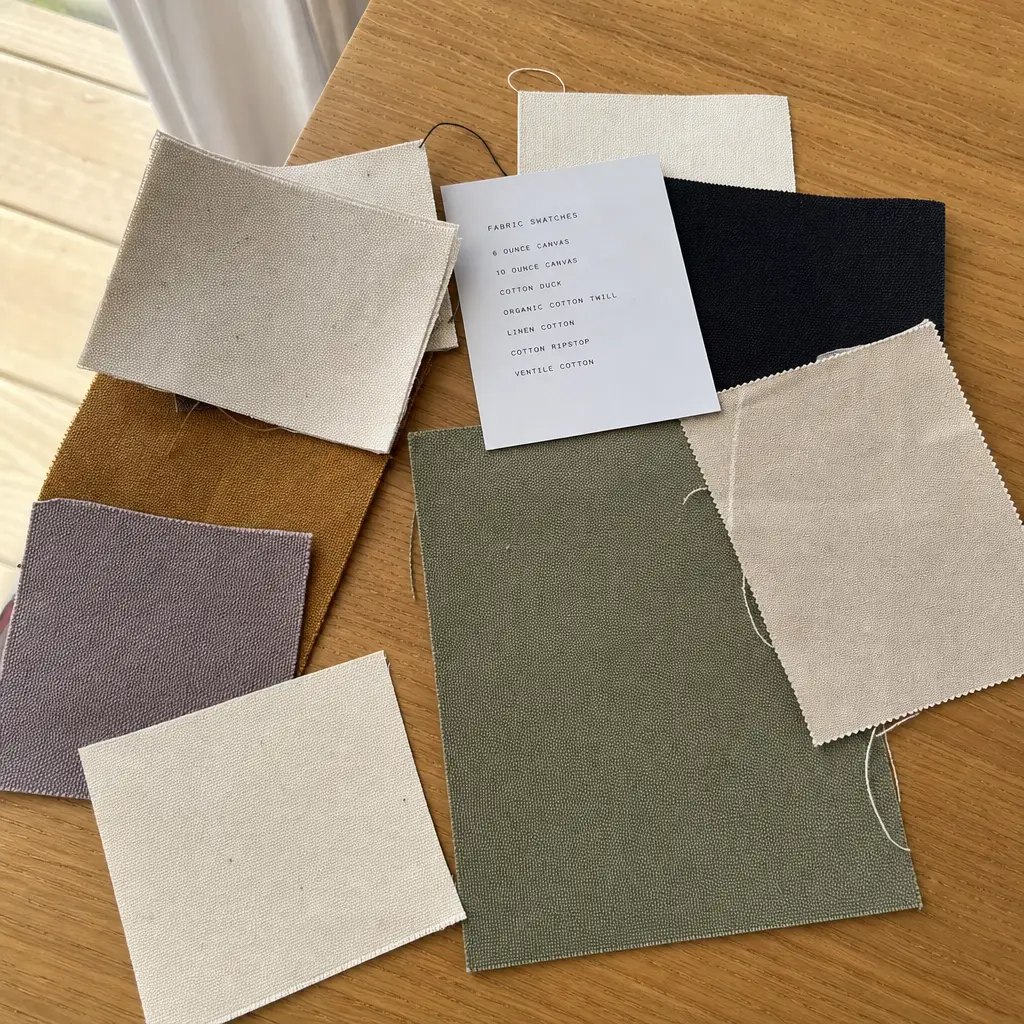
Canvas weight is usually quoted in ounces per square yard, while importers often ask for GSM as well. The working conversion is 1 oz/yd² equals about 33.9 GSM. That makes 8 oz about 271 GSM, 10 oz about 339 GSM, 12 oz about 407 GSM, and 14 oz about 475 GSM. The number only helps if the measurement point is clear. A supplier may be quoting greige fabric before finishing, finished fabric after dyeing, washed fabric after shrinkage, or a nominal mill standard.
For most single-bottle canvas wine carriers for wellness studios, 10 oz to 12 oz is the practical range. A 10 oz canvas can be soft, foldable, and clean to print when the handle and seams are built correctly. A 12 oz canvas gives better posture and a stronger retail hand feel, especially for gifting, memberships, and shelf display. A 14 oz canvas belongs in premium or two-bottle programs where structure and reuse justify the extra material and freight.
An 8 oz canvas may appear in attractive low-cost quotes. It can be acceptable for a light promotional sleeve or one-time event handout, but it is usually not the right starting point for spa retail or premium wellness gifting. At the other end, 16 oz canvas is often more than a narrow bottle carrier needs unless the concept is intentionally heavy-duty. More weight increases material cost, sewing resistance, needle wear, carton weight, and carton volume. Sample before deciding that heavier means better.
- 8 oz / about 271 GSM: best limited to light promotional sleeves or low-reuse programs where cost is the priority.
- 10 oz / about 339 GSM: useful starting point for standard single-bottle carriers needing softness and clean printability.
- 12 oz / about 407 GSM: strong retail option with better posture, perceived value, and broader gifting use.
- 14 oz / about 475 GSM: premium or two-bottle route where load, reuse, and shelf presence justify higher cost.
- 16 oz / about 542 GSM: specialty heavy-duty choice that needs a clear commercial reason for wellness programs.
- Quote control: request oz, GSM, fabric width, finishing route, shrinkage allowance, and fabric-weight tolerance together.
Build dimensions around the bottle
A wine carrier is narrow, so small measurement changes can create real problems. If the finished width is tight, staff may struggle to insert bottles during events or fulfillment. If it is too wide, the bottle leans and the carrier looks sloppy on a shelf. If the mouth opening is not controlled, one lot may fit a Bordeaux bottle while the next catches at the shoulder. Dimensions should appear in the RFQ, sample approval sheet, and purchase order.
For a standard single-bottle carrier, define finished height, finished width, side gusset, bottom gusset, mouth opening, handle drop, and seam allowance. Ask the supplier to confirm measurement points with an annotated drawing. A common practical tolerance is plus or minus 0.5 cm for critical width, mouth opening, and gusset measurements, and plus or minus 1.0 cm for height or handle drop when the design allows it. If a tighter tolerance is needed, discuss it before sampling because it may affect inspection pressure and rejection risk.
Two-bottle carriers need more control. The divider must keep bottles separated when the carrier is lifted, not just when it is standing on a table. Confirm divider height, divider width, attachment points, and the largest bottle diameter that must fit in both chambers. If the same carrier is expected to hold wine, champagne, kombucha, and olive oil, the widest and tallest format should drive the sample test. Approving a carrier with an empty generic bottle is a weak approval.
- Flat sleeve: lowest cost and smallest carton volume, but weak shelf posture and limited premium presentation.
- Gusseted single-bottle carrier: best all-around choice for wellness retail, gifting, and repeat use.
- Shaped base carrier: stronger standing performance, with higher cutting complexity and more dimensions to control.
- Two-bottle carrier: requires fixed divider, reinforced base, stronger handles, and testing with two filled bottles.
- Tall bottle carrier: needs height, mouth opening, and handle drop checked against champagne or specialty beverage bottles.
- Approval rule: test the sample with the real loaded bottle format before approving bulk cutting.
Treat handle strength as a separate spec
A stronger fabric does not automatically create a stronger wine carrier. The handle attachment is often the first place a loaded bag fails. A 12 oz carrier with one weak stitch line can perform worse than a 10 oz carrier with proper box stitching, secure back-tacks, and balanced load distribution. For glass bottles, handle construction should be written as a measurable requirement, not left to factory habit.
Common options include cotton webbing and self-fabric canvas handles. Cotton webbing is usually consistent, comfortable, and efficient to sew. A 2.5 cm to 3.0 cm width works for many single-bottle carriers, while two-bottle versions may need wider webbing or stronger attachment depending on the design. Self-fabric handles can look more integrated and premium, but they require careful folding, edge stitching, and thickness control where the handle enters the seam.
Handle length is also a buying decision. A short hand-carry handle looks tidy for gifting. A longer handle improves comfort but can make a narrow bottle carrier look unbalanced and may complicate carton packing. For repeated reuse or two-bottle carriers, require a loaded pull test or repeated lift test. The test can be simple: load with the target filled bottle weight plus an agreed safety margin, lift repeatedly, then inspect for seam opening, stitch breakage, fabric tearing, or handle elongation.
- Specify handle material: cotton webbing, self-fabric canvas, dyed webbing, contrast webbing, or recycled-content webbing if relevant.
- Specify dimensions: handle width, total length, handle drop, placement from side seams, and finished tolerance.
- Specify reinforcement: box stitch, cross stitch, bar tack, back tack, added patch, or seam-integrated attachment.
- Specify sewing details: thread color, thread type if relevant, stitch density, needle suitability, and trimming standard.
- Specify performance: target load, safety margin, repeated lift cycles, and pass/fail criteria after testing.
- Inspect appearance: handle pair length, twist, symmetry, tension, attachment height, and visible stitch consistency.
Match branding to canvas texture
Wellness brands often want a calm, low-gloss look: sage green, clay, charcoal, cream, muted terracotta, warm gray, or simple line art. Water-based screen printing usually suits that style on natural cotton canvas. It can handle studio marks, retreat dates, membership logos, and simple illustrations without creating a plastic-like surface. For one-color or two-color artwork, it is usually the clearest route to specify and inspect.
Canvas is not paper. Slubs, weave texture, and ink absorption can soften artwork edges. Very fine lines, tiny reversed text, small QR codes, and delicate gradients may lose clarity. Large solid areas can show uneven coverage if screen mesh, ink viscosity, curing, and squeegee pressure are not controlled. Ask for a strike-off or pre-production sample on the actual canvas, not only a digital mockup. The approved sample should become the reference for color, placement, edge clarity, and hand feel.
Placement deserves attention because bottle carriers have limited print area. Artwork that looks balanced on a tote bag can feel oversized on a wine carrier. Measure placement from fixed references such as the bottom seam, side seam, center fold, or mouth edge. Avoid printing too close to curved gussets or fold zones unless the sample proves the logo stays straight. For premium gifting, a small woven label, hangtag, or lower-corner print may feel more aligned with spa retail than a large front logo.
- Use vector artwork and provide Pantone, TCX, or approved physical color references.
- Set print size in centimeters and specify placement from seams, not only “center front.”
- Define placement tolerance, often plus or minus 0.3-0.5 cm for small centered marks when the factory can hold it.
- Set artwork limits: minimum line thickness, minimum text height, and no tiny reversed text unless sampled successfully.
- Test dry rub and light damp rub, especially for dark ink, dyed canvas, large solid prints, or tight carton packing.
- Reject unclear branding: wrong color, major print shift, smears, pinholes in solids, cracking, poor curing, or contamination.
Understand MOQ and price breaks
MOQ follows the production route. A stock natural canvas carrier with a one-color print can usually start lower than a custom dyed carrier with a woven label, divider, and retail barcode packing. The factory has to account for fabric minimums, cutting efficiency, screen setup, sewing line changeover, label MOQ, packing labor, and inspection requirements. A low unit price is not useful if the underlying specification is incomplete.
For a first wellness studio launch, a trial quantity may be enough. A distributor or group studio program may need repeatable production across many locations. Ask for price breaks at the same specification, such as 300, 500, 1,000, and 3,000 pieces. This reveals whether cost is driven mainly by setup, material purchase, or sewing efficiency. It also prevents a supplier from quoting a vague low-MOQ option that changes later once fabric weight, divider construction, print method, and packing are clarified.
Custom dyed canvas usually increases MOQ and timeline because it requires shade approval, lab dips, bulk fabric scheduling, and shade-lot control. Custom labels, special webbing colors, and retail-ready packaging can do the same. If the brand wants a quiet wellness look but needs a manageable first order, natural canvas with a muted one-color print is often the simplest starting point. After bottle fit and sell-through are proven, the program can move into dyed fabric, richer artwork, or premium packing.
- 300 pcs: possible for simple stock-fabric programs, but unit price and setup share may be high.
- 500 pcs: practical trial order for many studio retail, event gifting, or seasonal wellness programs.
- 1,000 pcs: better for custom labels, stronger price stability, and broader distribution planning.
- 3,000 pcs: useful after construction, artwork, packing, and sell-through are proven.
- Custom dyed fabric: expect higher MOQ, longer approval, shade-control work, and possible lab dip charges.
- Quote discipline: separate unit price, sample fee, screen fee, label tooling, packing cost, inspection cost, and freight estimate.
Make supplier quotes comparable
A strong RFQ saves time before negotiation begins. Without a controlled quote sheet, one supplier may price a 10 oz flat sleeve, another may price a 12 oz gusseted carrier, and a third may include individual polybags, hangtags, and carton labels. The numbers may sit side by side in a spreadsheet, but they are not comparable. Missing details should be treated as commercial risk, not as savings.
The quote sheet should identify the product version first: single-bottle or two-bottle, finished dimensions, fabric weight, canvas color, handle construction, print method, divider method, and packing. Then add order quantity, price breaks, sample route, lead time, inspection terms, payment terms, and Incoterms. For landed-cost planning, carton size, pieces per carton, gross weight, and CBM are essential. Heavier 12 oz to 14 oz carriers can change freight more than buyers expect.
Repeat orders need the same discipline. Wellness retail programs may involve several SKUs, seasonal artwork, or multiple studio locations. A clear specification reduces the chance of quiet supplier substitution. If the first order used 12 oz natural canvas and the repeat order shifts to lighter fabric, the brand experience changes even when the logo looks the same in photos. Reference the approved sample, fabric weight, construction, packing, and measurement tolerance on every purchase order.
- Product data: finished size, bottle fit, canvas weight, color, construction, handle, divider, label, and tolerances.
- Branding data: artwork file, print method, print size, color reference, placement, curing, and tolerance.
- Commercial data: MOQ, price breaks, setup fees, sample cost, payment terms, quote validity, and revision costs.
- Production data: sample lead time, bulk lead time, inspection point, approval sequence, and longest schedule risk.
- Packing data: folding method, polybag policy, carton size, pieces per carton, weight, CBM, and carton marks.
- Trade data: EXW, FOB, CIF, DDP, destination, export port, documentation, and responsibility for duties or local delivery.
Use samples to prove performance
A polished photo does not prove that a production order will work. For canvas wine carriers, the sample should use the intended fabric weight, handle construction, divider method, print process, and approximate packing method. A showroom sample made from available fabric can help with early concept review, but it should not be treated as final approval for bulk production.
Test the pre-production sample with the actual bottle type. Insert a filled bottle or equivalent dummy weight, lift the carrier repeatedly, set it down, and inspect the mouth edge, handle stitching, bottom seam, gusset, and fabric around attachment points. For two-bottle carriers, load both chambers and check whether the bottles touch during carrying. Also test staff handling. If a bottle fits only with careful adjustment, the carrier may slow event packing, retail replenishment, or gift assembly.
Print approval should be physical whenever possible. Muted wellness colors can shift on natural cotton because canvas shade, slub, and ink absorption vary. Label the approved sample with version number, date, fabric weight, print color, construction notes, and packing method. That sample becomes the reference for production, inspection, repeat orders, and any dispute about quality.
- Request a prototype only for concept review; request a pre-production sample for bulk approval.
- Confirm the sample uses bulk-intended canvas, final handle, final divider, final print, final thread color, and final label.
- Test bottle fit with target bottle height, widest diameter, shoulder shape, and filled weight.
- Perform repeated lift checks and inspect handle stitches, bottom seam, gusset, mouth edge, and divider after loading.
- Approve print color, edge clarity, hand feel, rub resistance, and placement on the actual canvas.
- Approve folding and carton arrangement if retail presentation, logo creasing, barcode labeling, or plastic reduction matters.
Set QC thresholds before production
Canvas bottle carriers have a small presentation surface, so defects show quickly. A crooked logo, dirty fingerprint, twisted side seam, mismatched handle length, or hard crease through the print can make the product unsuitable for retail even if it still holds a bottle. The QC plan should define acceptable and unacceptable conditions before production starts. Phrases such as “good sewing” or “nice quality” are too vague for inspection or claim handling.
Fabric weight should be checked during incoming material inspection. If underweight canvas is discovered after all bags are sewn, correction becomes expensive and delivery risk rises. A practical check is to cut and weigh a measured area from roll samples, then compare the result with the approved tolerance. Inspectors should also check fabric shade, odor, stains, slub consistency, humidity risk, and whether panels from different lots are mixed in the same carton. Natural canvas can vary, but the allowed level needs agreement.
Sewing inspection should focus on stress points: handle attachment, mouth edge, side seams, bottom gusset, and divider seams. Print inspection should name the defect types: wrong color, poor alignment, ink smear, pinholes in solid areas, cracking, poor curing, contamination, or unacceptable texture break. Packing inspection should cover carton compression, moisture protection, barcode readability, carton marks, SKU mixing, and whether the fold line damages the presentation area.
- Fabric test: verify oz or GSM from measured cut samples before cutting approval and record roll identity.
- Measurement test: check height, width, mouth opening, bottom gusset, side gusset, handle drop, and divider height.
- Load test: lift with target bottle weight plus agreed safety margin and inspect stress points afterward.
- Sewing defects: reject open seams, broken stitches, skipped stitches at stress points, exposed raw edges, and loose back-tacks.
- Print defects: reject wrong color, major smears, poor alignment, cracking, contamination, ghosting, and visible curing failure.
- Packing defects: reject wet cartons, crushed cartons, unreadable labels, over-compression, mixed SKUs, and fold marks through critical artwork.
Control packing and landed cost
Canvas wine carriers look compact, but packing choices can change landed cost and retail condition. A flat 10 oz carrier may pack efficiently. A 14 oz gusseted two-bottle carrier takes more carton volume and can crease if compressed too tightly. Packing should be specified in the quote, tested with the sample, and checked before shipment. Do not leave it to factory habit.
Many wellness brands want reduced plastic, but export shipments still need protection from moisture, dust, carton rub, and ink transfer. Individual polybags are not always required. A master carton liner, clean bundle packing, paper bands, and desiccant may offer a better balance between presentation and plastic reduction. If cartons ship directly to studio locations, barcode labels, SKU separation, and carton marks matter. If the goods go to a distributor warehouse, carton weight, pallet handling, and pick-pack efficiency may matter more.
Carton data is part of the buying decision. Pieces per carton, carton dimensions, net weight, gross weight, and total CBM affect freight quotes and receiving labor. Overly heavy cartons create handling problems. Over-compressed cartons create permanent creases, especially across printed logos or thick gussets. For repeat orders, consistent carton configuration also helps warehouse teams plan storage and fulfillment. Use actual carton data after sample packing, not only estimated bag size.
- State folding method: flat packed, folded once, bundled, paper banded, individually packed, or retail-ready packed.
- State plastic policy: no individual polybag, master carton liner only, desiccant, recycled polybag, or retail sleeve.
- Request carton data: pieces per carton, carton dimensions, net weight, gross weight, total cartons, and CBM.
- Protect presentation: avoid fold lines through the main logo or compression that distorts the gusset and mouth opening.
- Control receiving: require carton marks, SKU labels, barcode stickers, country information if needed, and mixed-carton rules.
- Check freight impact: compare air, sea, courier, or consolidated shipment options using actual carton data.
Specification comparison for buyers
| Spec decision | Recommended option | When it fits | Buyer risk to check |
|---|---|---|---|
| Fabric weight for standard single-bottle retail carrier | 10 oz to 12 oz cotton canvas, approximately 339-407 GSM; require supplier to state whether weight is greige, finished, dyed, washed, or coated | Wellness studio retail shelves, wine-and-yoga events, class bundles, spa gifting, and moderate reuse programs using a standard 750 ml wine bottle | Below 10 oz may collapse around a filled bottle; above 12 oz may add stiffness, sewing time, carton volume, and freight weight without improving the use case |
| Fabric weight for premium gift carrier | 12 oz to 14 oz canvas, approximately 407-475 GSM, with reinforced bottom seam and handle attachment | Retreat welcome gifts, membership gifts, premium spa retail, corporate wellness programs, and higher perceived-value packaging | Heavy canvas can reduce foldability, expose print texture, require larger needles and slower sewing, and create permanent carton creases; approve a physical sample |
| Fabric weight for two-bottle carrier | 12 oz to 14 oz canvas with fixed divider, reinforced base seams, and handle pull-test requirement | Two wine bottles, wine plus olive oil, kombucha sets, mocktail kits, or wellness beverage retail packs | A soft or floating divider may collapse and allow bottle impact; confirm divider height, attachment points, bottle diameter tolerance, and loaded fit |
| Dimensional tolerance | Finished dimensions usually controlled to +/-0.5 cm for critical width/mouth opening and +/-1.0 cm for height/handle drop, unless the design requires tighter control | B2B orders where the same bottle format, carton packing, and shelf presentation must repeat across locations | If no tolerance is written, suppliers may treat visible variation as normal sewing variance; set tolerances before sampling |
| Construction style | Gusseted base for retail posture; flat sleeve only for low-cost giveaway use | Shelf display, gift table presentation, distributor resale, reusable customer carryout, and studio retail merchandising | A flat bag may quote cheaper but sit poorly when loaded; require finished width, side gusset, bottom gusset, and mouth opening in the RFQ |
| Handle specification | 2.5-3.0 cm cotton webbing or self-fabric handles with box stitch, cross stitch, bar tack, or reinforced back-tack; loaded test at target bottle weight plus safety margin | Repeated lifting of glass bottles, member gifts, and retail customer reuse | Single-row stitching at the mouth is a common failure point; define stitch type, stitch density, thread, placement tolerance, and pass/fail load test |
| Printing method for wellness branding | Water-based screen print for simple logos and muted colors; heat transfer or digital route only when artwork complexity justifies it | Natural canvas aesthetic, spa colors, retreat artwork, membership marks, and simple line illustration | Fine lines can break on slub canvas; test print sharpness, ink curing, rub resistance, placement tolerance, and hand feel before bulk |
| MOQ logic | 300-500 pcs for stock natural canvas and one-color print; 1,000+ pcs for dyed fabric, custom label, unusual size, or divider-heavy construction | First studio launch, distributor test, seasonal promotion, or repeat wellness retail program | Very low MOQ can hide high setup fees, substituted fabric, limited print colors, no true pre-production sample, or higher freight per unit |
| Packing method | Flat packed or lightly folded in export cartons with carton liner, desiccant if needed, clear carton marks, and agreed pieces per carton | Importers, distributors, and studio groups needing clean receiving, barcode control, and reduced plastic options | Over-compression can crease heavy canvas and mark printed panels; confirm carton size, gross weight, CBM, folding direction, and logo protection |
Buyer checklist before sampling
- Define the bottle program first: standard 750 ml wine, champagne, sparkling beverage, olive oil, kombucha, mocktail bottle, or mixed gift set; provide height, maximum diameter, filled weight, and neck profile.
- Select the target structure: flat sleeve for low-cost giveaways, gusseted single-bottle carrier for retail, fixed-divider two-bottle carrier for higher load, or tall bottle carrier for champagne and specialty formats.
- Choose fabric weight by use: 10-12 oz for most single-bottle retail carriers, 12-14 oz for premium or two-bottle carriers, and 8 oz only for light promotional sleeves where low cost is the main requirement.
- State whether quoted oz and GSM are measured on greige fabric, finished fabric, dyed fabric, washed fabric, or coated fabric; ask for the allowed fabric-weight tolerance in percent.
- Specify cotton type or blend if relevant, including conventional cotton, recycled cotton content, organic cotton request, cotton-poly blend limits, certification documents, and whether undyed natural canvas is acceptable.
- Set finished dimensions for height, width, side gusset, bottom gusset, mouth opening, handle drop, divider height, seam allowance, and measurement tolerance for each critical point.
- Define handle material, width, length, attachment position, reinforcement stitch pattern, thread color, stitch density, and minimum loaded pull-test or repeated-lift requirement.
- Provide final logo artwork in vector format with Pantone, TCX, or approved physical fabric-matched color references; include minimum line thickness and minimum text height guidance.
- Confirm print method, number of colors, print size, placement reference from seams, alignment tolerance, ink hand feel, curing method, and dry or light-damp rubbing requirements.
- Request a pre-production sample made with bulk-intended fabric, bulk print color, final handle reinforcement, final divider if applicable, and proposed folding/carton packing.
Factory quote questions to send
- What exact fabric weight will you use in oz/yd² and GSM, and is the weight measured before or after dyeing, washing, finishing, coating, or shrinkage treatment?
- What fabric-weight tolerance do you control in production, and how do you verify GSM from incoming rolls: supplier mill label only, cut-and-weigh test, or both?
- Is the canvas stock fabric, made-to-order greige fabric, custom dyed fabric, recycled-content fabric, or certified fabric, and what MOQ and lead time apply to each route?
- What finished dimensions are included in your quote for height, width, side gusset, bottom gusset, mouth opening, handle drop, handle placement, and divider height?
- What finished-dimension tolerance can you hold for critical bottle-fit points such as mouth opening, bottom gusset, and divider width?
- Can you quote single-bottle and two-bottle versions separately using the same canvas weight, logo size, packing method, payment terms, and Incoterms?
- What handle material, width, length, stitch pattern, thread type, reinforcement method, and loaded pull-test standard are included in the unit price?
- For two-bottle carriers, how is the divider attached, what fabric weight is used for the divider, and does it connect to the side seams, bottom seam, top edge, or multiple points?
- Which print method is included, how many print colors are included, what ink type will be used, what curing method is used, and what print area triggers a price change?
- Can you provide a print strike-off or pre-production sample on the actual bulk canvas before mass printing, and will the approved sample be kept as the factory reference?
Quality-control points to confirm
- Fabric weight verified by cutting and weighing a measured sample area from incoming fabric rolls, not only by checking the supplier’s roll label; record oz/GSM and roll number.
- Fabric width, shade lot, slub level, odor, stain risk, humidity, colorfastness risk, and shrinkage checked before bulk cutting begins.
- Pattern panels checked for grain direction, usable width, cutting waste, and shade consistency so front/back panels do not visibly mismatch.
- Finished bag dimensions measured against the approved sample, especially height, mouth width, side gusset, bottom gusset, divider width, divider height, and handle drop.
- Bottle fit tested with the buyer’s target filled bottle or equivalent dummy weight, not only with an empty display bottle or generic factory bottle.
- Handle attachment inspected for box stitch shape, back-tack security, stitch density, skipped stitches, broken threads, thread trimming, symmetry, and distance from the mouth edge.
- Loaded handle test performed with target bottle weight plus agreed safety margin, using repeated lift cycles to reveal seam opening, fabric tearing, stitch breakage, or handle elongation.
- Divider stability checked by inserting two full bottles and lifting the carrier repeatedly to confirm bottles remain separated and the base does not twist or distort.
- Print alignment measured from fixed seam references, with acceptable tolerance agreed before bulk production and checked during in-line inspection, not only at final inspection.
- Ink rubbing tested dry and, when relevant, lightly damp, especially for dark ink, dyed canvas, large solid logos, or bags packed tightly in cartons.