Why print proofing is different for canvas wine carriers
Canvas wine carriers look simple on a quote sheet, but they are not the same as flat tote bags. The product changes shape after a bottle is inserted. A logo that appears centered on a flat sample can shift visually once the gusset expands, the handle pulls upward, and the bottle neck pushes against the top opening. For university bookstores, this matters because crests, mascots, alumni marks, and department logos are usually reviewed closely by licensing teams.
The buying problem is not only whether the factory can print the artwork. The question is whether the printed carrier still looks approved after sewing, folding, filling, packing, and shelf display. A useful print proofing checklist should connect artwork control with construction details, not treat the proof as a separate graphic file.
- Proof the product filled with the intended bottle size, not only lying flat.
- Measure logo position from sewn edges after the bag is finished, not from fabric panels before sewing.
- Review the carrier from front, side, and top because gusset expansion can expose print alignment errors.
- Keep a signed reference sample for bulk inspection, carton approval, and future replenishment.
Start with the bottle and retail use before selecting the bag
A university bookstore may buy canvas wine carriers for several uses: alumni weekend gifts, graduation merchandise, campus winery collaborations, donor thank-you packs, or general retail add-on sales. Each use pushes the specification in a different direction. A retail add-on item needs clean presentation and economical packing. A donor gift carrier may need heavier canvas, a divider, a premium handle, and a more controlled logo finish.
Bottle size is the first technical detail to state in the RFQ. Many buyers write 750 ml wine bag, but bottle profiles vary. A Bordeaux bottle, Burgundy bottle, champagne bottle, and specialty local winery bottle do not sit the same way in the carrier. If the bookstore expects mixed use, the gusset and opening need enough tolerance without making the carrier look loose and cheap on a standard bottle.
- For one 750 ml standard bottle, a common finished size is around 10 to 11 cm width by 34 to 36 cm height with a 9 to 10 cm gusset, depending on bottle shape.
- For two bottles, require a stitched divider and enough width so the bottles do not press directly against the print panel.
- For champagne-style bottles, allow extra body diameter and neck height before approving the sample.
- For retail display, confirm whether the bag must stand upright when filled or be sold flat at the checkout counter.
Fabric weight and finish affect both print result and perceived value
For canvas wine carriers, 10 oz to 12 oz cotton canvas is a practical range for most bookstore programs. In metric terms, that is often about 270 to 340 GSM, depending on weave and finishing. A lighter 8 oz canvas can work for low-cost event packaging, but it may collapse more easily and show bottle corners. A heavier 14 oz canvas feels premium, but it increases sewing bulk, carton weight, and sometimes makes fine print edges less clean because the surface is more textured.
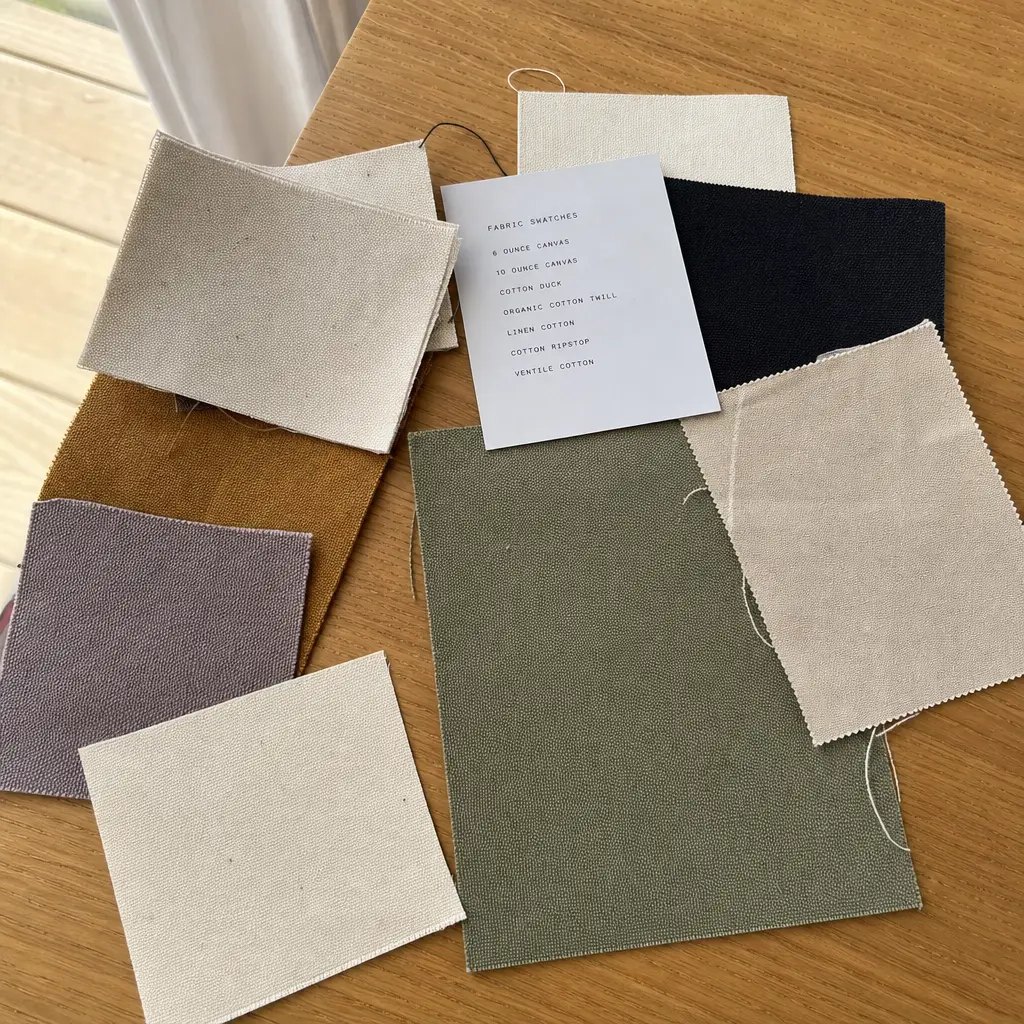
Natural canvas is common because it fits university retail aesthetics and avoids dye minimums. However, natural cotton has shade variation, seed specks, and slubs. Those are normal within reason, but they should be controlled by an approved fabric swatch. If the university brand mark uses white ink on dark dyed canvas, the proofing process becomes more sensitive because ink opacity, curing temperature, and fabric dye stability all affect the final look.
- 10 oz canvas: balanced choice for cost, durability, folding, and screen print clarity.
- 12 oz canvas: better for premium gift positioning and two-bottle formats.
- Natural canvas: lower dye risk, but expect visible cotton character and slight shade variation.
- Dyed canvas: stronger school-color presentation, but requires dye lot approval and may have higher MOQ.
- Washed canvas: softer handfeel, but can shrink or distort logo placement if not controlled before printing.
Choose the print method around the university mark, not only unit price
Spot-color screen printing is usually the safest method for canvas wine carriers with university bookstore artwork. It handles solid school colors, block lettering, and simple mascot graphics well. It also provides a durable print at reasonable cost when the order quantity supports screen setup. The factory should quote the number of colors, print size, screen charge if any, and whether the ink is water-based, pigment, or plastisol-style depending on the supplier setup.
Heat transfer can help when the logo has gradients, small multi-color detail, or a low order quantity that cannot absorb several screen charges. The tradeoff is handfeel and edge appearance. On a textured canvas surface, a transfer may look like a film sitting on top of the fabric. Embroidery is less common for the whole front panel of a wine carrier because bottle contact and fabric thickness can create puckering, but a woven label or small patch can work well for premium programs.
- Use screen print for 1 to 3 solid colors and repeat orders where screen setup can be reused.
- Use heat transfer for small runs, full-color art, or temporary event designs, but approve the handfeel.
- Use woven labels for a premium retail detail or when the logo must remain consistent across fabric colors.
- Avoid placing fine legal text, small registration marks, or thin outlines over rough slub areas.
- State whether the print must pass dry rub, tape pull, or light hand-wash testing.
Artwork proofing rules for bookstore and licensed merchandise teams
University bookstore buyers often work with licensed artwork files that cannot be modified freely. The factory should not redraw, thicken, simplify, or recolor a crest unless that change is formally approved. The RFQ should include vector files, Pantone references, permitted logo size range, clear space, and any restrictions on using the university name, mascot, year, or alumni wording.
A digital mockup is useful for placement discussion, but it is not enough for approval. The important proof is either a printed strike-off on the actual canvas or a full pre-production sample. For carriers, the full sample is better because it shows whether the logo remains square after sewing and filling. If time is tight, approve a print strike-off first, then a full sample before bulk cutting.
- Artwork file format: AI, EPS, or PDF vector is preferred for clean screen separation.
- Color reference: Pantone code plus note whether matching is judged on natural or dyed fabric.
- Print location: specify distance from top opening, bottom seam, side seam, and visible centerline.
- Clear space: keep logo away from handle stitch boxes, gusset fold lines, and bottom radius.
- Approval record: keep the signed sample photo, Pantone note, and factory production file under the PO.
MOQ logic and cost drivers that change the quote
The lowest unit price is rarely the best comparison unless the quoted specifications are identical. For canvas wine carriers, the main cost drivers are fabric weight, fabric color, bag size, divider construction, handle type, print method, number of print colors, packing, and order split. A 500-piece order in one artwork and natural canvas is a different factory job from 500 pieces split into five department logos with separate carton marks.
A realistic MOQ for printed canvas wine carriers often starts around 300 to 500 pieces per style or artwork for efficient production, although factories may accept lower quantities with sample-room sewing, digital transfer, or higher unit cost. Dyed fabric, custom woven labels, special handles, or multiple bag colors can raise the minimum. Buyers should ask for price breaks at practical quantities instead of forcing one target price without context.
- Request price breaks at 300, 500, 1000, and 2000 pieces if annual demand is uncertain.
- Separate one-time charges such as screen setup, sample fee, artwork adjustment, and courier cost.
- Clarify whether MOQ applies per artwork, per fabric color, per bag size, or per shipment.
- For multiple campus departments, consider one shared carrier with a hangtag or insert card to avoid splitting print runs.
- If the bookstore expects reorders, ask whether screens, patterns, and approved fabric standards will be kept.
Sample approval should include bottle loading, handling, and pack-out
A sample that looks good empty on a desk may fail in use. The pre-production sample should be tested with the intended bottle weight, carried by the handles, set upright, and placed into the proposed carton. This is especially important for two-bottle carriers because the divider and handle stitches carry more load and the bottles can knock against each other if the divider is too short or too soft.
The approved sample should include all visible and functional details: fabric, print, sewing, handle, divider, label, folding method, polybag if used, hangtag if used, and carton mark format. If the buyer approves only the front print and leaves construction open, the factory may use a different handle width, stitch type, or folding method in bulk production to meet cost or line efficiency.
- Load test: carry the sample with the intended bottle weight for a defined short handling test.
- Visual test: check logo straightness after the bag is filled and viewed at shelf distance.
- Rub test: rub printed area with a clean white cloth to detect poor curing or ink transfer.
- Folding test: fold as packed and inspect whether the crease crosses the printed logo.
- Carton test: place packed samples in the carton layout to confirm no crushing or excessive bending.
Packing decisions affect shelf presentation and receiving cost
Canvas wine carriers are often packed flat to reduce carton volume. That is practical, but the fold line must not damage the print or create a permanent crease through the university mark. For a premium gift program, individual polybags may keep the product clean during warehouse handling. For sustainability-focused campus retail, bulk packing without individual polybags may be preferred, but the carton liner and clean packing environment become more important.
Carton planning should be included in the quote because carton size and weight affect landed cost. Heavy 12 oz two-bottle carriers can make cartons dense quickly. A good supplier will propose carton quantity based on safe lifting weight, not only maximum cubic efficiency. If the order has multiple SKUs, carton marks and packing lists must be clear enough for bookstore receiving staff to separate designs without opening every carton.
- Set a carton weight limit that fits your receiving rules, commonly below 15 to 18 kg where manual handling is expected.
- Require carton marks with PO number, SKU, artwork code, color, quantity, gross weight, and carton number.
- Avoid tight compression if the front panel print is thick, raised, or recently cured.
- Use paper wrap or carton liner when individual polybags are removed for sustainability reasons.
- For retail-ready goods, confirm barcode sticker position and whether it goes on bag, hangtag, or polybag.
Lead time risks in campus retail programs
Lead time for canvas wine carriers is not only factory sewing time. The schedule usually includes artwork review, licensing approval, sample production, sample courier time, buyer comments, possible sample revision, bulk fabric preparation, printing, curing, sewing, trimming, inspection, packing, export handling, and inland delivery. If the product is tied to commencement, alumni weekend, homecoming, or a donor event, late approval can remove all schedule buffer.
A practical planning window is to place the RFQ early enough to approve the sample before peak production pressure. Natural canvas with a simple one-color screen print can move faster than dyed canvas with multiple artwork splits. The buyer should separate the approval deadline from the delivery deadline and put both into the PO. If the university licensing office needs physical samples, add that review time before confirming the final shipment date.
- Artwork file review: 1 to 3 working days when files are clean and Pantone references are complete.
- Print strike-off or sample production: often 5 to 10 working days, depending on material availability and queue.
- Sample courier and buyer review: allow realistic transit and internal approval time.
- Bulk production: commonly several weeks after final sample approval, longer for dyed fabric or split designs.
- Inspection and export booking: reserve time after packing before the cargo leaves the factory.
Inspection thresholds that prevent avoidable disputes
The purchase order should define how the bulk goods will be judged. Without acceptance criteria, the factory and buyer may disagree on whether a slub, shade difference, small print dot, or stitch variation is normal. Canvas is a natural woven material, so the standard must allow reasonable fabric character while rejecting defects that affect appearance, safety, or retail saleability.
For bookstore merchandise, the most sensitive points are logo color, logo placement, print cleanliness, handle strength, and carton accuracy. An inspection plan can be simple but should be written. Use the approved sample as the main reference and add measurable tolerances for size, position, and defect limits. Random inspection before shipment is much easier than sorting misprinted carriers after arrival.
- Measure finished size on a flat but relaxed carrier, not stretched by hand.
- Set logo placement tolerance, such as plus or minus 5 mm from approved position for standard screen print.
- Reject major print defects including smearing, wrong color, missing ink, double image, and obvious off-center placement.
- Reject functional defects such as open seams, skipped stitches at handles, loose divider seams, and broken bartacks.
- Classify minor natural canvas slubs separately from stains, oil marks, mildew odor, or dark contamination.
- Verify carton count against packing list before shipment, especially when multiple artwork versions are packed.
Specification comparison for buyers
| Spec decision | Recommended option | When it fits | Buyer risk to check |
|---|---|---|---|
| Fabric weight | 10 oz to 12 oz cotton canvas, about 270 to 340 GSM | Most university bookstore wine carriers used for retail, alumni events, and gift bundles | Below 8 oz can look thin around bottle corners; above 14 oz may raise freight cost and reduce print sharpness on rough fabric |
| Bag format | Single-bottle or two-bottle carrier with stitched divider | Single for retail add-on sales; two-bottle for alumni gifts, donor packs, and event merchandise | Divider height and seam strength must be proven with filled-bottle testing, not only flat measurements |
| Print method | Spot-color screen print for most logos; heat transfer only for complex gradients or low MOQ | University marks with 1 to 3 solid colors and clear brand standards | Small registration errors are very visible on seals, mascots, and thin serif type |
| Logo placement | Centered front panel with safe margin from seams, folds, and bottom gusset | Bookstore licensed products that need consistent shelf presentation | Artwork too close to the handle stitch line may distort during sewing or look off-center after filling |
| Handle construction | Self-fabric canvas handle or cotton webbing, reinforced box stitch | Reusable carrier positioned as a gift-quality item rather than disposable packaging | Handle drop, stitch density, and bartack location must support bottle weight without puckering the front panel |
| MOQ logic | 300 to 500 pieces for printed canvas wine carriers, higher when dyed fabric or custom woven labels are included | Campus seasonal buys, alumni weekends, graduation merchandise, and departmental gift orders | Very low MOQ often shifts production to digital or transfer printing with different handfeel and wash behavior |
| Proof approval | Pre-production sample with actual fabric, print ink, stitch method, and bottle test | Licensed university artwork, bookstore private label, or repeat replenishment program | Paper proofs and digital mockups do not show ink gain, fabric slub, seam distortion, or carrier balance |
| Packing method | Individual polybag optional, bulk packed in export carton with flat folded shape protected | Wholesale receiving, campus store stockroom handling, and distributor resale | Over-compression can crease printed panels; mixed-color cartons need a clear carton mark and packing list |
| Compliance evidence | Material declaration, ink declaration, and supplier production photos for the approved run | Importers and university vendors needing internal documentation before release | Do not rely on a logo image alone; licensed programs may require traceable artwork approval and lot control |
Buyer checklist before sampling
- Define the carrier use: retail add-on sale, graduation gift, alumni event, donor pack, winery partnership, or campus hospitality program.
- State bottle size assumptions in the RFQ, including 750 ml standard wine bottle, champagne-style bottle, or mixed bottle sizes.
- Select fabric by weight and structure, such as 10 oz natural canvas for standard retail or 12 oz canvas for premium gifting.
- Provide finished bag dimensions, gusset width, handle drop, divider requirement, seam allowance preference, and tolerance expectations.
- Send vector artwork with Pantone references, licensed mark rules, minimum clear space, and approved logo size range.
- Decide whether the print proof must use screen print, heat transfer, embroidery patch, woven label, or a combination.
- Require a pre-production sample made with actual fabric, actual ink, actual sewing construction, and filled-bottle test.
- Set acceptance criteria for logo position, color deviation, print edge sharpness, stitch security, fabric defects, and carton labeling.
- Confirm packing format: flat folded, individual polybag, carton quantity, inner divider protection, carton weight limit, and barcode labels.
- Build lead time around artwork approval, sample revision, bulk cutting, print curing, sewing, inspection, and export booking.
Factory quote questions to send
- What canvas weight in oz and GSM will be used, and is the fabric pre-shrunk, bleached, dyed, or natural greige cotton?
- What is the finished size tolerance for width, height, gusset, handle drop, and divider height after sewing?
- Which print method is quoted, how many colors are included, and what is the estimated print area in centimeters or inches?
- Can the factory match Pantone coated or uncoated references on natural canvas, and what color tolerance will be used for approval?
- Is the quoted sample a digital mockup, a strike-off print panel, or a full pre-production sample with stitching and packing?
- What is the MOQ by bag style, print design, fabric color, and carton mark, and what happens if the order is split by department logo?
- What bottle weight test or handle pull test can be performed before shipment, and how will results be documented?
- What packing method is included in the price, including polybag, carton size, carton quantity, carton marks, and pallet option?
- What is the production lead time after sample approval, and what schedule risks apply during university licensing review or peak season?
- Which quote terms are included: EXW, FOB port, fabric surcharge, screen charge, sample charge, artwork charge, and inspection cost?
Quality-control points to confirm
- Finished bag width and height within agreed tolerance, commonly plus or minus 5 mm for standard canvas sewing.
- Gusset opens evenly and stands with a filled bottle without twisting the front print panel.
- Handle drop matches approved sample and allows comfortable carry without contacting the bottle neck closure.
- Handle attachment uses secure box stitch, bartack, or reinforced stitching with no skipped stitches at stress points.
- Divider, if used, is centered and stitched deep enough to prevent bottles from knocking together during normal carry.
- Print color matches approved strike-off within the agreed tolerance and is checked under consistent lighting.
- Logo placement remains centered after the carrier is filled, not only when measured flat.
- Ink surface is cured, rub-resistant, and free of pinholes, smearing, heavy ink buildup, or blocked fabric texture.
- Fabric panels are free from large slubs, oil marks, needle holes, broken yarns, and shade variation beyond approved range.
- Cartons are labeled with PO number, SKU, color, quantity, gross weight, net weight, and country of origin where required.