Start With the Real Load, Not the Logo
Canvas wine carriers for university bookstores are often treated like simple promotional bags, but the risk profile is different. A tote that fails may drop notebooks; a wine carrier that fails may drop glass. For campus retail buyers, alumni shops, and distributors, the first specification should be the real load: bottle type, filled weight, carry distance, and how often staff and customers will handle the carrier before sale.
A standard 750 ml wine bottle often weighs around 1.2 kg to 1.5 kg when filled, depending on glass weight. Champagne and sparkling bottles are heavier and wider. A two-bottle carrier can easily carry 3 kg or more before adding hangtags, tissue, or gift inserts. Your RFQ should state the maximum loaded weight and the bottle dimensions used for approval. Without that information, two suppliers can quote the same-looking canvas carrier with very different seam margins.
- Use actual bottle samples or dimension drawings for pattern approval.
- State whether the carrier is for wine, spirits, champagne, water bottles, or mixed retail use.
- Define whether the bag must stand upright on shelf when filled.
- List the expected filled weight per carrier and the safety margin required for handling.
Choose Canvas Weight by Use Case
For most bookstore wine carriers, 10 oz to 12 oz cotton canvas is the practical range. In GSM terms, that is usually about 270-340 GSM after finishing, although mills and suppliers may convert oz and GSM differently. An 8 oz canvas can work for light gifting, but it may feel weak with a glass bottle and can wrinkle heavily in cartons. A 14 oz canvas gives a premium hand feel, but it increases cost, carton weight, sewing difficulty, and sometimes minimum order quantity.
Buyers should also separate raw fabric weight from finished fabric weight. Natural canvas, dyed canvas, washed canvas, and coated canvas can shrink or change hand feel after processing. If a quote only says canvas without weight, construction, and finish, it is not comparable. For repeat university programs, it is safer to approve a fabric swatch with weight, color, and texture attached to the sample record.
- 8 oz canvas: suitable only for light promotional use or very short-term gift packaging.
- 10 oz canvas: good entry point for single-bottle carriers with reinforced handles.
- 12 oz canvas: better for two-bottle carriers, premium bookstore shelves, and reuse expectations.
- 14 oz canvas: strong but higher cost, heavier cartons, and less efficient folding.
- Natural canvas: lower cost and faster sourcing than custom dyed fabric in most small programs.
Design the Base and Divider Around Bottles
A wine carrier can look correct while empty and still fail in use. The base width, side gusset, and divider position decide whether the bottle sits straight or pushes against the seams. If the base is too narrow, the carrier leans on shelf. If the divider is too low, two bottles hit each other near the neck. If the gusset is too shallow, the bottle stretches the side seam and creates stress at the bottom corners.
University bookstores often want the front panel to show a crest, mascot, or store name clearly. That is reasonable, but the logo area should not drive the pattern before bottle fit is confirmed. A strong construction normally uses a folded or boxed base, reinforced bottom corners, and a divider sewn into load-bearing seams. For two-bottle carriers, the divider should be high enough to reduce glass contact but not so high that it blocks easy loading at checkout.
- Measure bottle diameter at the widest point, not only the label area.
- Allow extra space for heavier champagne bottles if they are part of the assortment.
- Confirm divider height with real bottle insertion and removal.
- Review whether the bottom is flat enough for retail display.
- Avoid raw internal seams that scrape labels or catch bottle shoulders.
Handle Reinforcement Is the Main Failure Point
Most wine carrier failures happen at the handle attachment or the upper side seam. The handle may be self-fabric canvas, cotton webbing, or another textile strap. Self-fabric handles look integrated and can be economical when cut with the bag body, but webbing often gives more consistent strength. For a university bookstore order, appearance matters, but handle engineering should be written into the RFQ rather than left to the supplier's default.
A strong specification includes handle width, handle drop, stitch box size, bartack location, thread type, and minimum load test. The handle drop should suit retail carrying, not shoulder carrying; too long a handle lets bottles swing and hit knees or shelves. A box stitch with bartack is usually better than a simple line stitch. The buyer should approve close-up photos and a physical sample with the final reinforcement, because a hidden downgrade in stitching can reduce durability without changing the visible design much.
- Specify 1 inch to 1.25 inch handle width for comfortable hand carrying.
- Use reinforced box stitch plus bartack for glass bottle load.
- Request repeated lift testing with the correct filled weight.
- Reject skipped stitches, loose thread ends, and bartacks that miss the strap edge.
- Keep handle drop practical for hand carry and checkout counter use.
Print Method Must Match Canvas Texture
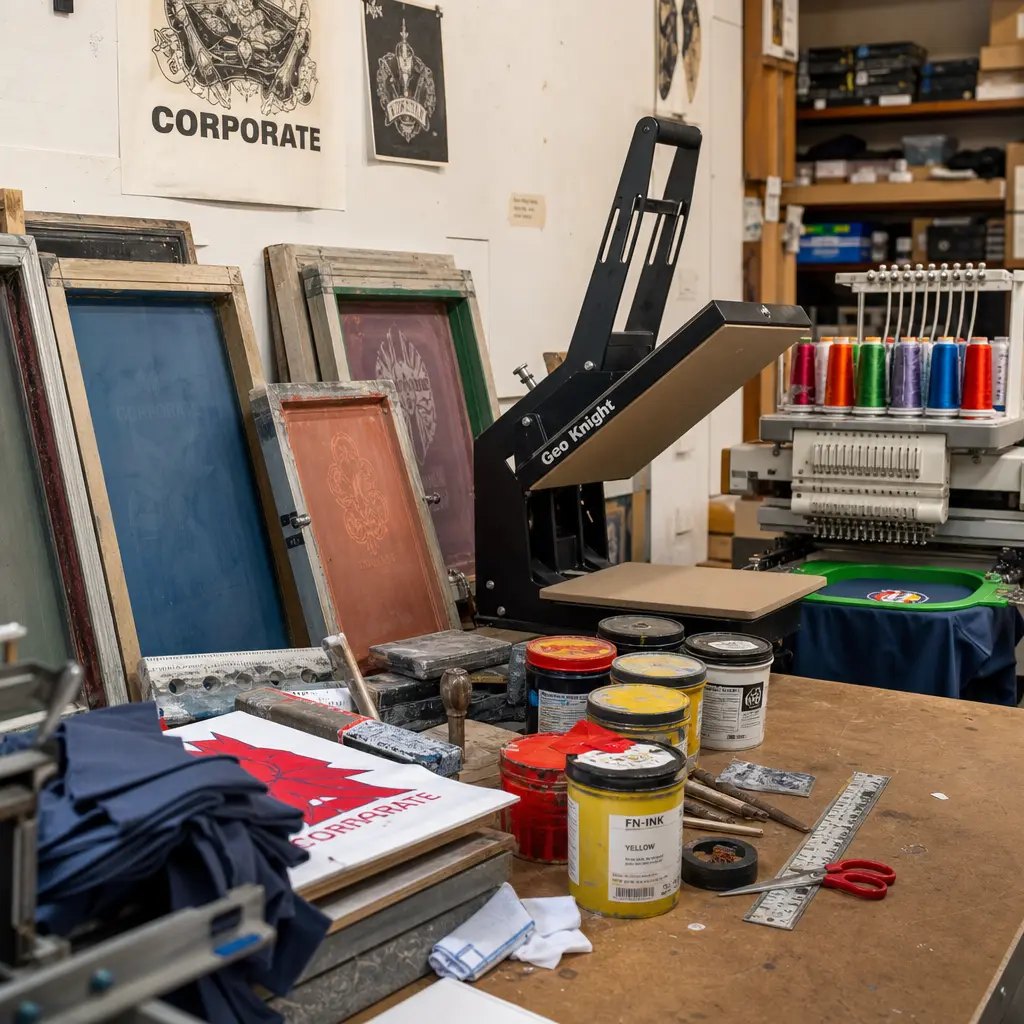
For university bookstores, water-based screen print is usually the best balance for cotton canvas wine carriers when the artwork uses one to three solid colors. It gives a softer hand feel than heavy plastisol and works well on natural or light-colored canvas. Heat transfer can reproduce detail but may feel less integrated and can crack or peel if the bag is folded tightly or rubbed in cartons. Embroidery is possible for premium orders, but it adds cost and can pucker on smaller panels if the backing and stitch density are not managed.
Campus artwork often includes small type, crests, registration marks, or licensed brand colors. Canvas is not paper; ink spreads slightly into the weave and edges will not be as sharp as on a smooth nonwoven or polyester surface. The RFQ should include vector artwork, Pantone references, print size, print position, and acceptable placement tolerance. A printed strike-off on the actual canvas is more useful than a digital mockup because it shows ink coverage, edge clarity, and how the fabric texture affects small details.
- Use screen print for bold logos, bookstore names, and event graphics.
- Use embroidery only when the budget supports slower sewing and higher decoration cost.
- Avoid very small serif text unless a strike-off proves readability.
- Set print placement tolerance, commonly within a few millimeters for panel positioning.
- Test dry rub and light wet rub before releasing bulk production.
Build a Durability Testing Checklist
A durability checklist should be short enough for factory QC to follow and specific enough for a third-party inspector to verify. For canvas wine carriers, testing should combine material checks, seam checks, load checks, and print checks. Flat visual inspection is not enough. The carrier must be filled, lifted, placed down, and rubbed in the same way it will be handled in a bookstore, warehouse, and customer vehicle.
Set acceptance criteria before production starts. If the supplier only learns the load test target after final inspection, disputes are likely. A practical approach is to test pre-production samples first, then repeat the same method during in-line and final inspection. For example, a single-bottle carrier can be lifted repeatedly with a weight above the expected bottle weight, while a two-bottle carrier should be tested with both compartments filled and the divider under tension.
- Fabric check: verify GSM, color shade, hand feel, stains, slubs, and obvious weave defects.
- Measurement check: confirm height, width, gusset, base, handle drop, divider height, and logo placement.
- Load check: lift filled carriers repeatedly and inspect handle attachments after testing.
- Seam check: review bottom corners, side seams, divider seams, bartacks, and backstitching.
- Print check: perform dry rub, light wet rub, tape pull if suitable, and visual review under normal light.
- Shelf check: fill the carrier and confirm whether it stands or leans according to the approved display requirement.
- Packing check: inspect fold lines, print rubbing, carton compression, label accuracy, and carton gross weight.
MOQ and Cost Drivers to Quote Correctly
MOQ is not only a factory policy. It is driven by fabric availability, cutting efficiency, print setup, labor time, and packing requirements. A natural canvas single-bottle carrier with one-color print may be realistic at 300-500 pieces with many suppliers. A custom dyed two-bottle carrier with special webbing, embroidery, inner divider, hangtag, barcode label, and individual polybag may require a higher MOQ or a higher unit price at small quantity.
When comparing quotations, separate the cost drivers instead of asking for one blended number. Fabric weight affects cost and carton weight. Printing affects setup and reject risk. Reinforced handles add sewing minutes. Individual retail packing adds labor and material. If the supplier quotes unusually low, the saving may come from lighter canvas, weaker thread, simplified bartacks, no print strike-off, or rough carton packing.
- Quantity breaks: request pricing at 300, 500, 1000, and 3000 pieces if the program may reorder.
- Fabric: compare finished GSM, color, finish, shrinkage risk, and fabric lot control.
- Construction: compare handle type, reinforcement, divider method, and bottom seam design.
- Decoration: separate screen charge, PMS matching, strike-off, embroidery digitizing, and rejected print allowance.
- Packing: include hangtag, barcode, inner polybag, carton mark, carton strength, and moisture barrier.
- Inspection: clarify whether factory QC photos, in-line inspection, or third-party inspection is included.
Sample Approval Should Simulate Production
A quick prototype is useful for shape discussion, but it should not be the final approval sample. For bulk approval, the sample should use the correct canvas weight, handle material, thread, divider construction, print method, print size, and packing fold. If the factory changes fabric or handle webbing after approval, the durability result changes. Procurement teams should label samples clearly and keep one approved sample at the buyer side and one at the factory.
For licensed university marks, artwork approval may move slower than bag approval. Build that into the schedule. A print strike-off should show the actual logo on actual canvas, not a paper color proof. If color matching is strict, note that natural canvas background color can shift the visual appearance of ink. PMS references help, but the buyer should approve the final look on fabric under normal retail lighting.
- Approve one construction sample before committing to full print production.
- Approve one printed strike-off on final fabric before bulk printing.
- Record sample dimensions, fabric weight, handle pull result, and print appearance.
- Photograph key details such as bartacks, divider seams, base corners, and logo placement.
- Use sealed or signed reference samples when multiple departments review the order.
Packing and Carton Plans Affect Retail Condition
Canvas wine carriers are usually flat packed, but flat packing can still damage presentation if the fold crosses the logo or if printed panels rub against each other. Natural canvas also absorbs moisture and odors more easily than synthetic materials. Export cartons should be strong enough for stacking, lined or protected when humidity risk is high, and kept within a manageable gross weight for bookstore receiving teams.
Retail buyers should decide early whether each carrier needs an individual polybag, belly band, hangtag, barcode sticker, or no retail packaging. Many university stores are reducing plastic, so a master carton with paper banding may be preferred, but that must be balanced against print protection and warehouse handling. Carton marks should include PO number, SKU, quantity, color, destination, and carton count. Incorrect carton labeling can cost more time at receiving than a small unit price saving is worth.
- Keep printed faces from rubbing directly if the ink is heavy or dark.
- Avoid sharp fold lines through the main logo panel.
- Use carton weights that store staff can lift safely, often under about 15 kg gross.
- Confirm carton dimensions for pallet planning and distributor warehouse rules.
- Include moisture protection for long ocean shipments or humid routes.
- Align barcode and hangtag placement with bookstore POS requirements.
Lead Time and Schedule Risks
A realistic schedule includes artwork preparation, material sourcing, sampling, sample shipping, buyer approval, bulk cutting, sewing, printing, finishing, QC, packing, export booking, and final delivery. For a standard natural canvas order, sample preparation may take about one to two weeks depending on decoration. Bulk production timing depends on quantity, print complexity, and factory capacity. Do not treat the supplier's sewing lead time as the full project lead time.
University bookstore programs often connect to fixed events such as commencement, alumni weekends, holiday gifting, and campus wine club promotions where late delivery has little value. The main schedule risks are slow artwork approval, late PMS changes, custom fabric delays, failed print strike-offs, and packing requirement changes after price confirmation. The RFQ should show the required in-store date and ask the supplier to work backward with realistic milestones.
- Lock bottle dimensions before pattern making.
- Lock artwork before print screen preparation.
- Approve fabric and print before bulk cutting if color is critical.
- Reserve time for third-party inspection and possible rework.
- Separate factory completion date from arrival date at the bookstore or distributor.
- Plan earlier for dyed fabric, embroidery, custom labels, or split shipments.
Specification comparison for buyers
| Spec decision | Recommended option | When it fits | Buyer risk to check |
|---|---|---|---|
| Canvas fabric weight | 10 oz to 12 oz cotton canvas, roughly 270-340 GSM after finishing | Most bookstore retail wine carriers, alumni gift packs, and campus event merchandise | Lower GSM may pass appearance approval but fail handle load or look too thin after washing |
| Bottle format | Single-bottle carrier for fast retail turnover; two-bottle carrier with divider for premium gifting | Single bottle for checkout impulse sales; two bottle for alumni, holiday, and donor programs | Divider height and base width must match real bottle types, not only a generic 750 ml cylinder |
| Handle construction | Self-fabric handles or 1.25 inch cotton webbing with box stitch plus bartack | Orders expected to carry full glass bottles or be reused after purchase | Decorative stitching without bartack can tear at the top seam even if fabric GSM is acceptable |
| Print method | Water-based screen print for one to three solid campus colors on natural canvas | University marks, bookstore logos, event dates, and simple alumni graphics | Fine serif text and metallic ink need strike-off approval because canvas texture reduces edge sharpness |
| Base and seam reinforcement | Double-fold side seams with reinforced bottom corners and internal divider stitching | Bookstore shelves where filled bags are handled repeatedly by staff and customers | A carrier can pass flat inspection but fail when a bottle pushes against the corner seam |
| MOQ logic | 300-500 pieces for standard natural canvas with one-color print; higher MOQ for dyed fabric or custom webbing | Pilot bookstore order, seasonal promotion, or reorderable campus merchandise program | Very low MOQ quotes may use leftover fabric lots, causing shade and shrinkage variation on reorders |
| Packing method | Flat packed in export cartons with moisture barrier, dividers if printed surfaces rub, and carton weight under 15 kg | Mixed campus store shipments, distributor warehouses, and retail receiving docks | Over-compressed cartons can crease printed panels and distort the gusset before shelf display |
| QC acceptance | AQL inspection with load test, seam pull review, print rub test, measurement check, and packing drop check | Bulk orders where failure at retail would affect university brand compliance | Supplier photos alone are not enough; inspection must include filled-carrier handling and abrasion checks |
Buyer checklist before sampling
- Define whether the carrier must hold one standard 750 ml wine bottle, one champagne bottle, or two bottles with a divider before requesting quotations.
- Specify canvas weight in oz and GSM, and state whether the value is greige fabric weight or finished fabric weight after washing, dyeing, or coating.
- Require handle reinforcement details, including stitch pattern, bartack position, thread type, and minimum load test target.
- Provide bottle dimensions, expected filled weight, and any retail shelf display requirements so the factory can confirm base width and gusset depth.
- Send logo artwork as vector files with Pantone references, print size, placement, and tolerance for registration or ink spread on textured canvas.
- Request a pre-production sample made with correct fabric, correct handles, correct print method, and final packing fold, not only a quick shape sample.
- Set measurable acceptance criteria for seam strength, handle pull, print rub, color shade, measurement tolerance, and carton packing.
- Confirm carton quantity, carton size, gross weight, moisture protection, barcode labeling, inner polybag policy, and retail hangtag requirements.
- Separate sample lead time, bulk production lead time, printing time, inspection window, and ocean or air shipping time in the buying calendar.
- Compare quotes using fabric GSM, construction, printing, packing, inspection, and logistics terms instead of unit price alone.
Factory quote questions to send
- What finished canvas weight in GSM and oz will be used, and can you provide a fabric swatch from the same quality planned for production?
- Is the quoted fabric natural, bleached, dyed, washed, or coated, and how will shrinkage or shade variation be controlled between lots?
- What handle material, width, length, stitching pattern, thread count, and bartack reinforcement are included in the quoted price?
- What bottle size and maximum filled weight did you use when checking the carrier pattern and base gusset dimensions?
- Which print method is quoted, what ink type is used, and what print rub or wash resistance can be tested on the sample?
- Does the price include artwork setup, screen charges, PMS matching, sample printing, hangtags, barcodes, and individual polybags if required?
- What is the practical MOQ for this exact construction, and how does the unit cost change at 300, 500, 1000, and 3000 pieces?
- What are the sample lead time, bulk lead time after sample approval, and cut-off date for artwork or material changes?
- How many pieces per export carton, what carton dimensions and gross weight are planned, and how will printed panels be protected from rubbing?
- What in-line and final inspection points will be recorded, and can the order be checked by a third-party inspector before shipment?
Quality-control points to confirm
- Finished fabric weight should match the approved sample within the agreed tolerance, with no unexpected thin panels, heavy slubs, or oil marks on visible surfaces.
- Carrier dimensions should be checked after sewing, including height, base width, side gusset, handle drop, divider height, and logo placement.
- Handle load testing should use filled bottles or equivalent weight and include repeated lifting, not only a single static pull.
- Bartacks, box stitches, bottom corners, and divider seams should show no skipped stitches, broken threads, loose backstitching, or seam slippage.
- Print should pass dry rub and light wet rub tests without heavy ink transfer, cracking, misregistration, or unacceptable color drift from the approved strike-off.
- The carrier should stand reasonably upright when filled if that is needed for retail shelf presentation.
- Bottle insertion should not scrape the printed panel, distort the divider, or expose raw seam allowance inside the bag.
- Cartons should protect the shape and print surface, stay within the agreed gross weight, and carry correct SKU, PO, quantity, and destination labels.
- Random inspection should include filled-use handling, not only flat table measurement, because wine carriers fail under load and friction.
- Approved samples, print strike-offs, fabric swatches, and packing photos should be retained as reference standards until final shipment is accepted.