Start With the Bottle, Not the Bag
A strong RFQ for wholesale canvas wine carriers for trade show exhibitors starts with bottle fit. The outside shape matters, of course, but the carrier has a job to do before it has a look to sell. It needs to hold glass securely, protect the label and foil, move comfortably through a busy venue, and still look clean when the booth team places it on a counter or tasting table.
Do not assume that every 750 ml bottle will behave the same inside a sewn carrier. Bordeaux bottles are usually straighter. Burgundy bottles often have wider shoulders. Champagne and many sparkling wine bottles are heavier and wider. Spirits bottles may be square, tapered, tall, or irregular. A carrier that fits one bottle neatly can catch at the shoulder of another or leave a smaller bottle leaning inside the cell.
Fit also changes how the carrier feels to the recipient. Too tight, and booth staff need to push the bottle down by force. That can slow distribution and scuff labels. Too loose, and the bottle knocks against the side seam or divider, which makes the gift feel unfinished. The useful target is controlled clearance: enough room for fast loading, but not so much that the bottle moves freely.
For mixed programs, design around the largest practical bottle and then test the smaller bottles. A two-bottle tasting kit might combine wine with olive oil, spirits, or a second wine shape. A six-bottle distributor tote may be used again with changing assortments. If the real bottle is not available during sampling, use a measured dummy bottle that matches the largest height, diameter, shoulder, and filled weight.
- For single-bottle carriers, include bottle diameter, full height, widest shoulder measurement, base diameter, and filled weight.
- For two-bottle carriers, state whether both bottles are identical or whether mixed bottle shapes are expected.
- For four- and six-bottle carriers, provide the heaviest expected load and confirm whether the tote must stand upright when full.
- For premium labels or foil capsules, require smooth inner finishing and a loading test that checks scuffing.
- If the carrier will fit inside a gift box, mailer, display tray, or booth kit, include folded thickness and packed dimensions in the RFQ.
Match Canvas Weight to the Job
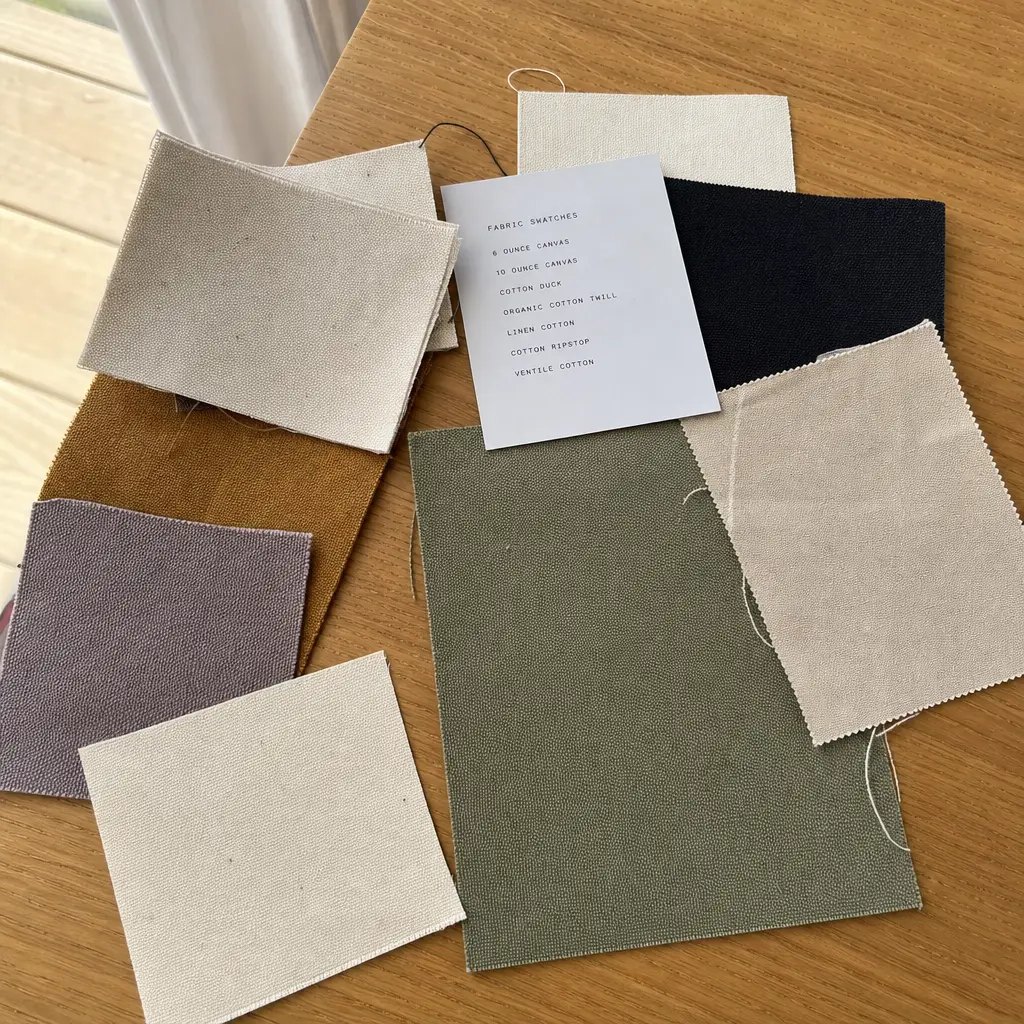
Canvas is often quoted by ounce weight, but procurement teams should ask for gsm as well. Ounce descriptions are useful, yet they can vary by mill, yarn count, weave density, finishing, and fiber blend. GSM gives buyers a clearer comparison point. It still does not replace a swatch, because two fabrics with similar gsm can feel different in stiffness, surface texture, and opacity.
For most trade show exhibitor orders, 10 oz to 12 oz cotton canvas, roughly 340 to 410 gsm depending on construction, is the practical middle range. It feels substantial enough for branded gifting, takes screen print well, and still packs efficiently. This range is commonly suitable for single-bottle and two-bottle carriers used for booth giveaways, distributor gifts, tasting kits, and short-run event campaigns.
An 8 oz or 9 oz canvas, often around 270 to 310 gsm, can be acceptable for a low-cost single-bottle handout. It should be treated as a budget route, not a hidden premium option. Lighter canvas can wrinkle more in cartons, collapse around the bottle, show more print-through, and feel less reusable. If the carrier will be photographed, sold, or reused by sales reps, buyers usually need a firmer fabric.
At the heavier end, 14 oz to 16 oz canvas, roughly 475 to 540 gsm, can work for retail resale, winery club gifts, distributor sample totes, and six-bottle carriers. The tradeoff is real. Heavy fabric adds cost, increases folded thickness, makes seam intersections bulkier, and raises carton weight. It can also require different needles, stronger machines, and adjusted print ink deposit. Use heavier canvas when the program needs it, not simply because the number sounds better.
- 8 oz to 9 oz canvas: best for budget single-bottle sleeves, temporary promotions, and cost-sensitive event handouts.
- 10 oz canvas: suitable for most single-bottle and two-bottle trade show carriers with standard screen printing.
- 12 oz canvas: stronger handfeel for exhibitor gifts, brand kits, and carriers that should stand neatly on display.
- 14 oz to 16 oz canvas: better for premium retail, wine club programs, distributor use, and six-bottle totes.
- For any quoted weight, request gsm, fiber content, weave photo, physical swatch, and confirmation that bulk fabric will match the approved sample within agreed variation.
Choose the Fabric Color Route Early
Fabric color influences more than appearance. It affects MOQ, lead time, print visibility, shade approval, packing care, and rejection risk. Natural unbleached canvas is popular for canvas wine carriers because it has a recognizable cotton look and is often easier to source than custom dyed fabric. It works well for vineyard, organic, craft beverage, and rustic retail positioning. Buyers should approve the actual look, including seed flecks, slubs, and natural shade variation.
Bleached canvas gives a cleaner base and stronger contrast for many logos. It can help bright reds, blues, blacks, and small graphics look clearer than they would on natural fabric. The drawback is handling sensitivity. White or near-white fabric shows dirt, carton rub, and fingerprints more easily. If the order is for a premium event or retail sale, packing may need paper bands, tissue separation, or individual bags.
Dyed canvas makes the carrier feel more brand-specific. Common choices for wine and beverage programs include black, burgundy, forest green, navy, charcoal, and warm gray. Stock dyed colors may be efficient when available. Custom dyed colors usually require lab dips, dye lot MOQ, and more schedule room. Dark fabric also changes decoration behavior: white ink may need stronger opacity, metallic inks may vary on the woven surface, and fine details can lose contrast.
Recycled cotton or recycled-blend canvas can support sustainability requirements, but the claim should match the documentation. Ask for the recycled percentage, the fiber source when relevant, and what certificates or supplier documents are available. Recycled yarn may show more visible variation and can behave differently in strength and shade consistency. That may be acceptable, but it should be approved before the purchase order is released.
- Use natural unbleached canvas when speed, moderate cost, and a warm cotton appearance matter more than exact shade control.
- Use bleached canvas when clean retail appearance and brighter logo contrast are priorities.
- Use stock dyed canvas when a standard color supports the brand without custom dye MOQ.
- Use custom dyed canvas when the bag must match a brand palette and the schedule allows lab dips and shade approval.
- Use recycled-content canvas only when documentation, label wording, and buyer claim requirements are agreed before order release.
Engineer the Parts That Take Stress
Most failures happen in predictable places: handle attachment, top opening, bottom corners, divider seams, and thick seam intersections. Fabric weight alone will not protect the order. A 12 oz bag with weak handle stitching can perform worse than a 10 oz bag with sensible reinforcement. The specification should describe the construction, not just the material.
Handle design should follow the filled load. A single-bottle carrier may need only a short hand-carry handle. A six-bottle tote needs a wider strap, deeper anchoring, and enough handle drop for comfortable lifting. Self-fabric handles look clean and integrated. Cotton webbing is often more consistent for heavier use. Box-and-cross reinforcement is common, while bartacks may be useful when the fabric thickness and seam layout allow them.
The base controls both safety and presentation. A boxed bottom helps the carrier stand on booth counters, tasting tables, and retail shelves. The gusset depth must match the bottle diameter with enough clearance and seam allowance. If the base is too narrow, bottles lean. If it is too wide, they shift while carried. A loaded standing test is a simple way to catch this before bulk production.
Dividers deserve the same attention as handles. A two-bottle carrier can use a removable divider when packing efficiency matters. A six-bottle carrier usually needs a sewn grid or structured divider to keep bottles separated. Thin dividers can look fine in an empty sample and then fold under pressure. Bound divider edges cost more, but they can improve appearance and reduce label abrasion.
- Specify finished usable handle drop, not only total strap length before sewing.
- Set strap width, stitch pattern, reinforcement patch, and thread quality according to filled load.
- Use boxed bottoms or gussets when the carrier must stand on a booth counter or retail shelf.
- Require divider cell dimensions after sewing and test with the actual bottle or approved dummy bottle.
- Check bottom corner stitching, upper edge finishing, divider seams, and handle attachment during sample approval and bulk inspection.
Print for Canvas, Not for Paper
Screen printing is usually the practical decoration method for canvas wine carriers used by trade show exhibitors. It suits solid logos, distributor marks, winery graphics, event names, and simple promotional artwork. It also scales well when the order quantity is large enough to absorb setup cost. The limit is the surface. Canvas is woven and slightly uneven, so artwork that looks sharp on a PDF may not print the same way on fabric.
Fine outlines, tiny taglines, distressed textures, gradients, and reversed text need extra care. Small type can break, fill in, or lose edge clarity. A detailed wine label illustration may need to be simplified before sampling. The supplier should confirm recommended minimum line width for the chosen fabric and print method. This is a small conversation that prevents a large argument later.
Heat transfer can help with detailed multi-color artwork, gradients, or smaller runs where screen setup is not efficient. Buyers should test the transfer on the actual canvas. Check edge adhesion, fold behavior, handfeel, rub performance, and pressure marks after packing. A transfer placed near a fold line or over a heavily textured panel may feel less integrated than screen print.
Embroidery can look premium on heavier canvas when the logo is simple. It is less suitable for tiny text, detailed bottle-label art, or large filled areas because dense stitching can pucker the panel. Woven labels, printed cotton labels, leather patches, and hangtags can add retail polish, but each one brings placement requirements, inspection points, MOQ, and lead time.
- For screen print, set Pantone colors, artwork file format, print area, placement tolerance, ink opacity expectation, and minimum line width.
- For heat transfer, confirm fold resistance, rub performance, edge adhesion, and carton compression behavior.
- For embroidery, limit tiny lettering and dense filled areas, and test puckering on the selected canvas weight.
- For woven side labels, confirm size, fold type, thread colors, sewing position, MOQ, and whether label production is included in lead time.
- For multi-location decoration, require photos and measurements of every placement on the pre-production sample.
Compare Quotes on the Same Basis
MOQ for canvas wine carriers is not controlled by one number. It can be driven by fabric availability, dye lot minimums, screen setup, label MOQ, cutting efficiency, divider labor, packing materials, and carton marks. A supplier may offer a low MOQ for natural canvas with one-color screen print because the materials are easy to arrange. The same factory may need a higher MOQ for custom dyed canvas, multiple artwork versions, retail packing, or a complex six-bottle divider.
When prices vary widely, the suppliers may not be quoting the same bag. One quote might include 10 oz stock canvas, basic overlocked seams, one-color print, and bulk packing. Another might include 12 oz canvas, bound seams, stronger handles, removable dividers, individual packing, and heavier export cartons. The lower price can be valid, but it may not carry the same event risk.
Artwork split is another common blind spot. An order of 2,000 pieces with one logo is different from 2,000 pieces split across four exhibitor logos at 500 each. Screens, production sorting, carton marks, inspection records, and packing labels can all change. Destination splits, barcode stickers, sales team allocations, and booth-specific marks should be part of the quote, not an afterthought.
The cleanest approach is to mark which specifications are fixed and which are flexible. If the event date is close, stock natural canvas and one-color screen print may be the best path. If brand color matters more than speed, custom dyeing may justify the higher MOQ and longer timeline. If the carrier will be sold at retail, finishing quality can matter more than a small unit-price saving.
- Low MOQ is most realistic with natural or stock-color canvas, standard size, and one-color screen print.
- Custom dyed canvas usually raises MOQ because the fabric mill has minimum dye lot requirements.
- Custom woven labels, hangtags, barcode labels, and printed retail packaging can carry separate MOQs and lead times.
- Six-bottle carriers cost more because fabric usage, cutting time, divider assembly, seam bulk, and load requirements increase.
- Mixed artwork should be quoted by design split, not only by total order quantity.
- Ask for separate lines for unit price, sample cost, setup cost, packing upgrade, carton data, and freight estimate.
Approve Samples With Real Handling
Photos help with early alignment, but they are not enough for wine carriers. Buyers need to feel the canvas, insert the bottle, lift the carrier, check handle comfort, inspect divider behavior, and review the print on the real fabric. This matters even more for two-bottle, four-bottle, and six-bottle designs because flat measurements do not always predict how the carrier behaves under load.
The pre-production sample should use the intended fabric weight, handle construction, divider method, print process, and seam finishing. If a supplier sends a substitute-fabric sample, use it only to review shape. Do not approve strength, handfeel, print quality, or packed behavior from the wrong fabric. For dyed fabric, compare the sample against the approved lab dip or swatch. For natural canvas, decide whether seed flecks, slub, and shade variation are acceptable.
A useful sample test does not need to be complicated. Insert the actual bottle and remove it several times. Carry the filled carrier for a short distance. Set it on a flat table and watch whether it stands. Check if the bottle catches on the divider or opening. Look inside for loose threads, rough overlock ends, and seam areas that could rub labels or foil. Fold the empty carrier to see where creases form.
Document the approval. Take photos, record measurements, and write clear comments. Mark which sample is the production reference. If the sample is generally approved but needs a changed handle drop, higher divider, or adjusted print placement, the technical file should be updated before cutting. A sample only protects the buyer when it becomes a measurable production standard.
- Approve fabric handfeel, thickness, shade, stiffness, and visible variation against the quoted gsm and fabric route.
- Measure finished width, height, gusset depth, handle drop, strap width, divider height, and bottle cell size.
- Test loading and removal with the actual bottle or a dummy bottle matching the largest expected size.
- Review print edge sharpness, opacity, color, placement, ink feel, and behavior after folding.
- Check inner seams for thread loops, rough overlock ends, and areas that could scuff labels or foil.
- Keep approved sample photos with the purchase order, inspection checklist, and factory production file.
Set QC Before Production Starts
Quality control works best when it is agreed before bulk production, not after cartons are sealed. Canvas wine carriers look simple, but small defects can create visible problems at a show: handles tearing, dividers collapsing, logos drifting off-center, print panels arriving creased, or rough seams damaging labels. A clear checklist gives the buyer, factory, and inspector the same target.
Finished size tolerance should be realistic for sewn fabric. A single-bottle carrier may use plus or minus 5 mm for width and height, with separate tolerances for gusset depth and handle drop. Larger multi-bottle totes may need broader dimension tolerances. The more important point is measurement discipline. Define whether width is taken at the top opening, body, or base. Measure gusset depth after the bag is opened. Measure handle drop from the top edge to the highest point of the handle when held naturally.
Load testing should reflect actual use. A single-bottle carrier should be tested with filled-bottle weight plus a margin. Two-bottle and six-bottle carriers need total-load testing, not a light pull on an empty bag. A static hang test can reveal weak handle anchoring. A short lift and carry test can show stress at seams and divider points. Pass criteria should be visible: no tearing, no stitch opening, no severe handle elongation, and no major distortion.
Decoration QC should cover color, placement, coverage, curing, and durability. Canvas texture can create minor ink variation, but major pinholes, smears, offsetting, cracking, poor opacity, ghosting, or inconsistent placement should not pass. Packing QC should also be included. Inspectors should open cartons and confirm quantity, carton marks, artwork version, divider inclusion, label placement, and whether print panels are protected from hard creasing.
- Define measurement points and tolerances before the pre-production sample is approved.
- Set load testing by carrier capacity, expected filled bottle weight, test duration, and pass condition.
- Inspect handle reinforcement, bottom corners, divider attachment, upper edge finishing, and stitch density.
- Check print placement from fixed reference points such as seam, top edge, bottom edge, pocket edge, or centerline.
- Review fabric shade and visible slub against the approved swatch or sample, allowing only agreed variation.
- Include packed-carton checks for quantity, carton marks, gross weight, CBM, crease risk, and correct packing method.
Plan Packing for the Venue
Packing affects landed cost, warehouse handling, and booth readiness. Single-bottle canvas carriers can often be flat-packed in efficient bundles. Two-bottle carriers may ship more compactly if removable dividers are bundled separately or inserted loosely. Six-bottle totes take more room because the base, divider grid, and heavier fabric resist compression. Carton dimensions and CBM belong in the quote because they shape freight cost and delivery planning.
Over-compression is a common and avoidable problem. If printed panels are pressed against seam intersections, handles, or divider edges, the logo can arrive with hard creases or pressure marks. This risk is higher with bleached canvas, dark dyed fabric with light ink, heat transfers, and premium retail programs. Bulk master carton packing may be fine for giveaways. Retail or VIP gifts may need tissue, paper bands, individual bags, hangtags, or barcode labels.
Carton weight should be practical for the people who have to move it. A very large carton can reduce carton count but become awkward during warehouse receiving or booth setup. Many buyers prefer carton gross weight under about 15 to 18 kg unless a different limit is approved. The right limit depends on carrier size, fabric weight, and packing method, so ask for carton data per 1,000 pieces when comparing suppliers.
Event delivery needs clear marks. Cartons may require PO numbers, item codes, exhibitor names, booth numbers, destination warehouse addresses, event reference labels, or artwork version labels. If one order is split across trade shows, distributors, or regional sales teams, each split should be packed and marked at the factory. A correct product in the wrong carton sequence can still create expensive confusion at the receiving dock.
- Request pieces per carton, carton size, gross weight, net weight, and CBM at quotation stage.
- Keep carton gross weight practical for warehouse and event handling, commonly under 15 to 18 kg unless approved.
- Confirm whether dividers ship inserted, folded, flat, or bundled separately.
- Use tissue, alternate stacking, or protective separation if print panels may rub, crease, or offset.
- Include carton marks for PO number, item code, artwork version, quantity, destination, event name, and booth or warehouse reference.
- Ask for packed-carton photos before shipment so the packing method is confirmed before goods leave the factory.
Work Backward From the Show Date
Trade show orders have a firm deadline. The carriers need to arrive before booth setup, not merely before the doors open. A natural canvas single-bottle carrier with one-color screen print can move quickly when fabric is in stock and artwork is approved. A custom dyed carrier with woven labels, multi-color decoration, revised sampling, and retail packing can add several weeks before bulk sewing even begins.
Break the schedule into real steps: artwork preparation, fabric sourcing or dyeing, sample making, sample shipment, buyer approval, material booking, cutting, printing, sewing, trimming, QC, packing, export paperwork, international freight, customs clearance, and domestic delivery. When everything is hidden inside one generic lead time, the weak points are hard to see. Delays often come from late artwork, slow sample approval, unavailable fabric, or packing changes after production starts.
Specification changes become more expensive as the event gets closer. Changing fabric color after sampling may require a new lab dip or new material booking. Increasing the print size may require new screens. Adding hangtags, barcodes, or individual packing can change labor and carton volume. Altering bottle capacity can affect the pattern. Freeze the technical pack before bulk production and assign one person who can approve details quickly.
Air freight can save a deadline, but it can also erase the savings from a low unit price. Heavy canvas and six-bottle totes are especially costly to move by air. Ask for realistic ship dates, carton CBM, and gross weight early. With those numbers, procurement can compare sea, rail, truck, and air options before the project becomes a rush.
- Use stock fabric and simple one-color screen print when the event date is close.
- Allow extra time for lab dips, custom dyeing, woven labels, multi-color artwork, and retail packing.
- Freeze bottle capacity, fabric color, print size, divider style, carton marks, and packing method before bulk production.
- Set latest dates for artwork approval, sample approval, inspection, shipment, customs clearance, and final delivery.
- Plan inspection before final payment and before goods leave the factory area when possible.
- For fixed events, compare freight options using carton CBM and gross weight as soon as construction is known.
Specification comparison for buyers
| Spec decision | Recommended option | When it fits | Buyer risk to check |
|---|---|---|---|
| Main fabric weight | 10 oz to 12 oz cotton canvas, approximately 340 to 410 gsm depending on yarn count and weave density | Most trade show giveaways, exhibitor sampling kits, wine distributor gift packs, tasting-room promotions, and retail wine club campaigns that need a firm handfeel without excessive carton volume | Canvas quoted only by ounce can vary by mill and finishing. Require gsm, fiber composition, weave photo, swatch, and shrinkage or dimensional stability notes if the bag may be steamed, pressed, or cleaned. |
| Budget fabric option | 8 oz to 9 oz canvas, usually about 270 to 310 gsm, in cotton or cotton-rich blend | Single-bottle handouts, short event campaigns, light promotional programs, and orders where the carrier is not expected to be reused many times | Thin canvas can collapse around the bottle, wrinkle in cartons, show more print-through, and feel less premium on a booth counter. Check opacity, stiffness, and label scuffing. |
| Premium fabric option | 14 oz to 16 oz canvas, roughly 475 to 540 gsm, or heavier cotton blend where machinery allows | Retail resale, winery club gifts, distributor sample totes, six-bottle carriers, and reuse-focused programs | Heavier fabric increases sewing difficulty, needle marks, folded thickness, carton weight, and freight cost. Confirm machine capability, seam bulk, handle reinforcement, and print ink deposit. |
| Carrier capacity | Single bottle, two-bottle with divider, four-bottle carrier, or six-bottle grid tote | Single bottle suits VIP handouts; two-bottle suits paired tastings; four- and six-bottle styles suit retail upsell, sales rep samples, and distributor movement | Bottle diameter and height vary by wine type. Approve fit with the actual bottle or a measured dummy bottle before bulk cutting, especially for Champagne, Burgundy, sparkling wine, and spirits bottles. |
| Finished size control | Set finished width, height, gusset depth, cell size, and handle drop with defined measurement points | Any order where multiple suppliers are quoting, or where the carrier must fit a bottle, gift box, shelf display, or event packing plan | Flat measurements do not always predict loaded behavior. Require open-gusset measurement, cell measurement after sewing, and fit photos with bottle inserted. |
| Handle construction | Self-fabric handles with box-and-cross reinforcement, or 1.25 inch to 1.5 inch cotton webbing for heavier loads | Self-fabric gives a cleaner branded look; webbing is usually better for six-bottle use, repeated distributor handling, and heavier bottle types | Weak handle anchoring causes visible failures at events. Specify strap width, finished handle drop, stitch pattern, stitch density, and static load test weight. |
| Divider method | Removable canvas divider for two-bottle carriers; sewn grid divider for six-bottle carriers; bound divider edges for premium programs | Removable dividers can improve packing efficiency; sewn grids improve structure for heavier use and retail presentation | Thin dividers collapse around glass bottles. Specify divider fabric gsm, cell size, divider height, attachment points, and whether edges are bound, hemmed, or overlocked. |
| Print method | Screen print for solid logos; heat transfer for detailed multi-color small runs; embroidery only for simple marks on heavier canvas | Screen print is the usual exhibitor choice because it balances cost, opacity, and repeatability on canvas panels | Canvas texture can break fine lines. Require minimum line width, Pantone target, print placement tolerance, curing method, and dry/wet rub checks where appropriate. |
| Base and side structure | Boxed bottom with side gusset for standing display; flat sleeve construction only for low-cost single-bottle programs | Boxed-bottom carriers present better on booth counters, tasting tables, and retail shelves | A base that is too narrow tips over; a base that is too wide allows bottle movement. Confirm finished depth, seam allowance, bottom reinforcement if needed, and loaded standing test. |
Buyer checklist before sampling
- Define the exact bottle type and dimensions: Bordeaux, Burgundy, Champagne, sparkling wine, spirits bottle, olive oil bottle, or mixed range.
- Provide bottle diameter at the widest point, full height, shoulder profile, base diameter, filled weight, and whether labels or foil capsules are easily scuffed.
- Choose carrier capacity before requesting price: single, two-bottle, four-bottle, or six-bottle construction changes fabric yield, cutting layout, divider labor, carton size, and load testing.
- State target fabric in both ounce and gsm, plus fiber content such as 100% cotton, cotton-poly blend, recycled cotton blend, or organic cotton if required.
- Clarify fabric color route: natural unbleached stock canvas, bleached canvas, stock dyed canvas, custom dyed canvas, recycled-content canvas, or cotton-poly blend.
- Request a fabric swatch from the proposed production lot when available, and approve shade, slub level, seed flecks, stiffness, and handfeel before bulk cutting.
- Provide artwork as vector files with Pantone colors, print size, placement measurements, minimum line width, and tolerance from seam, top edge, pocket edge, or bag centerline.
- Decide whether the carrier is a booth giveaway, VIP gift, retail resale item, distributor sample bag, wine club pack, sales representative tool, or tasting-room purchase item.
- Set handle load expectations by filled bottle weight and carrier capacity, not by empty bag appearance.
- Specify handle drop, strap width, reinforcement style, stitch pattern, and whether handles must fit over a hand, wrist, forearm, or shoulder.
Factory quote questions to send
- Which canvas weight are you quoting in gsm and ounce, and what is the fiber composition?
- Is the fabric greige, natural unbleached, bleached, stock dyed, custom dyed, recycled-content, organic, or blended canvas?
- Is the quoted fabric in stock or made to order, and what shade variation should we expect between sample, lab dip, and bulk?
- What are the finished width, height, gusset depth, bottom depth, handle drop, strap width, bottle cell size, and divider height after sewing?
- What seam allowance, stitch density, and thread type are included in the quote?
- What bottle dimensions did you use when checking fit, and can you test with our actual bottle or a supplied dummy bottle?
- Is the divider removable, sewn-in, bound, hemmed, or overlocked, and what fabric weight is used for the divider?
- Which print method is included, how many colors are included, what is the maximum print area, and what minimum line width do you recommend on this fabric?
- What Pantone matching limitations should we expect on natural, dyed, or recycled canvas?
- Does the quote include screen charges, setup charges, sample charges, artwork adjustment, inner packing, export cartons, carton marks, label sewing, hangtag application, and barcode labels?
Quality-control points to confirm
- Finished size tolerance should normally be within plus or minus 5 mm for width and height on single-bottle carriers, with separately agreed tolerances for gusset depth, cell size, and larger multi-bottle totes.
- Measurement points must be defined: top width, body width, open gusset depth, finished height, handle drop from top edge, divider height, and usable bottle cell size.
- Bottle cell size should be checked with the approved bottle or dummy bottle, not only measured flat with a ruler.
- Handle attachment should pass a static hang test using filled-bottle equivalent weight for the intended carrier capacity, with no tearing, seam opening, major deformation, or excessive handle elongation.
- For single- and two-bottle event carriers, buyers often set test loads around 1.5 to 2 times the expected filled load; for multi-bottle totes, agree the exact kilogram load and duration before production.
- Print color should match the approved Pantone target within fabric limitations, with no major pinholes, smearing, offsetting, cracking, ghosting, or poor edge coverage.
- Print placement should be checked from fixed reference points such as top edge, side seam, bottom seam, pocket edge, or centerline, with an agreed tolerance before production.
- Screen print curing should be checked so ink does not transfer during normal handling, carton compression, or light dry rubbing after adequate cure time.
- Divider cells should hold bottles upright without severe leaning when the carrier is placed on a flat table.
- Stitch density should be consistent, commonly around 7 to 9 stitches per inch for many canvas wine carriers unless the design, fabric thickness, or factory standard requires otherwise.