Start With The Event Use Case
Canvas wine carriers for trade show exhibitors are not the same purchase as retail wine bags stored on a shelf. At an exhibition, the carrier works as packaging, walking advertising, and a functional bottle transport item at the same time. It may be handed to buyers at a booth, staged on a tasting counter, placed inside a distributor welcome kit, or delivered to sales teams before a regional event. Each use case changes the correct size, fabric weight, print method, packing method, and inspection emphasis.
The most expensive sourcing mistakes usually start when a buyer requests a generic canvas wine bag before the bottle, artwork, and event route are defined. A low-cost single-bottle carrier may be the right choice for high-volume booth traffic. A two-bottle canvas wine carrier with a divider may be more suitable for VIP distributor meetings. A heavier natural canvas carrier with a subtle woven label may fit a premium brand reception. None of these options is automatically better; the right specification depends on who receives the bag, how long they carry it, and what brand impression the exhibitor wants to leave.
Procurement teams should also map the operational path. Will the empty carriers ship directly to the trade show venue, to a 3PL, to a hotel, or to a wine distributor that will load bottles locally? Will booth staff hand-load carriers during the show, or will the bags arrive pre-packed with bottles? If staff need to load quickly, the opening and gusset must be forgiving. If the carrier will be photographed for social media or retail buyer decks, front-panel smoothness and logo alignment matter more.
- For general booth giveaways, prioritize simple construction, quick loading, flat packing, and one-color screen print.
- For retailer appointments, prioritize fabric hand feel, clean stitching, sharp logo placement, and upright bottle presentation.
- For distributor kits, prioritize carton labeling, regional PO separation, reorderable specifications, and clear version control.
- For premium event gifting, consider heavier canvas, reinforced handles, better divider structure, and more controlled packing.
- For venue delivery, confirm receiving labels, delivery windows, carton counts, and whether cartons must be light enough for booth staff to move.
Choose Canvas Weight By Function
Canvas weight affects more than perceived quality. It changes how the carrier stands, how the print sits on the surface, how seams behave, how cartons cube out, and how much the order costs to ship. A 6 oz or 8 oz cotton canvas wine carrier may reduce unit price, but it can feel weak once a full bottle is loaded. For many trade show exhibitor programs, 10 oz to 12 oz canvas is a practical range because it gives enough body for presentation while remaining efficient for cutting, sewing, and packing.
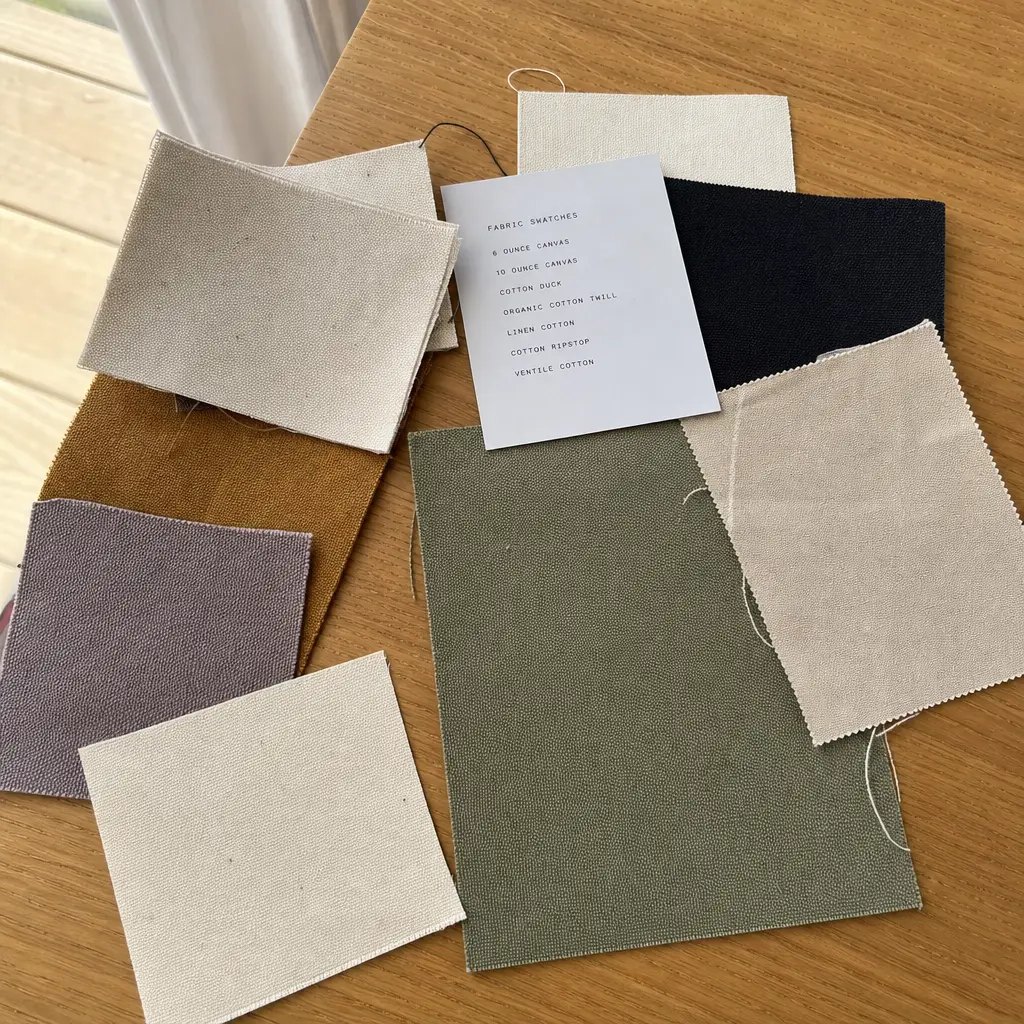
Factories may quote canvas in ounces per square yard or in GSM, and the same product name can hide very different fabric. One supplier's canvas wine carrier may be 8 oz natural cotton with a loose weave, while another quote may use 12 oz dyed canvas with a tighter surface. Buyers should not compare prices until fabric weight, composition, color, and finishing are stated clearly. Natural cotton canvas can also include specks, seed marks, and shade variation; these may support a sustainable look but can affect logo appearance if the design uses light ink, fine detail, or large unprinted negative space.
Fabric finish should be part of proofing. Stiffened canvas can help the carrier stand upright but may crease more visibly. Softer washed canvas can feel premium but may be less crisp for screen printing. Dyed canvas introduces shade control questions, especially when multiple production lots are involved. If the trade show schedule is tight, stock natural canvas is often lower risk than custom dyeing because it avoids lab dip approval, dye lot MOQ, and color matching delays.
- 8 oz canvas: suitable for budget programs, but check loaded shape, seam strength, and whether the logo panel wrinkles.
- 10 oz canvas: common balance for promotional wine carriers, screen print clarity, and manageable carton weight.
- 12 oz canvas: stronger hand feel and better structure for buyer meetings, VIP kits, and table display.
- 14 oz canvas: premium feel but higher material cost, more sewing bulk, and increased freight weight.
- Natural canvas: attractive for earthy or sustainable branding, but shade variation and cotton specks must be accepted in the QC standard.
- Dyed canvas: stronger brand color control on the bag body, but requires lab dip approval, dye lot planning, and more schedule buffer.
Build The Bottle Fit Spec
The phrase 750 ml wine bag is not detailed enough for a reliable RFQ. Bordeaux, Burgundy, Champagne, sparkling wine, and spirits bottles can all be used in trade show gifting, but they differ in diameter, shoulder shape, height, and filled weight. If the carrier is too narrow, staff will struggle to load bottles and the front print may distort. If it is too wide, the bottle can lean, the base can sag, and the presentation can look careless on a booth counter.
Bottle fit should be verified with the real bottle or with a matched substitute confirmed by dimensions. Buyers should provide height, base diameter, maximum shoulder diameter, neck height, and filled weight. If the bottle has a premium label, wax seal, neck tag, or protective wrap, include that in the fit review. The carrier opening should not scrape the label or capsule, and the handle drop should leave enough clearance for a comfortable grip after the bottle is loaded.
Two-bottle carriers require extra attention because the divider drives both safety and presentation. A divider that is too loose may allow bottles to knock together. A divider that is too tight can make loading slow and create stress at the bottom seam. Some buyers need a simple fabric divider; others may require a padded divider or reinforced center panel. The supplier should confirm whether the divider is sewn into the bottom, side seams, or top edge, because each construction behaves differently under load.
- Provide bottle height, base diameter, widest diameter, shoulder profile, neck height, and filled weight in the RFQ.
- State whether the bottle label must remain visible above the carrier or be mostly covered by the canvas panel.
- Define one bottle pocket, two separate pockets, one open compartment, simple divider, padded divider, or removable insert.
- Test loaded appearance from front, side, top, and handle view before approving bulk production.
- Check whether the loaded carrier stands flat on a counter without leaning, twisting, or pulling the front logo off center.
- Avoid finalizing logo size until the filled carrier shape, fold lines, and panel tension are reviewed.
Match Print Method To Artwork
For canvas wine carriers used by exhibitors, screen printing is often the most practical choice for one to three solid brand colors. It is economical at event quantities, works well with bold logos, and creates a direct printed finish on cotton canvas. The proofing risk is that canvas is textured and absorbent. A Pantone color approved on a digital PDF or coated paper chip will not look identical on natural cotton, especially when light ink is printed over an unbleached base.
Heat transfer, digital transfer, embroidery, and woven labels can all be valid, but they solve different problems. Heat transfer is useful when the artwork has gradients, many colors, or small runs, but it can change the hand feel and should be checked for edge lift, cracking, and rub resistance. Embroidery can look premium but may distort small text and fine linework, especially on a small wine carrier panel. Woven labels work well when the buyer wants subtle branding, consistent repeat orders, or a cleaner front panel.
Artwork should be simplified for the fabric and viewing distance. Trade show buyers may see the carrier while walking, on a table, or in a quick meeting. Tiny sponsor lines, thin URLs, and small reversed text often fail on textured fabric. QR codes require special caution: they must be large enough, printed with enough contrast, and tested by scanning from the physical sample. If a QR code is critical, the proof should include a functional scan test after printing, not only the digital artwork.
- Use screen print for bold logos, campaign marks, large flat colors, and repeatable event orders.
- Use heat transfer when color count is high, artwork has gradients, or the buyer needs a short proofing run.
- Use embroidery only when the design is simplified and thread texture supports the brand presentation.
- Use woven labels for subtle branding, multi-language programs, retail identity, or repeatable private-label lines.
- Test QR codes, small URLs, booth numbers, sponsor names, and reversed text at actual size on the final fabric.
- Avoid placing fine artwork over seam ridges, folded edges, handle reinforcements, or highly slubbed fabric zones.
Proof Artwork With Production Limits
A useful print proof is not a logo pasted onto a generic bag photo. It should show final artwork size, placement from fixed construction points, color references, print method, fabric base, and safe margins. For a front-panel logo, placement should be measured from stable references such as the bottom seam, side seams, top opening, or center line. If the proof only says centered, the factory and buyer may interpret the position differently once the bag is sewn and loaded.
Procurement teams should define acceptance criteria before the first physical sample. Print placement might be acceptable within plus or minus 3 mm to 5 mm, while finished bag dimensions may allow a wider tolerance because cotton fabric and sewing can vary. Color tolerance should be realistic for natural canvas. If a brand color is strict, the buyer should approve a physical strike-off and consider whether a white underbase, darker ink, or different fabric color is needed.
Proofs also need version control. Trade show programs often include multiple regional logos, exhibitor teams, sponsor lockups, or language versions. Each version should have a file name, date, print size, Pantone callout, and approval status. If the order includes a date, booth number, or campaign slogan, confirm that the final approved artwork is the version released for screens or plates. A single outdated PDF can cause a full production run with the wrong event details.
- Final proof should include logo width, logo height, distance from bottom seam, distance from side seams, and visual center line.
- Pantone references should be listed with a note that natural canvas may change perceived color compared with coated paper.
- Minimum line thickness, minimum gap, and minimum text height should be approved from a physical strike-off when detail matters.
- Artwork should be supplied as vector files with fonts outlined, linked images embedded, and overprint settings reviewed.
- Multiple logos, languages, sponsor panels, and regional versions each need their own placement proof and setup confirmation.
- Approval records should state approved, approved with listed corrections, or rejected; vague comments create production risk.
Understand MOQ And Cost Drivers
MOQ for canvas wine carriers is shaped by fabric sourcing, cutting efficiency, print setup, sewing line arrangement, and packing requirements. A factory may accept a lower MOQ for natural canvas because the fabric is common, while dyed canvas may require a higher minimum due to dye lot size. If the buyer requests three fabric colors and four regional logos, the order is no longer one simple run. It becomes multiple mini-runs with separate fabric control, screen setup, packing separation, and inspection risk.
Unit price comparisons should be based on matching assumptions. One supplier may quote 10 oz natural canvas with one-color screen print and bulk packing. Another may quote 12 oz dyed canvas, individual polybags, reinforced handles, and two-color printing. The second quote will look higher, but it may not be less competitive. Buyers should ask suppliers to separate fabric, printing, sewing, packing, sample, screen, and freight data where possible. This makes negotiation more practical than asking for an unexplained discount.
Cost also changes with timing. Rush orders may require stock fabric, overtime sewing, air freight, or simplified packing. Small adjustments such as reducing logo versions, using one ink color, choosing a standard pattern, or avoiding custom dyeing can protect both price and delivery. If the event date is fixed, procurement should evaluate the total landed and usable cost, not only the lowest FOB unit price.
- Fabric cost changes with weight, color, composition, finishing, shrinkage control, and dye lot size.
- Print cost changes with color count, print area, setup screens, curing time, and number of logo versions.
- Sewing cost changes with divider, gusset, handle reinforcement, lining, binding, edge finishing, and stitch complexity.
- Packing cost changes with individual bags, paper bands, hangtags, barcode labels, inserts, carton marks, and version separation.
- MOQ flexibility improves when buyers keep one fabric, one size, one construction, and one print method.
- Quote comparison should include sample cost, setup cost, spare units, carton volume, and shipment assumptions.
Approve Samples Like A Buyer
A pre-production sample should be treated as a control document, not a showroom accessory. The sample should use the intended fabric weight, handle material, thread color, print method, divider construction, and approximate production sewing. If a sample is made with substitute fabric or a different decoration method, it can help check size or concept, but it should not release bulk production for a fixed trade show order.
Sample review should include loaded use. Place the intended bottle inside, carry the bag by the handles, stand it on a table, and inspect the printed panel under realistic lighting. Check whether the handle feels comfortable, whether the bottle pulls the front panel out of shape, and whether the base remains stable. If the carrier creases across the logo or the handle attachment shows stress, revise the construction before bulk cutting.
Buyers should document sample decisions in a way that factory production and inspection teams can follow. Photos with a ruler are useful, but they should be supported by written measurements and tolerances. If a sample is approved with corrections, list each correction clearly: increase logo by 10 mm, move print 15 mm higher, change thread to natural, increase handle drop, or tighten divider seam. The sealed approved sample should not be casually used at the booth or sent between departments without tracking because it becomes the comparison standard.
- Measure finished width, height, gusset, bottom panel, handle drop, handle width, divider position, and logo placement.
- Compare fabric shade against the approved swatch and record acceptable natural variation or dye lot tolerance.
- Rub the printed area lightly and inspect for weak curing, surface cracking, powdery ink, edge lift, or smearing.
- Load the carrier with the correct bottle weight and inspect handle stress points, seam tension, and base stability.
- Photograph the approved sample from front, side, top, inside, handle, divider, and carton packing views.
- Keep approval comments specific enough for production teams, not just sales contacts, to execute.
Set QC Thresholds Before Production
Quality control for canvas wine carriers should focus on defects that affect brand presentation and carrying performance. Minor cotton slubs may be acceptable on natural canvas, but stains in the logo area are not. Slight sewing variation on an inside seam may be tolerable, but weak handle reinforcement is a functional failure. Defect categories should be agreed before production because event orders leave little time for disagreement at final inspection.
For print proofing, the most important QC thresholds are placement, color consistency, curing, and readability. A logo that shifts a few millimeters may be acceptable on a rustic natural bag if consistent, but not when the artwork has a centered frame or sponsor line. Ink should not bleed into small letters, crack when the carrier is folded, or transfer to adjacent bags in packing. Inspectors should pull samples from different cartons and, when possible, from early, middle, and late production to catch screen wear, print setup drift, and fabric shade variation.
Functional testing should be practical and repeatable. The test does not need to be a laboratory certification unless the buyer requires one, but it should reflect real use. Load the carrier with the intended bottle weight, lift it by the handles, hold it for a defined period, and check the bartacks, seams, divider, and base. If two bottles are used, test movement and contact between bottles. A carrier that looks fine empty may fail when walked through a busy exhibition hall.
- Critical defects: wrong logo, wrong fabric color, bottles not fitting, broken handle stitching, severe stains, or unsafe seam failure.
- Major defects: print misplacement beyond tolerance, unreadable logo text, open seams, ink smearing, badly twisted handles, or divider failure.
- Minor defects: small natural cotton specks away from the logo, slight fold marks, or trimmed thread ends within the agreed standard.
- Functional tests: loaded carry, seam stress review, divider alignment, standing stability, handle comfort, and bottle insertion speed.
- Measurement checks should include bag width, height, gusset, handle drop, print size, print position, and carton quantity.
- Inspection sampling should include multiple cartons, multiple logo versions, and both top and bottom layers of packed goods.
Plan Packing For Venue Receiving
Packing is often treated as an afterthought, but for trade show exhibitors it can decide whether the order is usable on time. Exhibition venues, 3PL warehouses, hotels, and distributor docks may require carton marks, PO numbers, booth numbers, consignee references, or appointment windows. If cartons are not labeled clearly, the goods may arrive at the building but still be unavailable when booth staff need them. Packing specs should be included in the RFQ and proof approval process, not added after production.
Canvas wine carriers are usually packed flat to save volume, but the print panel must be protected from abrasion and hard creases. Individual polybags protect each carrier and make distribution easier, but they add cost, labor, and plastic. Paper bands can support a lower-plastic presentation but may not protect against moisture or rubbing. Bulk packing may be efficient if the carriers will be loaded with bottles at a local warehouse, but it requires better carton discipline to avoid crushed or dirty panels.
Version control is a packing issue as much as a print issue. If the order includes multiple sponsor logos, regional sales teams, or destination addresses, each version should be separated by inner pack or carton. Carton labels should identify item, logo version, quantity, purchase order, destination, and event reference. For direct-to-venue delivery, buyers should request packing photos before shipment so receiving teams know what to expect.
- Confirm units per carton, carton size, gross weight, net weight, carton strength, and whether one person can safely lift each carton.
- Use carton marks that include item name, PO number, logo version, quantity, destination, consignee, and event reference.
- Avoid over-compression that creates permanent creases across printed logos or deforms handles and dividers.
- Separate multiple logo versions, language versions, or regional allocations by inner carton, carton label, or pallet label.
- Request a packing photo, carton mark photo, and loaded carton weight before shipment to a venue, hotel, or 3PL.
- Confirm whether the buyer wants individual polybags, paper bands, recycled-content packaging, bulk stacks, or sales-team kits.
Protect The Lead Time
Lead time should be counted backward from the date the exhibitor must physically have the carriers ready for bottle loading, not from the opening day of the show. The timeline needs room for artwork proofing, fabric confirmation, sample making, sample shipping, buyer review, material preparation, printing, curing, sewing, inspection, packing, export handling, customs clearance, and local delivery. If the carriers ship internationally, inland delivery and receiving appointments can create more risk than the sewing itself.
The biggest schedule risks are late artwork approval, custom fabric delays, and unclear packing instructions. Factories may reserve capacity, but they cannot safely print or cut without final artwork and sample approval. If the program includes multiple regions, the buyer should approve the master construction first, then control artwork versions through a clear approval log. Last-minute changes to booth numbers, sponsor marks, or QR codes should be treated as schedule risks, not simple file swaps.
When timing is tight, simplify the specification instead of relying only on faster freight. Stock natural canvas, one-color screen print, standard size, simple divider, and bulk packing can reduce approval and production complexity. Air freight may help after production, but it cannot fix a delayed proof, unavailable dyed fabric, or rejected sample. For fixed-date trade show orders, procurement should build a decision date into the timeline: if sample approval is not complete by that date, the product must be simplified or the delivery plan revised.
- Lock artwork before sample production whenever possible, especially event dates, booth numbers, QR codes, and sponsor logos.
- Use stock natural canvas when the event date is close and custom dyeing or special fabric MOQ creates avoidable risk.
- Approve one master construction before splitting regional logos, language versions, or sales-team allocations.
- Reserve time for inspection, corrective action, repacking, and replacement units before final shipment.
- For urgent orders, compare simpler specifications against the cost and risk of air freight or missed event delivery.
- Track the required receiving date, bottle-loading date, ex-factory date, vessel or flight date, and final delivery appointment separately.
Specification comparison for buyers
| Spec decision | Recommended option | When it fits | Buyer risk to check |
|---|---|---|---|
| Canvas weight | 10 oz to 12 oz cotton canvas for most trade show wine carriers | Good balance of structure, print clarity, hand feel, and carton weight for exhibitor giveaways or buyer meeting gifts | Canvas below 8 oz can collapse around a loaded bottle; very heavy canvas may raise cost and freight without improving event value |
| Bottle capacity | Single-bottle carrier for booth giveaways; two-bottle carrier with divider for VIP appointments or distributor kits | Single-bottle bags reduce shipping volume and simplify loading; two-bottle bags feel more premium for account-based gifting | Internal width, gusset, and divider spacing must match the actual bottle diameter, not only a nominal 750 ml description |
| Print method | Screen print for 1 to 3 solid brand colors; heat transfer for gradients, fine color blends, or short sample runs | Screen print gives durable, economical output when artwork is bold and quantity is above sample scale | Thin lines, small reversed text, and large ink blocks over seams can bleed, crack, or distort on coarse canvas |
| Logo position | Centered front panel with measured safe margin from bottom seam, side seams, handle stitching, and folds | Best for booth visibility, photography, and counter display when the carrier stands upright | Artwork placed too close to folded edges may shift during sewing and look off-center after the bottle is loaded |
| Handle construction | Self-fabric canvas handles or cotton webbing with bartack reinforcement | Suitable for bottles carried through exhibition halls, hotel receptions, distributor dinners, and sales calls | Handle drop, stitch density, thread quality, and bartack length must be approved because loaded wine is heavier than ordinary tote contents |
| MOQ logic | Use one base fabric, one size, and one print method first; split colors or regional logos only after checking setup minimums | Fits buyers coordinating exhibitor teams, regional distributors, or multiple sales territories under one program | Small color or logo splits can trigger separate cutting, print setup, shade control, inspection, and packing charges |
| Sample approval | Approve a pre-production sample with real bottle fit, loaded handle test, fabric shade, and final logo size | Necessary when the carrier will be photographed, displayed at a booth, or used in buyer appointments | Digital proofs alone do not reveal canvas texture, ink absorption, seam distortion, handle stress, or loaded bag shape |
| Packing format | Flat pack by inner polybag, paper band, or bulk stack; export carton with carton marks and event PO reference | Works for trade show delivery where cartons must be counted quickly at a venue dock, hotel, or 3PL warehouse | Over-tight cartons can crease printed panels; loose cartons increase abrasion, carton dimensions, and freight cost |
| Inspection plan | Set AQL level, defect categories, measurement tolerances, and loaded-use tests before production | Useful for fixed-date event orders where rework time is limited and brand presentation matters | If tolerances are not agreed in advance, final inspection disputes can delay release or force acceptance of avoidable defects |
Buyer checklist before sampling
- Define the bottle type before quoting: Bordeaux, Burgundy, Champagne, spirits, or mixed event bottles; include height, base diameter, shoulder shape, and filled weight.
- Specify fabric weight in oz or GSM, not only the word canvas; note whether natural, bleached, dyed, organic, recycled-content, or blended fabric is required.
- Confirm construction before artwork approval: single-bottle, two-bottle, gusseted base, flat base, divider, padded divider, lining, or no divider.
- Send vector artwork with Pantone references, final print size, placement dimensions, outlined fonts, minimum readable text height, and each logo version separated.
- Require a proof that shows logo scale on the actual carrier panel with seam references, not a floating artwork file on a generic mockup.
- Approve handle drop, handle width, thread color, bartack position, stitch density, and loaded carrying performance before bulk cutting.
- Set acceptable tolerances for finished size, print placement, fabric shade, logo color, carton quantity, and under- or over-shipment before production.
- Ask whether the supplier will provide a fabric swatch, print strike-off, sales sample, pre-production sample, and sealed approval sample.
- Request carton dimensions, gross weight, net weight, units per carton, inner packing method, and packed volume for freight planning.
- Align lead time with the event receiving date and bottle-loading date, not only the ex-factory date or international ship date.
Factory quote questions to send
- What canvas weight, fiber composition, weave, and approximate GSM or oz per square yard are included in the quoted price?
- Is the quoted fabric in stock, greige-to-dye, custom dyed, bleached, or natural, and what MOQ applies to each fabric option?
- Can you provide a fabric swatch or lab dip before sampling, and how much shade variation should we expect in bulk production?
- Which print method is quoted, how many colors are included, what is the maximum print area, and what is the setup charge for each logo version?
- Can you make a print strike-off or pre-production sample using final fabric, final thread, final handle material, and final artwork size?
- What finished-size tolerance, print placement tolerance, color tolerance, and stitch tolerance do you normally hold for this product?
- What bottle size is the existing pattern designed for, and can you test our actual bottle dimensions before confirming the pattern?
- How are handles reinforced: bartack, box stitch, cross stitch, double row stitching, or another method, and what loaded weight test can you perform?
- How many units are packed per carton, what are the estimated carton dimensions and gross weight, and can packing be adjusted for venue receiving?
- What production lead time starts after sample approval, and which schedule items depend on fabric availability, print screen approval, or packing materials?
Quality-control points to confirm
- Finished carrier size should match the approved sample within an agreed tolerance, commonly plus or minus 5 mm to 10 mm depending on construction and fabric behavior.
- Bottle fit must be tested with the buyer's bottle type, including neck clearance, base stability, label protection, and divider alignment if used.
- Print position should be measured from fixed seams or panel edges, not by eye, with a clear tolerance such as plus or minus 3 mm to 5 mm.
- Ink coverage must be even on textured canvas, with no pinholes, bleeding, scumming, ghosting, or broken edges that change brand readability at normal viewing distance.
- Logo color should be checked against the approved swatch or strike-off under consistent lighting, with realistic tolerance for natural cotton base color.
- Handle stitching should be secure, with bartacks or reinforced stitching placed consistently on both handles and no skipped stitches at stress points.
- Loaded carry testing should use the intended bottle weight for a reasonable handling period, not only an empty-bag pull or quick visual check.
- Divider seams, gussets, and bottom panels should be checked for symmetry so the loaded carrier stands properly on a counter or tasting table.
- Loose threads, oil marks, needle cuts, fabric slubs in logo areas, dirty fold marks, and print smears should be classified before inspection begins.
- Cartons should protect printed panels from abrasion, moisture, compression creases, and mixed-version confusion during sea, air, courier, or local truck transit.