Why university bookstore compliance is different for wine carriers
A canvas wine carrier looks simple, but a university bookstore order usually carries more risk than an unbranded promotional tote. The bag may display a licensed university mark, sit in a retail fixture, be sold as a gift item, and be handled by a receiving team that expects carton labels, barcodes, and correct country-of-origin marking. A supplier that can sew a basic canvas bag is not automatically ready for a bookstore-compliant wine carrier program.
The main buying problem is not only finding a low unit price. Procurement needs a supplier that can prove material consistency, protect logo accuracy, quote the same specification that will be produced, and pack the goods so they can move through a campus store or distributor warehouse without rework. This checklist helps separate a real production quote from a loose estimate.
- Treat the university logo as a controlled production element, not just artwork decoration.
- Define retail receiving requirements before sampling, especially barcode, hangtag, carton label, and inner packing.
- Tie supplier compliance evidence to the exact order, not to a generic factory profile.
- Use the approved sample as the reference for fabric hand feel, dimensions, print result, and packing.
Start with the bottle format, not the bag picture
The first specification decision is what the carrier must hold. A standard 750 ml wine bottle is not the same as a tall sparkling bottle, a wide Burgundy bottle, or a gift set with opener, tissue, and card insert. If the RFQ only says custom canvas wine carrier, factories will quote a common size from previous orders. That may look acceptable empty but become tight, unstable, or wrinkled when loaded.
For most retail bookstore programs, the buyer should state the bottle count and intended use. A single-bottle carrier can be slim and low-cost. A two-bottle carrier needs a divider or wider gusset to stop bottles hitting each other. A premium alumni gift may need a taller body, heavier canvas, reinforced handles, and a cleaner finish around the top hem.
- Single 750 ml bottle: common finished size around 10 to 11 cm width, 9 to 10 cm gusset, and 35 to 38 cm height, adjusted after bottle testing.
- Two-bottle carrier: specify divider height and stitching line so bottles stay separated during carrying.
- Tall bottle use: test with the actual bottle height before approving top hem and handle drop.
- Retail gift use: leave enough room for tissue paper or a neck tag without crushing the presentation.
- Standing stability: wider gusset and accurate bottom stitching matter more than a heavier fabric alone.
Fabric weight and canvas type affect both cost and compliance
Canvas wine carriers are commonly quoted in ounces or GSM. Buyers often compare 10 oz, 12 oz, and 14 oz canvas as if weight is the only quality factor. In production, yarn density, finishing, shrinkage, washing, dyeing, and fabric defects can matter just as much. A loose 12 oz canvas may feel less stable than a tighter 10 oz fabric, and a heavy 14 oz canvas may create bulky seams that are harder to stitch cleanly around the gusset.
For university bookstore retail, 10 oz to 12 oz natural cotton canvas is usually the practical range. It gives a solid hand feel, accepts screen printing well, and keeps freight weight under control. If the item is positioned as a premium alumni or donor gift, 14 oz can work, but the supplier should sample the exact seam construction and handle attachment because thick fabric can expose needle marks and uneven folds.
- 10 oz canvas: suitable for value retail and moderate bottle weight, but reinforce handles and bottom corners.
- 12 oz canvas: good default for bookstore merchandise because it balances stiffness, print surface, and cost.
- 14 oz canvas: premium feel, higher material cost, heavier cartons, and greater sewing difficulty.
- Natural canvas: lower dye risk and classic look, but expect natural seed flecks and shade variation.
- Dyed canvas: stronger brand color options, but requires colorfastness and shade control between lots.
- Organic or recycled cotton: define documentation needs early because certificates, traceability, and MOQ may change.
Construction details that prevent carrying failures
The highest-risk areas are the handle attachment, bottom seams, divider seams, and top hem. A wine bottle concentrates weight into a small footprint, so a weak bottom corner can fail even when the fabric itself is strong. For a single-bottle carrier, double stitching or reinforced seams may be enough. For two bottles, the carrier should be tested with both bottles loaded and swung lightly to simulate real handling.
Handle design also changes cost and usability. Self-fabric handles look clean and use matching material, but they add sewing steps and may feel bulky in heavier canvas. Cotton webbing handles can be comfortable and strong, but the color and width must be specified. If the bag is sold in a bookstore as a premium item, crooked handles or uneven bartacks will be visible to shoppers.
- Require box stitching or bartack reinforcement where handles meet the body for heavier styles.
- Specify handle width and drop, not only handle length; shoppers care about hand comfort.
- For two-bottle carriers, the divider should be stitched straight and deep enough to prevent bottle contact.
- Bottom gusset seams should be reviewed after load testing, not only during flat visual inspection.
- Top hem should be even and not twisted; uneven hems make logo placement look wrong.
Logo and print compliance for licensed university marks
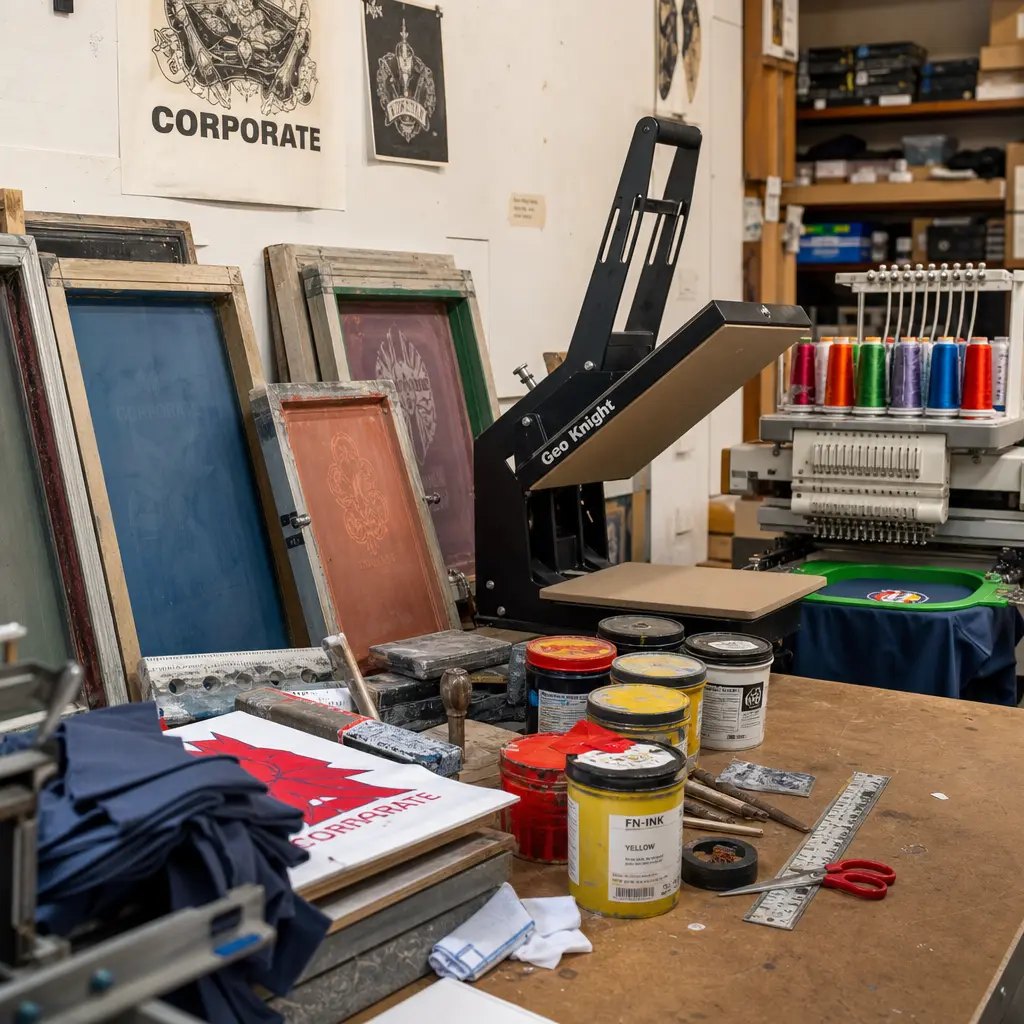
Campus marks often have strict color, size, clear-space, and placement rules. A supplier may be excellent at sewing but weak at brand compliance if artwork is sent as a low-resolution image or if Pantone references are missing. For screen printing, the factory needs vector artwork, print size, print position, ink colors, and whether the logo is printed on one side or both sides. For heat transfer, the buyer should approve film feel, edge finish, and wash or rub resistance where applicable.
The safest workflow is to approve a digital artwork layout first, then a physical strike-off or pre-production sample on the actual canvas. Natural cotton canvas can absorb ink differently than bleached or dyed fabric. Fine lines may fill in, small registered trademark symbols may blur, and dark campus colors may shift on unbleached backgrounds. Approval should be based on the physical sample, not only a PDF.
- Screen print: best for solid one-color to three-color designs, strong cost control at volume, and a traditional canvas look.
- Heat transfer: useful for gradients or detailed marks, but test hand feel and edge durability.
- Embroidery: premium but may pucker on lighter canvas and can distort small lettering.
- Woven label: good for subtle branding and repeat reorder consistency.
- Leather or PU patch: premium appearance, but confirm material compliance and attachment strength.
- Print placement tolerance: set a measurable range, such as plus or minus 5 mm from approved location, when feasible.
MOQ logic: why the same quantity can quote differently
MOQ is rarely one number for all versions. A factory may accept 500 pieces for a natural canvas single-bottle carrier with one-color print, but require more for custom dyed fabric, multiple artwork versions, a special woven label, or a two-bottle structure with divider. If procurement combines several campus logos, fabric colors, or print colors into one total order quantity, the supplier may still calculate setup and waste by each version.
A good RFQ breaks MOQ into the real cost drivers. Fabric booking, cutting efficiency, print screen setup, label production, packing labor, and carton marks can each create separate minimums. If the bookstore wants 300 pieces each for five campuses, the buyer should ask whether the supplier can gang production, share fabric, and separate only the print screens and packing labels.
- Clarify MOQ per style: single-bottle and two-bottle carriers usually count separately.
- Clarify MOQ per fabric color: natural canvas and navy dyed canvas may not share minimums.
- Clarify MOQ per artwork: each university mark may require separate screen setup and approval.
- Clarify MOQ per packing method: retail-ready units take more labor than bulk flat pack.
- Request price breaks at realistic quantities, such as 500, 1,000, 2,500, and 5,000 pieces, rather than one target quantity only.
Supplier evidence that should be reviewed before purchase order
Supplier compliance should be practical, order-specific, and verifiable. A glossy factory profile does not prove that the exact canvas, ink, label, and packing for this order meet the buyer’s requirements. Before issuing a PO, the buyer should collect evidence that the supplier can control material, decoration, stitching, packing, and documentation through mass production.
For many bookstore orders, the required documents are not exotic. The important point is matching documentation to the product and destination market. Fiber content, country of origin marking, restricted substance declarations, and any buyer-specific responsible sourcing forms should be addressed before the deposit is paid. If third-party testing is needed, decide whether the buyer or supplier arranges it and whose account pays.
- Factory business license and export experience for sewn cotton bags.
- Recent product photos of similar canvas wine carriers, including inside seams and handles.
- Material statement showing cotton canvas type, weight, and finishing.
- Ink or decoration safety declaration where required by the buyer.
- Country of origin marking plan for the bag, hangtag, label, or packaging.
- Quality control process showing in-line inspection and final inspection steps.
- Agreement on corrective action if production differs from the approved sample.
Sample approval should test function, not only appearance
A sample that looks good empty can fail once loaded with bottles. The approved sample should be made with the actual fabric weight, actual handle material, actual print method, and actual construction. If a supplier sends a quick sample in substitute fabric, it may be useful for size discussion, but it should not be treated as the production approval sample.
Procurement teams should create a simple sample approval sheet. Record finished dimensions, fabric weight, print position, color references, stitching details, packing method, and any approved exceptions. Photos are useful, but written tolerances are better. Once the sample is approved, the factory can train the production line against a clear standard rather than a vague comment such as make it like the sample.
- Fit test: insert the actual bottle type and confirm height, width, gusset, and ease of removal.
- Load test: lift and hold with filled bottles, then inspect handle stitching and bottom corners.
- Print test: review color, ink coverage, edge sharpness, and placement on the actual canvas.
- Packing test: pack the sample as proposed and check for creasing across the logo.
- Retail review: place hangtag, barcode, or label where store staff can scan without damaging the product.
- Approval record: sign off on the physical sample or keep a sealed reference sample at the factory and buyer office.
Packing rules that reduce warehouse and store rework
Packing is often treated as an afterthought, but it can decide whether a bookstore order is received cleanly or delayed at the dock. Canvas wine carriers are usually flat packed, but the fold direction matters. A hard fold through the printed logo can create a permanent crease, especially on heavier canvas or thick ink. If the carrier is sold as a gift item, creased fronts and dirty fabric surfaces create immediate markdown risk.
Retail buyers should define whether the order is bulk packed, individually polybagged, paper banded, hangtagged, or barcode labeled. Sustainability policies may discourage individual plastic packaging, but unprotected natural canvas can pick up dust during ocean freight and warehouse handling. A paper band or recyclable sleeve may be a compromise, but it must be tested for scuffing and moisture exposure.
- State units per inner pack and master carton to match bookstore receiving capacity.
- Avoid carton weights that are difficult for store staff to handle; canvas gets heavy quickly at volume.
- Keep printed panels facing away from rough carton edges or abrasive accessories.
- Use carton liners or clean inner bags when natural canvas must remain retail clean.
- Provide carton marks with PO number, SKU, color, quantity, gross weight, net weight, and country of origin where required.
- Confirm barcode format and placement if the bookstore scans units before shelving.
Lead time risks hidden inside compliance work
A standard canvas carrier can be produced quickly when fabric is in stock and artwork is simple. Compliance steps add time because they require approval, documentation, and sometimes testing. The most common schedule mistake is counting lead time from PO date while the factory counts from deposit, artwork approval, sample approval, or material arrival. This gap can cause missed campus events, graduation periods, and holiday gift windows.
The schedule should include separate gates: RFQ clarification, sample making, sample shipping, sample review, material booking, printing, sewing, final inspection, packing, export documents, and freight. If licensed logo approval is handled by a university licensing office, add that approval path to the calendar. A factory cannot reliably hold capacity forever while artwork or compliance forms remain open.
- Stock natural canvas and one-color print usually carry less schedule risk than dyed canvas or complex decoration.
- Custom dyed fabric can add time for lab dip, bulk dyeing, shade approval, and colorfastness review.
- Third-party testing can add several working days plus sample preparation and courier time.
- Retail barcode and hangtag approval should happen before packing materials are printed.
- Final inspection must occur after packing is mostly complete but before shipment release.
- For event-based orders, set a latest acceptable ship date and a latest acceptable in-hand date separately.
Specification comparison for buyers
| Supplier option | What to verify | Commercial advantage | Buyer risk to control |
|---|---|---|---|
| Direct sewing factory | fit-test photos with reference bottle, bottom reinforcement close-up, handle load proof, and final carton photo set | Better sample-to-bulk control and faster production feedback | May be weaker on export paperwork or branded packing unless checked early |
| Trading company | Factory name, production photos, trim-source proof, and who owns QC decisions | Can coordinate small mixed orders and extra services | Markup can hide real factory capability and slow defect decisions |
| Specialized bag workshop | bottle fit, bottom reinforcement, handle or cord strength, divider option, seam allowance, and upright stability | More practical for detailed construction, trims, and repeat programs | Capacity may be limited during peak seasons |
| Low-price general supplier | cotton canvas, jute, felt, nonwoven, or laminated paper sized to bottle diameter, weight, and condensation risk | Useful for simple promotional runs with loose specs | Material downgrades, weak packing, and vague inspection scope can erase savings |
| Retail-ready supplier | upright or flat packing, bottle-protection insert, carton count, moisture control, and retail display orientation | Can handle labels, SKU separation, carton marks, and receiving rules | Higher unit cost must be compared against reduced warehouse work |
| Compliance-focused supplier | Fabric records, labeling review, test plan, and production traceability | Safer for retail programs and repeat brand orders | Documentation claims need evidence, not only sales language |
| Local sample room plus bulk factory | Signed sample, bulk factory handoff, first-piece photos, and deviation owner | Good for complex branding before large production | Sample room quality may not match bulk line unless handoff is controlled |
Buyer checklist before sampling
- Define bottle format: single 750 ml bottle, two-bottle carrier, tall sparkling bottle, or mixed gift set with accessories.
- State finished dimensions, gusset width, divider requirement, handle drop, seam allowance tolerance, and whether the bag must stand upright when loaded.
- Choose fabric weight in oz or GSM and state whether natural, bleached, dyed, recycled cotton, organic cotton, or blended canvas is acceptable.
- Provide licensed logo files in vector format with Pantone references, print size, placement from seams, and any university brand-use restrictions.
- Require a pre-production sample using actual fabric weight, actual print method, actual handle construction, and actual packing method.
- Set acceptance tolerances for size, print position, color, seam strength, and visible defects before the supplier quotes.
- Clarify MOQ by style, fabric color, print design, and shipment destination; do not treat mixed designs as one MOQ unless the factory agrees in writing.
- Request carton dimensions, gross weight, packing quantity, inner packing, barcodes, warning labels, and bookstore receiving marks in the quote.
- List compliance documents needed before production: fiber content statement, country of origin marking plan, restricted substance declaration, and any test report requirements.
- Reserve time for artwork approval, sample revision, fabric dyeing or greige fabric booking, mass production, final inspection, and export documentation.
Factory quote questions to send
- Is the quoted fabric 10 oz, 12 oz, 14 oz, or a GSM equivalent measured before or after finishing?
- What is the exact finished size tolerance for height, width, gusset, divider width, and handle drop?
- Is the fabric stock natural canvas, custom dyed canvas, organic cotton, recycled cotton, or a cotton-poly blend?
- Which print method is included in the price, how many colors are included, and what is the maximum safe print area away from seams and handles?
- Does the MOQ apply per style, per color, per logo, per print colorway, or per total order?
- Are pre-production samples charged separately, and does the sample cost include actual print and actual fabric?
- What seam construction is quoted for the handle attachment and bottom corners: single stitch, double stitch, box stitch, or bartack reinforcement?
- What compliance documents can be provided for this exact order, and are any third-party tests excluded from the unit price?
- What packing method is quoted: bulk flat pack, individual polybag, paper band, hangtag, barcode sticker, or retail carton?
- What are the estimated carton dimensions, carton gross weight, and units per carton for freight calculation?
Quality-control points to confirm
- Measure finished bag height, width, gusset, divider position, and handle drop against the approved sample and tolerance sheet.
- Load test each sampled carrier with the intended bottle weight plus a reasonable safety margin; inspect handle stitching and bottom seams after lifting.
- Check fabric weight by cutting and weighing a known area or verifying supplier fabric inspection records when GSM is critical.
- Compare print color under consistent light against approved Pantone or physical strike-off; document acceptable shade variance before production.
- Rub test printed areas for dry and wet crocking where dark ink or dyed canvas is used.
- Inspect ink curing, edge sharpness, pinholes, registration, and print placement from top edge, side seam, and bottom seam.
- Check divider stitching on two-bottle carriers so bottles do not collide or force the carrier out of shape.
- Review loose threads, skipped stitches, needle holes, oil marks, stains, fabric slubs, and uneven top hems.
- Verify carton marks, country of origin labels, hangtags, barcode stickers, and retail packing against the bookstore receiving guide.
- Confirm final packed carton count, gross weight, and carton condition before balance payment or cargo release.